
Vertical vs Horizontal
Configuration Guide
Optimize your site layout and operational ROI. Whether you need space-saving vertical tanks or rapid-deployment horizontal systems, we provide engineered solutions tailored to your infrastructure.
The Structural Distinction
Deciding between vertical and horizontal storage configurations is a critical engineering step for site optimization and safety compliance.
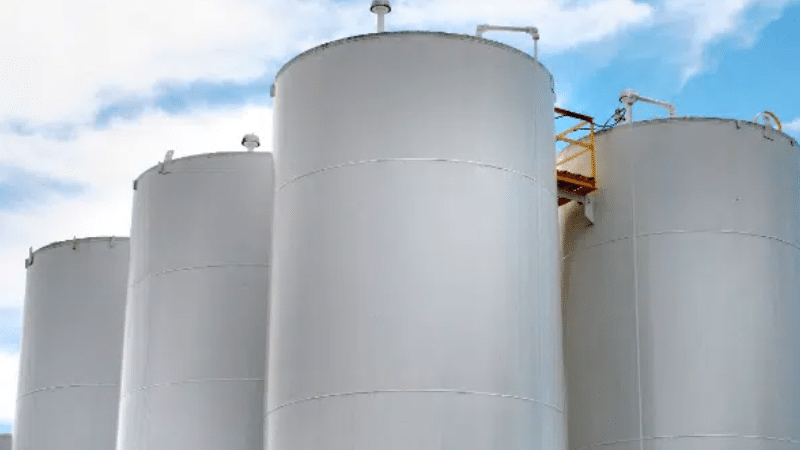
Vertical Storage Tanks
- Footprint Savings: Requires significantly less ground area for high-capacity fuel volumes.
- Atmospheric Stability: Less liquid surface area exposed to heat, reducing evaporation losses.
- Total Drainage: Conical or sloped bottom designs facilitate 100% fuel removal and easier cleaning.
Industrial Bulk Storage, Oil Terminals, Marine Ports.
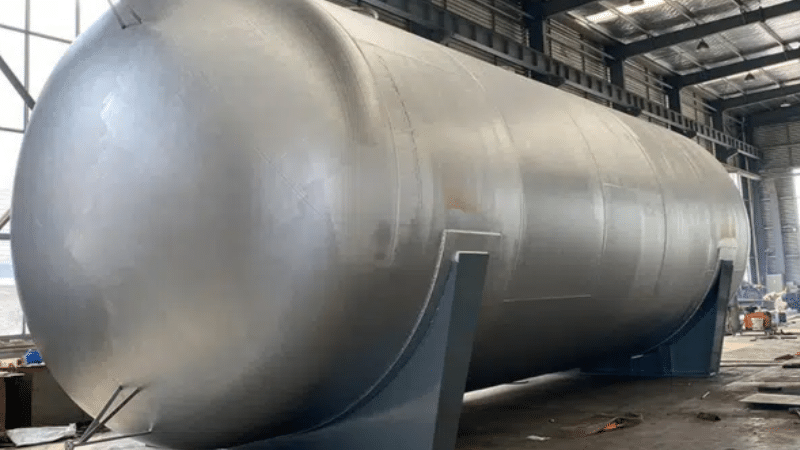
Horizontal Storage Tanks
- Lower Profile: Enhanced seismic and wind resistance due to a lower center of gravity.
- Safe Accessibility: All instrumentation and manways are accessible without high-altitude gear.
- Fast Deployment: Often delivered as a turnkey skid-mounted system for immediate site use.
Gas Stations, Backup Power, Commercial Fleet Fueling.
Engineering Comparison Matrix
A detailed quantitative analysis of vertical vs. horizontal fuel tank configurations to assist in your technical selection process.
| Feature / Aspect | Vertical Storage Tank | Horizontal Storage Tank |
|---|---|---|
| Footprint (Land Use) | Minimal Space Winner | Moderate to Large |
| Initial Setup Cost | Higher (Complex foundation & lifting) | Lower (Simpler saddle supports) Budget Winner |
| Seismic & Wind Stability | Moderate (Requires heavy anchoring) | High (Low center of gravity) Safety Winner |
| Maintenance Access | Requires scaffolding or ladders | Easy access to all fittings from ground |
| Evaporation Loss | Lower (Reduced liquid surface area) | Moderate (Larger vapor space area) |
| Available Capacities | Up to 150,000L+ | Typically up to 100,000L |
Deep Dive: Horizontal Fuel Storage Tanks
Exploring the engineering advantages and structural integrity that make horizontal tanks the preferred choice for commercial and mobile fueling operations.

Superior Structural Stability
By spreading the fuel weight over a longer horizontal plane, these tanks achieve a significantly lower center of gravity. This low-profile design is essential for seismic zones and areas prone to high-speed winds, as it minimizes the lateral stress on the foundation.
- Integrated Saddle Support Systems
- Balanced Load Distribution
- Ideal for Indoor/Low-Clearance Sites
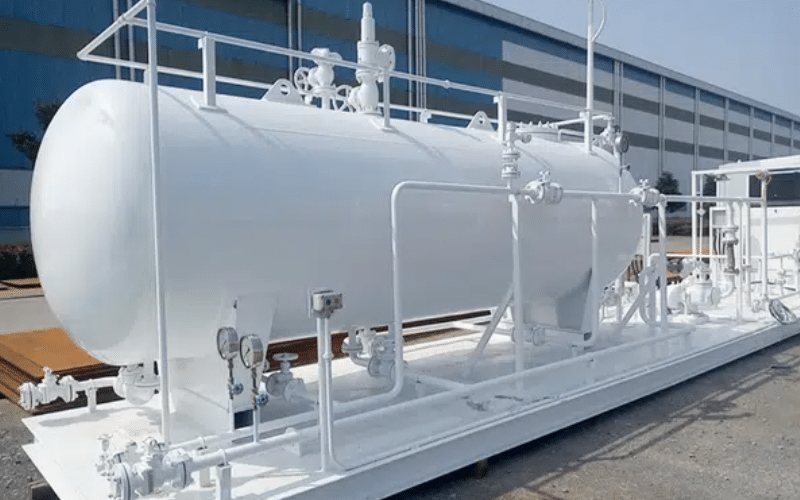
Skid-Mounted & Turnkey Ready
Horizontal tanks are inherently suited for skid-mounting. This allows pumps, filtration systems, and meters to be pre-installed on a single heavy-duty steel base at our factory, reducing site work by up to 70%.
- Plug-and-Play Installation
- Ground-Level Inspection Access
- Modular Scalability for Fuel Depots
Critical Selection Factors
Evaluating these three pillars will ensure your fuel storage configuration aligns with your operational goals and environmental realities.
Spatial Constraints
Consider the total available surface area versus vertical clearance. Urban sites often favor the slim profile of vertical tanks, while remote industrial sites with canopy height limits prefer horizontal designs.
Initial Investment
Vertical tanks require heavy-duty, deep concrete foundations to handle the high localized pressure. Horizontal tanks distribute weight over saddle supports, significantly reducing initial civil engineering costs.
Safety Requirements
Stability is paramount in seismic zones or hurricane-prone coastal areas. Horizontal tanks offer an inherently lower center of gravity, providing superior resistance to wind load and ground movement.
Real-World Industry Applications
See how our vertical and horizontal fuel storage systems are strategically deployed across diverse sectors to maximize safety and operational ROI.

Logistics & Fleet Hubs
Logistics centers require rapid-access fueling for heavy-duty trucks. Horizontal tanks are often chosen for their ease of pump integration and modular scalability as the fleet grows.
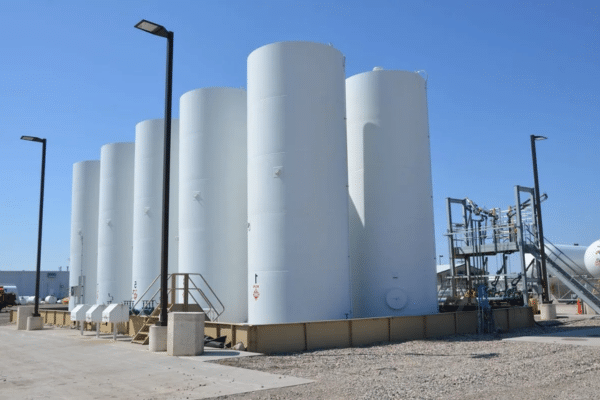
Mining & Remote Power
Massive fuel volumes are needed to power remote mining equipment. Vertical tank farms offer the highest capacity-to-footprint ratio, essential for long-term fuel reserves in isolated areas.
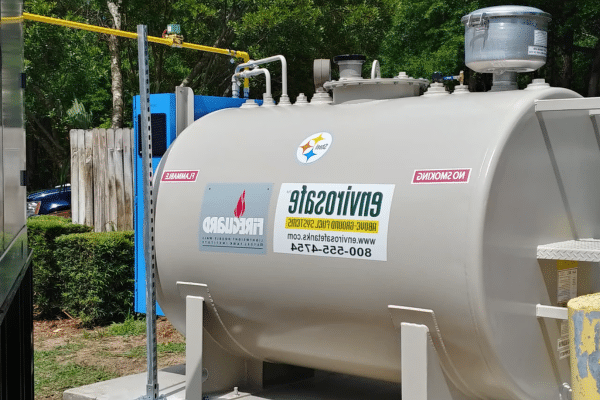
Critical Infrastructure
Data centers and hospitals rely on backup generators. Horizontal tanks are frequently installed in basement levels or under low-clearance canopies due to height constraints.

Retail Gas Stations
Urban sites with extremely high land costs utilize vertical tanks to store multiple fuel grades (Gasoline/Diesel) in a consolidated, space-efficient central fueling island.
Selection FAQ
When is a vertical tank more cost-effective than a horizontal one?
Are horizontal tanks safer in earthquake-prone areas?
Do vertical tanks have higher maintenance requirements?
Can horizontal tanks be ganged together for higher capacity?
Need a Site-Specific Evaluation?
Every fueling project has unique constraints. Contact our engineering team for a free site layout assessment and a customized configuration proposal within 24 hours.
CONSULT AN ENGINEER NOW
SF Double-Layer Tank
The ultimate underground storage solution with 30-year leak protection and S/F dual monitoring.
Secondary Containment
40ft Skid Station
Strategic high-capacity fueling terminals designed for rapid mobilization in heavy industrial sites.
65,000L Bulk Capacity
Thermal Store Tank
Advanced stratified storage systems for energy-efficient HVAC and waste heat recovery cycles.
Energy Management
Transmission Pipe
High-pressure, multi-layer piping networks engineered for long-distance fuel and gas transfer.
Infrastructure Grade