The simplest reaction of the conjoined explosion is a piece of conventional explosion gone wrong, so alas, it is serious, and peninsula-kindling stuff for those managing off-site emergency generators, equipment, vehicles, or some sort of plant site. It is a cruel standard matter for those involved in catching fuel for use.
It is high time you got to understand that safety compliance is essential. All the same, you will not be aware of the number of those many elimination input units, such as effort, money, and engineering, just in deciding to have a factory-sealed component tank, certified already, and hence plug-and-play integrated. This article elucidates what a component tank is all about, its passive destruction explosion supplying services used by which one outperforms traditional active systems, and finally, how to get the best model for your job.
Here is what we will cover:
- How explosion suppression technology works inside a component tank
- The four model series and their specifications
- Real-world applications across generators, vehicles, mining, and military operations
- How component tanks compare to conventional generator base tanks and self-bunded systems
- Sizing, integration, and total cost of ownership guidance
Need specification details now? Contact our engineering team for CT-Portable, CT-Industrial, or CT-Strategic model sheets tailored to your project.
What Is a Component Tank?
Defining the Modular Explosion-Proof Fuel Unit
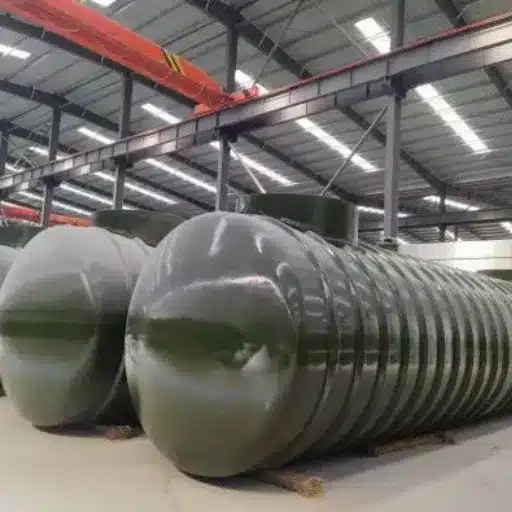
Component tanks are very costly, but they get integrated into several machines, such as electrical generators and vehicles, or even some other industrial fuel systems, for less expensive development. Instead of considering a system of several separate barriers to create a good storage tank, it is the tank and the suppression system that are shipped full with the passive explosion suppression matrix to prevent detonation without other sensors, power, or maintenance being necessary.
Think of this concept as a safety-critical subassembly rather than merely a storage vessel for the fuel. The complete unit is composed of a tank shell, a suppression matrix, sensor guts, and a complete set of standardized fittings. Hence, field assembly risks and most compatibility problems customarily found in custom builds for fuel systems are removed.
How Component Tanks Differ from Standard Generator Base Tanks
Generator base tanks are, in reality, little more than a sort of structural shell on which the generator sets sit. What they do is store either diesel fuel or gasoline and, when used, rely on either external fire suppression systems or spill containment and active monitoring facilities to manage any risks. Their design does not protect against explosion on the part of the internal tank alone if any of those systems fail.
It includes yet another type of tank, too-the component tank. Safety rests within the tank itself, for here is built a special inner matrix that quenches the flames, fragments the pressure waves, and dissipates thermal energy before the stage is set for an ignition event. External suppression systems cannot always be conveniently mounted as hoped, or it does not fail, or it never fails and is an injury-free application.
The Factory-Sealed, Pre-Certified Advantage
These tanks are factory-sealed and, thereby, eliminate common causes of failure:
- Incorrect installation of suppression materials in the field
- Unfit fittings between the tank and the fuel system
- Corrosion leaks in on-site welded seams
That way, every project integrator realizes faster commissioning with less time being spent at the site. Each unit leaves with verified leak integrity, amplitude checked, close density of suppression matrix, and flange alignment in accordance with the certificate.
How Explosion Suppression Technology Works
HAN Barrier Technology Explained
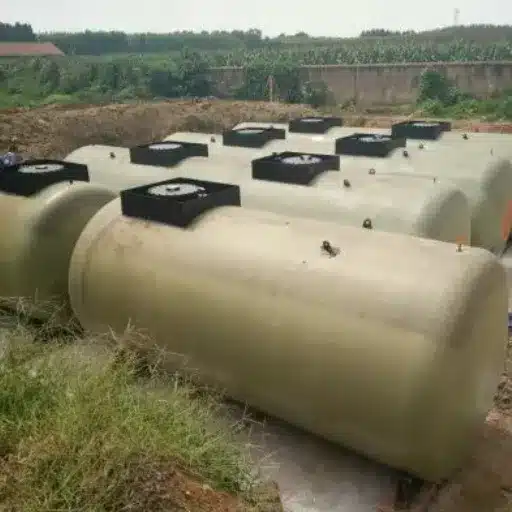
HAN Barrier is a passive explosion-prevention system consisting of a high-density aluminum alloy mesh matrix installed inside the fuel tank. The matrix performs three simultaneous physical functions without any power, sensors, or human intervention.
Thermal quenching. The alloy matrix instantly absorbs and disperses combustion heat. This cools the vapor environment below the flashpoint before the reaction can stabilize.
Flame fragmentation. The honeycomb structure subdivides the flame front into unstable micro-fragments as it tries to propagate. Those fragments self-extinguish almost immediately.
Pressure dissipation. The labyrinth structure diffuses shockwave kinetic energy. A potential explosive overpressure becomes a controlled, low-velocity release instead.
The result is often described as “burn only, no explosion.” Even when a tank containing flammable vapor is exposed to an open flame, static spark, or impact, the HAN Barrier prevents the deflagration from escalating into a detonation.
Aluminum Alloy Mesh Alternative
Some component tanks, particularly in the smaller CT-Portable series, use a lighter aluminum alloy mesh instead of the high-density HAN Barrier. This variant offers the same core benefits of thermal quenching and flame fragmentation, but with reduced weight for mobile and aerial applications.
The aluminum alloy mesh typically occupies even less tank volume than the HAN Barrier. Both materials displace less than 1.1% of fuel capacity, so fuel storage efficiency remains essentially unchanged.
Passive vs. Active Explosion Suppression Systems
Active suppression systems detect an ignition event and then deploy a suppressant, such as Halon or water mist, within milliseconds. These systems work, but they introduce significant complexity:
- Sensors that can fail or give false alarms
- Suppressant reservoirs that require periodic refilling
- Piping and nozzles that add weight and maintenance burden
- Power dependencies that create vulnerability in remote deployments
Passive systems like the component tank are essentially those that have no moving parts- there is no need for power on these units, and they are maintenance-free. According to [NIST fire research], passive matrix suppression has been successfully used in aviation, military, and commercial fuel tank applications for the last few decades.
“Burn Only, No Explosion”: The Science Behind It
The essential understanding is a structure that is geometric in character. For an explosion to take place, a flame front must attain an acceleration passing through a vapor space clear of any barrier. The mesh matrix restructures such a space into thousands of tiny cavities. In each cavity, the surface-area-to-volume ratio is so high that heat loss exceeds heat generation. Irrespectively, the flame does not propagate, nor can the pressure cause construction.
Component Tank Model Series and Specifications
CT-Portable (50–200 L)
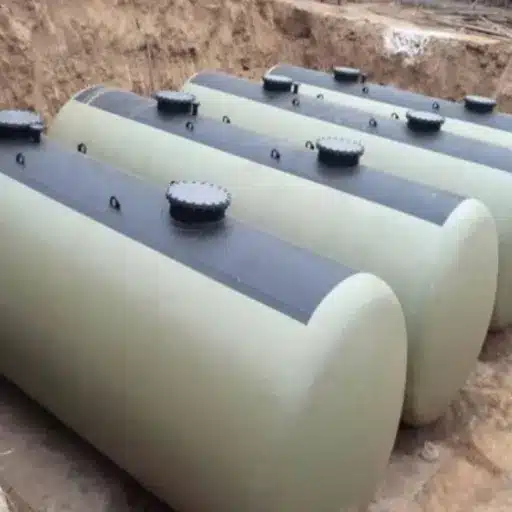
The CT-Portable series is designed for applications where weight and space are at a premium. The shell is constructed from aluminum or stainless steel, and the internal matrix uses the lighter aluminum alloy mesh.
Typical specifications:
- Capacity range: 50 L to 200 L
- Shell material: Aluminum or stainless steel
- Suppression matrix: Aluminum alloy mesh
- Weight: 15–45 kg, depending on capacity
- Primary applications: UAVs, mobile gen-sets, light emergency vehicles
And then Javier, who is a logistics coordinator at a remote telecommunications company, was able to realize that he had a challenge at hand with the mountain relay station. He went in for the CT-Portable 120 L model. A specialized shipping-certified emergency power-generating plant fit within an enclosure of a small generator, required no external fire suppression equipment, and ventured inside aerial transport weight limits. Within two days of delivery, the station had certified, explosion-proof fuel storage operating at 8,000 ft above sea level.
CT-Industrial (300–1000 L)
The CT-Industrial series is the fundamental tool for construction, mining, and industrial engineering generation. It is made of carbon steel implements with the full HAN Barrier suppression matrix, which gives maximum protection in high-risk conditions.
Typical specifications:
- Capacity range: 300 L to 1000 L
- Shell material: Carbon steel with corrosion-resistant cover
- Suppression matrix: HAN Barrier
- Weight: Changing from 180 to 480kg depending on the total capacity
- Primary applications: construction sites, mining operations, and industrial gensets
In Western Australia, a mining engineer specified mobilised mobile crushing equipment with six 800 L CT-Industrial units. The site required fuel storage systems with ATEX certification, and their design of HAN Barrier, which was passive, prevented the need for electrical fire suppression systems that are awkward for maintenance in dusty, high-vibration conditions.
CT-Strategic (1000–2000 L)
The CT-Strategic series is built for critical infrastructure, military logistics, and emergency reserve applications. It uses reinforced steel with a high-density suppression matrix.
Typical specifications:
- Capacity range: 1000 L to 2000 L
- Shell material: Reinforced steel
- Suppression matrix: High-density HAN Barrier
- Weight: 520–950 kg, depending on capacity
- Primary applications: Military fuel supply, hospital backup systems, emergency reserves
CT-Custom (Up to 5000 L)
For specialized integration projects, Shandong Shengrui offers CT-Custom configurations. These units can be manufactured with bespoke alloys, custom dimensions, multi-layer suppression systems, and project-specific mounting brackets.
Customization options include:
- Non-standard length-to-width ratios
- Multiple compartments for dual-fuel storage
- Specialized sensor port configurations
- Reinforced mounting for armored vehicle chassis
Key Technical Features and Integration Standards
Standardized DIN/ANSI Flange Interfaces
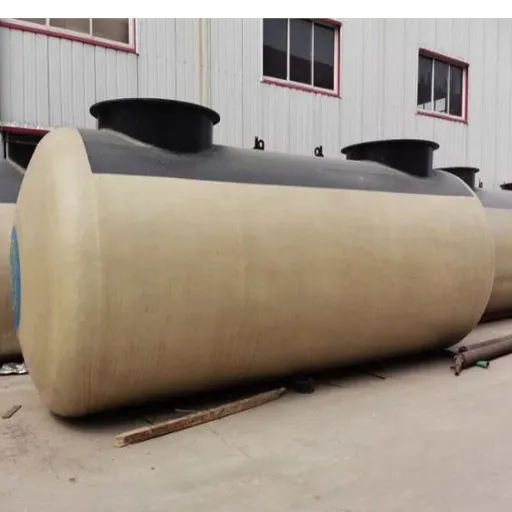
Component tanks ship with standardized fuel inlet and outlet flanges. This eliminates the custom fabrication that typically delays fuel system integration.
- DIN flanges for European and Asian market compatibility
- ANSI flanges for North American projects
- Custom flange configurations available on CT-Custom orders
NPT and BSP Thread Compatibility
Sensor and vent ports use common thread standards:
- NPT threads for North American and some Asian markets
- BSP threads for European, Australian, and Middle Eastern markets
That compatibility means level sensors, temperature probes, pressure transducers, and vent lines can often be connected without adapters.
Dual-Layer Shell Construction
All component tanks feature a dual-layer shell design. The inner wall contains the fuel. The outer wall provides structural protection and secondary containment. The interstitial space is monitored at the factory, and CT-Custom units can include continuous leak detection sensors.
Vibration Resistance and Fire Stability
The welded shell construction and internal matrix work together to dampen vibration. This matters for vehicle applications and for generators mounted on mobile platforms. The matrix also reduces liquid slosh by up to 40% during transport, which improves vehicle stability and reduces stress on mounting brackets.
Electrostatic Dissipation Properties
A common concern with metal mesh inside fuel tanks is static electricity buildup. The HAN Barrier and aluminum alloy mesh actually function as an internal equipotential grid. They dissipate static charges across the matrix rather than allowing them to accumulate at single points.
Primary Applications and Use Cases

Remote and Backup Generator Sets
Diesel-powered engines serving as a standby power source for data centres, hospitals, telecommunication sites, etc., are backed by diesel generators. Freedom time-related requirements set the criterion for the fuel tank, which is characterized by adequate capacity. It is the type of component tank, which is incorporated with a certain explosion control, such that footprint and compliance requirements are reduced.
The data center needed a fuel autonomy of a 48-hour duration for their backup generators. Such a need motivated by the Singapore office improvement would be observed through the installation of double redundant storage units of CT-Industrial 1000 L each. Differentiated types of installation would be done away with, especially because the tanks were pre-certified and did not need any external suppression hardware; hence, it ensured that the installation was inspected and passed fire safety in three weeks, compared to the alternatives that have conventional tank suppression.
Specialized and Emergency Vehicles
Fire trucks, ambulances, and even armored logistics vehicles are typically deployed in unknown situations. A sudden tank rupture, which is sometimes not even more than conventional, may trigger a huge inferno. The double-shell construction of a component tank and an inner matrix is both leak-proof and can stop an ignition.
Construction and Mining Operations
Mobile equipment in construction and mining environments uses fuel storage that can withstand rough handling, vibration, as well as dust and moisture ingress. Those working conditions are intended for specially designed products, like the CT-Industrial series, made from carbon steel or the full HAN Barrier matrix.
Tactical and Military Fuel Supply
Drop-ready fuel modules are essential equipment for air mobile operations, which can be airdropped at forward operating bases or carried in tactical vehicles. Drop-ready models by the CT-Strategic series are made of state-of-the-art reinforced steel, high-density suppression, and multi-fuel compatibility.
Hazardous and Environmentally Sensitive Areas
For locations, anything from a minor to a major fuel leak is a possible environmental catastrophe; component tanks serve as a protective extra safety barrier. The dual-wall design ensures no leaks by using a passive suppression matrix, which eliminates the danger of explosion that can then lead to fuel traveling across a wide area.
Component Tank vs. Conventional Fuel Storage Solutions

Component Tank vs. Standard Generator Base Tank
A standard generator base tank is a structural container that supports the generator’s weight while storing fuel. It typically offers single-wall construction and relies on external fire suppression and spill containment.
| Feature | Component Tank | Standard Generator Base Tank |
|---|---|---|
| Explosion protection | Built-in passive matrix | Requires external systems |
| Maintenance | Zero maintenance | Regular suppressor servicing |
| Power requirement | None | May require electrical suppressors |
| Installation | Plug-and-play | Often requires custom fabrication |
| Weight | Moderate | Heavy (structural load-bearing) |
Choose a component tank when safety cannot depend on external systems. Choose a standard base tank when the primary need is structural support for very large generators.
Component Tank vs. Self-Bunded Tank
Self-bunded tanks feature a tank-within-a-tank design that provides secondary containment for leaks. They are excellent for above-ground fuel storage at construction sites and depots. However, they are typically much larger than component tanks and do not include internal explosion suppression matrices.
Component tanks excel in applications where space is limited and explosion protection is mandatory. Self-bunded tanks are better suited for bulk fuel storage where leak containment is the primary concern.
Component Tank vs. Containerized Mobile Fuel Station
Containerized mobile fuel stations are complete refueling depots built inside 20 ft or 40 ft shipping containers. They include storage, dispensing pumps, payment systems, and canopy structures.
A component tank is not a replacement for a full containerized station. Instead, it is a subsystem that might be integrated into one. For example, a custom containerized station for a military base might use four CT-Strategic tanks as its fuel storage core.
When to Choose Each Solution
- Component tank: Generators, vehicles, hazardous zones, space-limited installations, zero-maintenance requirements
- Standard base tank: Large stationary generators where structural support is the primary need
- Self-bunded tank: Above-ground bulk fuel storage at construction or industrial sites
- Containerized station: Complete retail or fleet refueling depots requiring dispensing and payment infrastructure
Safety Standards and Certifications
ISO and ASTM Compliance
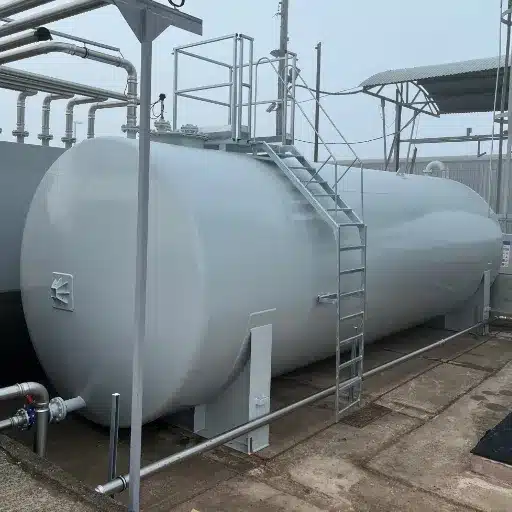
Component tanks are manufactured under ISO 9001 quality management systems. Materials and welding procedures comply with ASTM standards for pressure vessel construction and fuel containment.
Ex d IIB T4 Explosion-Proof Classification
Many component tank installations carry Ex d IIB T4 classification. This rating certifies that the equipment is suitable for use in hazardous areas where explosive gas mixtures may be present.
- Ex d: Flameproof enclosure
- IIB: Gas group covering typical fuel vapors
- T4: Temperature class with maximum surface temperature of 135°C
UL-2085 Fire Protection Standards
For North American projects, component tanks can be specified to meet UL-2085, the standard for fire-protected aboveground tanks for flammable and combustible liquids. This standard covers both fire resistance and ballistic impact protection.
ATEX and IECEx for Hazardous Environments
For European Union and international projects, ATEX and IECEX certifications verify that equipment is safe for use in potentially explosive atmospheres. These certifications are often required for mining, oil and gas, and chemical processing applications.
According to [HAN barrier standards], explosion-proof barrier materials in fuel tanks must demonstrate consistent performance across temperature extremes, fuel types, and long-term immersion conditions.
Sizing and Selection Guide
Matching Capacity to Generator Run-Time Requirements
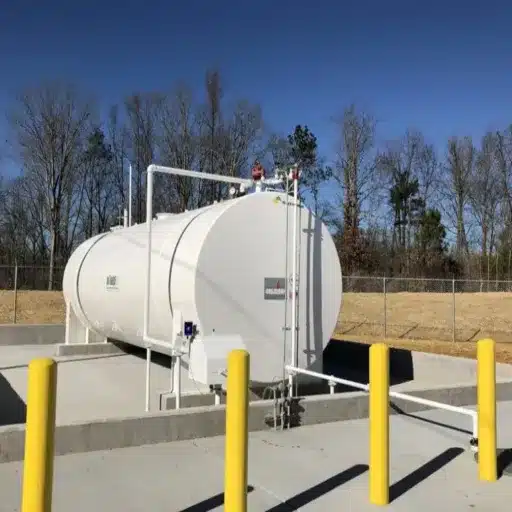
To size a generator fuel tank, one can make simple calculations based on the generator fuel consumption rate and the required runtime.
Example Computation:
- Fuel consumption of generator: 25 L/hour at full load
- Required time: 24 hours
- Tank size minimum: 25 × 24 = 600 L
- Safe capacity recommended at 10%: 660 L
In this case, with a space for additional increment, a CT Industrial 800 L unit will be aptly provided as bigger.
Vehicle Integration: Weight and Center-of-Gravity Considerations
For vehicle installations, work with the chassis manufacturer to confirm:
- Maximum allowable fuel system weight
- Acceptable center-of-gravity shifts when the tank is full vs. empty
- Crashworthiness requirements for the fuel storage location
CT-Portable models are typically used for light vehicles and UAVs. CT-Industrial and CT-Strategic models require heavier chassis and reinforced mounting.
Multi-Tank Configurations for Extended Operations
When a single tank cannot provide enough capacity, multiple component tanks can be configured in parallel. This approach also improves redundancy. If one tank requires service, the others continue supplying fuel.
Installation and Integration Best Practices
Plug-and-Play Integration Workflow
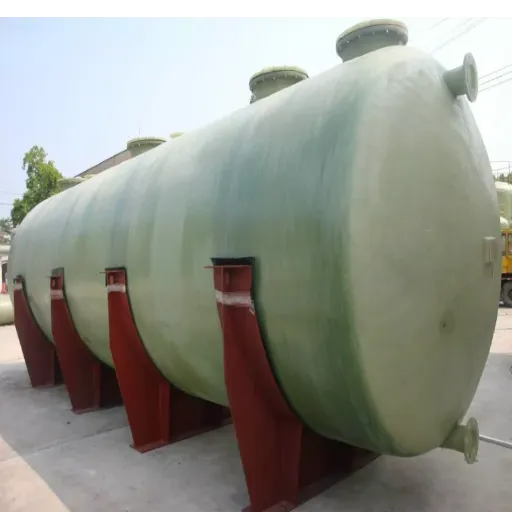
Because component tanks arrive as complete assemblies, the installation workflow is straightforward:
- Position the tank in the designated mounting location.
- Secure mounting brackets to the chassis or generator frame.
- Connect fuel lines using the supplied flanges and gaskets.
- Install sensors in the pre-threaded ports.
- Pressure-test connections and verify leak integrity.
- Commission the system and document certification paperwork.
Most CT-Portable and CT-Industrial units can be installed in a single day.
Custom Mounting Bracket and Chassis Adaptation
CT-Custom orders include mounting brackets engineered for the specific chassis or generator frame. Shandong Shengrui’s engineering team provides CAD drawings and 3D assembly videos to support installation teams.
Sensor Port Configuration (Level, Temperature, Pressure)
Standard sensor ports accommodate:
- Capacitive or ultrasonic level sensors for remote fuel monitoring
- RTD temperature probes for fuel temperature tracking
- Pressure transducers for leak detection and vapor monitoring
Because the ports are pre-threaded and positioned during factory assembly, installers do not need to drill or weld on the tank shell.
Maintenance, Lifecycle, and Total Cost of Ownership
Why Component Tanks Are Zero-Maintenance
The passive suppression matrix has no moving part, no electrical component, and no consumable suppressant. It is not worn out in a fuel environment. Materials of Aluminum Alloy and HAN Barrier have properties to be chemically resistant to gasoline, diesel, methanol, ethanol, and high-sulfur crude oil.
Maintenance schedules are not needed for void suppression functionality. Routine checks are still in order, like inspection of tank shell integrity, connection tightness, and sensor calibration, but these are standard checks for any fuel storage system.
Expected Service Life (25–40+ Years)
The suppression matrix itself is rated for 25 to 40+ years of continuous service. The dual-layer steel or aluminum shell typically matches or exceeds that lifespan when protected from mechanical damage.
TCO Comparison with Active Suppression Systems
When evaluating the total cost of ownership, factor in these elements over a 30-year lifecycle:
| Cost Element | Component Tank | Active Suppression System |
|---|---|---|
| Initial equipment | Moderate | Higher (tank + suppressor) |
| Installation | Lower (plug-and-play) | Higher (custom integration) |
| Annual maintenance | Minimal | Sensor testing, suppressant refills |
| Power consumption | None | Electrical supply required |
| Replacement parts | None | Sensors, nozzles, suppressant |
| Downtime risk | Very low | Depends on suppressor reliability |
For most remote, mobile, or critical infrastructure applications, the component tank’s lower lifecycle cost and higher reliability make it the financially sound choice.
Conclusion
A component tank is more than merely a fuel tank for storage; it is a safety module integrated within the factory that replaces complex external suppression systems with simpler passive zero-maintenance means. A perfect component tank can significantly decrease the time needed for installation and also reduce the lifecycle costs of the tank in the fuel storage of a generator or an emergency vehicle or during the equipment of a mining rig for hazardous terrain.
Key takeaways:
- Component tanks arrive pre-filled with HAN Barrier or aluminum alloy mesh suppression matrices
- Four model series cover applications from 50 L UAVs to 5000 L custom industrial integrations
- Passive suppression requires no power, sensors, or scheduled maintenance
- Standardized flanges and sensor ports enable plug-and-play installation
- The total cost of ownership typically beats active suppression systems over a 30-year lifecycle
Ready to specify a component tank for your project? Contact our engineering team for model recommendations, custom integration support, and a detailed quotation.