
Pure Fuel Storage Stainless Steel Tanks
Engineered for critical environments where fuel purity and corrosion resistance are non-negotiable. Lifetime durability for data centers, coastal sites, and industrial high-precision engines.
Ultimate Purity & Corrosion Resistance
While carbon steel meets basic needs, Stainless Steel is the definitive choice for critical fuel infrastructure where rust-risk is unacceptable and longevity is the priority.
Self-Healing Layer
Stainless steel forms a microscopic Chromium Oxide passive film. Unlike painted coatings, this layer is self-healing, providing permanent protection without maintenance.
Engine Protection
Zero iron-oxide flaking ensures that fuel remains 100% pure. This prevents injector clogging and system wear in high-pressure common rail (HPCR) diesel engines.
Lower Lifecycle Cost
Eliminate the need for internal lining inspections, cathodic protection, and external repainting. Stainless steel tanks offer the highest residual value and lowest TCO over 50 years.
Selecting the Right Grade
SS304 / 304L Standard
The industry standard for most inland fueling stations. Excellent weldability and toughness. Highly resistant to oxidation and suitable for most industrial diesel storage.
SS316 / 316L Marine Grade
Contains Molybdenum for superior resistance to chloride-induced pitting. Mandatory for coastal installations, chemical-rich environments, and high-salinity zones.

Technical Specifications
AWS D1.6 Certified Welding
Utilizing pulsed TIG and MIG welding technologies to minimize the Heat Affected Zone (HAZ), preventing carbide precipitation and preserving the anti-corrosion properties of the weld seam.
Full Passivation Treatment
Post-fabrication chemical pickling and passivation restore the chromium oxide protective layer, ensuring uniform corrosion resistance across the entire tank body and fittings.
| Capacity (L) | Material Grade | Diameter (mm) | Shell Thickness (mm) | Surface Finish | Compliance |
|---|---|---|---|---|---|
| 1,000 - 5,000 | 304 / 316L | 1,000 - 1,600 | 3.0 - 5.0 | Pickled / Brushed | UL 142 |
| 10,000 | 304 / 316L | 1,900 | 5.0 - 6.0 | Passivated | UL 142 / ASME |
| 20,000 | 304 / 316L | 2,200 | 6.0 - 8.0 | Industrial Satin | UL 142 / ASME |
| 30,000 - 50,000 | 304 / 316L | 2,500 - 2,800 | 8.0 - 10.0 | Passivated | UL 142 / ASME |
Standard Fittings Included:
- 4" NPT Fill & Suction Ports (Stainless Steel)
- Emergency Vent Port (Compliant with UL 142)
- 24" Manway with Teflon Gaskets
- Lifting Lugs & Grounding Tabs
Optional Customization:
- Double-Wall Containment
- Internal Anti-Wave Baffles
- Insulation Jackets (for temperature control)
- Mirror Polish Finish (Ra < 0.4μm)
Precision Engineering & Fabrication
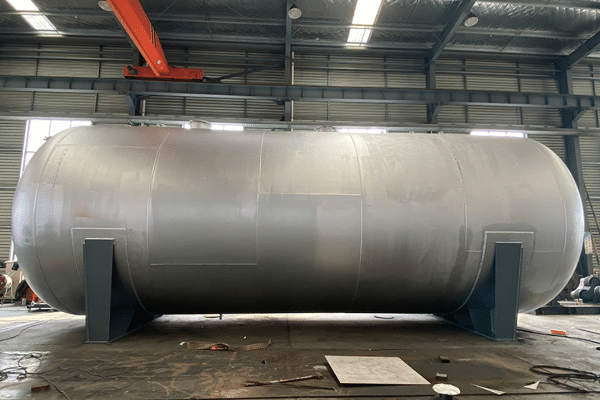
Crafting stainless steel diesel tanks demands uncompromising precision. Our advanced manufacturing processes ensure every tank not only meets but exceeds global performance and safety standards.
Automated Welding
Advanced TIG & MIG welding robots deliver uniform, high-strength seams, minimizing heat input to preserve the stainless steel's corrosion resistance properties.
Post-Weld Treatment
Immediate pickling and passivation treatment after welding restores the chromium oxide layer, eradicating discoloration and enhancing corrosion immunity at the weld zones.
Dimensional Accuracy
State-of-the-art CNC plate rolling and forming machinery ensure precise tank geometries, critical for structural integrity and fitting alignment.
Uncompromising Quality Control
Every step of our fabrication process is rigorously monitored to guarantee the highest quality and safety.
- 100% Penetrant Testing (PT): All critical weld seams are checked for surface-breaking defects.
- Hydrostatic Pressure Test: Tanks are subjected to 1.5 times the design pressure to confirm structural integrity and leak-proof performance.
- Internal Borescope Inspection: For complex designs, internal welds are visually inspected to confirm purity and absence of imperfections.
- Material Traceability: Full traceability from raw plate to finished product, with material certificates provided for every component.
Critical Applications for Stainless Steel
Our Stainless Steel Diesel Tanks are engineered for environments where standard carbon steel simply isn't enough, safeguarding your investment and ensuring mission-critical operations.

Coastal & Marine Environments
In high-salinity coastal areas, carbon steel tanks succumb to rapid corrosion. Our marine-grade SS316L tanks offer unparalleled resistance to salt spray and chloride-induced pitting, guaranteeing decades of reliable service.
- Superior Salt Spray Resistance
- Extended Service Life (50+ years)
- Reduced Maintenance Costs
- Aesthetically Pleasing

Critical Infrastructure (Data Centers, Hospitals)
Uninterrupted power is vital for data centers and hospitals. Our stainless steel tanks ensure the stored diesel remains perfectly clean and free from rust particles, protecting sensitive generator fuel systems and ensuring maximum uptime.
- Zero Fuel Contamination
- Reliable Generator Performance
- NFPA Compliance
- Long-Term Fuel Stability

Food & Pharmaceutical Facilities
Facilities requiring stringent hygiene and purity standards extend to their fuel storage. Stainless steel tanks prevent any possibility of material leeching or contamination, aligning with the highest operational cleanliness protocols.
- Hygienic Storage
- Prevents Cross-Contamination
- Easy to Sanitize Exterior
- Meets Regulatory Standards
Why Invest in Stainless Steel?
A direct comparison of long-term value: Stainless Steel vs. Standard Carbon Steel.
| Key Feature | Standard Carbon Steel | 304/316L Stainless Steel |
|---|---|---|
| Corrosion Resistance | Relies on coating; prone to rust if lining fails. | ✓ Permanent Immunity (Self-healing layer) |
| Fuel Purity Protection | Risk of iron-oxide flaking contaminating fuel. | ✓ 100% Pure (No flaking or sediment) |
| Internal Lining | Mandatory (Epoxy/Phenolic) | Not Required |
| Maintenance Needs | Frequent coating inspections & repainting. | Minimal to Zero Maintenance |
| Design Life | 15 - 20 Years | 50+ Years |
| Total Cost of Ownership | Lower initial / Higher long-term | Higher initial / Lowest long-term |
| Scrap/Resale Value | Low (Standard scrap steel) | High (Valuable recyclable alloy) |
The Verdict on ROI
While the initial cost of a Stainless Steel Diesel Tank is approximately 2.5x to 3x higher than carbon steel, the elimination of maintenance costs, lining inspections, and fuel system repairs typically results in a positive ROI within 7-10 years of operation.
Technical FAQ
SS304 vs SS316L: Which grade fits your project?
Maintenance requirements for Stainless Steel tanks?
Invest in Zero-Maintenance Fuel Storage
Switch to high-purity stainless steel storage. Eliminate rust contamination and reduce long-term operational costs starting today.
GET A CUSTOM QUOTE NOW →Integrated Station Infrastructure
Enhance your fuel storage system with high-performance components designed for total environment containment and smart management.

Manhole Wells
High-density secondary containment sumps providing secure, water-tight access to tank fittings.
Explore Category →
Composite Piping
Electro-fusion double-wall flexible pipes engineered for zero-permeation fuel transfer.
View Specifications →
Control Cabinets
Centralized PLC monitoring systems for leak detection, tank gauging, and pump automation.
System Details →
Component Tank
Modular safety storage units designed for rapid deployment in complex industrial fuel networks.
Discover Modular →