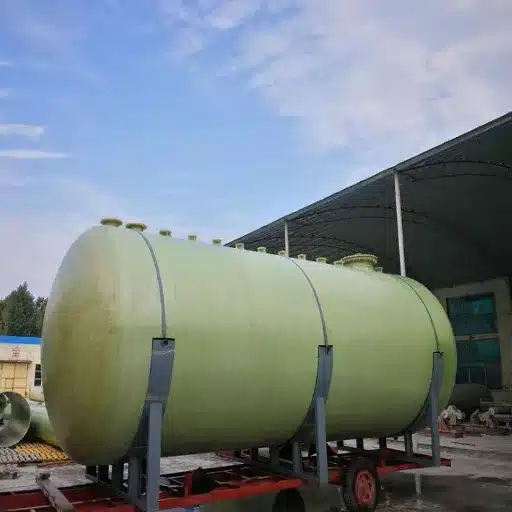
The fuel retailer that operates in Southeast Asia experienced its worst situation during the year 2019. The underground storage tank, which operated with a single wall system, started to leak during the previous months, resulting in soil contamination and water supply contamination to nearby areas. The cleanup operation required more than $2 million in expenses, while the station remained closed for six months to complete the required work. The culprit? The 15-year-old carbon steel tank, which had been installed in the area, suffered from corrosion at a faster rate than anticipated because of the region’s humid weather conditions.
If you hold the duty to manage fuel storage facilities in your organization, this situation will prevent you from achieving peaceful sleep. Your decision about storage technology will determine environmental compliance requirements, which affect public safety and operational capabilities and create substantial financial risks.
This is the primary reason that fuel retailers who operate in the future and industrial operators and EPC contractors throughout the world now adopt SF double-layer tank technology. The tanks provide more than 30 years of leak-proof performance, which meets the most demanding safety requirements because they combine steel structural strength with fiberglass corrosion protection.
The complete guide will show you how SF double-layer tanks function and why they deliver better performance than carbon steel and single-wall systems and how to choose the best system for your unique needs. The guide will assist you in making a decision that protects your financial investment for many years, whether you are constructing a new station or enhancing current facilities.
What Is an SF Double-Layer Tank?
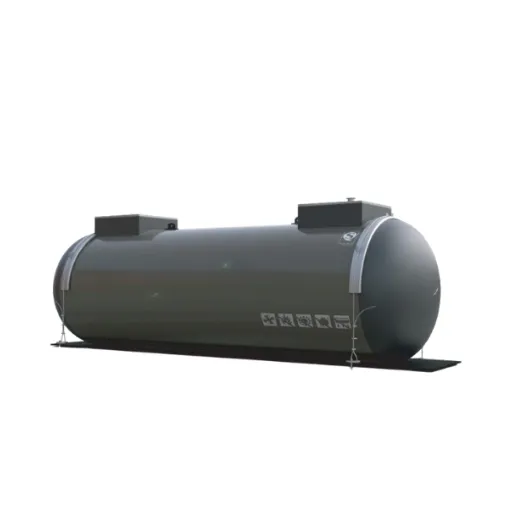
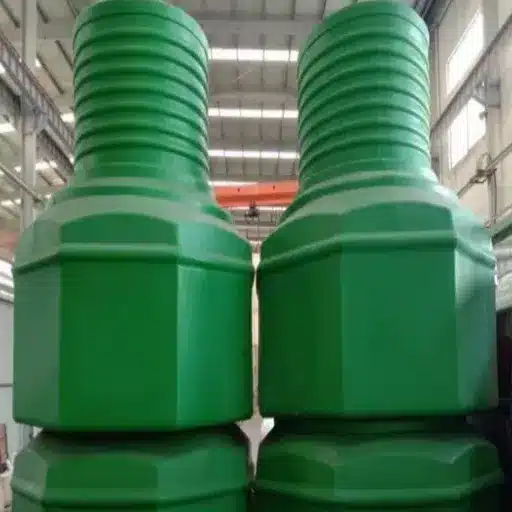
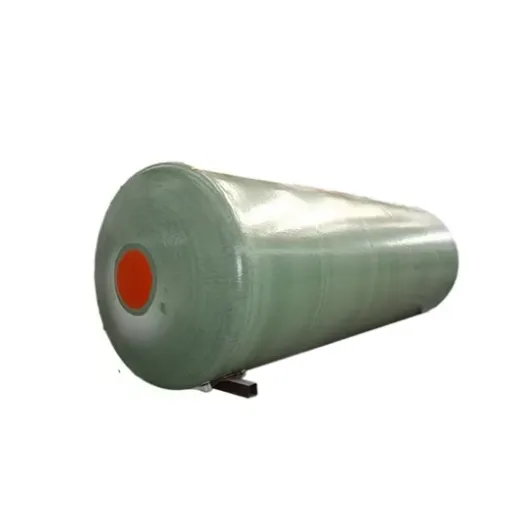
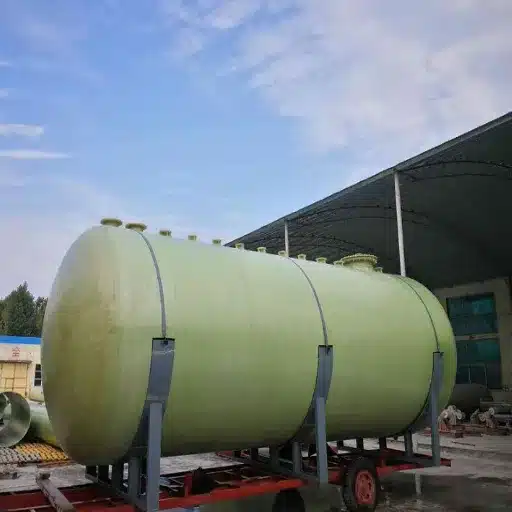
The SF double-layer tank functions as an underground storage tank that has been developed with a steel-fiberglass material combination for storing petroleum and chemical fuels. The “SF” designation refers to its dual-material construction: a steel (S) inner wall paired with a fiberglass (F) outer wall, which creates a double-wall system that includes an interstitial space used for leak detection.
Steel-Fiberglass Construction Explained
The inner layer consists of high-grade carbon steel, which creates structural strength and the capability to withstand internal pressure. The steel wall of this product meets all required standards for underground steel tanks according to UL 58, which applies to tanks that store flammable and combustible liquids. The tank’s steel structure provides permanent protection against underground pressure and operational weight during its installation process to underground areas.
The outer layer of the structure uses fiberglass-reinforced polymer (FRP) to create a complete, corrosion-resistant protective barrier. The fiberglass shell provides complete protection against all corrosive substances, which include soil chemistry, groundwater, and environmental factors that normally cause steel tanks to degrade within a period of 15 to 20 years.
The interstitial space needs a minimum width of 3-5 millimeters because it functions as the base for ongoing leak detection systems. The space functions to contain all possible leakage from the inner wall, while integrated sensor systems create immediate alarm signals.
How the Double-Wall System Works
The double-wall system functions according to its fail-safe design. The secondary fiberglass containment layer prevents all environmental release during an extremely rare event that breaches the primary steel wall. The interstitial space contains leaked product, which triggers monitoring sensors to create operator alerts of the situation before it causes environmental harm.
The dual-layer system establishes a new method for underground fuel storage systems to evaluate their operational risks. Traditional single-wall tanks offer no secondary containment—any leak goes directly into the surrounding soil. SF double-layer tanks provide redundant protection that complies with current environmental standards while extending their operational lifespan.
Interstitial Space Monitoring Technology
Modern SF tanks integrate advanced leak detection systems, which monitor their interstitial spaces throughout the entire monitoring period. The systems operate using multiple technologies, which include:
- Vacuum monitoring: Maintains a slight vacuum in the interstitial space; pressure changes indicate potential leaks
- Liquid sensors: Detect the presence of fuel or groundwater in the monitoring space
- Pressure monitoring: Tracks pressure differentials that signal wall integrity changes
The continuous monitoring system allows tank operators to detect upcoming problems before they lead to environmental disasters, which enables them to manage their tanks through preventive measures instead of emergency responses.
Why Choose SF Double-Layer Technology?
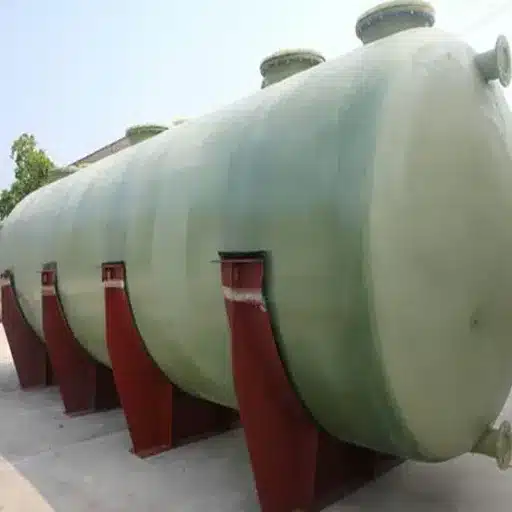
The fuel storage industry has reached its most critical point because existing facilities face new challenges that require better tank technology solutions. SF double-layer tanks address these challenges through engineering advantages that translate directly to operational and financial benefits.
Corrosion Resistance Comparison: SF vs Carbon Steel
The industry standard for tank construction has relied on carbon steel tanks for many years because this material offers structural strength, but tanks built with this material face an essential problem that they cannot overcome: corrosion. Steel materials will inevitably break down through electrochemical processes, which occur when metal comes into contact with soil moisture and oxygen, and different pH values in the environment.
Consider this comparison based on industry data:
| Factor | Carbon Steel Tank | SF Double-Layer Tank |
|---|---|---|
| Expected Lifespan | 15-20 years | 30+ years |
| Corrosion Protection | Coating-dependent | Fiberglass barrier |
| Maintenance Requirements | Regular inspection/re-coating | Minimal inspection |
| Environmental Risk | Higher (single wall) | Lower (double wall) |
| Total Cost of Ownership | Higher over the lifecycle | Lower over lifecycle |
The fiberglass outer wall of an SF tank provides permanent, maintenance-free corrosion protection. The fiberglass barrier protects the tank structure because it remains intact throughout the entire service life of the tank, while regular coatings will eventually scratch, degrade or delaminate.
Structural Integrity Advantages Over Pure Fiberglass
Fiberglass tanks provide excellent corrosion protection through their material properties, but they lack the strength that steel materials offer. Point loading and soil settlement, and mechanical damage to tanks during installation, make fiberglass tanks susceptible to these risks. The burial process requires complex methods that need expensive materials and special backfill and bedding procedures.
SF tanks use this design to take advantage of both material properties. The steel inner wall provides:
- Superior compressive strength for underground burial
- Pressure resistance for various fuel types
- Structural stability during installation and throughout service life
- Compatibility with standard fuel dispensing and monitoring equipment
The tank uses steel structural performance together with fiberglass corrosion protection to create a hybrid solution that performs better than either material.
30+ Year Service Life Engineering
The director of operations for a regional fuel retail chain in Australia, named Marcus Chen, used lifecycle costs to choose between storage solutions for his network of 50 gas stations. “We looked at the total cost over 30 years, not just the purchase price,” Chen explains. “The carbon steel tanks required replacement or main refurbishment work after 15 to 20 years of operation. The SF tanks we selected from Shengrui are engineered for 30+ years with minimal maintenance.”
The lengthened operational period of fuel storage facilities changes their financial viability. The complete ownership expense measurement, which includes all costs from equipment purchase through installation, upkeep, and monitoring until equipment replacement, shows that SF double-layer tanks provide lower annual operating costs than other solutions.
The 30-year design life isn’t just marketing claims. SF tanks achieve this through:
- Material synergy: Steel and fiberglass work together to prevent the failure modes that limit single-material tanks
- Automated production controls the manufacturing process to maintain uniform wall thickness and establish correct composite bonding.
- Quality assurance: Each tank undergoes rigorous testing, including hydrostatic pressure testing and holiday detection
- Standards compliance: UL 58 and UL 1746 certifications require design validation for extended service
Environmental Protection Benefits
Environmental compliance functions as a mandatory requirement for organizations because it serves as their essential operational permit. Worldwide regulatory frameworks have begun to impose stricter requirements, which introduce higher fines for both spills and environmental damage. The EPA’s UST regulations in the United States, similar frameworks in the EU, and emerging standards across Asia all emphasize leak prevention and early detection.
SF double-layer tanks provide multiple layers of environmental protection:
Primary containment: The steel inner wall functions as the primary containment system, which safely holds fuel under normal operational requirements.
Secondary containment: The fiberglass outer wall serves as a secondary containment system, which establishes a protective boundary to stop any material from entering soil or groundwater.
Early detection: The interstitial monitoring system provides immediate notification of any integrity compromise.
Corrosion immunity: The fiberglass barrier delivers protection against external corrosion, which typically causes tank failures in older single-wall steel tanks.
The multi-layer protection system helps operators who work in environmentally sensitive areas, which include locations close to water sources, residential areas, and agricultural fields.
Safety Standards and Certifications
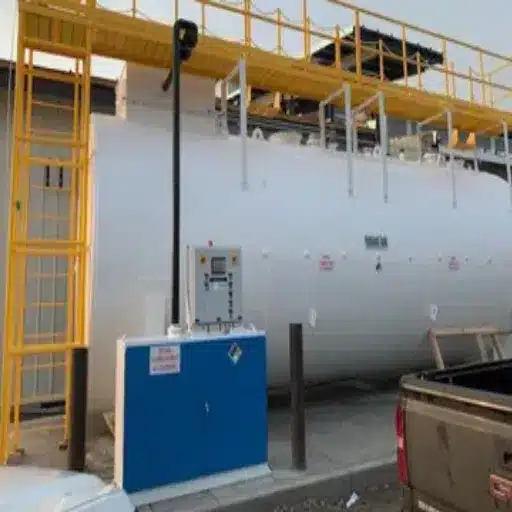
The fuel storage system requires operational capacity to function at operational standards, while its operation needs to meet both safety requirements and compliance standards. SF double-layer tanks are designed and manufactured to meet multiple international certification requirements, ensuring they can be deployed in virtually any regulatory environment worldwide.
UL 58 and UL 1746 Compliance Explained
The Underwriters Laboratories (UL) organization establishes safety standards for fuel storage tanks in North America, which also create international safety regulations.
The standard UL 58 establishes requirements for steel underground tanks that store flammable and combustible liquids. The standard requires steel thickness, weld quality, corrosion protection, and pressure testing to be specified. SF tanks use a UL 58-compliant steel inner wall to provide their basic structural support.
The organization UL 1746 provides regulations for building external corrosion protection systems that protect steel underground storage tanks. The standard covers:
- Protection systems that use cathodic technology
- Materials used for coatings and protective wraps
- Materials that include fiberglass
- Requirements for installation
The SF double-layer tanks fulfill UL 1746 standards because their fiberglass outer barrier provides a complete factory-installed system that protects against corrosion better than field-installed coatings.
ASME Certification Requirements
The American Society of Mechanical Engineers ASME certification delivers extra trust for applications that require pressure control or special storage procedures. ASME standards address:
- Pressure vessel design and construction
- Material specifications and testing
- Welding procedures and qualifications
- Quality control and inspection protocols
Shengrui’s manufacturing facilities maintain ASME certification, which allows them to produce tanks that fulfill these stringent requirements for specialized applications such as high-pressure storage and alternative fuels, and industrial chemical storage.
PEI Standards for Petroleum Equipment
The Petroleum Equipment Institute (PEI) creates recommended practices that direct the correct installation, maintenance and operation of fuel storage systems. PEI standards cover:
- PEI RP100: Recommended Practices for Installation of Underground Liquid Storage Systems
- PEI RP1200: Recommended Practices for Testing of UST Systems
- PEI RP1400: Recommended Practices for Installation and Testing of Vapor Recovery Systems
The installation of double-layer SF tanks follows PEI standards, which guarantee both proper performance and full regulatory compliance. The tank systems have been built to work with PEI-approved methods for integrating leak detection systems, which makes their implementation into storage facilities that meet standards easy.
ISO 9001 Quality Management
The reliability and service life of tanks depend on the manufacturing process, which determines their quality. ISO 9001 certification demonstrates that a manufacturer has developed quality management systems that meet international standards for:
- Process control: Documented procedures for each manufacturing stage
- Material traceability: Tracking of raw materials from source to finished product
- Inspection protocols: Systematic testing at critical production points
- Continuous improvement: Feedback loops to identify and address quality issues
ISO 9001 certification enables Shengrui to maintain consistent quality throughout its tank manufacturing process. The certification enables customers to verify manufacturing processes and quality dedication through a third-party assessment.
Integration with HAN Barrier Explosion-Proof Technology
The SF double-layer design provides protection against both leakage and rusting, while Shengrui protects its customers through its patented HAN Barrier system, which provides extra safety. The explosion-proof system uses an aluminum alloy mesh matrix, which creates a combustion-free environment inside the tank vapor space.
The HAN Barrier operates through three main functions:
- Heat absorption: The system cools down dangerous thermal energy, which would otherwise start fires through quick cooling.
- Flame quenching: The mesh structure stops flames from spreading, which prevents fire from spreading.
- Pressure management: The system gaps pressure build-up, which creates dangerous tank splitting conditions.
HAN Barrier integration delivers superior protection for fuel storage facilities at mobile fuel stations, mining sites, and extreme climate facilities because it safeguards all potential safety risks.
SF Tank Applications and Use Cases
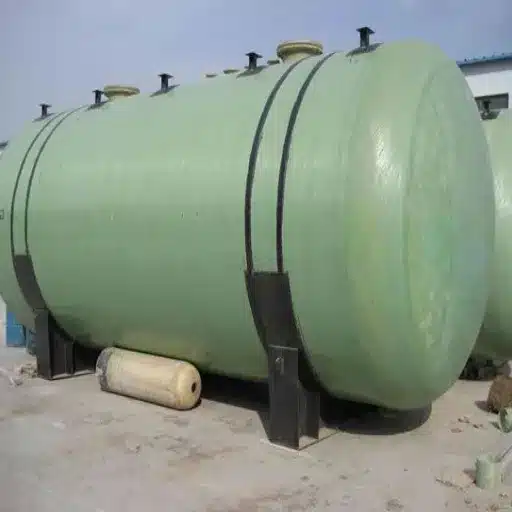
SF double-layer tanks serve diverse applications across multiple industries. Understanding how these tanks perform in different contexts helps identify the right configuration for your specific needs.
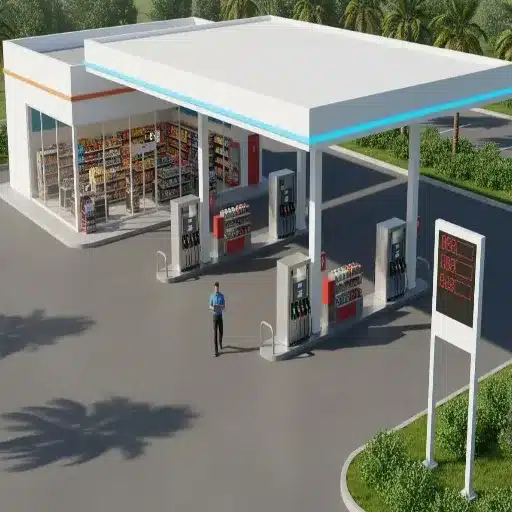
Retail Fuel Stations
The most common application for SF tanks is retail gasoline stations. The tank installation requires tanks to:
- Store multiple fuel grades (regular, mid-grade, premium, diesel) in separate compartments
- Withstand continuous fill and dispense cycles
- Modern fuel management and vapor recovery systems need to work together in the tanks
- Environmental rules need to be followed by the tanks
- The tanks must provide dependable performance for multiple decades while experiencing little operational interruption
A typical retail installation uses 20,000-40,000 liter capacity tanks with 2-4 compartments. The double-wall construction provides essential protection given the proximity to populated areas and the high cost of any environmental incident.
Real-world example: PetroVietnam’s retail network upgraded 200 stations to SF double-layer tanks between 2018 and 2022. The decision followed several costly remediation incidents with aging steel tanks. The new installations have operated leak-free since deployment, with monitoring systems providing continuous integrity verification.
Industrial Fleet Operations
Fleet operators who operate their fueling stations encounter specific difficulties that they must address. Fleet operators require storage facilities that must meet their operational needs because they need to:
- Handle high-volume dispensing for daily vehicle fueling
- Accommodate various fuel types, including diesel, gasoline, and alternative fuels
- Withstand industrial environments that experience heavy equipment movement
- Support 24/7 operations without interruption
- Scale with fleet growth
SF tanks excel in these applications because of their strong construction, which enables them to function with high-volume dispensing systems. The double-wall construction becomes essential because fleet fueling sites do not have the environmental containment systems which retail stations provide.
Mobile Fueling Solutions
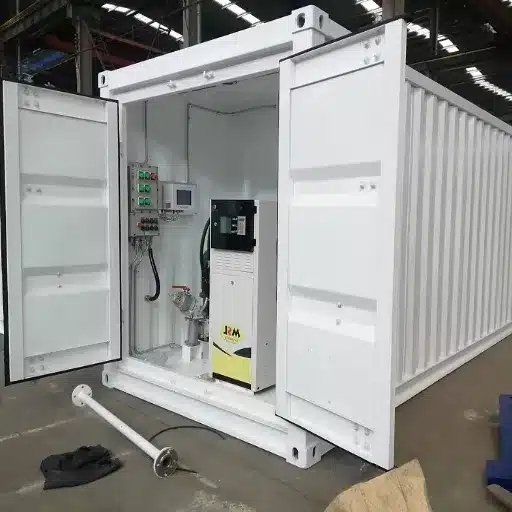
For remote operations, construction sites, mining camps, and emergency response, mobile fuel stations provide essential fueling capability. SF double-layer tanks form the core of these portable systems.
Mobile applications demand tanks that can:
- Withstand transport stresses, including vibration and shock loading
- Maintain integrity through temperature extremes
- Integrate with containerized or skid-mounted systems
- Support rapid deployment and relocation
- Operate reliably in harsh environmental conditions
Shengrui’s mobile fuel station configurations use SF tanks in 20ft and 40ft container formats because the systems provide complete self-sufficient fueling stations, which become operational within two hours after delivery. The HAN Barrier explosion-proof option is commonly specified for these applications, given the increased risks associated with transport and remote operation.
Remote and Mining Operations
The most demanding operational requirements of fuel storage systems occur at remote sites that support mining and resource extraction activities. Tanks must perform in:
- Extreme temperatures (from arctic conditions to desert heat)
- High-humidity or monsoon environments
- Seismic zones
- Areas with limited maintenance access
- Locations where environmental damage would be catastrophic
SF tanks have established their reliability through testing in these particular conditions. The fiberglass outer wall maintains its protective function against corrosive elements which damage coated steel tanks during humid weather conditions. The steel inner wall maintains structural stability under both installation forces and the operational needs of her fighting system.
In Indonesia’s mining sector, SF tanks have replaced failing carbon steel installations across multiple large-scale operations. The extended service life and minimal maintenance requirements make them particularly suitable for remote sites where tank replacement is logistically complex and expensive.
Installation and Maintenance Best Practices
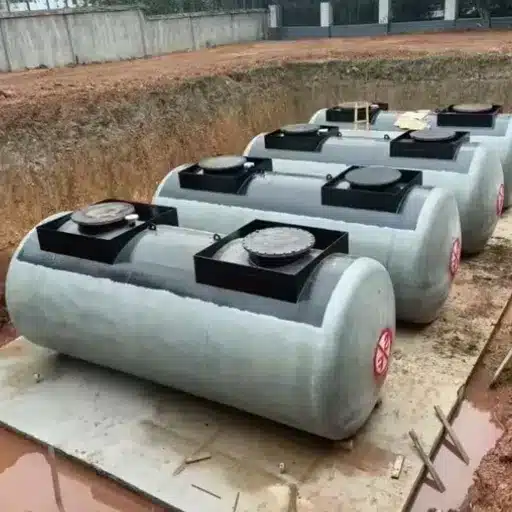
The performance and lifespan of tanks depend on how installation and maintenance work together with proper operational procedures. SF double-layer tanks have durability as their primary design feature but following best practices will help you achieve their complete 30+ year lifespan.
Underground Installation Requirements
Successful underground tank installation requires attention to site conditions, preparation, and installation technique.
Site preparation:
- The team needs to excavate to the required depth, which requires enough working space that extends around the complete perimeter of the tank.
- The bedding layer needs to be established as a stable level material, which must be constructed from clean, compacted materials that include sand or pea gravel.
- The system must effectively manage water flow in order to stop water from gathering around the tank area.
- The team needs to confirm that soil conditions meet the requirements needed for tank anchoring system installation.
Tank placement:
- The team needs to lower the tank using proper lifting equipment together with certified rigging methods.
- The tanks need to be positioned according to local regulations, which define the required distance from property boundaries, buildings, and other tanks.
- The design needs to position access ports together with monitoring connections in a way that allows easy access.
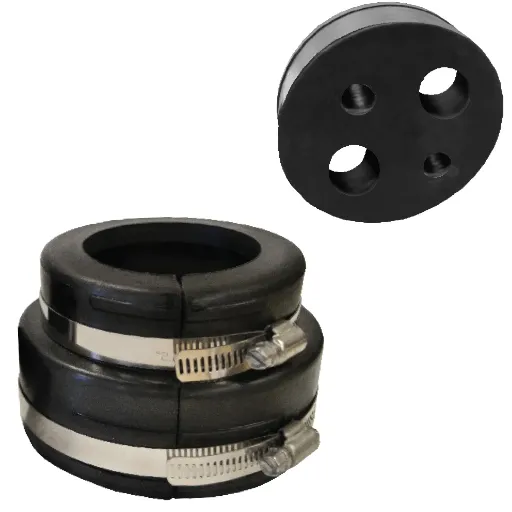
- The installation needs to use flexible piping connections in locations where code requirements mandate their use.
Backfilling:
- The team needs to use the designated backfill material, which typically consists of clean sand or pea gravel.
- The process needs to use lifts for backfilling, which requires proper compaction.
- The team needs to keep rocks and debris away from the area to prevent any potential harm to the tank coating.
- The team must create uniform compaction around the tank area, which will help stop settlement issues.
PEI RP100 provides detailed guidance for proper installation procedures. Following these practices prevents the installation-related damage that can compromise tank integrity.
Leak Detection System Integration
The interstitial monitoring system serves as an essential system for double-wall tank installations. The system will successfully detect leaks when the leak detection system receives proper integration.
Monitoring system types:
- Automatic tank gauging (ATG) systems: They enable continuous tracking while also supporting remote alert functions.
- Groundwater monitoring wells: They identify leaks in locations where water tables reach their highest points.
- Vapor monitoring: It identifies the presence of vapor within the interstitial space.
Installation considerations:
- The tank operators must place sensors at the point that will display the first signs of leaks.
- The team must install monitoring lines inside the protective conduit
- The team must test all connections to confirm their integrity before proceeding with the final backfill. The team must set alarm thresholds according to the specific monitoring technology requirements.
The integration of the station’s fuel management system enables operators to monitor all systems from a single point, which also delivers alarm notifications. Modern systems can send alerts via SMS or email, ensuring rapid response to any integrity concerns.
Inspection Protocols
The SF double-layer tanks need fewer maintenance tasks compared to carbon steel tanks but operators must conduct inspections to meet both legal requirements and operational safety needs.
The monthly inspections must verify these specific elements:
- The status of the leak detection system, together with its alarm capabilities, must be checked.
- The interstitial monitoring system must show normal operational limits.
- The surface indicators must show no evidence of leakage.
- The access ports must remain locked and correctly sealed.
The annual inspections require these activities:
- The complete testing of all leak detection systems
- The determination of the conditions for the tank pad, piping, and dispenser
- The monitoring system logs will be checked for any detected irregularities
- The inspection of cathodic protection systems (if installed)
- All documentation will be updated to meet regulatory standards
The periodic integrity testing will occur according to these time intervals:
The testing requirements will increase to more extensive testing every 3-5 years when regulatory requirements require it. The testing process may include these procedures:
- The testing will measure the system’s tightness through precise methods.
- The interstitial space must undergo evaluation.
- The corrosion protection system needs to undergo testing.
The SF tank design creates an easier process for conducting inspections. The double-wall construction eliminates the need for external tank coating inspections because the integrated monitoring system provides continuous integrity verification.
Maintenance Scheduling
The primary maintenance work for SF double-layer tanks consists of preventive tasks instead of corrective tasks. The standard maintenance schedule contains three distinct time frames for maintenance work, which include monthly maintenance work, quarterly maintenance tasks, and annual maintenance activities.
Monthly:
- The surface equipment requires a visual inspection.
- The team needs to check the operational status of the leak detection systems.
- The team needs to check all logs for any alarm events.
Quarterly:
- The monitoring equipment requires a complete inspection.
- The team needs to conduct tests for the alarm notification systems.
- The team needs to review all documentation to create updated records.
Annually:
- The system needs an extensive inspection process.
- The monitoring equipment requires calibration services.
- The team needs to create documents that prove their compliance with regulations.
- The team needs to develop a testing schedule for all upcoming tests.
The minimal maintenance requirements for this system create a stark comparison with carbon steel tanks, which need coating inspections and cathodic protection system maintenance, and more frequent integrity testing.
Cost Analysis: Lifecycle Value of SF Tanks
The cost of fuel storage facilities includes more than just their purchase price. Smart infrastructure decisions consider total cost of ownership (TCO) throughout the entire operational period of systems. SF double-layer tanks deliver compelling lifecycle economics despite higher initial investment.
Initial Investment vs Carbon Steel
The price of SF double-layer tanks exceeds equivalent capacity carbon steel tanks by 20-40%. The standard 30,000-liter tank requires an extra investment between $3,000 and $8,000 based on its specifications and shipping destination.
The premium requires a contextual evaluation:
- The installation expenses of SF tanks match or exceed the costs of conventional tanks because SF tanks require no external coating and need simpler backfill procedures.
- The factory-installed connections of the monitoring system enable simple system integration.
- The double-wall design decreases compliance costs as it combines both safety and environmental protection functions.
- The economic evaluation needs to include the assessment of risk mitigation value.
Maintenance Cost Comparison (30-Year TCO)
The economic value of SF tanks becomes visible after several years because their maintenance requirements start to decrease.
The following costs apply to carbon steel tank maintenance, which lasts for 30 years:
- The external coating needs inspection and touch-up maintenance, which costs between $500 and $1,000 at 3-to-5-year intervals.
- The cathodic protection system requires maintenance, which costs between $300 and $600 each year.
- The organization must conduct integrity tests at three-to-five-year intervals, which will cost between $1,000 and $2,000 for each test.
- The potential costs for remediation will reach between $10,000 and $50,000 if the coating system fails.
- The full cost of tank replacement will occur at year 15-20.
The maintenance costs for SF double-layer tanks throughout their 30-year lifespan include the following expenses.
- The basic monitoring system requires annual maintenance, which costs between $200 and $400.
- The organization must conduct integrity tests, which cost between $500 and $1,000 according to their testing schedule.
- The system requires only basic coating maintenance, which involves minimal work for maintenance purposes.
- The system operates without any need for cathodic protection maintenance.
- The system has operated for more than 30 years without needing any parts to be replaced.
The total ownership expenses of SF tanks decrease by 15 to 25 percent when compared to carbon steel options during their 30-year evaluation period.
Replacement Timeline Comparison
The timing of replacement stock serves as the most important economic element. Carbon steel tanks require replacement after 15 to 20 years because of corrosion which occurs despite proper maintenance. The design of SF double-layer tanks allows them to function effectively for more than 30 years.
The two elements create financial consequences that extend their impact:
- Capital expenditure timing: The 30 years requires two carbon steel tank purchases compared to a single SF tank acquisition.
- Installation disruption: The station must stop operations while extensive site work occurs during tank replacement.
- Regulatory complexity: New installations face potentially stricter standards than grandfathered existing tanks.
- Site preparation: The costs increase because of the original tank removal and disposal process.
SF tank operational expenses at this point reach their lowest level because the system prevents companies from needing to replace their equipment before its regular scheduled time.
Regulatory Compliance Cost Savings
The global trend of tightening environmental regulations continues to progress. SF double-layer tanks provide compliance advantages that translate to cost savings:
- Double-wall construction meets or exceeds secondary containment requirements in most jurisdictions
- Integrated monitoring satisfies leak detection mandates without additional equipment
- Corrosion immunity prevents the environmental incidents that trigger costly cleanup obligations
- Certification compliance (UL, ASME, ISO) streamlines permitting in regulated markets
The SF technology compliance advantages in environmental liability jurisdictions of the EU, North America, and growing Asia-Pacific countries deliver both risk reduction and administrative cost savings.
How to Select the Right SF Double-Layer Tank
Selecting the optimal SF tank configuration requires careful evaluation of your specific requirements. Working with an experienced manufacturer helps ensure you specify tanks that will perform reliably for decades.
Capacity Sizing Guidelines
The required tank capacity needs to be evaluated according to these two specifications:
Fuel volume requirements:
- The calculation process needs to establish which fuel volume will be used during the day
- The calculation needs to identify how often deliveries will happen, together with their least delivery requirements
- The calculation needs to consider how customer demand will change throughout the year
- The calculation needs to base inventory requirements on inventory levels that exist during 7 to 14 days of standard operational periods
Physical constraints:
- The required excavation area needs to be assessed according to
- The evaluation needs to consider both soil conditions and groundwater levels
- The assessment needs to identify the distance between the site and both buildings and property boundaries
- The evaluation needs to consider upcoming expansion projects
Regulatory minimums: Some jurisdictions specify minimum tank sizes or require multiple tanks for redundancy. Verify local requirements during planning.
The standard capacities of tanks operate between 10,000 liters, which serves small fleet operations, and 100,000+ liters, which serves high-volume retail or industrial applications. The use of multi-compartment tanks enables operators to store multiple fuel grades within a single tank structure, which decreases installation expenses while satisfying various fuel storage needs.
Customization Options (OEM/ODM)
Standard tanks do not fulfill all the requirements of particular projects. The company Shengrui offers OEM and ODM services to create customized solutions.
Common customizations:
- Designs that use non-standard capacities to meet specific spatial and volume needs
- Designs that include dedicated storage areas for alternative fuels and chemical products
- Designs that use customized port layouts to match their existing piping and specialized equipment
- Designs that need reinforcement to operate in areas with difficult soil conditions and seismic activity
- Protection systems that use specialized coatings to shield against extreme chemical exposure
Custom solutions have high value for:
- Large-scale retail networks that need to establish uniform standards
- Industrial applications that need to store specific chemical substances
- Projects that need to comply with particular regional regulations
- Turnkey station construction projects that need to integrate tanks with canopies and equipment.
Regional Compliance Considerations
Fuel storage regulations differ from one jurisdiction to another because of their unique legal requirements. The main factors for evaluation include:
North America:
- The United States Environmental Protection Agency regulates underground storage tanks through its EPA UST regulations.
- The Canadian provinces establish their own storage requirements through their provincial regulations.
- The industry requires UL certification as an essential standard for products to meet safety requirements.
- The regulations require systems to implement spill prevention measures and establish leak detection systems.
European Union:
- The tank construction industry must follow specific EN standards.
- The regulations require companies to establish procedures for groundwater protection.
- The regulations require companies to develop seismic designs for active seismic zones.
- The CE marking system serves as a compliance certification for all equipment.
Asia-Pacific:
- China uses national standards, which are known as GB standards, while Australia follows AS standards.
- The Environmental Protection Agency establishes its own requirement standards.
- The fire safety codes establish rules that must be followed for fire protection.
- The organization requires certification for imported products, which must undergo the certification process.
Middle East and Africa:
- European and American standards serve as the common standard for the area.
- The area experiences extremely hot weather conditions throughout the summer months.
- The regulations require companies to protect groundwater resources that exist in dry desert areas.
- The area requires specific procedures for managing logistics operations and creating import documents.
Your tanks will achieve all necessary standards when you engage a manufacturer who has expertise in international markets. Shengrui’s global compliance certifications (UL, ASME, PEI, ISO) enable the company to operate in different regulatory systems around the world.
Integration with Fuel Management Systems
Advanced management systems operate as essential components of modern fuel operations. SF tanks should integrate seamlessly with:
Automatic Tank Gauging (ATG) systems:
- The system manages fuel inventory while it monitors tank fuel levels.
- The system detects leaks while it activates alarm alerts.
- The system identifies water presence at the bottom of tanks.
- The system verifies fuel delivery while it matches delivery records.
Fuel dispensers and point-of-sale systems:
- The system needs specific piping connections for its operation.
- The system requires vapor recovery systems for its functional requirements.
- The system needs to meet specific flow rate requirements for its operation.
- The system uses security protocols to manage access control.
Environmental monitoring:
- The system provides leak detection information to users.
- The system creates documents to demonstrate compliance with regulations.
- The system uses alarm systems to alert users about important events.
- The system enables users to monitor facilities from a distance.
Tank specification should include connection requirements for planned management systems. The factory-installed monitoring ports, together with standardized connection points, make it easy to connect systems while decreasing the need for installation work in the field.
Conclusion
The selection of fuel storage technology determines your operational risk profile and environmental compliance approach and infrastructure costs, which will last for multiple decades. SF double-layer tanks represent the advancement of underground storage systems because their design combines steel’s reliable strength with fiberglass’s protective features, which create the longest operational life and safest performance standards.
Key takeaways from this guide:
- SF double-layer construction provides redundant containment with integrated leak detection, which decreases environmental risk through single-wall tank use.
- The 30+ year service life of fuel storage facilities creates economic benefits because it removes the need for mid-life equipment replacements and diminishes the requirement for ongoing upkeep.
- The tanks’ compliance with global certification standards (UL 58, UL 1746, ASME, ISO 9001) guarantees their regulatory compliance across different countries.
- The system operates effectively across multiple applications, which include retail stations, industrial fleets, mobile fueling, and remote operations.
- The system achieves cost benefits through its reduced upkeep needs, its extended operational duration, and its easy-to-manage compliance requirements.
SF double-layer tanks serve as a secure and affordable solution for fuel storage at new fueling stations and for the renovation of existing stations.
Request a consultation to discuss your specific tank requirements, or download our technical specifications to evaluate SF double-layer tank options for your project.
Ready to learn more about complete fueling infrastructure solutions? Explore our guides on turnkey station construction, mobile fuel stations, and HAN Barrier explosion-proof technology to understand how Shengrui delivers integrated solutions for fuel retailers and industrial operators worldwide.