A surge in the industrial sector has led to a significant increase in the demand for integrated, space-saving, and adaptable refurbishment solutions. The need for modular skid stations, especially the 20ft Skid Station or the 40ft Skid Station, demonstrates this situation quite adequately. These systems have redefined the ways organizations utilize clients’ fuel under value management as these systems are extremely effective in every sense, such as their convenience, safety, and power. This paper seeks to explore these gas-on-the-move installations, their specific advantages, and the rationale for the quick replacement of the current systems in the majority of sectors. Explore the future service station without turning your wheels!
Introduction to Skid Stations
What are Skid Stations?
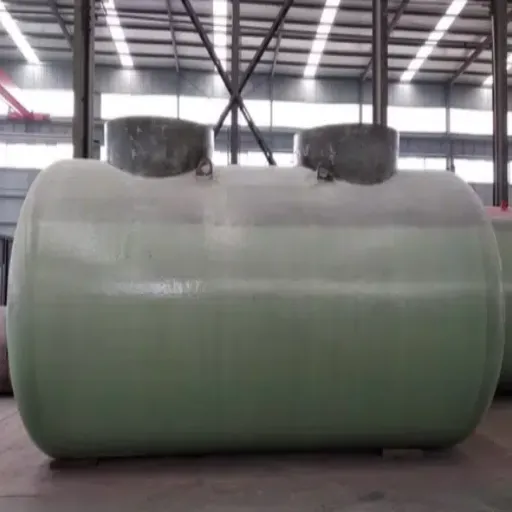
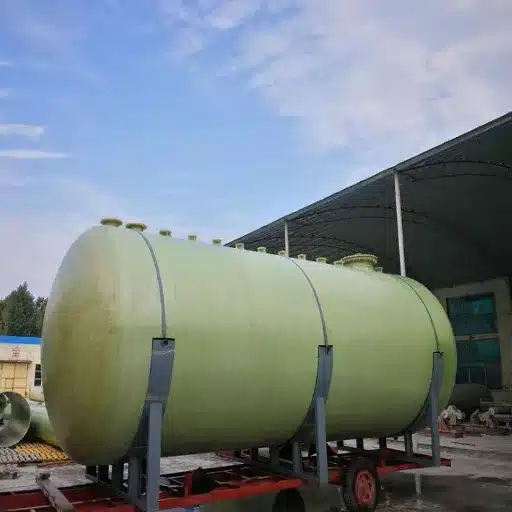
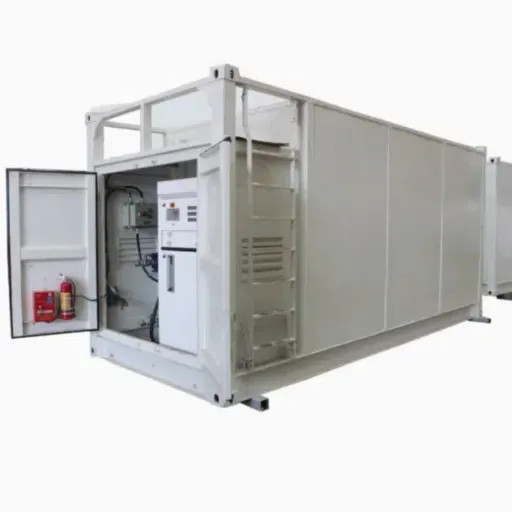
Skid stations are exactly what the name implies, with the layout pre-constructed and modular. These are usually made to have a loaded assembly of different important features, such as storage tanks for the fuel, pumps for dispensing it, and the control systems in a tiny, portable unit that makes the system easy to transport anywhere. The whole product is designed to give portability to the extremely operational fueling facility. Skid service stations are designed in such a way that they can be taken out and set up in different places. They are provided for different specific industries also requiring this type of solution, mainly in transport and mining works, contracting, and agriculture, and just about in any desired position.
Current data can be seen how modular fueling systems, or so-called skid stations, have suddenly surged in demand, based on being highly cost-effective and extremely flexible. Industrial reports have stated that the global market for modular fueling systems – or the so-called skid stations – should escalate from 6.8% CARG from 2023 up to 2030. This kind of growth will be seen in remote or hardly accessible places or on temporary construction sites where conventional fueling facilities are too expensive, difficult to install or impossible. The future skid station would have real-time fuel monitoring during and after pumping for control from a distance and safer management protocols. Enabling space or volume restriction for these fuels would become a reality with full incorporation of automation and Internet of Things technology systems.
Several technological advancements were deemed smart, fresh, and green because they came with dual walls of tanks to reduce spillage and contaminant risks, while others even appended them with leak detectors. The skid station would be transformed into the future of stretching the flexibility in fuel dispensing as far as the growing inclination towards instant.
Historical Context of Fuel Stations
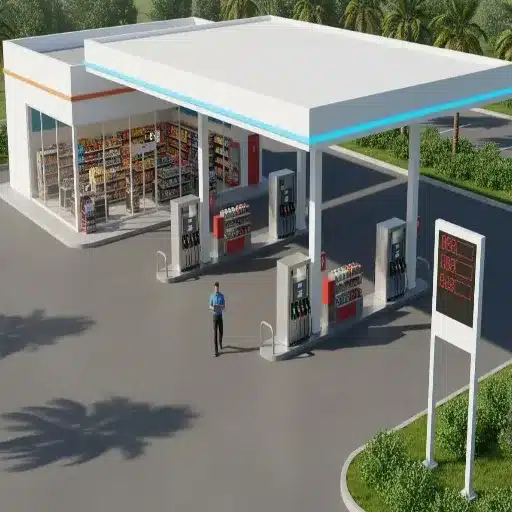
The 20th century rolled in, when one of the strongest reasons to have dedicated fueling points emerged, as fuel stations are known today. The first building to be intended for just refueling cars was opened as the first gas station in the world in 1905, which was attributed to St Louis, Missouri. They were identified during the 1920s as fully equipped with a canopy, pumps, and all those features that made it a vehicle-filling station.
Currently, all around the world, there are over 100,000 gasoline stations scattered all over the country. The United States is predominant, with Chevron, Shell, and ExxonMobil standing in the lead. It brings out the high importance and central position that fuel stations bear when it comes to regulating modern transport infrastructure. Countries in an increasing number have begun adopting cleaner technologies most recently. Among these, it has developed the concept of electric vehicle (EV) charging stations, and the total number of public EV chargers has consequently gone up, with an average of 2.7 million public chargers worldwide in 2023, as per the IEA.
Exploit the new forms making come into existence to biofuels like hydrogen of refill stations and hybrids, which serve both traditional propulsion and alternative energy modes. In reality, Europe and China stand out at giving the most innovative clean fuel programs and many of them are enforced by subsidies or incentives from the government in order to get sustainable refueling infrastructure. This clearly shows how fuel stations are no longer mere substitute points for fossil fuel but multi-energy hubs for future greener energy provision.
Importance of Modular Solutions in Modern Fueling
For current energy needs recognition, modular refueling infrastructure solutions are very relevant and essential as well as irreplaceable through their adaptability, scalability, and efficiency. One aspect of such development is the integration of conventional fuel pumps in electric vehicle charging stations and hydrogen gas refueling installations at a common location. At the same time, under the same newly feasible conditions, it becomes one form of modular fuel g infrastructure now. Allied Market Research indicates that the market is worth USD 18 billion in 2022. Then, by 2031, it will escalate to USD 207.5 billion, with an anticipated compound annual growth rate of 31.5%. Changes in the infrastructure, be it traditional fuel pumps, hydrogen refueling stations, electric vehicle charges, or other types, can indeed be linked to the massive and quick growth in that area. The growth urges the station towards breakthroughs in such station design so as to facilitate effective, low-cost adaptation and candle wax with the development of clean ventures.
Modular Fuel Stations are readily available to both rapid infrastructure rolling out in urban and in rural settings. These are applicable for the establishment of infrastructure for urban and rural areas because the very thing that makes them faster is necessary as modular gas stations. It’s like when the various prefabricated modular components significantly shorten the installation time; more such networks can be set up then at the right time when a higher number of car registrations with EVs are done practically in every part of the world. For 2022, electric vehicles reported sales by IEA due to more than 10 million units globally for the year can be associated with the estimate of 14 million sales in 2023, which made probable a growth due to geometric progression. Such expects more pressure on infrastructure providers to design scalable energy solutions which can sustain these inclinations for mixed transport means. Designs like those ensure energy self-sufficiency and adaptability to variations in the supply chains that changes in demand may impose.
Types of Skid Stations
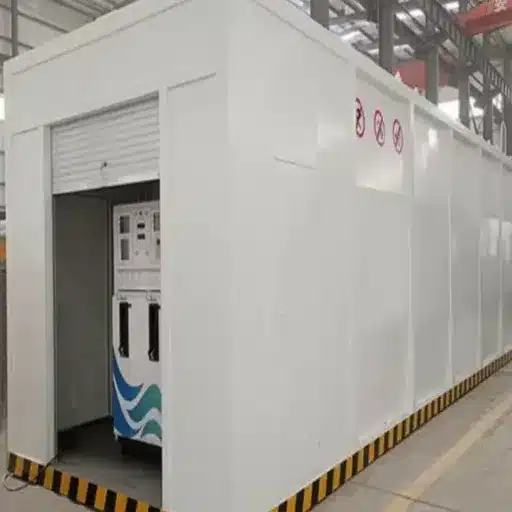
20ft Skid Mounted Fuel Stations
A 20ft Skid Station, a fine invention, is out to show a revolutionary interest in the sector. Such stations are modular units designed to be installed and be energy efficient with ease. It is a prediction that the market for skid-mounted systems will rise by an average percentage of 5.5% annually in the period of 2021-2028 due to such systems becoming more capable of operating in society’s numerous diverse sectors that include transportation, agriculture, and logistics. The scale renders them fit for mobility and setting up in environments with extreme congestion or even most environments.
At the moment, contemporary stations possess modern facilities such as, but not limited to the advanced safety features, sensor and camera fitted remote operated mechanism, and carrying capacity for crude oil and biodiesel; where as hydrogen, whereas hydrogen goes higher. Talking about capacity, a 20ft Skid Station may take as much as 40 cubic meters (40,000 liters) of fuel to the maximum, and that capacity is good enough to cope with the demands of small and medium-sized companies, working on limited to medium levels, whenever this system may be redundant for some time. The companies that establish the station need not worry about supplying service as much as it is done with the length of time for erecting it, compared to their conventional counterparts. In view of the above, these 20ft skid stations come quite handy in terms of the emergence of new power resources aimed at vehicles: electric and other alternative fuels.
40ft Skid Mounted Fuel Stations
A 40ft skid container fuel station possesses more than enough fuel for surround environments, which makes sense to dispense more fuel with much larger storage. To the contrary, most of these systems consist of about 80,000-function fuel storage, which is to say, around double the size of an individual 20ft system. Tailored to assist in speculation and expansion, the 40ft Skid Station incorporates advanced refuelling tools for the fuel; for instance, dispensers which allow for very fast pumping of the fuel, meeting the demands of fast operations such as course of operations.
As of late, it is noted that the contemporary 40ft Skid Station is one of this type’s machines that includes an inbuilt remote survey advantage, thus allowing the operators to control the fuel levels, incorporate, and make repairs as necessary. It should be emphasized that the installation in such projects is as easy and fast as it takes approximately 2-3 days, depending on the location. These units are adjustable to any needs and can accommodate all types of fuels, including diesel, petrol, biofuel, and hydrogen as well, which makes them appropriate in a rapidly changing energy consumption across the world. On the other hand, it should be noted that their durable nature and voluminous capacity enable them to supply logistical depots, mines, or factories that are totally cut off from the conventional distribution of energy, whereby a fuel system has to be in place at all times.
Comparison of 20ft and 40ft Stations
The sizes of tanks containing oil also differ; both types, 20-feet and 40-feet, have their characteristics as well, with vast differences in units and application over size as required in their intended function; such a small fixed plant encompasses mostly 10,000 to 20,000 liters and is compact and mobile. In keeping with such a profile, the device is very well suited to smaller tasks or temporary jobs where the need is for relatively low space and fuel.
In comparison, a 40-squeezer has twice the size of 30,000-40,000 liters or even more. It is shorter and simpler, but is still suitable for major long-lasting projects on a high-demand scale. PD meters are perfectly suitable for very high volume users such as large logistics complexes or industrial estates, and mining enterprises. In addition, broader functionality can be incorporated into them, such as bringing in advanced fuel management systems or multiple dispensing units to stretch their applicability across fuel grades.
There are optimistic contemplations that the two types at some point in the future, would adhere to known international standards (UL-142 or AS1940, relating to storage for fuels). This will be backed by the long-term durability expectations from the two Taser units. These contemporary stations measuring 40 ft have innovative systems for monitoring that allow the customer to take note of how much fuel is available vis-a-vis inventory control to determine fuel performance in one’s office over a given period, all with the help of remote collection using electronics over time. An individual could also have such measures on this very small, neat surface, which is filled with a 20-ft container that would have USB and IoT should be put in place because such stations are equipped with a small combination of the build-in inevitable doors, while stations larger than this create flexibility in strength due to a potent networking link and affinity toward growth for way huger and more demanding fuel tasks.
Such a decision would depend a lot on the application, the counseling, and long-term strategies of fueling on-field. Technological changes indeed enhance industrial practices as well as fuel use efficiencies.
Benefits of Skid Mounted Fuel Stations
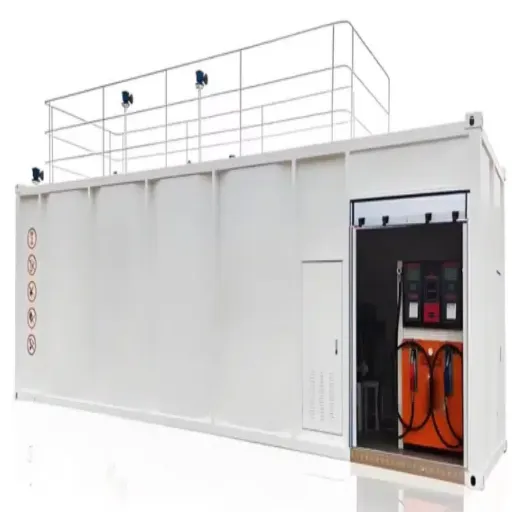
Customization Options for Different Needs
Fuel station tanks come with one particular advantage that the owner can use them as desired way or as much as his/her requirements, because every time under designing and shaping, the type of fuel, the range of fuel, and the size of the tank decide the dispensing capabilities that would be associated with consumption modes. They have been quickly adaptable to use diesel, gas, aviation fuel, and, among others, other sorts of alternative fuel like biodiesel, LNG, and thus for uses like, e.g., trucking, mining, agriculture, etc.; it basically meets it all.
Today, these developments manifest in smarter fuel monitoring technologies, which are already integrated in daily operations to secure continuous and effective on-time fuel management. Eight out of every 10 times, fuel stations have it today, a managed solution with Internet of Things-enabled sensors today. These sensors monitor everything from fuel levels on tanks to wells and the ground, and give an alert for repair or maintenance, eventually resulting in reduced cost and almost banishing downtime. Modularity in customizing these systems seems to imply that you can extend the business for the purpose from 5000 to 30000 litres, depending on site requirements.
The fuel stations that are featured at these sites are really awesome. They are functional for the reason that, with the prevailing weather conditions at certain site layouts, telemetry (tank insulation) or environmental control solutions would come into requirements to make the fuel rest in its safe and optimal stage of performance. Further, very sophisticated purification facilities, such as those needed for the best machinery, can have their systems integrated. These modes of customization can be brought together to make skid-mounted fuel stations construction cost-effective and the best everyday refilling options that are projected, considering certain desired operational targets.
Portability and Ease of Installation
Fueling stations designed to last and with mobile ease of installation should be the best alternative solutions for industries in which a change of location may be needed often or even constantly. The presently available data on recent fuel systems have even more agreement on stationary attachment-points being that setup is pretty much accomplished in a fraction of the time which taking place for a traditional fueling system. And usually within an hour or two, these may well be installed. They are spacious such that these particular modules are always very easy to transport using flatbed articulated or shipping containers, and therefore, befit an easily changing system in different sites of different industries, such as construction, mining, agriculture, power generation, etc.
These mobile fuel installations, moreover, will give us a certain reduction in logistics costs of almost 30 percent. This is mainly due to the fact that skid-mounted refueling stations eliminate the need to mobilize heavy equipment each time the project site is relocated. Even across treacherous topographies, an operator can use these without worrying about such things as durability, build quality, and safety measures. In fact, in the most secluded and off-grid conditions, such installations usually also contain integrated generators or, probably, solar system power that will make it possible to carry on with fuel-based energy provision without any external power supply in the future.
Cost-Effectiveness for Suppliers
Various cost savings lead suppliers to decide on mobile, fuel-filled stations. A latest industry report and projected statistics reveal that the world’s mobile fueling stations market will aggregate tremendous percentage CAGRs of 6.7 between 2023 and 2030 because of the rise in demand coming from the building activities, mining, and agriculture sectors. Dropping a lost-boy feed station thing may well involve a trade that delocalizes the net unconventionals of the oligarchs’ veritable storage infrastructure prices of nuts.
Transporting costs become less for suppliers inasmuch as these stations will easily be carried to areas with a high demand on them, which means downtime and wastage is reduced and productivity further enhanced. Such systems may be automated for fuel monitoring, which can improve as theft or overuse is reduced; the latter affects the indirect loss of funds, while other factors, such as theft or overuse, definitely lead to direct loss of money. Studies have also noted that in off-the-grid places, baking fuel tariffs on solar energy can actually curtail fuel operation costs by 30% to meet global sustainability norms. These kinds of mobile refueling stations demonstrate an increase in being economic while including new costs that are innovative.
Components of Skid Mounted Fuel Stations
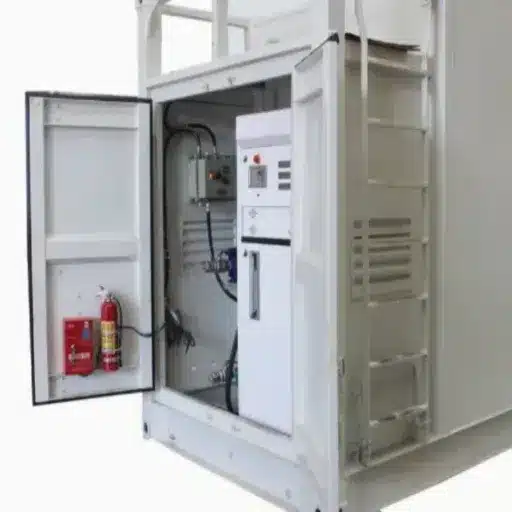
Fuel Dispenser Systems
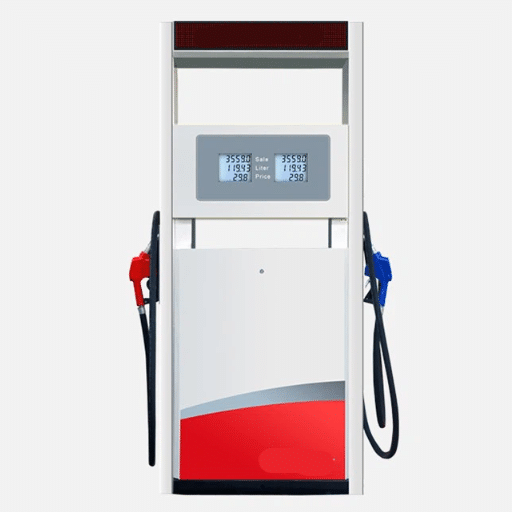
The most crucial piece is fuel dispensing systems in any fixed fuel station. Their most important work is to control the dispensing of fuel from an exact point as these systems generally feature highly accurate meters, nozzles, and pumps to cover a wide range of diesel, petrol, and kerosene applications. The advanced kind of dispensers is often fitted with additional technologies such as flow measurement sensors and digital interfaces for more efficient delivery of fuel with accuracy.
As per most recent analysis done regarding the industry scenario, fuel dispenser market expenditure in the area is expected to reach nearly $2.97 billion at a 5.2% CAGR by 2028. This is because of a very strong demand on the part of the supply side for fuel control. The quick spread of most fuel management solutions, however, springs from the rapid adoption of intelligent dispensing systems that are now being applied in many of the fast-growing countries. This would increase the number of sensors to ensure further improvement in the latest equipment that has almost touched upon touchless payments for improved convenience and in terms of increased operational efficiencies, both to the user and to service providers.
It is the compatibility of the modern design specifications for advanced fuel dispensing systems, up to meeting strict standards and regulations, and compliance with key international standards such as ATEX and UL certifications that make them safe to operate in potentially explosive areas. In addition to devices like anti-theft, leak detection sensors, and the automatic shutdown function, which minimize environmental and fuel wastages, the overall system is being crowned with yet another fancy toy that will really bring the total look and reliability improvement of a skid-mounted fuel station in the expanded energy situation.
Tank Containers and Flow Meters
The tentative depth to which one has to go in designing and constructing any fuel transporting and measuring system lies in the use of tank containers and flow meters. The tank containers contain tough materials like stainless steel, which could enable resistance to wear away and corrosion, and is apt for transporting any hazardous or inflammable liquid. The ISO ensures they are standardized for multiple modes of transport, like road, rail, and sea.
Flow meters, on the other hand, stand out as ultimate irreplaceable instruments, particularly when it comes to the precision dispensing or measurement of fuel. The ultrasonic or Coriolis technologies in the latest flow meter have enabled an accurate determination of both volume and mass, perhaps with the lowest level of error. For example, the latest reports in the engineering journals have suggested that ultra-high performance levels in flow meters could reach or exceed ±. 1%, depending on the specific liquid and working conditions.
Development has already started kick-starting in real-time as the IoT technology integration has allowed real-time monitoring to now check the pipeline pressure from another side, even if distance has been maintained due to COVID-19. A smart water is an example of the smart flow meter, which has an in-built analytics capability to show operators how the fuel is being utilized, find any abnormalities, and ensure the smooth operation of electrification that can be streamlined into an operational strategy. This kind of technology significantly cuts costs and increases accountability for electric energy management systems. Given the extent to which enhanced emphasis globally would be placed on sustainable practices, the application of precision tools like advanced flow meters would be quite necessary.
Station Containers and Mobile Configurations
Conversion of the fuel station to improve mobile base capabilities establishes much better systems of fueling. It is meant to be ported on site, a station that generally serves for movement with some added functionalities, its superstructures, and design quickly installed at any site of remote locations, fields of construction, mining sites, including those incomplete and temporary workplaces having fuel infrastructure all over. Generally, all those mobile fuel stations have the latest facilities where automatic dispensing systems are fitted according to real-time monitoring software, and secure fuel storage facilities are available.
Based on a potential review of the most recent industry report, the value of the global market for convenient fuel stands was forecast to rise by approximately 6% compound per annum for the years 2023 through 2030, courtesy of modern, efficient, and environmentally benign fueling solutions. This region customarily uses double-walled tanks, employing a smart telemetry system for inventory management as well as RFID or card-based access control systems for secure refueling.
Indeed, the station containers set up, but with capacities and characteristics awarr that are awry. It goes all the way, at the other end of the spectrum, to a storage range of 5,000 liters to as much as 50,000 liters used for all kinds of industrial services. Modern portable facilities come complete with solar-based technologies that provide energy efficiency and are, therefore, sustainable. Most of these are considered to be strictly safe and environmentally sound and are designed to contain situations and/or contaminants within them. In other ways, these technologies do not resemble that, and they all use IoT sensors and employ remote data reading to be able to tally with real-time data analysis on the consumption of fuel. In the end, reducing unwanted expenditure on energy accounts.
The station containers’ mobility comes with a trustworthiness in the fact that even with a combination of portability and innovative advancements, the facility can be used for such deployments and other mobile transactions under the program, making it one of the most energy-efficient practices possible.
Reference Sources
-
Performance Assessment Model for Petrol Stations Using a Multi-Criteria Condition Rating Index
- Key Insights: Evaluates petrol station performance, including refueling tank areas and pump stations, which could indirectly relate to containerized solutions.
- Source: Read the study
-
Comparison of Regulations and Life Cycle Cost Analysis Of Underground and Aboveground Storage Tanks
- Key Insights: Compares costs and regulations for different storage tank types, offering insights into the economic and regulatory aspects of fuel storage solutions.
- Source: Read the study
Frequently Asked Questions (FAQs)
What are 20ft and 40ft skid stations, and why are they becoming popular in modern fueling?
20 ft and 40 ft Skid Stations modular fueling systems are exactly what fuels like these are designed for. They are more portable and condensable, with smaller measurements, and can be moved and installed anywhere. These 20-ft and 40-ft fueling stations is its space-efficient design, the possibility of being IoT-enabled, and their cost-effective and environment-friendly alternative to the traditional refueling system.
How do skid stations enhance operational efficiency for industries?
Skid stations are compatible with several attributes, like real-time data analytics, IoT-enabled sensors, and automation. Such traits find their significance in facilitating various industrial requirements, like tracking and management of fuel, and minimal wastage to streamline the inventory management. Since these containers can be carried from one point to another, they simplify and speed up the installation process in emergency or irregular work areas.
Are skid stations environmentally friendly?
Yes, skid systems are created with environmental considerations at the center stage in their design and construction. Most are built with a clean fuel technology that minimizes and prevents site spillage, thus solving potential environmental damage. Nowadays, many features have been built with skid stations that will improve fuel usage to reduce emissions and make it possible to have greener operations. This is the most sustainable because the station may be simply relocated, reused, or upcycled as required.
How are station containers different from traditional fueling systems?
Provide more convenience in terms of portability, flexibility and customization compared with the traditional way of a station comprising the fueling systems. While traditional station systems are indeed stationary and typically call for hefty infrastructure, containers and skid stations are mostly pre-fabricated, modular, and portable systems. They also employ new technologies, which facilitate real-time monitoring and the enhancement of safety measures of tracking.
Which industries can avail the highest benefit from 20ft and 40ft Skid stations?
Skid stations have helped the industries to which they belong, such as construction, mining, transportation, agriculture, and energy, in many ways. For instance, they help in the fueling services of centers that have no or weak conformity to ordinary drinking water infrastructure but have fuel supply, or those where it may be necessary to move about to change the fuel tank along busy roads. Consequently, it must adapt and cater to the dynamic needs of an industry in order to offer the most efficient and reliable fueling solution for small spaces, working 24 hours a day all week long, with space restrictions.
What role does technology play in modern skid stations?
Integrating technology skids is the best in technology and well-suited to evolving industries, thus leaving them differentiated from other peers. Internet-of-Things sensors accompanied by remote monitoring and data analytics are among the things that could make it possible for personnel to remotely monitor fuel levels and discover inefficiencies, creating remote consumption optimization. It is proven that technology has enhanced resource management, lower operational costs, and higher reliability, making skid stations almost like a must-invest for all industries in the world.