In the year 2019, Martinez Mining Company in Chile, when they wrapped up the use of carbon steel and shifted to stainless steel diesel tanks, was hopeful of more corrosion resistance from the tanks. But who would have thought that the company would have to do replacement of tanks, for the first time, 40 years on, while operations are still running. The initial cost was 35 per cent more, but after 6 years of use, the company has managed to save over $180,000 in repairs, recoating, and replacement expenses. This is the typical reason why paying more for a stainless steel diesel tank initially often proves to be the cheapest solution in the long run.
When it comes to buying diesel storage, the majority of consumers are concerned about the capacity and price. People fail to understand that it is really the material that is used to make the tank that decides whether the tank will serve you for 12 years or last for 30 years.
This detailed manual focuses on the stainless steel diesel tank and outlines every nuance that a potential purchaser may require: characteristics of the tank, grades of material that can be used, certification and regulations, cost management, and assessment of the providers of the tanks. You’ll know the exact answer for those cases when it is worth paying more for the SS tanks and how to structure your system to fit these tanks.
What Is a Stainless Steel Diesel Tank?
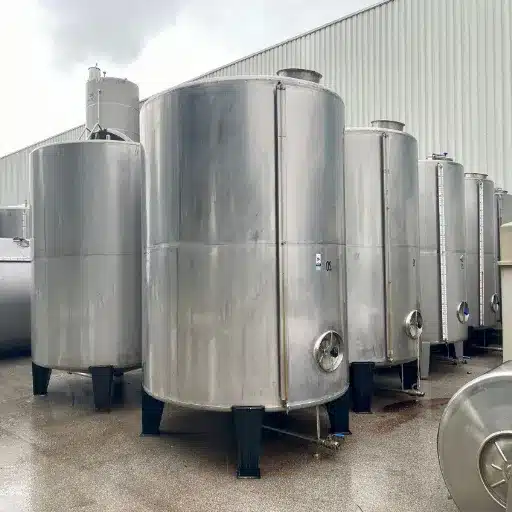
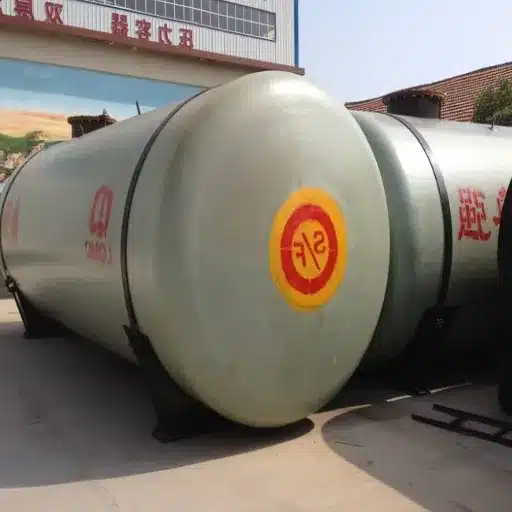
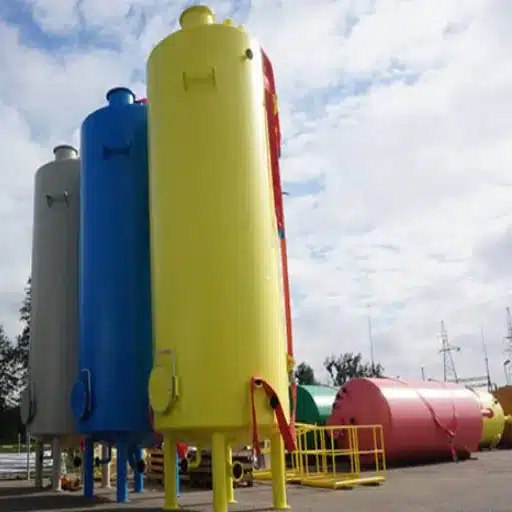
A stainless steel diesel tank is an advanced container designed for fuel storage and is made of steel that does not corrode easily, and is mostly of 304 or 316L grades. They found utility in storing diesel fuel from fuel stations and mining operations to marine installations and emergency power units.
The carbon steel approach involves applying a passive coating, while stainless steel contains a sufficient quantity of the alloy element chromium. Element chromium in the stainless steel increases the corrosion resistance during oxidation by forming a thin passive film, which redevelops if breached or compromised. That is why, in the same conditions, SS tanks last for tens of years more than unequally protected carbon steel. Further guidance on this topic can be found in the corrosion resistance section of the International Stainless Steel Forum.
Construction Standards and Specifications
The standard of manufacturing a stainless steel diesel tank is relatively high, and for the purpose of ensuring safety:
The thickness depends on the amount or volume of fuel a tank can hold and the pressure it can withstand. The tanks which hold less than 10,000 liters use plates of 3-4 mm while greater volumes, more than 50,000 liters industrial tanks, use 6-8mm thickness with additional support walls.
Welding specifications call for qualified methods, particularly during fuel applications. TIG (Tungsten Inert Gas) welding is widely used for stainless steel (SS) tanks as it gives better quality and more durable joints than the metal inert gas (MIG) process. All the weld seams need to undergo passivation to reform the chromium-rich oxide film that was torn off upon heating.
The surface finish depends on corrosion resistance and ease of cleaning. In general industrial use, a 2B finish pickled and passivated is provided, whereas in the very high cleanability cases, such as pharmaceutical backup power systems, electro-polished surfaces are preferred.
Stainless Steel vs. Alternative Materials
Selecting tank material requires balancing upfront costs against lifecycle performance. Each option presents distinct tradeoffs.
| Material | Initial Cost | Lifespan | Maintenance | Best For |
|---|---|---|---|---|
| 316L Stainless Steel | High | 25-30+ years | Minimal | Harsh environments, long-term investment |
| 304 Stainless Steel | Medium-High | 20-25 years | Low | Moderate climates, budget-conscious buyers |
| Carbon Steel (coated) | Low | 10-15 years | High | Short-term projects, controlled environments |
| Fiberglass | Medium | 20-30 years | Low | Underground installations, chemical resistance |
| Polyethylene | Low | 10-15 years | Low | Small capacities, temporary applications |
When Carbon Steel Makes Sense
Carbon steel tanks cost 30-50% less initially. For operations planning, 5-10 year site usage, this can represent better value. The challenge is maintenance. Coatings degrade, requiring inspection and reapplication every 3-5 years in aggressive environments. Skip a maintenance cycle, and corrosion accelerates rapidly.
The PetroLogistics fleet in Texas learned this lesson in 2021. Their carbon steel tanks looked fine during annual inspections. Internal corrosion beneath the coating line went undetected until a routine ultrasound revealed 40% wall thinning. Emergency replacement costs three times what a proactive SS conversion would have.
The Fiberglass Alternative
Fiberglass tanks are a suitable substitute for their SS counterparts in terms of anticorrosion and lifespan. They are often used for underground storage, especially in soils where corrosion conditions run higher than what is generally experienced. But fiberglass has some limitations. It has a limited impact resistance, temperature restrictions, and structural necessities that make it impractical for aboveground large-capacity installations.
Key Benefits of Stainless Steel Diesel Tanks
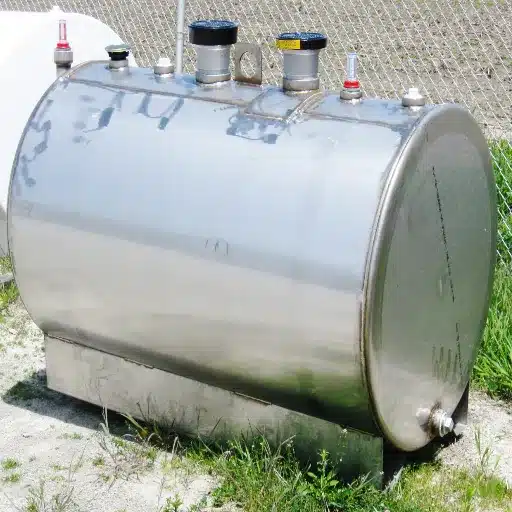
The advantages of SS construction extend beyond simple longevity. Each benefit addresses specific operational challenges buyers face.
Corrosion Resistance in Harsh Environments
Challenges to corrosion powerfully affect ocean, mining, and other coastal installations and environments. Salt spray corrodes steel rapidly in carbon through an atmosphere with acids or varying temperatures. The presence of molybdenum in the fittings has made it preferable for the grade 316L, which protects against pitting with chlorides and aggressive chemicals.
Pitting Resistance Equivalent Number (PREN) specifically designates this advantage. In 316L, PREN values range between 23 and 28; those of 304 brands range from 18 to 20. Higher PREN is synonymous with better resistance to localized corrosion that can penetrate tank walls unpredictably.
Extended Service Life
Industry data consistently shows SS tanks achieving 25-30 year service lives with minimal degradation. The Steel Tank Institute notes that well-maintained 316L tanks often remain in service beyond 35 years, while carbon steel tanks typically require replacement or major rehabilitation at 12-15 years. Learn more about fuel storage tank solutions to compare all available options.
This longevity transforms capital expenditure calculations. A tank that lasts 30 years versus 15 effectively halves the annualized equipment cost, even with a higher initial investment.
Regulatory Compliance Advantages
A big part of environmental regulation prefers products that do not leak. Thus, SS tanks offer greater ease in establishing compliance with the Spill Prevention, Control, and Countermeasure regulations of the Environmental Protection Agency. The material itself embraces the failure possible by secondary containment. It is recognized by the controlling authority, and some areas provide featured permitting regarding the installation of SS.
Resale and Sustainability Value
The processed glass remains at scrap value over the life cycle of use. Its material reach is maintained at 60% to 80% on the extraction of SS tanks after disposal. Disintegrated end-of-service life carbon steel tanks with sticky paints go into disposal troubles. According to the International Stainless Steel Forum, 80% of the product is recycled, and the best alternative for environmentally cautious operators is SS tanks.
Specifications and Sizing Guide
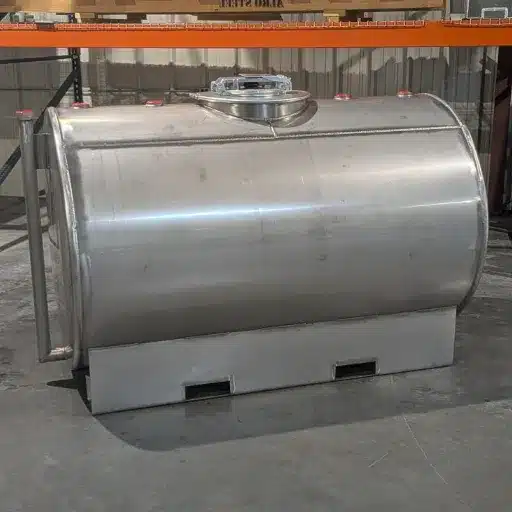
Proper specification ensures your tank meets capacity, space, and regulatory requirements without costly over-engineering.
Standard Capacity Ranges
Safer diesel tanks are available in significant capacities, ranging from mobile and small 1,000-liter units to industrial-scale installations from 100,000 liters and even higher limits.
- 1,000-5,000 liters: Mobile applications, small generators, and remote machines
- 5,000-20,000 liters: Fleet filling locations, construction sites, and agricultural operations
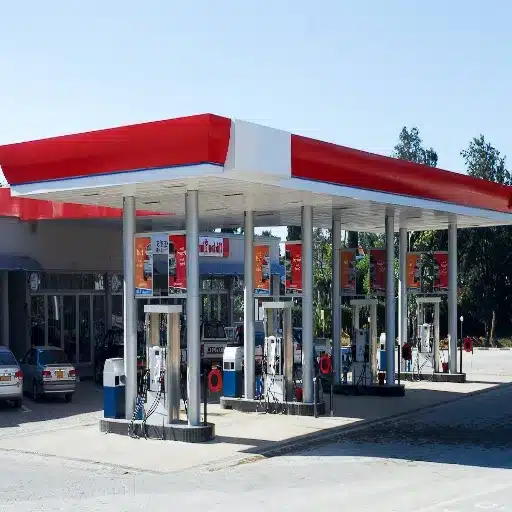
- 20,000-50,000 liters: Retail fuel stations, industrial facilities, and marine ports
- 50,000+ liters: Bulk oil terminals, mining operations, and strategic reserves
Above-Ground vs. Underground Configurations
Stainless steel tanks find more utilization above-ground because this material is corrosion-resistant. A remarkable thing about the SS tank is that they eliminate the major reason why tanks were buried, to protect them from atmospheric exposure. The above-ground tanks make reopening, maintenance, and leak detection an easy job.
For instance, substratum SS tanks have some area-based uses, such as being in the town center, having to be more aesthetic, or experiencing extremely cold temperature zones. Some additional engineering requirements are needed for an underground installation because of soil loading, the cathodic protection system, and the specialized leak detection systems.
Single-Wall vs. Double-Wall Options
Double-wall SS tanks incorporate a secondary containment shell around the primary vessel. This design captures leaks before environmental release, providing additional safety and simplified regulatory compliance. The interstitial space between walls can accommodate leak detection sensors for automated monitoring. Explore our guide to double-wall fuel tanks for complete secondary containment specifications.
Single-wall tanks suffice for applications with existing secondary containment infrastructure, such as concrete bund walls or lined containment areas. They’re lighter, less expensive, and simpler to install. Your environmental risk assessment and local regulations determine which configuration applies.
Compliance and Certification Requirements
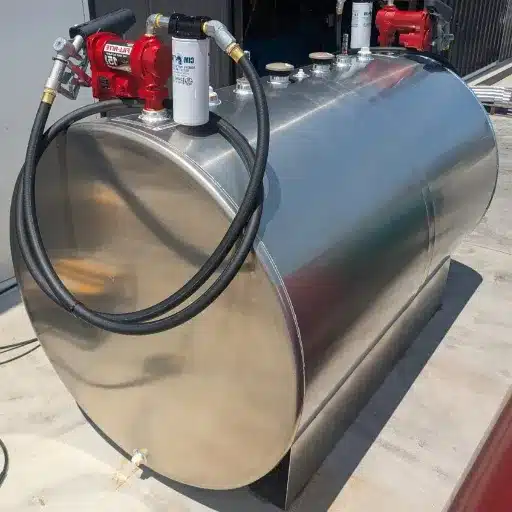
Fuel storage tanks operate under strict regulatory frameworks. Understanding applicable standards prevents costly compliance failures and project delays.
UL Standards for North America
UL 142 is applied to steel tanks meant for hazardous and combustible liquids. Thickness of the material, weld quality, requirements for testing pressure, and marking are included in this. A third party handles the inspection of the tank, as well as conducts bi-monthly audits of the manufacturers of the tank.
UL 58 covers the rules for underground steel tanks. Like UL 142, UL 58 has similar specifics about tanks that are underground. Tanks needing to be recognized under UL 58 will resist soil loading, corrosion stresses, and pressure from groundwater while maintaining structural integrity.
EPA SPCC Regulations
The first implementation of the Spill Prevention Control and Countermeasure (SPCC) Rule by the Environmental Protection Agency was for facilities that stored more than 1,320 gallons of petroleum products. For more details regarding compliance, you can review the EPA SPCC Guidance for Regional Inspectors. These standards focus on matters such as:
- The methods of testing and inspecting tank integrity
- The capacity of secondary containment
- Training of individuals and the manner in which they should react to spills
- Standards for keeping records and documentation
Because the containers generally serve as liquid carriers in the related chemical process market, building a tank for SPCC compliance is critical. In this regard, compliance is simple since 7% of the tanks are double-walled and hydrotested by manufacturers.
International Standards
ATEX certification applies to equipment that is being used in explosion-hazardous atmospheres, primarily in European and Middle Eastern markets. ATEX tanks belonging to such categories are designed to be very safe in the installation of hazardous zones.
ASME Boiler and Pressure Vessel Code covers the vessels being operated at high pressure, while diesel storage tanks in standard conditions are not under ASME terms and may require ASME certification in cases of high-pressure applications or complex vessels.
The standards from OIML ensure that a volume of commercial fuel dispensing applications will be measured correctly through an integrated tank system.
Certification Checklist for Buyers
When evaluating SS diesel tanks, verify these certifications match your application:
- UL 142 or UL 58 listing for North American markets
- ATEX certification for European/Middle Eastern hazardous zones
- ISO 9001 manufacturing quality certification
- Third-party inspection reports (SGS, Bureau Veritas, or equivalent)
- Material test certificates (MTC) documenting alloy composition
- Hydrostatic test certification for pressure integrity
- Welder qualification records for fabrication personnel
Cost Analysis and ROI
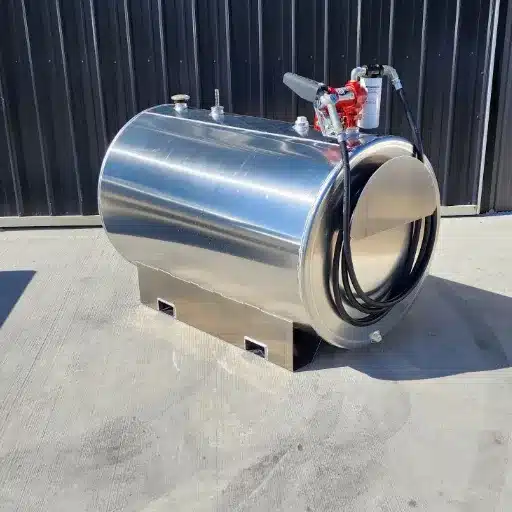
Understanding total cost of ownership enables informed comparisons between material options.
Price Ranges by Capacity
Stainless steel diesel tank pricing varies significantly based on capacity, grade, and configuration:
| Capacity | 304 Grade | 316L Grade | Double-Wall Premium |
|---|---|---|---|
| 5,000 liters | $3,500-5,000 | $4,500-6,500 | +25-35% |
| 20,000 liters | $8,000-12,000 | $11,000-16,000 | +25-35% |
| 50,000 liters | $18,000-28,000 | $25,000-38,000 | +25-35% |
These ranges reflect manufacturing costs only. Installation, foundations, piping, and ancillary equipment add substantially to project budgets.
Installation Cost Factors
Site preparation imposes a substantial variable cost. Above-grade tanks necessitate concrete pads or engineered foundations capable of accommodating the full weight of the tank, plus safety margins. Foundation costs range from 2,000 for small skid-mounted units to 50,000.
In addition, other costs are incurred for the connection and start-up of the tanks. Professional installation can be expected to run about 15-25% of the tank purchase price with integrated piping, electrical, leak detection calibration, and initial filling.
Maintenance Cost Comparison
Carbon steel tanks require repeated maintenance, which stainless steel lacks:
Coating inspection & repair: Every 3-5 years, costs between $500 and $2,000, depending on the size of the tank and the condition of the coating.
Cathodic protection monitoring: Annual, $200-500 annually, including testing and replacement of anodes for galvanized steel tanks submerged in underground water.
Internal inspection limitations: To provide for thorough inspection, coated tanks often require removal of the coating, to the detriment of assessment opportunities.
SS tanks need periodic washing outside and checks for leaking welds. Generally, the annual cost of maintenance is somewhere 560% higher than that of carbon steel over their lifetimes.
Total Cost of Ownership Calculation
20,000-liter tank over 25 years:
Carbon Steel Route:
- Initial tank: $6,000
- Initial coating: $1,500
- Recoating (5 cycles): $7,500
- Cathodic protection: $8,750
- Replacement tank at year 15: $6,000
- Total: $29,750
316L Stainless Steel Route:
- Initial tank: $13,500
- Minimal maintenance: $2,500
- No replacement required
- Total: $16,000
This stainless steel route, whose savings almost reach $13,750 for the period of 25 years, is more cost-effective while delivering enhanced reliability and compliance benefits.
Installation and Maintenance Best Practices
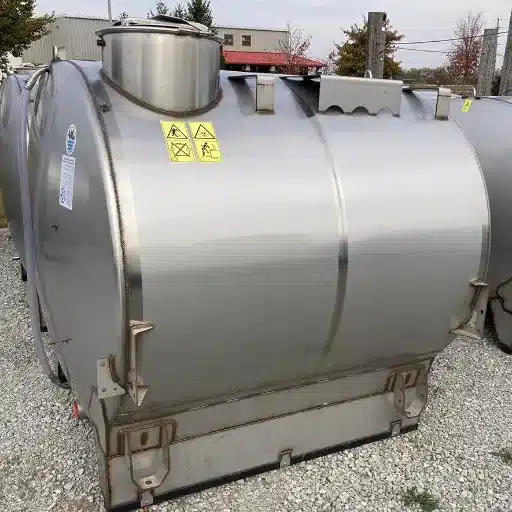
Proper installation ensures your SS tank delivers its full service potential.
Site Preparation Requirements
Location selection must consider the regulatory setbacks, ease of access for delivery trucks, and compliance with existing infrastructure. Site permitting requirements usually specify setbacks from property lines, buildings, or other structures, and from sources of surface water. Verify these minimum distance requirements with local authorities before finalizing a site for your tanks.
Footings designed for tank-supported loading and hydrostatic loading requirements can be computed. A full 50,000-liter tank with fuel weighs approximately 42 metric tons. A careful examination of the soil bearing capacity by design engineers suggests the manner of enlarging foundation designs. Improper foundations lead to stress, weld fatigue in the tank, and subsequently, failures may occur, no matter how sound the material is.
Connection and Piping Considerations
Compatible piping materials are needed with SS tanks. Cells of galvanic corrosion may be created if galvanized steel or dissimilar metals are used near stainless steel. Use stainless steel or compatible composites to connect or correctly isolate, diminishing the probability of interface premature failure.
Electrical grounding deserves particular attention. SS is a conductor of electricity so connection points must remain stable over the years. Perform annual inspections on grounding connections as part of maintenance.
Routine Maintenance Schedule
Quarterly inspections:
- Visual examination of exterior surfaces for damage or contamination
- Check foundation settlement or shifting
- Verify gauge accuracy against manual measurements
- Inspect vents and pressure relief devices
Annual maintenance:
- Ultrasonic thickness testing at monitoring points
- Internal inspection (if accessible) for contamination or unusual wear
- Pressure testing of leak detection systems
- Documentation review and SPCC plan updates
Five-year major inspection:
- Comprehensive weld examination by a certified inspector
- Internal cleaning and assessment
- Recertification of safety systems
- Structural foundation evaluation
How to Choose the Right SS Diesel Tank Supplier
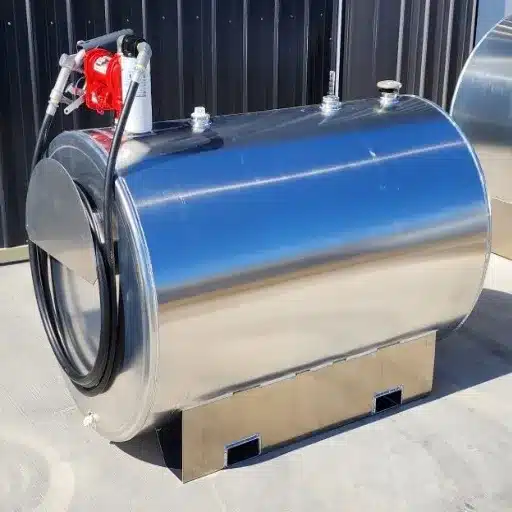
Supplier selection determines tank quality, delivery reliability, and long-term support availability.
Manufacturing Capabilities Assessment
The primary concern is whether suppliers outsource to manufacture their products or do it themselves. Suppliers who do their own production may possibly have more control over what they do. Typically, this yields faster resolution of quality issues. Insist on seeing plant certifications and quality documentation.
Advanced capabilities indicate supplier sophistication:
- Automated welding systems for perfect joint quality
- In-house passivation and finishing equipment
- Non-destructive testing capabilities (NDT) (ultrasonic, X-ray, dye penetrant)
- Custom engineering and design services
Customization Options
Standard tank designs suit many applications, but site-specific requirements often demand customization. Capable suppliers offer:
- Custom nozzle configurations and orientations
- Specialized manway and access provisions
- Integration with fuel management and monitoring systems
- Custom dimensions for space-constrained installations
- Special finishes for extreme environments
Delivery and Installation Support
International projects require logistics expertise. Verify supplier experience with:
- Export documentation and customs clearance
- Appropriate packaging for sea or land transport
- On-site technical support availability
- Installation supervision and commissioning assistance
Shandong Shengrui Intelligent Equipment Co., Ltd. provides comprehensive documentation, including CAD drawings, 3D assembly videos, and remote technical assistance to simplify installation for international clients.
Warranty and After-Sales Service
Standard warranties for SS tanks typically cover 5-10 years for structural integrity. Evaluate warranty terms carefully:
- What defects does coverage include?
- Are labor and materials both covered?
- What maintenance obligations void warranty protection?
- How responsive is technical support for warranty claims?
Extended support availability matters for long-lived equipment. Suppliers with established international service networks can address issues decades after initial purchase, while smaller vendors may lack long-term support capability.
Red Flags to Avoid
Notice such warning signals from your manufacturer:
- Vague material specifications: Solid suppliers would explicitly show the grade of the alloy and the carry mill certificates with designations like 304 and 316L. “Stainless steel” only without a grade indicates poor quality.
- Unrealistic pricing: Sub-market pricing indicates material weakness, a very thin wall, or is not made cautiously to attain an economy of superior quality.
- Missing certifications: An important point will be the individual who holds the ISO 9001 quality certification and the third-party-specific inspection report.
- No references: Standard suppliers always ease references with customer-based qualities and received case studies.
Applications by Industry
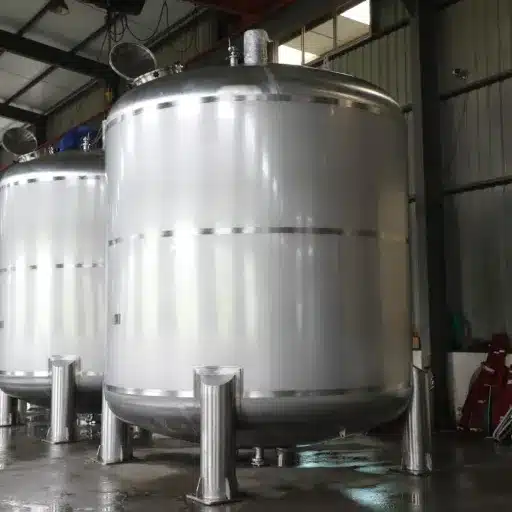
Different industries present unique challenges that SS tanks address effectively.
Construction and Mining
Remote operations with limited maintenance access benefit from SS reliability. Mining environments expose equipment to dust, vibration, and aggressive atmospheric conditions. SS tanks withstand these stresses while requiring minimal attention between annual inspections.
Mobile and skid-mounted SS configurations enable rapid deployment to project sites. Complete fueling systems on skids arrive pre-piped and tested, reducing field installation time from weeks to days. See our skid-mounted gas station solutions for portable fueling configurations.
Agriculture and Farming
Farm operations require seasonal reliability for planting and harvest periods when downtime costs severely. SS tanks eliminate the coating maintenance that carbon steel requires, ensuring fuel availability during critical operational windows.
Rural locations often lack immediate access to technical support. The self-maintaining nature of SS corrosion resistance provides valuable operational security for isolated facilities.
Marine and Offshore
Saltwater environments represent the ultimate corrosion challenge. Marine-grade 316L tanks resist salt spray and saltwater immersion that destroys carbon steel within months. Offshore platforms, port facilities, and coastal installations rely on SS for long-term fuel storage.
Regulatory compliance in maritime sectors demands rigorous documentation and certified equipment. SS tanks from certified manufacturers satisfy classification society requirements more readily than carbon steel alternatives. Review our explosion-proof equipment specifications for marine-grade safety systems.
Backup Power Generation
Data centers, hospitals, and critical facilities require absolute reliability from emergency power systems. Fuel contamination from corroded carbon steel tanks can disable generators precisely when they’re needed most. SS tanks ensure fuel quality integrity over decades of standby storage.
Diesel fuel degrades over time, but SS tanks slow degradation by preventing corrosion contamination. Combined with proper fuel polishing systems, SS storage extends usable fuel life from 6-12 months to 2+ years.
Transportation and Logistics
Fleet fueling operations demand high throughput and minimal downtime. SS tanks support continuous operations with reliability that scheduled maintenance windows can accommodate without emergency interruptions.
Truck stops and logistics hubs increasingly favor above-ground SS installations for environmental risk management. The combination of leak resistance and easy monitoring satisfies both operational and regulatory requirements.
Conclusion
Stainless steel diesel tanks signify a tactical approach aimed at ensuring functionality and managing expenses for the longest period possible. They do not corrode as opposed to the problematic carbon steel that demands frequent maintenance and renewals.
Key takeaways for buyers:
- 316L grade justifies its premium for harsh environments; 304 provides excellent value for moderate climates
- Total cost of ownership calculations consistently favor SS over 15+ year operational periods
- Compliance advantages simplify regulatory adherence and reduce environmental risk
- Supplier selection matters as much as tank specification; verify certifications and support capabilities
- Proper installation ensures your tank achieves its full service potential
For operations planning long-term infrastructure investments, SS diesel tanks deliver superior lifecycle value despite higher initial investment.
Ready to specify stainless steel diesel tanks for your project? Contact our engineering team for customized recommendations, detailed specifications, and competitive quotations tailored to your capacity and configuration requirements. We provide comprehensive documentation, installation support, and certified equipment meeting international standards for UL, ATEX, and ASME compliance.