
Engineering the Blueprint for Profit.
Maximizing site potential through precision layout design. We balance rigorous safety compliance with optimal traffic flow to ensure a high-efficiency energy retail environment.
Strategic Layout Archetypes
Standardized frameworks tailored to maximize throughput and profitability across diverse land profiles.

Urban Inline
Designed for compact city lots. Focuses on a parallel dispenser arrangement to maximize vehicle turnover within narrow boundaries.
- Narrow Footprint Efficiency
- Rapid In-and-Out Traffic
- Retail Frontage Visibility

Highway Logistics Hub
Features expansive turning radii and high-clearance zones specifically for 18-wheelers and high-volume freight traffic.
- Multi-Directional Access
- Heavy-Truck Turning Radius
- Separate HGV & Light Vehicle Paths

Multi-Energy Hub
An integrated ecosystem balancing traditional fueling with EV supercharging, hydrogen pods, and premium retail lounges.
- Zonal Safety Buffer Logic
- EV Charging Integration
- High-Yield Non-Fuel Retail
The Science of Traffic Flow
Engineering peak efficiency through predictive spatial modeling.
Analysis: Our simulation eliminates entry-point stacking, ensuring the main road remains clear even during peak hours.
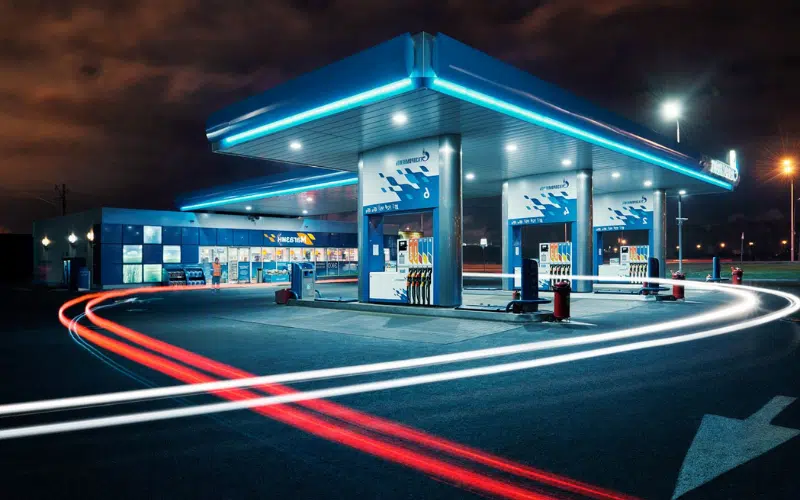
Entry Radii
Calculated curb geometry for smooth deceleration.
Bypass Lanes
Ensuring non-fueling traffic flows freely.
Tanker Routes
Replenishment paths isolated from customer lanes.
Safety Buffers
Dedicated zones for pedestrian-to-retail transit.
Safety & Regulatory Compliance
Designing for the most stringent fire safety and environmental codes worldwide.

*Visualization of NFPA 30A / PEI RP500 compliant hazardous area classifications.
Fire Setback Optimization
Strategic placement of fuel tanks and dispensers to meet mandatory separation distances from property lines and occupied buildings.
Hazardous Zone Mapping
Precise mapping of Class I, Division 1 & 2 areas to ensure all electrical equipment and vapor sources are safely positioned.
Environmental Containment
Layout integration of oil-water separators and drainage slopes to prevent runoff contamination and ensure EPA compliance.
From Blueprint to Digital Twin
Visualize every underground pipe and structural bolt before the first shovel hits the ground.

Clash Detection
Automated identification of spatial conflicts between underground fuel lines, electrical conduits, and drainage systems, reducing on-site rework by up to 90%.
Precise Quantity Take-offs
Generate exact material bills directly from the 3D model, ensuring transparent budgeting and zero material waste during the procurement phase.
Immersive Walkthroughs
Experience your station in high-fidelity 3D renderings and VR tours to refine customer touchpoints and retail visibility before construction.
Architecture for Profitability
Designing layouts that convert fueling stops into multi-service retail experiences.

Retail Attraction Path
We strategically position the C-Store entrance to be directly visible from every fuel pump. By optimizing the "Golden Path," we increase impulse purchase opportunities by guiding customers naturally toward retail zones.

Service Synergy
Seamlessly integrating Car Wash tunnels and EV Charging lounges without disrupting main fueling traffic. Our layouts ensure that auxiliary services act as complementary profit centers, not operational bottlenecks.
Design Insights & Support
What is the minimum land size required for a standard gas station?
Can you optimize the layout of an existing old station during a renovation?
How do you handle hazardous zone requirements in tight urban spaces?
Does the layout design include underground piping and tank placement?
Get Your Site Layout Analysis
Upload your land coordinates or existing plot plan. Our engineers will provide a preliminary feasibility study and 3D space optimization report.
Request Free Site AnalysisIntegrated Infrastructure
From layout design to structural realization, we synchronize every component for a seamless construction journey.
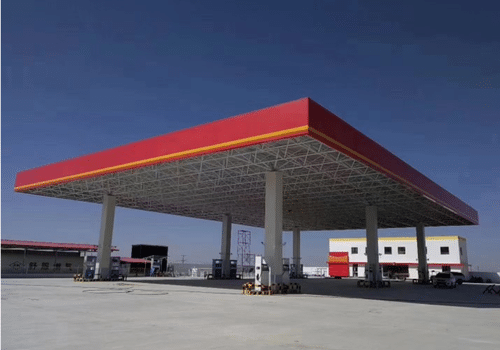
Gas Station Canopy
Prefabricated architectural solutions that provide superior weather protection and brand presence.
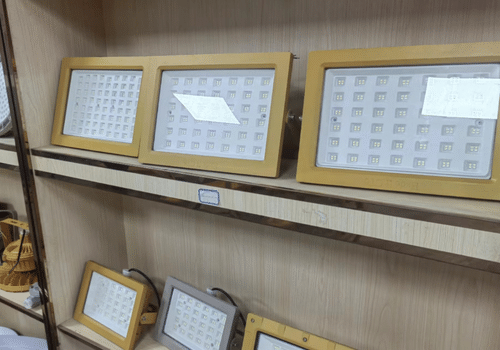
Canopy Lighting
Advanced LED ecosystems designed to maximize visibility and retail attraction while reducing energy costs.

Space Frame
Long-span structural engineering that allows for column-free fueling islands and maximum spatial flexibility.

Bolt Ball Grid
Modular joint systems enabling ultra-fast on-site assembly for complex and large-scale station geometries.