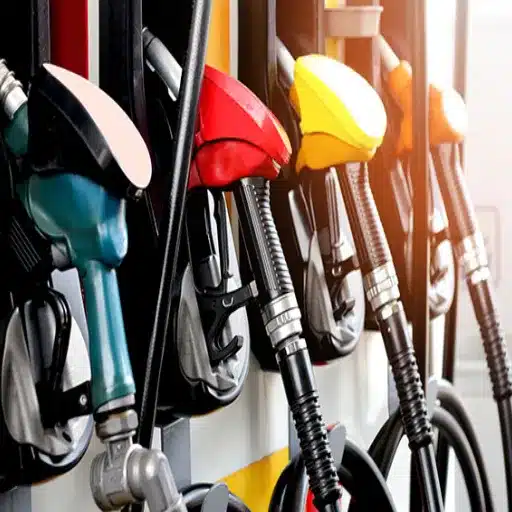
A contractor in Lagos installed four new fuel dispensers at a high-volume fueling station. The housings were ATEX-certified, the flow meters looked precise, and the price was competitive.
When the state petroleum inspector opened the first cabinet, he found a payment terminal with no Zone 1 certification. Every dispenser had to be decommissioned. Replacement components cost $15,000, and the station lost six weeks of revenue.
That single missing certificate turned a routine installation into a financial disaster. It’s also why fuel dispensers deserve more attention than most buyers give them.
A dispenser is not just a metal box with a hose. It’s a precision measuring instrument, an explosion-proof electrical assembly, a payment terminal, and a safety system combined into one unit.
In this guide, you’ll learn how fuel dispensers work, which fuel dispenser types fit different applications, what components matter most, and which certifications protect you from project delays. You’ll also get a practical selection framework and a maintenance checklist you can use immediately. If you are comparing fuel dispensing equipment for a gas station, fleet depot, or skid-mounted station, this guide is your starting point.
What Is a Fuel Dispenser?

A fuel dispenser is the terminal unit that transfers measured fuel from a storage tank into a vehicle. It controls the flow, calculates the volume and cost, and provides a safe interface between the customer and the flammable liquid.
In everyday language, people call it a gas pump or petrol pump. In the equipment industry, “pump” usually refers to the device that moves liquid, while “dispenser” refers to the complete terminal including the meter, display, nozzle, safety systems, and payment interface. Understanding this distinction matters when you buy, because a missing pump, meter, or certification can make the whole unit unusable.
Dispensers have evolved from purely mechanical units with gears and dials to electronic systems with microprocessors, touchscreens, and cloud connectivity. Modern dispensers can process multiple fuel grades, accept contactless payment, and report transaction data directly to a fuel management system.
How Fuel Dispensers Work
The fueling process is a coordinated sequence of mechanical, electrical, and safety steps. Here is how fuel dispensers work from the moment a customer arrives at the island.
Step 1: Payment Authorization
The customer swipes a card, taps a phone, or enters a fleet PIN. The dispenser encrypts the payment data and communicates with the point-of-sale (POS) system. Once authorized, the dispenser unlocks and displays the selected fuel grade and price.
Step 2: Pump Activation
When the customer lifts the nozzle, a switch signals the dispenser to start. Depending on the station design, fuel is moved in one of two ways:
- Submersible pump system: A turbine pump inside the underground tank pushes pressurized fuel up to the dispenser.
- Suction pump system: A gear pump inside the dispenser cabinet pulls fuel up from the tank.
Submersible systems are more common at modern high-volume stations because they support faster flow and quieter operation.
Step 3: Fuel Measurement
Fuel passes through a flow meter, typically a positive-displacement meter with pistons or gears. Each measured unit sends an electronic pulse to the control board. The board calculates volume and cost in real time and updates the display.
Accuracy at this stage is critical. Even a small calibration drift can create significant losses over thousands of transactions. Precision protects revenue.
Step 4: Fuel Delivery
Fuel travels through filters, solenoid valves, hoses, and out the nozzle. Filters remove contaminants that could damage the meter or vehicle fuel system. Solenoid valves control flow and shut off the line in an emergency.
Step 5: Vapor Recovery
As fuel enters the vehicle tank, displaced vapors travel back through a separate vapor recovery hose into the underground tank or recovery system. This reduces emissions and helps stations meet environmental regulations.
Step 6: Automatic Shutoff
When fuel covers the sensing port at the tip of the nozzle, the vacuum inside the nozzle changes. A spring-loaded mechanism snaps the nozzle shut to prevent overfilling and spillage.
Step 7: Transaction Completion
The customer hangs up the nozzle. The dispenser closes the main valve, records the final volume and cost, and sends the transaction data to the POS or fuel management system. The unit resets for the next customer.
This entire sequence happens in under a few minutes, but every stage depends on correctly specified components and calibrated systems.
Types of Fuel Dispensers
Understanding fuel dispenser types helps you match equipment to your site, throughput, and regulatory environment.
By Pumping System
Submersible Pump Dispensers
In a submersible system, the pump sits inside the underground storage tank and pushes pressurized fuel to multiple dispensers. This design supports high throughput, quieter operation, and simpler dispenser cabinets. It’s the standard for modern retail stations.
Suction or Gear Pump Dispensers
In a suction system, each dispenser contains its own gear pump that pulls fuel from the tank. These systems are simpler to install at smaller sites, remote locations, or mobile fueling units where underground pumps are impractical.
| Feature | Submersible Pump System | Suction Pump System |
|---|---|---|
| Pump location | Inside underground tank | Inside dispenser cabinet |
| Typical flow rate | 40-60 L/min per nozzle | 30-50 L/min per nozzle |
| Noise level | Lower | Higher |
| Best for | High-volume retail stations | Small stations, remote sites, mobile units |
| Installation cost | Higher | Lower |
By Product Capability
Single-Product Dispensers
A single-product dispenser delivers one fuel type from one hose. These are cost-effective for simple sites or dedicated diesel depots.
Multi-Product and Multi-Grade Dispensers
Multi-product dispensers can dispense gasoline, diesel, or other fuels from separate hoses within the same cabinet. Multi-grade dispensers offer multiple octane levels of gasoline. Both reduce island congestion and give customers more choice.
Multi-Fuel Dispensers
Advanced dispensers can handle gasoline, diesel, biofuels, AdBlue, or other fluids. These are becoming more common as fuel portfolios diversify and environmental rules tighten.
By Application
Retail Gas Station Fuel Dispensers
These are the standard units found at public filling stations. They prioritize user interface, payment integration, and regulatory compliance.
High-Flow Fleet Dispensers
Designed for trucks, buses, and commercial fleets, high-flow dispensers deliver fuel at 70-120 L/min to reduce vehicle turnaround time. They often have larger hoses, higher-capacity meters, and rugged nozzles. To learn more about high-flow fuel dispensers, please click to view our guide about high-flow fuel dispensers.
Mobile Fuel Dispensers
Mounted on tanker trucks, trailers, or skid-mounted stations, mobile dispensers serve construction sites, mines, agriculture, and emergency response. They often run on DC power and include self-contained pumps and meters. To learn more information, please click to view our guide about mobile fuel dispensers.
Alternative-Fuel Dispensers
Hydrogen, compressed natural gas (CNG), and liquefied natural gas (LNG) dispensers use specialized measurement and high-pressure handling systems. They share some components with liquid fuel dispensers but require additional safety controls and material ratings. For a deeper understanding, please read our Alternative Fuel Dispensers Guide.
Smart and IoT-Enabled Fuel Dispensers
Smart dispensers connect to cloud platforms for remote monitoring, predictive maintenance, inventory management, and fraud detection. They can integrate with fleet cards, loyalty programs, and automated fuel management systems. For a deeper understanding, please read our smart fuel dispensers guide.
Fuel Dispenser Components Explained

A fuel dispenser is a system of interconnected subassemblies. Each component affects accuracy, safety, and service life. One weak link can compromise the whole unit.
Electronic Head and Control System
Mainboard and Processor
The mainboard is the brain of the dispenser. It processes payment data, controls valves, interprets meter pulses, calculates totals, and communicates with the POS system. A robust processor ensures fast transaction handling and future software updates.
Display and Keypad
The display shows fuel grade, price per liter or gallon, volume dispensed, and total cost. Modern units use color screens and can display advertisements or loyalty prompts. The keypad allows manual entry, PIN input, and attendant functions.
Payment Terminal
Card readers, contactless modules, and fleet card readers must be certified for use in hazardous areas if they are installed inside the dispenser cabinet. This is the component that failed inspection in the Lagos example at the start of this guide.
Relay Boards and Sensors
Relays switch power to pumps, valves, and displays. Sensors monitor temperature, pressure, leak detection, and nozzle position. These inputs keep the dispenser operating safely.
Hydraulic and Fuel Delivery Section
Electric Motor
The motor drives the pump. In submersible systems, the motor is inside the underground tank. In suction systems, it is inside the dispenser cabinet and must be rated for the hazardous atmosphere.
Pump
The pump creates the pressure or vacuum needed to move fuel. Submersible turbine pumps are efficient for multi-dispenser layouts. Gear pumps are common in suction and mobile applications.
Flow Meter
The flow meter measures the volume of fuel delivered. Positive-displacement meters with pistons or gears are standard because they maintain accuracy across varying flow rates and pressures.
Pulse Sensor or Encoder
The pulse sensor converts the mechanical rotation of the meter into electronic pulses. The control board counts these pulses to calculate volume and cost. A faulty pulse sensor is a common cause of inaccurate readings.
Valves and Filters
Solenoid valves open and close the fuel path. Check valves prevent backflow. Filters protect the meter and nozzle from debris. These small parts have a large impact on reliability.
Hoses and Nozzles
Hoses must be anti-static, pressure-rated, and compatible with the fuel type. Nozzles control flow and include the automatic shutoff mechanism. Breakaway couplings at the hose connection prevent damage if a vehicle drives away with the nozzle still attached.
Safety and Environmental Components
Shear Valves
A shear valve is installed at the base of the dispenser. If a vehicle strikes the unit, the valve breaks cleanly and seals the fuel line, preventing a large spill and fire hazard.
Vapor Recovery System
Vapor recovery hoses and valves capture fuel vapors displaced during refueling. Stage II vapor recovery is required in many markets for environmental compliance.
Leak Detection
Interstitial sensors, sump sensors, and line leak detectors monitor for fuel escaping from tanks, lines, or dispenser sumps. Early detection protects the environment and reduces cleanup costs.
Emergency Stop
An emergency stop button cuts power to the pumps and closes valves. It’s a required safety feature at most fueling facilities.
Fuel Dispenser Standards and Certifications
Fuel dispensers must meet multiple standards depending on the market. Buying a unit without the right certifications can block customs, fail inspection, or void insurance. Compliance is non-negotiable.
OIML R117 Accuracy Standards
The International Organization of Legal Metrology publishes OIML R117, which defines accuracy classes for dynamic measuring systems. Retail dispensers are typically Class 0.5, meaning the maximum permissible error is ±0.5%. Some custody-transfer applications require Class 0.3 or better.
NIST Handbook 44 (United States)
In the U.S., retail motor fuel dispensers fall under NIST Handbook 44, Section 3.30. The maintenance tolerance is ±0.5%, and the acceptance tolerance for new or repaired equipment is ±0.3%. Some states also require National Type Evaluation Program (NTEP) certification.
ATEX and IECEx for Hazardous Areas
In Europe and many international markets, dispensers must carry ATEX or IECEx certification for use in explosive atmospheres. The inside of the dispenser cabinet is classified as Zone 1, requiring Category 2G equipment. IECEx is recognized in over 50 countries and allows buyers to verify certificates online.
UL 87A and UL 1238 (North America)
Underwriters Laboratories standards UL 87A cover fuel dispensers as complete units, while UL 1238 covers control equipment for hazardous locations. A fully compliant dispenser for the U.S. market typically needs both.
EN 13617 (Europe)
The European standard EN 13617 covers safety and performance requirements for fuel dispensers, including metering accuracy, vapor recovery, and electrical safety. It works alongside ATEX certification.
GB/T 3836 (China)
Chinese explosion-proof equipment is certified under the GB/T 3836 series, which is harmonized with IEC 60079. Export-oriented manufacturers typically hold dual CNEx/IECEx or CNEx/ATEX certifications.
NFPA 30A and NEC Article 514
In the United States, NFPA 30A and NEC Article 514 define installation requirements, hazardous location boundaries, and electrical listing requirements for motor fuel dispensing facilities.
How to Choose Fuel Dispensers for Your Station

Selecting the right dispenser means balancing throughput, compliance, integration, and total cost.
Match Station Type and Throughput
A busy retail station needs high-flow, multi-product dispensers with reliable payment terminals. A small fleet depot may only need single-product suction dispensers. A mining site may need mobile or explosion-proof units.
Define Fuel Type and Grade Count
Confirm which fuels you will sell now and in the future. If you plan to add biodiesel, AdBlue, or alternative fuels later, specify a dispenser that can be upgraded or expanded.
Set Flow Rate Requirements
Retail nozzles typically flow at 35-50 L/min. High-flow fleet nozzles can reach 70-120 L/min. Match the flow rate to your customer profile. Faster flow reduces wait time but requires larger pumps, hoses, and meters.
Specify Accuracy Class
For retail billing, specify OIML R117 Class 0.5 or better. For custody transfer or high-value fuels, consider Class 0.3. Always request calibration certificates and verify the meter is sealed against tampering.
Plan Payment and POS Integration
Decide whether you need cash, card, contactless, fleet card, or mobile payment. Each option requires the right terminal and software integration. Make sure the payment hardware carries the correct hazardous area certification for your region.
Account for Climate and Power Supply
Extreme temperatures, humidity, dust, and corrosive atmospheres affect component selection. Confirm voltage, phase, and frequency requirements. Mobile or remote units may need DC power or generator compatibility.
Verify Safety Certifications for the Target Market
This is the step that saves projects. Before you sign a purchase order, confirm that the dispenser and every electrical component inside it carry certifications recognized by your local regulator.
If you don’t know how to choose the fuel dispenser that meets your needs, please read our article about How to Choose a Fuel Dispenser.
Fuel Dispenser Selection Checklist
| Selection Factor | Questions to Ask |
|---|---|
| Pump system | Submersible or suction; number of dispensers per pump |
| Fuel type | Gasoline, diesel, biofuel, AdBlue, CNG, LNG, or hydrogen |
| Grade count | Single, dual, triple, or multi-product |
| Flow rate | Required liters per minute per nozzle |
| Accuracy class | OIML R117 Class 0.5, 0.3, or other |
| Payment methods | Card, contactless, fleet, or mobile |
| Certifications | ATEX, IECEx, UL 87A, NIST, OIML, GB/T |
| Climate rating | Temperature range, IP rating, corrosion protection |
| Power supply | Voltage, phase, frequency, or DC option |
| Support | Spare parts availability and technical response time |
When Priya, a procurement manager for a logistics hub in Lagos, chose dispensers for a new fleet depot, she started with this checklist. She avoided the lowest quote because the supplier could not provide verifiable IECEx certificates for the control boards. The supplier she selected cost 10% more but passed inspection on the first visit. To understand the Chinese market, please read our article on the China Fuel Dispenser.
Fuel Dispenser Installation and Commissioning
Proper installation ensures safety, accuracy, and regulatory acceptance. Skipping steps here causes problems later.
Site Preparation and Foundation
Install the dispenser island with a concrete foundation, proper drainage, and adequate clearance from traffic. The island must support the dispenser weight and withstand vehicle impact.
Electrical and Grounding
All electrical work must comply with local codes and hazardous area classifications. Grounding and bonding prevent static discharge. Explosion-proof conduit and seals are required in classified areas.
Piping and Leak Testing
Connect the dispenser to the underground tank using approved fuel piping. Perform hydrostatic and airtightness tests before commissioning. Document test pressures and results.
Calibration and Inspection
Calibrate each meter using a certified prover or test measure. Verify that the display matches the delivered volume within the applicable tolerance. Arrange inspection by the local weights and measures authority if required. For a deeper understanding, please read our Fuel Dispenser Installation Guide.
Documentation Handover
Receive as-built drawings, electrical schematics, calibration certificates, explosion-proof certificates, operation manuals, and warranty terms before final payment.
Calibration is very important for a fuel dispenser, you can read our article about fuel dispenser calibration.
Fuel Dispenser Maintenance and Troubleshooting
Regular maintenance extends service life and prevents failures that interrupt revenue.
Preventive Maintenance Schedule
- Daily: Inspect nozzles, hoses, and displays for damage or leaks.
- Weekly: Check filters and clean nozzles.
- Weekly: Verify emergency stop function.
- Monthly: Test meter accuracy, inspect vapor recovery valves, and check leak detection systems.
- Quarterly: Calibrate meters, inspect shear valves and breakaway couplings, and review transaction logs.
- Annually: Perform a full inspection, replace worn seals and hoses, and update software if applicable.
Common Issues and Causes
| Problem | Likely Cause | Recommended Action |
|---|---|---|
| No flow | Pump failure, clogged filter, closed valve | Check power, replace filter, verify valve position |
| Meter creep | Worn meter, faulty pulse sensor | Calibrate or replace meter and sensor |
| Leaks at nozzle | Worn seal, damaged spout | Replace nozzle or seal |
| Inaccurate totals | Calibration drift, temperature effect | Recalibrate with certified prover |
| Display errors | Control board fault, software issue | Restart, update software, or replace board |
| Vapor recovery alarm | Blocked vapor line, faulty valve | Clear line or replace valve |
When to Call a Technician
Call a qualified technician for any electrical fault in a hazardous area, meter calibration, control board replacement, or suspected leak. Never open an explosion-proof enclosure unless you are trained and authorized. If you need to learn more information, please read our article on Fuel Dispenser Maintenance.
Fuel Dispenser Market Overview
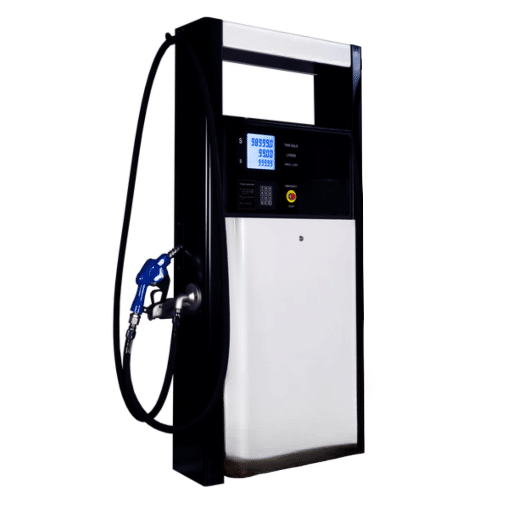
The global fuel dispenser market was valued at approximately 2.78 billion in 2025. It′s expected to reach around 2.94 billion in 2026, growing at roughly 6% annually.
Asia-Pacific leads with about 46% of global demand. This growth is driven by expanding fuel retail networks and rising vehicle ownership in China, India, and Southeast Asia.
Several trends are shaping the market. Smart and IoT dispensers enable remote monitoring, predictive maintenance, and integrated payment.
Alternative-fuel dispensers for hydrogen, CNG, and LNG are growing as fleets decarbonize. High-flow fleet dispensers are in demand at truck stops and commercial depots. Mobile fueling solutions serve remote industrial and emergency applications. If you have your own budget plan, please read our article on Fuel Dispenser Cost and TCO.
Frequently Asked Questions
What is the difference between a fuel dispenser and a fuel pump?
A fuel pump moves liquid from one place to another. A fuel dispenser is the complete terminal that includes the pump, meter, display, nozzle, safety systems, and payment interface. In retail fueling, the dispenser is the customer-facing unit.
How accurate are fuel dispensers?
Most retail fuel dispensers are certified to OIML R117 Class 0.5, meaning the maximum error is ±0.5%. In the U.S., NIST Handbook 44 allows a maintenance tolerance of ±0.5% and an acceptance tolerance of ±0.3% for new or repaired equipment.
What is OIML R117 Class 0.5?
OIML R117 is an international standard for dynamic measuring systems. Class 0.5 means the measuring system must stay within ±0.5% of the true volume across its rated operating range. It’s the common benchmark for retail fuel dispensers.
Can one dispenser handle multiple fuel types?
Yes. Multi-product dispensers can dispense gasoline, diesel, and other fuels from separate hoses in the same cabinet. Multi-grade dispensers offer different octane levels of gasoline. Each product line has its own meter and plumbing.
What certifications does a fuel dispenser need?
Requirements vary by market. Common certifications include OIML R117 for metrology, ATEX or IECEx for hazardous areas in Europe and international markets, UL 87A and UL 1238 for North America, EN 13617 for Europe, and GB/T 3836 for China.
How long does a fuel dispenser last?
With proper maintenance, a commercial fuel dispenser can last 10 to 15 years. Key wear parts such as hoses, nozzles, seals, and meters may need replacement during that period.
How much does a commercial fuel dispenser cost?
Costs vary widely by configuration. A basic single-nozzle suction dispenser may start at around $2,000.
Multi-product electronic dispensers with payment terminals can range from 4,000 to 12,000 or more. Installation, calibration, civil works, and certification add to the total.
Conclusion
Fuel dispensers sit at the intersection of engineering, safety, and customer experience. Choosing the right unit means looking beyond the brochure price to understand pump systems, flow meters, hazardous-area certifications, and total cost of ownership.
Key takeaways:
- Match the pump system, flow rate, and product capability to your station type.
- Verify that every component, including payment terminals, carries the right certification for your market.
- Plan installation, calibration, and maintenance from day one.
- Consider future fuel types and smart-system integration.
- Source from a manufacturer that provides documentation, spare parts, and responsive technical support.
At Shandong Shengrui Intelligent Equipment Co., Ltd., we design and supply fuel dispensers and complete fueling systems for retail, fleet, industrial, and skid-mounted applications.
If you are selecting gas station fuel dispensers for your next project, contact us for a specification review, certification checklist, or custom quote.