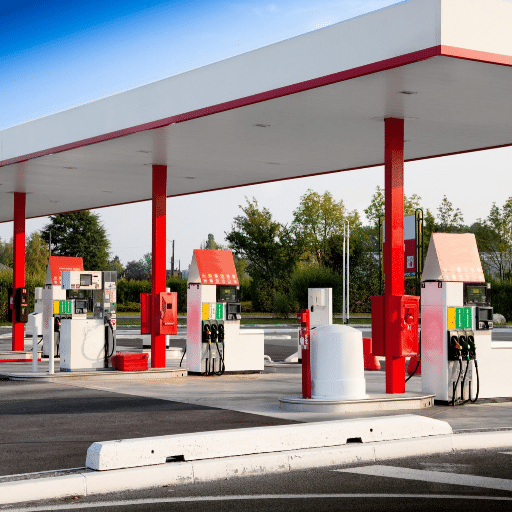
Last spring, a fuel delivery driver in Ohio overfilled a tank by roughly 12 gallons during the morning rush. The gasoline surged out of the fill pipe, but a properly sized spill bucket caught every drop. The station owner pumped out the fuel in 15 minutes. No report. No fine. No contaminated soil.
That is what the right spill containment systems do. They turn a potential environmental release into a routine cleanup.
If you own, engineer, or manage a fueling site, containment is not optional decoration. It is the layer of protection that sits between normal operations and a costly compliance failure.
In this guide, you’ll learn how spill containment systems work, which EPA rules apply to your station, what equipment you need, how to size it, and how to keep it compliant year after year.
Want to start with the foundation? Read our overview of underground fuel storage tanks first.
What Are Spill Containment Systems

A spill containment system is any physical barrier, vessel, or structure that captures fuel or other hazardous liquids before they reach soil, groundwater, storm drains, or navigable waters. At a fueling site, these systems do not stop leaks from happening. They stop leaks from spreading.
Containment is usually organized in layers:
- Primary containment is the vessel that normally holds the liquid: the tank, drum, pipe, or container.
- Secondary containment is the backup layer that catches spills if the primary container fails: spill buckets, dispenser sumps, berms, dikes, or double-walled tank shells.
- Tertiary containment is the final site-wide safeguard: sloped floors, drainage controls, or emergency ponds that stop a release from leaving the property.
Most gas station owners spend their time thinking about the first two layers. If the tank or piping holds, you are fine. If it does not, the secondary containment system must hold. That is why regulators treat secondary containment as a hard requirement, not a suggestion.
Fuel sites need these systems because spills happen in predictable places: during deliveries, at fill ports, around dispensers, and inside pipe runs. A containment system buys you time. It localizes the spill, simplifies cleanup, and protects both the environment and your operating license.
SPCC vs. UST Rules: Which Applies to Your Station?
One of the most common mistakes we see is assuming that all fueling sites follow the same containment rule. They do not. Two federal frameworks overlap here, and they govern different parts of your station.
The SPCC Rule: Aboveground Oil Storage
The EPA’s Spill Prevention, Control, and Countermeasure (SPCC) Rule, found at 40 CFR Part 112, applies to facilities that store oil above ground in quantities greater than 1,320 gallons aggregate. Only containers of 55 gallons or more count toward that total.
If your station has aboveground diesel tanks, used motor oil tanks, emergency generator tanks, or bulk lubricant storage that pushes you over the threshold, you need a written SPCC plan. That plan must include SPCC spill containment for the aboveground storage and for oil transfer areas.
The UST Rule: Underground Storage Tanks
The EPA’s Underground Storage Tank (UST) regulations, found at 40 CFR Part 280, cover buried tanks and their connected equipment. These rules require spill buckets at fill ports, overfill prevention devices, and under-dispenser containment (UDC) for the piping and hardware below each fuel dispenser.
Here is where confusion creeps in. Most retail gas stations store their motor fuel in completely buried USTs. Those USTs are exempt from SPCC because they’re already regulated under the UST program.
However, if the same station also has aboveground oil storage above 1,320 gallons, the SPCC plan must address transfer areas such as fuel dispensers connected to those exempt USTs.
In short:
- Only buried USTs for motor fuel? UST rules apply. SPCC likely does not.
- Aboveground oil storage over 1,320 gallons? SPCC applies, and dispenser islands may need transfer-area containment under 40 CFR 112.7(c).
- Both? You comply with UST rules for the tanks and SPCC rules for the aboveground storage and transfer areas.
If you’re unsure which framework governs your site, our UST compliance requirements guide walks through the thresholds in more detail.
Types of Spill Containment Systems for Fuel Sites

Different risks require different spill containment equipment. A spill bucket at a fill port is built for a different scenario than a berm around an aboveground tank. Below are the main types you will encounter at gas station spill containment projects.
Spill Buckets (Fill-Port Catchment Basins)
Spill buckets sit around UST fill pipes and vapor recovery ports. When a delivery driver disconnects the hose, a small amount of fuel often drips out. The bucket catches it.
Capacities typically range from 5 to 25 gallons. The bucket must be liquid-tight, accessible for inspection, and emptied promptly after a spill. Under federal UST rules, spill buckets must be integrity-tested every three years if they are single-walled, or monitored annually if they are double-walled.
Under-Dispenser Containment (UDC) Sumps
UDC sumps are installed beneath each fuel dispenser. They contain the piping, flex connectors, shear valves, and electrical conduits that run from the dispenser to the underground piping. If a connection leaks, the sump holds the fuel until you can repair it.
EPA rules require UDC to be liquid-tight on the sides, bottom, and at all penetrations. The materials must also be compatible with the fuel being conveyed. Like spill buckets, UDC sumps must be integrity-tested every three years if single-walled, or checked through interstitial monitoring if double-walled. This is the same principle behind most under-dispenser containment systems used in modern fueling infrastructure.
Turbine Sumps (Tank-Top Sumps)
Turbine sumps sit on top of the tank, usually over the submersible turbine pump. They house the pump head, line leak detectors, and related fittings. These sumps are larger than dispenser sumps and typically have 3- to 4-foot diameter lids.
Because they are part of the pressurized fuel system, turbine sumps are critical containment points. A leak here can release fuel directly into the annular space or, if the sump fails, into the soil.
Transition Sumps
Transition sumps appear along piping runs where the routing or burial depth changes. They are less common than dispenser or turbine sumps, but they serve the same purpose: providing access and containment at vulnerable joints or bends.
Spill Berms, Dikes, and Pallets for ASTs and Drums
For aboveground storage tanks, drums, and totes, secondary containment systems usually take the form of:
- Concrete or earthen berms and dikes that surround the tank
- Modular containment walls that can be resized or relocated
- Spill pallets and decks that raise drums above a built-in sump
These systems must be sized to hold the volume of the largest container plus freeboard for precipitation. Materials must resist the stored fuel.
Spill Kits and Absorbents
Spill kits are not a substitute for fixed containment, but they are an essential response tool. A well-stocked kit near fueling and storage areas should include absorbent pads, socks, drain covers, and disposal bags rated for flammable liquids.
| Equipment Type | Typical Location | Main Purpose | Testing Frequency |
|---|---|---|---|
| Spill bucket | UST fill/vapor port | Catch delivery drips | Every 3 years (single-wall) |
| UDC sump | Under fuel dispenser | Contain piping leaks | Every 3 years (single-wall) |
| Turbine sump | Top of UST | Contain pump/fitting leaks | Every 3 years (single-wall) |
| Transition sump | Along piping run | Access and containment at bends | Every 3 years (single-wall) |
| Berm/dike/pallet | Around ASTs, drums | Capture tank or container failure | Visual inspection per schedule |
| Spill kit | Near fueling/storage | Immediate response to small spills | Inspect monthly |
Sizing and Design Guidelines
Getting the size wrong is one of the fastest ways to fail an inspection. The general federal rule for fuel storage tank containment is straightforward: it must hold the greater of 10% of the total volume of all containers in the area, or 100% of the largest single container.
In practice, many engineers and regulators use a more conservative 110% rule. The extra 10% provides freeboard for precipitation, foam, or debris. Some states and local jurisdictions require even more, so always confirm the EPA secondary containment requirements that apply to your location.
Worked Example: Aboveground Diesel Tank
Suppose you have one aboveground diesel storage tank with a capacity of 10,000 gallons.
- 100% of the largest container = 10,000 gallons
- 10% of total volume = 1,000 gallons
- Required secondary containment volume = 10,000 gallons minimum
- With 110% freeboard = 11,000 gallons
If the tank sits inside a concrete berm, the berm must enclose enough volume to hold at least 10,000 gallons, and 11,000 gallons is the safer design target. You must also account for stormwater. If the berm is open to rain, you either cover it, pump out accumulated water, or size it for a 25-year, 24-hour storm event.
Material Compatibility
A containment system is only as good as the material it is made from. Concrete, steel, HDPE, fiberglass, and coated fabrics each react differently to gasoline, diesel, ethanol blends, and biodiesel. Under 40 CFR 280.32(a), containment materials must be compatible with the fuel they are designed to contain. A sump that dissolves or cracks when exposed to ethanol-blended gasoline is not compliant, no matter how well it is installed.
For a deeper comparison of tank construction, read our guide on double-wall vs single-wall fuel tanks.
Installation, Inspection, and Maintenance Best Practices
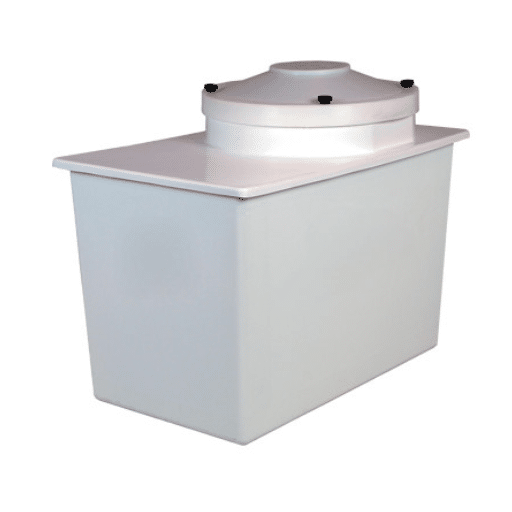
A containment system that is not inspected is a containment system that will eventually fail. Regulators and insurers know this, which is why inspection and recordkeeping are just as important as the equipment itself.
Monthly Visual Inspections
Every month, walk the fueling area and storage zones. Look for:
- Cracked seams or distorted walls in sumps and spill buckets
- Accumulated liquid, debris, or sediment
- Open, leaking, or missing drain valves
- Damaged entry boots, gaskets, or seals
- Missing or unsecured lids
Annual Integrity Checks
Once a year, review the overall condition of all containment equipment. Confirm that sizing still matches your current tank capacities, because station upgrades can outgrow the original containment design.
Triennial Containment Sump and Spill Bucket Testing
Single-walled containment sumps and spill buckets must pass an integrity test every three years. Acceptable methods include hydrostatic testing, vacuum testing, pressure testing, and low-liquid-level testing. Visual inspection alone does not satisfy EPA requirements.
If a test fails, the equipment must be repaired or replaced. Many jurisdictions require prompt reporting because a failed test is treated as evidence of a suspected release.
After-Rainfall Procedures
Outdoor containment areas collect rainwater. That water reduces the available containment volume and can carry hydrocarbons if a spill has occurred. After significant rainfall, remove accumulated water and inspect it for sheen before disposal.
Recordkeeping
Keep inspection and testing records for at least the period required by your regulator, typically one to three years. Good records are your best defense during an audit or incident investigation.
For more prevention-focused guidance, see our article on fuel storage tank leak prevention.
Building a Spill Containment Compliance Program
Strong compliance is not a single piece of equipment. It is a layered program that moves from prevention to response.
- Prevent: Use overfill prevention devices, automatic tank gauges, and careful delivery procedures to stop spills before they start.
- Contain: Install and maintain spill buckets, UDC sumps, turbine sumps, and AST berms sized for your actual volumes.
- Detect: Add interstitial monitoring, leak detectors, and automatic tank gauging so you know about a breach before it becomes a release.
- Respond: Train staff on spill response, keep spill kits accessible, and maintain a clear chain of communication for reporting.
If SPCC applies to your site, your written plan must be reviewed every five years or whenever a significant facility change occurs. Annual training for oil-handling personnel is also required.
For details on prevention equipment, read our guide to overfill prevention devices.
Choosing a Spill Containment Equipment Supplier

Not all containment equipment is built for fueling environments. When selecting a supplier, look beyond price and check the following.
Compliance Track Record
Ask whether the equipment meets the standards that apply to your region: EPA 40 CFR 112 and 280 in the United States, ATEX in Europe, UL listings for North America, or OIML and ISO certifications for global projects. A supplier should be able to document compliance, not just claim it.
Material Compatibility
Confirm that sumps, seals, and coatings are compatible with the fuels you store, including ethanol or biodiesel blends if applicable.
Customization and Integration
Every station layout is different. A supplier that offers custom engineering can adapt sump configurations, piping interfaces, and tank connections to your site rather than forcing your site to fit a catalog part.
Global Support
If you are building or upgrading stations in multiple countries, choose a partner with export experience, multi-region certifications, and responsive technical support. Installation documentation, CAD drawings, and on-site supervision can save weeks of delay.
At Shandong Shengrui Intelligent Equipment Co., Ltd., we supply certified fuel storage tanks, fuel dispensers, and containment-ready infrastructure for retail, fleet, and skid-mounted fueling projects worldwide. Our fuel storage tanks are engineered to integrate with modern leak detection and secondary containment systems, helping operators meet local and international standards from day one.
Frequently Asked Questions
What is a spill containment system?
A spill containment system is a physical barrier or structure that captures spilled fuel or hazardous liquid before it reaches soil, groundwater, or drainage systems. At fueling sites, examples include spill buckets, dispenser sumps, berms, and dikes.
Do gas stations need an SPCC plan?
Most retail gas stations that store motor fuel only in underground tanks do not need an SPCC plan for that fuel. However, if the station stores more than 1,320 gallons of oil above ground in containers of 55 gallons or more, SPCC applies.
How often must containment sumps be tested?
Single-walled containment sumps and spill buckets are generally integrity-tested every three years. Double-walled systems are typically checked annually through interstitial monitoring. Confirm the exact schedule with your local regulator.
What is under-dispenser containment?
Under-dispenser containment (UDC) is a liquid-tight sump installed beneath a fuel dispenser. It captures leaks from the piping, flex connectors, and shear valves that connect the dispenser to the underground fuel line.
How do you size secondary containment for a fuel tank?
Federal rules generally require secondary containment to hold the greater of 10% of the total volume of all containers or 100% of the largest single container. Best practice often sizes containment to 110% of the largest tank to allow freeboard.
What is the difference between primary and secondary containment?
Primary containment is the vessel that normally holds the liquid, such as a tank or pipe. Secondary containment is the backup layer that captures spills if the primary container leaks or fails.
What materials are used for spill containment systems?
Common materials include concrete, steel, high-density polyethylene (HDPE), fiberglass, and coated fabrics. The material must be chemically compatible with the fuel being stored.
What happens if a containment sump fails its integrity test?
A failed test usually must be reported as a suspected release, and the equipment must be repaired or replaced. Requirements vary by jurisdiction, but prompt action is essential to avoid fines and environmental damage.
Conclusion
Spill containment systems are the quiet insurance policy of every fueling site. They don’t attract attention when they work, but they prevent the incidents that can shut a station down.
To stay compliant and protected, remember four principles:
- Know your rule. Determine whether SPCC, UST, or both frameworks apply to your station.
- Size correctly. Design secondary containment for the largest container, with freeboard for precipitation.
- Inspect regularly. Monthly visual checks, annual reviews, and triennial integrity tests keep small problems from becoming big releases.
- Choose certified equipment. Work with suppliers who understand fuel compatibility, regulatory standards, and your specific site layout.
Last year, a fleet operator in Texas replaced aging single-wall dispenser sumps with double-walled units and continuous interstitial monitoring. During a routine monthly check, the system flagged a pinhole breach in the inner wall. The repair cost less than $1,000. A similar failure in an unmonitored sump could have required a $100,000 site remediation.
That is the difference the right spill containment systems make. They don’t just protect the environment. They protect your investment, your reputation, and your operating license.
If you’re planning a new fueling site or upgrading an existing one, contact our engineering team. We’ll help you specify containment-ready fuel storage tanks, dispensers, and skid-mounted systems that meet your local regulations and long-term performance goals.