A double-wall tank without the right interstitial monitoring is like a smoke detector with no battery. The hardware looks protective, but it will not warn you when danger arrives. A single fuel leak can cost $255,000 to remediate. Double-wall tanks with interstitial monitoring catch breaches in the annular space before fuel ever reaches soil or groundwater. Yet many buyers specify double-wall construction without understanding which monitoring method fits their tank material, soil conditions, and regulatory environment.
You already know that leak prevention matters. What you need is a practical way to match tank construction to the right interstitial monitoring approach, and to specify both correctly when procuring equipment. This article explains how double wall tank leak prevention works, compares wet versus dry monitoring methods, walks through what happens during an actual leak event, and gives you a procurement checklist you can use today.
In this guide, we will cover:
- How double-wall construction prevents environmental releases
- Wet versus dry interstitial monitoring methods, and when each makes sense
- EPA and global regulatory requirements for secondary containment
- What actually happens when a double-wall tank leaks
- A procurement checklist for specifying leak prevention features
- Cost-benefit analysis: Is the investment justified
Leakage is a very important safety incident for gas stations, and if you want to learn how to prevent it, please check out our article on Gas Station Leak Prevention.
How Double-Wall Construction Prevents Environmental Releases

The Two-Barrier Principle
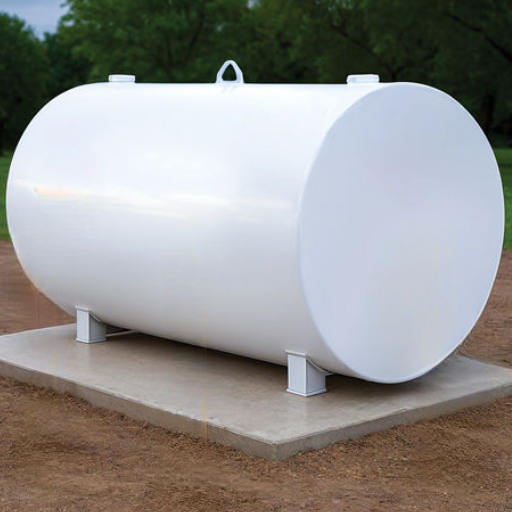
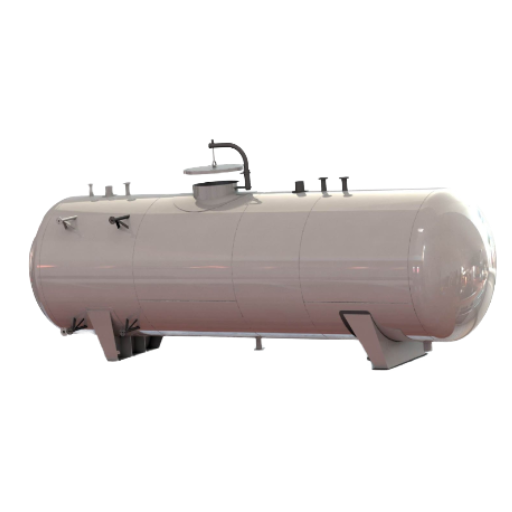
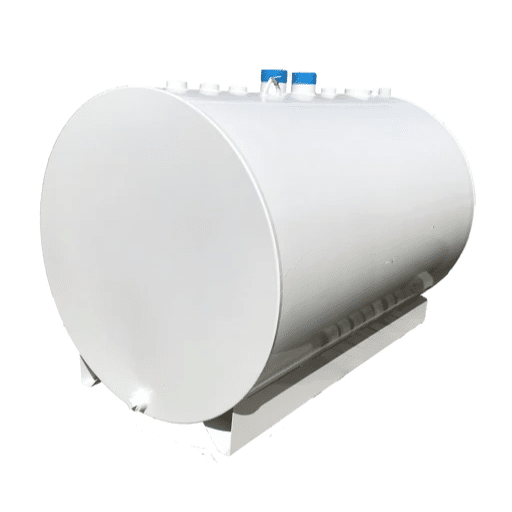
Double-wall tanks use two independent barriers to contain fuel. The inner wall serves as primary containment. It holds the fuel during normal operation. The outer wall serves as secondary containment. It prevents leaked fuel from escaping to soil or groundwater. Between these two walls sits an interstitial space. This gap is not empty air. It is an engineered monitoring zone designed to detect breaches in either wall before environmental damage occurs.
Three common construction types dominate the market. SF tanks combine a steel inner wall with a fiberglass-reinforced plastic outer wall. FF tanks use fiberglass for both walls. SS tanks use steel for both walls, though these are less common for underground applications due to corrosion risk. Each construction type influences which interstitial monitoring method works best.
The Interstitial Space as Early Warning Zone
The interstitial space is the key to double wall tank leak prevention. In a well-built SF tank, this gap measures between 0.1 and 5 millimeters depending on the manufacturing standard. The space must be uniform. Variations in gap width create dead zones where leaked fuel can pool undetected. A uniform gap ensures that any breach directs fluid to a monitored low point.
Monitoring happens in real time with electronic sensors or periodically with manual inspection. Real-time monitoring catches leaks within hours. Manual inspection might miss a slow leak for weeks. That difference determines whether you address a breach with a simple repair or face a full environmental remediation.
Material Selection and Leak Risk
SF tanks are the most common choice for standard petrol stations. The steel inner wall provides structural strength under burial loads and seismic stress. The FRP outer wall blocks external corrosion from soil moisture, salts, and electrolysis. This combination delivers 30 to 50 years of service life when properly monitored.
FF tanks excel in highly corrosive soil or saltwater environments. The all-fiberglass construction eliminates internal steel corrosion risk. However, FF tanks cost 20 to 40 percent more than equivalent SF models. They also offer less rigidity under extreme ground loads.
SS tanks provide high structural capacity but require cathodic protection to prevent electrochemical corrosion. For most fuel station projects, SF construction offers the best balance of strength, corrosion resistance, and cost.
Interstitial Monitoring Methods: A Technical Comparison
Not all interstitial monitoring provides equal protection. The method you choose determines detection speed, precision, maintenance burden, and total cost. Here is how the four primary approaches compare.
Wet (Hydrostatic) Interstitial Monitoring
Wet monitoring fills the interstitial space with a monitoring fluid, typically brine or glycol with a color tracer. The fluid level remains constant under normal conditions. If the inner wall breaches, fuel enters the space and displaces the monitoring fluid. The level change triggers an alarm. If the outer wall breaches, groundwater enters and also changes the fluid level.
This method monitors 100 percent of both wall surfaces continuously. Because the fluid contacts every surface, there are no dead zones. Hydrostatic systems can achieve leak detection precision of 0.1 gallons per hour. That exceeds the EPA minimum standard of 0.2 gph. Many fiberglass tank manufacturers prefer wet monitoring because it also serves as a continuous precision tank test.
The downside is maintenance. The monitoring fluid must be checked periodically. Freezing climates require glycol mixtures. Over time, fluid can degrade or leak through fittings.
Dry (Vacuum/Pressure) Interstitial Monitoring
Dry monitoring holds the interstitial space under vacuum or pressure. A pump creates underpressure in the annular gap. If either wall breaches, air or liquid enters the space. The pressure change triggers an alarm. Vacuum systems are common on steel and composite tanks where a fully sealed annular space is practical.
The advantage is simplicity. There is no monitoring fluid to maintain. The system tests itself continuously. If the vacuum pump fails, the system alarms immediately rather than silently failing.
The disadvantage is seal sensitivity. Any compromise in the annular seal, whether from a manufacturing defect, installation damage, or aging gaskets, causes a pressure loss. That pressure loss triggers a false alarm until the seal is repaired. In high-groundwater areas, a tiny outer-wall breach might let water in and trigger alarms before any real leak occurs.
Electronic Point and Cable Sensors
Electronic sensors represent the most advanced approach to interstitial monitoring. Capacitive or conductive point sensors sit at the lowest point of the interstitial space. They detect the presence of liquid directly. Continuous leak detection cable can run through the entire annular space, pinpointing the approximate location of a breach along the cable length.
Modern discriminating sensors differentiate between fuel and groundwater. This capability is critical in high water-table areas where groundwater intrusion is common. A sensor that cannot distinguish fuel from water will generate chronic false alarms. Operators eventually silence or ignore those alarms, defeating the purpose of the system.
Electronic sensors integrate with ATG consoles and SCADA systems. They support remote monitoring via relay outputs or 4-20 mA signals. A multi-site operator can receive leak alarms on a mobile device within minutes of a breach.
Manual Interstitial Monitoring
Manual monitoring uses a dipstick or visual inspection at a monitoring well to check for liquid in the interstitial space. This is the lowest-cost option. It is also the least reliable. Human error, missed inspection dates, and slow leaks that accumulate gradually all reduce effectiveness.
Manual monitoring meets the EPA requirement for a 30-day check. It does not provide real-time detection. For a station with high environmental risk or sensitive groundwater nearby, manual-only monitoring is insufficient.
Regulatory Compliance: What the EPA and Global Standards Require

EPA 40 CFR Part 280, The 2015 Federal UST Rule
The EPA’s 2015 revised federal UST regulations under 40 CFR Part 280 changed the landscape for double wall tank leak prevention. Any underground storage tank or piping installed or replaced after April 11, 2016, must use secondary containment with interstitial monitoring as the primary release detection method. This rule applies to all new installations. It does not grandfather in older single-wall designs.
Key requirements include:
- Interstitial monitor checks: At least once every 30 days
- Annual testing: Release detection equipment must be tested annually for alarm operability, battery backup, and sensor communication
- 3-year sump integrity testing: Containment sumps used for interstitial monitoring must undergo liquid-tightness testing every three years, or use double-walled sumps with periodic monitoring
These requirements make double-wall construction with interstitial monitoring the de facto standard for modern fuel storage.
Pre-2016 Systems, Grandfathered Alternatives
Tanks and piping installed on or before April 11, 2016, may continue using alternative release detection methods. These include automatic tank gauging, statistical inventory reconciliation, vapor monitoring, groundwater monitoring, and tank tightness testing. However, upgrading to double-wall with interstitial monitoring still makes financial sense for many older systems.
The cost of retrofitting or replacing an aging single-wall tank is often lower than the cost of a single remediation event. Insurance underwriters increasingly favor double-wall construction. Some states now require double-wall tanks for all new installations, regardless of federal grandfathering.
European Standards (EN 13160)
European standard EN 13160 governs leak detection devices for double-skinned tanks. Class I systems provide the highest protection level. They detect leaks in both inner and outer walls with high reliability. Factory pressure and vacuum testing requirements ensure that tanks leave the manufacturing facility with verified wall integrity.
The European approach emphasizes factory testing and continuous monitoring over periodic manual inspection. Tanks sold in EU markets must carry CE marking and demonstrate compliance with the ATEX Directive for hazardous area equipment.
China GB50156-2021 and A1/A2 Pressure Vessel Licensing
China’s GB50156-2021 standard covers design and construction of fuel stations, including underground storage requirements. Chinese manufacturers of SF double wall tanks must hold A1 or A2 pressure vessel design and manufacturing licenses. These licenses indicate that the manufacturer has been audited and approved by Chinese authorities for pressure vessel production.
For international buyers, verifying A1/A2 licensing is a baseline due diligence step. It does not replace UL, EN, or ASME certification for export markets. However, it does confirm that the manufacturer operates under a regulated quality system rather than as an unlicensed fabricator.
When Carlos Mendez upgraded his two-station network in Guadalajara, he specified double-wall tanks with interstitial monitoring to satisfy his insurer. He chose manual dipstick monitoring to keep costs low. For eleven months, the dipstick readings showed nothing unusual. Then a delivery driver noticed fuel pooling around a tank sump during a routine drop.
An investigation revealed that the inner wall had developed a stress crack near a weld seam. Fuel had been seeping into the interstitial space for four months. Because Carlos relied on monthly manual checks, the leak accumulated until it found a path through a damaged outer-wall fitting. The remediation cost reached 68,000. A $1,200 electronic sensor system would have caught the breach within 48 hours.
What Happens When a Double-Wall Tank Leaks
The Leak Event Sequence
Understanding the leak event sequence helps you evaluate whether your monitoring system provides adequate protection. Here is what actually happens, step by step.
Step 1: Inner wall breach. Corrosion, stress fatigue, manufacturing defect, or mechanical damage creates an opening in the primary containment wall. The breach might be microscopic at first.
Step 2: Fuel enters the interstitial space. Fuel migrates through the breach and collects at the lowest point of the annular gap. Gravity drives this migration. The amount of fuel entering depends on breach size and tank pressure.
Step 3: Sensor detects the change. In a wet system, the monitoring fluid level rises. In a dry system, pressure drops. In an electronic system, the sensor contacts fuel and changes capacitance or conductivity. Detection time ranges from minutes to hours, depending on breach size and sensor sensitivity.
Step 4: Alarm triggers. The local console sounds an audible alarm and displays a leak notification. Remote systems send alerts via SMS, email, or SCADA interface. The alarm persists until acknowledged.
Step 5: Operator investigates. EPA regulations typically require reporting a suspected release to the state UST authority within 24 hours. The operator checks the tank, reviews sensor data, and determines whether the alarm indicates a real leak or a false positive.
Step 6: Tank is emptied and evaluated. If the leak is confirmed, the tank is emptied. Technicians determine whether the tank can be repaired or must be replaced. Most double-wall tanks with interstitial monitoring never reach Step 6 because early detection allows repair before catastrophic failure.
If you use Fuel Storage, please refer to our article on Fuel Storage Tank Leak Prevention.
Why Most Leaks Never Reach the Environment
The secondary containment wall is the critical safety layer. Even if the inner wall fails, the outer wall holds the leaked fuel. In an SF tank, the FRP outer shell is chemically resistant to gasoline, diesel, and ethanol blends. It does not corrode in the same way steel does.
Early detection is equally important. Interstitial monitoring catches leaks while they are small. A 0.1 gph leak detected in the first week releases roughly 17 gallons. That volume fits easily within the interstitial space of a standard tank. Without monitoring, the same leak might continue for months, releasing thousands of gallons into the environment.
Specifying Leak Prevention Features: A Procurement Checklist

Tank Construction Standards
Demand documentation of the interstitial gap before you buy. The gap must be uniform across the entire tank surface. Request cross-section drawings that show gap dimensions at multiple points. For SF tanks, verify inner wall thickness of 6 to 10 millimeters and outer FRP thickness of at least 4 millimeters.
Confirm that the tank includes integrated sensor ports at the interstitial low point. Retrofitting sensor ports after manufacturing is difficult and often voids warranties. Specify factory-installed ports with threaded or flanged connections compatible with your chosen sensor type.
Need more information about Component Tanks? You can check out our article on Component Tanks.
Sensor and Monitoring System Specifications
Specify continuous electronic monitoring rather than manual-only inspection. Electronic sensors provide real-time detection. They also create an automatic data log that regulators and insurers value.
If your site has a high groundwater table, require discriminating sensors that differentiate fuel from water. Standard liquid-detection sensors will trigger false alarms whenever groundwater enters the interstitial space. Discriminating sensors cost 20 to 30 percent more but eliminate chronic nuisance alarms.
Confirm communication protocol compatibility. Most electronic sensors output via dry contacts, 4-20 mA, or RS485 Modbus. Verify that your ATG console or building management system can receive and interpret the sensor signal. Our guide to automatic tank gauge systems covers protocol integration in detail.
Certification and Testing Documentation
Request factory test certificates for every tank. These should include pressure or vacuum hold tests, interstitial gap verification, and weld inspection reports. For FRP components, ask for UL 1316 or EN 12285-1 compliance documentation.
Sensor calibration records are equally important. Sensors should arrive with a factory calibration certificate dated within 90 days of shipment. If the sensor has been sitting in inventory for six months, request recalibration before delivery.
Installation and Commissioning Requirements
Schedule a vacuum check for 24 hours after backfilling. This test verifies that the interstitial space remains sealed under burial load. Any pressure loss during this period indicates damage to the outer wall or a fitting seal.
Baseline sensor calibration must occur before the first fuel delivery. The sensor needs to learn the normal state of the interstitial space under operating conditions. Operator training on alarm response procedures is not optional. Every shift operator must know how to distinguish a leak alarm from a system fault, and who to contact when a leak is confirmed.
Aisha Okafor managed procurement for a coastal fuel depot in Lagos. She specified double-wall tanks with dry vacuum monitoring for her new installation. Within three months of commissioning, the system began generating alarms every few days. Technicians found no leaks. The culprit was saltwater intrusion through a microscopic outer-wall gap.
Because her sensors could not distinguish diesel from seawater, every groundwater intrusion triggered a fuel leak alarm. After consulting with the manufacturer, Aisha upgraded to discriminating hydrostatic sensors with brine monitoring fluid. The false alarms stopped immediately. The experience taught her that coastal sites demand sensor technology matched to the environment, not just the tank.
Cost-Benefit Analysis: Is Double-Wall Worth the Investment

Double-wall tanks cost 20 to 40 percent more than single-wall equivalents. Interstitial monitoring adds 500 to 3,000 per tank depending on the method. Wet hydrostatic systems sit at the high end of that range. Manual dipstick monitoring sits at the low end. Electronic point sensors fall in the middle.
The average UST remediation cost exceeds $255,000. That figure includes soil removal, groundwater treatment, regulatory fines, and legal fees. It does not include business interruption, reputational damage, or increased insurance premiums. A single remediation event costs more than outfitting an entire station with double-wall tanks and premium monitoring.
Service life differences add another dimension. An SF double-wall tank lasts 30 to 50 years. An unprotected single-wall steel tank lasts 5 to 10 years in corrosive soil. Over a 30-year horizon, you might replace a single-wall tank three to six times. You would replace an SF double-wall tank once.
Insurance and liability reductions provide less visible but equally real savings. Underwriters increasingly offer premium discounts for stations with continuous interstitial monitoring. Some policies require it for new installations. The monitoring system pays for itself not by generating revenue, but by preventing catastrophic loss.
Need help comparing tank types for your project? Our fuel storage tank solutions guide breaks down underground versus aboveground options, single versus double wall, and steel versus fiberglass from a leak risk perspective.
Frequently Asked Questions
What is interstitial monitoring?
Interstitial monitoring is a leak detection method that checks the space between the inner and outer walls of a double-wall tank for leaked fuel or vapor. Sensors or monitoring fluid detect breaches in either wall before fuel reaches the environment.
How often must interstitial monitors be checked?
EPA regulations require checking interstitial monitors at least once every 30 days. Electronic continuous monitoring systems satisfy this requirement automatically. Manual systems require a physical inspection by station personnel every 30 days.
Can a double-wall tank leak without triggering an alarm?
Yes, if the monitoring system is inadequate. A tank with manual-only monitoring or faulty sensors can leak undetected for weeks. The double-wall construction contains the leak temporarily, but without functional monitoring, operators will not know a breach has occurred until fuel escapes the secondary containment.
What is the difference between wet and dry interstitial monitoring?
Wet monitoring fills the interstitial space with a monitoring fluid such as brine. A level change indicates a wall breach. Dry monitoring uses vacuum or pressure in the annular space. A pressure change indicates a breach. Wet systems monitor 100 percent of both walls continuously. Dry systems are simpler to maintain but more sensitive to seal degradation.
Conclusion
Double-wall tank leak prevention is not about buying the most expensive tank. It is about matching construction, monitoring technology, and regulatory requirements to your specific site conditions. A well-specified SF double-wall tank with continuous electronic interstitial monitoring provides decades of protection against environmental liability. A poorly specified system with manual-only checks creates a false sense of security.
The key takeaways are simple. Specify a uniform interstitial gap with factory-verified tolerances. Choose continuous electronic monitoring over manual inspection. Match the sensor type to your groundwater conditions. Demand factory test certificates and sensor calibration records. Train your operators on alarm response before the first fuel delivery.
If you are planning a new station or replacing aging tanks, start with the monitoring method and work backward to the tank specification. The right interstitial monitoring system turns your double-wall tank from passive hardware into active environmental protection.
Contact Shandong Shengrui Intelligent Equipment Co., Ltd. for SF double-wall tanks with integrated interstitial monitoring ports, factory test documentation, and leak detection system compatibility. Our engineering team can help you specify the right configuration for your soil conditions, regulatory environment, and fuel type.