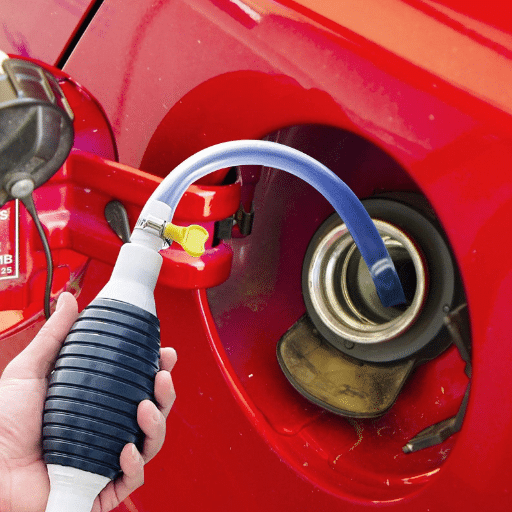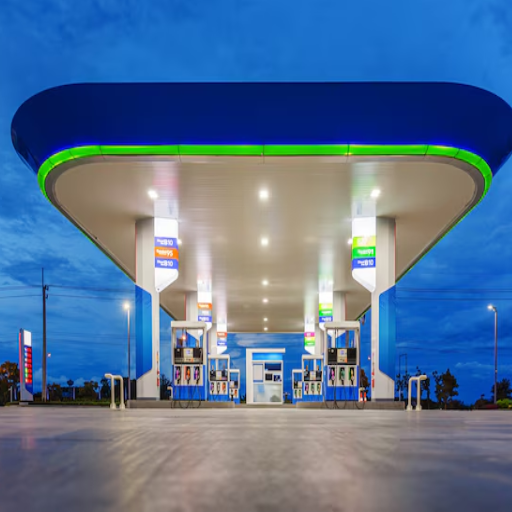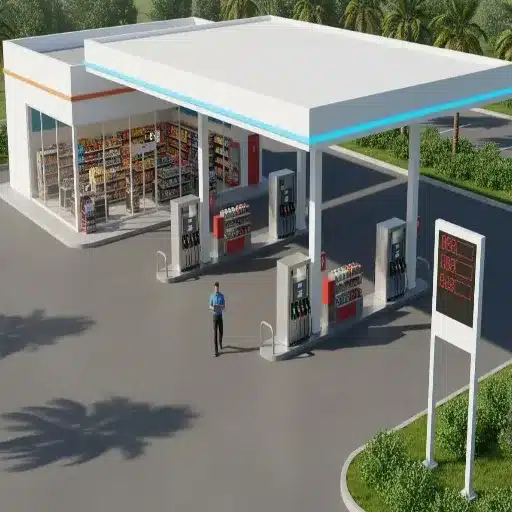
The investigation of a 2019 Lagos, Nigeria, fuel station fire traced its origin to an operational design error, which placed fuel dispensers at a distance smaller than two meters from the convenience store entrance, thus creating a safety violation. The minor gas station layout violation resulted in property damage exceeding a million dollars and created a danger to multiple lives.
You understand that a gas station layout is not merely about arranging equipment on a plot of land. It forms the basic structure that ensures operational safety and regulatory compliance and establishes sustainable business profits. Your customer service capabilities depend on every single meter of space, each equipment setup choice, and all traffic movement arrangements you create.
This guide shows you how to create a gas station design that meets global safety requirements while ensuring traffic efficiency through your site and providing your machinery with long-term operational performance. The principles in this document will guide you to create an efficient layout, whether you develop a new station or update an existing one.
Want to see how intelligent equipment integration enhances your layout? Explore our fuel dispenser solutions designed for optimal station performance →
What Is a Gas Station Layout?
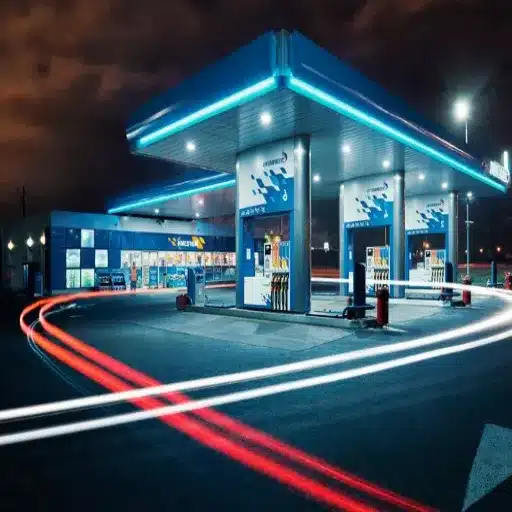
The complete design of a gas station facility shows every element that makes up the gas station space, including the gas pumps and the underground tanks, the store area, the vehicle movement paths, and the security areas. The effective layout design needs to achieve four main goals, which include operational efficiency, customer convenience, safety compliance, and regulatory requirements within the existing space of the site.
Your layout functions as the operational framework that your station needs to follow for all its upcoming activities. The system controls your station’s capacity to handle multiple vehicles at once while it manages safe fuel storage and dispensing operations, and it establishes customer movement paths and emergency service response times to important locations. The layout design needs to handle peak-hour traffic while allowing different vehicle types to use the space, and it needs to make sure dangerous materials stay apart from safe materials.
The components of a standard gas station layout include:
- Fueling islands with dispensers arranged for optimal vehicle access
- Underground storage tanks (USTs) are positioned for regulatory compliance and operational efficiency
- Convenience store and retail spaces integrated without compromising safety
- Traffic circulation patterns that prevent congestion and accidents
- Safety equipment zones, including emergency shutoffs and fire suppression systems
- Utility infrastructure for electrical, communication, and monitoring systems
The elements require complete cooperation, which requires all elements to work together. The installation of fuel dispensers needs to follow traffic patterns because any other method will create traffic delays. The installation of underground tanks needs to follow separation requirements because any failure to do this will result in regulatory violations. The design of retail space needs hazardous zone classifications because the design will endanger customers who visit the space.
Key Components of an Effective Gas Station Layout
Fueling Island Placement and Spacing
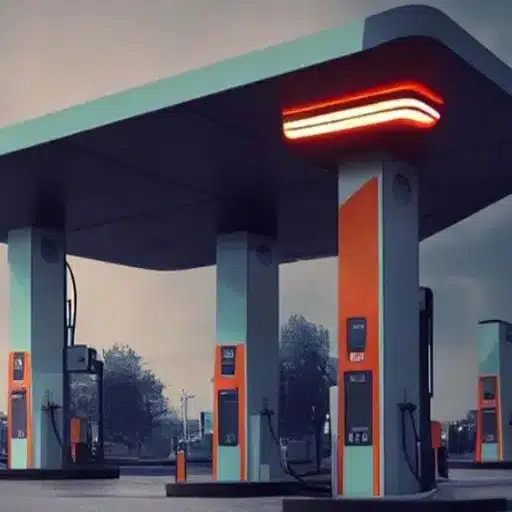
The operational center of your station depends on the fuel islands. The spacing between islands determines three factors, which include customer throughput, vehicle maneuverability, and safety compliance requirements.
The industry standards require a minimum distance of 12 to 14 feet, which should be measured from the centers of adjacent fueling islands. The required spacing allows standard vehicles to operate while maintaining safe distances needed for door operation, fuel nozzle usage, and pedestrian travel. The required spacing for stations that serve heavy-duty vehicles or trucks should be expanded to 16 to 18 feet.
Your dispenser configuration determines the required island length. Single-sided islands have a typical size of 20 to 24 feet, while double-sided islands require 40 to 48 feet to enable simultaneous fueling operations on both sides. The design of islands should follow a pattern that makes them face the main traffic flow route because this design helps reduce problems during entry and exit.
The planning of island placement requires your assessment of the canopy coverage. Your canopy should extend at least 3 feet beyond the dispenser face to protect customers and equipment from the weather. The requirement for overhangs determines both total site dimensions and foundation placement.
Underground Storage Tank Positioning
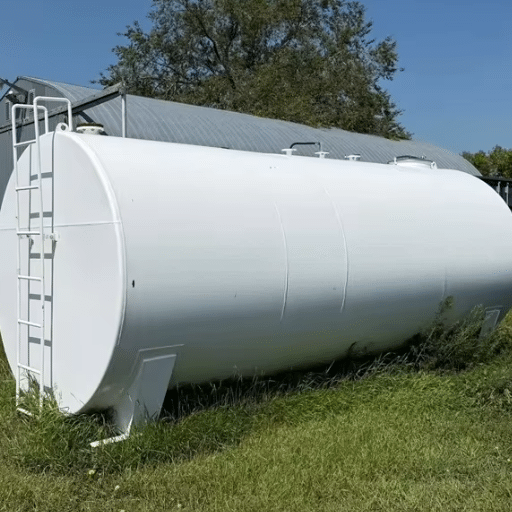
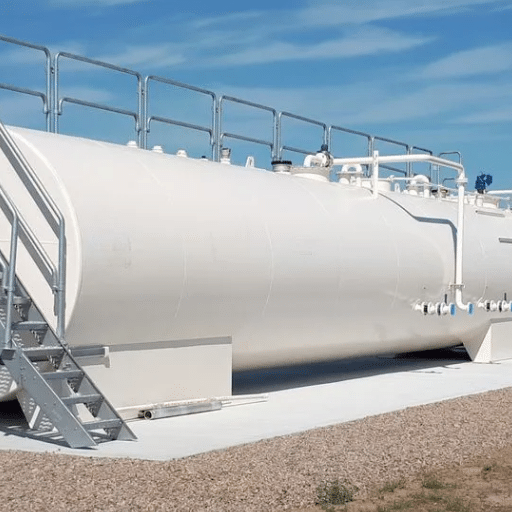
Gas stations need to position underground storage tanks with maximum precision for their site design. UST placement affects installation costs, regulatory compliance, leak detection effectiveness, and long-term maintenance access.
Regulatory requirements mandate minimum separation distances that vary by jurisdiction but generally include:
- 25 feet minimum from any building or property line
- 10 feet minimum from fuel dispensing equipment
- 50 feet minimum from ignition sources (electrical transformers, generators)
- 100 feet minimum from water wells or surface water bodies
Tanks should be arranged to create direct pathways that lead to fuel dispensers. The use of shorter piping results in decreased pressure losses, which makes leak detection easier and decreases installation expenses. For multi-tank installations, maintain 3 feet of separation between tank walls to accommodate monitoring equipment and cathodic protection systems.
The orientation of tanks determines how effective leak detection will be. Complete tank monitoring requires operators to install single-wall tanks in locations that provide complete visibility of every area. Double-wall tanks with interstitial monitoring provide operators with various operational options but require accessible placement to conduct their inspection and maintenance duties.
Planning your UST installation? View our certified fuel storage tanks engineered for global compliance standards →
Convenience Store and Retail Integration
Modern fuel retailers generate their total station revenue through convenience store sales, which account for 70 percent of their revenue. Gas stations need to create their retail space layout because customers want to buy products, while safety regulations require them to keep hazardous areas separate.
The electrical codes establish hazardous location classifications, which you need to avoid when selecting your convenience store site. The National Electrical Code (NEC) Article 514 in the United States defines Class I Division 1 and Division 2 zones, which extend from fueling points and tank vents. Your retail building needs to be constructed outside these zones, which usually require 20 to 25 feet of distance between the building and the closest fueling station.
Create pedestrian pathways that direct customers from fuel stations to the store entrance in a secure manner. The design needs to prevent people from walking through areas where they might encounter dangerous situations and through areas where vehicles operate. Staff members can watch over the store and fueling islands because clear sight lines exist between these two areas, which also improves security.
Your design needs to include space for delivery trucks to access the site. Convenience stores need regular supply deliveries, which should not disrupt fueling operations or block emergency access routes. Loading areas need to be constructed with separate circulation paths, which will keep retail and fueling operations from interfering with each other.
Traffic Flow and Vehicle Circulation
The layout needs to handle demand during peak hours while avoiding street and internal traffic problems.
All entry and exit points need to be designed for optimal traffic flow. The one-way system, which operates around fueling islands, leads to fewer dangerous situations because it decreases conflict areas. The facility needs to establish specialized exit points that allow customers to leave without passing through active traffic zones.
The required lane widths depend on the type of vehicle using the road:
- Standard vehicles need 10 to 12 feet of lane space.
- Large SUVs and trucks require 12 to 14 feet of lane space.
- Heavy-duty commercial vehicles need 14 to 16 feet of lane space.
Queue management requires planning for 3 to 5 minutes of waiting capacity during peak periods. The station needs to store between 15 and 25 vehicles in its circulation lanes because it has 8 fueling positions, which must remain open for access and exit.
Emergency Access and Safety Zones
Gas station design needs emergency access as a fundamental requirement that cannot be altered. Fire apparatus requires 20-foot minimum width access paths that extend to all fueling equipment and storage tanks within 150-foot distances.
Mark emergency shutdown system locations clearly in your layout. These systems must be accessible from multiple points, including the perimeter of the fueling area and the convenience store. Staff must have quick access to emergency shutoffs, which protect their safety during emergencies.
Fire suppression equipment zones require dedicated space that remains clear of obstacles. Foam suppression systems, fire extinguishers, and spill containment equipment need to be placed in a way that allows people to access them while keeping them safe from vehicle damage.
Gas Station Layout Standards and Compliance
International Safety Standards (UL, ISO, ATEX)
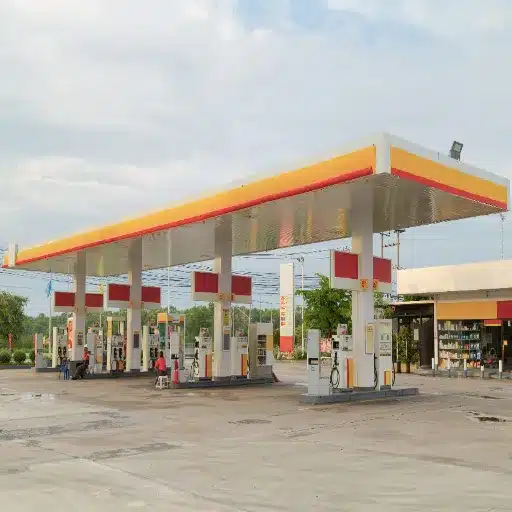
Gas station equipment needs to meet various certification requirements, which depend on the specific markets you want to enter. The design process needs to include these standards since they guide the creation of layouts, which will later lead to expensive design modifications and noncompliance problems.
The equipment safety standards for North America markets follow Underwriters Laboratories (UL) guidelines. The UL 87 standard applies to power-operated dispensing devices that handle petroleum products. The UL 2586 standard defines the safety requirements that must be met by fuel dispensers. Your design needs to support UL-listed equipment through designated clearance spaces and mounting instructions.
ISO standards deliver international standards that establish requirements for fueling infrastructure systems. ISO 15171 defines the testing standards that need to be followed for road vehicle fuel dispensers. ISO 10088 defines the fuel systems requirements for small craft vessels. International market layouts need to use ISO standards, which define equipment compatibility requirements.
The European market uses ATEX regulations to control the operation of equipment in areas that might experience explosive atmospheres. ATEX certification protects electrical equipment in dangerous areas through explosion-proof certification. Your layout must define zone classifications precisely to specify appropriate ATEX equipment categories for each location.
The standards require documentation, which needs to be created during every phase of the layout development process. The final approval requires equipment specifications and installation drawings, and zone classification maps to match certification standards.
Underground Tank Separation Requirements
Underground storage tank regulations differ from one jurisdiction to another, but both establish identical safety requirements. Your layout design requires a full understanding of these requirements since they determine your actual building expenses for site changes.
The U. S. Environmental Protection Agency (EPA) requires specific distance requirements, which are defined under 40 CFR Part 280. The regulations establish UST location requirements which state that USTs must be placed:
- 25 feet away from all buildings and their closest property boundaries
- 50 feet away from every ignition source
- 100 feet away from all surface water bodies and drinking water wells
State and local regulations frequently establish more demanding standards. California requires a 30-foot distance between buildings and specific tank configurations. You need to check local changes that affect federal and national standards.
Tank placement needs to follow both regulations and operational requirements, which determine practical layout needs. Excessive tank positioning results in restricted building expansion possibilities. Property line tank placement creates security threats while restricting nearby land development options.
Electrical and Explosion-Proof Zone Classifications
The electrical systems in fueling stations must follow hazardous location standards, which determine the placement of explosion-proof devices. The layout design of your project needs to comply with two requirements, which include equipment placement restrictions and construction standards.
Class I, Division 1 locations typically include:
- The areas that surround fuel dispenser enclosures
- The areas that exist beneath dispenser islands where fuel piping runs
- The areas that extend 5 feet from tank fill openings and vent pipes
- The areas that exist inside tank sumps and containment chambers
Class I, Division 2 locations extend further:
- The areas that extend 20 feet from fuel dispensing equipment
- The areas that extend 3 feet above the finished grade level of the underground tanks
- The areas that extend 10 feet from tank fill openings and vent pipes
Your layout must clearly delineate these zones to specify appropriate electrical equipment. Explosion-proof lighting systems, together with conduit systems and communication equipment, need higher financial investment than typical equipment. The thorough design of hazardous zones enables organizations to achieve cost savings while ensuring their safety requirements.
Accessibility and ADA Compliance
The accessibility standards require businesses to provide customers with disabilities who want to access their fueling stations with safe and independent usage options. The Americans with Disabilities Act (ADA) and similar regulations worldwide mandate specific design elements.
The ADA Standards for Accessible Design establish the following requirements:
- Every fuel station must provide one fuel dispenser that wheelchair users can access.
- Dispenser controls need to be positioned at reachable heights, which range between 15 inches and 48 inches.
- Accessible dispensers need to have 30 inches by 48 inches of clear floor area.
- Accessible routes need to connect from parking areas to accessible fueling positions.
Different regulatory systems in international markets create requirements that match those found in domestic regulations. European standards EN 301 549 and equivalent national regulations require accessibility features that follow inclusive design principles but have different specific dimension requirements.
Designers need to determine accessible fueling locations during the initial stages of layout development. These locations need to have level surfaces for entry, sufficient space for movement, and direct access to accessible parking areas. The cost to implement accessibility features into existing designs becomes higher compared to their implementation during the design development phase.
Ensure your layout meets international compliance standards. Explore our UL and ISO certified fuel station equipment →
Safety-First Layout Design Principles
Explosion-Proof Equipment Placement
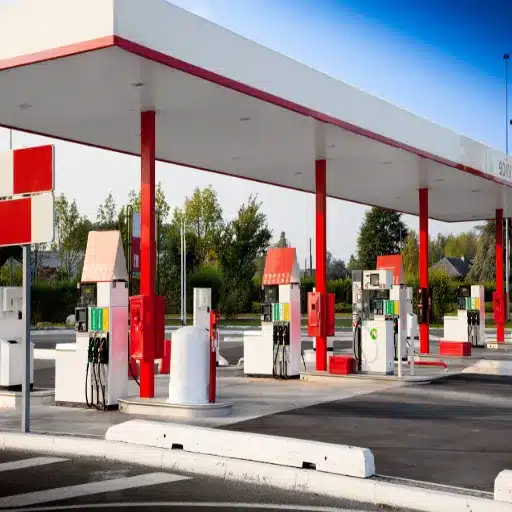
Explosion-proof equipment protects against ignition in hazardous atmospheres that contain fuel vapors. The correct equipment distribution throughout your gas station design enables uninterrupted safety operations, which maintain full functionality.
The complete fueling areas, traffic paths, and safety equipment spots require explosion-proof lighting to provide illumination. The placement of luminaires should create complete visibility, which prevents any hidden spills or equipment damage. The standard mounting height for under canopy lighting systems ranges between 12 and 20 feet based on the required illumination and the designated zone types.
The hazardous areas of fuel dispensers need explosion-proof enclosures for their electrical panels and control systems. The contemporary intelligent fuel management systems are developed through the centralization of controls into secure areas, which decreases the need for explosion-rated equipment at every island.
All emergency phones and intercom systems must comply with zone classification standards for communication equipment. Emergency communication devices need to be installed at heights and locations that allow customers to easily access them during emergencies.
Emergency Shutdown System Integration
Emergency shutdown systems (ESDs) provide the critical ability to stop fuel flow throughout your station during incidents. The layout needs to position ESD controls so that they can be accessed immediately, but their protective functions will remain intact.
Manual ESD stations should be located at:
- Two locations must be placed at each end of the fueling area
- The convenience store counter or office
- The perimeter of the station property
- Points accessible to emergency responders
The ESD systems need to cut power to all fuel dispensers while they shut down solenoid valves at tanks and start alarm systems. Modern intelligent systems allow operators to trigger shutdowns from mobile devices or central control rooms because ESD functions integrate with remote monitoring capabilities.
Standardized signage needs to mark ESD locations for clear identification. Emergency responders must identify shutdown controls immediately upon arrival. Your network of stations benefits from consistent placement, which helps firefighters and hazmat teams respond effectively to emergencies.
Fire Suppression and Safety Equipment Zones
The layout needs to maintain an accessible space that remains free from obstacles to accommodate fire suppression equipment. The design process requires you to establish these zones at the beginning because they will interfere with other systems.
Foam suppression systems, where required, need space for tank storage, proportioning equipment, and distribution piping. The systems need between 100 and 200 square feet for equipment storage, which they use as their primary area, while their distribution system spreads across all fueling locations.
The placement of portable fire extinguishers must meet the requirements established for both occupancy and hazard classification. Extinguishers should be placed at distances no greater than 30 feet from both fueling equipment and all escape routes. The mounting heights, which range between 3.5 feet and 5 feet enable most users to access items while protecting items from vehicle impacts.
All spill containment equipment, which includes absorbent materials, containment booms, and disposal containers, requires storage in weather-protected areas close to fueling zones. You need to select dedicated areas within your layout to store spill kits, which must be clearly marked.
Vapor Recovery System Layout
The vapor recovery systems capture fuel vapors that escape from vehicles during their refueling process to achieve lower emission levels and better safety results. The design of these systems requires certain piping arrangements, which will affect your complete system configuration.
The Stage II vapor recovery systems establish connections between every fuel dispenser and a vacuum system, which delivers vapors back to underground storage tanks. The system needs two separate piping networks, which include both fuel delivery pipes and vapor return pipes that must follow particular sizing and routing guidelines.
The balance vapor recovery systems, which currently operate in various jurisdictions, depend on vehicle onboard recovery equipment. The systems simplify piping requirements but need dispenser configurations that work with onboard recovery nozzles.
Technicians need to position all vacuum pumps and carbon canister equipment for proper access during their maintenance work. The components need to go through periodic inspection processes, which include replacement procedures. The system design makes it impossible to access components, which leads to higher maintenance expenses and lower system performance.
Intelligent Fuel Station Layout: Future-Ready Design
Smart Fuel Dispenser Positioning
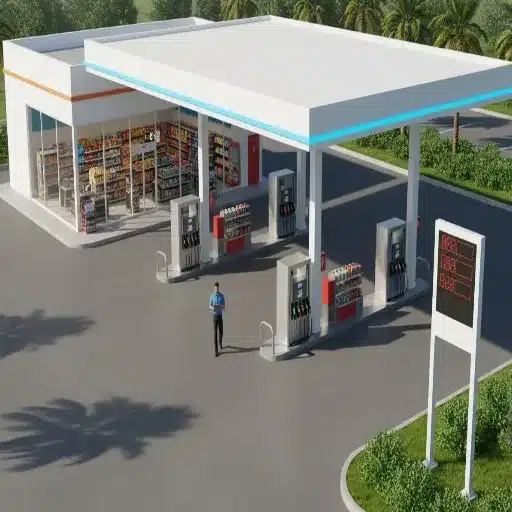
The advanced monitoring, payment processing, and diagnostic capabilities of intelligent fuel dispensers determine their required layout design needs. The systems need to be positioned at their best operational point through the assessment of their current capabilities and required infrastructure elements.
Smart dispensers use special communication networks to connect with central management systems. Your layout must accommodate conduit runs from each dispenser to network consolidation points. The installation of fiber optic or shielded Ethernet cabling requires a different path than standard electrical conduit installation.
The intelligent dispensers demand secure network connections that meet PCI DSS standards for their payment processing equipment. Layout planning should create separation between payment networks and operational control systems, which will need different conduit paths and equipment storage areas.
The modern dispensers use their diagnostic functions to create large data sets, which send real-time information to the management systems. Your layout design needs to support a communication system that can handle high data traffic without causing delivery delays that would disrupt your business operations.
IoT Monitoring and Control Centers
Gas station design requirements change because Internet of Things (IoT) technology provides complete capability to oversee and manage gas stations from distant locations. Your layout must be designed to support the necessary infrastructure of intelligent systems.
Central control rooms or network closets require:
- Server equipment needs a climate-controlled environment
- Uninterruptible power supply (UPS) systems
- Secure access controls and monitoring
- The room must provide sufficient capacity to accommodate future equipment needs
Larger stations need 100 to 200 square feet of dedicated space, which serves control center functions. Smaller facilities may consolidate control functions within the convenience store back office, provided security and environmental requirements are met.
Your facility needs a complete sensor network coverage to monitor tank levels and detect leaks, and conduct environmental assessments. The layout design process needs to determine where sensors will be placed and how their conduit routes will be created without interfering with fuel pipes and electrical systems.
EV Charging Station Integration
With all the developments going on worldwide on the environment front and a strong push toward smart cities, the world clearly needs EV charging infrastructure just as much as it needs conventional fueling infrastructure. The need for these services has never been greater.
Businesses seeking to build a gas station with EV stations will have to face the tremendous opportunities and technical requirements. You need house services of 208 or 240V up to Level 2 charging stations. They bring 10-20 miles of driving per hour of charging, usually in convenience stores where consumers frequently spend 20-30 minutes while shopping. Level 2 chargers have to be situated close to the entrance where shoppers can access the EV chargers during their 20-30 min visit.
DCFC stations add 100+ miles in 20 to 30 minutes, but demand a huge electric infrastructure. 480V systems need their transformers, switchgear, and cooling to be dedicated to them. All three significantly affect what can fit inside a site for layout planning.
Now it is important to consider peak demand charges; if the system is too small, electrical bills will practically explode because of the peaks from both the EV and fuel sides. Expect high hardware prices when it comes to electrical upgrades in support of fast-charging stations because of the utilization of rapid-charging technology by the masses of electric vehicles today.
When it is possible, it would be beneficial to modify the circulation patterns in parking lots by separating the recharging lanes from the fuel lanes. EV recharging time is generally higher than the fueling time of a normal car, so the queue dynamics generally work in another direction. Separate spaces must be designated to move the vehicles away from the refueling slot whenever necessary so that the EV does not block the fueling slot or vice versa.
Automated Payment and Security Systems
As a substitute for manual procedures, modern payment systems also eliminate labor costs and improve the convenience of customers. It is essential to have a neat and tidy layout that may support automation as it relates to payment and security.
These weapons of mass destruction (WMD) require unhindered network access to the payment and security processing components. Position these dispensers to make customers feel safe during payment transactions below the lines of sight to the convenience store and focus on good lighting.
In any place on your site, cameras must be strategically placed to cover the entire premise. The right spot to mount cameras is also an area where camera power and network are accessible:
- All fueling positions
- Entry and exit points
- Cash handling area
- Equipment enclosures
License plate recognition has also been evolving through the addition of cameras to the more traditional security systems. This one involves select configurations based on the terms of the capture angles and lighting requirements that need to consider the way cameras are mounted.
Ready to integrate intelligent systems into your station layout? Discover our smart fuel management solutions designed for modern fueling operations →
Common Gas Station Layout Types
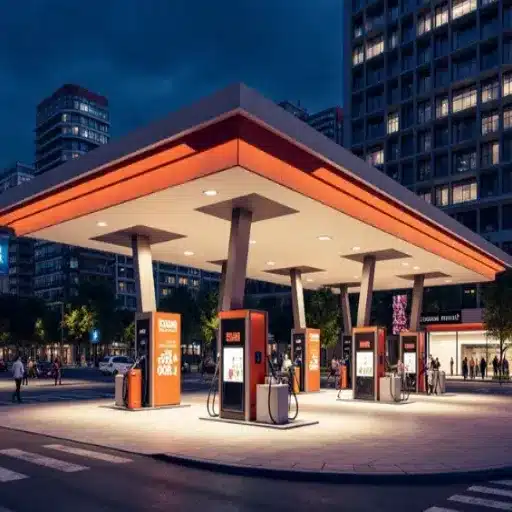
Small-Scale Single-Island Layout
It is at places that have limited traffic or which are isolated, or which have property limitations that the single-island design station layout is applied. This design is highly optimized in terms of efficiency and in terms of the least infrastructure investment, and benchmarks safety compliance as the first priority.
Characteristics of Single-Island Facilities are:
- One double-sided fueling island with 2 to 4 dispensers
- Single underground storage tank – capacity 5000 to 10,000 gallons
- The minimal retail convenience store or kiosk space is 400 to 800 square feet
- One entrance to the exit, with one-way circulation
- A cover over a very rudimentary canopy in the fueling island
Site Requirements range between 0.25 and 0.5 acres. Most of the layouts will be dominated by separation distances between tanks, buildings, and property lines.
Single-island layouts work well in rural areas, fleet fueling facilities, or additional fueling outlets in retail returns. However, the limited capacity would create congestion during peak demand periods and restrict profit potential from fuel sales.
Standard Multi-Island Configuration
Basic island configuration defines a commercial configuration for the standard petroleum retailing industry, and it typically is a balance between facility size, customer convenience, and level of investment. This particular blueprint lays out moderate- to high-capacity areas where fuel is pumped and sold as part of a general convenience retail facility.
Typical installation consists of:
- Two to four enterprise islands each fitted with six to sixteen dispensing devices
- Multiple underground storage tanks of 20,000-40,000+ gallons
- Full convenience store (1500-3,000 square feet)
- Separate ingress and egress
- Full canopy covering
Land requirements span between 0.75 and 2 acres based on configuration and local parking needs. The circulation requirement as composite locations develop reaches major importance in that each islet one adds will prevent them from becoming a point of conflict.
Bulk layout handles peak-hour demand through redundancy. In case one island is full, traffic can divert to some other stations without showing on the outside as queues. It is these flexibilities that make the investments in additional infrastructure legitimate for most commercial purposes.
Truck Stop and Fleet Layout
As opposed to the standard car networks, truck stop and fleet fueling layouts incorporate designs intended to handle heavy-duty vehicles with specialized requirements for geometries of the fueling positions, traffic circulation, and fuel delivery capacities.
Key differences from these automobile layouts are as follows:
- Fueling lanes are geared for more space and maneuverability of a vehicle (14 to 16 feet)
- Longer fueling islands with high-flow dispensers (25+ GPM vs. 10 GPM standard)
- Separated car and truck fueling locations
- Differentiated DEF (diesel exhaust fluid) dispensing infrastructure
- Altered and somewhat more extensive parking spaces for letting drivers rest
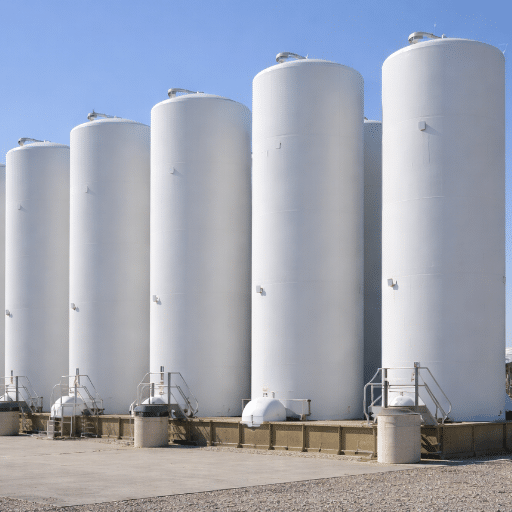
Underground storage tanks for truck stoppers necessitate a much larger volume (over 50,000 gallons), and there are frequently separate tanks for diesel and petrol, as well as alternative fuels. Many layouts feature a collection of big storage tanks in a plant configuration.
There is a conflict-free flow of goods and vehicles through activities such as the separation of heavy trucks from autos within the premises. While the heavy truck movement is based around congestion, there is a hazardous crossing of routes. Truck and automobile conflict points end up being dedicated entry/exit and circulation routes.
Modular and Mobile Station Design
Especially beneficial are modular layouts in situations: when and where rapid deployment of fueling stations is needed, and yet construction could not provide space for long-term construction activity.
Mobile fueling consists of storage tanks, dispensers, safety systems, skid-mounted, or container-facilitated transport. They come as a self-sufficient unit, which is a very simple matter for the site, and, factually, it can be easily moved around whenever circumstances change.
When Maria Santos needed a gas station at a remote mine in Peru, ABC Ltd was given the task of designing and building office and fueling facilities. It was estimated that the conventional construction would need six months’ construction time, as well as significant establishment of the infrastructure. Instead, the modular fueling skids were delivered to the site, where they commenced fueling operations after three weeks. When the mine was moved 18 months later, the entire fueling station moved along with it to the same location, preserving her earlier investment in infrastructure.
Modular layouts excel in situations requiring:
- Rapid deployment without extensive construction
- Relocation flexibility for changing operational needs
- Phased expansion as demand grows
- Temporary fueling during permanent facility construction
- Remote locations where construction logistics are challenging
Permanent modular configurations that are identical to those modular facilities are deployed as fixed facilities, thereby furnishing rapidity in construction while building permanent infrastructure; such outlines are appropriately positioned for a range of locales wherein construction time limits influence the commencement of various markets.
Layout Optimization for Operational Efficiency
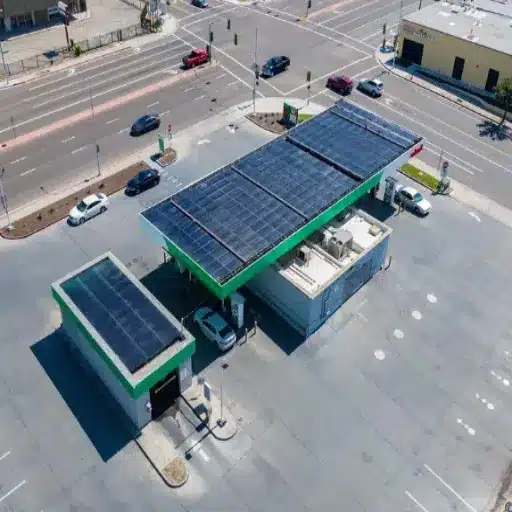
Traffic circulation mainly dictates service delivery to clients. Proper layout design can simplify the movement of vehicles through the whole process without any confusion and unnecessary delay during refueling, payment, and leaving activities.
Quantity design is about understanding your demand patterns. Sales data at an hourly rate can be analyzed to reveal peak times, which could subsequently lead to the development of circulation capacity of about 150% of average peak demand. This buffer can nurture growth, and any unusual demands can be settled without having to experience another external queueing lineup.
It can also be said that the canopy design affects the customers’ experiences and extends the applications of the equipment. They need to have you provide extensions of up to 3 feet for the canopy beyond the faces of the dispensers in order to allow some level of protection for customers during refueling. Usually, a height clearance of 14 feet would ensure that most commercial vehicles would be able to enter the canopy while ensuring proper illumination and placement of signs.
Lighting should have a uniform intensity of illumination through all operational areas. Target levels of illumination are as follows:
- 20-30 foot-candles at fueling positions
- 5-10 foot-candles within parking and circulation areas
- 30-50 foot-candles for entering and egressing the security camera area
Given the constraints, particularly for specialty areas, LED lights are highly frequently selected because they offer both the explosion-proof requirement and an energy-efficient feature that was missing in the previous lighting alternatives.
Perhaps a design might often overlook including access for maintenance. Equipment will need specific intervention, maintenance, calibration, and repairs. In this particular case, where equipment is placed in places impossible for people to get in, it is argued that drawing facilities only increase costs and downtime.
Access routes must be designed to allow service vehicles to reach all equipment for maintenance without disrupting other activities. Underground tanks must have sumps that permit technician access. Dispenser islands should have enough room for technicians to work while fuels are being provided at adjoining positions.
Conclusion
The layout of your gas station is going to have severe impacts on the safety, effectiveness, and profitability of your fueling operation over the decades to come. Every decision about the apportionment of spaces, siting of equipment, and traffic arrangement is bound to strike upon your serving ability for the customers, which is cheerful and compactly sealed as well, while having your investment safeguarded and complying with the legal requirements as well.
The principles in this guide provide the foundation for effective layout design:
- Prioritize safety through proper separation distances and zone classifications
- Design for compliance with UL, ISO, and ATEX standards from the outset
- Optimize traffic flow for peak-hour demand without creating bottlenecks
- Integrate intelligent systems that enhance monitoring and operational control
- Plan for maintenance access that keeps equipment operating reliably
- Consider future flexibility for EV charging and alternative fuel expansion
Laying out a gas station so that it is always easy to enter a pump and exit is a judgment, not a happy accident. Careful design and planning are necessary to achieve a balance among safety and convenience, capacity and cost, current necessities, and future flexibility in such operations. The winning strategy among surviving gas stations generally has been their conception as a whole entity from the very first day.
Ready to implement a layout that maximizes safety and efficiency? Contact our engineering team for customized layout consultation and equipment specification →
It does not matter if it is a new station you are planning or simply upgrading existing fueling stations; what matters most is the provision of the right equipment. Shandong Shengrui Intelligent Equipment offers fuel dispensers, storage solutions, glare-free lighting, and smart control and management systems designed to meet international standards and ensure effective operation. Our team of experts assists in every stage of the project, from the beginning of the layout design to the commissioning process, to make sure that your station will be operating safely and efficiently for a long time.