When the new fuel pump was started by Ahmad at a gasoline station located in Jakarta, it was assumed that every necessary precaution had been taken. The tanks were installed correctly with double walls, the pump frames were all assembled and the support beams were made specifically to withstand strong winds. But when the pump island canopy was installed, low-grade electrical connection junctions were placed underneath. The fateful day was three months after that, when a muggy evening caused a single arc inside a junction box which coincided perfectly with the collection of gasoline fumes near the dispensers. The station had to be shut for emergency repairs for six weeks. The root cause was not destiny. It was an incompetent placement of non-intrinsically safe electrical equipment in a classified zone.
You must be aware that if you are going to erect, expand or maintain service stations, safety policies will be among the top priorities. What will be difficult is getting acquainted with the list of all the explosion proof codes and the mechanisms meant for enhancing safety in possession as well as use of any given gas dispensing equipment. There is a lot at stake here and one needs to be a little familiar with the jargon.
This guide, concealed behind the term explosion-proof tools in reference to gas stations, the concept of zoning, which is fundamental and prevalent in the understanding of explosion, cross-border considerations and principles, as well as appropriate protection specifics for each zone. Moreover, you will be in a position to make decisions with confidence, knowing that you have the tools and the ready-to-use methods at hand for simple tasks like sourcing a single piece of equipment or designing a whole service gas station construction system.
Need more information about Chinese gas station equipment? Please click on our guide about Chinese gas station equipment.
What “Explosion-Proof” Actually Means

Many people have an incorrect understanding of the term explosion-proof or xproof. The confusion being that bomb or explosion-proof styles of construction can actually protect from external explosions. The term means that the inner circuit mechanics are in order and it is the main housing and accessories that have been designed specifically to prevent the internal ignition, such as an electric arc or a spark, from spreading to the rest of the hazardous atmosphere, and manage to contain the resultant fire or a subsequent blowout.
At the station, gasoline vapors combine with air to generate flammable gases. It is possible to ignite the flammables through the use of regular electrical fixtures due to the existence of switching arcing or surface temperatures which are higher than the auto-ignition temperature of the fuel. Such appliances as explosion-isolating appliances prevent these sources of incendiary sparks from reaching ignition points with the help of sealing, or outfitting with solid and controlled surface temperatureings.
The equipment utilized is termed as an explosion-proof gas facility or device, one that is constructed and suitable for application in regions containing flammable gases or vapors. Even where there is an internal failure in the enclosure, the room does not explode due to containment, and the surface of the enclosure does not exceed the heat of combustion of the fuel as controlled by the temperature ratings of the enclosure.
The venting design possesses a number of unique characteristics such as flame-path channels that cool the flow of ignited gases before they are introduced into the atmosphere; the use of vapor-tight gaskets which can provide effective sealing against water penetration; and explosion-proof enclosures made of either aluminum free of copper or stainless steel with glass panes. The vehicle does feature a rating as well which is called the T-rating. It is established to control the temperature on the various surfaces of any equipment. For example, T6 means that the rated temperature is completely safe and not more than 85 degrees Celsius in comparison with gasoline’s auto-ignition limit which is roughly 280 degrees Celsius.
For gas stations, safety is always the most important. Please check out our article on Gas Station Safety Equipment.
Hazardous Area Classification at Gas Stations
For us to be able to calculate the right equipment, you first must boss Classification zones in your stations. There are two such systems in use around the world, and the concepts of both are essential for international projects.
The Zone System (ATEX / IECEx)
The zone system determines hazardous areas according to the frequency and duration that an explosive substance is present.
Zone 0 consists of locations in which explosive atmospheres are present whilst Normal Operation commences or for long periods of time, normally due to the process. It includes underground storage tanks, pump internals, and vent pipes. The equipment present within these areas requires Category 1 protection, the highest level trim.
Zone 1 is an area where it is anticipated that explosive atmospheres can be present during normal operating conditions. Such areas as the immediate vicinity of fuel dispensers, filling nozzles, and vapor release points, typically extending 0.5 to 1 meter above ground level and the like fall here. Equipment designed for Zone 1 installations needs Category 2 protection level.
Zone 2 encompasses areas where explosive atmospheres are rare and if any situations occur, they will only be for a short time. It is all space within the filling site, car park space, and cleared space in the large area, which is represented by Zone 2. Equipment also in this range encompasses Category 3.
The Class and Division System (NEC / North America)
In North America, however, there is a different approach as far as the National Electrical Code is concerned. Class I is about flammable gases and vapors. Division 1 is more like Zone 1, which is where the coding assumes that materials or substances will be in place during normal operations. And finally, Division 2, is most likely similar to Zone 2 as it is a place where the halo does not usually present potential hazards due to operational activities.
| Zone System | Area Definition | Typical Gas Station Location | Equipment Category |
|---|---|---|---|
| Zone 0 | Explosive atmosphere present continuously | Inside storage tanks, pump internals, vent pipes | Category 1 (Ga) |
| Zone 1 | Explosive atmosphere likely during normal ops | Pump islands, dispenser vicinity, filling nozzles | Category 2 (Gb) |
| Zone 2 | Explosive atmosphere unlikely, brief only | Wider forecourt, parking, peripheral zones | Category 3 (Gc) |
| Safe Area | Non-hazardous | Convenience stores, offices, remote control rooms | Standard equipment |
| Class I, Div 1 | Gases present during normal operations | Pump islands, dispenser areas | Equivalent to Zone 1 |
| Class I, Div 2 | Gases present under abnormal conditions | Outer forecourts, storage areas | Equivalent to Zone 2 |
Incorporating the correct equipment ratings with the respective areas is not advice, but a must-do thing. Install equipment rated for Zone 2 in a Zone 1 location, and it will in no time become an addition to your inventory of risk-based decisions, especially in the insurance industry, compliance with regulation and in some cases even lives.
Types of Explosion-Proof Equipment for Gas Stations

One can easily say that even the most comprehensive network information security programme has far more to it than meets the eye. Every electrical and mechanical component of the equipment placed in hazardous areas must be zoned and should conform to that zone.
Lighting Systems
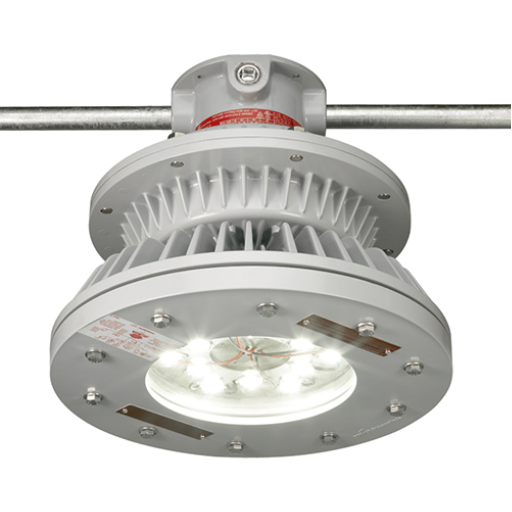
Explosive lightings are not limited to just these types: most are to be found in the general heading of explosion-proof fixtures. Canopy lights are arranged under the station canopy to light up the pump islands without compromising T6 rating or unprotected IP66 protection. The Zone 2 flood and area lights take care of the broader forecourt area. Emergency light fixtures that come with battery back-ups which are fitted with LiFePO4 cells, are also designed to light up the evacuation corridors when necessary. These days led gas station explosion-proof light has been developed to levels that produce up to 170 lumens per watt, leading to close to 70 percent energy saving compared to previous forms of lighting such as high-pressure sodium or fluorescent fixtures.
Control and Electrical Infrastructure
Junction boxes, control stations, distribution panels and cable glands are the heart of the fuel tank facility. The said components should be equipped with flameproof or increased safety ratings to impede any possible wire termination or splice end arcs. These boxes link everything from dispensers to tank gauging and payment terminals to produce an enclosed station environment.
Safety and Monitoring Equipment
Emergency stop stations are very useful as they help the operator in cutting off power and halting pumps immediately without the switch becoming a source of ignition. CCTV cameras are also supplied in stainless steel housings for security review in hazardous zones. Gas detectors, on the other hand, are devices that are able to measure the vapor concentration at various points and when the level reaches a dangerous point, the alarms go off. Fire alarm pull stations, strobes, and smoke detectors complete the safety envelope.
Mechanical and Process Equipment
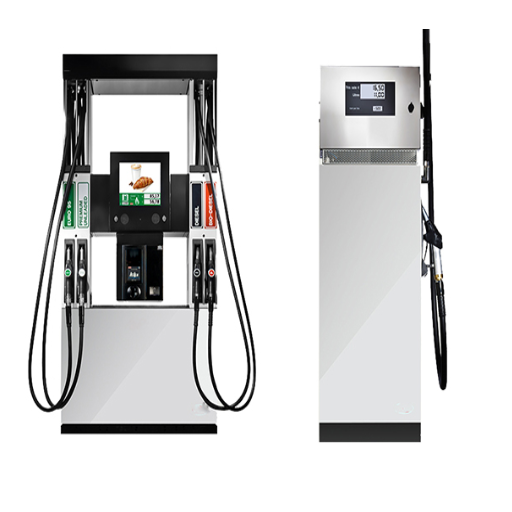
In case of a blast, the motors operating are special, as they are resistant to explosion and thus can run a pump or ventilation without any dangers. Another example of an explosion proof equipment is a solenoid or electrically inductive operated valve that has flame protection design and thus fitted into fuel lines. In that case, the dispensers used must have a certification for explosion protection, which usually reads Ex d IIB T6 Gb. This states that the equipment is not only intrinsically safe for Zone 1 but also with gasoline vapor.
Barrier and Structural Safety
Protection Methods Explained
Safety or rather explosion protection, in the realm of manufacturers, is done in a number of ways. One would understand how to render help to this classification in terms of the determination of the protective system for a particular hazard.
Ex d, Flameproof Enclosure
Explosion-proof enclosure is an enclosure that presents itself as a reinforced casing capable of containing and withstanding an internal explosion. лf sham arcing occurs or ignites gas admitted into the enclosure, irreparable damage of the similarly constructed housing stops an explosive wave. Elaborate flame paths turn escaping gases into a cooled cloud before they reach the atmosphere, and thus increase the intensity of fire risk. Basically, this type of protection is the most widespread for zone 1 refueling dispenser stations, components and also luminaries.
Ex e, Increased Safety
Construction under the aegis of the increased safety designs is ensured and steps have been taken to avert arcs, sparks and undue temperatures on the surface of the construction under the normal thermal radiation environment. The designs of terminals, connections, and rotating machinery have been made with the use of higher precision and improved materials. Ex e is widely practiced in such products as aluminum window boxes, machine tool production, and enclosed control units for Zone 1 and Zone 2-area installations.
Ex i, Intrinsic Safety
The safety of the apparatus is based on the fact that it limits the amount of electrical energy to a certain level lower than the energy of gas ignition. Ex ia equipment is resistant to two faults and conforms with Zone 0 requirements. Ex ib can resist only one fault and can be used in Zone 1. This technique is most often seen in sensors, gas sensors, and instrumentation located in and near the tanks.
Ex p, Pressurized
In this case, pressure vessels are used which contain compressed inert gas, preventing steam generator water gas from rushing in uncontrolled. Instead, a safety interlock mechanism – one of the features from the super power shut down system- shuts off power. The same manner is applied to larger stands and equipment for analysis.
Ex n, Non-Sparking
Non-sparking devices are engineered so that during regular functioning, no ignitable sparks or hot surfaces are created. However, it is ineffective for use in regions within Zone 1 envelope and therefore not suitable for installation on pump islands.
| Protection Method | Code | How It Works | Typical Zone Use |
|---|---|---|---|
| Flameproof Enclosure | Ex d | Contains internal explosion; cools escaping gases | Zone 1, Zone 2 |
| Increased Safety | Ex e | Prevents arcs, sparks, and excess heat under normal operation | Zone 1, Zone 2 |
| Intrinsic Safety | Ex i | Limits electrical energy below ignition threshold | Zone 0 (ia), Zone 1 (ib) |
| Pressurized | Ex p | Maintains positive pressure to prevent gas ingress | Zone 1, Zone 2 |
| Non-Sparking | Ex n | No sparks or hot surfaces under normal operation | Zone 2 only |
Global Certifications and Standards

Some requirements are obligatory and shall be adhered to, while some are not always binding. In the new consumers protection law in 2025 and 2026, it is expected that the buyers shall ascertain that the goods bought meet the level of safety that is expected to be in the market of destination.
ATEX (European Union)
The Directive 2014/34/EU of the ATEX is the manufacturer’s requirements in Europe for their machinery. Additionally, Directive 1999/92/EC is a framework for the safety of employees at their place of work. Every single EU fueling facility requires the installation of ATEX-certified equipment and this requirement is widely accepted in the Middle East and Africa as well, provided that the design follows the standards of the EU region.
IECEx (International)
With the help of the ‘IECEx’ scheme and compliance with the IEC 60079 series, customers can obtain an interferometric certification of an international standard. In practice, for international transactions, IECEx is often used in combination with ATEX and is the most customer-friendly technical requirement for organizations working in several administrative regions.
North America
In the United States, the design, construction and use of equipment in hazardous (classified) locations are regulated by NFPA 70, the National Electrical Code, Articles 500 to 505. UL 844 offers the Specific Approval of luminaires for use in hazardous locations. Also, OSHA 29 CFR 1910.307 deals with electricity in the hazardous locations. In Canada, CSA C22.2 No. 137 provides a specification for the use of explosion-proof lighting fixtures.
China
With respect to devices that were made or dispatched from China, the requirements of explosion-proof materials are defined in the GB/T 3836 series of standards. Mainly, GB/T 3836.1-2021 deals with general aspects of organisation and performance of such activities. Chinese certification organizations as CNEx certification and NEPSI certification, are compulsory for Chinese production. If the products are aimed at export, companies often obtain not only Chinese certificates, but also certificates of the European, i.e., ATEX and international IECEx systems.
How to Read an Explosion-Proof Label
A typical nameplate marking reads Ex db IIC T6 Gb. Here is what each element means.
- Ex: Certified for explosive atmospheres
- db: Flameproof enclosure protection type
- IIC: Suitable for hydrogen and acetylene, the most demanding gas group; covers IIA and IIB by default
- T6: Surface temperature will not exceed 85 degrees Celsius
- Gb: Suitable for Zone 1
Do not forget always to check the fittings of gas group and maximum temperature class which should be that of the most severe fuel that could have leaked at the station. When introducing hydrogen refueling, the installations must be IIC-class. For the smaller gasoline-only stations where hydrants are not present, IIB is normally good enough.
How to Select Explosion-Proof Equipment: Step-by-Step

Gas station equipment that is suitable for explosive atmospheres such as explosion-proof gas station equipment must be selected in a methodical way. Here are six steps assigned to prevent problems and ensure compliance.
Step 1: Identify the Hazard Zone. Designate the station area using the zone or division system. As a rule, the fuel dispensing area is usually Zone 1 which is also referred to as Division 1. The perimeter is for parking which is Zone 2. And finally, the space inside the tanks is Zone 0.
Step 2: Match the Gas Group. Work out which is the most hazardous fuel being the main source of the risk. IIA would mean propane and butane. IIB would mean multiple fuels, ethylene and gasoline vapors. IIC would refer to hydrogen and acetylene. Installation under one group allows the use of equipment from the upper groups.
Step 3: Select the Temperature Class. It is necessary to remember that intrinsic safety is not only limited to the use of encapsulation, but that the equipment also peaks at a temperature below the fuel’s auto-ignition temperature. Gasoline auto-ignites at approximately 280 degrees centigrade. A T6 rating, which also limits the heat on the outermost areas of the enclosures to 85 degrees centigrade, is found to offer the most complete safety in gas station design.
Step 4: Verify Environmental Ratings. Manufacturers of the equipment for use in petrol filling stations outdoors are required to take into account such factors like rain, dust, and impacts. IP66 or IP67 protection and IK10 grade strength against impact are there as industries depend on global environmental challenges. For stations out at sea or in high-humidity areas, the equipment shall be provided with appropriate coatings.
Step 5: Confirm Certifications for Your Market. ATEX in Europe. IECEx worldwide acceptance. UL for North America. GB/T 3836 and CNEx for China. They shall hold the latest issue dates and shall be original documents notarized.
Step 6: Plan for Maintenance and Lifecycle. Explosion proof devices needs checking at regular intervals. The flame path is damaged when the cable connectors are pulled. Any damage to the construction of the vessel under this necessitates pulling up the Gasket as it is Preventing Such Leakage. While LED modules operate more than 50000-100000 hours, the drivers and joints that seal them will require maintenance. Ensure that the operational strategy is implemented from the inception of the facility.
If you are planning a complete station build, our turnkey gas station solutions include pre-matched explosion-proof components selected for your specific zone map and regulatory environment.
Cost Overview and ROI
Explosion-proof equipment comes at more of a higher cost when compared to the standard industrial hardware. The project needs to be accepted as capable of returning the value for the money before spending it on the stakeholders.
Product prices are differentiated by types of certificates, specifications, and other features. Generally, a set containing one or two single or double pump fuel dispensers will cost between $650 and $1200. Its ATEX canopy lights, though, are reasonably priced. The X-rated ones hover between $50 and $150 per piece for the normal configuration, but the other flood lights, the fancy ones, can go up to or even exceed $200. The prices of the explosion-proof cameras vary from $1,000 going all the way to $5,000, depending on quality and type.
Costs of the entire system reveal a more accurate picture. Such as, starting at 7,500 for a 1000 liter volume mobile container type (explosion proof) gas station, it could go up to 35000 for a fully integrated container of 40 feet housing modules with tanks, dispensers, electric panels and relevant equipment. Vertical turnkey skid-mounted gaseous fueling station with basic and auxiliary infrastructure and an emphasis on underground storage tanks typically poses costs of 140,000-830,000 depending on geographical scope and demand.
ROI generally results from different sources. Energy savings can amount to about 70% in comparison with traditional lighting technology. Extended product life, in some cases rated 50,000 hours for LEDs, helps decrease maintenance expenses. But more importantly, with approval, the company is not only subject to the penalties that may arise in case of any breakdown but also to the regularly incurred expenses for breaching agreements on responsibilities and even the need for shutting down equipment, which might incur even more expenses than any amount of the insurer’s premium previously stated.
2025-2026 Trends and Future Considerations
The market for explosion-proof products is growing rapidly. The total market was calculated at about $8.64 billion in the year 2025 and is anticipated to increase to $13.52 billion by the year 2033, as estimated by Grand View Research. Over a quarter of revenues in the oil and gas sector, which includes network gas stations, was also captured.
Currently, there are certain modifications in purchasing behavior. Rather than being a rare find, LED products have become the default choice. The innovation system security and telecom integration services enable checking the status of the light, the condition of the battery, and the failing status in the vicinity of the hazardous atmosphere without a visit to such premises. This practice help to cut down on fiscal costs and operational risks.
Hydrogen refueling infrastructure is being developed and in locating new stations that would be adding such hydrogen shall consider the IIC gas group needs as well as static electricity. Appropriate references for new hydrogen projects include NFPA 2 and ISO 19880 standards.
Moreover, in China new approved standards like GB 12710-2024 and GB 46031-2025 are revamping the safety criteria for combustible processes and other equipment like coking facilities. Compliance officers should ensure that products are in conformity with both existing export certification and impending national standards for China contingencies.
Conclusion
It is important to clarify that installing explosion-proof gas station equipment is absolutely indispensable. Instead, this equipment is the basis for enhancing the facility’s performance, ensuring human safety as well as avoiding losses. The underlying issues are relatively simple: define the zones without any problems, specify the gas set and temperature category, verify the applicable certificates, and organize the maintenance of such designs, taking into account the safety factor.
In Shandong Shengrui Intelligent Equipment Co., Ltd., we design this equipment for such turnkey systems as explosion-proof gas dispensing stations. Each product – whether ATEX explosion-protected dispensers or LED explosion-protected lighting or HAN barriers or fire-protected glass partitions in grade B1 or any other item – is particularly designed to act in combination with other products. This allows the operating users to carry out the activities of the filling station with assurance.
Ready to specify explosion-proof equipment for your next project? Contact our engineering team for a customized assessment and quote tailored to your zone map, fuel types, and regional compliance requirements.