In September of 2023, ground was broken in Florida by a developer at what they might have thought was a gas station renovation. Within three months, there was a $47,000 change order. The pump islands, which were 12 feet from the property line, should have been 20 feet away. In terms of canopy clearance, the necessary height should have been 16 feet, not the 13 feet that it was. The convenience store entrance looks out to the fueling area, thus cutting out the intended 30% foot traffic.
Poor gas station layout design costs money and causes reduced throughput, and compliance headaches. Despite this, most developers treat layout as simply a hasty afterthought, focusing first on equipment and brand selection while neglecting the increasing physical importance of site arrangement to operations, safety, and profitability.
In this comprehensive guide, you’ll learn:
- Regulatory requirements and spacing standards that vary by jurisdiction
- How to optimize traffic flow for maximum vehicle throughput
- Integration strategies for convenience stores and quick-service restaurants
- ADA compliance specifics for fuel stations
- Common layout mistakes and how to avoid them
Whether you’re designing a new retail fueling facility, upgrading an existing station, or sourcing equipment for international deployment, understanding gas station layout fundamentals ensures your project succeeds from day one.
Understanding Gas Station Layout Fundamentals
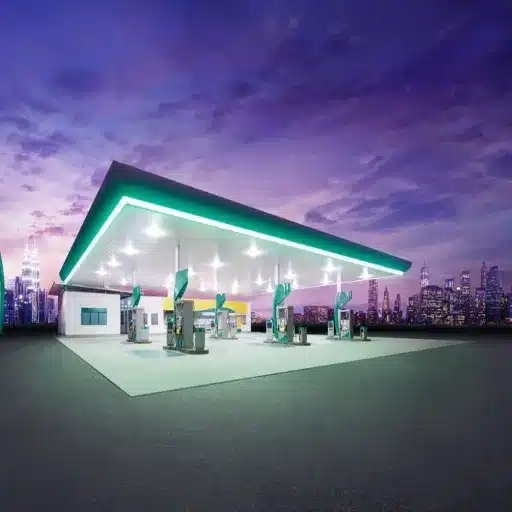
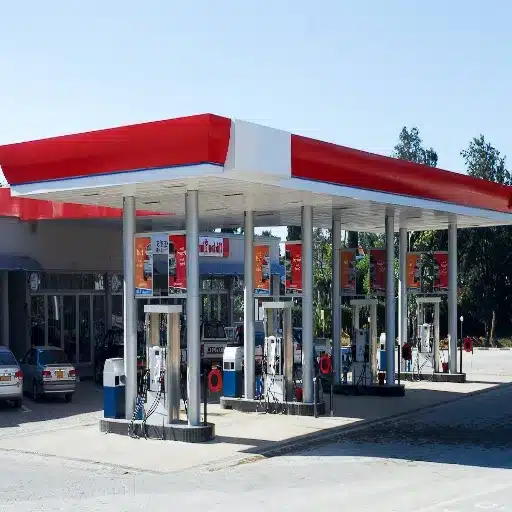
A well-designed gas station layout balances multiple competing priorities: vehicle circulation, safety compliance, customer convenience, and revenue optimization. Every element, from pump island placement to canopy height, affects operational efficiency and regulatory compliance.
What Makes a Good Gas Station Layout
Good designs are marked by the following:
Efficient Traffic Flow – Vehicles should enter, be fueled, and driven out without unnecessary delays or conflicts. One-way circulation patterns should be used to avoid too many backing and turning conflicts. Further, sightlines at all exits should remain such that the chances of accidents happening due to a lack of vision are avoided.
Regulatory Compliance – Property lines, setbacks, and the minimum distance between islands, along with some advantages of good design to comply with local zoning, fire, and ADA requirements. No compliance can result in fines, delays, and a costly redesign.
Maximization of Revenue – The pump placement in such a way that it can drive the foot traffic through the c-store because the gross profit margins are always much higher than fuel. An important point in this canopy coverage is to encourage fueling during bad weather. An adequate stacking area ensures the customers do not go without fuel during the peak hours.
Future Security– Accommodation for future growth, or the introduction of alternative fuels or equipment upgrades, without the necessity of restructuring were arranged.
Dubai’s major petroleum retailer engineers designed their gas flagship station: they modeled three distinct design configurations through traffic simulation software. “We’ve counted a 40-percent increase between the first and final design in vehicles passing per peak hour,” reflects their facilities manager. “This is directly associated with a cash flow.” It would be inconceivable to design these bottlenecks without the early analysis of traffic behavior.
Key Stakeholders in Layout Planning
Successful layout design requires coordination among:
- Civil engineers handle site grading, drainage, and utility placement
- Architects design the convenience store and canopy structures
- Petroleum equipment specialists specify dispenser placement, tank locations, and fuel system integration
- Fire marshals and code officials review compliance with safety standards
- Environmental consultants ensure regulatory compliance for tank placement and spill containment
Engaging equipment specialists early prevents expensive surprises. Specifications for tank access, fill point locations, and dispenser connections all influence site layout decisions.
Regulatory Framework and Standards
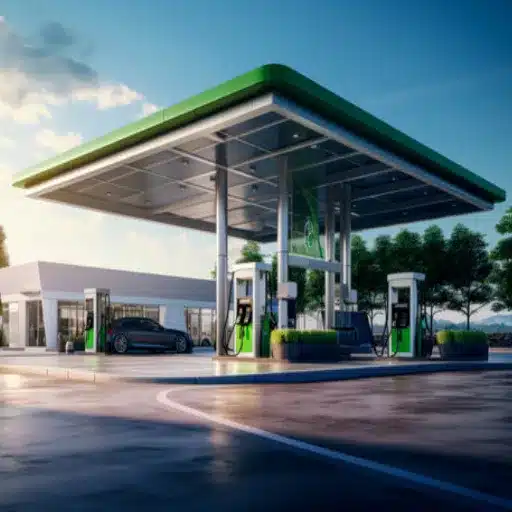
Gas station layout must comply with multiple overlapping regulatory frameworks. Understanding these requirements before design prevents costly revisions.
NFPA 30 and 30A Requirements
The regulations regarding combustible and flammable liquids are enforced according to NFPA standards:
NFPA 30 shall govern the tank storage requirements, including the setback distances of tanks from the building and from property lines, focusing mostly on the safeguards for tanks but having an impact on the overall site layout.
NFPA 30A is most relevant specifically to motor fuel dispensing facilities. Highlights include:
- Setback distances of fuel dispensers to building openings
- Emergency disconnect requirements for electrical systems
- Fire suppression and detection system specifications.
UFC 3-460-01 Federal Standards
The Unified Facilities Criteria for petroleum fuel facilities provides detailed design standards used by federal agencies and often adopted by commercial developers seeking proven specifications:
- Pump islands should be arranged in a parallel fashion with approximately 15 feet between adjacent sides
- Stacking space should accommodate a minimum of two vehicles per pump position
- Drive aisles require a minimum of 24 feet in width for two-way traffic
These standards offer conservative, battle-tested guidelines that satisfy most local jurisdictions.
Local Zoning and Fire Code Variations
Specific requirements vary significantly by location:
| Jurisdiction | Pump Island Setback | Canopy Setback | Notes |
|---|---|---|---|
| Taylorsville, UT | 15 feet from the property line | 20 feet from the front property line | Stacking space for 2 vehicles minimum |
| Staunton, VA | 15 feet from street ROW | Canopy may extend to 5 feet from the ROW | Canopy supports must remain 15 feet from the ROW |
| Porterville, CA | 15 feet from the property line | May encroach 10 feet within the setback | Case-by-case review for variances |
| New York (typical) | 30 feet from street/property line | Varies by district | More restrictive in residential areas |
Always verify local requirements during preliminary design. What works in one jurisdiction may fail in another.
International Standards
There are extra standards that apply to the global projects, i.e.:
OISD 118 (India): The rules, set forth by the Oil Industry Safety Directorate, include plant arrangement, distances between tanks, and safety zones.
EN Standards (Europe): European Norms encompassing fuel storage, dispensing, site safety, among other issues, and are applicable, among others, similar to the ATEX, concerning the hazardous environment.
How do international standards affect your project? [Contact our engineering team for global compliance guidance →]
Site Layout Components and Dimensions
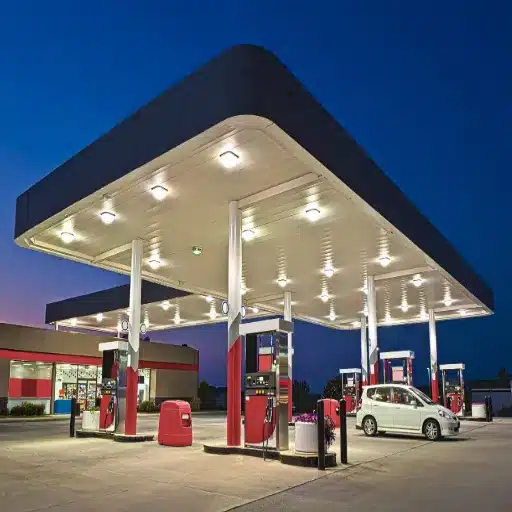
Successful layouts coordinate multiple physical elements within available space while meeting regulatory requirements.
Property Requirements and Setbacks
The minimum lot specifications differ from one territory to another; nevertheless, they usually involve:
- Lot size: 1–2 acres minimum for standard retail stations; 3+ acres for truck stops
- Frontage: 150–200 feet along the primary roadway
- Depth: Minimum 200 feet needed for adequate setbacks and circulation traffic
- Impervious coverage: Usually limited to 65–80% to control stormwater
Setback requirements protect neighboring properties and ensure safe operations:
| Feature | Typical Minimum Setback | Purpose |
|---|---|---|
| Pump island to the property line | 15–30 feet | Fire safety, vehicle maneuvering |
| Canopy to property line | 20 feet (supports), 5 feet (cover) | Structure safety, aesthetics |
| Underground tank to property line | 35 feet | Environmental protection |
| Building to the property line | 50+ feet from road ROW | Zoning, fire access |
These setbacks define the buildable area for pump islands, parking, and circulation. Violating setback requirements risks permit denial or expensive variances.
Fuel Pump Island Layout
Pump island configuration directly impacts customer experience and operational efficiency.
Island spacing standards:
- Between island sides: 15 feet minimum (UFC 3-460-01); 20 feet preferred for truck access
- From buildings: 18 feet minimum with doors/windows; 13 feet without openings
- From property lines: 15–30 feet, depending on jurisdiction
Island dimensions:
- Width: 10–12 feet typical; wider islands accommodate more dispensers
- Length: Varies by dispenser count; each dispenser needs approximately 10–12 feet
- Height: Grade-level or slightly raised with concrete curbs
Stacking space requirements ensure vehicles don’t back up onto public roads:
- Minimum 40 feet per pump island (2 vehicle lengths)
- Driveways cannot be used for vehicle queuing
- Additional stacking is needed for high-volume locations
When a convenience store operator in Ohio expanded from 4 to 8 pumps, they initially kept the same island spacing. “We created a bottleneck,” admits the operations director. “Vehicles couldn’t maneuver around each other during busy periods. We had to shut down for three days to reconfigure the islands with proper spacing. That lesson cost us $25,000 in lost revenue and reconstruction.”
Canopy Specifications
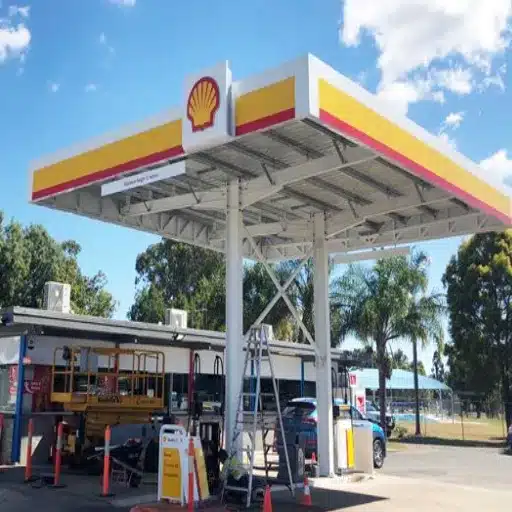
Canopies protect customers and equipment while providing structure for lighting and signage.
Standard dimensions by dispenser count:
| Dispensers | Canopy Dimensions | Application |
|---|---|---|
| 2 (4 fueling positions) | 24 ft × 40 ft | Small neighborhood stations |
| 4 (8 positions) | 40 ft × 60 ft | Standard retail stations |
| 6 (12 positions) | 40 ft × 90 ft | High-traffic suburban stations |
| 8+ (16+ positions) | 60 ft × 100 ft+ | Highway travel centers |
Vertical clearance requirements:
- Minimum: 13 feet 6 inches to the lowest projecting element (code requirement)
- Standard: 14–16 feet for passenger vehicles
- Truck stops: 16–18 feet for tanker and commercial vehicle access
Structural considerations:
- Canopies must withstand wind loads, snow loads, and seismic forces per local building codes
- Column placement should not impede vehicle circulation
- Drainage integration prevents water accumulation
Our bolted space frame canopy systems offer superior load distribution and faster installation than conventional steel structures. [Learn about our prefabricated canopy solutions →]
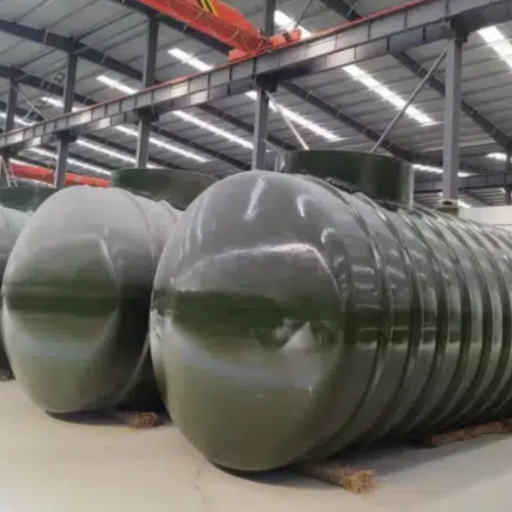
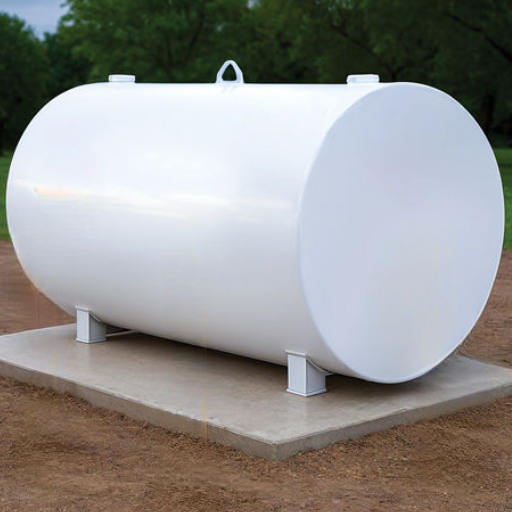
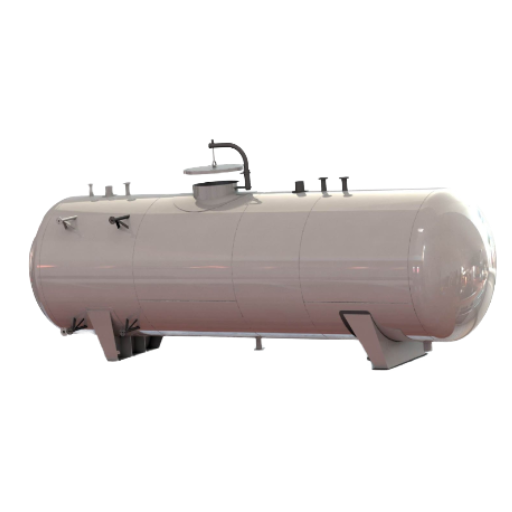
Underground Storage Tank Placement
UST location affects both environmental compliance and operational efficiency.
Tank setback requirements:
- From property lines: Typically 35 feet minimum
- From buildings: Varies by tank size and local codes
- From other tanks: Usually 3–6 feet minimum for multiple tanks
Fill point accessibility:
- Tanker trucks need clear access routes without backing
- Fill points should be within 100 feet of the tanker parking position
- Delivery zones require an adequate turning radius (26 meters for trucks)
Interstitial monitoring access:
- Double-wall tanks require access to monitoring equipment
- Probe access manholes must be located for convenient inspection
- Spacing from dispensers allows for leak detection line routing
Traffic Flow and Circulation Design
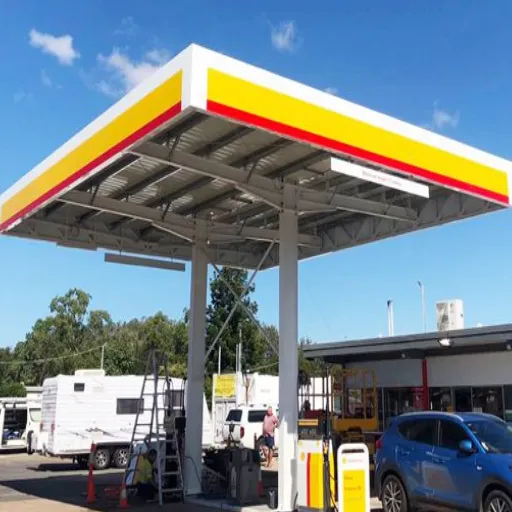
Vehicle circulation patterns determine how efficiently customers move through your facility.
One-Way vs. Two-Way Traffic Patterns
One-way circulation offers several advantages:
- It decreases conflict points at intersections where vehicles meet
- It eliminates entrance-and-exit driving in the narrow drive aisles
- It makes customer route finding more easily understood because it goes in and out
- Narrower drive aisles can be used (22–24 feet vs. 26+ feet)
Identify one-way patterns through some arrows and some signage located in the island-type setting. Loop patterns are especially recommended for corner lots.
Two-way circulation requires:
- Wider drive aisles (minimum 24 ft., 26+ preferred)
- Well-defined central line- Striping
- The most important issue to consider is sight lines at intersections
A two-way circulation plan is more appropriate for a smaller lot without the ability to loop back.
Drive-Through vs. Pull-Through Configurations
Pull-through layouts allow vehicles to exit forward without backing:
- Ideal for larger vehicles, RVs, and vehicles with trailers
- Reduces backing accidents
- Requires more linear space (30+ feet per position)
- Common at truck stops and highway locations
Standard pull-in layouts are more space-efficient:
- Vehicles back out after fueling
- Requires adequate clearance behind vehicles
- Works for standard passenger vehicles
- More pumps per linear foot of canopy
Drive-through configurations wrap around buildings:
- Create continuous flow patterns
- Works well with convenience store integration
- Require careful coordination with building placement
- Common in modern fast-service designs
Tanker Truck Access and Maneuvering
Tanker delivery operations often determine layout feasibility.
Access requirements:
- Turning radius: 26 meters (85 feet) for standard tankers
- Approach width: 12–15 feet for delivery hoses
- Vertical clearance: 16+ feet under canopies
- No backing: Design routes allowing forward entry and exit
Delivery zone placement:
- Position fill points for easy tanker approach
- Separate delivery traffic from customer fueling
- Provide staging areas where trucks can wait without blocking pumps
- Coordinate with underground tank locations (typically near property edges)
When a developer in Texas designed a high-volume station, they focused on customer convenience but neglected tanker access. “The first fuel delivery revealed the problem,” recalls the project manager. “The tanker couldn’t make the turn to reach the fill points without backing into the street. We had to relocate 100 feet of fuel piping and add a dedicated delivery lane. The oversight added six weeks and $35,000 to the project.”
Entry/Exit Driveway Design
Driveway configuration affects both site operations and traffic impact on surrounding roads.
Width requirements:
- Single lane: 12 feet minimum
- Two-way driveway: 24 feet minimum (26 feet preferred)
- Curb cuts: Typically limited to 40 feet maximum per opening
Separation standards:
- Driveways should be separated by at least 25 feet when two openings exist on one street
- Entry and exit points should be spaced away from intersections to prevent queuing into traffic
- Right-in/right-out designs work best on busy thoroughfares
Sight distance:
- Exit points need clear sight triangles (typically 150+ feet in each direction)
- Landscaping and signage must not obstruct driver visibility
- Lighting enhances nighttime visibility for safe merging
Convenience Store Integration
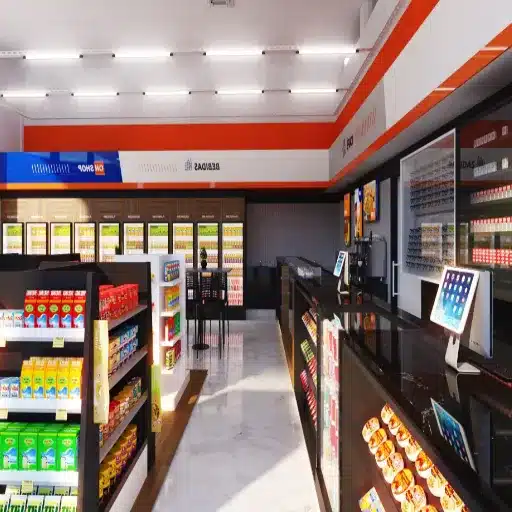
Since fuel margins are thin, convenience stores drive profitability. The layout must encourage fuel customers to enter the store.
Store Placement Strategies
Position the store as a backdrop:
- Place convenience stores toward the back or side of the lot
- Keep fuel pumps in front (relative to the primary road)
- This creates natural foot traffic flow from the pumps to the store entrance
Maintain road visibility:
- Storefront should face the primary roadway for brand recognition
- Avoid placing buildings where they create blind spots across the lot
- On corner lots, position the store on one side, leaving the other open for circulation
Pump orientation matters:
- Orient pumps perpendicular to the store entrance when possible
- This creates natural walking paths toward the building
- Drivers face the store while fueling, increasing awareness of retail offerings
Pedestrian Flow from Pumps to Store
Crosswalk design:
- Mark clearly with textured or painted surfaces
- Keep crossings short and direct
- Use high-contrast colors for visibility
- Position at natural exit points from pump islands
Pathway requirements:
- Width: 48 inches minimum for accessibility
- Slope: Maximum 1:20 (5%) running slope; 1:48 (2%) cross slope
- Surface: Stable, firm, slip-resistant materials
- Protection: Bollards or barriers protect pedestrians from vehicles
Lighting enhances safety:
- Uniform illumination along walkways (minimum 5 foot-candles)
- Focus lighting on decision points (crosswalks, entrances)
- LED systems provide energy-efficient, long-lasting solutions
Interior C-Store Layout Options
Three primary layout patterns serve different retail strategies:
Grid layout (most common for C-stores):
- Organizes shelves in clean, parallel aisles
- Maximizes product density and efficiency
- Supports quick in-and-out visits
- Easiest for inventory management and restocking
Loop layout:
- Guides customers through a defined path around the store
- Ensures exposure to all product sections
- Works well for divided product groupings (hot food, beverages, groceries)
- Increases impulse purchase opportunities
Free-flow layout:
- Uses curved paths and creative displays
- Encourages browsing and discovery
- Less efficient for C-stores but suitable for specialty concepts
- Requires more space per product display
Aisle width standards:
- Minimum 36 inches for accessibility
- 48+ inches preferred for high-traffic areas
- Wider aisles near checkout reduce congestion
Quick Service Restaurant Integration
Adding QSR drive-thrus requires careful coordination:
Traffic separation:
- Keep drive-thru lanes distinct from fueling traffic
- Use medians, markings, or grade changes to separate flows
- Ensure drive-thru stacking doesn’t block pump access
Queue management:
- Provide 6–8 car stacking spaces for drive-thru
- Design menus and payment points for efficient ordering
- Consider dual-lane configurations for high-volume locations
Walk-up access:
- Connect the QSR entrance to the convenience store when both are present
- Share seating areas where applicable
- Coordinate hours of operation with fueling schedule
ADA Compliance and Accessibility
The Americans with Disabilities Act mandates specific accessibility features at fuel stations. Non-compliance risks fines up to 55,000forfirstviolationsand55,000forfirstviolationsand110,000 for repeat offenses.
Fuel Pump Accessibility Requirements
Control height specifications:
- All operable controls must be within 15 to 48 inches from ground level
- This includes payment terminals, grade selectors, and call buttons
- Controls must be operable with one hand without tight grasping, pinching, or twisting
- Maximum force: 5 pounds (except for fuel nozzles, which are exempt)
Refueling assistance:
- Stations must assist disabled customers upon request
- Assistance must be available at a self-serve price (no additional charge)
- Signage must notify customers how to request help (honking, call button, etc.)
- Exception: Single-employee remote control operations are not required to assist but are encouraged to do so when feasible
Accessible dispenser placement:
- At least one pump of each fuel type must be accessible
- Accessible pumps should be on the shortest accessible route from the parking
- Clear floor space (30×48 inches) must be provided at controls
Accessible Parking and Routes
Parking space calculations:
| Total Parking Spaces | Accessible Spaces Required | Van Spaces |
|---|---|---|
| 1–25 | 1 | 1 van-accessible |
| 26–50 | 2 | 1 van-accessible |
| 51–75 | 3 | 1 van-accessible |
| 76–100 | 4 | 1 van-accessible |
Space dimensions:
- Standard accessible: 8 feet wide plus a 5-foot access aisle.
- Van-accessible: 11 feet wide (or 8 feet with 8-foot access aisle)
- Access aisle must be level with parking space (slope may be up to 1:48)
Location requirements:
- The accessible spaces shall be bound to the shortest accessible routes.
- One of the six accessible parking spaces must be accessible to vans.
- Signage required: Post-mounted with the International Symbol of Accessibility
Accessible routes:
- They should be a minimum of 36 inches wide (44 inches is recommended for interior paved walkways)
- Maximum running slope: 1:20 (5%)
- Maximum cross slope: 1:48 (2%)
- The surface must be stable, firm, and slip-resistant.
Building Accessibility
Entrance requirements:
- 36-inch clear width minimum at doors
- Automatic or power-assisted doors preferred
- Thresholds maximum 1/2 inch high with beveled edges
Service counter height:
- Maximum 36 inches in height
- Clear knee space: 27 inches high, 30 inches wide, 19 inches deep minimum
- Alternatively, provide accessible service at an alternative location
Restroom accessibility (if provided):
- 60-inch diameter turning space
- Grab bars at proper heights
- Accessible fixtures (sinks, mirrors, dispensers)
- If restrooms are provided for any customers, they must be accessible
Note: If a gas station provides no restrooms for any customers, they are not required to add them for ADA compliance.
Safety and Environmental Considerations
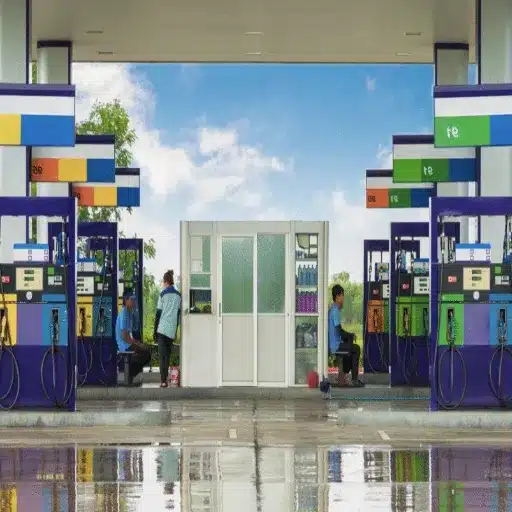
Layout decisions affect safety systems and environmental protection capabilities.
Emergency Shutoff Placement
Location requirements:
- Emergency electrical disconnects must be located 20–100 feet from the dispensers they serve
- Multiple disconnects required for large sites
- Must be clearly marked and easily accessible
- Typically positioned at building exterior or canopy columns
System integration:
- Shutoffs cut power to all dispensing equipment
- Fire detection systems can trigger an automatic shut-off
- Manual activation by employees or emergency responders
Fire Detection and Suppression
Canopy fire detection:
- Heat detectors required on 15-foot centers maximum
- Single row over the center of the island for standard widths
- Two rows (1 foot from each curb) for islands wider than 6 feet
- Mount to the canopy underside or use heat collectors if no canopy
Fire suppression systems:
- Sprinkler systems required in some jurisdictions
- Dry chemical systems common for pump island protection
- Coordinate with the local fire marshal during design
Fire extinguisher access:
- Accessible points within 75 feet of any pump
- Weather-protected cabinets
- Clearly marked locations
Spill Containment and Drainage
Impervious surface management:
- Limit impervious coverage to 65–80% for stormwater management
- Provide oil-water separators for runoff from fueling areas
- Direct drainage away from buildings and storage tanks
Spill containment:
- Spill buckets at fill points capture delivery overfills
- Dispenser sumps contain leaks from hose connections
- Secondary containment for tanks prevents environmental releases
Design considerations:
- Slope paving away from buildings and toward drainage points
- Trench drains with removable traffic-rated grating
- Regular inspection and maintenance of containment systems
Design Best Practices and Common Mistakes
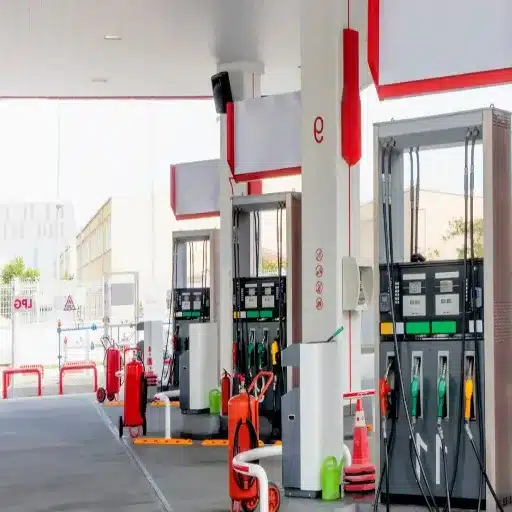
Learning from others’ mistakes saves time and money.
Maximizing Throughput
Vehicle flow optimization:
- Design for peak hour traffic, not average conditions
- Provide extra stacking space to accommodate surges
- Consider seasonal variations (tourist routes, summer travel)
Pump count decisions:
- Industry standard: One pump per 1,000–1,500 daily transactions
- Under-pumping creates queues and lost customers
- Over-pumping wastes capital on unused capacity
Technology integration:
- EMV-compliant payment at the pump reduces store visits for payment
- Fleet card compatibility captures commercial business
- Mobile payment options speed transactions
When a highway location in Arizona upgraded from 6 to 10 pumps, they expected a proportional revenue increase. “We only saw 15% more volume,” explains the owner. “The problem wasn’t pump count—it was circulation. Vehicles couldn’t maneuver efficiently, creating bottlenecks. We reconfigured the layout the following year and finally achieved the throughput we planned for.”
Avoiding Common Layout Errors
Mistake 1: Inadequate setbacks
- Problem: Pump islands are too close to property lines
- Consequence: Permit denial or expensive variance applications
- Solution: Verify local setbacks early; design conservatively
Mistake 2: Poor tanker access
- Problem: Fill points inaccessible or requiring backing
- Consequence: Delivery delays, operational disruptions
- Solution: Design delivery routes with the truck turning radius in mind
Mistake 3: Ignoring pedestrian flow
- Problem: Lacked secured walkway from the pumps to the store
- Consequence: Unmanageable c-store traffic and dangerous instances
- Solution: Thorough planning regarding crosswalks and pathways, similar to vehicle circulation
Mistake 4: Insufficient stacking space
- Problem: Queues back onto public roads
- Consequence: Traffic complaints, potential citations
- Solution: Provide 40+ feet of stacking per island
Mistake 5: Canopy clearance issues
- Problem: Low canopies block tanker or large vehicle access
- Consequence: Delivery restrictions, customer complaints
- Solution: Maintain 16+ feet clearance for standard stations, 18+ for truck stops
Future-Proofing for Expansion
Growth plan:
- Size the electrical service for additional pumps
- Design fuel piping with expansion loops
- Reserve space for additional tank capacity
- Consider canopy structural capacity for future extension
Alternative fuel readiness:
- EV charging stations require different spacing and electrical infrastructure
- Hydrogen and natural gas need specialized safety clearances
- Layout flexibility accommodates changing fuel portfolios
EV Charging Integration
Electric vehicle charging increasingly complements traditional fueling:
Spacing considerations:
- EV stalls need 30+ minutes of dwell time (vs. 5 minutes for fuel)
- Position charging away from high-turnover fueling positions
- Provide amenities (seating, WiFi) for waiting customers
Pull-through design:
- EVs with trailers require pull-through charging stalls
- Adapt gas station layout principles for EV charging placement
- Consider hybrid layouts serving both fuel and electric vehicles
Electrical infrastructure:
- Coordinate transformer placement with site layout
- Plan conduit routes from the electrical room to the charging positions
- Size the service entrance for future expansion
Conclusion
Gas Station Layout involves a balanced approach when technical compliance, profitability, operations, as well as health and safety concerns are considered. These elements have an influence on all aspects of the station, from the spacing between the islands to the canopy height, and from one wheel up to its opening.
Key takeaways:
- Verify local requirements early. Setbacks and spacing standards vary significantly by jurisdiction.
- Design for traffic flow. One-way circulation, adequate stacking space, and clear sightlines maximize throughput.
- Integrate C-store strategy. Store placement and pedestrian flow directly impact high-margin retail sales.
- Meet accessibility standards. ADA compliance isn’t optional—violations carry substantial penalties.
- Plan for the future. Layout flexibility accommodates expansion and alternative fuels.
Inefficient design practices result in unnecessary expenses. Many times, simple issues like poor setback distances or bad circulation pathways end up costing thousands after the structure is erected. To avoid such occurrences, it is indispensable to invest in adequate pre-construction of development work.
At the company, Shandong Shengrui Intelligent Equipment Co., Ltd, we work with gasoline station advertisers and provide them with equipment that fits the objects’ layouts. Almost all the provided equipment, starting from filling petals, septic tanks, prefabricated sheds, and anti-fire barriers, is certified in accordance with the global protocols such as NFPA, UFC, ATEX, and many more.
Our engineers deliver layout recommendations, facilitate draughting development and building, and support the process of installation of components and fittings to the satisfaction of the client.
[Request a layout consultation for your gas station project →]