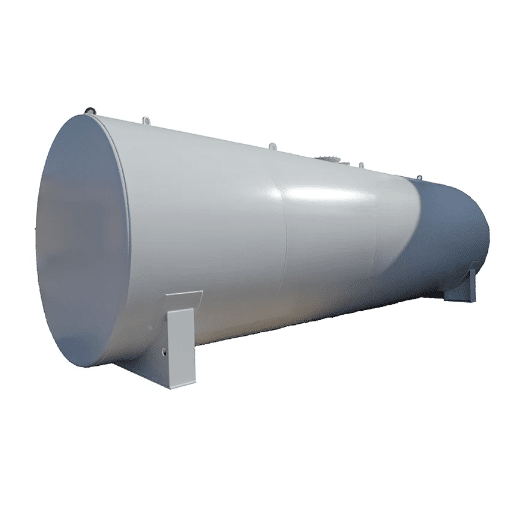
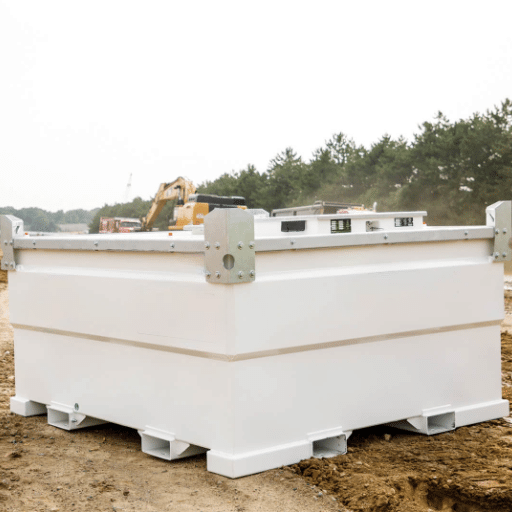
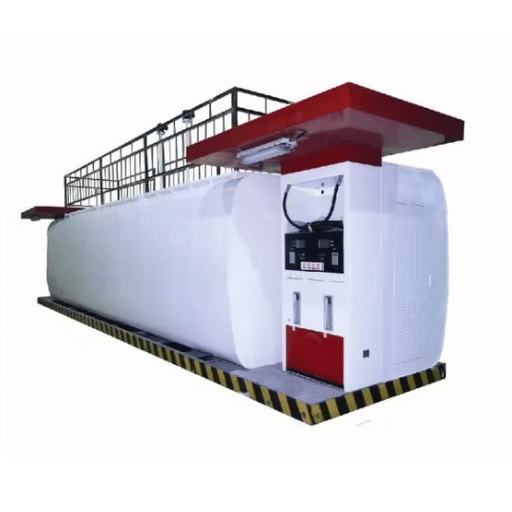
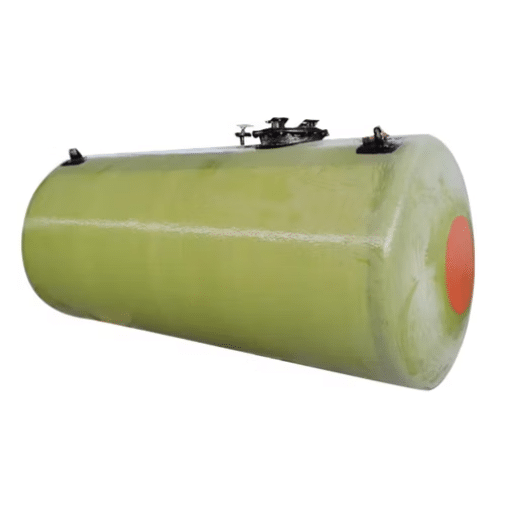
A single corrosion pinhole in an underground storage tank can leak roughly 400 gallons of fuel per year. For gas station owners, that risk is not abstract. It shows up as contaminated soil, regulatory fines, cleanup costs, and a damaged reputation.
Cathodic protection for gas stations is the electrical shield that prevents this. Yet many owners know they need it for steel tanks without understanding how it works, what it costs, or when it fails. This guide explains cathodic protection in plain language, compares the two main systems, walks through testing requirements, and helps you decide whether eliminating cathodic protection entirely with corrosion-resistant tanks is the smarter long-term choice.
You will learn:
- What cathodic protection is and how it stops tank corrosion
- The difference between sacrificial anode and impressed current systems
- Federal and state testing requirements
- What a structure-to-soil test involves
- Real 2026 cost ranges
- When fiberglass tanks remove the need for cathodic protection
New to underground storage? Start with our complete guide to underground fuel storage tanks before you choose a specific tank type.
What Is Cathodic Protection for Gas Stations?

The Corrosion Problem Underground
Steel underground storage tanks and piping sit in soil that is rarely dry. Moisture, oxygen, and dissolved salts create a natural electrochemical reaction. The steel loses electrons and becomes an anode. Metal ions leave the tank surface.
Over time, those tiny losses become pits. Then holes. Then leaks. Even a small opening releases petroleum into soil and groundwater.
One gallon of petroleum can contaminate up to one million gallons of water.
For station owners, the result is environmental liability, expensive cleanup, and regulatory enforcement. This is why corrosion protection is not optional for metallic underground fuel storage. It is a condition of operating safely and legally.
How Cathodic Protection Reverses Corrosion
Cathodic protection is an electrochemical technique. It forces the tank or pipe to become the cathode of an engineered cell. It supplies a protective direct current that counteracts the natural corrosion current.
Instead of the tank losing metal, a sacrificial component corrodes. Or an external power source drives protective current into the tank surface. In simple terms, cathodic protection makes the tank the recipient of electrical current rather than the source of dissolved metal.
When designed, installed, and maintained correctly, it can add decades of service life to steel UST systems. The industry standard protection criterion is a structure-to-soil potential of at least –850 millivolts relative to a copper-copper sulfate reference electrode. That number is the pass line for most CP tests.
Featured snippet definition: Cathodic protection for gas stations is an electrochemical corrosion-control method that applies protective direct current to buried steel tanks and piping, forcing the metal surface to become a cathode and preventing it from corroding in moist soil.
Two Types of Cathodic Protection Systems
Not every gas station needs the same type of protection. The right system depends on tank size, coating quality, soil conditions, and the number of structures being protected.
Galvanic (Sacrificial Anode) Systems
A galvanic system uses anodes made from a more reactive metal, usually magnesium or zinc. These anodes are electrically connected to the tank or pipe. Because the anode material is more eager to corrode, it sacrifices itself while the tank remains protected.
This approach is passive. It needs no external power, no rectifier, and no monthly electrical checks. It works best for:
- Small or well-coated tanks
- Sites with low current demand
- Operators who want minimal maintenance
The anodes have a finite life. Eventually they degrade and must be replaced. However, for many standard retail applications, a factory-installed sacrificial anode system is simple, reliable, and cost-effective.
Impressed Current Cathodic Protection (ICCP)
An impressed current system uses a rectifier to convert alternating current to direct current. That DC is delivered to durable anodes buried near the tank. The operator can adjust voltage and current output to match changing site conditions.
ICCP is better suited for:
- Large or multiple tanks
- Poorly coated structures
- High-resistivity soil
- Sites with stray electrical interference
The trade-off is complexity. Impressed current systems require 60-day rectifier inspections and more involved maintenance. They also cost more upfront. However, they offer precise control and can protect much larger structures than galvanic systems.
Sacrificial Anode vs. Impressed Current
| Factor | Galvanic (Sacrificial Anode) | Impressed Current (ICCP) |
|---|---|---|
| Power source | None required | AC rectifier |
| Anode material | Magnesium or zinc | Mixed metal oxide, graphite, or platinum |
| Maintenance | Low | Higher |
| Testing frequency | Every 3 years | Every 3 years + 60-day rectifier checks |
| Best for | Small, coated tanks | Large or multiple tanks, poor coatings |
| Typical cost | ~$500 anode materials per tank | 15,000–40,000 installed for a 3-tank site |
Choosing between the two is not about which is “better.” It is about matching the system to your tank type, soil, and operating conditions.
Not sure which system fits your station? Contact our team for site-specific guidance on storage and corrosion protection.
Regulatory Requirements and Testing Frequency

Federal EPA Rules
In the United States, underground storage tanks installed after December 22, 1988 must meet federal corrosion protection standards. These rules are under 40 CFR Part 280. Owners have three basic options:
- Build tanks and piping from non-corrodible material, such as fiberglass-reinforced plastic
- Use steel with a corrosion-resistant coating plus cathodic protection
- Obtain a site-specific determination from a corrosion expert that the location is not corrosive enough to require additional protection
Older tanks installed before 1988 had to be upgraded with corrosion protection, interior lining, or both, or closed properly. Cathodic protection systems must be tested by a qualified tester within six months of installation and at least every three years thereafter. Testing is also required within six months after repairs.
How Often Must Cathodic Protection Be Tested?
The testing schedule depends on the system type:
- Sacrificial anode systems: full survey every 3 years
- Impressed current systems: full survey every 3 years; rectifier inspection every 60 days
- After repairs or installation: within 6 months
Owners must keep records of the last two tests. In California, record retention is 78 months.
Key Standards to Know
Several standards govern design, installation, and testing:
- API RP 1632, Cathodic Protection of Underground Petroleum Storage Tanks and Piping Systems
- NACE SP0285, External Corrosion Control of Underground Storage Tank Systems by Cathodic Protection
- NACE SP0169, Control of External Corrosion on Underground or Submerged Metallic Piping Systems
- ISO 15589-1:2026, updated cathodic protection design and monitoring requirements for oil and gas pipeline systems
These standards are not just technical references. They are what regulators, testers, and insurers use to judge whether your system is adequate.
Cathodic Protection Testing Explained
The Structure-to-Soil Test
The most common test measures the electrical potential between the buried tank and the soil. A qualified tester uses a high-impedance voltmeter connected to the tank and a copper-copper sulfate reference electrode placed on the ground directly above the tank.
The tester takes readings with the protective current on, then immediately after interrupting it. The instant-off reading removes the effect of soil resistance and gives a more accurate picture of true polarization.
Pass and Fail Criteria
A system passes if it meets one of two criteria:
- An instant-off potential of at least –850 mV relative to copper-copper sulfate
- A 100 mV polarization decay over time after current is interrupted
If the tank cannot reach these values, the system is failing. Common causes include depleted anodes, broken wires, coating damage, or dry soil around the reference point.
Common Testing Errors
Even a good system can produce bad readings if the test is done poorly:
- Dry or frozen soil increases electrical resistance and distorts readings.
- Sunlight heating the reference electrode can shift the measured potential.
- Poor electrode contact creates unstable numbers.
- Placing the electrode too close to an anode inflates the reading.
Because of these variables, testing should be performed by a certified professional. NACE/AMPP, STI, or ICC certification is commonly required.
Installation and Lifecycle Costs
Understanding the full cost of cathodic protection helps station owners budget realistically over the life of the tank.
Initial Costs
- Sacrificial anode materials for a new steel UST: approximately $500 per tank
- Impressed current system for a 3-tank retail site: $15,000–$40,000 installed
- Retrofit test station for an older tank: approximately $2,500 one-time
Ongoing Costs
- 3-year CP survey: $800–$2,000 per visit
- 60-day rectifier inspection (ICCP): $200–$400 per visit if outsourced
- Anode replacement (galvanic): every $15–$30 years depending on design and soil
20-Year Total Cost of Ownership
For a steel tank with sacrificial anodes, owners can expect to spend roughly $6,000–$12,000 over 20 years in testing, maintenance, and potential anode replacement. For impressed current systems, the total can be higher due to rectifier maintenance, electricity, and more frequent inspections.
These numbers do not include the cost of repairs if the system fails. If a tank loses protection for more than 90 days, many states require an integrity test before the system can return to service.
Common CP Failures and How to Spot Them

Galvanic System Failures
- Anode depletion: Anodes eventually corrode away and lose protective output.
- Dielectric shorts: The tank touches foreign metal, creating an electrical short that bypasses protection.
- Broken lead wires: Excavation, settlement, or maintenance activity can sever connections.
Impressed Current Failures
- Power loss or rectifier failure: No current means no protection.
- Anode bed deterioration: Durable anodes do not last forever in aggressive soil.
- Broken header cables: Underground cable damage interrupts current flow.
- Soil resistivity changes: Seasonal moisture shifts can alter how current distributes.
Operational Warning Signs
Watch for these indicators that something may be wrong:
- Unexplained fuel loss or inventory discrepancies
- Rectifier alarm or zero output reading
- Failed structure-to-soil potential readings
- Visible corrosion at exposed fittings, risers, or sumps
Catching problems early keeps a minor maintenance issue from becoming a tank replacement project.
Cathodic Protection vs. Fiberglass Tanks: The Real Cost Decision
For many station owners, the real question is not which CP system to install. It is whether to avoid cathodic protection altogether by choosing a corrosion-resistant tank.
Steel Tank + Cathodic Protection
- Lower upfront tank cost
- Required testing, maintenance, and recordkeeping
- Ongoing compliance burden
- Risk of failure if maintenance lapses
Fiberglass Underground Storage Tank
- Higher upfront cost
- No cathodic protection required
- No CP testing or maintenance
- Immune to external corrosion
Mini-scenario: Maria operates a rural fuel station with two aging steel tanks. Every three years she pays for CP testing. Every few months she worries about the rectifier readings.
When she budgets a tank replacement, her engineer gives her two options. She can install coated steel with a new impressed current system. Or she can switch to fiberglass double-wall tanks.
The fiberglass option costs more on day one. It removes some projected CP costs over 20 years. It also removes the risk of compliance penalties.
Maria chooses fiberglass. Now she spends her maintenance budget on leak detection and dispenser upgrades instead.
When Steel + CP Still Makes Sense
Steel tanks with cathodic protection remain valid for:
- Above-ground or special load-bearing applications
- Sites where local codes still favor steel
- Projects with tight initial capital constraints and strong maintenance discipline
When Fiberglass Eliminates the Problem
Fiberglass is often the better long-term choice for:
- New retail stations focused on lifecycle cost
- Sites with corrosive soil or high groundwater
- Owners who want to reduce compliance complexity
- Projects in regions with strict environmental enforcement
There is also an interior corrosion angle to consider. Ethanol and biodiesel blends can promote microbiologically influenced corrosion inside steel tanks. NIST corrosion lab tests found that ethanol-blend USTs can develop severe internal corrosion from acetic acid produced by bacteria.
That risk exists regardless of how well the outside of the tank is protected.
Looking for tanks that do not need cathodic protection? Browse our underground fuel storage tanks built for corrosion resistance and long-term compliance.
2026 Compliance Updates

Regulations continue to tighten. Two recent developments are especially relevant for gas station owners.
California UST Regulations
California’s updated UST rules include:
- Cathodic protection testing every 36 months
- Impressed current rectifier inspections every 60 days
- 78-month record retention
- New tank marking requirements effective July 1, 2026
These rules apply broadly and carry enforcement weight. Station owners should confirm their testing schedule and documentation now. For a compliance checklist you can use immediately, see our UST compliance requirements guide.
Indiana Certification Requirements
Indiana Senate Bill 277 requires cathodic protection personnel to be state-certified, effective July 1, 2026. Testers must pass the International Fire Code Institute exam or an equivalent approved program. This means owners can no longer assume any contractor is qualified.
ISO 15589-1:2026
The updated ISO 15589-1 standard covers cathodic protection design and monitoring for oil and gas pipeline transportation systems. While focused on pipelines, it influences best practices for station piping networks and is increasingly referenced in international project specifications.
FAQ
What is cathodic protection for gas stations?
Cathodic protection for gas stations is an electrochemical method that prevents buried steel tanks and piping from corroding by making the metal structure the cathode and supplying protective direct current.
How does cathodic protection work on underground tanks?
It counters the natural corrosion current in moist soil. Sacrificial anodes corrode instead of the tank, or an impressed current rectifier pushes protective current into the tank surface.
How often must cathodic protection be tested?
Sacrificial anode systems need a full survey every three years. Impressed current systems also need a full survey every three years, plus rectifier inspections every 60 days.
What is the difference between sacrificial anode and impressed current?
Sacrificial anode systems use reactive metal anodes that corrode passively with no external power. Impressed current systems use a rectifier and durable anodes to deliver adjustable protective current.
Do fiberglass tanks need cathodic protection?
No. Fiberglass-reinforced plastic tanks are non-corrodible and do not require cathodic protection under federal UST rules.
How much does cathodic protection cost for a gas station?
Sacrificial anode materials for a new tank cost roughly $500. Impressed current systems for a typical 3-tank retail site range from $15,000 to $40,000 installed, plus ongoing testing and maintenance.
What is a structure-to-soil potential reading?
It is a voltage measurement between the buried tank and a reference electrode in the soil. The standard pass criterion is an instant-off reading of at least –850 millivolts.
Can cathodic protection fail?
Yes. Anodes deplete, rectifiers fail, cables break, and soil conditions change. Regular testing and maintenance are essential to keep the system effective.
Conclusion
Cathodic protection for gas stations is essential when you operate steel underground tanks, but it is not free or maintenance-free. The right system, galvanic or impressed current, depends on your tank size, soil conditions, and operating budget. Testing every three years, keeping proper records, and watching for failure signs keep your station compliant and your soil clean.
For owners planning a new station or replacing aging tanks, the broader question is whether cathodic protection should be part of your strategy at all. Corrosion-resistant fiberglass tanks eliminate the need for CP, remove recurring testing costs, and simplify long-term compliance.
At Shandong Shengrui Intelligent Equipment Co., Ltd., we provide turnkey gas station solutions that help you choose the right storage, protection, and monitoring approach for your project. From certified underground fuel storage tanks to complete fueling infrastructure, we support station owners and project integrators worldwide with engineering you can rely on.
Ready to protect your investment? Request a quote for corrosion-resistant storage tanks or a complete gas station equipment consultation today.