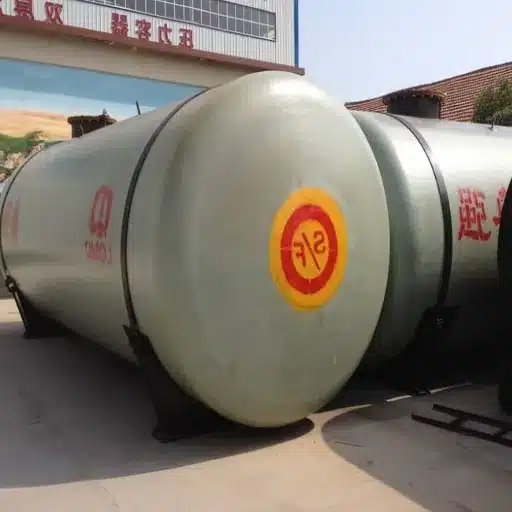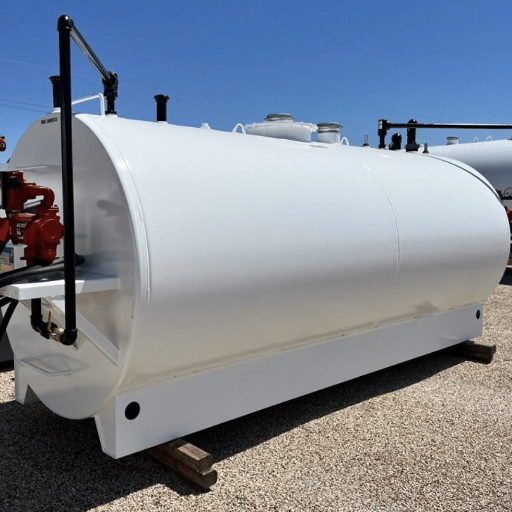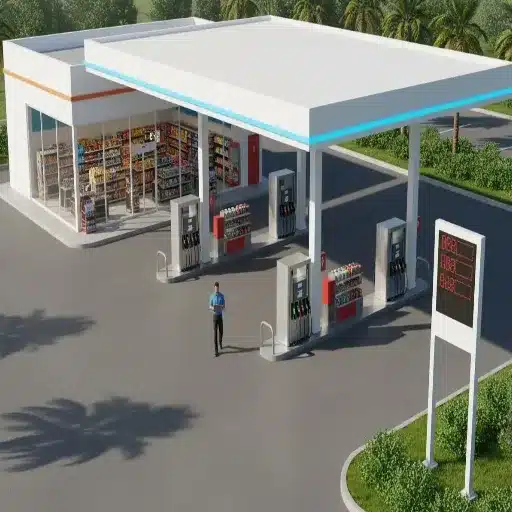
A skid station wins when the machines come to one place. A fuel trailer wins when one crew must carry fuel to machines that move. A fuel truck wins when bulk fuel has to reach many sites on a schedule. The skid station vs fuel trailer decision is settled by where the fuel meets the machine, and by who is licensed to drive it there.
Here is the trap. Buyers price the three formats as if they were substitutes. They aren’t. They carry different road rules, driver licensing, refill logistics, and staff costs, and comparing unit prices alone hides the cost that decides the project.
Take a composite example. A quarry operator bought a towable fuel trailer because it was the cheapest way to stop sending excavators to a public station. Six weeks later, the same crew was spending two hours a day shuttling the trailer around a 400-hectare site.
The trailer wasn’t wrong. It was answering the wrong question, and the site had one fixed fuel point waiting to be built.
You probably suspect the format choice matters more than the model choice. This article gives you the decision rule, the licensing rules, and the cost-per-liter logic to reject the formats that do not fit before you request a quote.
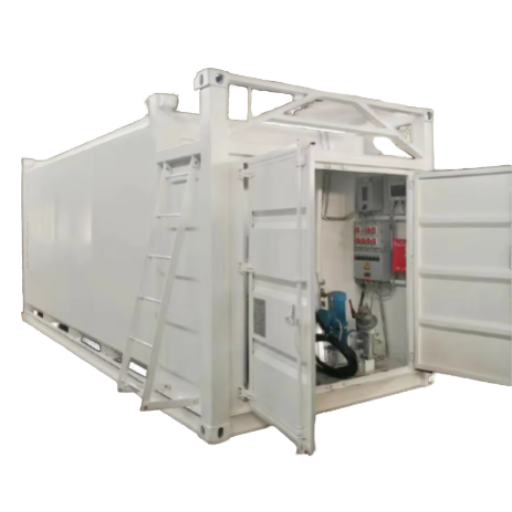
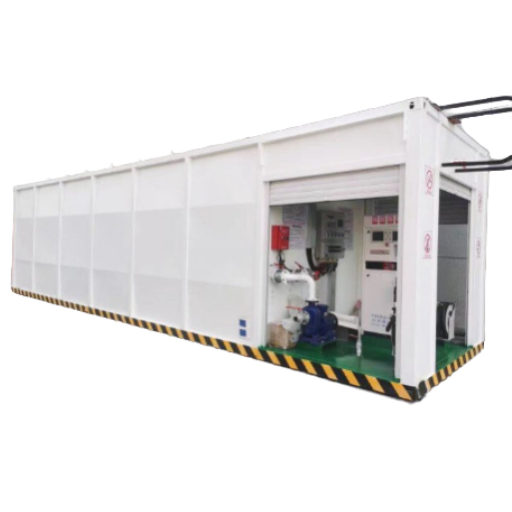
One clarification before the comparison. Fuel skid means different things in different markets. In North America, it usually describes a small tank that lives in a pickup bed or on a flatbed. In this article, a skid station means a packaged mobile fuel station on a fixed pad, typically 10,000 to 50,000 liters.
If you’re choosing between two station formats, the containerized versus open-frame skid comparison answers that question. If you’re still deciding between aboveground and buried, start with skid station versus a buried tank. And if a fixed site already looks right, send us your consumption figures, and we’ll size the tank against your delivery interval.
Key Takeaways
- The decision axis is where the fuel meets the machine, not unit price. Fixed machines favor a skid station; roaming machines favor a fuel trailer; many sites favor a fuel truck or delivered fuel.
- A working fuel trailer is regulated transport, not an errand. In the US, a placarded hazmat load is a commercial motor vehicle at any size, and the materials-of-trade exception is small: 30 L per package and 200 kg aggregate.
- A skid station moves the delivery to your site on a schedule. It does not remove fuel logistics; it converts them into a fixed cost you can model.
- Cost per liter, not purchase price, separates the formats. Model it over the permit or lease life, and the crossover usually appears.
- Public retail is a separate question. If the site sells fuel to the public, permits and fire code decide the format before any equipment comparison does.
What Exactly Are You Comparing
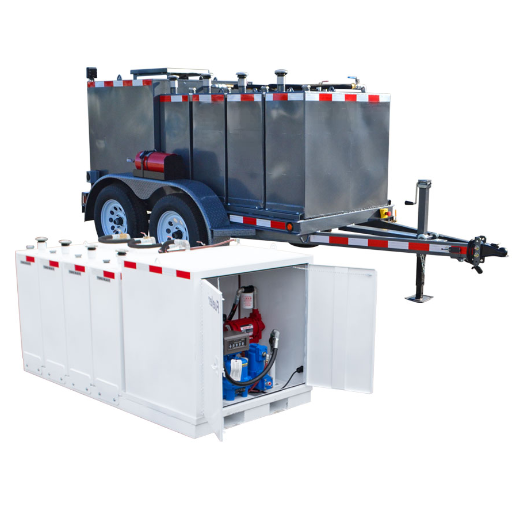
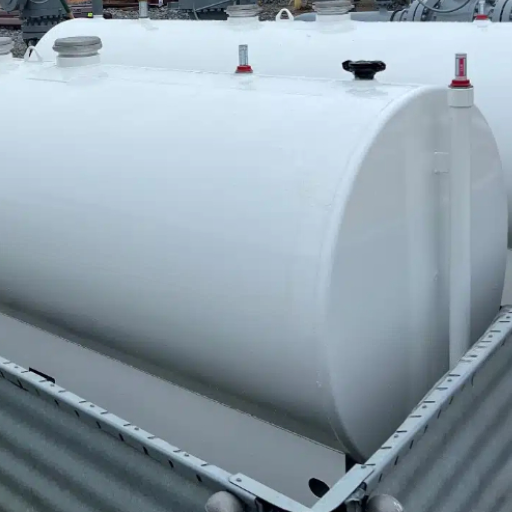
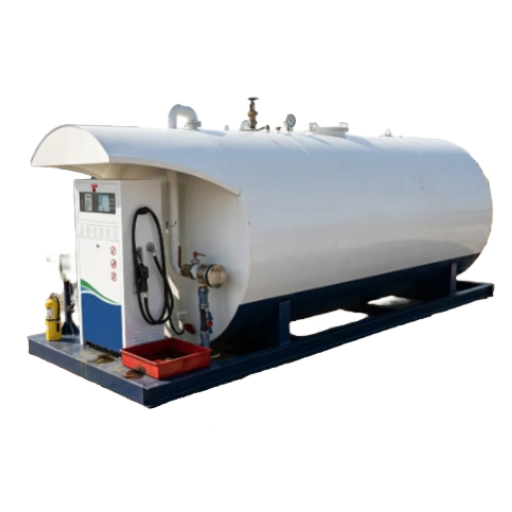
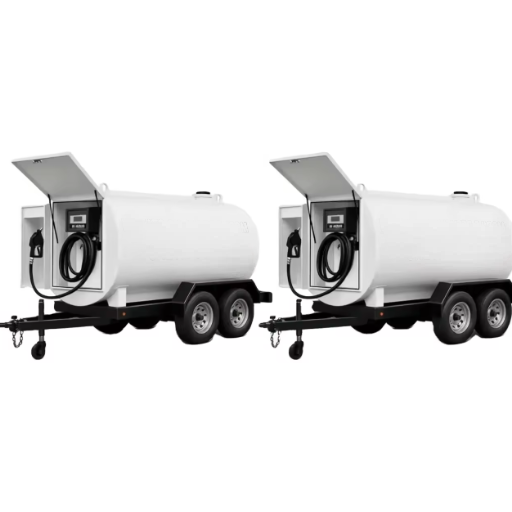
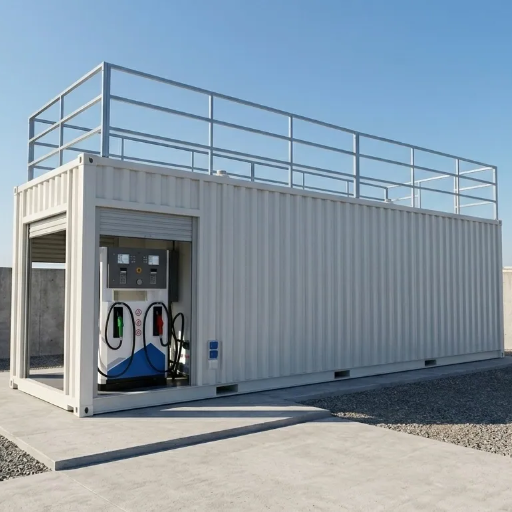
A skid station is a prefabricated tank and dispenser mounted on a frame at a fixed site, typically 10,000 to 50,000 liters. A fuel trailer is a tank built onto its own axles and towed by a vehicle. A fuel truck, called a bowser in the UK, Australia, and parts of Africa, carries a tank and pump on its own chassis.
That distinction matters because the three formats answer different operational questions. One asks the machines to travel. One asks a crew to travel. One asks a supplier to travel.
The industry vocabulary does not help. The term bowser covers both trailer-mounted and truck-mounted dispensing units, so two buyers can say the same word and mean different equipment. At the small end, a 200-gallon pickup skid and a 250-gallon towable trailer blur together. At the industrial end, the gap between a skid station and a trailer is measured in orders of magnitude, not gallons.
One more axis check. This comparison covers mobile fuel formats only. Tank materials and aboveground-versus-buried deployment are separate decisions, and the buried-tank article linked above owns the second one.
Side-by-Side: Skid Station vs Fuel Trailer vs Fuel Truck
The table below is the article in miniature. Read it before the detail sections, then use the detail to confirm which column fits your site.
| Criterion | Skid station | Fuel trailer | Fuel truck / bowser |
|---|---|---|---|
| Typical capacity | 10,000 to 50,000 L across 20ft and 40ft units | Hundreds of gallons up to roughly 1,000 gallons in common towable builds | Thousands of gallons, often multi-compartment |
| Who moves | Machines travel to the station | A crew tows fuel to the machines | A supplier runs a route, or your driver does |
| Site works | Pad, bund and anchoring before delivery | Hardstanding to park and refuel on | A turning area and safe stop points |
| Driver licensing | None for dispensing; the delivery tanker has its own driver | Depends on load and jurisdiction; a placarded load is often a commercial vehicle | Commercial licensing and hazmat training in most markets |
| Road rules | Site permit and fire code, not road rules | Towing, braking, hazmat placarding and parking rules | Full commercial vehicle regime |
| Dispensing rate | High, with station-grade dispensers | Moderate, limited by pump size and hose | High, with bulk transfer equipment |
| Refill logistics | Bulk tanker delivers to your pad on a schedule | You refill at a supplier or by bowser delivery | It is the delivery |
| Staffing | Self-serve by trained staff | One trained driver tied to the trailer | A dedicated driver or a delivery contract |
| Cost shape | Capital plus pad, permits and freight | Capital plus tow vehicle and labor time | Capital, or a delivered-fuel margin |
| Residual value | Relocatable as a packaged unit | Resaleable vehicle asset | Resaleable vehicle asset |
| Best fit | Fixed, high-consumption site | Roaming machines, one crew, one site or region | Many sites, bulk resupply, or no fuel infrastructure |
The decision axis sits in row two. Everything else follows from who moves.
Capacity and Refill Logistics: Who Moves the Fuel
Skid station: delivery comes to you
A skid station changes the shape of your fuel logistics rather than removing them. A bulk tanker still has to reach the site, usually on a schedule set by consumption and tank size. The unit holds enough to buffer between deliveries, which is why capacity selection is a delivery-interval question first and a price question second.
Our 20ft skid station specification guide walks through the capacity arithmetic, including safe fill and ullage. The operational point is simpler: on-site fueling becomes a scheduled event you can plan around. You stop paying a crew to move fuel, and you start paying a supplier to bring it. A station on a pad is also self-serve for trained staff, so no driver is tied to it, and nobody has to wonder whether the trailer is where it needs to be.
Fuel trailer: one crew, one radius
A towable fuel trailer puts the fuel where the machines are, which is exactly what a single roaming crew needs. Refilling happens at a fuel supplier or by bowser delivery where the trailer parks. The constraints are physical: the trailer has to be somewhere, the tow vehicle has to be available, and the crew’s day has to absorb the towing time.
Trailer pumping capacity is typically lower than station-grade dispensing, so a large machine takes longer to fill. On a small site that is invisible. On a site with forty machines and two shifts, it becomes the bottleneck that the quarry operator in the opening example ran into.
Fuel truck: the fuel is the delivery
A fuel truck or bowser answers a different question again. When the fuel has to reach many sites, or when a supplier already delivers to your area, buying a truck duplicates infrastructure you can rent through the delivery. Its advantage is bulk and route economics. Its disadvantage is that you now own a commercial vehicle operation, with a driver, maintenance, licensing, and scheduling attached.
Formats also combine. A regional contractor with three yards put a skid station at the main depot, kept a trailer for a satellite site with roaming equipment, and bought delivered fuel for two temporary jobs. Nobody chose one format. They matched three formats to three site conditions, which is the pattern most industrial buyers end up with.
If the fixed-site case is yours, see what a packaged unit actually includes in the 20ft skid station configurations before you size the pad.
Road Legality and Licensing: The Rule That Decides More Than Price
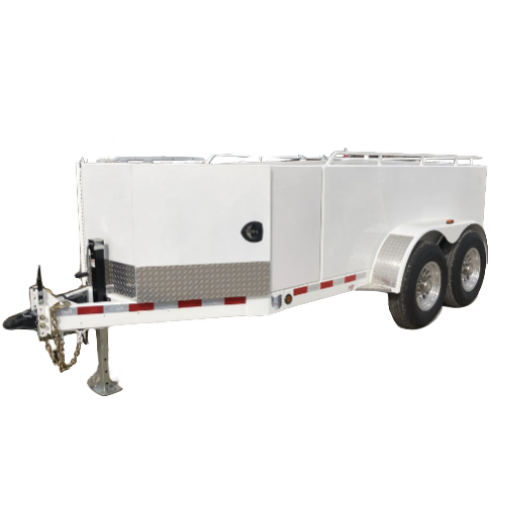
This section is the one buyers underestimate most. In the United States, a fuel trailer at working capacity is not a convenience item you tow to the site. It is regulated transport.
Each format lives under a different rulebook:
- Skid station: site permits, fire authority approval, and electrical rules. The vehicle leaves; the site stays regulated.
- Fuel trailer: towing and braking rules, hazardous materials placarding, and driver licensing that follows the load.
- Fuel truck: the full commercial vehicle regime, including hazmat training and vehicle maintenance records.
The commercial vehicle threshold
Under 49 CFR 383.5, a commercial motor vehicle includes a vehicle of any size used to transport hazardous materials that require placarding. A placarded fuel trailer can therefore require a commercial driver’s license regardless of its weight. Weight thresholds exist too, but the hazmat clause is the one that surprises trailer buyers.
The same section defines a tank vehicle as one designed to carry liquid in tanks with an individual rated capacity of more than 119 gallons and an aggregate capacity of 1,000 gallons or more. That definition drives the tank endorsement requirement, and it is one reason a trailer built around a large single tank is treated differently from a small pickup skid.
The materials-of-trade exception is narrow
US rules do allow a small exception. 49 CFR 173.6 lets a business carry limited quantities of certain hazardous materials as materials of trade, without the full hazardous materials regime. The limits are strict: for many Class 3 flammable liquids in Packing Group II or III, 30 liters, about 8 gallons, per package, and an aggregate gross weight of all materials of trade on the vehicle of 200 kg, about 440 pounds.
Read those numbers against a working fuel trailer and the conclusion is unavoidable. A trailer carrying hundreds of gallons doesn’t fit the exception. It is a placarded hazmat shipment, with the driver licensing, documentation, and vehicle rules that follow.
Agricultural and other exemptions exist in some jurisdictions, but they are specific and conditional. Confirm yours with the state or national authority before you buy.
What replaces the road rules at a fixed site
A skid station leaves the road regime behind because the unit does not travel. What applies instead is the site regime: planning consent, fire authority approval and electrical rules. Our skid station permit requirements guide covers the approval tracks and their document packs. “Temporary” is a permit category in most jurisdictions, not an exemption.
Dispensing is governed separately again. In the US, NFPA 30A is the code fire authorities most often cite for fueling operations, and how it applies to a trailer or truck dispensing on site depends on local adoption. Outside the US, dangerous goods transport rules and local fire codes apply in their own forms. The pattern holds everywhere: the format decides which rulebook you live under.
Cost Per Liter: Where Each Format Wins
Purchase price is the least useful number in this comparison. The useful number is cost per liter delivered, modeled over the life of the permit, lease, or project.
We publish a ten-year total cost of ownership model for a 20ft skid station, including the line items quotes usually leave out. Rather than re-derive that arithmetic here, use the logic to see where each format’s cost lands:
- Skid station. Capital, pad and bund, permits, freight, and scheduled bulk delivery. The per-liter cost falls as annual volume rises, because the fixed costs spread across more fuel.
- Fuel trailer. Unit cost, tow vehicle, insurance, driver time, and slower dispensing. The per-liter cost rises with distance and with how often the crew has to move the trailer instead of the machines.
- Fuel truck. Either a vehicle purchase with a driver and maintenance program, or a delivered-fuel margin if you buy the service. The per-liter cost depends on route density, not on your site.
The crossover usually follows consumption. A fixed site that burns tens of thousands of liters a year tends to justify a station’s fixed costs. A site that burns a few thousand liters a month across scattered machines tends to favor a trailer. A buyer with many small sites tends to favor delivered fuel until route density justifies a truck.
Two cautions before you put numbers in a board paper. Budget from local quotes, because quotes vary more than the formats do. And treat the trailer’s labor cost as real even when it hides in an existing salary; a crew spending two hours a day towing fuel pays for the trailer in time, not in fuel.
Decision Rule: Six Site Conditions That Decide It
Use these six conditions in order. The first one that matches your site usually settles the format.
- One fixed pad, high daily consumption, machines converge on it. Choose a skid station. The delivery schedule replaces the crew shuttle.
- Machines roam across one site, and one crew fuels them. Choose a fuel trailer. It follows the work and needs no pad.
- Many sites, or bulk resupply you would rather buy than own. Choose a fuel truck or delivered fuel. Route density decides which.
- No tow vehicle and no licensed driver available. Choose a skid station. The fuel arrives; nobody on your team has to drive it.
- The site changes every few months and has little residual location value. Start with a trailer, and move to a station only if consumption justifies the pad.
- The site sells fuel to the public. None of the above decides it alone. Permits and fire code decide, and the skid station versus buried tank comparison covers the deployment question that follows.
Condition four is the one buyers miss, because they price equipment before they check their own staffing. If nobody on site can legally drive a placarded load, the trailer’s purchase price is irrelevant. The format that works is the one whose logistics you can actually run.
FAQ: Skid Station vs Fuel Trailer and Fuel Truck
What is the difference between a fuel skid and a fuel trailer?
A fuel skid is a tank on a frame that rides in a truck bed or on a flatbed, usually a few hundred gallons. A fuel trailer is a tank built onto its own axles and towed behind a vehicle. In industrial use, a skid station is a larger packaged station fixed on a pad, and it does not travel with a vehicle at all.
Do I need a special license to tow a fuel trailer?
It depends on the load and the jurisdiction, and in the US, a placarded fuel load can require a commercial driver’s license at any vehicle size. Check the hazardous materials and tank vehicle rules for your state or country before assuming an ordinary license is enough.
Is a skid station cheaper than a fuel truck?
Usually, at the equipment level, because you are buying a fixed station rather than a commercial vehicle and driver operation. Whether it is cheaper per liter depends on your volume and delivery costs, which is why the ten-year model matters more than the sticker price.
Can a fuel trailer replace a skid station?
It can serve the same machines, but it changes who moves. A trailer works when a crew can tow fuel to roaming equipment. It tends to fail when machines converge on one point at high volume, because the crew’s towing time becomes the constraint.
What is a fuel bowser?
Bowser is the term used in the UK, Australia, and parts of Africa for a mobile fuel dispensing unit. It can be trailer-mounted or built onto a truck chassis, so the word alone does not tell you which format you are buying.
Conclusion
The skid station vs fuel trailer vs fuel truck question has one honest answer: match the format to where the fuel meets the machine, then confirm the licensing and logistics you can actually run. A fixed site with converging machines favors a station. Roaming machines with one crew favor a trailer. Many sites favor a truck or delivered fuel.
Cost per liter decides the close calls, not the purchase price. Model it over the life of the permit or lease, and include the labor the trailer hides in existing salaries.
If you are sizing a fixed-site solution, our team can help you match capacity, pad, and permit path to your consumption. Talk to our engineers about your fuel logistics and get a specification you can take to your fire authority.