A fine gas station sign isn’t about aesthetic pleasure, but about customer traffic, attraction, and information. The sign itself must be capable of captivating a driver’s attention, not simply being passed by. This discussion addresses all essential practices involved in designing good gas signs. Good signs ensure maximum visibility, quick observance, on-site compliance with regulatory requirements, and excellent customer orientation [04]. From the right messages to an innovative design, what does it take to pull off successful signage? This paper will provide information regarding the most vital aspects that the planning and engineering crew should pay attention to. Gas station operators may want alternatives to promote awareness and, along with that, enhance the venture’s performance.
Types of Gas Station Signage
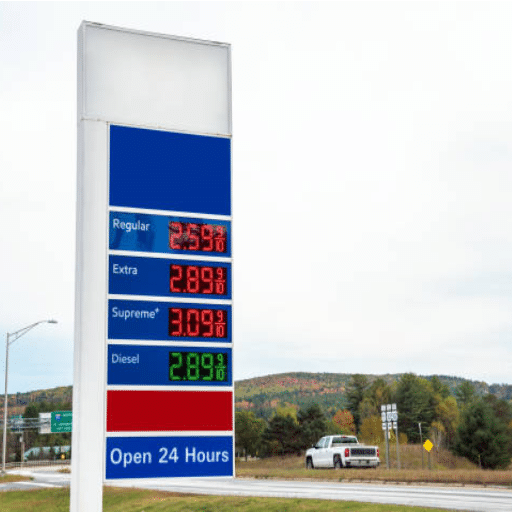
Price Displays
These display the cost of fuel and are the key to attracting customers. LED price displays are preferred for their visibility and ease of updating.
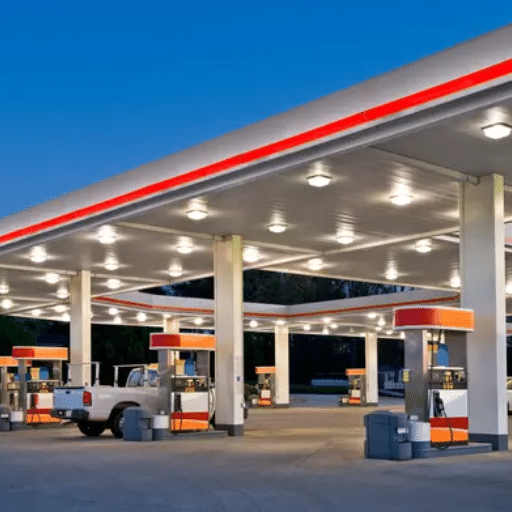
Canopy Signage
Installed between fuel pump canopies, these signs usually declare the brand name and symbol of the service station, while attracting attention from afar.
Direction Signs
These help the consumer by providing direction to the station, including entrance, exit, and parking area, thereby making them improve traffic flow and safety.
Promotional Signs
Promotional signage is used to broadcast discounts, loyalty programs, and ISM products, generating fresh purchases.
Signs for Safety and Compliance
They are essential in the communication of safety regulations, such as warnings of non-smoking zones or instructions for emergency shut-off.
Key Takeaway: All of these signs serve specific purposes, altogether contributing toward an efficient and customer-friendly atmosphere in a gas station.
Outdoor Signage Options
Outdoor signage plays such a massive role for gas stations regarding operational orientation and commercial purposes. Listed herein are the key choices:
Monument Signs
These are permanent floor-level constructions that attract the eye of anyone driving past. They tend to position themselves close to the roadway, all the better for the brand, which, in turn, makes it easy for customers to find them. Monument signs are tough; the materials they are built from, like stone, concrete, or metals, are used to cope with the elements.
LED Price Signs
LED signs displaying gas prices truly act out of necessity to attract drivers to the station by showing the most competitive price offers on fuel. Attractive under any weather, these low-energy signs are conspicuous, and feature fast, real-time updates whenever there is an alteration in displayed prices, linearly
Canopy Signs
Canopy Signs are constructed above the fuel pumps that are also oriented to offer a space for the sheltering of customers during a refueling wagon. They typically include the brand logo with colors and lighting, providing a nice, dim place to brighten the area in daylight and differentiate the business from rival stations during nighttime.
Directional and Parking Signs
These are signs intended to direct the flow of traffic and a means for ensuring safety within the site, while also directing the customers to the entry/exit points, parking areas, or specific services, such as air and water points or car wash points, in order to enhance the overall customer experience.
Billboards and Advertisements
When wisely placed, billboards near the highway and intersections are an efficient way to pull in new customers. In these projects, the large audience at these vantage points attracts marketing efforts pushing fuel deals, supplies, and limited-time promotions. Billboards of such a scale pump visibility through a loud, omnipresent reinforcement of branding.
Summary: Display combines many of the mentioned qualities, offering an overall exterior signage that’s good not only for the gas station’s promotional aims but also for creating a seamless, safe adventure for the customer.
Digital Signs for Modern Gas Stations
The most significant achievement of digital signage in the gas station is how dynamic and adaptable screens are making it easier for gas station owners to communicate with their customers, leaving traditional signage way back in the past. These displays are able to quickly present highly vibrant, eye-catching technicolored gas prices, promotions, weather updates, or even safety messages as their customer watches. This dynamic frame makes digital signage truly remarkable in that its adaptability allows the operators to speak to their customers, the same night after night, general gasoline prices will be communicated, whereas they talk about running oil prices and limited-time deals. In fact, this motion within the displays will maximize operational efficiency as it gives excellence in customer-friendliness.
But other than the beautiful appearance, it is more cost-efficient when looking to the future. Once digital signage has been put in place, the upkeep costs paid in due time are minuscule, perhaps the electricity bill and other small things connected to it, tiny amounts, and negligible changes worth mentioning. Additionally, content management features could vary in navigating a digital photograph, and vast capabilities can present remote management to manage the content from a central location.
One major advantage of digital signage is its capability to facilitate various interactive elements and other multimedia applications, facilitating the shorter attention span and also creating a long-branding-impacted memory. Sometimes, these systems integrate with customer loyalty programs, allowing customers to view new, highly pertinent offers together with QR codes, helping to create an enhanced impression with the pure convenience of mobile-user interaction. So regarded as a bold innovation, these digitally evolved oomph machines help gas stations aiming to remain relevant in a space that keeps on turning digital.
Custom Gas Station Sign Designs
Several requirements are factored into the design of custom gas station signs to ensure maximum efficiency and compliance with industry standards. First, the design must consider any local zoning laws and regulations concerning where the sign can be located, its size, and foreground-and-background contrast levels. It is critically important to review the codes for the locality to avoid penalties or modifications of the site after installation.
Second, high distinction features like LED panels or backlit displays must be incorporated because they ensure writing is legible both in bright daylight and at night. They increase the visibility from far away, thus pulling the attention of drivers and passers-by. Colour and font must be chosen carefully to be in harmony with the brand identity and define the perfect readability that maintains exceptionality.
Another aspect that is significantly enhanced by these varying technologies is customer interactivity, such as fuel price displays in real time or dynamic, updated promotions. Additionally, using advanced materials and weatherproofing will ensure greater durability and reduced maintenance, with a lower return on investment in the long run. Integrating these elements into custom designs will thus increase the functionality of gas stations and secure the return on investment for operators.
Importance of High-Quality Gas Station Signs
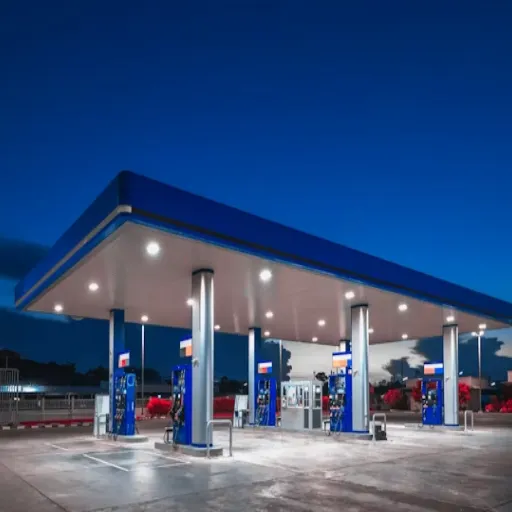
To be able to draw the customers as well as communicate the necessary information and be visible to the brand owner, the signs at gas stations must be of high quality. The signs are easily recognizable as signaling that the fuel prices and other services have been decided to fit the convenience of the driver and their decision tables. In these situations, the signs must be durable to withstand heavy environmental destruction, auxiliary in all conditions, maxing out their impact, and be fitted with responsible lighting. Thus, the signs help to paint good pictures about customers, empower the brand name, and yield some money into the pockets of a gas station owing to its well-polished, always ready, and simple form of communication by plying several equally good-looking strips of strong ethanol.
Impact on Customer Experience
Good signage rarely fails to enhance the consumer experience by making decision-making smoother and more convenient. Brightly lit and legible signs make it easier for consumers to be spotted by the side of the road, compare fuel prices, and assess the services offered. Plus, digital and LED signs can display more real-time information, such as offers or updates, lessening the degree of confusion and ensuring a seamless interaction. High-quality signage constructs trust by almost projecting professionalism, almost proving reliability, thus in the end certainly improving the perception of the client on the brand positively, thereby resulting in enhanced satisfaction, repeat visits, and a very strong position in the market.
Durability and Longevity of Signs
Several factors could determine the longevity and durability of signs, including materials used, environmental elements, and the construction format for the sign. Aluminum, acrylic, and plexiglass are commonly utilized for weather and physical wear resistance against UV exposure; it is the high-grade material that seems to meet these requirements, as already explained. As soon as proper finishing coats or layers are just finished, the weatherability property of the signage is significantly improved, preventing fading or degeneration with time.
And lastly, multiple environmental factors such as temperature decay, rising humidity, and persistent sun exposure are similarly capable of affecting a sign’s lifespan as well. Correctly designing the material in compliance with the weather of that relevant area ensures an effective long-term performance. A more typical example of the subject would be for different coastal areas in which some kind of corrosion-resistant metals would actually be ideal.
For signs, another essential maintenance is necessary for extending their lifespan: frequent cleaning, inspections, and imminent repairs. Though digital signs are crafted to last, said maintenance may require parts updates, and routine digital sign maintenance to keep it working in its functionality. By using durable materials, finishes, and proactive care, the signs will continue to look good and perform well throughout the years, producing long-term value and maintaining the brand’s image.
Branding and Recognition
Effective branding and recognition greatly rely on the strategic role of visual and design elements incorporated into one’s signage. Your very best logo is there, with colors and typography that are also consistent with your brand’s ID, further pushing the agenda of being recognized by identification. By ensuring coherence through all your brands’ signage, your brand becomes strong across all fronts of the customer experience for the customer. The presentation will include location-based design and clear visibility of the signs at various distances, thereby increasing readability and overall recall. Coupled with modern technologies such as LED displays or augmented reality integration, businesses have the chance of multiplying their brand identity and standing out in a competitive market.
Regulations and Compliance for Gas Station Signs

This requirement has to be met by gas station signs as per the federal, state ad local acts of legal operation and public. Some of these requirements include:
- Zoning Laws – These lawson sign placement, size, height, and visibility endorsement are endorsed to coordinate or fit in with land area usage and avoid or decrease visual obstructions.
- Illumination standards – Specifies brightness and hours of operation so as to be compatible with traffic visibility and with light pollution settings for LED and other types of sign illumination.
- ADA Compliance – Ensure that signs meet the standards of the Americans with Disabilities Act (ADA), ensuring clear lettering and readability for people with disabilities.
- Environmental Concerns – Signs have to follow environmental laws, such as restrictions on unpermitted structures in wetlands or conservation grounds.
The issuance of a permit is sufficient; therefore, it becomes mandatory to procure them from the local authorities before anyone can start setting anything up. The permit that one is issued tends to go into details such as details of specifications, designs, safety aspects, etc. What it provides is that designers need to give the best to their understanding of regulations about air pollution.
Important: By following the rules, companies can escape fines, ensure smooth operation and maintenance of their customers’ and community safety and well-being.
Local and State Signage Requirements
Local and state regulations for signage usually vary depending on the jurisdiction. These requirements typically include the size, location, viewability, and compliance with zoning and safety requirements. It usually establishes that signs should not hinder traffic signs and should adhere to height restrictions in particular areas. Companies must ensure that anyone sings on the premises of a commercially established area within zoning legislation, which will govern as to lighting, size, and distance from the property lines in particular jurisdictions of residential, commercial, or similar zones.
State laws might further specify the materials and the design to include some local restrictions on spatial affairs, such as traffic control at intersections. Materials, contained in non-toxic paints or non-flaking on walls, might be specified in compliance with city regulations. It may also contain restrictions on the nature of messages that are inscribed. While being compliant, businesses need to review municipal and state codes, apply for the proper permits, and perform the jobs using licensed contractors who are well aware of the exactness of the local laws.
Safety Signs and Their Importance
Safety signs play an essential role in maintaining workplace safety, preventing accidents, and ensuring regulatory compliance. Through universally recognized symbols, colors, and text, they communicate critical information on how to behave, warn against dangers, and give instructions in case of an emergency. According to the OSHA (Occupational Safety and Health Administration) requirements, safety signs are properly visible, E-Z at strategically the appropriate and required spaces. Identify the safety signs in the absence of predominant language skills or restricted reading capability.
Safety signs come in different forms, each bearing a different purpose. Warning signs draw attention to the possible hazard, such as wet floors or high voltage. Prohibition signs prohibit specific unsafe actions, for example, no-smoking areas. Mandatory signs show the necessary action to be followed, such as wearing protective gear in designated areas, and Informative signs are those that indicate fire exits, first aid, or meeting points in case of an emergency.
Appropriate compliance with the safety sign is to evaluate where the sign is being placed and what type of activity it is warning against; after identification of risks, it is necessary to make sure that the materials and colors are as standard as possible, thus minimizing the chances of misinterpretation, compliance, and durability. And in either standard or normal circumstances, the role of indoor and outdoor signs is not solely about reducing risk at the place or workplace to foster safety and responsibility.
Compliance with Fuel Type Regulations
Compliance with regulations on fuel type requires following federal, state, and local mandated fuel components, usage, and emission regulatory compliance mandates. One must first of all identify the relevant laws, mostly Environmental Protection Agency (EPA) regulations, regarding air pollution through the Clean Air Act, relating to fuel formulations and emission control for various industries and motor vehicles. Main components include the adherence to Renewable Fuel Standards (RFS), the correct labeling of fuel dispensers, and enforcement for the use of certain types of fuel blends, such as ethanol-gasoline blends (e.g., E10 or E15) or biodiesel blends (e.g., B20). There could be hefty fines, curtailment, and a negative impact on environmental sustainability if a particular company does not comply with the regulations. Records should be maintained efficiently, and audits should be performed frequently in order to remain in compliance with the set regulations. Organizations must form associations with legal experts and focus on fuel-monitoring technology advancements to further streamline the compliance process, reduce operational risks, and ensure compliance with the very laws.
Installation and Maintenance of Gas Station Signage
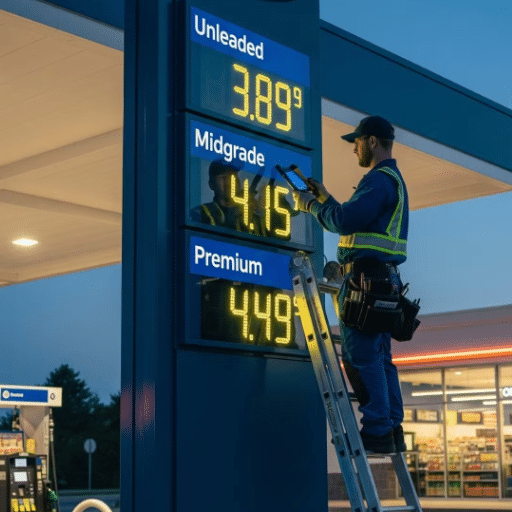
Securing the careful setup and maintenance of gas station signage is highly relevant to visibility, compliance with safety regulations, and customer communication. The placement of signs in optimum positions that maximize visibility from the main streets and entryways is necessary, maintaining compliance with local zoning and height restrictions. There must be protective durability capable of resisting environmental factors like winds, rain, and UV exposure.
Routinely scheduled assessments to assess for any and all damages, fading, or lighting malfunctions should be part of an everyday maintenance service. Routine cleaning preserves attention and professionalism, while immediate repair or change ensures safety compliance. Outsourcing sign services will increase the quality of life expectancy and signage on gas stations.
Best Practices for Sign Installation
The correct installation of the sign is crucial for weather resistance, legally safe use, and safety. A thorough preliminary walkthrough of the site will enable you to consider essential factors such as the Bearing of Sign Placement in relation to environmental and structural challenges, along with exposure to temperature, wind, or any other weather elements. Choosing materials and anchorage systems that hold well with those elements is recommended. Processing and enforcing codes and standards of the city or province will significantly reduce potential long-term legal issues or safety issues.
Accurate measurements, leveling tools, and adherence to the given technical specifications during the installation ensure that the communication is level, plumb, and installed professionally. All the individual components must be extremely secure, particularly in high-wind zones or high-traffic areas. For internally illuminated signage, the electrical work must meet all safety protocols, while the lights must then be objectively assessed for functionality. To document the installation and monitor its progression, many technical setbacks, such as permissibility and inspection, would play a vital role in integrated comprehensive project documentation.
Routine Maintenance for Longevity
The maintenance of the sign would be essential to maintain its existence. Largely, an excess structure will determine the number of inspections, ranging from visual inspections three to four times a year to check loose and missing screws, collapsed sign supports, and environmental damage from wind, water, leaks, and UV radiation. At each visual inspection, the electrical fitting engaged with one illuminated sign is to be examined. Replace the missing lamp while maintaining the brightness of the sign and clean the light panels concurrently. Clean the face of the sign with a mild detergent solution to allow no accumulation of airborne pollutants, dirt, or grime, to skyrocketingly extend the age, and thus, if ever needlessly to heap up extra costs, delay the completion of the policy. Evaluation every year will reveal if those signs continuously exposed to harsh climatic conditions are candidates for being repainted, pushed into further industrialized finishing, or coated again out there. The complete asset recognition system is regularly maintained, which keeps the extensive maintenance procedures in place by inspection and repair, law enforcementing last measures against the prolonged life of the sign.
Safety Considerations During Installation
When working on temporary signage practice, it is imperative to uphold safety measures. These stipulations are designed to ensure the employee’s health and safety as well as to abide by the rules and standards. To begin with, due diligence on any job site must be carried out before it commences. Such an inspection will help identify any environmental hazards that could endanger the lives of workers, for example, power-line dangers, muddy/refrigerant grounds, or harsh weather conditions. Ensure that workers are provided with the appropriate personal protective equipment for the said installation site, including hard hats, gloves, and harnesses for high-level installation. Before using tools, ladders, or lifting equipment, one must ensure they are in top working order with the right load capacity.
The company needs to give more prominence to grounding and keeping structured data up to the requirements of a particular manufacturer. Wiring on ticketing displays must comply with good wiring, and every electric item must be properly grounded to abate fire hazards and electrical hazards. Similarly, traffic minimizes road mishaps and pedestrian crossings from nuisance. Abiding by the above codes without compromise, risks are minimized for the maintenance of structural integrity; the advent of a watch on health and safety operational requirements is quite effective.
Pricing and Promotion Strategies Using Gas Station Signage

The importance of gas station signage is to inform pricing and promotional messages most effectively. To maximize the impact, pricing must be displayed in a large, easily readable font, and adjustments for real-time market fluctuations, for both accuracy and transparency to the benefit of the customers. Promotional messages such as fuel or convenience store specials should be concise, catchy, and located for attention purposes. Digital signage systems allow much flexibility in presenting immediate pricing and promotional changes, while the LED displays allow high visibility night and day. Clarity and good location of the message are key; gas station signage acts as the worst as an instrumental part of influencing customer decision-making and, in turn, improves revenue generation.
Effective Price Display Techniques
To ensure that the right signage usage in gas filling stations may be realized, the main factors to be considered must be substantive guidelines in compliance with signage. The dark, huge digital sizes are the first to read from a distance. All of these characteristics are so designed to call the car driver’s attention (possibly because professional management considers ideal means of congestion around well-busy thoroughfares of concrete and cement). Thirdly, the high color contrast in terms of black-on-dark-grey background or black-on-white character should catch the eye, as opposed to any other sort of conditions, lit either more dimly or very well. The signage and another idea of the category might happen to be LED backing digital signage that would make price posting in the real-time world much more, and it is more efficient, instead of using just paper postings. Placing the sign well up high and at various very precise angles is also another step that perhaps helps incoming traffic and still traffic moving toward stationary objects. After some time, recognizability and trust will be fueled by branding elements like the location of the logo and the type. With those things, a station has a chance to speak to its customers in many ways, to give them reason to drive by, and to further increase vulnerability.— like all other things mentioning portfolio mechanics.
Pump Topper Signs for Promotions
A large sign located ideally beneath the fueling machine was the handiest tool to advertise sales of gas stations. In my case, I knew how welcome they were above my own gas station (they were full-service, hence everywhere) and interacted with customers. By announcing these discounted sales, club memberships, or, in many cases, one-day deals, the undertaking grabs the viewers’ attention and, further, gives rise to more niche-like sales. Placed just at the eye level of any customer, the prospects for his/ her visibility are pretty good; smart design makes the shop seem more trusted with completeness in branding, and naturally results in increased assurance about the shop.
Utilizing Signs for Fuel Type Promotions
Understandably, signs showing off fuel types have been incredibly effective in creating customer awareness, as well as directing orders towards premium sales. On one of the hand, corporations giving prominence to an array of fuel options, including premium, diesel, and then alternative fuels like E85 or EV charging, can use these signs to inform and equip clientele with information about the merits and features of their choices. They also design attention-drawing signs with supporting information on issues like increased performance and efficiency with hand-brilliance of symbols to be used in showcasing all marketing tools. Enhanced include an effective display of simple-worded messages and captivating colors that make the ads easily viewable and suspensefully attractive. Imagine these signs placed more defensively within the perimeters of fuel dispensing zones or entrances so that they become an attraction to all potential customers’ navigation, thereby informing them about their fuel options and benefits, which could include rebates or savings programs. When using this more targeted method, businesses will experience more uplifting sales volumes coupled with customer loyalty in an increasingly competitive scenario.
Conclusion
Each gas station sign is imperative for all business operations that depend on sales means visibility and adherence to those signs dictated by the legislation, direct customer communication, and stakeholder terminology, to state the brand. The relative strategic advantages conferred to the operators of gas stations are very much supported by the signage they choose, by the volume force of marketing components provided by enhanced pricing and promotions, and promotions to customer satisfaction. The coming of modern signs and having an association with traditional signage provides gateways for engagement and operating efficiency, surrounded by fierce competition.
Reference Sources
Montgomery County, Maryland – Gasoline Station Signage: Discusses state laws and requirements for gas station signs, including readability and mandatory information. Visit the source
Paramus Borough Government – Gasoline Service Station Sign Requirements: Outlines regulations for gas station signage, including size and content specifications. Visit the source
Miami-Dade County – Gasoline Price Signs Requirements: Details guidelines for displaying fuel prices and conditions of sale on gas station signs. Visit the source
Frequently Asked Questions (FAQs)
How might I customize gasoline station signage to reflect my brand image?
Gasoline station signage can be customized by a sign manufacturer to adjust colors, fonts, and logos to fit in with your brand image. Talk about the materials, such as 3M reflective sheeting for safety and visibility, for your selected pump sign designs, promotional banners, and reasonable prints that can be economically printed. Pump signs and in-store displays are consistent, so the entire chain matches your branding. The service provided by the given manufacturer, combined with your purchases, should give you confidence in knowing that the signs are made to your satisfaction and on time.
Which gasoline pump sign(s) are available meeting all local regulations?
Many offer safety compliance-based pump signage, taking federal and local regulations, flammable safety warnings, and proper reflectivity into consideration. Full text and symbol representation signs, including all requirements, can be bulk purchased. Knowing how to manufacture for the fuel industry, suppliers can ensure their signs match every string of verbiage and placement guideline requirements, so motorists and employees are adequately informed.
Can text for price displays be customized for displaying low prices or promotions?
Yes, pricing displays can be customized to highlight prices as the lowest in the market or to announce a special offer. These may range from full-color digital numerals and changeable letter boards to printed banners. For maximum visibility during the night, use reflective materials or 3M-coated faces. Their experts can then guide you through fast shipping and installation options for quickly updating the same sign within various locations of a chain.
What are some affordable gasoline station solutions for small locations?
Small stations can save money by using small print banners and simply mounting vinyl pump signs and standard-size displays rather than opting for custom-built sign cabinets. When a variety of sizes are purchased in bulk, the price of a sign can decrease quite a bit. Choose companies that dispatch at reasonable shipping rates and are customer-centered so that constructive advice can be offered. This will help one select materials that will be durable without unnecessarily spending money.
When are we seeing reflective gasoline signs combined with 3M material, and what is the effect on nighttime visibility?
Reflective sheeting, such as 3M, improves illumination from light sources in and around roadways, reflecting in reverse-rays bouncing off the reflective materials, enabling gas pump signs and price displays to glow brightly at night. This brings additional safety and visibility for drivers on the road after sunset. Choose grades of reflective material listed as suitable for outdoor use and flammable-area rating where appropriate.
Are custom-designed pump signs recommended according to fuel types or flammable warnings?
Most of the customized pump signs are necessary for clearly indicating fuel grades, terms of payment, and warnings about flammability. The customized sign for a specific need to label diesel, ethanol blends, or premium gasoline can help prevent cross-fueling and to ensure compliance with safety standards. Many signs signaling the degree of safety have language and symbols that show compliance with safety laws; one of the signs about flammable material carries pictures of fire.
How long does the production and shipping of customized gasoline signs generally take?
Manufacturing times ultimately depend on complexity: standard prints and pump signs will probably be ready for shipment in a few days to two weeks, whereas fully customized, fabricated signs could take several weeks. Shipping times will be dependent on carriers and location. Please be aware of the production timeline, fast-track options, and shipping updates so you can anticipate the installation and minimize downtime at your site.
How can the gasoline sign selection enhance the customer experience inside the store and at the pumps?
The choice of sign can be strategic in improving wayfinding, safety, and advertising both inside the store and at the pump. Crisp branded signs direct the driver’s eye toward the pumps, the payment kiosk, and the convenience-store areas. The promotional prints, if placed appropriately, could foster instant sales. These fonts, in all their good looks, speak quality and consistency of the chain and would create trust and help to bring back customers for more.