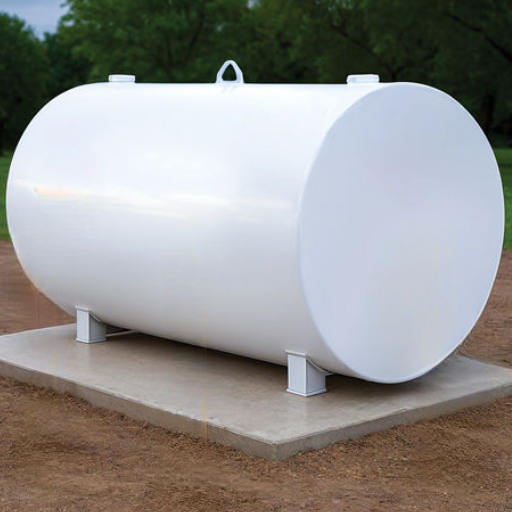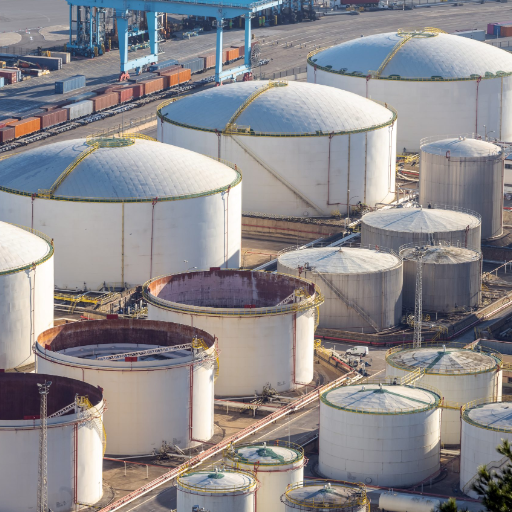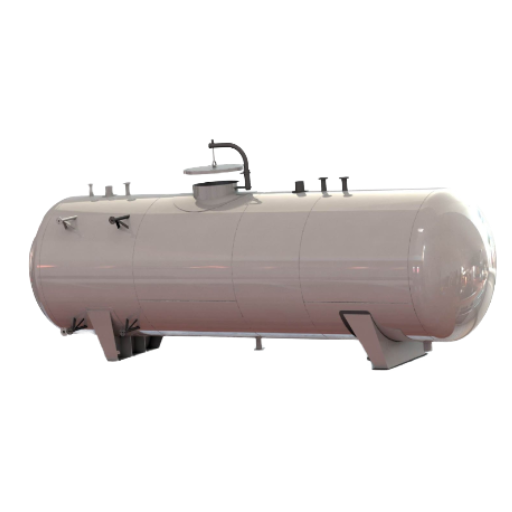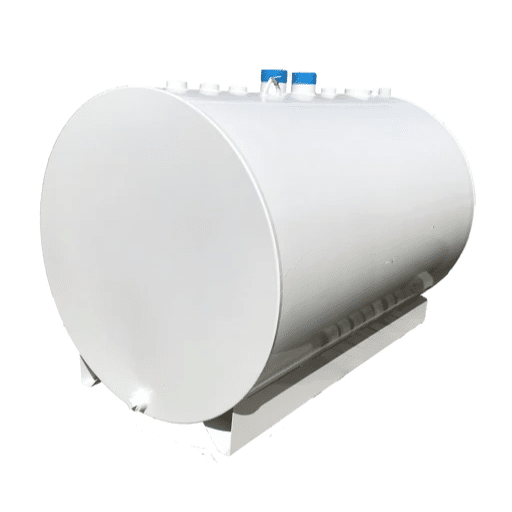
Two vessels hold the same 45,000 gallons of water. One delivers about 500 ton-hours of usable cooling; the other gives up 30% of that before the shift is half over. The steel is identical. What separates them is how well the water inside stays stratified.
That’s the whole idea behind a thermal store tank, and it’s the part most buying guides skip. If you’re specifying storage for a district heating network, a data center, a heat pump, or a solar array, you already know a tank can smooth a peak. What is harder to find is one source that defines the term, explains the physics in plain language, walks the sizing arithmetic, and connects insulation, materials, codes, and cost into a single decision.
By the end, you’ll be able to define the term, choose a storage medium, size the volume from real numbers, and specify insulation and a code basis with confidence.
Here is what we will cover:
- What a thermal store tank is, and what it doesn’t do
- Charging, discharging, and why stratification is everything
- The three storage media compared side by side
- Where these tanks are used
- A step-by-step sizing method with a worked example
- Insulation, materials, standards, and cost
- An eight-step selection sequence, plus installation and commissioning
This is the pillar of a full topic cluster on thermal storage. It gives each deep subject one paragraph and one citable artifact, then hands the detail to a dedicated article.
Ready to scope a project? Explore our storage tank range.
What Is a Thermal Store Tank?
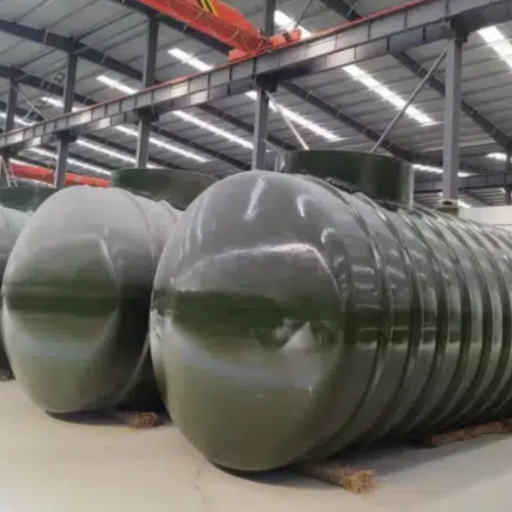
A thermal store tank is an insulated vessel that holds thermal energy in a storage medium, usually water, so it can be used hours later. It stores heat or coolness produced during low-demand or off-peak periods and releases it during peak demand. It stores energy; it doesn’t generate it.
In practice, the naming is genuinely confusing. You’ll see the same vessel called a thermal store, a heat store, a thermal energy storage (TES) tank, a thermal storage tank, or simply a buffer. In the United Kingdom, “thermal store” usually means a domestic hot-water cylinder that separates stored heat from mains-pressure supply; in industrial English, it means a large engineered vessel on a district heating, district cooling, CHP, or process system.
The most important clarification is what the vessel doesn’t do. A thermal store tank never creates thermal energy; a source does: a chiller, a boiler, a heat pump, a solar array, a combined heat and power (CHP) engine, or waste heat.
The tank decouples when energy is made from when it’s used. That decoupling is why buyers build one:
- Peak shaving to cut the size of the plant you have to buy
- Load shifting to run chillers or boilers when power is cheap
- Resilience to ride through a compressor trip or a grid event
- Renewable and waste-heat capture that’s otherwise thrown away
- Steadier operation, since a plant that rarely cycles hard lasts longer
Specifying a thermal storage vessel? Talk to our engineers about your load profile and site constraints before you fix a size.
How Thermal Store Tanks Work: Charging, Discharging & Stratification
Water stores heat through its sensible heat: the energy it holds rises in proportion to its mass, its specific heat, and its temperature rise. Double the temperature differential (ΔT), and you roughly double the energy held at the same volume, which is why plain water is the cheapest storage medium available.
Charging and discharging are the same process run in opposite directions. On a heating system, warm water enters through a diffuser at the top while cold water leaves at the bottom; on a cooling system, chilled water enters low and warmer return water leaves high. The diffusers spread flow across the full cross-section at very low velocity, so incoming water floats into place instead of jetting in and mixing the tank.
That’s the mechanism that makes one tank worth more than another. Temperature stratification is the natural stacking of water by density: warm water is lighter and sits on top, cold water is heavier and sits at the bottom, with no physical barrier between them. The transition zone in the middle, where temperature changes from hot to cold over a short height, is the thermocline. In a well-designed tank, the thermocline stays thin and stable through a full cycle; in a poor one, it grows and smears until the tank is lukewarm throughout.
One number decides whether you got this right. A well-stratified tank commonly recovers roughly 85 to 95% of the energy you charged into it; a poorly stratified tank may recover only 60 to 70%. That gap is the difference between a tank that carries your peak load and one that quietly underdelivers on the same footprint, insulation, and capital.
One geometry note belongs here. Heat loss and mixing both track external surface area, so a tall, compact vessel usually beats a long, low one of equal volume. It’s a standing argument in favor of a vertical storage tank whenever the stored energy must survive for hours.
Types of Thermal Store Tanks
Almost every thermal store tank is one of three media, and the choice follows from the duty, not from fashion.
| Media | Storage mechanism | Typical temperature range | Typical application | Notes |
|---|---|---|---|---|
| Sensible hot water | Temperature rise (mass × specific heat × ΔT) | Up to about 95 to 98 °C at atmospheric; higher when pressurised | District heating, CHP, biomass, solar, process heat, domestic hot water | Cheapest medium; storage density commonly about 60 to 80 kWh/m³ over a modest ΔT |
| Sensible chilled water | Temperature drop | Supply about 4 to 7 °C (39 to 44 °F), ΔT about 10 °C (18 °F) | Data centers, district cooling, airports, and air-conditioning | Same water, cooling duty; needs a vapor barrier and condensation control |
| Latent (PCM) | Phase change at near-constant temperature | Set by the PCM melting point | Space-constrained storage, load shifting | More energy per volume; encapsulant and cycling stability matter |
| Thermochemical | Reversible sorption or reaction | High | Emerging and research | Named for completeness; not a mainstream tank product |
Sensible hot-water storage is the workhorse: district heating networks, biomass plants, CHP engines, and large solar thermal arrays all use it because hot water is cheap, safe, and well understood. It’s the medium behind nearly every large thermal store in Europe.
Sensible chilled-water storage uses the same physics on cooling duty, holding water at roughly 39 to 44 °F and discharging it to absorb a cooling peak. The detail that bites is the vapor barrier: because the water is colder than ambient, the tank must stop condensation and heat gain, not just lose less heat.
Latent storage uses a phase change material (PCM) that absorbs and releases energy as it melts and freezes at a near-constant temperature, storing more energy per volume than water can. That matters where floor space is the binding constraint, though the encapsulant and long-term cycling stability need attention.
Three configuration axes cut across all three media, each covered by its own guide: pressurised (ASME) versus pressureless (vented), vertical versus horizontal, and single tank versus multiple-tank array.
Thermal Store Tank Applications
Thermal storage is not one market; it’s several.
District heating and district cooling make up the largest segment, with Europe holding the largest installed base. A network store lets a CHP plant or heat source run at steady output while demand swings, improving efficiency and cutting peak plant capacity.
Data centers and mission-critical cooling are the fastest-growing buyers. Uptime Institute analysts have noted that mechanical systems can exceed 30% of IT load at peak, and thermal storage is increasingly framed as a capacity strategy, not just a cost play. In power-constrained markets, a chilled-water tank can carry a cooling load through a brief chiller outage or a grid event.
Combined heat and power (CHP) load shifting lets the engine run at its best efficiency point while the tank absorbs the mismatch between output and building demand.
Solar thermal and heat pump buffer storage captures energy when the sun is up, or the tariff is low, and releases it later.
Biomass boilers and industrial process heat buffer a slow-responding source against a fast-responding load, and domestic hot water is the UK “thermal store” segment: a cylinder that separates stored heat from mains-pressure supply.
How to Size a Thermal Store Tank
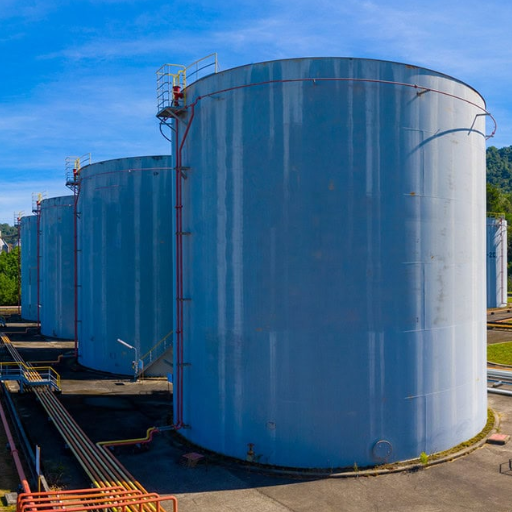
Start with the idea that decides every project: usable capacity depends on ΔT and stratification efficiency, not just volume. Two tanks of equal nominal size can store very different amounts of usable energy. Anyone who sizes on volume alone is guessing.
Two relationships cover almost every sizing conversation. The first is cooling-centric and easy to remember:
Ton-hours ≈ (Usable gallons × ΔT in °F) / 1,439The second works backwards from a load. In its ASHRAE form:
V_gal = (1,440 × S_ton-hr) / (FoM × ΔT in °F)Here FoM is the figure of merit, the fraction of nominal capacity actually usable during discharge. It’s commonly assumed at about 0.90 for a well-designed tank; a poorly stratified one can fall far below that.
Take a 45,000-gallon tank charged to a 16 °F ΔT: 45,000 × 16 ÷ 1,439 ≈ 500 ton-hours. That’s enough to carry a 1,000-ton cooling load for 30 minutes, or a 500-ton load for an hour. It comes from the same 45,000 gallons a mixed tank would only partly deliver. If you would rather not do the arithmetic by hand, request a sizing review, and we will run your numbers.
Follow eight steps:
- Define the load and the discharge duration. How many tons (or kW) must the tank carry, and for how many minutes?
- Set the supply and return temperatures your distribution loop can actually achieve.
- Compute the ΔT. This is the lever, and it’s often more powerful than adding volume.
- Choose a realistic FoM, normally about 0.90 for good stratification, lower if the geometry is poor.
- Solve for volume with the second formula above.
- Check the aspect ratio. A diameter-to-height ratio of roughly 1:1 to 2:1 supports the strongest thermocline; squat tanks can lose 30 to 40% of usable capacity to mixing.
- Confirm the geometry fits the footprint, ceiling height, and door access.
- Round up and re-check against your peak-shaving target, not against round numbers.
However, steps three and six are design decisions, not arithmetic: a wider ΔT stores more energy in the same tank, so sizing must run alongside the loop design rather than after it.
Two tanks, one problem. A facilities team ordered two identical vessels and could not understand why one always ran out of capacity first. The weak tank’s diffuser discharged too fast, mixed the layers every cycle, and surrendered close to 30% of its usable capacity. The fix was a redesigned diffuser, not a bigger tank. You’re buying usable capacity, and nominal volume is only a starting point.
Insulation and Standby Heat Loss
Here is the cost insight that saves the most money: insulation is usually the cheaper half of the answer. The instinct when a tank underperforms is to buy more capacity. The better move is to stop energy you already paid for from leaking out, so a smaller tank holds its usable heat longer.
District-heating tanks are commonly specified to a maximum standby heat loss of less than 12 to 15 W/m² of tank surface. Germany’s KWKG funding threshold sits at less than 15 W/m², and the Vattenfall heat storage tank in Berlin was specified at less than 12 W/m² while holding water at 98 °C.
The governing geometry is the surface-area-to-volume ratio: because loss tracks external surface, a compact tall tank escapes less heat per stored gallon than a long low one, the same argument that favors vertical geometry for stratification.
| Material | Service range | Moisture / CUI risk | Best fit | Notes |
|---|---|---|---|---|
| Mineral wool (rock or glass wool) | Up to about 600 °C and beyond | Higher if the jacketing fails, since it holds water | Hot-service shells; district-heating standard | Commonly specified at 300 to 500 mm on shell and lid; boards deliver about 100 mm each, so multiple layers |
| Cellular glass (foam glass) | Cryogenic to about 400 °C and beyond | Low; closed-cell and non-wicking | Wet, load-bearing, chilled service | Higher material cost; chosen specifically to avoid corrosion under insulation |
| Polyurethane or PIR foam | Up to about 120 °C | Low when sealed | Ambient and moderate-temperature tanks | Good vapor resistance; injected or panel form |
| Aluminum jacketing | Any | The shield and the risk | All outdoor tanks | Preferred weather shield; must keep water out permanently, so inspect at each cycle |
| Standby-loss target | Not applicable | Not applicable | District heating | Commonly less than 12 to 15 W/m² of surface |
In practice, mineral wool is the hot-service workhorse, fireproof and economical, with district heating specifications commonly stacking 300 to 500 mm on the shell and lid. Cellular glass is closed-cell and non-wicking, chosen for wet and load-bearing duty even at higher cost, while polyurethane and PIR foams suit moderate temperatures. Aluminum jacketing is the weather shield on nearly every outdoor installation.
Then watch the counter-risk. The same jacket that keeps water out will hold it in if it fails, and wet insulation against a steel shell accelerates corrosion under insulation (CUI), so inspect the jacketing at every maintenance cycle. Our carbon steel tank corrosion protection guide covers the mitigation. Chilled tanks add a further requirement: a continuous vapor barrier to stop condensation and heat gain.
The cheap tank that cost more. A buyer chose a storage vessel on price per gallon, then spent years paying for high standby loss and an early jacketing failure that let water reach the shell. The fix, better insulation and a rebuilt vapor barrier, cost less than the extra capacity they first believed they needed. Engineer the heat loss down before you engineer the volume up.
A note on scope: keeping fuel liquid in a cold climate is a different duty, covered in our tank insulation and heat-loss guidance. This pillar addresses insulation for standby loss and long-duration storage performance.
Running the numbers on your own tank? Request a tank and insulation configuration review, and we will set the thickness to a standby-loss target for your climate.
Materials, Standards & Thermal Fatigue
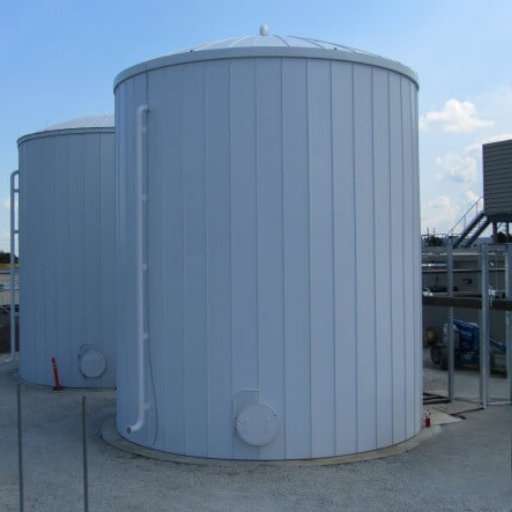
For a pressurised thermal store tank, the baseline material is carbon steel to ASTM A516 Gr. 70, with a two-part epoxy interior lining for normal water chemistry. It’s the lowest-cost option at scale and, correctly lined and insulated, it delivers a long service life. Some duties need more:
- Stainless 304 or 316L for aggressive chemistry, elevated chlorides, or a design life beyond 30 years; the material premium buys freedom from reliance on a coating.
- Chromoly P11, P22, or P91 for high-temperature power and process duty only.
- Clad or lined construction, a carbon steel shell with a stainless or nickel interior, to cut cost against a solid alloy vessel.
- Concrete pit storage, far cheaper per cubic metre but pressureless and a different construction class.
The code basis makes a pressurised vessel legal and insurable. It’s ASME BPVC Section VIII Division 1 or 2, applied with a U-stamp and verified independently through the National Board, documented with Form U-1, certified material test reports (CMTR), and weld records. For Chinese fabrication, GB/T 150 is the parallel pressure-vessel code, and export-grade suppliers work to both.
| Material | Typical use | Code or standard basis | Notes |
|---|---|---|---|
| Carbon steel ASTM A516 Gr. 70 | Standard hot and chilled TES, normal water chemistry | ASME Section VIII Div. 1 or 2; epoxy interior lining for chilled service | Baseline material; lowest cost at scale |
| Stainless 304 or 316L | Aggressive water chemistry, elevated chlorides, more than 30-year life | ASME Section VIII; corrosion-resistant throughout | Material premium; no reliance on a coating |
| Chromoly P11, P22, or P91 | High-temperature power and process heat | ASME Section VIII; high-temperature design | Only for elevated-temperature duty |
| Clad or lined construction | Cost-optimised aggressive duty | Carbon steel shell with stainless or nickel interior | Cuts cost versus a solid alloy vessel |
| Concrete (pit or PTES) | Very large seasonal storage | Local concrete standards; pressureless | Cheaper per cubic metre but not a pressure vessel |
| ASME 119-gallon exemption | Multiple small-tank arrays | ASME Section VIII threshold | An array can reach large volume without U-stamped vessels if each tank stays under 119 gallons |
That last row deserves a plain definition. The ASME 119-gallon exemption lets small vessels below a set volume threshold be built without the full U-stamp process, so an array can reach a large total volume while each tank stays under the limit. The trade-off is honest: more tanks mean more surface area, so more standby loss, and more piping, valves, and joints to maintain.
Two planning standards matter here. VDI 4657 Blatt 2 governs the planning and integration of TES tanks into building energy systems, and AGFW FW 313 sets insulation thickness practice for district heating; ASHRAE provides the stratification and diffuser design basis in North America.
Then there’s the failure mode daily cycling creates, and most guides ignore: cyclic thermal fatigue. Every charge and discharge cycle imposes a small thermal strain on the shell, concentrated at weld toes and nozzle connections. Over thousands of cycles, fatigue can crack exactly the points hardest to inspect.
The pressure regime you choose sits upstream of all of this, framed in our atmospheric vs pressure storage tanks guide. Where water chemistry is the driver, stainless steel storage tanks explain where the extra cost is justified. For the steel-specification fundamentals behind the baseline material, see our carbon steel storage tanks guide.
Thermal Store Tank Cost and Total Cost of Ownership
Cost is where most guides stop, with a single number and no context. We will give you bands, and then the part that matters more: what the tank costs to own.
ASME commercial steel storage tanks commonly list between roughly $24 and $60 per gallon, with larger vessels falling toward $24 to $37 per gallon and small or mid sizes running higher because fabrication cost doesn’t scale down. As directional list-price examples, a jacketed-and-insulated 1,000-gallon ASME tank has been listed near $33,000, and a non-jacketed 200-gallon vessel near $5,600. Industrial-scale TES is often quoted near 1 to 4 €/kWh of capacity.
Main cost drivers are capacity, pressure rating and code basis, lining, insulation and vapor barrier, diffuser internals, nozzle count, and transport. Treat every figure as directional, in 2025 to 2026 currency, and confirm against a live quote.
Now the part competitors skip. Total cost of ownership is dominated by what the tank does every day for decades, not by its purchase price:
- Standby heat loss, the electricity or fuel you pay for continuously
- Insulation refurbishment, usually once or twice over a long life
- Maintenance, including CUI inspection and lining checks
- Service life, typically 25 to 40 years with care
Put plainly: a cheap tank with poor insulation can cost more over its life than a well-insulated one that costs more up front.
Selecting the Right Thermal Store Tank
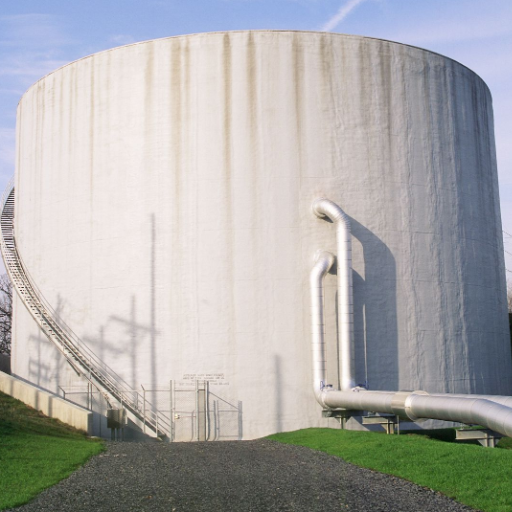
Everything above resolves into one decision sequence, run in order because each step depends on the one before it:
- Define the load and the discharge duration.
- Choose the media: sensible hot water, sensible chilled water, or PCM.
- Compute the volume from ΔT and a realistic FoM, normally about 0.90.
- Confirm the pressure and code basis: ASME pressurised or pressureless.
- Specify stratification internals and diffusers.
- Specify insulation and the vapor barrier, and set a standby-loss target in W/m².
- Verify the fabrication documentation: U-stamp, weld records, CMTR.
- Plan commissioning and stratification verification.
Even so, four spec-stage mistakes account for most disappointing installations: sizing on nominal volume instead of usable capacity; ignoring ΔT and over-buying volume; under-insulating and paying for it daily; and buying on price per gallon alone.
If you would like a second set of eyes on your sequence, that’s a conversation we have every week. Request a thermal storage tank quote and our engineers will review the load, the media choice, and the code basis with you.
Installation and Commissioning
Two logistics questions decide feasibility before cost: can the tank get in, and can it come out? Door and ceiling clearance, rigging access, and a removal strategy need answers before you order, not on delivery day. Many large stock vessels are built for domestic hot water, and their connection geometry suits neither hydronic thermal storage nor good stratification.
Fill-water quality deserves a specification of its own. Large, low-turnover hot or chilled volumes stagnate, and stagnant water promotes biofouling and allows solids to settle. Plan for side-stream filtration and appropriate biocide and inhibitor dosing from the first fill.
Then commission for stratification, because it’s measurable. Temperature profiling through the first full charge and discharge cycle establishes a baseline and shows the thermocline in real time. Poor stratification points to a diffuser problem rather than a tank problem, a far cheaper thing to correct early.
Finish by verifying control integration: the charge and discharge setpoints and the logic that switches between source and tank. Pre-tested modular skid packages shorten on-site assembly and move that verification into a factory.
Frequently Asked Questions
What is a thermal store tank?
A thermal store tank is an insulated vessel that holds thermal energy in a storage medium, usually water, for use hours later. It stores heat or coolth produced off-peak and releases it during peak demand. It stores energy; it never generates it, so a chiller, boiler, heat pump, or other source is always required.
How does a thermal store tank work?
Water stores energy as sensible heat, proportional to its mass, specific heat, and temperature difference. During charging, low-velocity diffusers add warm water at the top or chilled water at the bottom without mixing the layers, and that stratification lets the tank deliver far more usable energy than a fully mixed tank of the same size.
How long does a thermal store tank last?
A well-built, well-maintained steel storage vessel commonly serves 25 to 40 years. Service life depends on water chemistry, lining quality, insulation integrity, and inspection practice, especially checking for corrosion under insulation.
How do you size a thermal store tank?
Define the load and discharge duration, set your supply and return temperatures, compute the ΔT, and solve for volume using V_gal = (1,440 × ton-hours) / (FoM × ΔT). Assume a figure of merit near 0.90, then confirm the aspect ratio supports stratification. Sizing on volume alone will overshoot or undershoot.
How many gallons per ton-hour of thermal storage?
The working relationship is Ton-hours ≈ (usable gallons × ΔT in °F) / 1,439. For reference, 45,000 gallons at a 16 °F ΔT yields about 500 ton-hours, enough to carry a 1,000-ton load for 30 minutes.
What is thermal stratification in a storage tank?
Thermal stratification is the natural stacking of water by density, with warm water on top and cold water at the bottom and no barrier between them. Good stratification makes a tank’s usable capacity approach its nominal volume; poor stratification mixes the layers and wastes capacity.
What is a thermocline?
A thermocline is the transition zone inside a stratified tank where temperature changes from hot to cold over a short height. A thin, stable thermocline indicates a well-designed tank; one that thickens and drifts indicates mixing, short-circuiting, or a diffuser problem.
Do I need an ASME tank for thermal storage?
Only if the vessel is pressurised. Above a small volume threshold, pressurised tanks require ASME Section VIII construction with a U-stamp and National Board registration. Pressureless tanks are not ASME pressure vessels, and an array under the 119-gallon exemption can reach large volume without pressure-rated vessels.
Carbon steel or stainless steel for a thermal storage tank?
Carbon steel to ASTM A516 Gr. 70 with an epoxy lining is standard for normal water chemistry and the lowest cost at scale. Choose 304 or 316L stainless for aggressive chemistry, elevated chlorides, or a design life beyond 30 years, paying a material premium to stop relying on a coating.
Do chilled water storage tanks need different insulation?
They need more than insulation: a continuous vapor barrier. Because chilled water is below ambient temperature, a failed barrier allows condensation and heat gain that corrode the shell and erode capacity. Cellular glass is often chosen for chilled service precisely because it’s closed-cell and non-wicking.
Always confirm the final tank selection, code basis, and insulation specification with your authority having jurisdiction and a qualified engineer. Nothing in this guide substitutes for project-specific design.
Selection Sums Up to a Sequence
A thermal store tank stores and shifts energy but never generates it, so a source is always part of the project. Stratification is what makes one tank worth more than another: a well-stratified vessel recovers roughly 85 to 95% of stored capacity, a mixed one only 60 to 70%. Usable capacity is set by the temperature differential and the figure of merit, not nominal volume.
Insulation and surface-area-to-volume ratio decide how long the stored energy stays usable, and A516 Gr. 70 under ASME Section VIII with a U-stamp is the baseline for pressurised service, with stainless reserved for aggressive water.
The order of decisions runs: define, media, size, stratify, insulate, certify, commission. Follow it, and the hard questions arrive while they are still cheap to answer.
Our team designs and fabricates ASME and pressureless thermal storage vessels, from diffuser internals to insulation and vapor barrier, and documents them for the market you build in. Speak with our engineers about your project, or review the storage tank range we build for thermal and industrial duty.