Ask ten buyers how they sized their fuel tank, and nine will describe the same calculation. Average daily consumption, times the days between deliveries, plus a safety margin. It’s a sound method, and it’s where most sizing goes wrong, because the answer depends on three numbers the method never supplies.
Those numbers are how much the tank will actually hold, how much the delivery truck will actually bring, and how much fuel has to be sitting in it on the worst week of the year. A fuel tank sizing calculation is not one multiplication. It’s a short chain, and a single weak link moves the result by thousands of gallons.
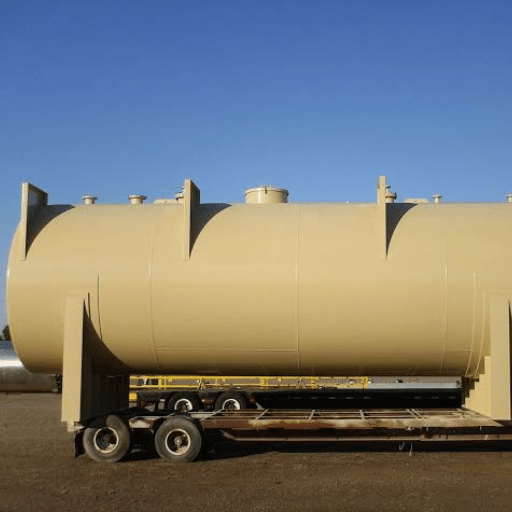
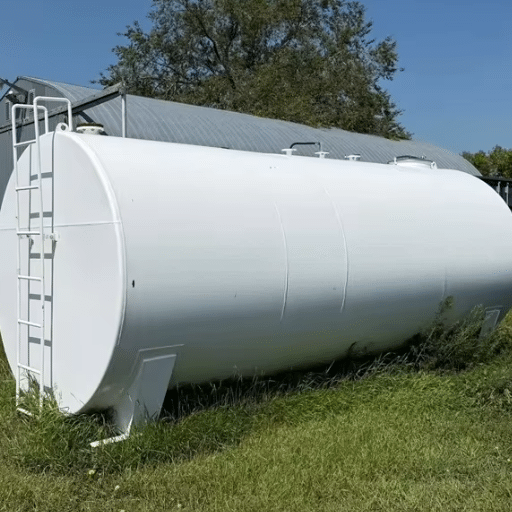
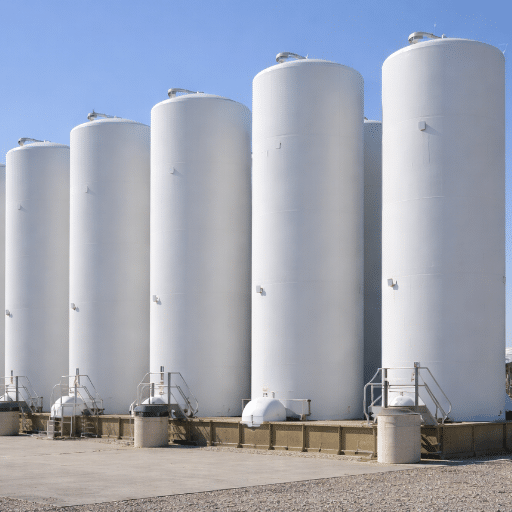
Get the chain right, and you specify a tank once. Get it wrong, and you either run dry during a peak or you buy a tank that slowly degrades its own contents. Both outcomes are decided on paper, before a single plate is cut. If you are still deciding on tank geometry, orientation belongs to our guide to vertical vs horizontal storage tanks.
Here is the path:
- The three-layer formula, and the inputs it needs
- Why you size to the peak month, not the annual average
- The four numbers that actually set your reserve
- The fill ceiling, which changes with tank size
- The compliance thresholds that change the answer at 1,320 gallons
- One worked example carried through to a specified tank
If you would rather have your numbers checked than run them yourself, our engineers will review your capacity calculation against your consumption records and delivery arrangements.
Fuel Tank Sizing Calculation: The Short Answer

The working formula is three layers deep:
Nominal capacity = ((average daily consumption × peak factor) × (days between deliveries + reserve days)) ÷ fill ceiling
The one-line version you’ll find everywhere, consumption × interval, is that expression with the peak factor, the reserve days, and the fill ceiling all set to one. Those three omissions explain how two sites with identical consumption end up with tanks that differ by half.
Here is every input a fuel tank sizing calculation needs, with the range most commercial projects land in:
| Input | What it means | Typical value |
|---|---|---|
| Average daily consumption | Fuel used on an average day, from 6–12 months of records | Site-specific |
| Peak factor (k_max) | Highest month ÷ average month | 1.1–1.5; higher for seasonal sites |
| Days between deliveries | Your normal delivery interval | 7–14 days |
| Reserve days | Lead time to a delivery + emergency cover | 3–5 days |
| Safety margin | Buffer applied on top | 10–20% |
| Fill ceiling | Maximum % of nominal you may fill to | 85–97%, set by tank size |
| Unusable heel | Volume that sits below the suction line | 2–5% |
Two rows deserve emphasis. The fill ceiling isn’t a flat 95%; it falls as tanks get smaller, which is why the same calculation produces different answers at 2,000 and 20,000 gallons. The unusable heel is real product you can never burn, so it inflates the nominal size you must buy.
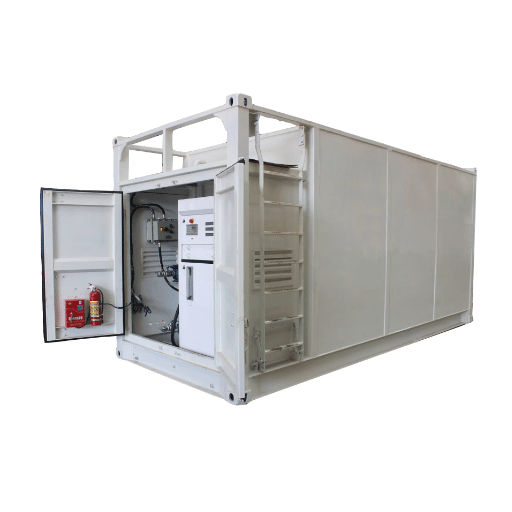
Our range of fuel storage tanks covers the standard capacities this method usually lands on, in UL 142 configurations for both above- and below-ground.
Step 1: Size to the Peak Month, Not the Annual Average
The most common sizing error is a good one to make on paper and a bad one to make in steel. Teams average twelve months of consumption, multiply by the delivery interval, and specify the result. Then March arrives, and the tank runs short every week.
Fuel consumption isn’t flat. Farms are bimodal, heavy through planting and harvest, light through winter. Retail sites spike on weekends and holidays, and generator sites barely move until they move enormously.
Sizing to the annual mean means sizing to a number you exceed for half the year.
The fix is one division. Take your highest month and divide it by your average month:
k_max = highest month ÷ average month
That coefficient scales your average daily consumption up to a peak daily demand. A site that averages 1,000 gallons a day and peaks at 1,500 in its busiest month has a k_max of 1.5, and its working volume should be calculated at 1,500 gallons a day, not 1,000.
Three refinements make k_max more honest:
- Use at least twelve months of records. A six-month sample taken over summer will understate a winter-peaking site, and vice versa.
- Add expected growth. A 10% expansion in the next three to five years belongs in the calculation now, because moving a tank later costs more than sizing it once.
- Check the peak hour, not just the peak month. Retail sites often see roughly 20% of a day’s sales in the busiest hour, which matters for pump sizing.
If you have no history, estimate from equipment instead: multiply each unit’s fuel burn by its expected daily runtime, then add the growth allowance. A blank history is a reason to size upward, not to skip the step.
Step 2: Size to the Delivery You Can Actually Get

Every guide tells you to add a “contingency reserve” and stops there. That’s not a specification; it’s a placeholder. The reserve is the part of the tank you never plan to use, and it’s set by four things you can look up.
Lead time and emergency cover. This is the gap between deciding you need fuel and having it in the ground. Operators order about two days ahead, but a supplier that has fallen behind can take three days to a week to recover, and after a disruption a site may wait three or four days for a truck. Fleet depots conventionally hold about five days of autonomy: three days of lead time plus two days of reserve.
The minimum drop your supplier will bring. This is the constraint nobody publishes, and it catches people constantly. Fuel suppliers commonly set a 250-gallon minimum delivery, and tanks at or below 250 gallons often carry a separate delivery fee, as do orders below the minimum. Some contracts set automatic-delivery eligibility at 375 gallons. If your tank is smaller than the smallest load your supplier will send, no amount of arithmetic will make it work.
The maximum load a truck can carry. A bobtail delivers roughly 4,500 gallons; a transport truck about 7,500 gallons of diesel or 8,500 to 8,600 gallons of gasoline, limited by weight rather than volume; a trailer 9,500 to 11,600 gallons. Suppliers often set a minimum order near a full load, which is why a station that needs 7,000 gallons still takes a full 9,000-gallon tanker.
The rule that falls out of all four: size to the drop, not just the demand. A tank smaller than the smallest load you can buy is unusable, and one far larger than you can absorb sits stagnant. The realistic operating band sits between those two numbers, and everything outside it is dead capacity.
The installation itself has to accommodate this. A tank that cannot be reached by a loaded tanker, or whose fill point blocks the hose run, fails on delivery day rather than on paper, which is why aboveground tank installation and access planning belong in the same conversation as sizing.
Step 3: Divide by the Fill Ceiling, Which Depends on Tank Size
Here is the rule that gets repeated everywhere: keep the tank under 95% full. It’s correct for large tanks and wrong for small ones.
No tank is filled to its nominal capacity. Vapor space, thermal expansion, and overfill protection all require headroom above the liquid.
That headroom isn’t a fixed percentage; it scales with the tank’s size and placement. Energy Institute guidance on design and operating limits sets working fill limits that climb with gross capacity:
| Gross tank capacity | Above-ground fill ceiling | Underground fill ceiling |
|---|---|---|
| Under 10,000 L (under ~2,640 gal) | 85% | 90% |
| 10,000–14,999 L (~2,640–3,960 gal) | 90% | 93% |
| 15,000–29,999 L (~3,960–7,930 gal) | 93% | 95% |
| 30,000–80,000 L (~7,930–21,130 gal) | 95% | 97% |
| Above 80,000 L (above ~21,130 gal) | Calculated by design | Calculated by design |
The same size bands also carry an alternative for sites with a standing delivery arrangement, allowing up to 95% above ground and 97% underground on tanks under 15,000 L. Overfill alarms sit just above the ceiling, and a minimum operating limit sits just above the suction line, roughly 125 to 150 mm.
The consequence is worth stating plainly. Two tanks with identical nominal capacity can have different usable capacity, because the smaller one is allowed a lower ceiling. A 10,000-gallon above-ground tank holds about 9,500 gallons usable; run the same maths on a 5,000-gallon tank at a 93% ceiling, and you get 4,650.
Dividing your usable requirement by the correct ceiling gives the nominal size to buy. Skipping this step is the difference between a tank that meets the requirement and one that is quietly 5% too small.
The Compliance Ladder: Where the Answer Changes
Fuel storage tank sizing is a volume decision until it becomes a permitting decision. At specific capacities, the rules change, and the trigger is total volume on site, not how much you need.
The thresholds below come from federal UST rules, 40 CFR 280, and SPCC rules, 40 CFR 112.
| Threshold | Trigger | What it changes |
|---|---|---|
| 110 gal | 40 CFR 280 | Volume above which an underground tank falls under federal UST rules |
| 660 gal | NFPA 110 | Cap on diesel stored indoors or on a roof without a day tank |
| 1,000 gal | NFPA 30 | Tight-fill and above-ground requirements for Class I liquids |
| 1,320 gal | 40 CFR 112 (SPCC) | Aggregate capacity that triggers a Spill Prevention Plan |
| 10,000 gal | 40 CFR 112 (SPCC) | Ceiling for self-certifying as a Qualified Facility |
| 42,000 gal | 40 CFR 112 (SPCC) | Underground tank size that brings a facility into SPCC scope |
The 1,320-gallon row surprises operators most, because it counts aggregate capacity above 55 gallons across the whole site. Add a second tank without checking the total, and you can cross the line without meaning to. Above it, you need a spill prevention plan; up to 10,000 gallons you may self-certify it, and beyond that a professional engineer usually prepares it.
Containment follows similar logic. It is sized to hold the largest container’s contents plus freeboard for rainfall and firefighting water, which most jurisdictions set at 110% of the largest tank. Field practice matches: drain the largest tank and add 10%. Where several tanks share one containment area, the figure can climb toward 150%.
This is where a containment tank earns its place. A self-bunded fuel tank carries its containment in its own outer shell, so crossing the threshold adds a tank specification rather than a concrete pour.
Thresholds that apply federally may be lower locally, so confirm the governing requirement with your authority having jurisdiction before you fix a capacity.
A Worked Fuel Tank Sizing Calculation, Start to Finish

Numbers only become a decision when they end at a tank you can order. Here is the full chain for a mid-size fleet depot.
The site. Average consumption of 400 gallons a day. Deliveries every 14 days. Peak month runs 1.5× the annual average. The site plans modest growth over the next five years. The tank will be above ground.
| Step | Input | Calculation | Result |
|---|---|---|---|
| 1 | Peak daily demand | 400 gal/day × k_max 1.5 | 600 gal/day |
| 2 | Working volume | 600 gal/day × 14 days | 8,400 gal |
| 3 | Reserve | 600 gal/day × 5 days (3 lead + 2 emergency) | 3,000 gal |
| 4 | Usable requirement | 8,400 + 3,000 | 11,400 gal |
| 5 | Fill ceiling | Above ground, 30,000–80,000 L band | 95% |
| 6 | Nominal requirement | 11,400 ÷ 0.95 | 12,000 gal |
The requirement lands exactly on a standard size: 12,000 gallons. That matters, because specifying 12,000 is cheap and specifying 11,400 is specifying nothing. Standard above-ground capacities cluster around 5,000, 8,000, 10,000, and 12,000 gallons, with roughly 50 m³, about 13,200 gallons, a common ceiling for station-scale tanks in many export markets.
Now check the size the site might have chosen first. A 10,000-gallon tank holds 9,500 usable gallons at a 95% ceiling, which, against a 600-gallon peak day, is about 15.8 days of cover. The site needs 19 days: 14 between deliveries plus 5 of reserve. It fails by 1,900 gallons, and it fails worst in the month it can least afford to. An 8,000-gallon tank is further off again.
Both smaller tanks look adequate against average consumption, but neither survives the peak month. Exposing that takes two minutes of arithmetic.
Once the volume is settled, geometry is a separate decision. Our guide to how to choose tank orientation after sizing covers how the same capacity behaves as a vertical or horizontal vessel, and shop-fabricated versus field-erected tanks explains where the shop-fabrication size ceiling sits.
One Big Tank or Several Smaller Ones?
Sizing usually assumes a single tank. Often the better answer is two.
The reason is turnover. Ultra-low-sulfur diesel begins to degrade within 6 to 12 months, biodiesel blends should not be stored beyond about six months, and stabiliser treatment is advised once fuel sits past 90 days. A tank sized generously for future growth can hold fuel long enough to lose quality, which damages engines and forces remediation.
Standard practice, drawn from the NFPA 110 handbook, is to prefer several moderately sized tanks over one large one. Splitting a 20,000-gallon requirement into two 10,000-gallon tanks brings each unit’s turnover time down, and it lets you add redundant pumping so a single pump failure does not take the whole system offline.
The trade-off is honest both ways. More tanks mean more fill points, more gauging, and more inspection, unless a single containment area serves them all, which changes the containment maths above. One tank means less equipment and a simpler site.
There’s a field story that illustrates the failure mode. A fire department ran a 200-gallon standby diesel tank for emergency apparatus. Because the fuel rarely moved, it went stale and, in cold weather, turned to gel, and the department eventually replaced it with propane.
The tank wasn’t too small for the duty. It was too large for the actual turnover.
Usable vs Nameplate: The Last Adjustment
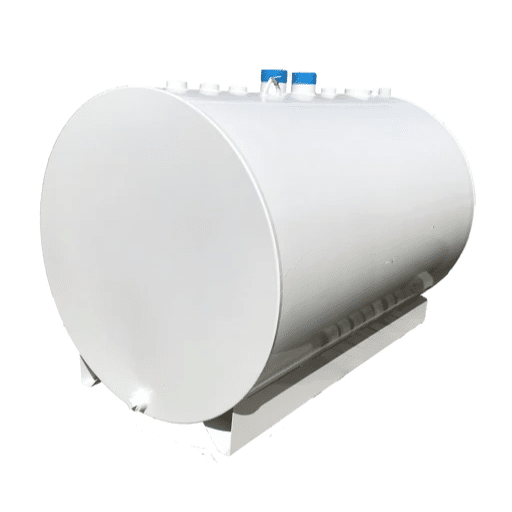
Nameplate capacity isn’t usable capacity. Usable volume excludes the heel, product below the suction line that cannot be drawn, plus the overfill margin at the top. UL 142-2019 puts sediment allowance at roughly 2 to 5% of tank volume, and a large tank may have around 150 gallons unusable below the suction plus about 2% held back for overfill.
The everyday example is the domestic heating oil tank. A 275-gallon tank holds only about 250 usable gallons; a 330-gallon tank holds about 300. That’s why experienced operators reorder at a quarter tank rather than waiting, and why the gauge falls faster near the bottom than the top: the rounded shell means volume doesn’t track depth in a straight line.
If you need volume from dimensions instead, convert with 7.48052 gallons per cubic foot and measure to the inside of the shell. A horizontal cylinder’s volume at part fill isn’t a simple proportion of depth, which is why dipstick charts exist.
Frequently Asked Questions
How do I calculate what size fuel tank I need?
Multiply your average daily consumption by a peak factor, then by the days between deliveries plus reserve days, and divide by the fill ceiling. In practice: 400 gallons a day, a 1.5× peak factor, 14 days between deliveries, and 5 reserve days gives 11,400 usable gallons, or 12,000 gallons nominal at a 95% fill ceiling.
What is the difference between usable and nominal tank capacity?
Nominal capacity is the tank’s total volume as built. Usable capacity is what you can actually draw: nominal minus the fill ceiling headroom at the top and the heel below the suction line. A 275-gallon heating oil tank holds only about 250 usable gallons, and a 10,000-gallon tank holds roughly 9,500.
How big a tank do I need before my supplier will deliver?
At least as large as the smallest load your supplier will send. Fuel suppliers commonly set a 250-gallon minimum delivery, and tanks at or below 250 gallons often carry a separate delivery fee, with some contracts setting automatic delivery at 375 gallons. Check the minimum before you specify a small tank.
How long will a 1,000-gallon tank last?
It depends entirely on consumption. At 650 gallons a day, that is 40 hours of cover; at 50 gallons a day, 20 days; at 10 gallons a day, over three months, which is long enough to raise fuel-aging concerns. Divide usable volume by daily draw.
Should I buy one large tank or several smaller tanks?
Split the requirement when turnover matters. NFPA 110 guidance favours several moderately sized tanks over one large one, because each unit’s fuel turns over faster and redundant pumping keeps the system running if one pump fails. A single tank is simpler and needs less gauging, so the choice turns on fuel aging and uptime.
Is it bad to oversize a fuel storage tank?
It can be. Oversizing raises the upfront cost and slows fuel turnover, and slow turnover allows condensation, water accumulation, and microbial growth that degrade diesel. Ultra-low-sulfur diesel begins to degrade within 6 to 12 months. Size for demand plus a defensible reserve, and split capacity rather than inflating a single tank.
The Calculation Is a Chain, Not a Formula
Five takeaways decide whether your capacity figure holds up:
- Size to the peak month, not the annual average. Compute k_max as the highest month divided by the average month, and scale your daily demand by it.
- Treat the reserve as a specification, not a placeholder. It’s set by delivery lead time, emergency cover, your supplier’s minimum drop, and the largest load a truck can bring.
- Use the fill ceiling for your tank’s size. It runs from 85% on small above-ground tanks to 97% underground, not a flat 95%.
- Know which side of 1,320 gallons you are on. Aggregate capacity above 55 gallons across the site counts, and crossing it adds a spill prevention plan.
- Check turnover before you inflate a tank. If the volume implies more than 6 to 12 months of on-site storage, split the capacity instead.
Every step is cheap on paper and expensive in steel. Too small shows up as dry days in your busiest month; too large shows up as degraded fuel and a tank you stop trusting. Both are avoidable before the order is placed.
Send us your consumption records, delivery interval, and site constraints, and our engineers will run the calculation with you, check it against the compliance thresholds in your jurisdiction, and recommend a capacity and tank count that will still be right in year ten. Request a fuel capacity review, and we will come back with a worked specification.