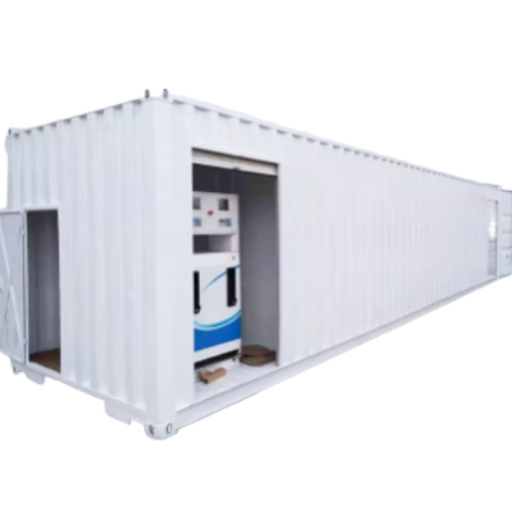
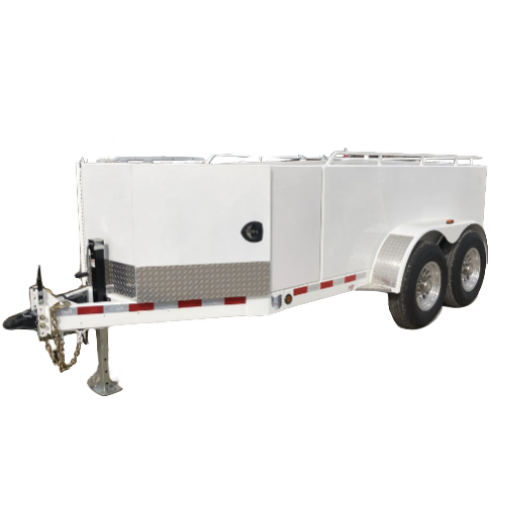
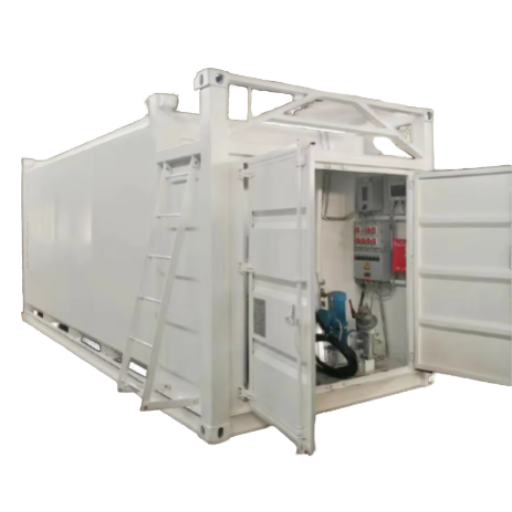
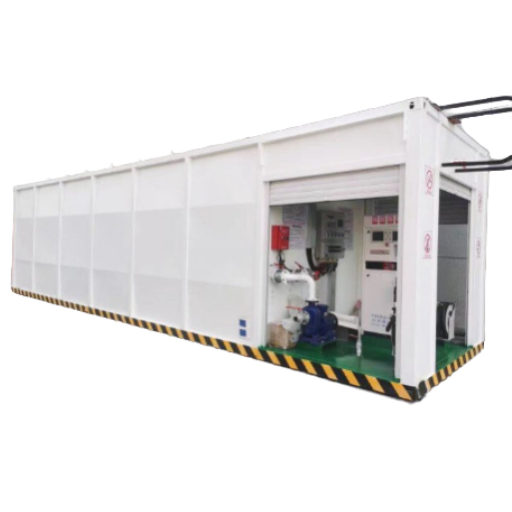
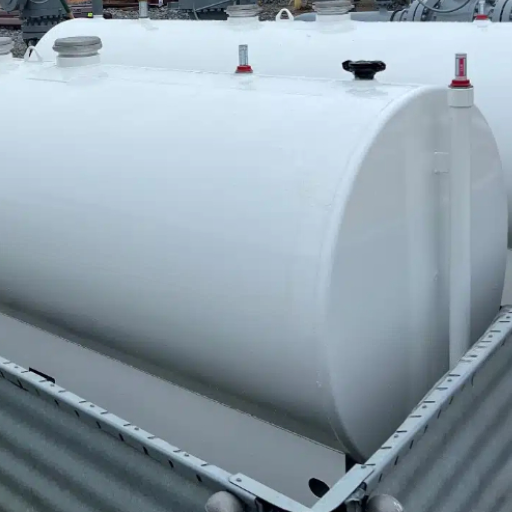
Skid station remote monitoring puts tank level, dispenser transactions, leak sensors, and site status on one telemetry gateway. A 20ft unit at a remote site can then run without a full-time attendant.
The sensor is the easy part. The hard part is making an alarm reach a person at 2 a.m. It’s also making the unit fail-safe when the network drops.
Most monitoring projects fail for a boring reason. The data arrives, and nobody acts on it. A gauge on a dashboard is a display. A gauge with a route to an on-call phone is a control.
This guide covers what to instrument on a 20ft skid and how to connect it. You’ll learn how alarms and automation should behave, which reports a fuel manager uses, and how to commission a system that still works in year five. Still specifying the unit itself? Start with our 20ft skid station specification guide.
Key Takeaways
- A 20ft skid needs four monitored layers: inventory, dispensing, containment and site status.
- Connectivity is a site decision: cellular first, satellite fallback, local buffering mandatory.
- An alarm that reaches nobody is not monitoring. Specify routing, escalation and a daily heartbeat.
- Automation must fail safe: local protection stays live when the network drops.
- Commissioning is a test, not a login. Simulate every alarm and pull the network before sign-off.
What Skid Station Remote Monitoring Covers
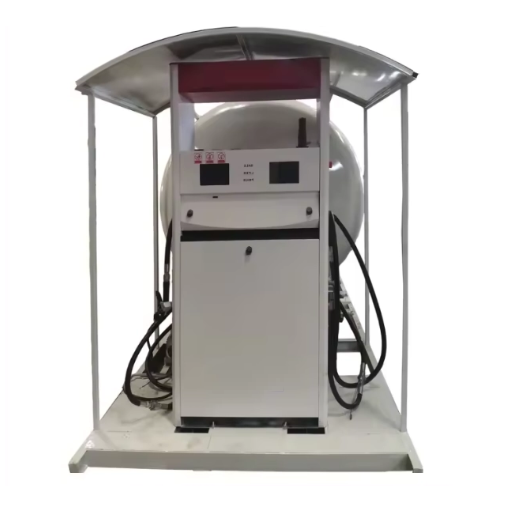
Skid station remote monitoring is the instrumentation and communications layer that reports a 20ft unit’s tank inventory, dispenser transactions, containment alarms, and site status to a remote dashboard. It turns a standalone fuel skid into a site an operator can supervise from another location, without a resident attendant.
The monitored estate fits into four layers. Each one answers a different question, and skipping one leaves a blind spot the others cannot cover.
| Layer | What is measured | Typical device | What it catches |
|---|---|---|---|
| Inventory | Product level, water level, temperature | Magnetostrictive probe, radar or hydrostatic sensor | Low stock, water ingress, unexplained loss, overfill risk |
| Dispensing | Volume per transaction, product, time, authorization | Dispenser flow meter and controller, RFID or PIN reader | After-hours use, meter drift, unauthorized fueling, reconciliation gaps |
| Containment and leak | Interstitial space, sump, line pressure | Interstitial sensor, sump float, line-leak detector | Primary-wall breach, sump ingress, pipe leak |
| Site status | Power, access, fire panel, emergency stop, generator | UPS contact, door switch, dry contacts, PLC inputs | Power loss, intrusion, fire alarm, shutdown state |
Two distinctions matter before you buy anything.
Monitoring is not automation. Monitoring gives you visibility. Automation changes the state of the equipment: closing a valve, disabling a dispenser, starting a generator, or placing a reorder. Ask which outputs the system can actually switch, and under which conditions.
Automatic tank gauging is not station telemetry. An ATG is a fuel tank gauge. Tank telemetry is the integration layer that combines the gauge with dispenser transactions, leak sensors, and site status.
A site can have a good ATG and still have no usable monitoring. Nothing connects the tank to the alarm route. Our guide to automatic tank gauging covers the instrument; this article covers the layer above it.
A 20ft skid has fewer points than a retail forecourt: usually one tank, one or two dispensers, a small cabinet, and limited antenna space. The four layers are the same. The discipline is deciding which points earn their place.
A mine site we’ll call Red Ridge installed a tank gauge with a low-level alarm routed to a shared inbox. The gauge worked all quarter. At month-end, reconciliation found a 4,000-liter gap that had been building for weeks.
Nobody had opened the inbox. The sensor was fine. The route was not.
The Instrumentation Layer: What to Specify
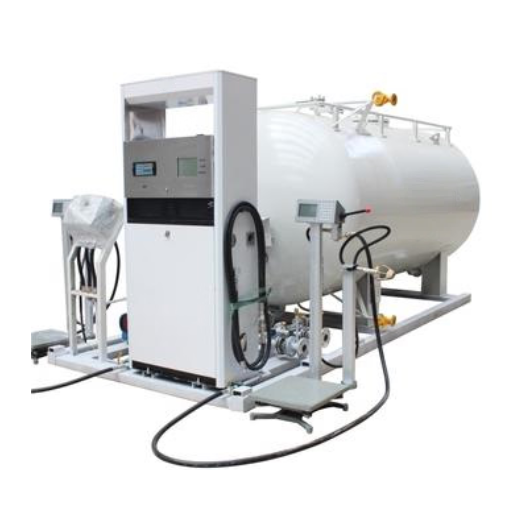
The instrumentation layer is where most specifications are too vague. “Digital gauging” and “remote monitoring ready” are not specifications. A usable points list names the measurement, the device, the output, and the alarm setpoint.
Tank. A magnetostrictive probe is the common choice. Vendors typically quote ±0.5 mm, with product and water floats on the same probe.
Non-contact radar is quoted around ±20 mm. That’s enough for stock control, not tight loss detection. Hydrostatic sensors cost less. They drift with product density.
Specify probe length, water interface, temperature measurement, and the volume-correction method.
Dispenser. The dispenser contributes volume, product, time, and authorization data. Its flow meter has its own accuracy class. Dispenser totals are not a substitute for tank reconciliation.
The 20ft product page quotes ±0.2% for its positive-displacement meter. Ask whether the controller stores transactions locally when the link is down, and how many it can hold.
Containment and leak. An interstitial sensor watches the gap in a double-wall tank. A sump sensor watches the low point under a dispenser. A line-leak detector watches the pressurized piping.
Don’t combine them into one “leak” input; it makes diagnosis harder. Our guide to interstitial monitoring explains the sensing methods and alarm semantics.
Site status. Power, UPS run-time, door access, fire panel state, emergency-stop status, and generator run state are cheap inputs. They carry high operational value. A site that loses power without an alarm finds out when a truck arrives.
Hazardous area. Sensors, radios, and junction boxes inside the classified zone need explosion protection. In Europe, that means ATEX. Internationally, IECEx is the common route.
The control cabinet can sit in a safe area. The devices and cable entries in the zone cannot. Check the certificate scope against the device, not just the enclosure.
Protocols. The integration layer speaks in outputs: 4–20 mA, dry contact, RS-485 with Modbus RTU, Modbus TCP, or MQTT. Our control cabinets with RS-485 and Modbus RTU bridge field devices to a gateway.
A proprietary dispenser bus needs a protocol converter. That converter becomes another device to power, configure, and spare.
| Device | Measures | Typical output | Specify this |
|---|---|---|---|
| Tank probe | Product and water level, temperature | RS-485/Modbus, 4–20 mA | Probe length, resolution, water interface, temperature |
| Radar level sensor | Product level, non-contact | 4–20 mA, Modbus | Beam angle, dead zone, foam and condensation behaviour |
| Dispenser controller | Volume, product, transaction | Proprietary bus, IFSF, Modbus | Transaction fields, authorization method, offline storage |
| Interstitial sensor | Liquid in the annulus | Dry contact, 4–20 mA | Discriminating fuel/water, sensor placement |
| Sump sensor | Liquid in the sump | Dry contact | Low-point placement, IP rating |
| Gateway or RTU | Aggregation and backhaul | Ethernet, 4G, satellite | Protocol support, local buffer, VPN, I/O count |
| Power monitor | Mains, UPS and solar status | Dry contact, Modbus | Run-time, low-battery alarm |
The 20ft product page lists a cloud ATG option with remote inventory tracking, leak detection alerts, and fuel management software. Ask whether that software is the fuel management system of record or a dashboard view of the controller. The safety and control cluster lists an intrinsically safe electrical box, an overfill prevention valve, interstitial leak sensors, and an emergency shut-off system. Those are the factory-fit inputs. Anything beyond them is a project decision and should appear on the points list before the unit ships.
Factory-fit versus retrofit. Factory-fit means the sensor ports, wiring, I/O list, and cabinet space are documented before shipment. Retrofit means adding sensors to a tank with no spare port, a cabinet with no spare space, and a controller with no data output.
A depot we’ll call North Yard bought a gateway that spoke Modbus RTU and connected it to a controller on a proprietary bus. The converter added cost, a power supply, and a new failure point. It delayed commissioning by three weeks.
Do not over-instrument. Every sensor adds a calibration obligation and an alarm that someone must own. Start with the four layers. Add vibration, filter differential pressure, or fuel-quality monitoring only when the reading changes a maintenance decision.
Skid Station Remote Monitoring: Connectivity for Off-Grid Sites
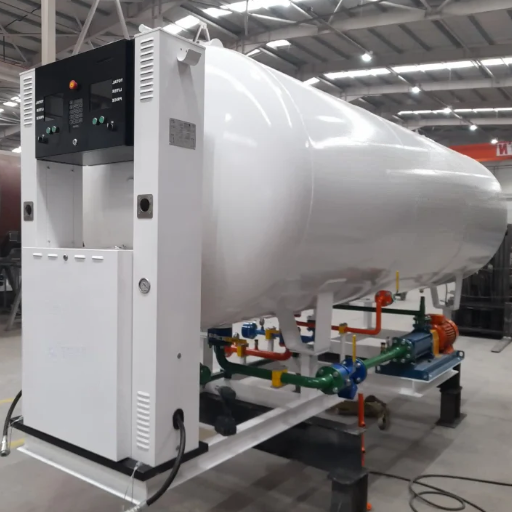
Connectivity is a site decision, not a product feature. Three facts settle most of it: Is there grid power? Is there cellular coverage at the antenna location? Who responds when something fails?
| Site condition | First choice | Fallback | Watch-outs |
|---|---|---|---|
| Grid power, good cellular | 4G router with VPN | Ethernet or fiber | Data plan, fixed IP or dynamic DNS, firewall |
| Grid power, weak cellular | 4G with external antenna | LTE-M or NB-IoT for low data | Antenna height, lightning protection, signal survey |
| Off-grid, cellular | Solar and battery with 4G | Satellite | Power budget, battery chemistry, winter insolation |
| Off-grid, no cellular | Satellite (Iridium, VSAT, Starlink) | Store-and-forward with periodic uplink | Latency, data cost, clear view of the sky |
| Several skids on one site | Local Wi-Fi or LoRaWAN to one gateway | Cellular backhaul | Network segmentation, gateway as a single point of failure |
Store-and-forward is mandatory. The unit must keep recording when the link drops. It must replay when the link returns. Ask for buffer depth, time-stamp policy, and what happens after a long outage.
A fuel tank monitoring system that loses the last 24 hours of transactions isn’t a records system.
Power. Mains with a UPS is the simplest arrangement. Off-grid sites need a power budget that covers the gateway, modem, sensors, and antenna. Add a battery margin for cloudy weeks.
The 20ft product page lists a solar option for off-grid operation. Monitoring should not be the load that flattens the battery.
Cybersecurity. Use a VPN or TLS, unique credentials, network segregation, and a documented firmware update path. Don’t expose a default web port to the internet.
The IEC 62443 series is the common industrial baseline. It’s easier to apply at commissioning than after an incident.
Data ownership. Ask where the data is hosted and whether you can export it. Ask how long it’s retained and what happens at the end of the subscription. Put the answer in the contract.
A system that holds your history hostage is a subscription, not an asset.
Alarms, Automation and the Reports That Matter
An alarm is only useful if it produces an action. That requires a priority, a route, a response time, and a record.
| Priority | Examples | Response | Route |
|---|---|---|---|
| P1 life safety or environmental | Interstitial fuel alarm, fuel in sump, overfill, fire, emergency stop | Immediate shutdown and dispatch | Local annunciator, SMS, phone call, on-call |
| P2 operational | Low level, dispenser fault, communication loss, power loss | Same shift | SMS or app, dashboard |
| P3 commercial | Delivery variance, after-hours dispensing, meter drift | Daily review | Report or email |
Routing and escalation. SMS, app, email and a phone tree are the building blocks. The design question is simple: what happens when the first contact doesn’t answer?
Use acknowledge-and-escalate. Add a daily heartbeat, so silence is visible. One alert to one shared inbox isn’t a route.
Alarm fatigue. Rationalize setpoints before go-live. Suppress chattering alarms. Separate “sensor fault” from “release.” The alarm-management practices in ISA-18.2 and IEC 62682 came from process plants.
The logic still applies to a fuel skid: every alarm should be unique, actionable and owned.
Fuel station automation examples. A leak or overfill alarm can close a valve or disable dispensing. Preset dispensing limits a fill to a set volume. RFID or PIN authorization controls who can draw fuel.
Auto-reorder triggers a delivery when the level crosses a threshold. The 20ft product page lists an overfill prevention valve, interstitial leak sensors and an emergency shut-off system. The control cabinet page lists automatic shut-off valves and sump leak monitoring.
Guardrails. Local protection must stay live when the network drops. Manual override must be physical and logged. Test mode must be visible on the dashboard and on site.
Every automatic action needs an audit trail: what happened, when, and who reset it.
The reports a fuel manager uses. A fuel monitoring system only earns its cost when these reports change a decision. Start with three cycles:
- Daily: opening and closing gauge, deliveries, dispensed volume, book-to-gauge variance and open alarms.
- Weekly: consumption by vehicle or department, cost per liter, after-hours transactions and delivery reconciliation.
- Monthly: variance trend, meter calibration status, alarm response times and data uptime.
A variance threshold of 0.5% to 1% of throughput is a common investigation trigger. Tighter than the meter’s own accuracy is noise. The cost side of monitoring belongs in the ten-year cost model, not in the equipment quote alone.
At an unmanned cardlock we’ll call Harbor Gate, a sump sensor saw fuel at 2 a.m. The controller closed the shut-off valve, the on-call phone rang, and the site stayed closed until a technician arrived. No product reached the ground. The system worked because the local action and the remote route were both tested.
How to Specify and Commission Skid Station Remote Monitoring
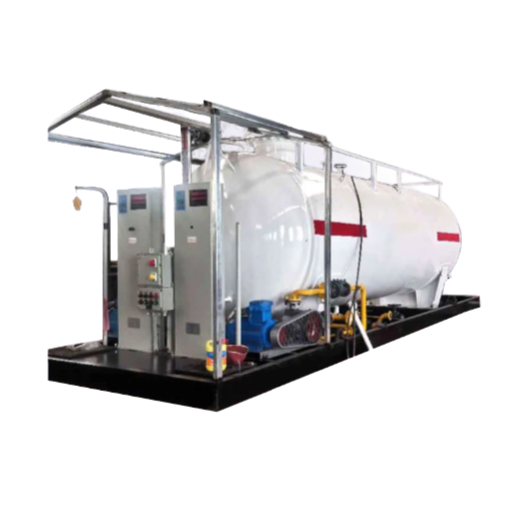
A monitoring specification is a small package, and it is worth more than a datasheet. It should contain:
- Points list: tag, measurement, range, protocol, alarm setpoint and fail state for every input.
- Network diagram: devices, gateway, backhaul, firewall and remote users.
- Alarm matrix: priority, route, response time and owner.
- Data plan: ownership, hosting, export format, retention and end-of-contract terms.
- Service terms: calibration interval, response time, spare parts and firmware support.
- Cybersecurity requirements: VPN or TLS, credential management, update path and network segregation.
Factory acceptance test. Simulate every alarm at the factory. Verify that the gateway sees every point. Verify that the local buffer records and the dashboard reflects the state change.
A FAT that only checks “the screen lights up” isn’t a test.
Site acceptance test. Pull a sensor. Disconnect the network.
Trip the emergency stop. Verify escalation and the dashboard. Then repeat the network-failure test with the unit running. That’s the condition the site will actually face.
Commissioning sequence.
- Install and address the sensors.
- Calibrate the tank probe against a manual gauge.
- Calibrate the dispenser meter to local metrology requirements.
- Simulate every alarm and verify the route.
- Test network failure, power failure and recovery.
- Train the operator and hand over the as-built documents.
| Failure | Symptom | Root cause | Fix |
|---|---|---|---|
| No data after a week | Last-seen timestamp ages | SIM plan, antenna or VPN | Check signal, plan and credentials |
| Flat battery on a solar site | Gateway offline at night | Power budget underestimated | Resize panel and battery, enable sleep mode |
| False leak alarms | Repeat interstitial alarm | Water ingress or sensor placement | Dry the sump, relocate the sensor, use a discriminating sensor |
| Book-to-gauge drift | Variance grows | Meter drift, temperature correction or unmetered transfer | Calibrate, check compensation, investigate transfers |
| Alarm never reaches anyone | Event in the log, no response | Routing rule, spam filter or on-call gap | Test escalation quarterly, add a heartbeat |
| Gateway is a single point of failure | All points drop | No local redundancy | Keep a local annunciator, spare gateway and documented fail state |
Cost drivers, not a price. The budget lines are sensors, controller, gateway, antenna, SIM or data plan, software subscription, commissioning and annual service. The equipment is usually the smaller half over ten years. Ask for the recurring lines in writing before comparing two quotes.
If you have a points list and a site description, send them to our team. We will check the control architecture and the interface to the unit, and tell you which inputs are factory-fit and which need a site visit.
FAQ
Do I need remote monitoring on a 20ft skid station?
Not always. A staffed site with reliable power can run on local gauges and daily dips. Remote monitoring earns its cost when the site is unmanned. It also earns it when a fuel loss would take weeks to notice, or when several sites are managed from one office.
Can I add telemetry to an existing skid station?
Yes, if the tank has a spare riser and the dispenser controller exposes a data output. Retrofits cost more when the tank has no port, the cabinet has no spare space, or the controller uses a proprietary bus. Check those three items before you buy sensors.
What connectivity works at a remote mine or telecom site?
Cellular first if there is coverage. Use an external antenna and a local buffer. Satellite when there is none, accepting higher latency and data cost.
Solar and battery if there is no grid. Test the signal at the exact antenna location before you specify the hardware.
How accurate is remote tank monitoring?
Remote tank monitoring accuracy depends on the sensor. A magnetostrictive probe is typically quoted around ±0.5 mm; a non-contact radar unit around ±20 mm. Accuracy is not the same as resolution or repeatability. Ask for all three, and calibrate the probe against a manual gauge at commissioning.
What happens when the network goes down?
The unit should keep recording locally and replay when the link returns. Ask for buffer depth, time-stamp policy and what happens after a long outage. Local alarms and shut-offs must keep working without the network.
Can the system shut off a dispenser automatically?
Yes, where the controller supports it. A leak or overfill alarm can close a valve or disable dispensing. Keep the local emergency stop independent, make the automatic action visible, and log who reset it. Test the action at commissioning and annually.
Is remote monitoring required by NFPA 30A or the SPCC rule?
No. NFPA 30A requires emergency disconnects and operating instructions. The SPCC rule requires inspections and records.
Neither prescribes a telemetry architecture. Permit conditions, insurers, or a corporate fuel policy may require monitoring. Check those before you treat it as optional.
Who owns the monitoring data?
That’s a contract question, not a technical one. Ask where the data is hosted and whether you can export it. Ask how long it’s retained and what happens at the end of the subscription. Put the answer in writing before you sign.
The Monitoring Layer Is Part of the Station, Not an Add-On
A 20ft skid station is a compact fuel site, and its monitoring layer should be specified with the same discipline as its tank and dispenser. Cover the four layers: inventory, dispensing, containment and site status.
Choose connectivity from the site’s power and coverage, not from a vendor’s default. Route alarms to a person, with escalation and a heartbeat. Keep local protection independent of the network. Test all of it before sign-off.
The exact primary phrase, skid station remote monitoring, describes a small category today. The operational problem is not small. A remote unit without telemetry is a tank you hope is fine. A unit with telemetry, routing and fail-safe automation is an asset you can operate.
If you are configuring a 20ft unit, the 20ft containerized fuel station page lists the factory-fit control and ATG options. If you are still settling the specification, the 20ft skid station guide covers capacity, standards and the submittal documents. Either way, put the monitoring points on the same drawing as the tank and the dispenser. That is where they will be installed.