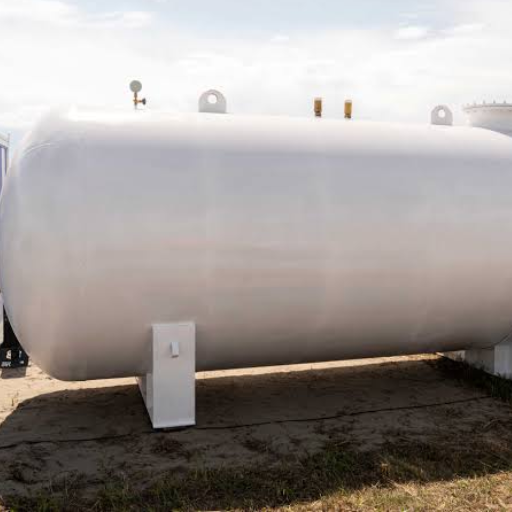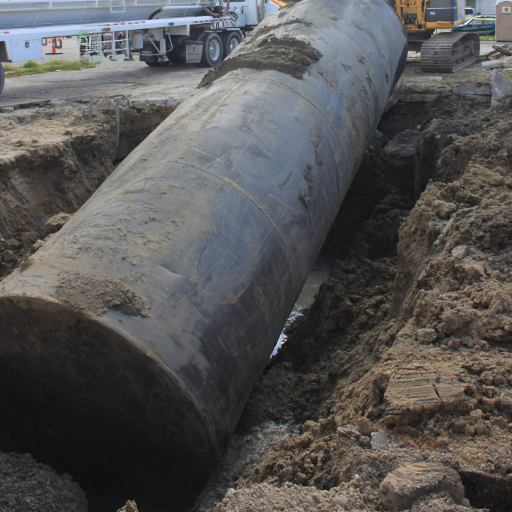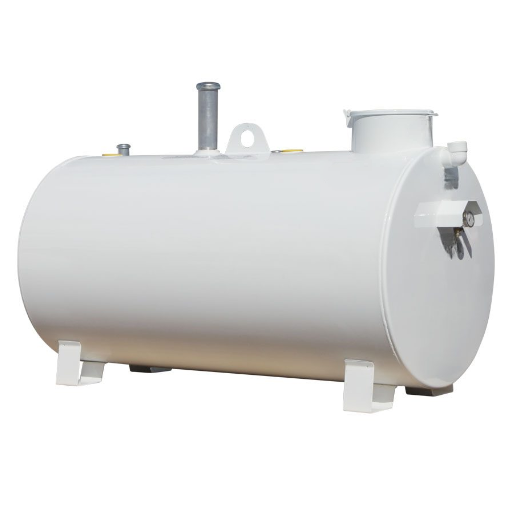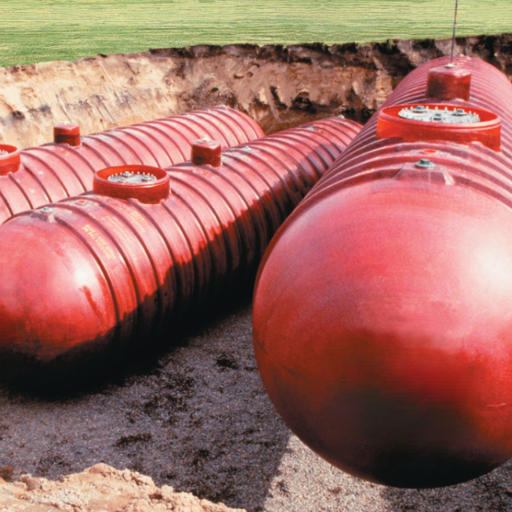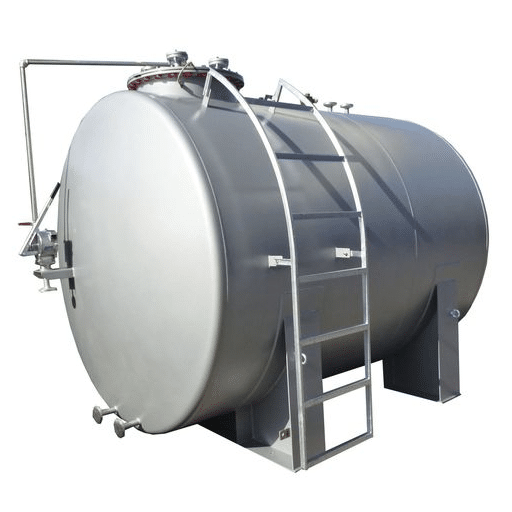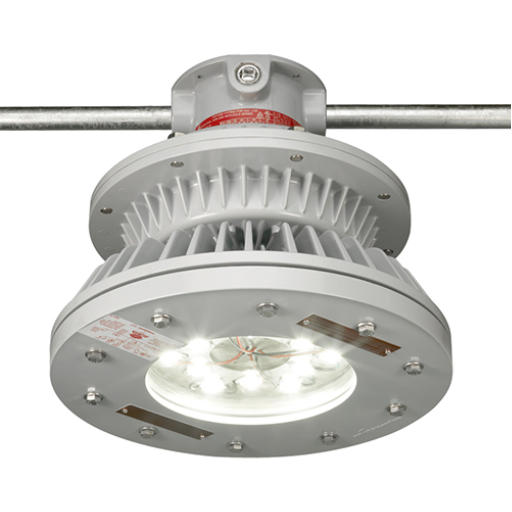
A double-wall tank is not a monitoring system. It is two walls and a gap. The gap holds a leak back, but it cannot tell anyone the leak exists. That job belongs to interstitial monitoring, the method that watches the space between the primary wall and the secondary barrier and turns a silent breach into an alarm.
You already know that double-wall construction is the baseline for new underground storage tanks. What is harder to pin down is how that gap is actually watched, and what each alarm means. The rules also change when a tank, a pipe, or a sump crosses a border. Those details decide whether a leak is caught in hours or discovered after it reaches groundwater.
This guide covers the full monitoring system, not just the tank:
- Where the interstitial space exists across a fueling site
- The four ways to monitor it, and how sensor placement changes with the method
- How to read an alarm and identify which wall failed
- The US, EU, and China requirements that apply
- How to specify, commission, and test a monitored interstice
Specifying tanks for a new site? Our engineering team can review your tank schedule against the interstitial monitoring requirements for your jurisdiction. Request a specification review and we will map the method, sensor type, and documentation for each tank.
What Interstitial Monitoring Actually Watches
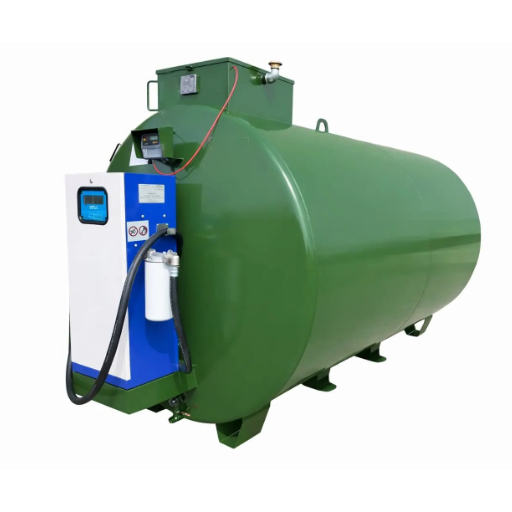
Interstitial monitoring is a release-detection method that watches the space between a primary container and its secondary barrier. That space can be a tank annulus, a pipe annulus, a double-walled sump gap, or the volume between a tank and an excavation liner.
A breach in either barrier changes that space, and a sensor, gauge, or dipstick detects the change. This direct reading is what separates interstitial leak detection from inventory reconciliation and automatic tank gauging, which infer a leak from a volume trend rather than from the barrier itself.
The interstice must be continuous and must communicate with the monitoring point. A gap that dead-ends behind a fitting, or a jacket that bonds directly to the steel, is not a monitored interstice. This distinction matters because the phrase “double wall” is used loosely in procurement documents.
The UL 1746 certification scheme separates the two cases. Part II covers factory-assembled composite systems where fiberglass is bonded directly to the steel tank, with no annular space to monitor. Part III covers jacketed tanks with a separated annulus that is monitored for leakage. A tank can be “UL 1746 certified” under either part.
Only the Part III jacket gives you a gap that interstitial monitoring can watch. Double wall tank leak detection therefore starts with the part number on the certificate, not the phrase in the specification. Our guide to double wall fuel tank specifications explains how to read the certificate line by line.
The same logic applies beyond the tank. A fueling site has several places where a primary barrier and a secondary barrier meet:
| Component | What the interstice is | What a breach means |
|---|---|---|
| Double-wall tank | Annulus between the steel inner wall and the FRP or steel outer wall | Inner breach releases product; outer breach admits groundwater |
| Double-wall piping | Annulus between the primary pipe and the secondary pipe | Product collects in the annulus, or water enters from outside |
| Containment sump | Gap in a double-walled sump, or the sump itself acting as secondary containment | Product or water appears in the sump |
| Under-dispenser containment | Liquid-tight basin beneath the dispenser | Product escapes from dispenser fittings or piping above the sump |
| Excavation liner or bladder | Space between the tank and a leakproof liner, or between the tank and an internal bladder | Product sits between the tank and the barrier |
Each of these spaces needs a monitoring point. If the point is missing, inaccessible, or at the wrong elevation, the barrier exists on paper but not in practice.
To understand the compatibility of fuel tanks with different fuels, please read our article on SF tank fuel compatibility.
Interstitial Monitoring Methods: Four Ways to Watch the Gap
The method you choose determines where the sensor sits, what triggers an alarm, how often someone must check the system, and how it fails. The four common interstitial monitoring methods are not interchangeable, and the first decision is usually wet vs. dry interstitial monitoring.
Dry Interstice With Liquid Sensors
A dry interstice stays empty. A point sensor sits at the lowest point of the annulus, where gravity carries any liquid. For piping, a continuous cable can run through the annulus and report the approximate location of a breach.
The key specification is whether the sensor discriminates between fuel and water. A discriminating sensor reports each as a separate event; a non-discriminating sensor reports “liquid” and leaves the operator to investigate. On a high-water-table site, that difference decides whether the system produces useful alarms or chronic nuisance calls.
Dry systems need little maintenance, but they depend on the sensor sitting at the true low point and the annulus staying open. Debris, a sagging pipe run, or a sensor above the sump floor creates a blind spot.
Wet, or Hydrostatic, Monitoring
A wet system fills the annulus with brine or a glycol mix. A reservoir sits at the high point, and a dual-float sensor watches the level. A low level means product entered through the inner wall and displaced the fluid. A high level means groundwater or rain entered through the outer wall.
That single sensor tells you which barrier failed, not just that one did.
The trade-offs are maintenance and installation discipline. The annulus must be filled from the low point, often under vacuum, to avoid trapped air that later looks like a level change. The fluid must suit the stored fuel and be protected from freezing. A fitting leak can drain the reservoir and create a false low-level alarm.
Vacuum and Pressure Monitoring
A vacuum or pressure system holds the annulus under a controlled pressure difference. A breach in either wall changes the pressure and triggers an alarm. These systems are common on jacketed steel tanks and double-wall piping.
Vacuum monitoring is continuous and self-testing, but sensitive to seals. A damaged gasket, a loose fitting, or a failed pump can mimic a wall breach. A vacuum decay test, or time-to-no-vac, separates a real breach from a seal leak. A system that loses vacuum quickly needs investigation; one that holds for days is probably sound.
Vapor and Manual Monitoring
A vapor sensor responds to hydrocarbon vapor rather than liquid. It can catch a small breach before liquid accumulates, but it is less common and depends on the fuel’s vapor pressure.
Manual monitoring uses a dipstick and product-finding paste at the low point. It is the lowest-cost option and still satisfies the federal 30-day check when done correctly. It is also the weakest: a slow leak can accumulate for weeks, and a missed inspection leaves no record.
| Method | Interstice state | Sensor location | What triggers the alarm | Common failure |
|---|---|---|---|---|
| Dry liquid sensor | Empty | Lowest point of the annulus | Liquid contacts the sensor | Sensor above the low point; debris blocking the path |
| Wet hydrostatic | Filled with brine or glycol | Reservoir at the high point | Low level (inner breach) or high level (outer breach) | Trapped air; fluid loss through a fitting |
| Vacuum or pressure | Sealed, under vacuum or pressure | Gauge or pressure transducer | Pressure change beyond the setpoint | Seal or pump leak mistaken for a wall breach |
| Vapor | Empty or vented | Vapor sensor in the annulus | Hydrocarbon vapor above the threshold | Low vapor pressure fuel; sensor drift |
| Manual | Empty or filled | Dipstick at the low point | Visible product or paste reaction | Missed inspection; slow accumulation |
Most electronic sensors report to an automatic tank gauge or a dedicated controller. The console is part of the monitoring system, not an accessory. If it is configured for inventory only, the sensor can be working perfectly and still produce no leak alarm. Our guide to automatic tank gauge leak detection covers console configuration and sensor integration in more detail.
Reading the Alarm: Which Wall Failed?
An alarm is only useful if the operator knows what to do next. The first question is always the same: is this fuel, water, or a faulty sensor?
| Indication | Most likely cause | First check | Reportable? |
|---|---|---|---|
| Low brine level | Inner wall breach; product displaced the monitoring fluid | Confirm the level trend; inspect the tank and fittings | Yes, treat as a suspected release |
| High brine level | Outer wall breach; groundwater or rain entered | Check the sump, fittings, and water table | Investigate and repair the outer barrier |
| Dry sensor alarms, discriminating reading is fuel | Inner wall or fitting leak | Confirm sensor location; sample the liquid | Yes |
| Dry sensor alarms, discriminating reading is water | Outer wall breach or water in the sump | Check sump cleanliness, lid, and penetrations | Investigate; repair the outer barrier |
| Vacuum loss | Wall breach or a seal or fitting leak | Run a time-to-no-vac test; isolate fittings | Investigate before returning to service |
| Sensor fault or no communication | Wiring, console configuration, or battery backup | Test at the console; check the annual test date | No, but fix it before relying on the system |
The compliance trap is water. A dry sensor that cannot tell fuel from water will alarm every time the sump fills with rain. Operators silence it, and then the system is ignored when a real leak arrives. A discriminating sensor costs more, but it prevents the alarm fatigue that turns a monitoring system into background noise.
Liquid that is not part of the monitoring method must be removed promptly. If a breach of either wall is confirmed, the system needs repair or replacement, and the site may need corrective action. Federal rules generally require a suspected release to be reported to the implementing agency within 24 hours. Check the state or provincial rule, because the timing and the form can differ.
There is one more trap in the sump. A sensor in a dry interstice does not count as periodic monitoring for a double-walled sump.
Those sumps still need a liquid-tightness test every three years, or a monitoring method that the rule recognizes as periodic. A sensor that watches the gap is not a substitute for testing the sump. Our spill containment systems guide covers the sump hardware and testing schedule that sit alongside the monitoring method.
Interstitial Monitoring Rules in the US, EU, and China
The technical method is similar across markets. The legal triggers are not. A tank that satisfies one jurisdiction may need a different document set in another.
United States
The federal rule is 40 CFR Part 280. Section 280.43(g) allows interstitial monitoring when the system is designed, constructed, and installed to detect a leak from any portion of the tank that routinely contains product. For tanks and piping installed or replaced after April 11, 2016, secondary containment and interstitial monitoring are required. The monitor must be checked at least once every 30 days.
EPA recorded 4,047 confirmed releases in fiscal year 2024, and interstitial monitoring is the method most likely to catch one at the barrier instead of in groundwater.
Several dates and duties sit around that core requirement:
- Release detection equipment must be tested at least annually, a requirement that took effect on October 13, 2018.
- Containment sumps used for interstitial monitoring must be tested for liquid tightness every three years, or be double-walled with periodic monitoring.
- Records for hand-held equipment must be kept for one year. Records for other release detection equipment must be kept for three years.
One number confuses. Some guides say interstitial monitoring must detect 0.1 gallon per hour, and that this “exceeds the EPA minimum of 0.2 gallon per hour.” But 0.2 gph is the automatic tank gauging standard in §280.43(d)(1).
Interstitial monitoring under §280.43(g) is not in the §280.40(a)(4) list that carries the 0.95/0.05 performance requirement. Its duty is to detect a leak through the inner wall. The 0.1 gph figure comes from third-party evaluations and state protocols. Ask a supplier for the listing behind any leak-rate claim.
For a practical comparison of interstitial monitoring with the other six federal methods, see our guide to gas station leak detection systems. The EPA interstitial method page is the primary source for the federal definition, and 40 CFR 280.43 is the controlling text.
European Union
EN 13160-1 defines classes of leak detection systems for tanks and pipework holding water-polluting fluids. Class I is the highest protection level and covers systems that detect a leak before product can escape, typically vacuum or pressure systems under EN 13160-2. Class II covers liquid systems under EN 13160-3, where the monitoring fluid itself may escape.
The class count changed between editions, so do not rely on a remembered number. What matters is the class claimed, the test standard behind it, and whether the sensor carries CE marking and ATEX certification. Missing class documentation is a customs and insurance problem, not just a technical one.
China
GB 50156-2021 sets the requirements for automobile fueling stations. The clauses that matter for interstitial monitoring are specific:
- 6.5.1 allows a double-wall tank or a single-wall tank inside an anti-seepage pit.
- 6.1.9 requires a continuous interstitial gap sufficient for leak detection.
- 6.1.10 requires a leak-detection riser: steel, roughly 80 mm in diameter, wall thickness of at least 4 mm, on the tank-top centerline, connected to the interstitial gap, and capable of supporting both manual and online monitoring.
- 6.5.5 requires double-wall piping, a steel outer wall of at least 5 mm, a continuous interstice, a detection point at the lowest point, and a slope of at least 5‰ toward that point.
- 6.5.6 calls for online monitoring of double-wall tanks and anti-seepage pits, with liquid sensor accuracy of 3.5 mm or better.
For Chinese submittals, remember that gasoline underground tanks are atmospheric, not pressure vessels. An A1 or A2 pressure-vessel license is a capability, not a requirement. Ask for the tank’s fabrication standard, the GB 50156 clause statement, and the factory annulus and riser test reports.
| Jurisdiction | Instrument | Core requirement | Document to request |
|---|---|---|---|
| United States | 40 CFR 280.43(g) | Detect a leak through the inner wall; check every 30 days | Manufacturer instructions, sensor listing, annual test record |
| United States | 40 CFR 280.20 / 280.41 | Secondary containment and interstitial monitoring for tanks and piping installed or replaced after April 11, 2016 | As-built drawing, secondary containment documentation |
| European Union | EN 13160-1, -2, -3 | Class I or Class II system, tested to the relevant part | Class certificate, CE marking, ATEX certificate |
| China | GB 50156-2021 6.1.9, 6.1.10, 6.5.5, 6.5.6 | Continuous interstice, detection riser, double-wall piping, online monitoring | Clause compliance statement, riser drawing, sensor accuracy report |
State, provincial, and local rules can be stricter than the national rule. Confirm the implementing agency’s requirement before the tank leaves the factory, not after it is in the ground.
Specifying a Monitored Interstice
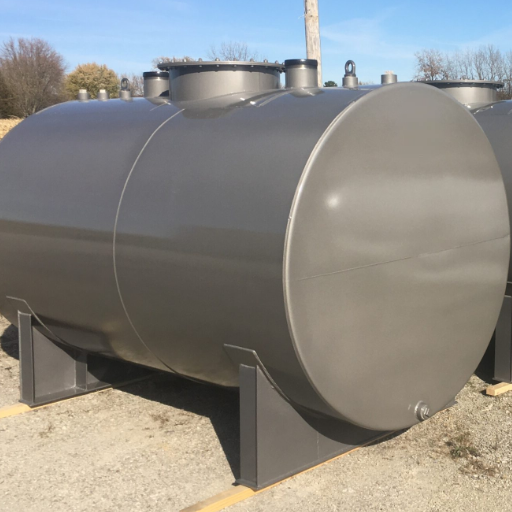
A monitored interstice is a specification line, not a marketing phrase. Interstitial tank monitoring only works when the port, sensor, and console are specified together, so the following items belong in the tank and piping package.
Tank. Requires UL 1746 Part III for a jacketed tank with a monitored annulus, or the equivalent EN 12285-1 or GB 50156 route for the destination market. Confirm that the annulus is continuous, the sensor port is at the low point, and the port is factory-installed. Retrofitting a port can void the warranty. Our SF double-wall tank specification covers the wall thickness and test documentation that belong alongside the monitoring requirement.
Piping. Requires double-wall piping with a continuous interstice, a detection point at the low point, and a slope that directs liquid toward it. The composite pipe for gas stations guide explains how pipe material and fittings affect the interstice. Confirm that sumps and entry boots are part of the same monitored system, not separate line items.
Sensor. Require a listing from the National Work Group on Leak Detection Evaluations (NWGLDE) or an equivalent third-party evaluation. Specify discriminating sensors for high-groundwater sites. Confirm the output protocol (dry contact, 4-20 mA, or RS485 Modbus), the temperature rating, the cable length, and the hazardous-area certification. Ask for a calibration certificate dated within 90 days of shipment.
Console and documentation. Confirm that the automatic tank gauge or dedicated controller can accept the sensor input, log the alarm, and notify a remote operator. A console that only tracks inventory is not a leak detection system. Require mill certificates, the factory annulus proof-pressure and communication test, the sensor calibration certificate, the O&M manual, and a spare parts list. For China, add the detection riser drawing and the GB 50156 clause statement.
| Item | What to ask for | Reject if |
|---|---|---|
| Tank annulus | Continuous gap, factory sensor port at the low point | Bonded composite with no monitorable annulus |
| Tank certificate | UL 1746 Part III, EN 12285-1, or GB 50156 compliance | “UL 1746 certified” with no part number |
| Piping | Double wall, continuous interstice, low-point detection | Single-wall pipe with a line leak detector only |
| Sensor | NWGLDE listing, discriminating option, calibration certificate | Unlisted sensor with no test report |
| Console | Leak detection mode enabled, alarm log, remote notification | Inventory-only configuration |
| Documentation | Factory annulus test, communication test, O&M manual | Test reports promised after delivery |
Need a second set of eyes on the specification? Send us your tank and piping schedule. We will mark the interstice, sensor, and documentation requirements that are missing before you issue the purchase order. Talk to our engineering team.
Commissioning, Testing, and Failure Modes
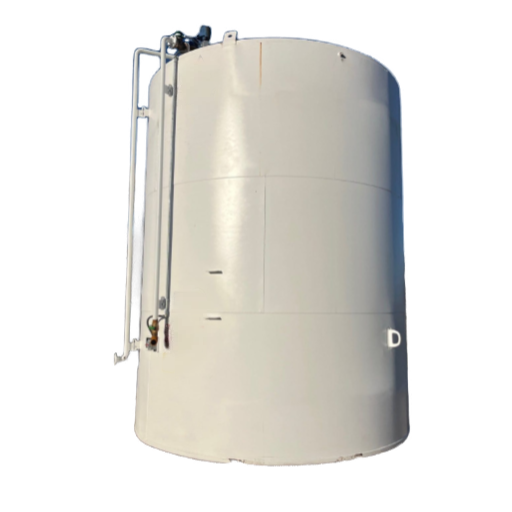
A monitored interstice fails in predictable ways. Most failures happen during installation or during the first year of operation, not after a decade of service.
The Commissioning Sequence
- Factory test. Confirm the annulus proof-pressure and interstitial communication test. The communication test proves that the entire gap is connected to the monitoring point.
- Post-backfill test. Pull a vacuum or pressure on the annulus after backfill. A loss during this period points to damage to the outer wall or a fitting seal.
- Fill and set. For a wet system, fill from the low point under vacuum, then set the high and low alarm levels. For a dry system, confirm the sensor is at the true low point.
- Baseline. Record the stable reading before the first fuel delivery. This becomes the reference for every later alarm.
- Functional test. Trigger an alarm at the console, confirm the notification path, and train the operator on the response.
Recurring Testing
The 30-day check is the minimum. Electronic systems satisfy it automatically when they are configured correctly and communicating. Manual systems need a physical inspection and a written record.
The annual equipment test is the one most often missed. It covers the controller configuration, the alarm, the battery backup, sensor buildup, and communication. A system that passes the 30-day check can still fail the annual test because the console was replaced or the sensor was never reconnected.
The Failure Modes That Cause Repeat Alarms
| Failure | Symptom | Root cause | Fix |
|---|---|---|---|
| Water in the sump | Repeat water alarms | Lid, penetration, or sump seal leak | Clean, seal, and re-test the sump |
| Brine loss | Low-level alarm with no fuel | Reservoir or fitting leak | Repair and refill from the low point |
| Trapped air | False low level after filling | Filled from the high point or too fast | Vacuum fill from the low point |
| Vacuum pump failure | No vacuum or continuous alarm | Pump, gauge, or power fault | Replace the pump; verify time-to-no-vac |
| Inventory-only console | No leak detection at all | Configuration error after a console swap | Enable leak detection; run the annual test |
| Sensor above the low point | Delayed or missed alarm | Installation error | Relocate the sensor to the low point |
| Damaged cable | Zone fault | Backfill or dispenser work | Repair or replace the cable |
| Blocked interstice | No communication to the monitoring point | Construction debris or a collapsed gap | Clear the gap; repeat the communication test |
A station passed its monthly visual check for two years. During an annual equipment test, the technician found the interstitial sensor had never been enabled after a console replacement. The tank was double-walled, and the sensor was installed correctly, but the system was watching nothing. A monitoring system has to be tested as a system, not as a collection of parts.
Frequently Asked Questions
What is interstitial monitoring?
Interstitial monitoring is a release-detection method that watches the space between a primary container and its secondary barrier. It detects liquid or a pressure change in the annulus of a double-wall tank or pipe, the gap in a double-walled sump, or the space between a tank and a leakproof liner.
How often must interstitial monitoring be checked?
The federal minimum in the United States is at least once every 30 days. Continuous electronic systems satisfy this automatically when configured correctly. Manual systems require a physical inspection and a written record every 30 days. Annual equipment testing and three-year sump testing are separate requirements.
What is the difference between wet and dry interstitial monitoring?
A wet system fills the annulus with brine or glycol and watches the liquid level. A low level indicates an inner-wall breach; a high level indicates an outer-wall breach. A dry system leaves the annulus empty and uses a liquid sensor at the low point. Dry systems are simpler to maintain; wet systems tell you which wall failed.
Can interstitial monitoring detect leaks in piping as well as tanks?
Yes. Double-wall piping has its own annulus, and the same methods apply. A continuous cable can locate a breach along the pipe run. The detection point must be at the low point of the run, and the pipe must slope toward it.
Does a double-wall tank always have a monitored interstice?
No. UL 1746 Part II composite tanks have fiberglass bonded directly to steel, with no annular space to monitor. UL 1746 Part III jacketed tanks have a separated, monitored annulus. Ask for the part number, not just the phrase “double wall.”
What is the 0.1 gph standard, and does it apply to interstitial monitoring?
The 0.1 gallon-per-hour figure appears in third-party evaluations and state protocols for interstitial and sump testing. It is not the same as the 0.2 gph automatic tank gauging standard in 40 CFR 280.43(d)(1). Ask a supplier for the listing or test report behind any leak-rate claim.
Conclusion
Interstitial monitoring is the part of a double-wall system that turns containment into information. The walls hold the leak; the monitoring tells you it happened. Four points matter most:
- The interstice must be continuous, accessible, and connected to a monitoring point.
- The method determines sensor placement and alarm meaning. A wet system’s low level and high level point to different walls.
- The rules differ by jurisdiction. The US 30-day check, the EU EN 13160 class, and the Chinese GB 50156 riser are not interchangeable.
- Commissioning and annual testing are where most systems fail. A sensor that is installed but not enabled is not monitoring anything.
If you are planning a new station or replacing an aging tank, start with the monitoring method and work back to the tank specification. The right interstitial monitoring system makes the gap between the walls a working safety layer instead of an empty space.
Shandong Shengrui Intelligent Equipment Co., Ltd. supplies SF double-wall tanks with factory interstitial ports, detection risers for GB 50156 projects, and documentation packages for UL, EN, and Chinese compliance routes. Our engineering team can review your tank schedule, match the sensor and console to your site conditions, and confirm the monitoring requirements before you issue the purchase order.
Review our SF double-layer tank range or contact our engineering team to discuss your project.