Three suppliers sent Daniel three quotes last month. Each one promised a “UL 1746 certified SF double-wall tank.” Each quoted within four percent of the others. And each attached a different set of drawings.
One specified 6 mm steel. One specified 5 mm with a thicker jacket. The third didn’t say, because the spec sheet listed capacity and color and stopped there. Daniel had a deadline, three prices, and no way to tell which tank he was actually buying.
That is the gap an SF double-wall tank specification closes. A certificate tells you a protection system was listed. It doesn’t tell you what arrives on the truck.
This guide is written for the person receiving a spec, not the person selling one. You will get three things. A specification you can issue to suppliers. A submittal package you can demand before approving a bid. And a set of rejection triggers that disqualify a weak offer while you still have leverage.
The regulatory citations are current and sourced. Where a claim could not be verified, we say so rather than guess.
Want a second opinion on a spec before you send it out? Request a specification review from our engineering team.
What an SF Double-Wall Tank Specification Must Contain
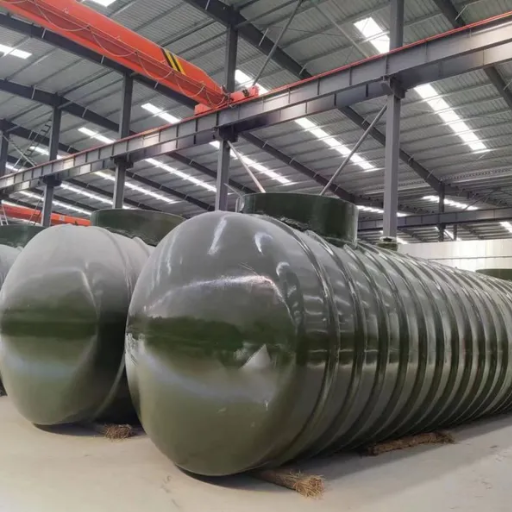
An SF double-wall tank specification is a procurement document. It defines the steel inner wall, the fiberglass outer wall, and the interstitial space with its monitoring method. It also sets the standards the tank must be listed to, and the documentation the supplier must deliver. Written well, it makes three suppliers bid on the same product.
The distinction matters because most “spec sheets” in circulation are marketing collateral. They list capacity and finish. A real specification is a contract annex, and it has to survive contact with a factory that wants to reduce cost.
A complete SF specification carries twelve lines. If a supplier’s reply leaves any of them blank, that silence is itself information.
| # | Field | What to require |
|---|---|---|
| 1 | Nominal and working capacity | Both figures, with fill ceiling stated |
| 2 | Dimensions | Diameter, length, and overall envelope |
| 3 | Steel grade | Named grade with a mill certificate to match |
| 4 | Steel plate thickness | Minimum, with measurement method |
| 5 | FRP jacket thickness | Minimum, with measurement method |
| 6 | Resin system | Type and fuel compatibility basis |
| 7 | Interstitial design | Gap dimension and monitoring method |
| 8 | Coating and finish | Internal lining, external UV resistance |
| 9 | Anchoring | Anti-flotation provision and design load |
| 10 | Standards and listing | Specific standard, part, and file number |
| 11 | Testing | Factory and site tests, with records |
| 12 | Documentation | Full submittal package list |
Working capacity versus nominal capacity
This is the first place a quote misleads without lying. Nominal capacity is the geometric volume of the tank shell. Working capacity is what you can actually dispense. It is smaller because you can’t fill to the top and can’t draw to the bottom.
A tank sold as 50,000 liters may deliver closer to 45,000 liters of usable stock per cycle. Over a year of deliveries, that difference affects how often trucks arrive and how much capital sits in inventory. Specify both numbers, and require the supplier to state the fill ceiling that produces the working figure. Our guide to fuel tank sizing calculation walks through the arithmetic if you need to model it for your own throughput.
Specifying the Steel Inner Wall
The steel wall carries the structural load. Everything else in an SF tank exists to protect it from the soil outside and the fuel inside.
Steel grade
Two grades appear in most SF quotations: Q235B and Q345R. Both are Chinese national standards rather than American or European ones, which matters for cross-border projects.
Q235B is a general structural carbon steel. Q345R is a pressure-vessel grade with higher yield strength and tighter chemistry control. For a buried tank under normal loading, Q235B is common. For larger diameters, deeper burial, or heavier traffic loading, Q345R gives more margin.
Ask the supplier to name the grade and to supply a mill certificate for the actual heat of steel used. A grade on a quotation is a promise. A mill certificate is evidence.
Plate thickness
Our own SF double-layer tanks specify 6 mm to 12 mm carbon steel for the inner shell. Treat 6 mm as a floor, not a target. Thickness should rise with diameter, burial depth, and axle loading above the tank.
The verification method matters as much as the number. Specify ultrasonic thickness measurement on delivered tanks, and require the readings in the submittal package. A nominal 6 mm plate that measures 5.4 mm after forming is a different tank.
Welds and non-destructive testing
Underground tanks are welded pressure-retaining structures. The specification should name the welding standard, require welder qualification records, and state which non-destructive testing applies to which seams.
At minimum, demand visual inspection of all seams and a documented leak test of the completed tank before it leaves the factory. For higher-consequence installations, add radiographic or ultrasonic testing on longitudinal and circumferential seams. If the supplier cannot say which seams are tested and how, that is a rejection trigger, not a detail to negotiate later.
For a walkthrough of how the steel and fiberglass layers are assembled in the factory, see how an SF double-wall tank is built.
Specifying the FRP Outer Wall
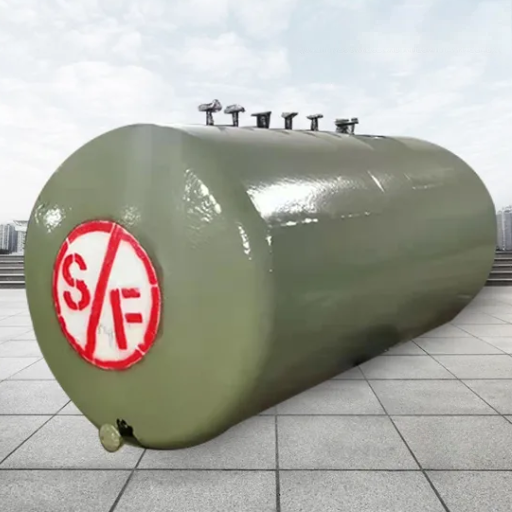
The fiberglass jacket is the corrosion barrier. In an SF design, it is also the secondary containment, which makes it a regulated component rather than a finish.
Resin system and fuel compatibility
Resin type decides which fuels the jacket tolerates and how it behaves in wet soil. Specify the resin family, not just “FRP.” Then tie it to the fuel list in your specification.
If the site will handle ethanol blends or biodiesel, say so at bid stage. Compatibility is a design input, not a warranty conversation after delivery.
Minimum thickness
Our specification calls for FRP at 4 mm or greater. That is a reasonable minimum for a tank jacket, and it is a number you should verify rather than accept.
Ask how thickness is measured. The honest answer involves ultrasonic measurement at defined points and a record of the readings. The weak answer is a nominal figure with no test method attached.
Bond strength: the failure mode nobody tests
An SF tank works because steel and fiberglass stay bonded. If that bond fails, the jacket becomes a loose sleeve. Water enters between the layers, corrosion starts on the steel you thought was protected, and the interstitial space stops telling you anything useful.
Most quotations do not mention bond strength at all. Ask for it. A supplier who can describe the surface preparation before winding, and who can produce bond test data, is telling you something about the factory.
The Interstitial Space: Specifying Monitoring, Not Just a Gap
The space between the walls is the reason an SF tank qualifies as secondarily contained. What you specify is not the gap. It is the monitoring.
The regulatory floor
Under 40 CFR 280.20, tanks and piping installed or replaced after April 11, 2016 must be secondarily contained and must use interstitial monitoring. The containment must hold any release until it is detected and removed. It must also prevent a release to the environment over the system’s operating life.
That’s the legal minimum, and it isn’t optional in the United States.
What interstitial monitoring must actually detect
40 CFR 280.43(g) sets the performance bar. For a double-walled tank, the method must detect a leak through the inner wall. It has to work at any point where the tank normally holds product.
Read that carefully, because it is where specifications quietly fail. A monitoring system that only samples the bottom of the tank does not satisfy the requirement for the whole product-holding volume. Your specification should state that the monitoring method covers the full wetted area, and the supplier should confirm it in writing.
Vacuum, pressure, or liquid
Three methods dominate.
Vacuum monitoring holds the interstitial space under negative pressure. A breach draws air in and the gauge moves. It is sensitive and gives continuous indication.
Pressure monitoring works the same way in the opposite direction, and is common where a dry space is preferred.
Liquid-filled monitoring puts a compatible brine in the gap. A leak changes the fluid level. It is robust but adds weight and requires the fluid to be compatible with the tank materials.
Our own tanks use a roughly 5 mm interstitial clearance with pressure-based sensing. Any change in gauge reading signals a breach in either wall. Whatever method you choose, specify the alarm threshold and who sets it. An alarm that triggers on normal temperature swing will be ignored within a month.
The 0.2 gallon per hour benchmark
For automatic tank gauging, 280.43(d) sets the bar. The equipment must detect a leak of 0.2 gallons per hour from any part of the tank, tested at least monthly. That is the reference number for leak-detection performance in the US framework. If a supplier’s monitoring claims sound impressive but cannot be mapped to a detection threshold, the claim is decoration.
For the wider picture of how sensors, alarms, and gauges fit together on site, see our overview of gas station leak detection systems.
Verification: What UL 1746 Does and Does Not Certify
This is the section where buyers most often think they have verified something and have not.
The three standards, and which one you need
UL publishes three standards that appear in tank discussions, and they cover different things.
- UL 58 covers steel underground tanks for flammable and combustible liquids. It is the tank standard.
- UL 1316 covers glass-fiber-reinforced plastic underground storage tanks. It applies to all-composite tanks, not steel tanks with a jacket.
- UL 1746 covers external corrosion protection systems for steel underground storage tanks.
The EPA’s list of UST standards describes UL 1746 precisely this way, and the wording is the whole point.
What that means in practice
UL 1746 certifies the protection system applied to a steel tank. It doesn’t certify the tank’s internal design or its structural adequacy. Those sit with UL 58.
So “UL 1746 certified” answers a narrower question than most buyers assume. It tells you the external corrosion protection was evaluated to a recognized standard. It doesn’t tell you the steel is 6 mm, that the welds were tested, or that the tank suits your fuel.
A useful specification therefore requires three things. The tank standard. The corrosion protection standard. And the documentation that connects both to the unit you are buying.
The three-minute file check
Ask for the UL file number. Then look it up in the UL Product iQ directory yourself.
Don’t accept a certificate image. Images are easy to produce, easy to reuse across product lines, and easy to date from a different model. The file number resolves to a listing entry that tells you the company, the product category, and the scope.
The same discipline applies to the Steel Tank Institute documents. The EPA lists STI F894, the ACT-100 specification for external corrosion protection of fiberglass-reinforced composite steel tanks, and STI F961, the ACT-100-U version. ACT-100-U tanks are built to UL 58, UL 1746 Part IV, and the F961 specification together.
Note the word Part. UL 1746 is organized in parts, and the part cited tells you which protection system was evaluated. A coated steel tank and a jacketed steel tank do not reference the same part. Ask which part and which STI specification the listing cites, and treat a vague answer as a gap.
The cathodic protection confusion
A common claim is that UL 1746 certification proves a tank needs no cathodic protection. That is true for an FRP-jacketed tank, where the jacket is the corrosion barrier.
It isn’t true as a general statement about the standard, though. UL 1746 also covers cathodically protected coating systems.
The EPA’s installation requirements recognize several routes. Steel with cathodic protection is one. Steel clad or jacketed with non-corrodible material is another. FRP construction is a third.
Which means the listing type decides the answer. If a supplier says “UL 1746, so no cathodic protection needed,” ask which part of the standard and which protection system is listed. The answer will either be precise or revealing.
International projects
For buyers outside North America, EN 12285-1 is the parallel standard. The 2018 edition covers workshop-fabricated horizontal cylindrical steel tanks, single-skin and double-skin. They are for underground storage of flammable and non-flammable water-polluting liquids. Building heating and cooling are excluded.
A specification for a project that crosses jurisdictions should state which framework governs and which additional listings are required. That is a project decision, and it belongs in the document before bids are invited.
The Submittal Package: What Should Arrive Before You Approve a Bid
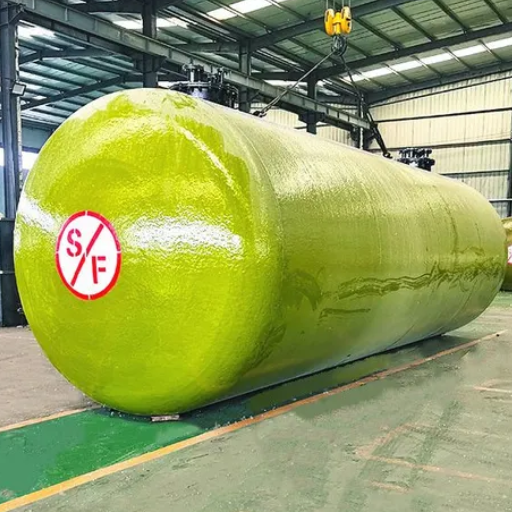
Here is where most procurement processes leave money on the table.
Buyers tend to negotiate price first and ask for documents later. By then, the purchase order is signed, and the leverage is gone. The submittal package should be a bid-stage requirement, scored alongside price.
Documents to demand at bid stage
- The UL file number for the specific tank model, not the company.
- The standard and part cited by the listing, plus any STI specification reference.
- A dimensional drawing with wall thicknesses called out.
- The steel grade proposed, and whether a mill certificate will be supplied.
- The FRP resin system and its fuel compatibility statement.
- The interstitial monitoring method and its detection threshold.
A supplier who can produce all six at bid stage is organized. One who promises them “after order” is telling you how the rest of the project will go.
Documents to demand at fabrication stage
- Mill certificates for the steel actually used, matched to heat numbers.
- Welder qualification records and the welding procedure specification.
- Non-destructive test reports for the seams you specified.
- FRP thickness readings at defined measurement points.
- Bond test data for the steel-to-fiberglass interface.
- Photographs of the jacket application and the interstitial fittings.
Documents to demand at delivery
- Factory leak test record, signed and dated.
- Dimensional verification against the approved drawing.
- Anchoring design for the actual site conditions, including water table.
- Commissioning checklist for the monitoring system, with alarm setpoints.
Picture a distributor in Southeast Asia who ordered forty tanks on price alone. The tanks arrived with three problems. Mill certificates named a grade nobody had specified. Jacket thickness averaged 3.2 mm against a stated 4 mm. And there was no bond test data at all.
Two tanks then failed their site tightness test. The rework and the schedule slip cost more than the whole saving on the order. The buyer had no contractual document to point to.
Every one of those defects was detectable before shipment, with paperwork.
The rejection table
| Spec value | Why it fails | What to ask for instead |
|---|---|---|
| Steel grade unnamed | Cannot verify structural basis | Named grade plus mill certificate commitment |
| Plate thickness given as nominal only | Forming reduces wall thickness | Minimum measured thickness, with method |
| FRP “heavy duty” or no figure | Not verifiable | Minimum mm with measurement points |
| “UL certified” with no file number | Could be any product line | File number for the specific model |
| Monitoring method unspecified | May not cover full wetted area | Method plus detection threshold |
| No bond strength data | The main SF failure mode | Surface prep description and test data |
| Anchoring excluded from scope | High water tables float tanks | Anti-flotation design for your site |
| Certificate image offered | Not traceable to the unit | UL Product iQ lookup by file number |
Fuel Compatibility Clauses Your Spec Must Carry
Fuel compatibility belongs in the specification because it is a design input, not a warranty claim.
Gasoline and diesel are the baseline. Any credible SF tank handles them. Specify the grades and any additives in use.
Ethanol blends need explicit attention. The steel inner wall is not the concern. The resin system and any elastomers in the monitoring fittings are. If the site will dispense E10 or higher, state the maximum blend in the specification and require the supplier to confirm compatibility in writing.
Biodiesel is a stronger solvent than mineral diesel, and it affects seal materials and some resin systems over time. Sites handling B20 or above should say so at bid stage.
Jet fuel brings its own handling and quality requirements, and tanks serving aviation should be specified against those, not treated as diesel with a different label.
The pattern is consistent: name the fuel list, get written confirmation, and keep that confirmation in the project file. A compatibility failure discovered in year four is a very expensive conversation without it.
Site Conditions That Change the Specification
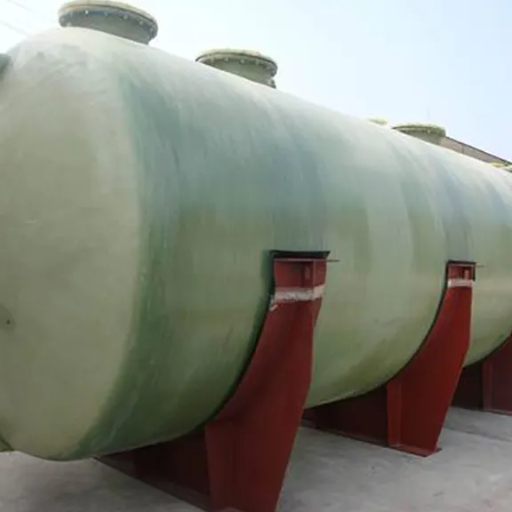
A tank specified for a dry, stable site is not the same product as one specified for a high water table. These conditions should appear in the specification, not be discovered during excavation.
Water table and anti-flotation
An empty buried tank in saturated ground is a boat. Buoyancy is calculable, and the anchoring design should be stated in the submittal. If the supplier’s scope excludes anchoring, your specification should say who owns it.
Soil chemistry and stray current
Aggressive soils and stray current from nearby infrastructure affect steel. An FRP jacket handles most of this, which is a genuine SF advantage. But the specification should still record the site assessment so the decision is documented.
Traffic loading and burial depth
Axle loads above the tank drive the required steel thickness and any concrete slab design. Specify the design loading and the cover depth. Our guide to underground fuel storage tanks covers installation sequencing in more detail.
Seismic
In seismic regions, anchoring and pipe flexibility both matter. Specify the design basis rather than assuming the supplier knows your site.
Acceptance Testing and Commissioning
The specification should name the tests, who witnesses them, and what record results.
Before backfill, the tank should pass a documented tightness test. Testing after backfill means uncovering a failure costs excavation.
Interstitial tests confirm the monitoring system responds as designed. Ask for the test method and the recorded readings, not a checkbox.
Witnessed versus documented is a real distinction. A witnessed test requires your representative or a third party on site. A documented test requires a signed record. High-consequence installations deserve both, and the specification should say which tests fall into which category.
If you want the specification and the acceptance criteria reviewed together before the purchase order is issued, our team can walk through your project requirements with you.
Specification Verification Checklist
Use this as a one-page gate before approving any SF tank bid.
| Requirement | Verify by | Reject if |
|---|---|---|
| Tank standard named | UL 58 or EN 12285-1 cited | “UL certified” only |
| Protection standard named | UL 1746 with the specific part | No part cited |
| Listing traceable | UL file number checked in Product iQ | Certificate image only |
| Steel grade | Grade named plus mill certificate | Unnamed or “carbon steel” |
| Steel thickness | Measured minimum, method stated | Nominal figure only |
| FRP thickness | ≥4 mm with measurement points | No figure or “heavy duty” |
| Bond strength | Surface prep plus test data | Not addressed |
| Interstitial monitoring | Method, coverage, detection threshold | “Leak detection included” |
| Fuel list | Written compatibility confirmation | Not addressed |
| Anchoring | Anti-flotation design in scope | Excluded without owner named |
| Testing | Named tests with witness and records | Checkbox acceptance |
| Documentation | Full submittal package agreed | Promised after order |
Twelve rows. If a bid clears all twelve, you are comparing tanks rather than brochures.
Our SF double-layer tank specifications page shows these fields filled in. It lists the steel grades, jacket thickness, and interstitial design we build to.
Frequently Asked Questions
Does an SF tank need cathodic protection?
No, for an FRP-jacketed SF tank. The fiberglass outer wall is the corrosion barrier, which is why this construction is recognized as an accepted corrosion-protection route. But do not treat that as a property of the standard. UL 1746 also covers cathodically protected coating systems, so the listed protection type decides the answer.
Is UL 1746 the same as UL 58?
No. UL 58 is the standard for steel underground tanks. UL 1746 covers external corrosion protection systems applied to steel tanks. A compliant purchase usually references both, plus a documentation trail linking the listing to the specific unit.
What FRP thickness should I specify?
Four millimeters minimum is a reasonable baseline for a tank jacket, and it is what our own SF tanks are built to. The number matters less than the verification: require measured readings at defined points and put them in the submittal.
Can I accept a certificate image instead of a UL file number?
No. An image cannot be traced to the model you are buying. Ask for the file number and check it in UL Product iQ yourself. It takes about three minutes, and it is the single highest-value check in the process.
What is the difference between working and nominal capacity?
Nominal capacity is the shell volume. Working capacity is what you can actually dispense, after the fill ceiling and the unusable heel. Specify both and require the fill ceiling to be stated.
How do I know the steel is the grade I specified?
Mill certificates matched to heat numbers, plus ultrasonic thickness readings on delivery. A grade on a quotation is a promise. A certificate and a measurement are evidence.
Conclusion
An SF double-wall tank specification is not paperwork. It is the document that decides whether three quotes describe three comparable tanks or three different products at similar prices.
Five things carry most of the weight. Name the standard and the part, not just the logo. Specify measured thicknesses with a verification method. Require a submittal package at bid stage, while you still have leverage. Put the fuel list and the site conditions in writing. And check the UL file number yourself.
Do those, and the certificate stops being a claim you accept and becomes one input in a decision you control.
If you would like your draft specification reviewed against these criteria before it goes out to tender, request a specification review. We will tell you which fields are underspecified, and which ones a supplier could exploit.