In 2021, a project engineer in Malaysia named Rahim received three quotes for an airport fuel storage upgrade. Two suppliers offered FF double-wall tanks. The third proposed SF double wall tanks at 30% lower cost. Rahim’s team almost rejected the SF option because they assumed steel meant corrosion risk. Then they reviewed the spec sheets. The steel inner wall was Q235-B carbon steel. The outer wall was a 5 mm fiberglass-reinforced plastic shell. The interstitial space carried continuous vacuum monitoring. The design life was 40 years. The FF tank would have solved a corrosion problem the site did not have, while the SF tank matched every engineering requirement at a lower total cost.
If you are specifying, buying, or installing underground fuel storage, you have probably asked the same question: is an SF double wall tank the right choice? This guide answers that question with practical detail. You will learn how SF tanks are built, how they compare to FF and single-wall designs, what certifications matter, how to install them correctly, and how to maintain them over a 30-year life.
New to underground storage? Start with our complete guide to underground fuel storage tanks before you choose a specific tank type.
What Is an SF Double Wall Tank?

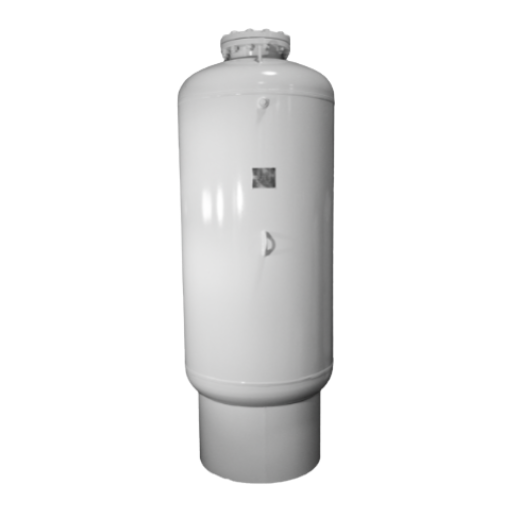
An SF double wall tank is an underground fuel storage vessel made from two materials: S for steel and F for fiberglass-reinforced plastic. The inner wall is a steel shell that holds the fuel. The outer wall is an FRP shell that protects the steel from soil corrosion and provides secondary containment. Between the two walls sits a narrow interstitial space that is monitored continuously for leaks.
The steel inner wall gives the tank its structural strength. This matters under heavy traffic loads, in seismically active regions, and during installation when rigging and backfill place stress on the shell. The FRP outer wall blocks moisture, salts, and electrochemical corrosion. It also creates a built-in secondary barrier, so regulators in many countries accept SF tanks as compliant with secondary containment rules without requiring a separate concrete vault.
SF tanks are sometimes called steel fiberglass tanks, SF double-layer tanks, or S/F composite tanks. Capacities commonly range from 1,000 liters to 100,000 liters, with 10,000 to 50,000 liters being the most common sizes for retail stations and fleet depots. Design life typically spans 30 to 50 years when properly installed and maintained.
How an SF Double Wall Tank Is Built
Understanding the layers helps you evaluate quality and avoid specification mistakes.
Inner Steel Wall
The inner wall is usually built from Q235-B or Q345R carbon steel plate, 6 to 10 millimeters thick depending on capacity and design pressure. Q235-B is popular because it welds cleanly and provides good structural rigidity. Q345R offers higher tensile strength and is sometimes used for larger diameters or higher burial loads.
The steel shell is fabricated in sections, welded, and tested for leaks before the FRP layer is applied. Weld quality is critical. A poorly welded seam is more likely to fail than the steel itself, so reputable manufacturers use X-ray or ultrasonic weld inspection and hydrostatic testing.
Outer FRP Wall
The outer wall consists of fiberglass-reinforced plastic at least 4 millimeters thick. This layer is applied over the steel shell using filament winding or hand lay-up techniques. The resin system is usually polyester, vinyl ester, or epoxy. Vinyl ester resists fuel permeation better than standard polyester, making it a premium choice for aggressive fuels.
The FRP layer serves three functions. First, it isolates the steel from soil and groundwater, eliminating the need for external cathodic protection in most cases. Second, it acts as the secondary containment vessel. Third, it creates the interstitial space for leak detection.
Interstitial Space
The gap between the steel and FRP walls is typically 0.1 to 5 millimeters. It must remain continuous across the entire tank surface so leaks can reach a sensor. Factory quality control often includes high-voltage holiday testing to verify that the FRP layer has no pinholes or voids.
The interstitial space is connected to monitoring ports at the tank ends. These ports allow installers to connect pressure sensors, vacuum gauges, liquid probes, or automatic tank gauge systems.
If you are unsure whether double-wall construction is worth the premium, read our detailed double wall vs single wall fuel tanks comparison.
SF vs FF vs Single-Wall: Which Tank Should You Choose?
Not every site needs the same tank. Choosing the wrong construction adds cost without adding safety.
| Feature | SF Double Wall Tank | FF Double Wall Tank | Single-Wall Steel Tank |
|---|---|---|---|
| Inner wall material | Carbon steel (Q235-B/Q345R) | FRP | Carbon steel |
| Outer wall material | FRP | FRP | None |
| Structural strength | Excellent | Good | Good |
| Corrosion resistance | Excellent external | Superior internal and external | Requires coatings/CP |
| Typical lifespan | 30–50 years | 30+ years | 15–25 years |
| Relative cost | Moderate | High (20–40% premium) | Lowest |
| Leak detection | Interstitial monitoring | Interstitial monitoring | External methods only |
| Best for | Standard petrol stations, high loads | Aggressive soils, chemicals | Temporary or low-risk use |
SF tanks are the right default for most petrol stations, fleet depots, and industrial fueling projects. They handle standard gasoline, diesel, and ethanol blends. They resist normal soil corrosion. They cost less than FF tanks while delivering comparable design life.
FF tanks make sense when the soil is highly acidic or saline, when storing aggressive chemicals, or when internal corrosion from biodiesel or additives is a concern.
Single-wall steel tanks carry the lowest upfront cost but the highest long-term risk. Many jurisdictions now restrict or ban them for new installations.
How SF Double Wall Tanks Work

An SF tank is more than a vessel. It is a monitored containment system.
Primary Containment
Fuel rests inside the steel inner wall during normal operation. The steel shell resists internal pressure from the fuel column, external pressure from soil and traffic loads, and thermal expansion from temperature swings.
Secondary Containment
If the inner wall leaks, fuel enters the interstitial space rather than escaping into soil. The FRP outer wall contains the leaked fuel until maintenance crews respond. This secondary barrier is why double-wall tanks satisfy EPA secondary containment requirements under 40 CFR Part 280.
Leak Detection
The interstitial space is monitored continuously. Common methods include:
- Pressure monitoring: The gap is pressurized with air or inert gas. A pressure drop signals a breach.
- Vacuum monitoring: The gap is held under vacuum. A loss of vacuum indicates a leak.
- Liquid sensors: Probes detect the presence of fuel or water in the interstitial space.
- Automatic tank gauge integration: ATG systems read sensor data and trigger alarms.
EPA regulations require the leak detection method to identify a leak of 0.2 gallons per hour or less. A properly installed SF tank with interstitial monitoring can detect breaches long before fuel reaches the environment.
Learn more about leak detection in our guide to gas station leak detection systems.
Certifications and Standards That Matter
Certificates determine where a tank can legally operate and whether regulators will accept it.
UL 58, Steel Underground Tanks
UL 58 covers steel underground tanks for flammable and combustible liquids. It defines fabrication, testing, and performance requirements. If an SF tank advertises a steel inner wall built to UL 58, ask for the manufacturer’s UL file number and verify it in the official directory.
UL 1316, FRP Underground Tanks
UL 1316 covers fiberglass-reinforced plastic underground tanks. For SF tanks, this standard applies primarily to the FRP outer wall. It validates burial load performance, chemical resistance, and environmental durability.
UL 1746, External Corrosion Protection Systems
UL 1746 covers external corrosion protection systems for steel underground tanks. For SF tanks, the FRP outer shell is the corrosion protection system. UL 1746 certification confirms that the FRP layer has been tested and found adequate to prevent external corrosion without additional cathodic protection.
EPA 40 CFR Part 280
In the United States, EPA 40 CFR Part 280 governs underground storage tanks. It mandates release detection, spill and overfill prevention, corrosion protection, secondary containment, and operator training. SF tanks with interstitial monitoring directly satisfy several of these requirements.
International Standards
- GB50156-2021: Chinese code for gas station design and construction.
- EN 12285-1: European standard for welded steel underground fuel tanks.
- AQ 3063-2025: Chinese safety standard referenced by some manufacturers.
Applications and Sizing Guide
SF tanks fit a wide range of fuel storage projects. Capacity sizing depends on throughput, fuel turnover, and site constraints.
Common Applications
- Retail petrol stations: Multiple tanks store different fuel grades separately.
- Fleet depots and truck stops: High-volume storage with fast turnover.
- Airport ground support: Jet fuel and aviation gasoline storage.
- Mining and construction: Remote, high-throughput fueling.
- Emergency generator day tanks: Backup power fuel storage.
Typical Capacities and Dimensions
| Capacity | Common Diameter | Common Length | Typical Use |
|---|---|---|---|
| 10,000 L | 1,800 mm | 3,000–3,600 mm | Small retail station, generator backup |
| 20,000 L | 2,200 mm | 5,200–5,800 mm | Mid-size retail station |
| 30,000 L | 2,400 mm | 6,400–7,500 mm | Large retail station, fleet depot |
| 50,000 L | 2,500 mm | 10,000–10,700 mm | Truck stop, industrial depot |
Dimensions vary by manufacturer and can often be customized for constrained sites. Always confirm the exact outer diameter, burial depth, and traffic rating with the manufacturer before excavation begins.
Installation Best Practices

Installation quality has more impact on tank life than any specification on paper.
Site Assessment
Start with a geotechnical survey. Soil chemistry, groundwater level, frost depth, and traffic loads determine bedding material, burial depth, anchoring, and corrosion protection. Standard soils support SF tanks without cathodic protection. Highly corrosive soils may require an FF tank or additional protective measures.
Excavation and Bedding
Excavate a pit that provides at least 600 millimeters of clearance around the tank shell. Place a minimum of 300 millimeters of bedding material on the excavation floor. Acceptable bedding includes pea gravel, crushed stone, or clean sand. Prohibited materials include native soil, clay, silt, rocks larger than 19 millimeters, and organic matter.
For FRP-jacketed tanks in wet or tidal areas, use pea gravel or crushed stone only. Sand can wash out and create voids beneath the tank.
Tank Placement and Anchoring
Place the tank centrally on the bedding. Use a spirit level to confirm the tank sits flat and does not rotate. In high groundwater areas, install hold-down straps with dead-man anchors or concrete pads. An empty tank can float if groundwater rises around it.
After placement, verify that the interstitial vacuum gauge reads within the manufacturer’s specified range. A vacuum loss at this stage usually indicates shipping damage.
Backfilling
Backfill evenly from the five-to-seven o’clock positions first. Tamp manually under the shell to eliminate voids. Continue backfilling evenly up both sides. Uneven backfill creates stress concentrations that can deform the tank over time.
Backfill material should match bedding specifications. Compact in lifts no thicker than 300 millimeters to achieve uniform support.
Piping, Sumps, and Commissioning
Install double-wall piping with interstitial monitoring where required. Connect spill buckets, dispenser sumps, and turbine sumps to the leak detection system before backfilling. Test all piping with air or nitrogen.
After backfilling, monitor the interstitial vacuum for 24 hours. A stable reading confirms that the secondary containment is intact. Calibrate the ATG, verify sensor alarms, and document all readings before the first fuel delivery.
Maintenance and Inspection Schedule
SF tanks require less maintenance than single-wall steel tanks, but they are not maintenance-free.
Every 30 Days
- Walk through the tank area and sumps.
- Check for standing water, fuel odors, or stained soil.
- Verify the interstitial monitoring system shows normal readings.
- Inspect spill buckets and dispenser sumps for liquid.
Annually
- Test release detection equipment for alarm operability.
- Calibrate ATG sensors per the manufacturer’s schedule.
- Review inventory reconciliation records for unexplained losses.
- Inspect exposed FRP surfaces, pipe coatings, and fittings.
Every 3 Years
- Test spill and overfill prevention equipment.
- Inspect the external FRP surface for cracks, blisters, or impact damage.
- Repair minor FRP damage with compatible resin and fiberglass patches.
- Verify tank anchoring and backfill settlement.
Record Keeping
Keep inspection records for at least 12 months, or longer if required by local regulations. Good documentation protects you during regulatory inspections and insurance claims.
Cost and Total Cost of Ownership

The purchase price of the tank is only the first line item. A complete analysis includes equipment, freight, installation, maintenance, and end-of-life removal.
Equipment-Only Costs
SF double wall tanks from manufacturers typically range from roughly $3,000 for small 1-to-5 cubic meter units to $15,000 or more for 50-to-100 cubic meter tanks. FF tanks cost 20% to 40% more. Single-wall tanks cost less upfront but carry higher lifecycle risk.
Installation Costs
A fully installed commercial UST system typically ranges from $30,000 to $150,000 or more per tank when excavation, bedding, piping, monitoring, permits, and site restoration are included. Complex sites with rock, high groundwater, or existing tank removal can push costs higher.
Freight and Import Costs
Ocean freight, import duties, customs clearance, and local transport can add 30% to 50% to the ex-works price. When comparing quotes, ask for a landed estimate that includes delivery to your site.
Lifecycle Value
SF tanks typically require roughly one-tenth the maintenance cost of single-wall steel tanks. The FRP shell does not rust, and external cathodic protection is usually unnecessary. Over a 30-year design life, maintenance savings often exceed the original purchase price. Factor in avoided soil remediation costs, and the economic case for double-wall construction becomes clear.
For a full cost breakdown including worked examples, read our dedicated guide to underground fuel tank cost and TCO.
Common Problems and Troubleshooting
Even well-built SF tanks can show symptoms if installation or monitoring is neglected.
Vacuum Loss in the Interstitial Space
A dropping vacuum reading usually means the outer FRP shell has been breached, or a monitoring port connection is leaking. Check fittings first. If fittings are tight, perform a pressure or vacuum test to locate the breach.
Groundwater in the Interstitial Space
Water in the interstitial space signals a breach in the outer FRP wall. The tank may still be containing fuel, but the secondary barrier is compromised. Investigate immediately and repair the FRP layer before the breach expands.
ATG False Alarms
False alarms often come from sensor drift, temperature changes, or electrical interference. Calibrate sensors per the manufacturer’s schedule and verify wiring integrity.
FRP Surface Damage
Minor scratches or blisters can be repaired with compatible resin and fiberglass patches. Deep cracks or delamination require professional assessment.
Unexplained Inventory Losses
If deliveries, sales, and tank gauge readings do not reconcile, investigate possible leaks, meter errors, or theft before assuming tank failure.
FAQ
What does SF stand for in a double wall tank?
SF stands for Steel-Fiberglass. The inner wall is steel; the outer wall is fiberglass-reinforced plastic.
How long do SF double wall tanks last?
Properly installed and maintained SF tanks typically last 30 to 50 years. This is significantly longer than single-wall steel tanks, which often last 15 to 25 years.
What fuels can an SF tank store?
SF tanks commonly store gasoline, diesel, jet fuel, kerosene, ethanol blends, biodiesel, crude oil, and some petroleum-based chemicals. Verify chemical compatibility with the manufacturer for non-standard fuels.
Do SF tanks need cathodic protection?
Usually no. The FRP outer shell isolates the steel from soil and groundwater, eliminating the need for external cathodic protection in most cases. Steel piping and other metallic components may still require protection.
Can SF tanks be used above ground?
SF tanks are designed for underground installation. Aboveground applications usually require different standards and may not be appropriate unless specifically engineered and certified.
How do I verify UL certification for an SF tank?
Ask the manufacturer for the UL file number, then verify it through the official UL online certifications directory. Do not accept a certificate image alone.
Conclusion
An SF double wall tank combines the structural strength of steel with the corrosion resistance of fiberglass. For most petrol stations, fleet depots, and industrial fueling projects, it offers the best balance of performance, compliance, and cost. The key to success is matching the tank to the site, verifying certifications, insisting on quality installation, and maintaining the leak detection system over the tank’s full design life.
When you evaluate quotes, look beyond the tank price. Ask about steel grade, FRP thickness, interstitial monitoring compatibility, installation support, and documentation. The cheapest option rarely delivers the lowest total cost of ownership.
At Shandong Shengrui Intelligent Equipment Co., Ltd., we engineer SF double wall tanks as part of integrated gas station solutions. From certified steel-fiberglass tanks and fuel dispensers to skid-mounted stations and leak detection systems, every component is designed to work together for decades of safe performance.
Ready to specify an SF double wall tank for your project? Contact our engineering team for a customized assessment, capacity recommendation, and quote tailored to your site conditions and regulatory environment.