Two quotes land on Elena’s desk for the same 100 m³ hot-water tank. One is $190,000. The other is $560,000. Both are correct.
Elena, a plant engineer in Spain, has just met the central problem in thermal storage procurement. The number on the quote isn’t the cost of the tank. It is the cost of the scope someone chose to include. The first supplier priced a bare vessel; the second priced a working system with insulation, controls, foundation, and commissioning.
If you are budgeting a thermal storage tank cost, checking a quote, or deciding whether storage pays back, start here. This guide covers 2026 price bands at three boundaries, the reasons behind a 300% spread, a reproducible 25-year total cost of ownership (TCO) model, and a quote-normalization checklist.
Know your duty and design ΔT? Our thermal storage tank sizing method turns them into a volume. This guide turns the volume into a budget.
What Does a Thermal Storage Tank Cost?
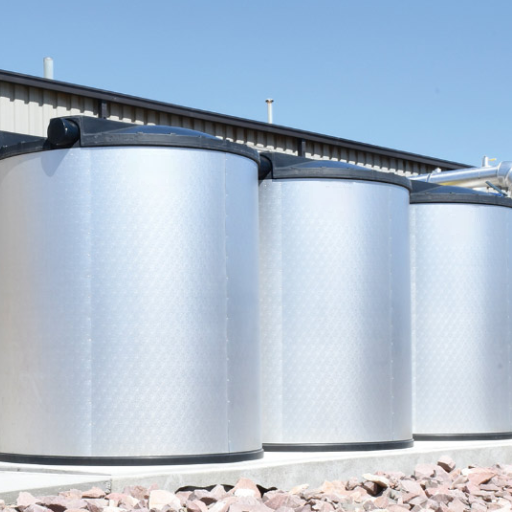
In 2026, a thermal storage tank cost runs $54-$97/kWh for a modular vessel, $117-$260/kWh for an ASME commercial vessel, and about $300/kWh installed at small-commercial scale. Large atmospheric and pit storage can fall below $13/kWh. Scope and design ΔT decide which applies.
The range is wide because “tank cost” describes three different products; fix the boundary first. For the wider category, see our thermal store tank guide.
Vessel-only prices
A vessel-only quote covers the shell, heads, nozzles, manways, supports, and basic paint, but excludes insulation, jacketing, internals, controls, freight, and installation.
Modular atmospheric tanks in the 80-700 gallon range list at $1,190- $5,798, or $54- $97/kWh at a 35 °C spread. ASME commercial tanks in the 80-1,000 gallon range run roughly $18- $40 per gallon, or $117- $260/kWh at the same spread.
The per-gallon number is the one buyers misuse: gallons describe volume, while kilowatt-hours describe stored energy. The same tank rated at ΔT 50 °C looks 30% cheaper per kWh than at ΔT 35 °C, though the steel and price did not change.
Installed package prices
An installed package adds insulation, jacketing, diffusers, a heat exchanger, pumps, piping, controls, sensors, and often a skid. This is the first boundary that represents a working system, with a planning benchmark of about $300/kWh at small-commercial scale.
All-in project prices
An all-in project adds foundation, rigging, freight, electrical, commissioning, permits, and contingency. Installation alone is 30-60% of the budget, and all-in projects often land at 1.5-3× the installed-package cost per kWh.
Table 1. The three thermal storage tank quote boundaries
| Boundary | Usually includes | 2026 range | Cost per stored kWh |
|---|---|---|---|
| Vessel only | Shell, heads, nozzles, manways, supports, basic paint | Modular 80-700 gal: $1,190-$5,798; ASME 80-1,000 gal: ~$18-$40/gal | $54-$97/kWh modular; ~$117-$260/kWh ASME, at ΔT 35 °C |
| Installed package | Vessel, insulation, internals, heat exchanger, pumps, piping, controls, skid | ~$300/kWh benchmark; scope varies | ~$300/kWh |
| All-in project | Package plus foundation, rigging, freight, electrical, commissioning, contingency | Project-specific; installation 30-60% of budget | Often 1.5-3× the installed-package rate |
Send us your duty and design ΔT, and we will convert them into a volume and budget range before tender.
Why Thermal Storage Tank Prices Vary by 300%
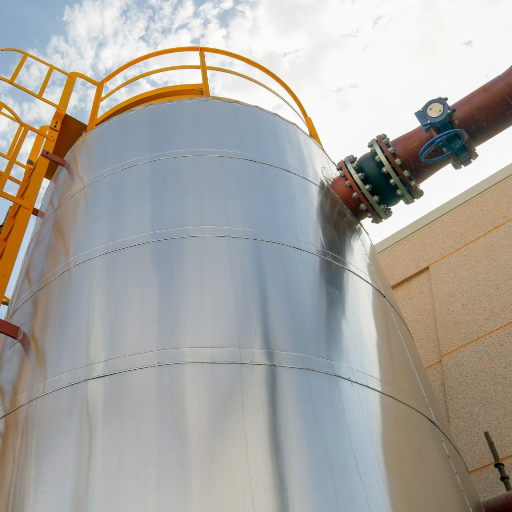
The gap between a $2/kWh pit and a $260/kWh vessel is not markup. It is scale, code, temperature, material, and site.
Scale and volume
Unit cost falls sharply with size. Modular pricing drops about 44% per kWh from 80 to 700 gallons. Atmospheric tank thermal energy storage (TTES) at 1,000 m³ costs $300−$600/m³, below $200/m³ above 7,500 m³.
Pit thermal energy storage (PTES) cost has a median of $115/m³ (range $35-$320/m³), per a 2025 ASME analysis of 51 projects. At a 40 K spread, that is $6-$13/kWh for atmospheric tanks and $1-$7/kWh for pits.
Pressure and code basis
The ASME thermal storage tank cost premium is 40-80% over an uncoded atmospheric tank of the same size. Pressurized TTES runs $500-$2,000/m³, against $220-$400/m³ atmospheric. If the process doesn’t need pressure, don’t pay for it.
Temperature, material, and insulation
Higher temperatures store more energy per cubic metre but demand alloy, thicker insulation, and safety provisions. Stainless costs 2.7-3.3× carbon steel per gallon; outdoor insulation can cost 2-4× indoor. Insulation design belongs in our thermal storage tank insulation guide, while its cost is a separate line affecting capex and standby loss.
Site and certification
Foundations run 1-9% of project cost, more on piles. ASME certification adds $4,500 plus a $11,000 deposit, and the stamp is about $400. Plate is 55-70% of vessel price: A516 Grade 70 has traded near $800/ton export and $1.12-$1.40/lb from US and EU distributors.
For the phase-change alternative in a different form, see our guide to phase change material thermal storage tanks.
Table 2. What moves a thermal storage tank price
| Driver | Quantified impact |
|---|---|
| Scale | ~44% lower $/kWh from 80 to 700 gal; PTES median $115/m³ |
| Pressure and code | 40-80% premium; pressurized $500-$2,000/m³ |
| Temperature and ΔT | Normalize $/kWh to the design ΔT |
| Material and insulation | Stainless 2.7-3.3×; outdoor insulation 2-4× |
| Site and foundation | ~1-9% of project cost |
| Certification and steel | $4,500 + $11,000 deposit, $400 stamp; plate 55-70% of vessel cost |
The Total Cost of Ownership Model
The thermal storage tank cost is the down payment; TCO is the whole mortgage. Net TCO, usually shown as net present value (NPV), discounts all costs and subtracts all benefits, answering whether the project is worth doing. Levelized cost of storage (LCOS) discounts costs before benefits and divides by delivered kWh, answering what storage costs per unit of heat. A low LCOS doesn’t guarantee a positive NPV, so report both.
Capex and opex
Use one boundary for every option compared, and add missing scope before ranking. Fixed operations and maintenance (O&M) runs about 1% of capex per year, pumping consumes 1-3% of delivered energy, and standby loss is the line most often omitted.
Periodic capex, end of life, and benefits
Recoating every 10-12 years costs roughly 40% of new tank price; non-destructive testing (NDT) adds 4-8% of vessel cost per 2-3-year cycle. Decommissioning is minor, residual value is often below 5%, and benefits include demand charges, arbitrage, avoided capacity, resilience, and incentives. Model benefits separately; never net them into a “price.”
Net TCO = Capex
 + Σ (Fixed O&M + Variable O&M + Standby loss + Periodic capex - Benefits) / (1 + r)^t
 + End-of-life / (1 + r)^n
 - Residual value / (1 + r)^n

LCOS = PV(costs before benefits) / PV(delivered kWh)
Simple payback = net capex / average annual net benefit
Table 3. TCO components and benchmarks
| Category | Benchmark |
|---|---|
| Capex | Vessel $54-$260/kWh; installed package ~$300/kWh |
| Fixed O&M | ~1% of capex/year; €1,500/tank/year in Danish district heating |
| Variable O&M and standby | Pumping 1-3% of delivered energy; standby 2.4-8 °F/24 h |
| Periodic capex | Recoating every 10-12 years at ~40% of new tank price |
| End of life and benefits | Residual often under 5%; demand charges can be ~98% of savings |
Chilled water storage tank costs typically run $30-$300 per ton-hour, depending on tank type and whether the quote includes the chiller-side interface. For sizing and selection, see our cooling storage cost guide.
Ask for the assumptions behind any payback number. Without a tariff, a cycle count, and a discount rate, it is a slogan, not an analysis.
The Costs Buyers Miss: Standby Loss, Pumping, and Maintenance
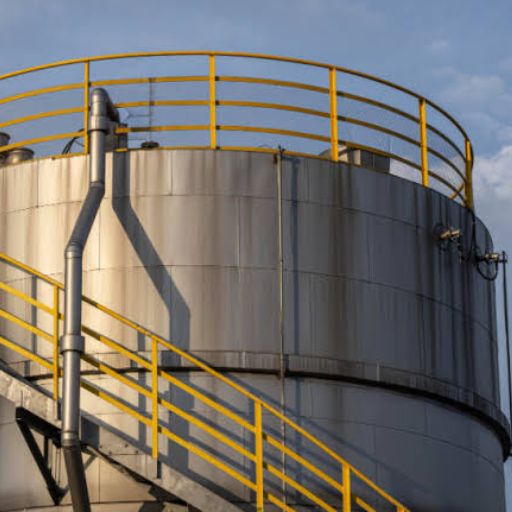
The thermal storage tank cost on the quote is visible. The costs below decide whether the project earns its capital back.
Standby loss
Modular tanks lose 2.4-8 °F per 24 hours; poorly insulated or high-temperature systems can lose about 20% of stored energy per year at the high end. Convert it to money: a 4,650 kWh tank losing 1% per day loses about 17,000 kWh per year, or roughly $1,020 at a $0.06/kWh heat value.
Pumping and parasitic loads
Diffusers, heat exchangers, and long pipe runs add pressure drop. Pumping typically consumes 1-3% of delivered energy. At a 2% parasitic load and 1.16 GWh delivered, that is about 23,000 kWh per year. Specify allowable pressure drop; internals that double pump head are not cheap.
Maintenance
Thermal storage tank maintenance cost runs about 1% of capex per year for fixed O&M. In Danish district heating, a working reference is €1,500 per tank per year, covering an annual inspection that sometimes requires a diver. Budget inspection, the diver, and controls spares as one line before the tank is ordered.
Recoating, relining, and controls
Carbon steel tanks need recoating every 10-12 years, at roughly 40% of the price of a new tank. On the 100 m³ example below, that is a $112,000 cash hit in year 12 that never appears in the capex quote. Our guide to carbon steel tank corrosion protection explains the lining trade-off.
Controls deserve the same treatment: a California thermal energy storage project was abandoned after repeated controls reliability problems. Budget controls, commissioning, training, and spares as lifecycle costs.
Request a maintenance and recoating schedule with your quote. If a supplier cannot produce one, the price is incomplete.
Worked Example: 25-Year TCO for a 100 m³ Hot Water Tank
This thermal storage tank cost model is illustrative, not a quote. The $120/kWh installed figure sits below the ~$300/kWh small-commercial benchmark in Table 1 because 100 m³ is far above the packaged-unit scale that benchmark describes. Every assumption is labeled so you can replace it.
System: 100 m³ atmospheric hot-water tank, design ΔT 40 K, 250 cycles per year, 25-year analysis, 6% discount rate.
Table 4. Worked example inputs
| Input | Value | Basis |
|---|---|---|
| Usable capacity | 4,650 kWh | 100 m³ × 1.163 kWh/m³·K × 40 K |
| Installed capex | $558,000 | $120/kWh installed; mid-size package assumption |
| Annual delivered heat | 1,163,000 kWh | 4,650 kWh × 250 cycles |
| Value of shifted heat | $69,780/year | $0.06/kWh on/off-peak spread |
| Demand-charge savings | $15,000/year | Site-specific illustration |
| Standby loss | $1,020/year | 1%/day × 4,650 kWh × 365 × $0.06 |
| Pumping | $2,100/year | 2% of delivered energy × $0.09/kWh |
| Fixed O&M | $5,580/year | 1% of capex |
| Recoating | $112,000 in year 12 | 40% of vessel cost; vessel assumed 50% of capex |
Industrial electricity is assumed at $0.09/kWh, close to the 9.03 ¢/kWh US industrial average reported by the US Energy Information Administration for July 2026.
Table 5. Results and sensitivities
| Metric | Base case | 30% ITC | $0.03 spread | 150 cycles/year |
|---|---|---|---|---|
| Net annual benefit | $76,080 | $76,080 | $41,190 | $49,010 |
| Simple payback | 7.3 years | 5.1 years | 13.6 years | 11.4 years |
| 25-year NPV | ~$359,000 | ~$526,000 | -$87,000 | ~$13,000 |
| LCOS before revenue | ~$49/MWh | ~$38/MWh | ~$49/MWh | ~$80/MWh |
What the numbers say
The base case pays back in 7.3 years with a positive NPV, and a 30% investment tax credit (ITC) cuts payback to 5.1 years. At a 3 ¢/kWh spread, revenue drops while costs do not, and the 25-year NPV turns negative by about $87,000.
Sensitivity
Discount rate matters less than utilization: moving from 4% to 8% changes NPV by 15-20%, while moving from 250 to 150 cycles changes it by more than 90%. Run your own tariff, cycle count, and maintenance estimate before you commit.
Send your duty, ΔT, and tariff; we will run this model and return a scope-normalized budget.
How to Compare Thermal Storage Tank Quotes
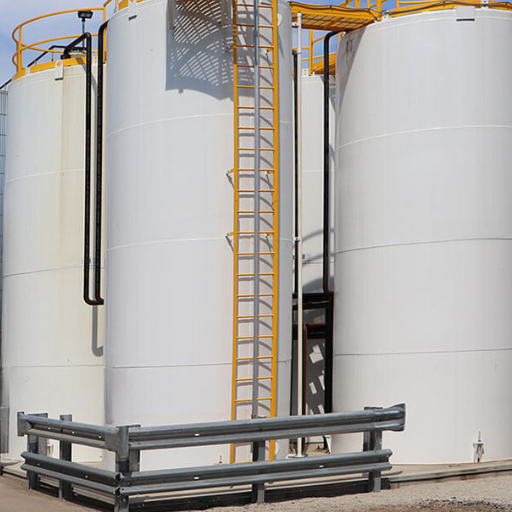
Aisha, a procurement lead for a hospital campus, received three quotes for one tank: $240,000, $410,000, and $690,000. None was fraudulent.
The cheapest excluded insulation and controls. The middle included the package but not the foundation. The highest was the only all-in number.
Normalize before you negotiate. Use this ten-item checklist:
- Scope boundary: vessel, installed package, or all-in project.
- Code basis: atmospheric, ASME-stamped, or other pressure code.
- Usable capacity and design ΔT: both stated, not just volume.
- Insulation: thickness, material, jacketing, calculated standby loss.
- Internals: diffusers or baffles, with pressure-drop figures.
- Lining and corrosion protection: system, thickness, warranty.
- Controls: sensors, valves, PLC, commissioning scope.
- Site works: foundation, crane, freight, electrical, permits.
- Documentation: drawings, calculations, material certs, ASME paperwork.
- Warranty and O&M: capacity retention, leak coverage, maintenance schedule.
Red flags are predictable. Watch for a price per gallon without a ΔT, an “installed” price that excludes foundation and electrical, a capacity rating at an unrealistic ΔT, a warranty that excludes capacity retention, and a payback claim based on three days of test data.
Scope confusion often starts with the product itself. Our thermal store vs buffer tank comparison explains buffer tank cost and why two vessels of similar size perform different jobs. Ask every supplier to quote at the same boundary, assumptions, and currency, then compare.
When Does Thermal Storage Pay Back?
The thermal storage tank payback period depends on the tariff, not merely on tank efficiency.
Demand charges versus arbitrage
At a US university campus, adding thermal energy storage alongside an existing battery bank saved $34,709 in a year, or 24.5% of total energy cost. Of that, $34,168 came from demand charges and only $541 from energy arbitrage.
Cycles and spread
A practical screening rule for the payback period: more than 200 cycles per year and a spread of at least $0.05/kWh support a payback under ten years. Below 50 cycles, storage is a resilience or compliance purchase, not an arbitrage one. Large seasonal projects can post 50-year paybacks.
Incentives
In the US, the Section 48E ITC has a 6% base rate and can reach 50% with prevailing wage, apprenticeship, domestic-content, and energy-community bonuses. For 2026, the domestic-content threshold is 50%, rising to 55% afterward.
Utility rebates include $30/ton-hour, $300 per peak kW, and $350 per peak kW. Section 179D offers up to $5.81/sq ft, and bonus depreciation is 20% in 2026. Confirm eligibility with a tax adviser and check local equivalents.
Thermal storage vs battery cost
Thermal storage costs roughly $5-$100/kWh of thermal energy; lithium-ion batteries cost $300-$600/kWh of electrical energy. They serve different loads: thermal can’t run lights or motors, and batteries can’t supply process heat at $5/kWh. Compare by service, not by a single $/kWh headline.
Decision rules
Large seasonal duty points to pit storage; pressurized or high-temperature duty to an ASME vessel; a space-constrained site to phase-change material (PCM) or a hybrid. Small commercial heating fits a buffer tank or thermal store. Low spread, few cycles, or a short horizon: don’t buy on arbitrage.
Frequently Asked Questions
How much does a thermal storage tank cost?
A modular vessel costs about $54-$97/kWh, an ASME commercial vessel $117-$260/kWh, and an installed small-commercial package around $300/kWh. Large atmospheric and pit storage can fall below $13/kWh, depending on scope and design ΔT.
What is the cost per kWh of thermal storage?
The thermal storage tank cost per kWh ranges from roughly $1-$7 for large pit storage to $260 for a small ASME vessel. Normalize every figure to the same design ΔT. Dollars per gallon cannot be converted without the temperature spread.
How long does a thermal storage tank last?
The thermal storage tank lifespan is commonly 30-40 years with maintenance; 25 years is a conservative planning figure. Carbon steel needs recoating every 10-12 years at about 40% of the new tank price. Stainless or glass-lined tanks cost more upfront but reduce periodic work.
What maintenance does a thermal storage tank need?
Expect annual inspection of the shell, insulation, valves, and relief devices, plus water treatment checks. Fixed O&M runs about 1% of capex per year. ASME vessels need NDT every 2-3 years at 4-8% of vessel cost per cycle.
Is thermal storage cheaper than batteries?
Yes, per kWh of stored energy, often by a factor of five or more, but it only serves heat and cooling. Lithium-ion serves electrical loads. Compare by service, not by a single $/kWh headline.
How do I compare thermal storage tank quotes?
Normalize scope, code basis, usable capacity, design ΔT, insulation, internals, controls, site works, documentation, and warranty. Ask every supplier to quote the same boundary and assumptions, then compare installed cost and 25-year TCO.
Conclusion
The number on the quote isn’t the cost of the tank. It is the cost of the scope someone chose to include. Fix the boundary first, and most of the confusion disappears.
Five actions for your next project:
- Define the quote boundary first; vessel, package, and project are different products.
- Normalize capacity by ΔT and usable volume. Dollars per gallon hide the energy story.
- Model standby loss, pumping, and recoating. They decide whether the case survives year 12.
- Check your tariff. Demand charges and spread matter more than tank efficiency.
- Separate thermal from battery comparisons. Judge them by service, not $/kWh.
A thermal storage tank cost that looks high may be the only complete number in the room. A low one may be a vessel with a project attached later at your expense.
Send Shandong Shengrui your duty, design ΔT, pressure basis, site ambient, and tariff. Our engineers will return a scope-normalized budget and a 25-year TCO comparison. Request a thermal storage tank quote and start from a number you can defend.