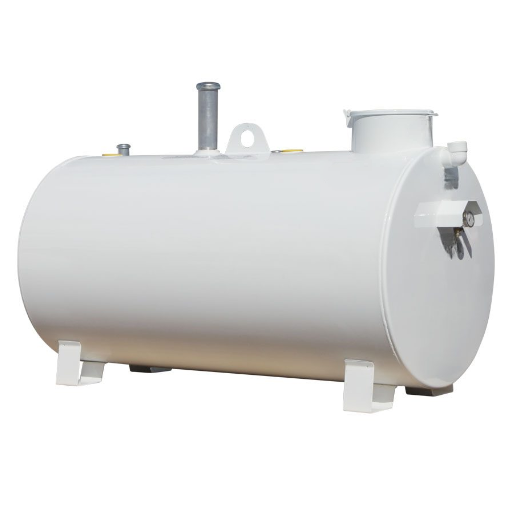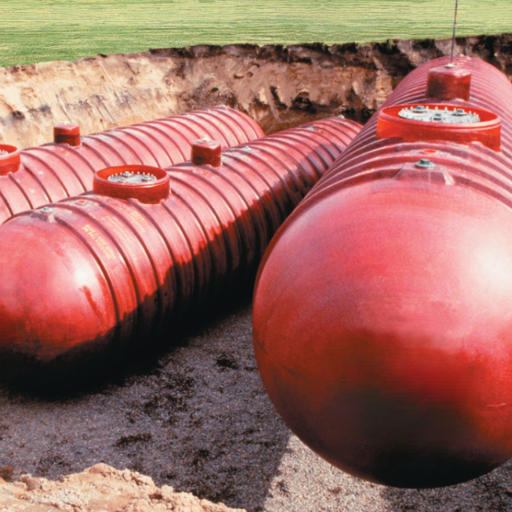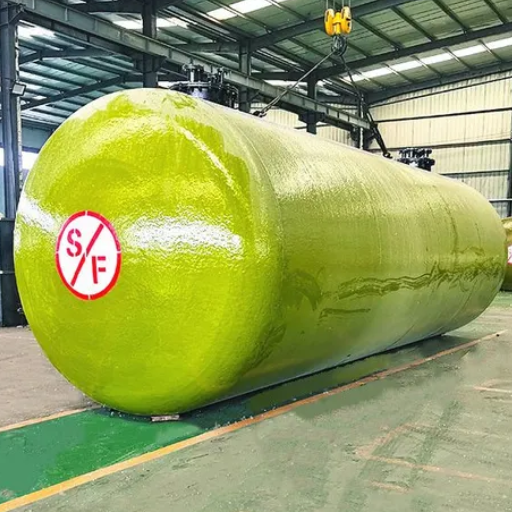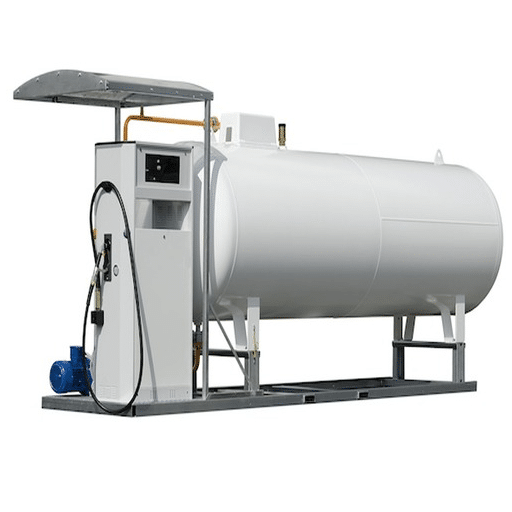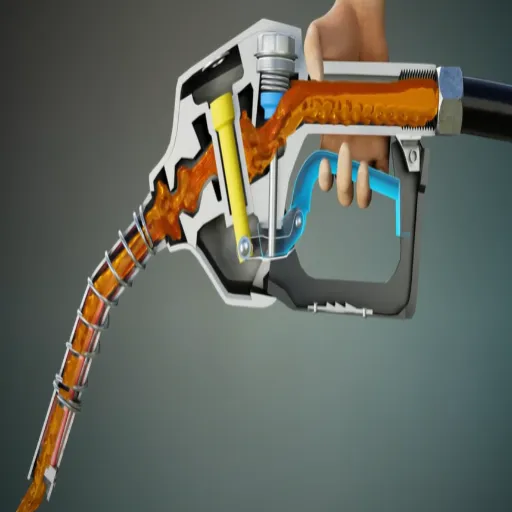
Renee had four bids for a new underground tank, and all four said the same thing: UL 1746 certified. The prices sat within 6 percent of each other. The certificate images looked identical. Then her engineer asked a question none of the bids answered.
Which part?
That question matters more than the certificate. UL 1746 certification covers the external corrosion protection system on a steel tank, not the tank itself, and it comes in four distinct versions. Each version protects the tank differently, costs differently, and leaves the owner with a different inspection obligation.
This article explains what the standard actually covers, how the four parts differ, and how the US federal rule maps onto each one. You will also get a ten-minute procedure for verifying a supplier’s claim before you sign.
If you are holding a submittal that says “UL 1746 certified” with no part number, send it to our engineering team. We will tell you what it does and does not prove.
What UL 1746 Covers, and What It Does Not
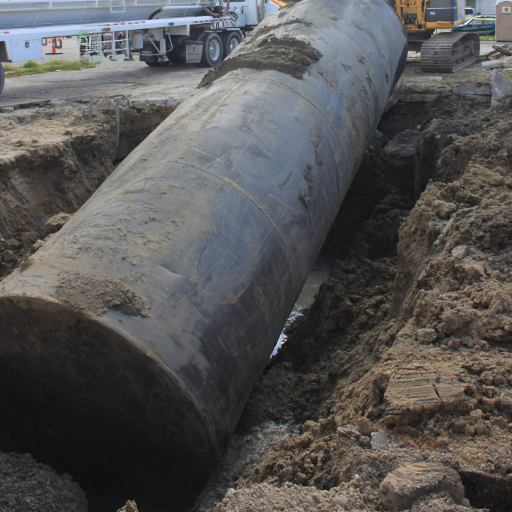
UL 1746 is the UL standard for external corrosion protection systems for steel underground storage tanks. It covers the factory-installed system that protects the outside of a steel tank built to UL 58: a coating, a composite cladding, a jacket, or a pre-engineered cathodic protection package. It does not certify the tank itself.
That definition is worth reading twice, because the buying language gets it wrong constantly. A tank is not “UL 1746 certified.” The tank is built to UL 58. The system applied to its exterior is what UL 1746 evaluates.
The scope has two load-bearing words: factory-installed and pre-engineered. A field-applied coating is not a UL 1746 system, even with the same material. Neither is a cathodic protection design assembled on site, which the federal rule treats as a separate engineering exercise.
| UL 1746 covers | UL 1746 does not cover |
|---|---|
| The coating, cladding, or jacket on the tank exterior | The tank shell, wall thickness, or welding (UL 58) |
| The pre-engineered anodes, bushings, and test station (Part I) | Interior linings or fuel compatibility |
| Factory production tests on the protection system | Installation, bedding, or backfill |
| Marking and UL follow-up service at the factory | In-service inspection or field repairs |
| The interstitial space in a jacketed system (Part III) | The site, the piping, or the monitoring equipment |
The distinction is not academic. It tells you which documents to ask for, and which claims should never appear on a submittal.
The Four Parts of UL 1746
UL 1746 is organized into four parts. They are the core of UL 1746 certification requirements, and each part describes a different protection system. The part number is the detail that turns a vague certificate into a specification.
| Part | Protection system | What is on the tank | Interstice? | Common STI spec | US route |
|---|---|---|---|---|---|
| I | Pre-engineered galvanic cathodic protection | Dielectric coating, anodes, isolating bushings, test station | No | STI-P3 (F841 for dual wall) | 280.20(a)(2) |
| II | Composite | FRP bonded to the steel, 0.100 in minimum | Only in double-wall variants | ACT-100 (F894) | 280.20(a)(3) |
| III | Jacketed | Separate FRP, PUR, polyurea, or HDPE jacket | Yes | Permatank (F922) | 280.20(a)(3) |
| IV | Polyurethane coating | Bonded PUR coating, about 0.070 in | No | ACT-100-U (F961) | 280.20(a)(3) |
Part I: Pre-engineered cathodic protection
Part I is a factory-built cathodic protection system: a dielectric coating, sacrificial anodes, isolating bushings and gaskets at every opening, and a test station.
Published summaries describe a minimum of two anodes and a design basis of 4,000 ohm-cm soil resistivity. That is an assumption, not a guarantee. More corrosive ground needs supplemental anodes, which are a field addition, not part of the listing.
STI-P3 is the best-known product in this family. If a supplier says “UL 1746 Part I,” you are buying a coated steel tank with anodes, not a composite or jacketed tank.
Part II: Composite
Part II is a fiberglass-reinforced plastic layer bonded directly to the steel shell, at least 0.100 in thick. The bond is continuous. There is no gap to monitor unless the tank is a double-wall variant with a separate interstitial space.
ACT-100 is the reference specification. Buyers often describe these tanks as “glass-lined,” which is loose but not misleading. The FRP is the corrosion barrier, and the steel carries the structure.
Part III: Jacketed
Part III puts a separate jacket around the tank, held off the steel to create a continuous interstitial space. The jacket can be FRP, polyurethane, polyurea, or HDPE. That space is the secondary containment, and it is designed to be monitored.
This is the part that matters most for new US installations, because the interstice satisfies two requirements at once: external corrosion protection and secondary containment. Permatank is the standard example. A steel-fiberglass (SF) tank is usually a Part III system.
Part IV: Polyurethane coated
Part IV is a bonded polyurethane coating, around 0.070 in thick. On a datasheet, it looks like Part II, because both are coatings. The material and thickness differ, and so does the listing.
Four parts, four different products. “UL 1746 certified” without a part tells you little about what is wrapped around the steel.
UL 1746 vs UL 58 vs UL 1316
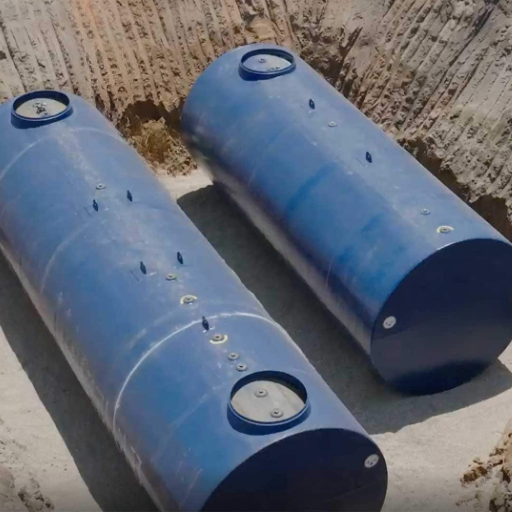
Three standards appear in almost every steel tank conversation, and they answer three different questions.
| Standard | What it covers | Applies to |
|---|---|---|
| UL 58 | Steel underground tanks: design, thickness, welding, testing | The tank itself |
| UL 1746 | External corrosion protection systems applied to steel tanks | The exterior system |
| UL 1316 | Fiberglass-reinforced plastic underground tanks | An all-FRP tank |
A compliant steel tank purchase normally cites both UL 58 and UL 1746, with the part named. An all-fiberglass tank cites UL 1316 and nothing else, because it has no steel for UL 1746 to protect.
That is the whole relationship, and it explains a common tender error. When a buyer asks a fiberglass supplier for UL 1746 certification, the correct answer is no. If you want the full argument, our guide to why UL 1746 does not apply to fiberglass tanks walks through the category mistake and what to ask for instead.
For the steel side of the pair, our overview of carbon steel underground storage tanks covers the UL 58 requirements that sit underneath the protection system.
How UL 1746 Certification Fits 40 CFR 280.20
The US rule is 40 CFR Part 280. Section 280.20 sets performance standards for new tanks and lists the accepted corrosion protection routes. Each route carries a note naming the codes that satisfy it.
UL 1746 appears in the notes to two different routes. That is the source of most of the confusion.
| CFR route | What it approves | Codes named in the note | UL 1746 part |
|---|---|---|---|
| 280.20(a)(1) | Fiberglass-reinforced plastic tank | UL 1316, ULC S615 | Not applicable |
| 280.20(a)(2) | Steel tank with cathodic protection | STI-P3, UL 1746, ULC S603/S603.1/S631, STI F841, NACE SP0285 + UL 58 | Part I |
| 280.20(a)(3) | Steel tank clad or jacketed with a non-corrodible material | UL 1746, STI ACT-100 (F894), ACT-100-U (F961), Permatank (F922) | Parts II, III, IV |
| 280.20(a)(4) | Bare metal with no added protection | Only with a corrosion expert’s site determination | None |
Two things become clear.
First, the same standard can support two completely different tanks. A cathodically protected steel tank and a jacketed steel tank can both point to UL 1746. The certificate narrows the field, but it does not tell a regulator which route you took. The part does.
Second, the four parts are not interchangeable. Part I is the cathodic protection route. Parts II and III are the clad-or-jacketed route. Part IV sits there too, under the STI specification named in the note.
The 2016 overlay
There is a second requirement layered on top. Tanks and piping installed or replaced after April 11, 2016 must be secondarily contained and use interstitial monitoring, as set out in the opening paragraph of 280.20 and in 280.43(g).
This is where the part choice becomes commercial rather than technical.
A Part I tank has no interstice. It needs a separate secondary containment solution, usually a double-wall variant or an excavation liner with monitoring. A Part III jacketed tank builds the interstice into the product. That is the real reason a jacketed tank costs more, and the reason it simplifies a new installation.
For comprehensive information, please read our double-wall fuel tank specifications explained guide.
Which Part You Buy Decides Your Inspection Duty
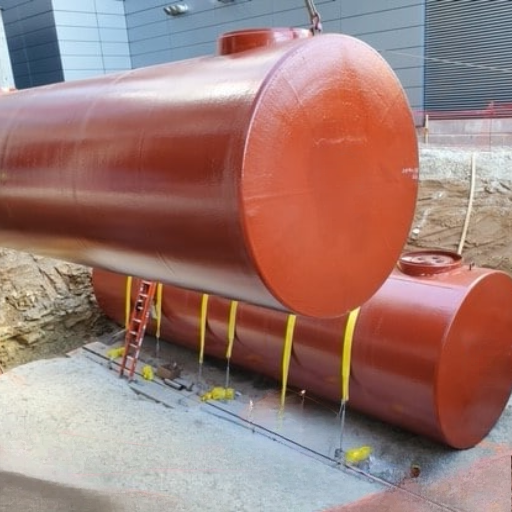
The certificate is a purchase decision with a maintenance tail. The part determines what the owner has to test, and how often.
Part I. An installed cathodic protection system triggers 40 CFR 280.31. The system must be tested within 6 months of installation and at least every 3 years after that, by a qualified tester. The owner keeps the results of the last two tests. Impressed-current systems, which are field-installed and not typical of a factory Part I package, also need a 60-day operating check.
Part III. The obligation moves to the interstice. The jacket is the corrosion barrier, so there is no cathodic protection system to test. Instead, the owner must monitor the space between the walls under 280.43(g), and the monitoring method must detect a leak through the inner wall anywhere the tank normally holds product.
Parts II and IV. These are bonded barriers. There is no cathodic protection to test and no interstice to monitor, unless the tank is a double-wall variant with a monitorable space.
| Part | Cathodic protection testing | Interstitial monitoring | Secondary containment built in |
|---|---|---|---|
| I | Yes: 6 months, then every 3 years | Only with a separate solution | No |
| II | No | Only in double-wall variants | Only in double-wall variants |
| III | No | Yes, under 280.43(g) | Yes |
| IV | No | No, unless double-walled | No |
This table is the honest version of a claim you will hear from suppliers: “UL 1746 means no cathodic protection is needed.” It is true for Parts II, III, and IV. It is false for Part I, which is a cathodic protection system. And it is not a property of the standard at all. It is a property of the part.
Choosing between a Part I and a Part III tank for a new US site? Send us the site conditions and both bids, and we will tell you which route each one actually takes.
If you are weighing a coated steel tank against a jacketed one, our guide to cathodic protection testing for gas stations covers the field testing side in more detail.
How to Verify a UL 1746 Certification Claim
A certificate image is not verification. It can be genuine and still be for a different product, a superseded edition, or a different legal entity. The file number is the thread you pull.
Here is the procedure we recommend to any buyer.
- Ask for the part. “UL 1746 Part III” is an answer. “UL 1746 certified” is not.
- Ask for the UL file number and check it in UL Product iQ, which is free to search. Confirm the listed product is the corrosion protection system and that the manufacturer name matches the entity on the quote.
- Check the UL 58 listing separately. A UL 1746 file does not imply a UL 58 file for the tank.
- Check the edition date. The standard is in its 3rd edition, published in 2007 and revised in 2014. A certificate citing an older edition needs an explanation.
- Match the STI specification. STI-P3, ACT-100, ACT-100-U, and Permatank each map to a part. If the certificate and the spec sheet disagree, stop.
- For Part I, ask for the cathodic protection design: soil resistivity, anode count, and test station location. A pre-engineered system still has to suit the ground it is buried in.
- Rule out the three non-equivalents: a lab “certificate of compliance,” a manufacturer’s self-declaration, and a certificate image with no file number.
Marcus, a construction manager in Houston, ran this check on a jacketed tank in 2023. The certificate looked right. The file number resolved to a coating, not a tank jacket.
The supplier had listed a coating under Part IV and used that listing to sell a Part III system. The bid was $40,000 below the compliant alternative. The savings disappeared when the state inspector asked for the part.
A testing laboratory can issue a report that says a sample met a test. That is not a UL listing, and it does not carry UL’s follow-up service. The distinction sounds pedantic until you are defending the purchase to a state regulator.
If you want to see how the same logic applies to a full tank specification, our SF double-wall tank specification turns these questions into a submittal checklist.
Where to get the standard itself
UL 1746 is a copyrighted standard sold by UL Standards & Engagement and ANSI. A search for a UL 1746 PDF returns unauthorized copies, and some are superseded editions.
For verification, you do not need the standard. Product iQ is free, current, and authoritative on whether a listing exists. For the technical text, buy the current edition. A buyer who relies on a pirated 2014 PDF is checking a claim against a document that may not match the listing.
Six Claims That Should Make You Pause
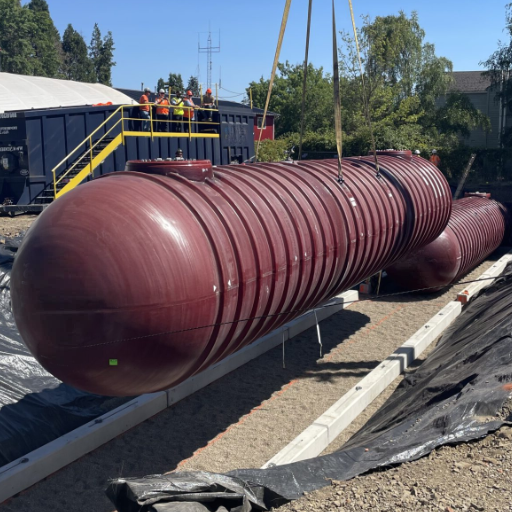
Each phrase is a reason to ask a follow-up question, not necessarily to walk away.
- “UL 1746 certified tank.” The tank is UL 58. The system is UL 1746. The phrase is loose, but it usually means the supplier has not separated the two.
- “UL 1746, so no cathodic protection is needed.” True for Parts II, III, and IV. False for Part I. Ask which part.
- “Type I or Type II.” These were official UL 1746 terms for double-wall construction geometry, added in 2000 and deleted in the 2007 edition. Manufacturers still use them, including major US producers. They do not map cleanly onto Parts I to IV.
- “Our fiberglass tank is UL 1746 certified.” A fiberglass tank is UL 1316. There is no steel for UL 1746 to protect.
- “UL 1746 approved,” with no file number. Approval is not a UL category. A listing has a file number, and the file number is checkable.
- “We can email you the UL 1746 PDF.” Either a pirated copy or a misunderstanding of the license. The standard is sold, not distributed.
FAQ
What is UL 1746?
UL 1746 is the UL standard for external corrosion protection systems for steel underground storage tanks. It covers the factory-installed coating, cladding, jacket, or cathodic protection system applied to a steel tank built to UL 58. It does not certify the tank itself.
Does UL 1746 apply to fiberglass tanks?
No. An all-fiberglass tank is certified to UL 1316. UL 1746 protects steel, so a tank with no steel falls outside its scope.
Is UL 1746 the same as UL 58?
No. UL 58 covers the steel tank: design, wall thickness, welding, and testing. UL 1746 covers the external corrosion protection system applied to that tank. A compliant steel tank usually cites both standards.
Does UL 1746 require cathodic protection?
Only Part I does, because Part I is a cathodic protection system. Parts II, III, and IV rely on a bonded barrier or a jacket instead, so they do not require cathodic protection testing. The part number decides the answer.
What is the difference between Part II and Part III?
Part II is a fiberglass composite bonded directly to the steel, with no continuous gap to monitor. Part III is a separate jacket held off the steel to create an interstitial space, which provides secondary containment and can be monitored.
Can I download UL 1746 for free?
No. It is a copyrighted standard sold by UL Standards & Engagement and ANSI. UL Product iQ is free and lets you verify a listing without buying the standard. The PDFs on file-sharing sites are unauthorized and may be out of date.
Conclusion
UL 1746 certification is narrower than the phrase suggests. It covers the protection system on the outside of a steel tank, not the tank, and it comes in four versions that behave differently in the ground and in a compliance file.
Four things worth carrying into your next tender:
- The tank is UL 58. The system is UL 1746. Ask for both, and ask for the part.
- The part decides the inspection duty. Part I brings cathodic protection testing every three years. Part III brings interstitial monitoring instead.
- UL 1746 appears in two CFR routes. The standard alone does not tell a regulator which one you used. The part does.
- A file number is the only claim worth checking. Certificates can be real and still be irrelevant.
Our SF double-layer storage tank is built to the UL 58 and UL 1746 framework, with the documentation package a US submittal needs. Whoever you buy from, including us, should be able to give you the part and the file number before you sign.
If you are comparing bids and want a second opinion on what each one actually certifies, send us the submittals. It is a shorter conversation than a failed inspection.