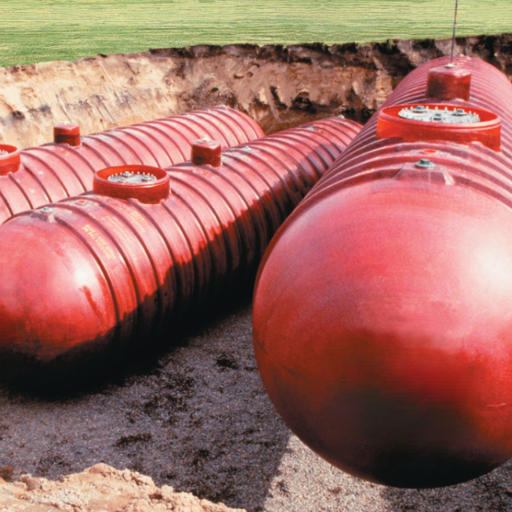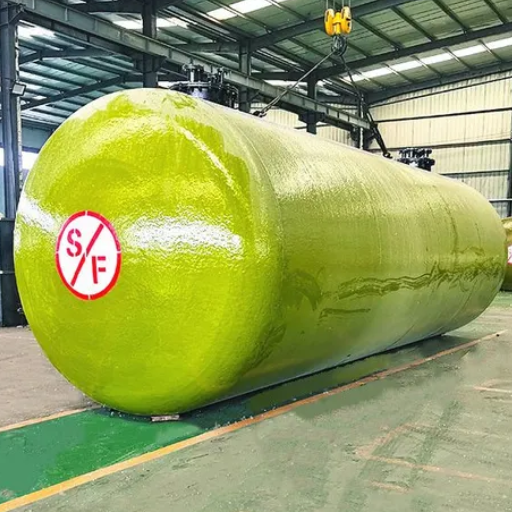
Nadia had three quotes in front of her, and all three described the same product. Each supplier called it a double-wall fuel tank. Each attached a certificate. Each quoted a capacity within a few thousand litres of the others.
The tanks weren’t the same product. One had a steel inner wall and a fiberglass outer. One had fiberglass on both walls.
The third had steel on both. Its outer wall would spend thirty years in contact with wet soil, relying on a protection system the quote never named.
You already know that “double wall” means two walls. What the phrase doesn’t tell you is what each wall is made of, which standard the tank is certified to, or what thickness you should accept.
Three things decide what you receive.
This article gives you the values. You’ll get a construction comparison table, the thickness figures to specify and how to verify them, and the standards mapped to the specification line they belong on.
If you need the full procurement procedure, how to specify an SF double-wall tank covers the submittal package and the rejection process. This page is the reference you keep open beside it.
What “Double Wall” Actually Specifies
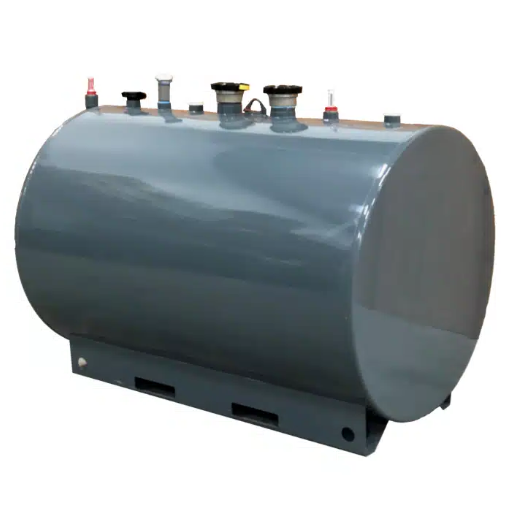
A double-wall fuel tank specification defines two containment barriers separated by a monitored interstitial space. It also states the standard each barrier is certified to, and the method used to detect a leak between them. The phrase describes geometry. The specification describes materials, thicknesses, and certification.
That distinction matters, because geometry is the part every supplier gets right. Any fabricator can build a tank with two walls.
The differences that decide whether the tank is acceptable on your site sit in the layers you can’t see once it’s buried.
Three constructions are sold under the same phrase, and the industry writes them as two letters:
- SF: steel inner wall, fiberglass (FRP) outer wall
- FF: fiberglass inner, fiberglass outer
- SS: steel inner, steel outer
The letters appear on most manufacturer datasheets and in most tenders, including in markets where nobody uses them in conversation. Learn them. The certificate follows the letters.
For a detailed comparison, please read our article on steel-fiberglass vs fiberglass-fiberglass tanks.
Why the letters change the certificate
The US federal rule for underground storage tanks is 40 CFR Part 280. Section 280.20(a) lists the accepted ways to corrosion-protect a tank that holds product while buried. Each route names its own standards.
An FF tank qualifies under one route. An SF tank qualifies under another. They aren’t interchangeable, and a supplier who treats the certificates as equivalent has either misunderstood their product or is hoping you won’t check.
The Specification Table: SF, FF and SS Compared
This is the table most comparison pages leave out. Materials, lifespan, and cost get compared constantly. The certification column is the one that decides whether a tank is acceptable on your site.
| SF | FF | SS | |
|---|---|---|---|
| Inner wall | Carbon steel | FRP | Carbon steel |
| Outer wall | FRP | FRP | Carbon steel |
| Tank standard | UL 58 | UL 1316 | UL 58 |
| Corrosion protection | UL 1746 (Part 2 or 3) | Inherent: no steel in contact with soil | Requires its own route: UL 1746 Part 1 or Part 4, or CP |
| CFR route | 280.20(a)(3) | 280.20(a)(1) | 280.20(a)(2) or (a)(3) |
| Interstitial monitoring | Yes | Yes | Yes |
| Typical use | Retail petrol and diesel, most sites | Aggressive soil, chemical service | Non-buried sections, high-consequence sites |
Why the certificate column decides the purchase
Read the corrosion protection row twice. Then read it again.
UL 58 covers steel underground tanks. UL 1316 covers glass-fiber-reinforced plastic underground tanks, and it explicitly includes alcohols and alcohol-gasoline blends. UL 1746 covers external corrosion protection systems for steel tanks.
That last definition is the one buyers skim. UL 1746 protects steel from soil. An FF tank has no steel in the ground, so there’s nothing for UL 1746 to protect. Asking a supplier whether their FF tank is “UL 1746 certified” is a category error, and the answer tells you something about the supplier.
The SS case, which nobody explains
SS tanks are the construction the comparison pages skip, and they deserve a paragraph because they’re the easiest to specify badly.
Both walls are steel. The inner wall holds product and is protected by the product itself, more or less. The outer wall faces soil, groundwater, and stray current, and it has no fiberglass jacket to hide behind.
So the outer wall needs its own corrosion protection route under 280.20. That normally means cathodic protection, a coating system, or both.
If a supplier quotes an SS tank and describes it as “double wall, so it’s protected,” they’ve described the geometry and skipped the engineering.
SS tanks are legitimate. They’re common where part of the tank sits above grade, where the site is already running a maintained cathodic protection system, or where a client standard calls for steel throughout. They’re a poor default for a buried retail installation, because you’re paying for two steel walls and then paying again to protect the second one.
Comparing three quotes and unsure which construction you’re being offered? Send us the drawings, and we will tell you which certificate each one should carry.
Wall Thickness in Double Wall Fuel Tank Specifications
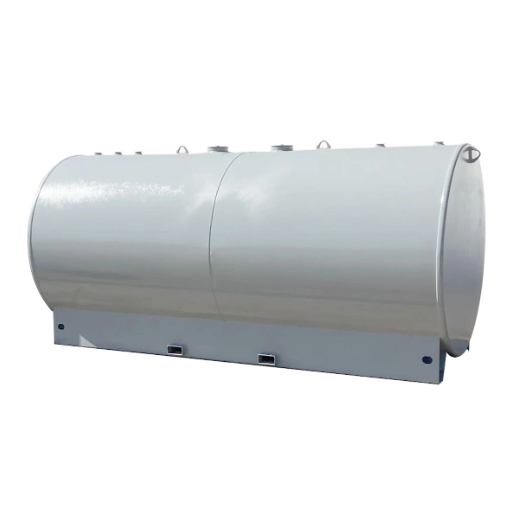
Thickness is the specification line buyers check most often and verify least often. A number on a quote is a promise. A measurement on a delivered tank is evidence.
| Component | Typical minimum | How it is verified | Reject if |
|---|---|---|---|
| Steel shell | 6 mm (a floor, not a target) | Ultrasonic, on the delivered tank | Nominal figure only, no readings |
| Steel heads | 6 mm | Ultrasonic | Same |
| FRP jacket | 4 mm | Ultrasonic at defined points | No measurement method stated |
| Interstitial gap | 3.5 mm, continuous | Design drawing plus factory check | Gap can close anywhere on the surface |
These figures come from our own SF double-layer tanks. They specify 6 mm to 12 mm carbon steel, FRP at 4 mm or greater, and an interstitial gap of at least 3.5 mm. Treat them as a worked example of what a compliant specification states, not as a universal rule. Larger diameters, deeper burial, and heavier axle loading all push the steel figure up.
Why 6 mm is a floor, not a target
Six millimetres is where the conversation starts. It is not where it ends. Thickness should rise with diameter, with burial depth, and with the load passing over the tank.
Tomas learned this on a depot job outside Kraków. The site sat under a turning circle for articulated lorries, and the winning quote specified 6 mm because 6 mm was the number in the tender.
The engineering review flagged the axle loading and pushed the shell to 8 mm. The revised quote came in 6% higher. The alternative was a tank designed for a car park, buried under a lorry route, with a thirty-year design life.
The lesson isn’t that 6 mm is wrong. It’s that a thickness without a load case is a number without a reason.
Thickness without a measurement method is a brochure claim
Ask how the figure will be verified. The honest answer involves ultrasonic measurement at defined points, and a record of the readings in the documentation package.
The weak answer is a nominal figure with no test method attached. A 6 mm plate that measures 5.4 mm after forming is a different tank, and the difference is invisible from the outside.
The Standards, Mapped to the Specification Line
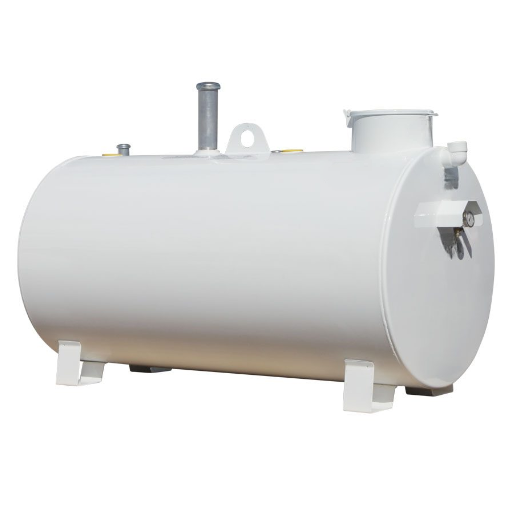
Three UL standards appear in every tank conversation, and they answer three different questions. Getting them straight takes five minutes and saves a procurement cycle.
UL 58, UL 1316 and UL 1746
UL 58 is the tank standard for steel underground tanks holding flammable and combustible liquids. It addresses the tank as a structure.
UL 1316 is the tank standard for fiberglass underground tanks, and it covers alcohol and alcohol-gasoline mixtures specifically. If you’re storing ethanol blends, that scope matters.
UL 1746 is the external corrosion protection standard for steel tanks. It certifies the protection system applied to the outside of a steel tank. It doesn’t certify the tank’s internal design or its structural adequacy, because those belong to UL 58.
The EPA’s list of underground storage tank standards describes all three, and the wording of the UL 1746 entry is the whole point. It covers protection systems, not tanks.
UL 1746 is organized in parts, and the common shorthand is wrong
Here is the part most specification sheets get wrong, including some written by people who should know better.
UL 1746 is divided into Parts, and the Part cited tells you which protection system was evaluated. Two independent readings of the standard’s scope clause give the same structure:
| Part | What it covers |
|---|---|
| Part 1 | Factory-installed impressed-current cathodic protection |
| Part 2 | Factory-assembled composite systems, FRP only |
| Part 3 | Factory-assembled jacketed systems: FRP, polyurethane, polyurea or HDPE |
| Part 4 | Factory-assembled coating systems, polyurethane only |
You’ll often see a different taxonomy quoted in the trade: Type I for coatings, Type II for jackets, Type III for composites. That shorthand uses the wrong word and a different mapping. The standard is organized in Parts, not Types, and the order is not the order people repeat.
This is worth knowing for one practical reason. “UL 1746 certified” is ambiguous until the Part is named. An SF tank should cite Part 2 or Part 3. A urethane-coated steel tank cites Part 4. A cathodically protected steel tank cites Part 1.
Those are different products with different maintenance obligations.
A useful cross-check: Modern Welding’s ACT-100-U tank cites UL 58, UL 1746 Part IV, and STI F961 together. That’s a urethane-coated steel tank, and the Part IV citation matches a coating system. When a supplier’s Part number and described construction disagree, you have found something worth asking about.
What “UL 1746 certified” doesn’t tell you
It doesn’t tell you the steel is 6 mm. It doesn’t tell you the welds were tested. It doesn’t tell you the tank suits your fuel.
It tells you the external protection system was evaluated to a recognized standard. That’s a real and useful fact. It’s simply narrower than most buyers assume.
This is also where the cathodic protection question resolves. A common claim is that UL 1746 certification proves a tank needs no cathodic protection. That’s true for a Part 2 or Part 3 listing, where a fiberglass layer is the corrosion barrier.
It isn’t true of the standard as a whole, because Part 1 is cathodic protection. Ask which Part first. Then answer the CP question.
Clauses Double Wall Fuel Tank Specifications Most Often Omit
Five lines go missing from specifications more than any others. Each one is cheap to write and expensive to discover later.
Working capacity versus nominal. Nominal is the geometric volume. Working is what you can actually dispense, and it’s smaller, because you can’t fill to the top or draw to the bottom.
A tank sold as 50,000 litres may deliver closer to 45,000 litres per cycle. Specify both, and require the fill ceiling that produces the working figure. The arithmetic is in our guide to fuel tank sizing calculations.
The resin system, not just “FRP.” Polyester, vinyl ester, and epoxy behave differently against aggressive fuels and in wet soil. Two jackets at the same thickness can differ by a decade of service life on resin choice alone. If the quote doesn’t name the resin, the price isn’t comparable to one that does.
Bond strength between steel and FRP. An SF tank works because the two layers stay bonded. If the bond fails, the jacket becomes a loose sleeve, water gets between the layers, and the interstitial space stops telling you anything useful. Most quotes don’t mention bond strength at all. Ask for it.
Interstitial gap continuity. The gap has to be continuous across the whole tank surface. If it pinches shut anywhere, a leak in that region can’t reach a sensor. The regulation is explicit that interstitial monitoring must detect a leak through the inner wall anywhere the tank normally holds product. A gap that closes therefore defeats the requirement, even though the drawing says “double wall.”
Spill and overfill provisions. These sit in 280.20(c), separate from the corrosion requirements, and they’re frequently left off tank specifications because they belong to the fill system. Overfill prevention must stop flow at no more than 95% full, or restrict flow and alarm at 90%. Specify which one you’re buying.
For the monitoring side of the interstitial requirement, interstitial monitoring methods for double-wall tanks compare the available approaches.
A Double Wall Fuel Tank Specification You Can Issue
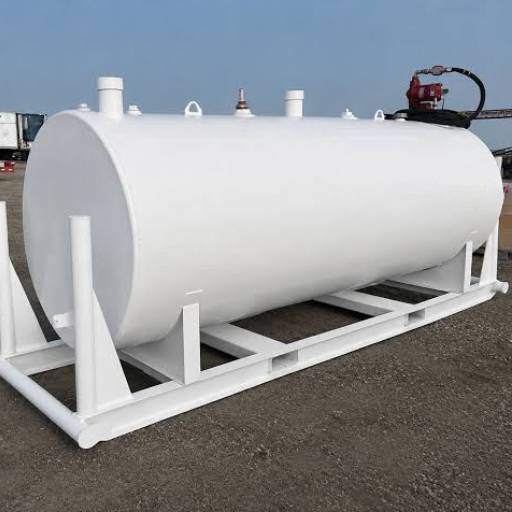
Twelve lines, values only. This is the short form you can paste into a tender or check a quote against. The procurement procedure behind it, including what documents to demand at each stage, is in the SF double-wall tank specification guide.
| # | Line | State |
|---|---|---|
| 1 | Construction | SF, FF or SS, written as letters and words |
| 2 | Capacity | Nominal and working, with fill ceiling |
| 3 | Dimensions | Diameter, length, envelope |
| 4 | Steel grade and thickness | Grade named, thickness as a minimum with method |
| 5 | FRP thickness and resin | Minimum with method, resin family named |
| 6 | Interstitial gap | Minimum dimension, continuity requirement |
| 7 | Tank standard | UL 58 or UL 1316, as applicable |
| 8 | Corrosion standard | UL 1746 with the Part number |
| 9 | Monitoring method | Vacuum, pressure or liquid |
| 10 | Spill and overfill | Which 280.20(c) option |
| 11 | Testing | Factory and site tests, with records |
| 12 | Documentation | Mill certificate, test records, UL file number |
Line 8 is the one to watch. A quote that says “UL 1746” and stops has given you a standard without telling you which protection system you’re buying. A quote that says “UL 1746 Part 3, FRP jacket, STI ACT-100” has told you what the tank is.
Elena runs procurement for a fuel distributor in Valencia and now scores bids on a single sheet. She marks each of the twelve lines as stated, vague, or blank. Her rule: three blanks is a no-bid, not a negotiation.
In her first cycle using it, she disqualified a supplier who turned out to be quoting a single-wall tank with a bund, described as “double wall” in the covering email. The sheet caught it in four minutes.
Frequently Asked Questions
Is a double wall fuel tank the same as an SF tank?
No. SF is one construction of a double-wall tank: steel inner wall, fiberglass outer. FF and SS are also double-wall. “Double wall” describes the geometry; SF, FF, and SS describe what the walls are made of.
What wall thickness should a double-wall fuel tank have?
For a buried steel shell, 6 mm is a reasonable floor, rising with diameter, burial depth, and axle loading. A fiberglass jacket is typically 4 mm or more. State every figure as a minimum with a measurement method, and require the readings in the documentation package.
Does a double wall tank need UL 1746?
Only if it has a steel wall in contact with soil. An SF tank needs it for the jacket. An SS tank needs a protection route for its outer steel wall. An FF tank doesn’t, because UL 1746 protects steel, and an FF tank has none in the ground.
What is the difference between SF, FF, and SS?
SF is steel inside, fiberglass outside. FF is fiberglass on both walls. SS is steel on both. The letters determine which standard the tank is certified to, and the standards aren’t interchangeable.
Do double wall tanks need cathodic protection?
It depends on the construction and, for a steel tank, on which Part of UL 1746 the listing cites. A fiberglass jacket is the corrosion barrier on an SF tank, so CP is normally not required. A steel outer wall, as on an SS tank, needs its own protection.
What capacity should I specify?
Specify nominal and working capacity together, and state the fill ceiling that produces the working figure. Working capacity is what you can actually dispense, and it’s always lower than the number on the brochure.
Conclusion
Double wall fuel tank specifications are a description of shape plus a set of values, and the shape is the part every supplier gets right. Four things decide what you actually receive:
- The construction, written as SF, FF, or SS, because the letters determine the certificate
- The thickness figures, stated as minimums with a measurement method attached
- The standard and its Part, because “UL 1746” without a Part number doesn’t identify the protection system
- The clauses buyers omit, particularly working capacity, resin system, and interstitial continuity
None of these are difficult to specify. They’re only easy to forget, which is why they turn up in disputes rather than tenders.
If you’re holding three quotes and want a second opinion before you commit, request a specification review, and we will mark each line as stated, vague, or missing. If you already know the construction you need, the SF double-layer tank specifications page lists the values our tanks are built to.
The tank will be in the ground for thirty years. The specification is the only document that will still be telling the truth about it.