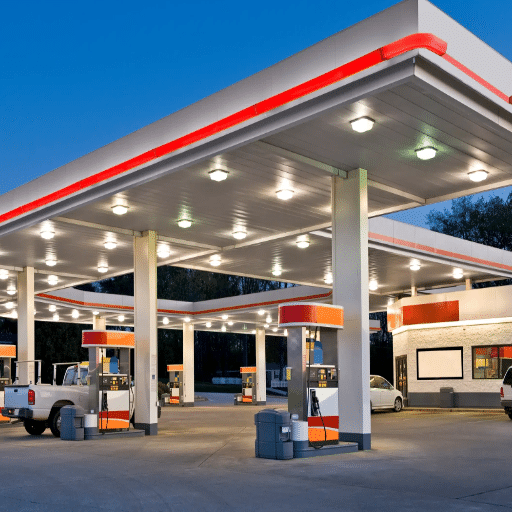
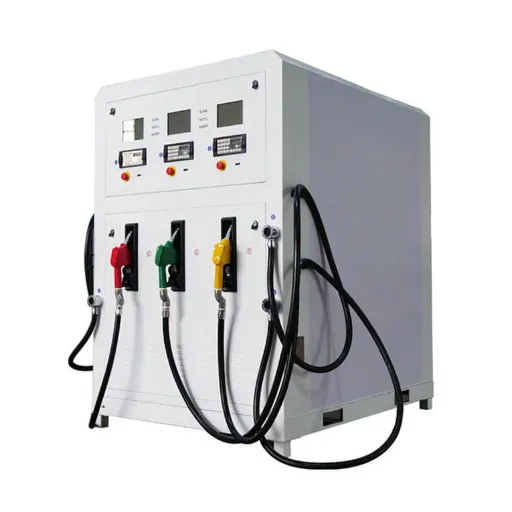
What do a fuel storage tank, a dispenser island, and an instrumentation cabinet have in common? Each one needs a completely different type of explosion-proof barrier material to keep your station safe.
Too many buyers treat “explosion-proof barrier” as a single product. In reality, a modern gas station uses three distinct barrier layers: honeycomb fill inside the tank, structural walls around high-risk zones, and electrical isolators behind the control panel. Choose the wrong one for the job, and you create a dangerous gap in protection. Choose wisely, and every component works together to prevent ignition, contain deflagration, and protect both personnel and equipment.
In this guide, you will learn exactly which explosion-proof barrier material belongs in each part of your station. We will cover HAN aluminum honeycomb for tank fill, steel and composite blast barriers for structural protection, and intrinsic safety isolators for electrical circuits. You will also see how regional standards affect material selection, what these solutions cost, and how to avoid the most common specification mistakes.
At Shandong Shengrui Intelligent Equipment Co., Ltd., we integrate all three barrier types into turnkey fueling systems. Our HAN barrier technology, certified structural components, and compliant electrical protection are engineered to work as a unified safety system.
What Are Explosion-Proof Barrier Materials?

Explosion-proof barrier materials are engineered substances or systems that prevent, contain, or isolate explosive events in hazardous environments. In gas station design, they serve as passive or active protection layers that stop flame propagation, absorb blast energy, or electrically isolate ignition sources from flammable vapors.
The Three Layers of Station Protection
Every fueling facility needs a layered approach because the threats differ by location. The three layers are:
- Tank-fill barriers — passive honeycomb mesh placed inside fuel storage tanks to suppress internal combustion
- Structural blast and fire barriers — walls, panels, or enclosures that absorb external blast overpressure and block radiant heat
- Electrical isolation barriers — devices that limit energy in instrument circuits so sparks cannot ignite surrounding atmospheres
Each layer addresses a different hazard. Tank-fill barriers manage internal deflagration. Structural barriers protect against external explosions and jet fires. Electrical barriers prevent the ignition source from forming in the first place.
Featured Snippet Definition
Explosion-proof barrier materials for gas stations include HAN aluminum honeycomb tank fill that suppresses internal flame propagation, structural steel or composite blast walls that absorb external overpressure, and intrinsic safety electrical isolators that limit spark energy in hazardous zone circuits.
How HAN Barrier Materials Work
HAN (High-porosity Aluminum Network) barrier material is the dominant explosion-proof barrier material for fuel storage tanks. It consists of an aluminum alloy honeycomb or polygonal cellular mesh inserted into the tank interior. Despite its simplicity, it delivers four critical safety effects simultaneously.
Flame Blocking and Compartmentalization
When a flame front enters a HAN-filled tank, the cellular structure breaks the combustion wave into thousands of tiny compartments. Each cell quenches the flame by cooling it below the ignition temperature. This compartmentalization prevents flame propagation from spreading through the vapor space.
Heat Absorption and Cooling
Aluminum has high thermal conductivity. The honeycomb walls absorb combustion heat rapidly and radiate it into the surrounding metal tank shell. Tests show that tanks filled with HAN aluminum honeycomb can withstand open flame exposure for one hour at 90 percent capacity without catastrophic overpressure.
Vapor Suppression and Static Dissipation
The mesh surface area disrupts vapor concentration buildup and promotes faster vapor recombination with liquid fuel. HAN materials reduce oil and gas concentration during unloading by approximately 43 percent. The conductive aluminum framework also dissipates static charge that might otherwise accumulate during fuel movement.
Liquid Sloshing and Surge Reduction
During transport or seismic events, HAN barrier material reduces liquid sloshing energy by roughly 40 times. This protects tank walls from fatigue and reduces structural stress on fittings and nozzles.
Mini-Story: The Missing Tank-Fill Barrier
A fleet depot in Southeast Asia installed reinforced blast walls around a skid-mounted station but left the storage tank unfilled. During a hot-fuel transfer on a humid afternoon, vapors ignited inside the tank. The resulting overpressure cracked the dispenser island foundation and damaged two fuel dispensers. The repair bill exceeded $40,000, and the station was offline for three weeks. If HAN barrier fill had been installed, the cellular structure would have contained the combustion for up to one hour and protected adjacent equipment from overpressure damage.
Want to see how HAN barrier technology integrates into complete station systems? Explore our explosion-proof gas station equipment guide for a full component overview.
Structural Blast and Fire Barrier Materials
While HAN material protects the inside of the tank, structural barriers protect everything around it. These systems absorb blast overpressure, block radiant heat, and maintain structural integrity during a fire event. If you need to know about fire prevention measures at gas stations, please read our article on Fire Suppression & Emergency Shut-Off.
Steel Composite Panels
Steel composite blast barriers combine corrugated steel sheets with refractory cores. Systems similar to the Durasteel design are rated for 0.3 to 2.7 bar blast overpressure and H120 hydrocarbon fire resistance. The steel shell provides impact resistance while the core insulates against heat transfer. These panels are commonly used around control rooms, safe-area boundaries, and high-value equipment clusters.
Reinforced Concrete and Precast Walls
Reinforced concrete remains a cost-effective barrier material for permanent installations. Precast concrete sections can achieve two-hour fire ratings and substantial blast resistance. The trade-off is weight and installation time. Concrete barriers are best suited for fixed stations where space and foundation capacity are not limiting factors.
Fiberglass and Modular Composite Barriers
Modular fiberglass-reinforced polymer barriers offer chemical resistance and lighter weight than steel or concrete. They are often used for temporary or relocatable protection around maintenance areas or construction zones. However, their blast ratings are generally lower than steel composite systems, so they are rarely used as primary protection for fuel storage.
Hydrocarbon Fire Ratings and Blast Overpressure
Structural barrier materials for gas stations must resist hydrocarbon pool fires, not just standard cellulosic fires. Hydrocarbon fire curves rise faster and reach higher temperatures than cellulosic curves. Look for H120 or higher ratings when specifying barrier materials for fueling environments. Well-designed blast walls can reduce explosion overpressure by 60 to 80 percent behind the wall.
Electrical and Active Isolation Barriers

The third layer of explosion-proof barrier materials targets electrical energy. In hazardous areas, even a small spark from an instrument loop can ignite flammable vapors. Electrical isolation barriers prevent that spark from forming.
Intrinsic Safety Barriers: Zener vs. Galvanic Isolators
Intrinsic Safety (IS) barriers limit voltage and current in instrument circuits to levels below ignition thresholds. There are two main types:
- Zener barriers use shunt diodes to divert excess energy to ground. They require a high-integrity ground connection and are less expensive per loop.
- Galvanic isolators use transformers or optocouplers to provide electrical separation between the safe area and the hazardous zone. They do not require a safety ground and offer better immunity to ground-loop noise.
IS barriers typically cost 150 to 500 per loop, depending on channel count and isolation type.
Flameproof Enclosures and Ex d Housings
For higher-power equipment, flameproof (Ex d) enclosures contain the explosion inside a heavy metal housing. These are not barriers in the traditional sense, but they function as physical barriers that prevent flame egress. Ex d junction boxes for gas station applications often range from 800 to 2,500 per enclosure.
Active Explosion Isolation
Active systems use chemical or mechanical isolation valves that detect pressure rise and close within milliseconds. These are more common in chemical processing and dust handling than in retail fueling, but they may be used in vapor recovery systems or bulk loading facilities.
If you are deciding between intrinsic safety and explosion-proof enclosures for your instrumentation, read our intrinsic safety vs. explosion-proof guide for a detailed comparison.
Explosion-Proof Barrier Materials in Gas Station Design
The key to effective protection is matching the right barrier material to the right station component. Here is how the three layers map to actual gas station locations.
Component Map: Which Barrier Goes Where
| Location | Barrier Type | Typical Material / System | Purpose |
|---|---|---|---|
| Fuel storage tank interior | Tank-fill barrier | HAN aluminum alloy honeycomb | Suppresses internal flame propagation |
| Dispenser island / pump canopy | Flameproof enclosure + structure | Ex d housings, steel framing | Contains electrical faults and physical impacts |
| Control room / safe area boundary | Blast/fire barrier | Steel composite or concrete wall | Protects personnel and control systems |
| Instrumentation circuits | Electrical isolation | IS barriers / galvanic isolators | Limits energy into hazardous zones |
| Vapor recovery / bulk loading | Active isolation | Mechanical isolation valves | Stops deflagration propagation in piping |
Skid-Mounted Stations: Integrated Barrier Approach
Skid-mounted fuel stations benefit from an integrated barrier strategy because every component ships pre-assembled. The tank arrives with HAN fill already installed. The dispenser island includes Ex d housings and steel framing. The control panel sits behind a steel composite barrier wall. Because all barriers are specified together, there are no compatibility gaps between layers.
For buyers planning a skid-mounted fuel station, specifying the barrier package at the design stage reduces installation risk and ensures that every layer is certified as a system.
Underground vs. Aboveground Tank Considerations
Underground storage tanks rely primarily on HAN barrier fill because the surrounding soil provides structural blast protection. Aboveground tanks need both HAN fill and external structural barriers. Aboveground installations in high-wind or seismic zones may also require reinforced concrete walls or steel composite shields to meet UL 2085 or equivalent protected tank standards.
Mini-Story: The Wrong Alloy Grade
A European integrator specified HAN barrier fill for a multi-fuel station serving both diesel and E85 ethanol blends. The supplier used a standard aluminum alloy not rated for ethanol-blended gasoline. Within two years, corrosion appeared at the cell junctions. The ATEX certificate was voided because the material no longer matched the tested configuration. Replacement cost exceeded $18,000, including re-certification and labor. The mistake was simple: the integrator treated all HAN barrier material as interchangeable, without checking alloy compatibility for the actual fuel chemistry.
Standards and Certifications by Region

Explosion-proof barrier materials must comply with regional standards that define testing methods, performance criteria, and installation requirements. Understanding which standard applies to your project prevents compliance gaps and certification delays.
North America
- UL 2085 — Protected Aboveground Tanks for Flammable and Combustible Liquids. Covers both fire resistance and ballistic impact for tank systems.
- UL 2245 — Standard for Below-Grade Vaults for Flammable Liquid Storage Tanks. Addresses vault construction and barrier requirements.
- NFPA 30A — Code for Motor Fuel Dispensing Facilities and Repair Garages. Defines hazardous area classification and protection requirements.
Europe
- ATEX Directive 2014/34/EU — Equipment and protective systems intended for use in potentially explosive atmospheres.
- EN 12285 — Workshop fabricated steel tanks. Specifies requirements for aboveground and underground tanks.
- EN 14015 — Specification for the design and manufacture of site-built vertical cylindrical flat-bottomed steel tanks.
International
- IECEx — International certification system for equipment used in explosive atmospheres.
- IEC 60079 series — Explosive atmospheres standards covering area classification, equipment protection levels, and installation.
- ISO 28300 — Venting of atmospheric and low-pressure storage tanks. Relevant for vapor management and pressure relief coordination with barrier systems.
China
- GB 50156 — Code for design and construction of automobile gasoline and gas filling stations.
- AQ/T 3001 — Safety technical code for refueling stations. Includes requirements for explosion-proof materials and installation.
- NEPSI / Ex-CCC — National certification for explosion-proof equipment used in China.
If you need help navigating the differences between ATEX, IECEx, and UL certification, our certification comparison guide breaks down each scheme for international projects.
Cost, Installation, and Maintenance Comparison
Barrier material costs vary widely by type, application scale, and certification level. Here are typical ranges to help you budget accurately.
HAN Material Cost and Filling Density
HAN aluminum honeycomb barrier fill is commonly priced in the range of 100 to 400 per cubic meter, depending on alloy grade, cell geometry, and order volume. Filling density typically runs 28 to 32 kg per cubic meter. Tank volume occupancy is limited to 0.8 percent in cylindrical tanks and 1.0 percent in spherical tanks. For a 30-cubic-meter tank, expect HAN fill costs of roughly 3,000 to 12,000.
Blast Wall Panel Cost and Installation Labor
Steel composite blast wall panels range from 800 to 2,500 per square meter installed, depending on fire rating, blast overpressure rating, and structural support requirements. Concrete barriers are less expensive per square meter for materials but carry higher labor and foundation costs.
Electrical Barrier Cost per Loop
Intrinsic safety barriers typically cost 150 to 500 per loop. Galvanic isolators sit at the higher end of that range. Ex d junction boxes and enclosures range from 800 to 2,500 per unit, depending on size and certification.
Maintenance Schedules and Inspection Points
- HAN fill: Inspect during tank internal inspection cycles (typically every 10 years for USTs). Look for corrosion, cell collapse, or contamination.
- Blast barriers: Inspect seals, coatings, and anchor bolts annually. Re-certify after any seismic event or near-miss incident.
- IS barriers: Verify barrier labels, grounding, and loop parameters during periodic electrical inspections.
Mini-Story: Integrated Barrier ROI
A Middle East logistics operator chose HAN-filled SF double-layer tanks plus modular steel blast walls for a new fleet station serving a construction hub. The skid-mounted design cut deployment time from six months to eight weeks compared with conventional construction. More importantly, the integrated barrier package qualified the station for a lower insurance risk tier. Annual premiums dropped 15 percent, saving approximately $8,500 per year. The operator recovered the additional barrier investment within three years through insurance savings alone, not counting the faster deployment schedule.
How to Choose the Right Explosion-Proof Barrier Material
Selecting the correct barrier material does not have to be complicated if you follow a systematic process.
Step 1: Identify the Hazard Zone
Use hazardous area classification to define whether you are dealing with Zone 0 (inside the tank), Zone 1 (dispenser island, vent areas), or Zone 2 (perimeter areas). Zone classification determines which barrier types are mandatory and which are optional.
For help classifying your site, refer to our hazardous area classification guide.
Step 2: Define the Threat
Match the barrier to the specific threat:
- Internal deflagration in the tank → HAN barrier fill
- External blast or jet fire → Structural blast wall
- Electrical spark in instrumentation → IS barrier or Ex d enclosure
Step 3: Match Material to Component
Use the component map in the previous section to assign the right material to each location. Do not substitute a structural wall where tank fill is needed, or vice versa.
Step 4: Verify Regional Standards
Confirm which certification scheme applies to your project. A station in Europe needs ATEX-compliant materials. A station in North America needs UL-listed components. An export project may need both.
Step 5: Budget for Lifecycle Maintenance
Include inspection, re-certification, and replacement costs in your total cost of ownership. The cheapest upfront option may become the most expensive if it requires frequent replacement or voids your insurance coverage.
Ready to specify barrier materials for your project? Contact our engineering team for a site-specific assessment that maps the right protection layers to your exact station design.
Common Mistakes to Avoid When Making Choices

Even experienced buyers make these errors when specifying explosion-proof barrier materials.
Confusing Tank-Fill HAN with Structural Blast Walls
A tank-fill barrier suppresses internal combustion. A blast wall absorbs external pressure. They are not interchangeable. Specifying one when you need the other leaves a dangerous protection gap.
Specifying the Wrong Alloy Grade for Fuel Chemistry
Not all aluminum alloys resist ethanol-blended fuels or biodiesel. Always verify alloy compatibility with your fuel chemistry before ordering HAN barrier fill.
Forgetting Electrical IS Barriers for Instrumentation
It is easy to focus on the big physical barriers and overlook the instrument loops. Every level sensor, pressure transducer, and temperature probe in a hazardous zone needs an IS barrier or Ex d housing.
Ignoring Volume Occupancy Limits in Tanks
HAN fill must not exceed the tank volume occupancy limits (0.8 percent for cylindrical tanks, 1.0 percent for spherical tanks). Overfilling reduces usable fuel capacity and may affect tank calibration.
Neglecting Seal and Coating Inspection on Blast Barriers
Blast barriers rely on fire-resistant coatings and sealed joints. Annual inspection is essential. A single failed seal can compromise the entire barrier rating during a fire event.
Frequently Asked Questions
What is HAN barrier material?
HAN (High-porosity Aluminum Network) barrier material is an aluminum honeycomb or cellular mesh installed inside fuel storage tanks. It suppresses internal flame propagation by compartmentalizing combustion, absorbing heat, and reducing vapor concentration.
What is the best explosion-proof barrier material for gas stations?
There is no single best material. The right choice depends on location and threat type. HAN aluminum honeycomb is best for tank interiors. Steel composite panels are best for structural blast protection. Intrinsic safety barriers are best for electrical instrumentation circuits.
Can HAN barrier material be used in aboveground tanks?
Yes. HAN barrier fill can be used in both aboveground and underground tanks. Aboveground tanks may also need external structural barriers such as steel composite walls or concrete shields to meet protected tank standards like UL 2085.
What is the difference between explosion-proof and intrinsic safety barriers?
Explosion-proof barriers contain the explosion inside a heavy enclosure. Intrinsic safety barriers prevent the spark from ever reaching ignition energy. IS barriers are preferred for low-power instrumentation. Ex d enclosures are used for higher-power equipment.
How often should explosion-proof barrier materials be inspected?
Blast barriers and electrical isolators should be inspected annually. HAN tank fill should be inspected during the tank’s internal inspection cycle, typically every 10 years for underground storage tanks or as required by local regulations.
Conclusion
Explosion-proof barrier materials are not a one-size-fits-all product. A safe gas station needs three distinct layers: HAN aluminum honeycomb inside the tank, structural steel or composite barriers around high-risk zones, and intrinsic safety isolators on every instrument circuit. Each layer addresses a different threat, and each must be specified to the correct standard for your region.
The most common and costly mistake is treating these layers as interchangeable. Tank fill cannot replace a blast wall. A blast wall cannot stop an electrical spark. Only by mapping each barrier to its specific component and hazard zone can you build a station that is truly protected from end to end.
Here are the key takeaways:
- Match the barrier material to the threat: internal deflagration, external blast, or electrical ignition
- HAN aluminum honeycomb dominates tank-fill applications due to its flame suppression and vapor control properties
- Structural barriers need hydrocarbon fire ratings (H120 or higher) and verified blast overpressure resistance
- Electrical IS barriers and Ex d housings are mandatory for instrumentation in hazardous zones
- Regional standards (UL, ATEX, IECEx, GB) determine which certifications your materials must carry
- Budget for lifecycle inspection and maintenance, not just upfront material cost
If you are planning a new station or upgrading an existing one, our engineering team can help you select and integrate the right explosion-proof barrier materials for your specific design. Contact us today for a site-specific assessment and certified barrier solutions that meet your regional requirements.