The delivery driver pulled the hose from his tanker at a rural station outside Columbus, Ohio, on a wet Tuesday morning in March 2024. He had delivered to this site forty times without incident. But that morning, the automatic shutoff valve on the underground tank failed. Diesel surged back through the fill pipe. Fifteen gallons splashed onto the concrete before the driver could react. The spill bucket beneath the fill cap caught every drop. The station owner, Greg, wiped it clean in twenty minutes. No report was filed. No inspector visited. No soil was contaminated. The spill containment system worked exactly as designed.
Most gas station owners never think about their spill containment systems until something goes wrong. That is a mistake. These systems are the first physical barrier between a fuel spill and the environment. When they fail, the consequences are immediate and expensive. When they work, most owners never know they were needed.
In this guide, you will learn exactly what spill containment systems are, how they differ from leak prevention, which EPA rules apply to your station, the four types of equipment you need to know, how to test and maintain them, and what compliance looks like in practice. You will also get a complete checklist you can use today.
Leakage is a very important safety incident for gas stations, and if you want to learn how to prevent it, please check out our article on Gas Station Leak Prevention.
What Are Spill Containment Systems?

Spill containment systems are the physical barriers and collection devices that capture fuel before it reaches soil, groundwater, or stormwater systems. They are your first line of defense against the most common type of fuel release at a gas station: the delivery spill.
Spill containment is not the same as leak prevention. Leak prevention focuses on the tank and piping itself, stopping fuel from escaping the primary containment. Spill containment handles fuel that has already escaped the delivery hose, fill pipe, or equipment connection. Both are essential. Neither replaces the other.
The EPA regulates spill containment through two separate rules. Underground storage tanks fall under 40 CFR Part 280, which mandates spill prevention equipment at every fill pipe. Aboveground oil storage triggers the Spill Prevention, Control, and Countermeasure Rule (40 CFR Part 112), commonly called the SPCC rule. Understanding which rule applies to your station is the first step toward compliance.
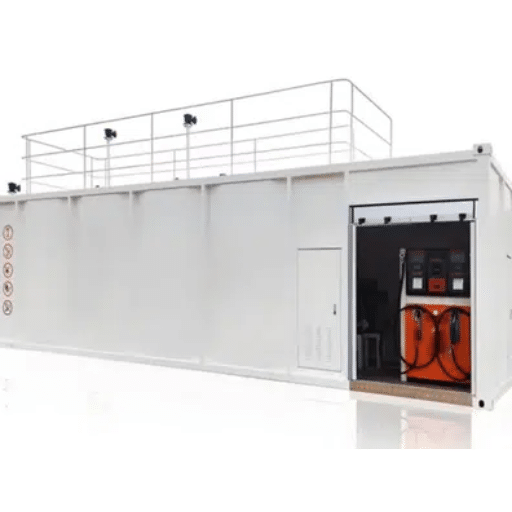
At Shandong Shengrui Intelligent Equipment Co., Ltd., we engineer fuel storage and gas station infrastructure with integrated spill containment, leak detection, and overfill protection. Every system is designed to work as a unified defense.
SPCC vs. UST Rules: Which One Applies to Your Station?
This is where many station owners get confused. Two EPA rules mention containment. They apply to different equipment. Getting them mixed up can lead to missing a requirement you actually have to meet.
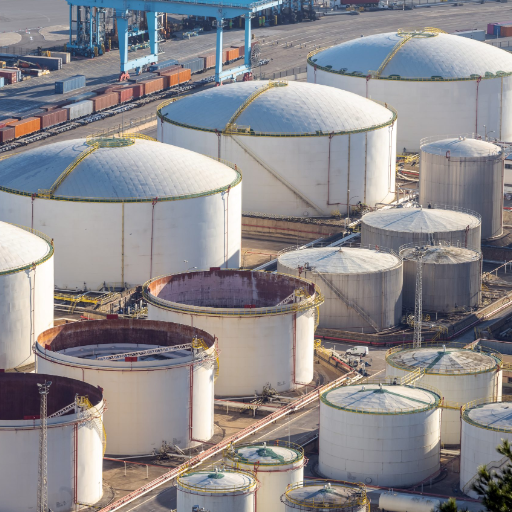
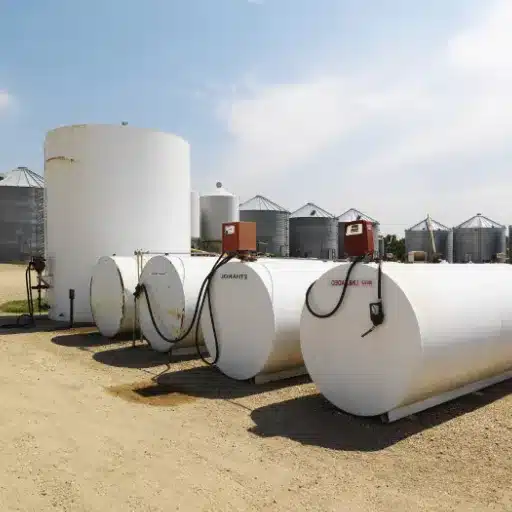
The SPCC Rule (40 CFR Part 112) applies to aboveground oil storage. If your facility stores more than 1,320 gallons of oil in aboveground containers, you must have a written SPCC plan and secondary containment sized to hold the full volume of your largest container plus freeboard for precipitation. Industry best practice sizes this at 110% of the largest tank.
The UST Rule (40 CFR Part 280) applies to underground storage tanks. It requires spill prevention equipment, overfill prevention equipment, and corrosion protection. Most retail gas stations are governed by the UST rule because their fuel is stored underground.
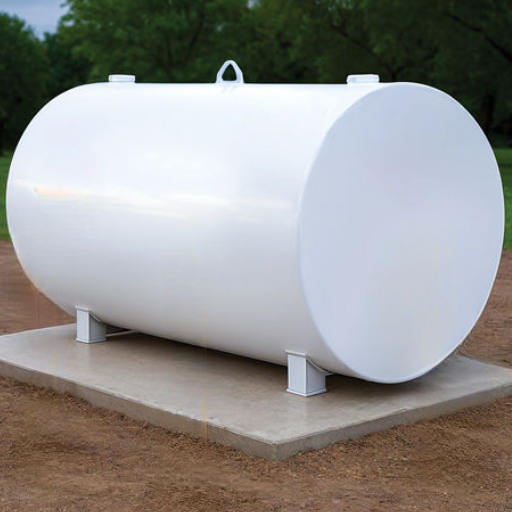
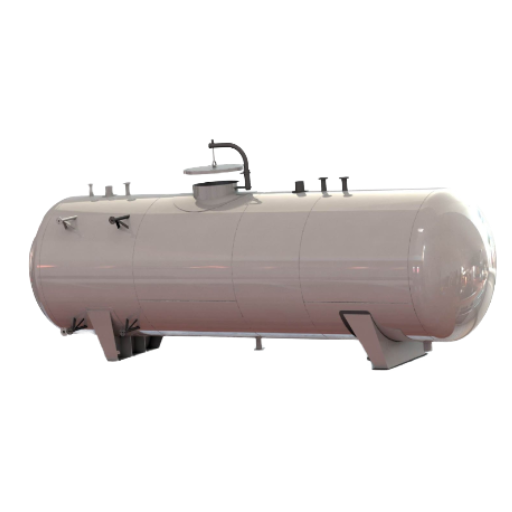
Here is the critical distinction. If you operate a typical gas station with underground gasoline and diesel tanks, you are probably exempt from the SPCC rule. But if you also store aboveground diesel for your backup generator, used motor oil, or heating oil, your aggregate aboveground capacity may exceed 1,320 gallons. That triggers SPCC compliance, including secondary containment for those aboveground tanks and any transfer areas connected to them.
If your station is subject to SPCC, then fuel dispensers and loading equipment connected to otherwise exempt USTs must still have appropriate containment or diversionary structures. The EPA does not mandate a specific gallon capacity for these transfer areas, but containment must be sized based on good engineering practice.
State rules can be stricter than federal minimums. Some states impose lower capacity thresholds, more frequent inspections, or specific design standards. Always verify requirements with your state environmental agency.
For the full regulatory framework governing tanks, piping, and inspections, see our UST compliance requirements guide.
The 4 Types of Gas Station Spill Containment Equipment

Every gas station with underground tanks uses at least one of these four equipment types. Understanding what each does and where it sits in your system is essential for inspection, testing, and maintenance.
1. Spill Buckets (Spill Catchment Basins)
Spill buckets are contained in sumps installed at fill and vapor recovery connection points. Their job is simple: catch drips, splashes, and backflow during fuel delivery. They typically range from 5 to 25 gallons in capacity, with lids 1 to 2 feet in diameter. Most UST systems are required to have spill buckets at each fill pipe where fuel is delivered. Some configurations install the spill bucket inside a larger sump for nested secondary containment.
2. Dispenser Sumps (Under-Dispenser Containment)
Dispenser sumps sit directly beneath the fuel dispenser. They provide access to piping, flex connectors, shear valves, and other equipment located under the pump island. Available as both contained and uncontained designs, dispenser sumps are the primary spill containment system for the equipment and connections under each pump. Under the 2015 UST rule, under-dispenser containment must be liquid-tight on its sides, bottom, and at any penetrations at all times.
3. Turbine Sumps (Tank-Top Sums)
Turbine sumps are installed directly above the underground storage tank. They house the submersible turbine pump head, piping, line leak detectors, interstitial monitoring devices, and wiring. Lids are generally 3 to 4 feet in diameter. Shapes vary: round, oval, square, or rectangular. These sumps are critical access points for equipment that moves fuel from the tank to the dispenser.
4. Transition Sumps (Intermediate Sumps)
Transition sumps provide access points along piping runs connecting tanks to dispensers. They are used to transition from above-ground to below-ground piping, or located at low spots, branches, and tees in the piping system. They are less common than turbine or dispenser sumps, with lid sizes similar to turbine sumps at 3 to 4 feet.
Spill Containment Equipment at a Glance
| Equipment Type | Purpose | Typical Capacity | Location | Testing Frequency |
|---|---|---|---|---|
| Spill Bucket | Catch delivery drips and backflow | 5-25 gallons | At fill/vapor recovery pipes | Every 3 years |
| Dispenser Sump | Contain under-dispenser leaks | Varies | Beneath each fuel dispenser | Every 3 years |
| Turbine Sump | Access pump and monitoring equipment | Varies | Directly above UST | Every 3 years |
| Transition Sump | Access along piping runs | Varies | Between tank and dispenser | Every 3 years |
EPA Testing Requirements for Spill Containment Equipment
Installing the equipment is not enough. The EPA requires formal integrity testing on a strict schedule. Missing a test cycle is one of the most common violations cited during inspections.
Single-Walled Equipment Testing (Every 3 Years)
Single-walled containment sumps, spill buckets, and under-dispenser containment must be tested for liquid-tightness at least once every three years. The federal testing deadline for the initial three-year test was October 13, 2018, so all existing equipment should have completed at least one test cycle by now.
Double-Walled Equipment Alternative
Double-walled sumps and spill buckets offer an alternative to triennial testing. You may either test them every three years, or equip them with a continuous integrity monitor. For double-walled containment sumps, the monitor must be checked at least once a year. For double-walled spill buckets, the monitor must be checked at least once a month.
Approved Testing Methods
The EPA recognizes several methods for demonstrating integrity:
- Hydrostatic testing fills the sump with liquid and monitors for level drop.
- Vacuum testing applies negative pressure and monitors for pressure loss.
- Pressure testing applies positive pressure and monitors for pressure loss.
- Low-liquid-level hydrostatic testing is an EPA-approved alternative that reduces water use.
- Interstitial monitoring is used for double-walled systems to detect breaches in either wall.
Recognized procedures include PEI RP 1200 and manufacturer-specific protocols. It is important to note that ASTM E3225 covers visual examination of sumps, but visual inspection alone does not satisfy the regulatory integrity testing requirement. A sump can look fine and still fail a pressure or vacuum test.
Want to understand how leak detection complements containment? Read our complete guide to fuel storage tank leak prevention for a full breakdown of detection methods and prevention strategies.
How to Inspect and Maintain Spill Containment Equipment

Testing is periodic. Inspection is continuous. The owners who stay out of trouble are the ones who treat monthly inspections as non-negotiable.
Monthly Walkthrough Inspections
Every 30 days, visually inspect all spill buckets, containment sumps, and under-dispenser containment. Look for cracks, distortion, water or fuel accumulation, debris, and unsealed conduit openings. Verify that leak detection sensors are in place and functional. Document the inspection with the date, inspector name, and findings.
Annual Inspections
The annual inspection is more thorough. Function-test line leak detectors and sump sensors. Visually inspect all containment sumps for structural integrity. Check that entry boots and seals are intact and compatible with the stored fuel. Verify that drain valves are closed and functional. Review the prior twelve months of monthly records.
After Significant Rainfall
Outdoor containment systems must account for precipitation. After heavy rain, inspect sumps for water accumulation. Remove any water that shows an oil sheen as hazardous waste. Do not drain contaminated water to storm systems.
Common Maintenance Tasks
Remove debris and liquid from spill buckets after every delivery or at least monthly. Replace worn entry boots and seals before they leak. Confirm drain valves remain closed except when actively draining inspected, clean water. Repair cracks or distortions immediately. Any equipment that fails inspection must be repaired or replaced within 30 days.
Maria Chen operated a four-pump station in suburban Houston for nine years. Her spill buckets were tested on schedule in 2021 and passed. But between 2021 and 2024, she never looked inside them. When the state inspector arrived in May 2024, he found two spill buckets filled with stagnant water, leaves, and a cracked entry boot that had been leaking vapor for months. Maria received a notice of violation, a $12,000 fine, and a 30-day corrective action order. Her testing was current. Her maintenance was not.
If you want to use Entry Boots to prevent Gas Station Leak, please check out our article on Gas Station Entry Boots.
The True Cost of Spill Containment
Spill containment equipment is not free. But the cost of neglecting it is far higher.
A standard spill bucket costs $200 to $600, depending on size and material. A dispenser sump ranges from $400 to $1,200. Turbine sumps are larger and run $800 to $2,500. Installation adds $500 to $2,000 per unit, depending on site conditions and whether it is new construction or a retrofit.
Triennial testing costs $300 to $800 per sump or bucket for hydrostatic or vacuum testing. Double-walled equipment costs more upfront but reduces long-term testing expense if you use continuous monitoring.
Now compare that to the alternative. A single delivery spill that bypasses a failed spill bucket can contaminate soil immediately. A site assessment starts around $15,000. Soil remediation runs $125,000 on average. If groundwater is affected, costs routinely exceed $500,000. EPA civil penalties can reach $25,000 per tank per day per violation. State penalties add thousands more.
The math is simple. A $400 spill bucket and a $500 test every three years protect against a $125,000 cleanup. That is not just compliance. It is business survival.
Building a Spill Containment Compliance Program
A collection of equipment is not a program. A program is a system where every element reinforces the others. Here is how to build one.
Start with the layered defense concept. Your primary layer is the tank and piping itself, designed not to leak. Your secondary layer is the spill bucket and containment sump that catch fuel if it escapes the primary system. Your tertiary layer is the monitoring and testing program that tells you when a barrier has failed. Your emergency layer is the response plan that activates when an alarm triggers.
Staff training is the most overlooked element. Every employee who works near the tank area should know what a spill bucket is, how to check it for liquid, and what to do if they find fuel where it should not be. A delivery driver who notices a full spill bucket and reports it can prevent a violation. An employee who ignores it creates liability.
Documentation protects you during audits. Keep records of every inspection, test, repair, and alarm response. The EPA requires one-year retention for walkthrough records and three-year retention for testing records. Some states require longer. Keep digital copies backed up off-site.
SPCC plan requirements apply only if your aboveground oil storage exceeds 1,320 gallons. If triggered, you must maintain a written plan reviewed and updated annually, with a professional engineer certification if your facility meets certain thresholds.
Emergency response planning ensures that a detected spill does not become a disaster. Your plan should include immediate shutdown procedures, notification chains, spill kits staged at each containment point, and contact information for certified cleanup contractors.
For details on overfill prevention equipment that works alongside your containment system, see our overfill prevention devices guide.
Spill Containment Systems Checklist

Use this checklist to audit your spill containment program.
Daily / Weekly
- Check spill buckets for liquid or debris after deliveries
- Verify dispenser sumps are dry and free of fuel odors
- Confirm drain valves on containment are closed
- Check that sump lids are secure and undamaged
Monthly
- Conduct formal 30-day walkthrough inspection of all containment
- Inspect spill buckets for cracks, distortion, and debris
- Check entry boots and seals for wear or incompatibility
- Verify leak detection sensors are in place and functional
- Document inspection with date, inspector name, and findings
Annual
- Function-test all sump sensors and line leak detectors
- Visually inspect all containment sumps for structural integrity
- Review prior 12 months of monthly inspection records
- Verify all materials are compatible with stored fuel (40 CFR 280.32(a))
- Update emergency response procedures if needed
Triennial
- Test single-walled sumps and spill buckets for liquid tightness
- Test double-walled equipment OR verify continuous monitor function
- Retest any repaired or replaced equipment within 30 days
- Conduct a comprehensive program audit and documentation review
SPCC Plan Items (If Applicable)
- Verify the aboveground oil storage aggregate is below or above 1,320 gallons
- Maintain a written SPCC plan reviewed annually
- Ensure secondary containment is sized to 110% of the largest container
- Document monthly containment integrity inspections
- Stage spill response supplies near transfer areas
Frequently Asked Questions About Spill Containment Systems
What are the EPA requirements for secondary containment?
For UST systems, 40 CFR Part 280 requires spill prevention equipment at every fill pipe and containment sumps that are liquid-tight. For SPCC-covered aboveground storage, secondary containment must hold 100% of the largest container plus freeboard, with 110% as industry best practice.
How often must containment sumps be tested?
Single-walled containment sumps must be tested for liquid tightness every three years. Double-walled sumps may use continuous interstitial monitoring checked annually instead of triennial testing.
What is the difference between a spill bucket and a containment sump?
A spill bucket is a small catchment basin, typically 5 to 25 gallons, installed at fill pipes to catch delivery drips. A containment sump is a larger structure beneath dispensers or above tanks that houses equipment and contains larger leaks.
Do gas stations need an SPCC plan?
Most retail gas stations are exempt from SPCC because their fuel is stored in USTs. SPCC applies only if the aggregate aboveground oil storage exceeds 1,320 gallons.
How much does a containment sump cost?
Dispenser sumps range from 400 to 1,200. Turbine sumps run 800 to 2,500. Installation adds 500 to 2,000 per unit. Triennial testing costs 300 to 800 per sump.
Conclusion
Spill containment systems are the silent guardians of your gas station. They do not announce their presence. They do not improve your sales. But when a delivery goes wrong, a fitting corrodes, or a seal fails, they are the difference between a twenty-minute cleanup and a six-figure disaster.
Three principles will keep your containment program solid. Install the right equipment for every fill point, dispenser, and tank access. Inspect and maintain it every single month without exception. Test it on schedule and keep records that prove your diligence.
Compliance is not a mystery. It is a discipline. The stations that master it avoid fines, protect their licenses, and operate with confidence. The stations that neglect it learn the hard way that a $400 spill bucket is the best investment they never knew they made.
James Okonkwo runs a fleet depot in Lagos with four underground diesel tanks. When he built the station in 2020, he installed double-walled spill buckets and dispenser sumps with continuous interstitial monitoring. He trained his operators to check monitors monthly and document every reading. In five years, his system detected two minor breaches early, both repaired for under $1,000. He has never had a release, never paid a fine, and never lost a day of operation to environmental enforcement. His inspectors use his station as a reference site. His containment program did not just protect his soil. It protected his entire business.
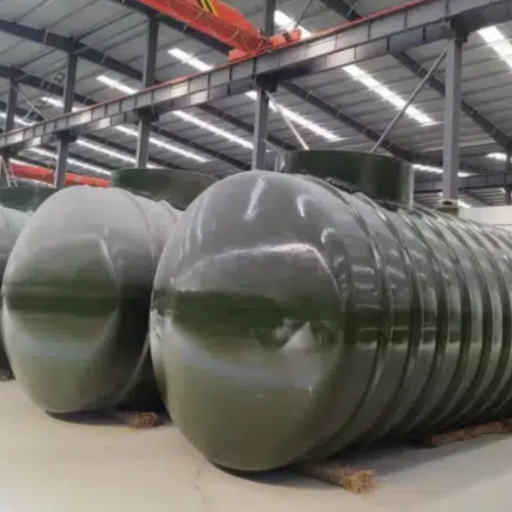
At Shandong Shengrui Intelligent Equipment Co., Ltd., we engineer fuel storage and gas station infrastructure with integrated spill containment, leak detection, and overfill protection. Our SF double-layer underground tanks, certified dispenser sumps, and explosion-proof safety components are designed for compliance from day one. Every system meets international standards, including UL, ASME, ISO, and ATEX certifications, making them suitable for projects worldwide.
Ready to build a compliant spill containment system? Contact our engineering team for a site-specific assessment and custom equipment specification that matches your fuel types, regulatory environment, and operational requirements.