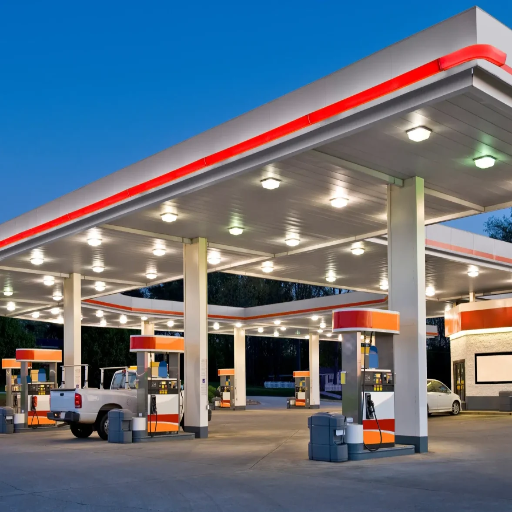
What if the dispenser that looks like a bargain costs you three times its price before it ever pumps a litre? Every week, buyers discover that a low unit price means nothing when fuel dispensers from China arrive without the right certifications, the wrong voltage, or spare parts that take two months to source.
You already know that China is the world’s largest manufacturing hub for fuel dispensers. You also know that choosing the right unit means balancing flow rate, accuracy, explosion protection, and integration with your station systems. In this guide, you’ll learn how the China fuel dispenser market is structured, which manufacturers lead in specific use cases, and what certifications your destination market demands. You’ll also get a step-by-step sourcing process that reduces customs delays and downtime risk.
Whether you’re building a retail station, equipping a fleet depot, or adding fueling to a remote site, this article will help you buy smarter.
Looking for a matched station system? Explore our complete fuel dispensers guide to understand how dispensers, tanks, and safety equipment work together.
The China Fuel Dispenser Market in 2026

China’s fuel dispenser industry is not a single market. It is a network of manufacturing clusters, each with its own strengths, customer base, and export specializations. Understanding these clusters is the first step in finding a supplier that matches your project.
The global fuel dispenser market was valued at approximately 2.78 billion to 3.49 billion in 2025, with forecasts for 2026 ranging from 2.94 billion to 3.72 billion depending on the research scope. Asia-Pacific accounts for roughly 46% of global revenue and is the fastest-growing region, with a projected CAGR of 6.3% to 8.6% through the mid-2020s. Within that region, China is the dominant producer and consumer of fuel dispensers. A separate China-focused estimate projects the country’s self-service fuel dispenser segment alone to grow from 5.2 billion in 2024 to 9.0 billion by 2033, at a CAGR of about 7.1%.
When Omar, a procurement manager based in Nairobi, compared quotes for a new retail station in early 2025, he noticed that suppliers in Zhengzhou offered lower unit prices while suppliers in Wenzhou quoted slightly more but included ATEX documentation and faster sample turnaround. He chose the Wenzhou supplier for his EU-funded project. The decision saved him six weeks of customs back-and-forth and a $4,200 certificate-verification delay.
Three manufacturing regions dominate the Chinese fuel dispenser landscape:
- Zhengzhou, Henan Province. Home to Censtar, Eaglestar, and Welldone. This cluster is known for high-volume production, strong domestic market share, and bundled turnkey solutions.
- Wenzhou, Zhejiang Province. Home to Bluesky, Lanfeng, Datian, and many precision component suppliers. This cluster specializes in export engineering, POS integration, and fast customization.
- Beijing. Home to Sanki and several smart-station technology firms. This cluster focuses on AIoT integration, cloud-connected dispensers, and large state-owned oil company supply.
The right region depends on your priorities. Zhengzhou wins on scale and package pricing. Wenzhou wins on export agility and integration detail. Beijing wins on smart-station technology.
Why Source Fuel Dispensers from China?
Chinese manufacturers offer three advantages that are hard to match elsewhere.
Cost efficiency with broad configuration options. A standard retail dispenser from a certified Chinese manufacturer typically ranges from 600 to 3,500 per unit, depending on nozzle count, flow rate, and smart features. Multi-nozzle fleet models range from 1,500 to 5,500, and high-flow or heavy-duty units can reach $8,000 or more. Many suppliers accept single-unit orders for testing, which lowers the barrier for first-time buyers.
OEM and ODM flexibility. Most established manufacturers offer custom branding, panel design, nozzle configurations, voltage settings, and POS protocol interfaces. Common protocol support includes Tatsuno, Gilbarco, Wayne, Tokheim, Bennett, IFSF, PTS, ITL, and PT. This matters if you are replacing older dispensers and need compatibility with your existing management system.
Export certification support. Reputable manufacturers hold or can arrange OIML R117, ATEX, IECEx, CE, MID, UL, ISO 9001, and country-specific approvals such as SONCAP, SASO, and Certificates of Conformity for African markets. That doesn’t mean every listing is certified. It means the ecosystem has the capability; your job is to verify it.
The caveat is equally important. China’s manufacturing base is deep, but it is also noisy. Trading companies, uncertified workshops, and copied-brand products sit alongside genuine manufacturers. The rest of this guide will help you tell the difference.
Top China Fuel Dispenser Manufacturers by Use Case
No single manufacturer is best for every project. The right choice depends on whether you need scale, export experience, customization, or smart-station technology.
Censtar: Scale and Domestic Dominance
Censtar Science & Technology Corp., founded in 1992 and headquartered in Zhengzhou, is widely cited as the largest fuel dispenser manufacturer in China. The company claims an annual production capacity of around 100,000 nozzles and an estimated 40% to 41.8% domestic market share. Its dispensers are supplied to Sinopec and PetroChina, and the company has participated in drafting Chinese national standards for fuel dispenser explosion protection.
Censtar’s strengths are volume, state-project credibility, and a wide product range. It makes dispensers for gasoline, diesel, CNG, LNG, LPG, hydrogen, and AdBlue. Its smart CS series and multi-product dispensers are common choices for large retail chains and extreme-climate deployments.
Best for: high-volume retail networks, state-oil projects, and buyers who need a proven domestic brand.
Bluesky: Export Engineering and Payment Integration
Bluesky Energy Technology, founded in 1997 and based in Wenzhou, operates a 50,000+ square meter factory and exports to more than 100 countries. The company specializes in Tatsuno-compatible engineering, RFID and NFC fleet-card support, and POS integration with systems like Gasnet, Wayne, and Gilbarco.
Bluesky dispensers are often chosen for high-throughput stations and fleet depots. Standard retail flow rates run 5 to 70 L/min, with high-flow fleet models reaching up to 120 L/min. Accuracy is typically around ±0.30%, and noise levels are rated at ≤70 dB(A).
Best for: export buyers who need fast customization, strong documentation, and integrated payment systems.
Eaglestar: Customization and Turnkey Bundles
Henan Eaglestar Energy Technology, founded in 2005 in Zhengzhou, offers a broad product line under model families such as EG1, EG3, EG5, EG6, EG7, and EGX. The company emphasizes OEM and ODM services, mobile and container station integration, and cooperation with Fortune 500 clients. Pricing ranges from roughly 400 for mini dispensers to 5,300 for multi-nozzle station-grade units.
Best for: custom projects, first-time buyers who need bundled equipment, and remote or temporary fueling sites.
Sanki: Smart Station Technology
Beijing Sanki Petroleum Technology positions itself as a high-tech manufacturer with strong AIoT integration. Its Skyline series features cloud-connected touchscreens, integrated payment, and unified station management platforms. Sanki is also a “Little Giant” enterprise with EU MID and OIML certifications.
Best for: tech-forward stations, multi-energy sites, and operators who want a single platform for dispensers, tanks, and payment systems.
Well done, Lanfeng, and Datian: Niche Specialists
- WellDone Group emphasizes multi-energy solutions, including hydrogen, LNG, CNG, and EV charging alongside traditional fuel. It holds extensive CE, ATEX, and PED certifications and is a strong fit for European market entry.
- Zhejiang Lanfeng Machine offers cost-effective, export-oriented dispensers with a long-standing presence in Wenzhou.
- Zhejiang Datian Machine, operating since 1985, has supplied components to major international brands such as Tokheim, Gilbarco, and Bennett.
| Manufacturer | Hub | Key Strength | Best For |
|---|---|---|---|
| Censtar | Zhengzhou | Scale, state projects | Large retail, extreme climates |
| Bluesky | Wenzhou | Export, POS integration | High-volume, fleet |
| Eaglestar | Zhengzhou | OEM, bundled solutions | Custom/remote projects |
| Sanki | Beijing | Smart/AIoT | Tech-forward stations |
| Welldone | Zhengzhou | Multi-energy, EU certs | Europe, energy transition |
Types of Fuel Dispensers Available from China

Chinese manufacturers produce dispensers for almost every station type. Matching the right configuration to your operation prevents overspending and underperformance.
Single-nozzle dispensers are the simplest option, often used for small retail sites, fleets, or mobile stations. Double and multi-nozzle dispensers serve high-traffic islands by allowing simultaneous fueling from one cabinet. Multi-product dispensers combine gasoline, diesel, and sometimes alternative fuels in one unit.
Retail dispensers typically deliver 5 to 50 L/min, which is sufficient for passenger vehicles. Fleet and truck-stop dispensers run 70 to 120 L/min to reduce queue times for commercial vehicles. High-flow mining or industrial dispensers prioritize durability and dust sealing over speed. To learn more about high-flow fuel dispensers, please click to view our guide about high-flow fuel dispensers.
Electronic dispensers use digital meters, LCDs, and programmable controllers. Mechanical dispensers remain available for low-cost or remote deployments where electronics are hard to maintain.
Smart/IoT dispensers add remote monitoring, predictive maintenance alerts, mobile payment, and integration with fuel management systems. Mobile and container dispensers are pre-mounted on skids or inside containers for remote, temporary, or emergency fueling.
Calibration is very important for a fuel dispenser, you can read our article about fuel dispenser calibration.
A logistics contractor in Peru learned this distinction the hard way. She bought standard retail dispensers for a mining support depot. The units worked, but queues at shift change stretched to 45 minutes. After switching to 80 L/min high-flow models from a Wenzhou manufacturer, average wait time dropped to under 10 minutes, and the depot recovered its upgrade cost in fuel-throughput gains within 14 months.
Certifications and Standards for China Fuel Dispensers
Certifications are where many sourcing projects succeed or fail. A missing ATEX certificate, an expired OIML scope, or a CE mark from an unrecognized body can block customs, void insurance, or prevent commissioning.
OIML R117: Metrological Accuracy
OIML R117 is the international legal metrology standard for liquid measuring systems, including fuel dispensers. The updated OIML R117-1:2019 defines accuracy classes. Class 0.5 (±0.5%) is the typical requirement for retail fuel dispensers. Higher classes apply to custody transfer or industrial uses.
Verify the certificate covers the exact model and flow range you are buying.
ATEX and IECEx: Explosion Protection
ATEX refers to EU Directive 2014/34/EU for equipment used in potentially explosive atmospheres. IECEx is the international equivalent and is widely accepted in the Middle East, Africa, and Asia. Fuel dispensers need Zone 1 or Zone 2 protection for motors, enclosures, cable glands, and control circuits.
CE and MID: European Market Entry
CE marking confirms general product safety for the EU market. MID (Measuring Instruments Directive) is required for legal metrology in EU fuel retail. Many buyers confuse CE with MID; they are not interchangeable.
UL and PEI: North America
For the United States and Canada, look for UL electrical and fire-safety listing and PEI (Petroleum Equipment Institute) construction and installation compliance.
ISO 9001 and Chinese Standards
ISO 9001 is a baseline quality-management certification. Chinese manufacturers also reference GB/T 9081 (fuel dispenser standard) and JJG 443-2015 (calibration regulation). CNEX is the domestic Chinese explosion-proof certification.
Country-Specific Approvals
Different markets require additional documentation:
- Nigeria: SONCAP
- Kenya, Uganda, Tanzania: Certificate of Conformity (CoC)
- Saudi Arabia: SASO
- Russia / Eurasian Customs Union: CU-TR / EAC
- Southeast Asia: Varies by country; OIML and IECEx are often accepted
Always verify certificates through official databases such as IECEx.org or the issuing notified body’s website. Do not rely on supplier PDFs alone.
How to Source Fuel Dispensers from China: A Step-by-Step Process

A structured sourcing process separates reliable suppliers from risky ones.
1. Define Your Specifications
Before contacting suppliers, document:
- Fuel types: gasoline, diesel, ethanol blends, AdBlue, LPG, CNG, LNG, hydrogen
- Number of nozzles and products per dispenser
- Required flow rate for your peak traffic
- Voltage and frequency for the destination country
- Display language, receipt printer, and customer-facing features
- POS protocol and management system integration
- Environmental conditions: temperature range, humidity, dust, altitude
2. Shortlist Certified Manufacturers
Start with manufacturers that have a verified export history in your region. Check their website, Made-in-China or Alibaba profiles, and request a company registration certificate. Look for ISO 9001 and the specific product certifications your market requires.
3. Request a Factory Video or Third-Party Audit
A real manufacturer will provide factory video, live virtual tours, or third-party audit reports from SGS, TÜV, or Bureau Veritas. Pay attention to CNC machining areas, flow meter calibration rigs, assembly lines, and testing equipment.
4. Verify Certificates Independently
Cross-check ATEX, IECEx, OIML, CE, and MID certificates against official databases. Confirm the certificate scope matches the model number, voltage, and fuel type you are ordering.
5. Compare Quotations on Total Cost
A quotation should include:
- Unit price with detailed configuration
- Spare parts list and pricing for the first order
- Warranty terms, typically 1 to 2 years on electronics
- Lead time and sample availability
- Payment terms, commonly 30% deposit and 70% before shipment
- Packing dimensions and shipping options
- After-sales response time and support channels
When a distributor in Lagos compared two quotes in 2024, the cheaper option excluded filters, seals, nozzle boots, and spare display boards. By the time he sourced those separately, the total cost exceeded the higher quote by 18%. He now asks every supplier for a first-order spare-parts list before signing.
6. Arrange Pre-Shipment Inspection
For bulk orders, hire a third-party inspector to check build quality, electrical configuration, meter assembly, and packing before the goods leave the factory. This step typically costs 300 to 800 and can prevent far more expensive disputes.
7. Manage Shipping and Customs
Confirm all export documents are in order: commercial invoice, packing list, bill of lading, certificate of origin, and required product certificates. Work with a customs broker who understands fuel equipment classification and your destination country’s import rules.
If you don’t know how to choose the fuel dispenser that meets your needs, please read our article about How to Choose a Fuel Dispenser.
Pricing and Lead Times from China
Understanding typical pricing helps you spot outliers.
| Dispenser Type | Typical Price Range (USD) | Notes |
|---|---|---|
| Manual / mini dispenser | 400–1,100 | Suitable for small fleets or testing |
| Standard retail dispenser | 600–3,500 | Single or double nozzle, electronic |
| Multi-nozzle / smart dispenser | 1,500–5,500 | POS integration, larger displays |
| High-flow fleet dispenser | 2,500–8,000+ | 70–120 L/min, heavy-duty construction |
| Mobile / skid-mounted station | 10,000–80,000 | Includes tank, pump, dispenser, and safety systems |
Lead times vary by manufacturer and order size:
- Sample orders: 15 to 30 days
- Standard production: 20 to 45 days
- Bulk or customized orders: 45 to 90 days
Shipping a 40-foot container from China to Africa, the Middle East, or Southeast Asia typically adds 3,000 to 8,000, depending on the port and season. Customs clearance and local duties are additional. If you have your own budget plan, please read our article on Fuel Dispenser Cost and TCO.
Red Flags: When to Walk Away

Some warning signs should end a supplier conversation immediately.
- A price 50% or more below the market average with no clear explanation
- Refusal to provide factory video, audit access, or reference projects
- Certificates from unrecognized testing bodies or expired scopes
- No ISO 9001 certification or unwillingness to share it
- No export experience in your region
- Evasive answers about flow meter calibration, warranty, or spare parts
- Pressure to pay 100% upfront before production begins
A buyer in Manila once received a quote for ATEX-certified dispensers that was 60% below market. The supplier sent a certificate that looked legitimate, but the notified body name did not appear on the EU NANDO database. The buyer walked away and later learned the same supplier had shipped non-explosion-proof cabinets to another customer in Southeast Asia.
FAQ: China Fuel Dispenser Sourcing
Who is the largest fuel dispenser manufacturer in China?
Censtar Science & Technology Corp. is widely cited as the largest domestic manufacturer, with an estimated 40% market share in China and a production capacity of around 100,000 nozzles per year.
What certifications does a fuel dispenser from China need?
The required certifications depend on the destination market. Common requirements include OIML R117 for metrology, ATEX or IECEx for explosion protection, CE for the EU, MID for EU retail metrology, UL and PEI for North America, and country-specific approvals such as SONCAP, SASO, or CoC.
How much does a fuel dispenser from China cost?
Standard retail dispensers typically range from 600 to 3,500. Multi-nozzle or smart models range from 1,500 to 5,500, and high-flow fleet models can exceed 8,000. Mobile or skid-mounted stations with dispensers range from $10,000 to $80,000.
How long does it take to ship fuel dispensers from China?
Sample orders usually take 15 to 30 days. Standard production takes 20 to 45 days, and bulk or customized orders may take 45 to 90 days. Sea freight adds two to eight weeks, depending on the destination.
Can I get a custom-branded or OEM fuel dispenser from China?
Yes. Most established manufacturers offer OEM and ODM services, including custom branding, panel design, nozzle configuration, voltage settings, and POS protocol support.
Are China fuel dispensers compatible with Gilbarco, Tatsuno, or Wayne systems?
Many Chinese manufacturers produce dispensers compatible with major protocols and components from Gilbarco, Tatsuno, Wayne, Tokheim, and Bennett. Always confirm the exact protocol and interface before ordering.
Conclusion
The China fuel dispenser market offers competitive pricing, broad customization, and certified products for almost every station type. Success depends on matching the right manufacturer to your use case and verifying certifications before you compare prices.
Remember the key takeaways:
- Zhengzhou offers scale and bundled solutions. Wenzhou offers export engineering and fast customization. Beijing offers smart-station technology.
- Certifications are not optional. Verify OIML R117, ATEX/IECEx, CE/MID, UL, or country-specific approvals through official databases.
- Compare total cost, not unit price. Include spare parts, warranty, after-sales support, and shipping.
- Watch for red flags such as unrealistically low prices, expired certificates, and refusal to provide factory proof.
If you need help selecting a China fuel dispenser that fits your station type, throughput, and export market, contact our engineering team. We can match dispenser specifications to your complete fueling infrastructure and make sure your equipment arrives ready to commission.
Ready to source smarter? Request a fuel dispenser specification review, and we’ll help you compare configurations for your project.