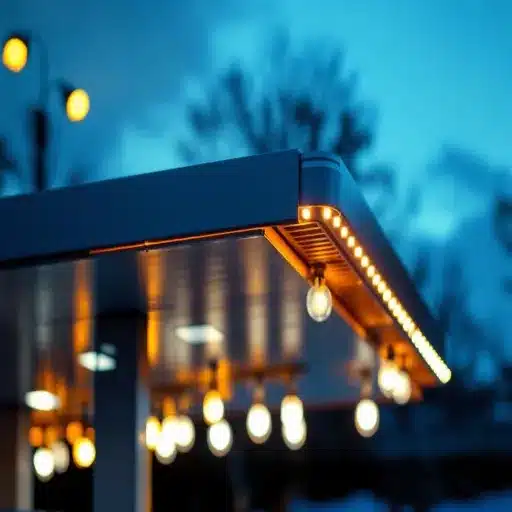
The canopy light that prevents an explosion costs less than one hour of station downtime.
In 2024, a contractor in Florida installed UL 844 explosion-proof canopy lights over a new gas station at a 16-foot mounting height. He paid $12,000 for the fixtures. The electrical inspector arrived for final approval and asked a simple question: Why are these explosion-proof? The contractor pointed to the fuel dispensers below. The inspector pulled out NEC Article 514. Standard canopy lights mounted at 14 to 17 feet above grade sit in unclassified space. They need a wet-location rating only. The contractor returned the entire order, reordered standard UL 1598 LEDs, and lost three weeks plus $2,500 in restocking fees.
That mistake repeats across the industry. Buyers over-specify expensive hazardous location fixtures in the United States while missing critical ATEX requirements in Europe. The rules are different. The zones are different. The certifications are different. Getting it wrong wastes money on one continent and creates liability on the other.
This guide breaks down explosion-proof lighting for gas stations in plain terms. You will learn how these fixtures work, where they are actually required, which certification applies to your market, and how to design canopy lighting that meets both safety standards and illumination targets.
At Shandong Shengrui Intelligent Equipment Co., Ltd., we supply ATEX, IECEx, and UL-certified canopy lighting as part of complete gas station equipment packages. We have guided projects across six continents. The right specification saves money. The wrong one creates delays.
For detailed information about Explosion-Proof Gas Station Equipment, please refer to our article about Explosion-Proof Gas Station Equipment.
What Is Explosion-Proof Lighting and Why Do Gas Stations Need It?

Explosion-proof lighting refers to luminaires engineered to operate safely in environments where flammable gases, vapors, or dusts may be present. These fixtures either contain internal sparks and heat within a sealed enclosure or limit electrical energy to levels below ignition thresholds.
Gas stations are classified as hazardous locations because fuel vapors collect near dispensers, tanks, and sumps. A single hot surface on a standard light fixture or a spark from a failed driver can ignite an explosive atmosphere. That is why regulatory bodies mandate certified lighting in classified zones.
The global explosion-proof lighting market reached approximately USD 3 to 5 billion in 2025. LED technology now captures roughly 62% of new hazardous lighting installations, displacing fluorescent and high-intensity discharge fixtures because of superior energy efficiency, longer lifespan, and lower heat output. The hazardous location LED segment alone was valued at approximately USD 532 million in 2025 and is projected to reach USD 848 million by 2034.
Want to understand how explosion-proof certification works across different schemes? Our ATEX vs IECEx vs UL certification guide breaks down the standards that govern all hazardous area equipment.
The Critical US vs EU Difference Nobody Explains
Here is the single most important fact about gas station canopy lighting. In the United States, most canopy lights do not need to be explosion-proof. In the European Union, they absolutely do.
US NEC: Why Most Canopy Lights Do NOT Need to Be Explosion-Proof
Under the National Electrical Code (NEC) Article 514, the hazardous location around a fuel dispenser extends 18 inches above grade and 20 feet horizontally from any edge of the dispenser enclosure. Standard gas station canopies mount at 14 to 17 feet above the forecourt. That is well above the 18-inch hazardous boundary.
The result: canopy lights mounted at typical heights are in unclassified space. They do not require UL 844 hazardous location listing. They need UL 1598 wet-location rating for weather resistance. This distinction saves thousands of dollars per station.
The exception is low-mounted fixtures. Bollard lights, wall packs below 18 inches, or any luminaire within 20 feet of a dispenser at low height must carry Class I, Division 2, Group D rating under UL 844.
EU ATEX: Why Canopy Lights MUST Be Explosion-Proof
Under EU Directive 2014/34/EU, any electrical equipment installed in a potentially explosive atmosphere must carry ATEX certification. Gas station canopies and forecourts are classified as Zone 2 for gas and Zone 22 for dust. This means canopy lighting in Europe must be ATEX-certified, typically rated II 3G Ex nR for gas and II 3D Ex tc for dust.
The same fixture mounted at the same height faces entirely different requirements depending on which side of the Atlantic it is installed.
Zone and Classification Guide for Gas Station Lighting
Before specifying any luminaire, you must know the zone where it will operate. The table below maps the classification systems.
| Location | ATEX / IECEx Zone | ATEX Category | IECEx EPL | NEC Class/Division |
|---|---|---|---|---|
| Underground tank interior | Zone 0 | Category 1 | Ga | Class I, Division 1 |
| Dispenser island, near the nozzle | Zone 1 | Category 2 | Gb | Class I, Division 1 |
| Canopy soffit (EU) | Zone 2 | Category 3 | Gc | Class I, Division 2 |
| Canopy soffit (US, typical height) | Zone 2 | Category 3 | Gc | Unclassified |
| Storefront exterior | Non-hazardous | N/A | N/A | Non-hazardous |
Gas Groups for Fuel Types
Gas groups classify the explosive energy of different substances. The fixture must match the gas group of the fuel being dispensed.
- Gasoline vapor: ATEX/IECEx Group IIA, UL Group D
- Diesel: ATEX/IECEx Group IIA, UL Group D
- Ethanol blends: ATEX/IECEx Group IIB, UL Group C
- Hydrogen: ATEX/IECEx Group IIC, UL Group B
Hydrogen requires the most stringent rating. Stations adding hydrogen refueling must verify that existing canopy lighting carries Group IIC or equivalent certification.
Temperature Classes T1-T6
Temperature classes define the maximum surface temperature a fixture can reach. T6 is the most restrictive at 85 degrees Celsius. T1 allows up to 450 degrees Celsius.
Gasoline has an auto-ignition temperature of approximately 280 degrees Celsius. Equipment used near gasoline vapor must be rated at least T3. Most LED canopy fixtures for gas stations carry T4 or T6 ratings, providing additional safety margin.
Understanding zone classification is the foundation for choosing the right lighting. Our hazardous area classification guide walks through Zone 0, Zone 1, and Zone 2 mapping for fuel stations.
Certification Standards for Explosion-Proof Lighting

ATEX Directive 2014/34/EU
ATEX is mandatory for equipment placed on the European market for use in explosive atmospheres. The technical basis is the EN 60079 series. For canopy lighting in Zone 2, the typical marking is II 3G Ex nR IIC T4 Gc. Category 3 equipment can be self-certified by the manufacturer, though many buyers prefer third-party certification for additional confidence.
IECEx Scheme
IECEx is a voluntary international certification scheme using the IEC 60079 standards. It is recognized in over 50 countries and mandatory in Australia, New Zealand, Singapore, and Israel. An IECEx certificate can fast-track ATEX certification because both schemes share the same technical standards.
UL 844: Hazardous Location Luminaires
UL 844 is the US standard for luminaires used in hazardous locations. Fixtures listed under UL 844 carry markings such as Class I, Division 2, Groups C and D, or Class I, Zone 2, Group IIB+H2. This standard applies to low-mounted fixtures near dispensers, not typical canopy soffit lights.
UL 1598: Wet Location Luminaires
UL 1598 covers general-purpose luminaires, including those rated for wet locations. For US gas station canopies mounted at typical heights, UL 1598 wet-location rating is usually sufficient. These fixtures must still meet IP65 or higher for dust and water ingress protection.
IP and IK Ratings for Canopy Environments
IP ratings measure ingress protection. IP65 protects against dust and water jets. IP66 handles powerful water jets. IP67 allows temporary immersion. For gas station canopies, IP66 is the recommended minimum.
IK ratings measure impact resistance. IK08 resists 5 joules of impact. IK10, the highest rating, resists 20 joules. Canopy fixtures in public fueling areas should carry IK10 to withstand accidental impact and vandalism.
Dual Certification Strategy
Manufacturers targeting both EU and US markets can certify the same fixture platform to both ATEX and UL standards. Because the technical requirements share common roots in IEC 60079, dual certification typically costs only 20% to 30% more than single certification. The housing, LED module, and optical design remain identical. Only the documentation, labeling, and factory audits differ.
Protection Methods: Ex d, Ex e, Ex nR, and Ex ec
Explosion-proof lighting uses different protection concepts depending on the zone risk level.
Flameproof Enclosure (Ex d)
Ex d fixtures use heavy housings that can withstand an internal explosion without allowing flames or hot gases to escape. The enclosure quenches the flame through machined flame paths. This method is required for Zone 1 and Zone 0 applications. Ex d fixtures are heavier, more expensive, and roughly two to three times the cost of Zone 2 equivalents.
Increased Safety (Ex e / Ex ec)
Ex e enhances insulation, spacing, and sealing to prevent arcs, sparks, or excessive temperatures. Ex ec is a lighter variant for Zone 2. These methods rely on construction quality rather than containment.
Restricted Breathing (Ex nR)
Ex nR is the most common protection method for Zone 2 canopy lighting. The sealed enclosure limits gas ingress so the internal atmosphere never reaches explosive concentrations. Ex nR fixtures are lighter than Ex d, simpler to install, and cost-effective for canopy applications.
Which Method for Which Zone?
| Zone | Risk Level | Common Protection Methods |
|---|---|---|
| Zone 0 | Continuous hazard | Ex ia (intrinsic safety), Ex d |
| Zone 1 | Likely during normal operation | Ex d, Ex e, Ex p |
| Zone 2 | Unlikely, short-lived | Ex nR, Ex ec, Ex nA |
| US unclassified | No hazard | Standard wet-location construction |
LED vs Legacy: Why LED Dominates Hazardous Area Lighting
LED technology has become the default choice for hazardous area lighting. Here is why.
Energy Savings
LED canopy fixtures deliver up to 70% energy savings compared to high-pressure sodium or metal halide alternatives. A typical 150-watt HID fixture can be replaced with a 50-watt LED delivering equivalent lumens. Over a station operating 12 hours per day, that difference compounds quickly.
Lifespan
Quality LED fixtures rated for hazardous areas carry lifespans exceeding 100,000 hours. At 12 hours of daily operation, that is over 22 years before the LED module reaches 70% of its initial output. Legacy HID lamps need replacement every 2 to 5 years.
Lower Heat Output
LEDs generate less waste heat than HID or fluorescent sources. Lower surface temperatures improve safety margins in hazardous environments and reduce thermal stress on drivers and housing components.
LED Retrofit ROI
In 2023, a fuel retail chain in Poland upgraded 45 stations from fluorescent to ATEX-certified LED canopy lighting. Energy consumption across the portfolio dropped 62%. Maintenance visits for lamp replacement fell from quarterly to once every four years. The retrofit paid for itself in 2.8 years through energy savings alone. The operator now saves approximately EUR 18,000 annually on electricity and maintenance across those stations.
Ready to explore LED canopy lighting for your project? Our engineering team can calculate energy savings and payback for your specific station layout. Request a lighting specification review.
Designing Gas Station Canopy Lighting: Foot-Candles, Spacing, and Specs

Foot-Candle Requirements
The Illuminating Engineering Society (IES) recommends a minimum of 10 foot-candles at pump islands. Most modern stations target 20 to 30 foot-candles for visibility, safety, and marketing appeal. Higher levels improve security camera performance and customer perception of cleanliness.
Uniformity Ratios
Uniformity matters as much as raw brightness. A 4:1 maximum-to-minimum ratio is the typical target. Poor uniformity creates dark pockets that feel unsafe and make fueling operations harder to monitor.
Canopy Layout Methodology
Fixture spacing depends on mounting height, fixture beam angle, and target foot-candles. For a 16-foot canopy height with 120-degree beam angle LEDs, fixtures are typically spaced 12 to 16 feet apart. Rows run parallel to fueling islands. Taller canopies require higher lumen output or tighter spacing.
Mounting Height and Structural Loading
Canopy fixtures add weight and wind load. A typical LED canopy fixture weighs 8 to 15 pounds. The canopy structure must support this load plus wind and seismic forces. Engineers should verify that the canopy space frame or supporting structure can handle the additional point loads.
Dark Sky and Municipal Ordinances
Some municipalities limit canopy illumination to approximately 22 foot-candles to control light pollution. Fixtures with proper optical cutoff direct light downward rather than spilling into surrounding neighborhoods. Color Correlated Temperature (CCT) of 4000K to 5000K is standard for canopy lighting, balancing visibility with dark sky compliance.
Emergency and Egress Battery Backup
Emergency lighting is required for safe evacuation during power outages. In hazardous areas, battery backup systems must themselves be certified for the zone. LiFePO4 battery packs in Ex nR or Ex e enclosures are the current standard for Zone 2 canopy emergency lighting.
Gas Station Lighting by Equipment Zone
Canopy Soffit
In the EU, the canopy soffit is Zone 2. ATEX-certified lighting is mandatory. In the US, standard canopy height places fixtures in unclassified space. Wet-location UL 1598 rating is sufficient. Only low-canopy designs or fixtures mounted near dispenser grade require UL 844.
Dispenser Island Perimeter
The area immediately surrounding fuel dispensers is Zone 1 under ATEX and Class I, Division 1 under NEC. Any lighting mounted below 18 inches within 20 feet of a dispenser must carry the highest protection rating. This includes bollard lights, low wall packs, and under-canopy accent lighting.
Underground Tank Sumps and Wet Wells
Underground fuel storage tanks and their sumps are classified as Zone 0 or Class I, Division 1. Equipment installed inside sumps requires the highest level of protection. Luminaires are rarely installed inside sumps, but inspection lights and portable lighting used in these areas must be rated accordingly.
Storefront and Convenience Area
The convenience store exterior and parking areas are typically non-hazardous. Standard commercial lighting applies. However, any fixture illuminating the forecourt from the storefront facade should be evaluated for its proximity to classified zones.
EV Charging Islands
As stations add electric vehicle chargers near fueling areas, lighting classification boundaries may require re-evaluation. EV charging equipment itself is not typically explosion-proof rated, but its placement relative to fuel dispensers affects the hazardous zone boundary. Projects combining fueling and EV charging should conduct a fresh hazardous area classification study.
Selecting the Right Explosion-Proof Canopy Light
Follow these six steps to specify the correct canopy lighting for your project.
Step 1: Identify Your Market
Determine whether the station is in the EU, the US, or both. EU stations require ATEX. US stations at typical canopy heights require wet-location UL 1598, not UL 844. Multi-country operators should consider dual-certified fixtures.
Step 2: Determine Zone Classification
Conduct a hazardous area classification study or reference NEC Article 514 for US projects. Confirm whether the canopy soffit falls inside or outside the classified boundary. In Europe, assume Zone 2 unless a qualified engineer determines otherwise.
Step 3: Match Gas Group and Temperature Class
Identify the fuel types to be dispensed. Gasoline requires Group IIA or Group D and temperature class T3 or better. Hydrogen requires Group IIC or Group B and T6. The fixture marking must match or exceed the fuel hazard.
Step 4: Verify IP and IK Ratings
Specify IP66 minimum for dust and water protection. Specify IK10 for impact resistance in public areas. Lower ratings may be acceptable for protected or private fleet installations.
Step 5: Evaluate LED Efficiency and Warranty
Target 130 lumens per watt or higher for energy efficiency. Verify the warranty covers the LED module, driver, and housing. Five-year warranties are standard for quality hazardous area LED fixtures.
Step 6: Plan for Maintenance Access
Canopy fixtures over fueling islands must be accessible for driver replacement without shutting down the station. Consider fixtures with remote drivers mounted outside the hazardous area or quick-disconnect mounting systems.
If you need to know about fire prevention measures at gas stations, please read our article on Fire Suppression & Emergency Shut-Off.
Common Specification Mistakes

Specifying UL 844 When UL 1598 Suffices
This is the most expensive mistake in US gas station lighting. Contractors assume canopy lights over fuel dispensers must be explosion-proof. Under NEC 514, standard canopy height places fixtures in unclassified space. Always verify mounting height against the 18-inch hazardous boundary before specifying UL 844.
Ignoring Zone 22 Dust Requirements
ATEX covers both gas and dust hazards. Canopy lighting in Europe often requires dual certification: II 3G Ex nR for gas and II 3D Ex tc for dust. Specifying gas-only certification leaves a compliance gap.
Choosing the Wrong Temperature Class for Fuel Type
Hydrogen refueling requires T6 and Group IIC ratings. A fixture rated T4 and Group IIA is insufficient. Stations adding alternative fuels must re-evaluate all electrical equipment in the hazardous area.
Neglecting Emergency Lighting in Hazardous Areas
Emergency battery backup is required for safe egress. In hazardous zones, the battery pack itself must be certified for the zone. Standard commercial emergency lighting cannot be installed in Zone 2 without proper certification.
Undersizing Fixtures for Canopy Height
A fixture that delivers 30 foot-candles at 12-foot mounting height may deliver only 15 foot-candles at 18 feet. Always calculate lumens and spacing based on actual canopy height, not generic assumptions.
2025-2026 Market and Technology Trends
Several trends are reshaping explosion-proof lighting for gas stations.
LED dominance continues. Approximately 62% of new explosion-proof lighting installations now use LED technology. The remaining share of HID and fluorescent is concentrated in legacy installations awaiting retrofit.
Smart and IoT-enabled hazardous lighting is growing. About 37% of new explosion-proof lighting models launched in 2024 integrated sensors, wireless connectivity, or remote monitoring. Features like predictive maintenance alerts and adaptive dimming are becoming standard in industrial safety ecosystems.
Hydrogen infrastructure is driving demand for Group IIC-rated fixtures. Stations adding hydrogen refueling must upgrade canopy lighting to the most severe gas group. This trend will accelerate as hydrogen fueling networks expand in Europe and Asia.
IEC 60079-47 is under development for wireless and IoT-enabled devices in hazardous areas. As smart sensors and connected monitors enter fuel stations, certification bodies are adapting to evaluate radio frequency emissions alongside explosion protection.
The global explosion-proof lighting market is expected to sit between USD 3 billion and USD 5 billion in 2025. North America holds approximately 33% of global installations. Asia-Pacific is the fastest-growing region, driven by petrochemical expansion and mining growth in China, India, and South Korea.
Frequently Asked Questions
Do US gas station canopy lights need to be explosion-proof?
Generally no. Under NEC Article 514, the hazardous boundary extends 18 inches above grade and 20 feet horizontally from dispensers. Standard canopy lights mounted at 14 to 17 feet are in unclassified space and only require a wet-location rating. Low-mounted fixtures below 18 inches may require hazardous location listing.
What ATEX rating is required for gas station canopy lighting in Europe?
Typical canopy lighting in Europe requires ATEX II 3G Ex nR certification for Zone 2 gas hazards. Many applications also require II 3D Ex tc for Zone 22 dust hazards. The exact rating depends on the hazardous area classification study.
What is the difference between UL 844 and UL 1598?
UL 844 covers luminaires for hazardous locations where flammable gases may be present. UL 1598 covers general-purpose luminaires, including wet-location variants. For US gas station canopies at typical mounting heights, the UL 1598 wet-location rating is usually sufficient.
How much energy can LED canopy lighting save?
LED canopy fixtures can reduce energy consumption by up to 70% compared to HID alternatives. Actual savings depend on operating hours, electricity rates, and the efficiency of the legacy system being replaced.
Conclusion
Explosion-proof lighting for gas stations is not about buying the most expensive fixture. It is about matching the right luminaire to the right zone, market, and fuel type.
Here are the five key takeaways:
- In the United States, standard canopy lights at typical mounting heights are unclassified and only need a wet-location UL 1598 rating, not UL 844.
- In the European Union, canopy lighting is mandatory, ATEX Zone 2 certified, typically II 3G Ex nR.
- LED technology now dominates hazardous area lighting with up to 70% energy savings and 100,000-hour lifespans.
- The fuel type determines the gas group and temperature class. Hydrogen requires Group IIC and T6, the most stringent ratings.
- Emergency battery backup in hazardous areas must itself be zone-certified.
At Shandong Shengrui Intelligent Equipment Co., Ltd., we design and supply ATEX, IECEx, and UL-certified canopy lighting as part of complete gas station equipment packages. Whether you are building a single station in Texas or rolling out a European network, our engineering team can specify the exact lighting certification, lumen output, and mounting configuration your project requires.
Contact our engineering team for a canopy lighting specification tailored to your station layout, target markets, and fuel types.