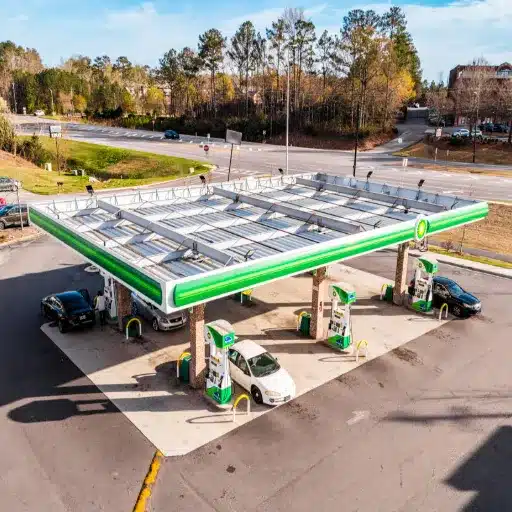
Every month, the fuel variance report at Mike’s 24-hour station crept a little higher. At first, he blamed delivery shortages. Then he suspected tank leaks. The real culprit was a single dispenser registering 0.3% over-delivery. Customers were getting slightly more fuel than they paid for, and Mike was losing roughly $450 every month on that one island alone.
This is why fuel dispenser calibration matters. It is not a paperwork exercise. It protects revenue, keeps regulators satisfied, and protects the trust customers place in every liter or gallon they buy. This guide explains the standards that govern accuracy, the step-by-step procedure technicians use, the tolerance limits you must meet, and how to choose dispensers that make future calibration easier.
You will learn which standard applies to your market, what equipment you need, how to calculate error, why drift happens, and how often to verify your pumps. If you are sourcing new fuel dispensing equipment, the last section will help you specify units that arrive calibrated and stay calibrated. For detailed information, please refer to our fuel dispensers’ complete guide.
Why Fuel Dispenser Calibration Matters

A fuel dispenser is a legal measuring instrument. In most countries, the moment it is used for trade, its accuracy becomes a matter of public law. A small measurement error compounds quickly. A 0.25% over-delivery error on 100,000 liters per month costs a station about 250 per month at a 0.25 per liter margin. Over a year, that is $3,000 from a single minor drift.
Calibration also protects customer trust. Drivers rarely measure what they receive, but regulators, competitors, and auditors do. One failed inspection can trigger fines, forced shutdown of a dispenser, negative media coverage, and mandatory re-testing of every pump on the forecourt.
Safety is another reason. Calibration drift is often a symptom of deeper problems: worn meter components, air ingress, pulser failure, or contaminated fuel. Addressing drift early catches these issues before they cause vapor lock, meter seizure, or cross-contamination between fuel grades.
At Shandong Shengrui Intelligent Equipment Co., Ltd., we treat calibration as part of the product lifecycle. Precision engineering at the factory reduces field adjustment. Clear K-factor documentation simplifies verification. And traceable standards ensure inspectors accept the results.
Calibration Standards and Legal Requirements
Different markets use different standards, but they share the same goal: to ensure the volume shown on the dispenser matches the volume delivered within a defined tolerance.
NIST Handbook 44 (United States)
In the United States, NIST Handbook 44, Section 3.30 covers liquid-measuring devices used for retail motor fuel. State weights-and-measures agencies enforce it. The standard uses a maintenance tolerance of 1 cubic inch plus 1 cubic inch per indicated gallon. On a common 5-gallon prover test, that equals ±6 cubic inches, or about ±98.32 milliliters. New or rebuilt dispensers are tested to an acceptance tolerance half as wide: ±3 cubic inches on the same 5-gallon test.
NIST also requires testing to be performed with certified field standard test measures and provers traceable to national standards. The test must follow proper pour and drain times, and the prover must sit level.
OIML R117-1:2019 (International)
OIML R 117-1:2019 covers dynamic measuring systems for liquids other than water, including fuel dispensers. Accuracy classes are defined by the maximum permissible error. Most retail fuel dispensers fall under Class 0.5, meaning ±0.5% error. High-value custody-transfer applications may require Class 0.3, or ±0.3%. Testing under OIML R 117-2 requires checking at least six flow rates across the operating range, with at least three independent measurements at each point.
China JJG 443-2023
China’s verification regulation for fuel dispensers, JJG 443-2023, sets a maximum permissible error of ±0.3% and repeatability of ≤0.1%. Self-calibration risk zones are commonly interpreted as reliable below ±0.15% and high-risk above ±0.25%. For skid-mounted dispensers exposed to harsh outdoor conditions, a six-month legal verification cycle is common, with many operators running informal three-month self-checks between formal inspections.
MID/CE (European Union)
The EU Measuring Instruments Directive (MID) sets a typical retail tolerance of ±0.2% for liquid fuel dispensers. Devices must carry CE marking and a notified-body certificate. National metrology offices perform periodic verification, usually annually.
| Standard | Region | Typical Tolerance | Repeatability | Common Interval |
|---|---|---|---|---|
| NIST Handbook 44 | United States | ±6 in³ on 5 gal (maintenance); ±3 in³ (acceptance) | Not stated explicitly | Annual or biannual |
| OIML R117-1 Class 0.5 | International | ±0.5% | Not stated explicitly | Annual |
| OIML R117-1 Class 0.3 | Custody transfer | ±0.3% | Not stated explicitly | Annual |
| China JJG 443-2023 | China | ±0.3% | ≤0.1% | 6 months (skid-mounted) |
| EU MID | European Union | ±0.2% | As specified by type | Annual |
Before buying a dispenser, confirm which standard your local legal metrology office recognizes. A unit certified only to NIST may not satisfy an EU MID inspector, and vice versa.
Calibration Equipment You Need

Accurate calibration depends on traceable equipment. Cutting corners here invalidates the entire test.
- A certified prover can test and measure. Common sizes are 5 gallons, 20 liters, or 50 liters. The prover must carry a current calibration certificate from an accredited lab, usually traceable to NIST, NMIJ, or your national metrology institute.
- Thermometer and hydrometer. Fuel volume changes with temperature. Test results must be corrected to a reference temperature, often 15°C or 60°F.
- Level surface and drain-time procedure. A prover sitting on uneven ground gives false readings. Standard drain times, often 30 seconds, must be observed before reading the meniscus.
- Lead seals or tamper-evident tags. After adjustment and acceptance, the meter must be sealed. Breaking the seal without authorization is illegal in most jurisdictions.
- Calibration logbook or digital record system. Auditors will ask for historical data. Each entry should include date, dispenser ID, prover ID, test volumes, errors, adjustments, technician, and seal numbers.
- Optional: gravimetric scale, master meter, diagnostic software. Gravimetric testing weighs the delivered fuel and converts mass to volume using density. Master-meter testing uses a high-accuracy reference meter connected in series. Diagnostic software can read pulse counts, K-factors, and error codes directly.
If you are choosing new equipment, ask the manufacturer whether the dispenser supports diagnostic readouts and K-factor adjustment without breaking the metrology seal. That single feature can cut calibration time significantly. For a deeper understanding, please read our Fuel Dispenser Installation Guide.
Fuel Dispenser Calibration Procedure and Accuracy Testing
This is the general field procedure technicians follow for fuel dispenser calibration. Always defer to your local legal metrology authority for exact requirements.
- Prepare the dispenser and prover. Verify the prover certificate is current and the dispenser is clean, powered, and filled with representative fuel. Record the starting temperature and density.
- Pre-wet the measure. Fill the prover once and drain it completely. This conditions the walls and establishes the correct drain time.
- Dispense a known volume at maximum normal flow. Run a standard test volume, often 5 gallons or 20 liters, into the prover. Do not slow the nozzle artificially.
- Record both readings. Write down the volume shown on the dispenser and the volume indicated by the prover.
- Correct for temperature and thermal expansion. Convert both readings to the same reference temperature using correction tables or software. Account for the thermal expansion of the prover itself.
- Calculate relative error. Use the formula:
E = (V_dispenser − V_reference) / V_reference × 100%
A positive result means the dispenser over-delivers. A negative result means it under-delivers.
7. Repeat at minimum flow rate. Test at the lowest normal operating flow to check performance across the range.
8. Run repeatability tests. Perform at least three consecutive runs at the same flow rate. The spread between the highest and lowest results must meet your local repeatability requirement.
9. Adjust if out of tolerance. Use the manufacturer’s procedure to change the K-factor or mechanical calibration screw. Adjust as close to zero error as possible, not merely within tolerance.
10. Re-test, seal, and document. After adjustment, repeat the tests. Once accepted, apply the seal, record all values, and file the report.
Calibration Error Formula Example
Suppose the dispenser shows 20.05 liters and the corrected prover reading is 20.00 liters.
E = (20.05 − 20.00) / 20.00 × 100% = +0.25%
That means the station is giving away 0.25% of every liter. Over 100,000 liters, that is 250 liters of lost product.
Tolerances and Acceptance Criteria
Understanding the difference between acceptance and maintenance tolerance prevents two common mistakes: rejecting a dispenser that is legally acceptable, or accepting one that is drifting toward failure.
- Acceptance tolerance applies to new, rebuilt, or newly serviced dispensers. It is tighter because the unit should be near perfect.
- Maintenance tolerance applies to dispensers in regular service. It allows for normal wear but still protects consumers and station owners.
- “As close to zero as possible” is a phrase inspectors often use. Meeting tolerance is the legal minimum. Good practice is to adjust the error toward zero so the dispenser stays within tolerance longer.
When a dispenser repeatedly tests near the maintenance limit, it is telling you something. The meter may be wearing out, the pulser may be failing, or the fuel may be carrying more contamination than expected. Schedule a deeper inspection before the next formal cycle.
How Often Should Fuel Dispensers Be Calibrated?
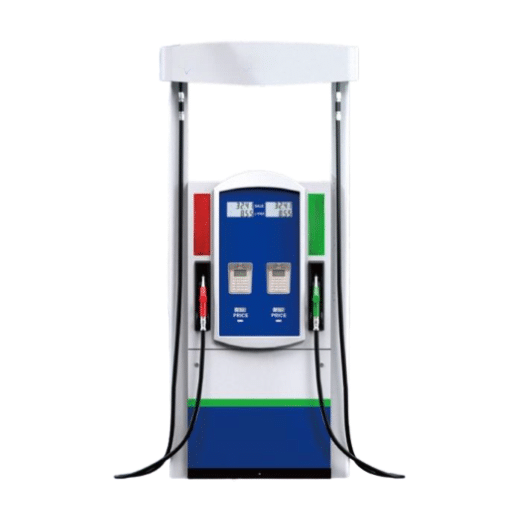
There is no single global interval. Calibration frequency depends on the jurisdiction, fuel type, dispenser usage, and environment.
- United States: Most states require annual or biannual inspection by weights-and-measures officials. High-volume stations may be inspected more frequently.
- China: Skid-mounted dispensers typically require legal verification every six months. Operators often add quarterly self-checks.
- European Union: Annual verification is typical under MID.
- India: Some states require daily pre-sale checks by the dealer using a verified 5-liter or 10-liter measure.
- CNG/LPG dispensers: Often verified every six months to two years, depending on national rules.
Regardless of the formal schedule, recalibrate after any of the following events:
- Major repair or component replacement, especially the meter, pump, or pulser
- Customer complaint about short delivery
- Broken, missing, or tampered seal
- Relocation of the dispenser
- Long period of non-use
- Environmental damage such as flooding or impact
Proactive stations do not wait for the inspector. They run self-checks every month or quarter and keep internal records. This catches drift early and makes the official inspection a formality.
Common Fuel Dispenser Calibration Errors and Drift Causes
Drift rarely happens overnight. It is usually the result of gradual wear, contamination, or environmental stress.
Mechanical wear in the flow meter. Positive-displacement meters use pistons, gears, or oval gears. Over time, clearances increase and fuel slips past the measuring elements without being counted. This typically causes over-delivery. Piston meters often last 8 to 12 years before wear exceeds adjustment limits.
Clogged filters and debris. Particles bypass worn filters and accumulate inside the meter, increasing friction and causing erratic movement.
Pulser or encoder failure. A faulty pulser loses pulses, which leads the control board to under-count delivered volume. The result is over-delivery to the customer.
Air or vapor in the line. In suction systems, air bubbles displace liquid fuel. The meter counts gas volume as liquid, so the customer receives less than displayed.
Temperature effects. Fuel expands when warm and contracts when cold. Without automatic temperature compensation, volume readings drift with seasonal temperature swings.
Voltage fluctuations. Micro-brownouts or unstable power can cause CPU reboots, display errors, and corrupted calibration constants.
Mechanical shock. Impacts during service, vehicle collisions, or rough transport can knock a meter out of calibration.
Improper initial calibration. A dispenser that is not calibrated correctly at the factory or during installation may remain inaccurate until properly adjusted.
If you need to learn more information, please read our article on Fuel Dispenser Maintenance.
| Symptom | Likely Cause | First Action |
|---|---|---|
| Consistent over-delivery | Meter wear, pulser failure | Inspect meter and pulser, check pulse count |
| Consistent under-delivery | Air in line, restriction before meter | Check filters, suction line, and vapor recovery |
| Erratic readings | Debris in meter, voltage issues | Clean meter, check power stability |
| Slow flow with normal reading | Clogged filter or nozzle | Replace filter, inspect nozzle strainer |
| High variance between tests | Temperature effects, air ingress | Verify temperature compensation, check seals |
Record-Keeping and Compliance Documentation
Good records turn a stressful inspection into a quick review. Each calibration record should include:
- Date and time of test
- Dispenser identification number and grade
- Technician name, certification number, and employer
- Prover or test measure ID and certificate expiration
- Test volume and number of runs
- Dispenser reading and corrected reference reading for each run
- Calculated error and repeatability
- Any adjustments made and final as-left error
- Seal numbers applied
- Fuel temperature and density
- Signature or digital approval
Most authorities require records to be kept for at least one to two years. Digital systems are increasingly accepted and make trending easier. A station that tracks error over time can predict when a meter will approach its maintenance limit and schedule replacement before a failure.
Choosing a Calibration-Friendly Fuel Dispenser

Not all dispensers make calibration equally easy. Specifying the right features at purchase reduces lifetime calibration cost and downtime.
Accessible K-factor adjustment. The K-factor converts pulses into volume. If the adjustment is buried behind custom firmware or requires special tools, every calibration takes longer and costs more.
Built-in temperature compensation. This automatically corrects volume to a reference temperature. It is essential in climates with wide temperature swings and is required by some standards.
Diagnostic display or error codes. A dispenser that reports pulse counts, flow rates, and fault codes helps technicians identify drift causes quickly without disassembling the unit.
Factory calibration certificate. Ask for a certificate showing the dispenser was calibrated against traceable standards before shipment. For international projects, verify that the certificate is accepted in the destination country.
Spare parts availability. Meters, pulsers, and seals wear out. A supplier with local or regional parts stock prevents long downtime when components need replacement.
System integration. A dispenser does not work alone. It must be matched to the pump, tank, management system, and safety equipment. Turnkey gas station solutions reduce integration risk because the components are engineered to work together, including calibration constants and communication protocols.
If you are still comparing models, our guide on how to choose a fuel dispenser walks through flow rates, nozzle configurations, and certifications in more detail.
Frequently Asked Questions
What is the most common fuel dispenser calibration error?
The most common error is over-delivery caused by meter wear or pulser failure. As internal clearances increase or pulses are lost, the dispenser delivers more fuel than it records. This silently reduces station revenue until a calibration check catches it.
Can I calibrate my own fuel dispensers?
In most jurisdictions, only authorized or certified technicians can legally adjust and seal trade dispensers. Station owners can perform self-checks with a certified prover, but any adjustment, seal breaking, or official verification must be done by the proper authority or licensed service provider.
What happens if a dispenser fails calibration?
The dispenser must be taken out of service until it is adjusted, re-tested, and sealed. In some regions, the inspector applies a rejection sticker. Repeated failures can trigger fines, additional inspections of other dispensers, and damage to the station’s reputation.
Does OIML R117 apply in the United States?
No. The United States uses NIST Handbook 44 and NTEP type evaluation for retail motor fuel dispensers. OIML R117 applies in many other countries and is commonly required for export. Some manufacturers design dispensers to meet both standards to simplify global sales.
How do I know if my dispenser has temperature compensation?
Check the type-approval certificate, the technical manual, or the dispenser display settings. Units with temperature compensation usually list a reference temperature and may show real-time fuel temperature during delivery. If you are unsure, ask the manufacturer or your service technician.
Conclusion
Fuel dispenser calibration is not a one-time setup task. It is an ongoing discipline that protects revenue, ensures legal compliance, and maintains customer confidence. The standards may differ by country, but the core principle behind every fuel dispenser calibration is the same: the volume displayed must match the volume delivered within an accepted tolerance.
Start by confirming which standard applies in your market. Equip your team with a certified prover, thermometer, and logbook. Follow a repeatable procedure, calculate error carefully, and adjust as close to zero as possible. Track drift over time, recalibrate after repairs or complaints, and choose dispensers with accessible K-factors, temperature compensation, and diagnostic support.
If you are planning a new station or upgrading existing dispensers, Shandong Shengrui Intelligent Equipment Co., Ltd. supplies fuel dispensing equipment engineered for accuracy and built to meet NIST, OIML, MID, and China metrology requirements. Contact our team for a calibration-ready specification or a turnkey station quote.