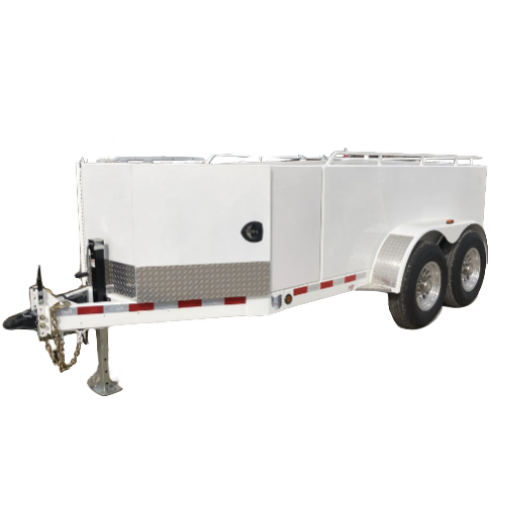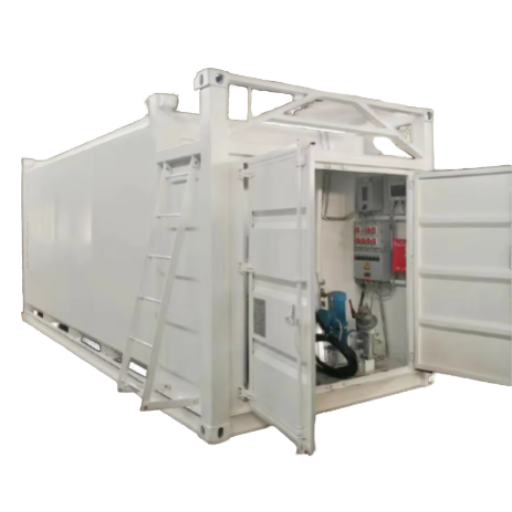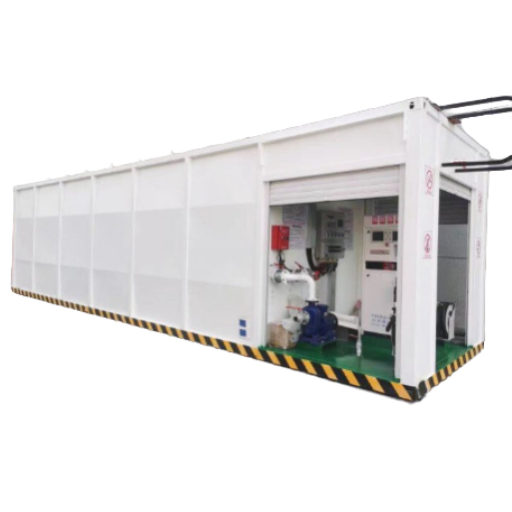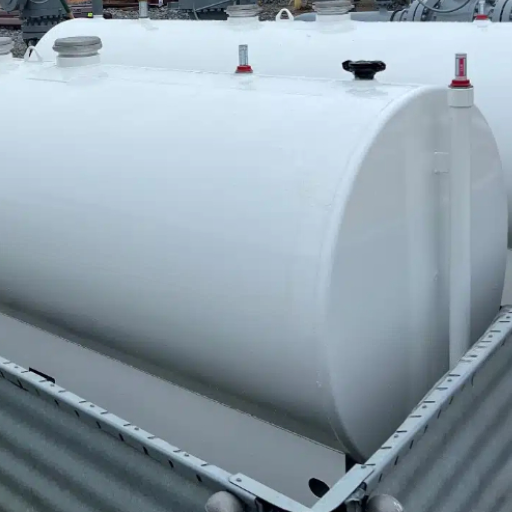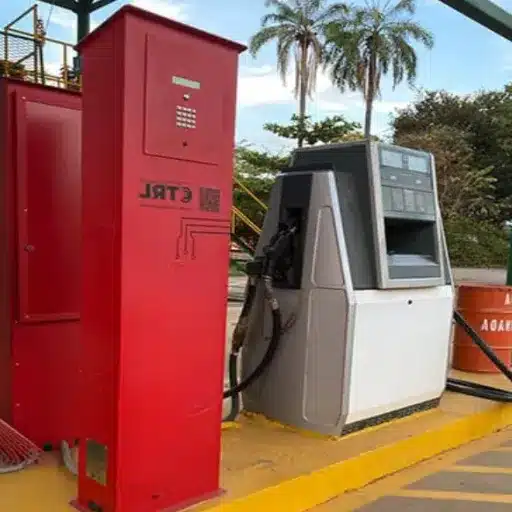
Relocating a 20ft skid station means draining the tank, purging and certifying it gas-free, disconnecting and capping the services, lifting it only at the supplier’s designated points, moving it as empty cargo, then re-siting it and re-running the pressure, leak, earthing, and overfill tests before the first dispense. Relocating a fuel skid is cheap when the lifting points, transport configuration, and gas-freeing were designed in, and expensive when they were not.
This guide covers industrial skid stations on a 20ft frame. Fuel tank relocation here means moving the whole packaged unit, not swapping a tank in place. It isn’t about vehicle, marine, or heating-oil tanks, which follow different rules at a much smaller scale.
Elena runs fuel supply for a mining camp in the Andes. Her five-year contract ended in March, and the site owner offered a two-year extension at a different pit, 11 kilometers away.
The question wasn’t whether to move it. It was whether anyone had planned the move when the unit was bought. Nobody had. A skid station is sold as relocatable, and it is, but relocatability is a procedure, not a property.
Key Takeaways
- An unpurged tank is regulated as if it were full under 49 CFR 173.29(a). The gas-free certificate is what changes the transport class.
- A 20ft unit moves at 4.2 to 7.0 t dry, but a 20,000 L diesel fill would add 16.7 t. Every move starts with a drain, not a crane.
- Lift only at the supplier’s designated points. Pipes, dispensers and canopies are not lift points, and using them can damage equipment and void warranties.
- Budget the move before you need it: $8,000 in our year-five cost model, or $5,000 to $12,000 when a permit expiry forces it.
- Everything that carried product or current is retested after the move. The pad, earthing grid and buried piping stay behind and are rebuilt.
Relocating a Fuel Skid: What Triggers a Move
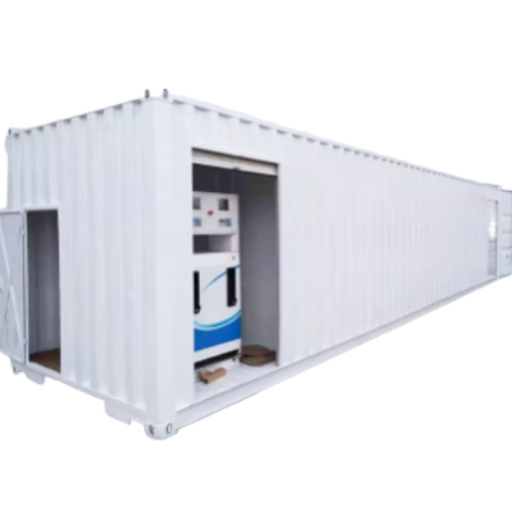
Most moves are not planned as moves. They are forced by a date that was already on the calendar. The first trigger is the contract: a mining, construction, or events site closes, and the unit has years of service left.
The second is the permit clock. Temporary approvals expire, and the unit must move, be recertified, or be permitted as a fixed tank. The limits vary widely:
- Bexar County, Texas: 180 days.
- Renton, Washington: one year.
- Orange County, California: 90 days or less, and 12,000 gallons or less.
- Wisconsin: 24 months.
Your local authority having jurisdiction (AHJ) may be stricter.
The third trigger is the site itself: a lease ending, a plot being redeveloped, or two depots consolidating. The fourth is resale. A used skid station keeps more value when it can be shown working, and more still when its documents are complete.
That creates a decision. It’s easy to defer, and expensive to defer.
Our ten-year cost model prices a planned year-five relocation at $8,000 in its mining scenario. The fallback, when a permit expires and the move becomes reactive, is $5,000 to $12,000. The same model values the unit at auction for a fraction of its book value if it can’t move.
A buried tank has no version of this decision. Its exit path is underground tank removal and decommissioning, not resale. That’s the practical difference between the two deployment models, and it’s why skid station permit requirements matter twice: once when you site the unit, and again when you move it.
Phase 1: Defuel the Tank and Drain the Lines
The move starts by removing the fuel. Dispense it into vehicles or transfer it to another tank or a tanker. Then drain the product lines, the dispenser, and the hose reel. What remains is a heel, a small residual volume that cannot be pumped out through the normal suction point.
Don’t skip the last part. A 20ft unit travels at 4.2 to 7.0 t dry. A 20,000 L diesel fill adds 16.7 t at 0.835 kg/L. Gasoline is lighter at about 0.745 kg/L, but a 20,000 L fill still adds 14.9 t.
| Load case | Figure | Basis |
|---|---|---|
| 20ft unit, dry | 4.2 to 7.0 t | Empty packaged station |
| Fuel alone, 20,000 L diesel | 16.7 t | 20,000 × 0.835 kg/L |
| Fuel alone, 20,000 L gasoline | 14.9 t | 20,000 × 0.745 kg/L |
| ISO gross mass, 20ft plate | 30,480 kg | Frame limit |
| Practical no-permit road cargo, 20ft (US) | ~17.2 t | Federal 80,000 lb GVW less tractor and chassis |
A full unit is over the practical cargo limit before it is over any bridge. It is also, if any residue remains, a dangerous-goods shipment. Both problems have the same solution: empty the tank and prove it.
Phase 2: Purge, Test and Certify the Tank Gas-Free
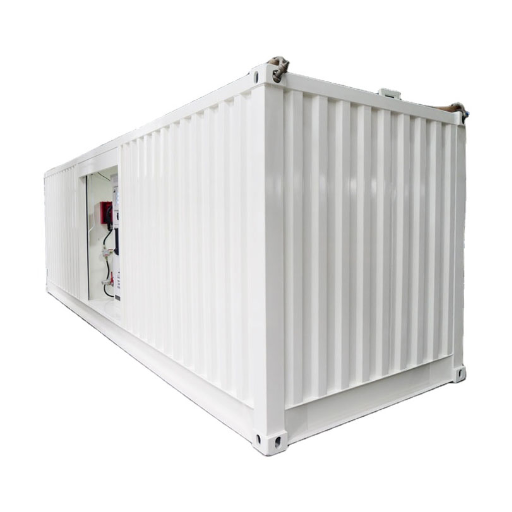
Draining removes liquid. It doesn’t remove vapor. A tank that smells of diesel still contains a flammable atmosphere, and that atmosphere is what turns a repair job into an incident.
Tank purging displaces the vapor. The common methods are:
- Inert-gas displacement with nitrogen or carbon dioxide.
- Water displacement, where the tank and site allow it.
- Forced ventilation, with continuous monitoring.
Someone competent to assess the tank, the product, and the confined-space risk should choose the method. This article can name the options; it can’t choose one for your site.
After purging, test the atmosphere with a calibrated instrument. If anyone is going to enter the tank, the entry is a permit-required confined-space operation. Hot work follows the same gate: no hot work permit until the tank is gas-free. OSHA 1910.146 defines a hazardous atmosphere as flammable gas, vapor, or mist above 10% of the lower flammable limit, or oxygen below 19.5% or above 23.5%. Oxygen test first, then flammables, then toxics.
The output is a gas-free certificate issued by a qualified inspector. It should identify the tank, the date, the method, the readings, and the period of validity. Keep a copy with the unit and send one to the carrier before the truck is booked.
Our notes on skid station shipping logistics record what happens without it. An operator in Kenya received a unit that arrived without a gas-free certificate. The tank looked clean, but port authorities treated it as potentially hazardous and held it at Mombasa for 11 days while testing was arranged.
The document isn’t paperwork for its own sake. It’s the difference between freight and a hazmat case.
The residue rule that makes the certificate mandatory
In the United States, 49 CFR 173.29(a) says an empty packaging containing only the residue of a hazardous material must be offered for transportation and transported in the same manner as when it held a greater quantity. In plain terms, a tank with fuel residue is treated as if it were full. That means placards, shipping papers, and a hazmat-endorsed driver.
The exemption in 173.29(b)(2)(ii) applies when the packaging is “sufficiently cleaned of residue and purged of vapors to remove any potential hazard.” The gas-free certificate is the evidence that this has happened. Without it, fuel tank transport remains a dangerous-goods shipment.
Other markets use the same principle through ADR for road and IMDG for sea. The exact paperwork differs. The logic does not: clean and purge, or ship it as dangerous goods.
Phase 3: Disconnect, Cap and Make the Unit Safe
With the tank empty and gas-free, the unit can be isolated. Lock out and tag out (LOTO) the power at the site isolation point, then prove the circuit dead at the unit. A skid station has more than one energy source: mains power, the dispenser, the pump set, lighting, the control panel, and sometimes a generator or a solar array.
Disconnect and cap the product, vent, and vapor-recovery lines. Blind or plug every opening that will travel. Label each line at both ends so the destination crew knows what connects where. Remove the anchor bolts, cutting them flush if they cannot be unscrewed, and record the anchor pattern before the pad is left behind.
Then disconnect the instruments: the automatic tank gauge, interstitial sensors, overfill alarm, leak detection, emergency stop, and any CCTV or access control. These are mounted on the unit and travel with it, but their calibration records and wiring schedules must travel too.
A skid station is not the whole site. This is the part buyers underestimate.
| Stays at the old site | Travels with the unit |
|---|---|
| Concrete pad, plinth and anchor stubs | Tank, frame, dispenser, pump set, control panel |
| Underground product and vent piping | Hoses, nozzles and breakaway couplings |
| Earthing grid and lightning masts | ATG and interstitial sensors mounted on the unit |
| Power feed and isolation point | Spare parts, keys and manuals |
| Bollards, spill kit and signage | As-built drawings, test records and calibration certificates |
| Canopy and its footings, if separate | Gas-free certificate and transport documents |
The earthing grid deserves its own sentence. The unit’s bonding straps travel; the ground grid does not. The destination needs a new grid, and the resistance test is repeated there, not assumed from the old site. Our destination pad and foundation requirements set out what the pad and its buried services must provide before the unit arrives.
Phase 4: Lift Points, Rigging and Transport Configuration
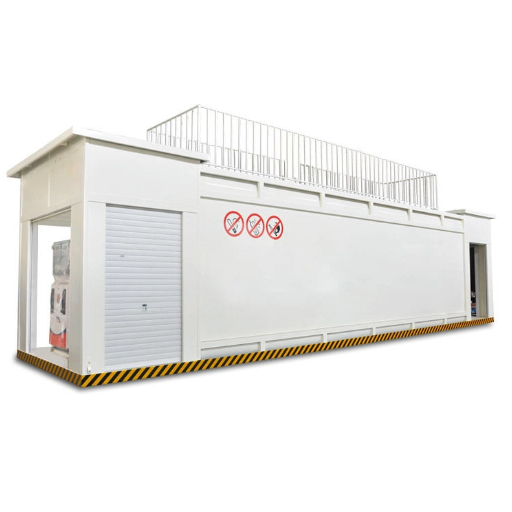
Lift only where the supplier says
A 20ft skid station has designated lifting points: corner castings on a container frame, or lifting lugs on an open skid. They are sized for the unit’s center of gravity and its loaded frame, not for convenience.
Verify the skid station lifting points against the supplier’s general arrangement drawing before the crane is ordered. Then build the lift around them. A four-point lift with a spreader beam keeps the slings vertical and the load stable. The center of gravity should be marked on the unit, and the crane operator should see the mark.
Don’t lift by the product piping, the dispenser, the canopy, or the control panel. Our installation guide warns that lifting by these components damages equipment and can void warranties. It is also how a routine move becomes an insurance claim.
For a 20ft unit, plan on a 25-ton crane class. The exact capacity depends on radius, boom length, and site access. The crane lift plan and the rigging plan should be signed by the crane contractor. Keep personnel out of the exclusion zone, and do not lift in wind above the crane’s limit.
Crane cost is driven by size, distance, and complexity. A US bulk-tank mover quotes $2,000 to $5,000 to lift a 30,000-gallon tank, with 1 to 2 hours of unloading time included and hourly charges after that (Alliance Truck & Tank Sales). A 20ft skid is smaller, but the cost drivers are the same. The same source makes a point that applies directly: do not bring the crane on site until the truck is confirmed and the destination is ready.
Match the transport configuration to the unit
A 20ft unit can move as a flat-rack load, as break-bulk cargo, by roll-on/roll-off, or inside an ISO container. Each mode changes the unloading equipment:
- Flat-rack: crane.
- Break-bulk: crane or heavy forklift.
- RO-RO: roll-off truck or trailer.
- ISO container: container handler or crane with a spreader.
Secure the unit to the trailer deck at the frame, not at the tank shell. Protect the dispenser, close and seal openings, and mark the unit with gross and net weight, center of gravity, lifting points, and overall dimensions. If the unit is container-framed, confirm the CSC plate and its current ACEP examination date. That plate is a transport credential, not a fire rating.
Road limits decide the route. In the United States, the federal gross vehicle weight limit for tractor, chassis, and cargo combined is 80,000 lb, or about 36,287 kg. After tractor, chassis, and fuel, the practical no-permit cargo limit is roughly 17.2 t for a 20ft container.
A dry 20ft skid station usually sits inside that. Height, width, and local bridge limits can still require an oversize load permit or an overweight permit, and larger loads may need a pilot car.
If the move is becoming a routine part of your operation rather than a one-off, the format question changes. Our mobile fuel format comparison sets a skid station against a fuel trailer and a fuel truck on capacity, licensing, and refill logistics.
Phase 5: Offload, Re-Site and Reconnect
The destination pad is a project of its own, and it must be finished before the truck arrives. The working targets in our installation guide are a ground bearing capacity of 10 to 20 t/m², levelness within 3 mm across the skid base, and anchor bolts set exactly to the supplier drawing. Concrete must be cured, not simply poured.
A composite example shows why the sequence matters. A fleet depot booked its crane for a Monday morning. The pad had been poured on Friday to “about the size of the container.” When the crane arrived, the anchor bolts did not match the drawing and the level was 12 mm out across the base.
The unit went back on the trailer, and the depot lost two weeks to coring and re-pouring. The crane cost was the smallest line on the invoice.
Once the unit is set, level it and anchor it to the drawing. Then reconnect in a fixed order:
- Product piping.
- Vent and vapor lines.
- Power.
- Earthing and bonding.
- ATG and interstitial sensors.
- Overfill and emergency stop.
Every flange gasket and every joint is new work, even if it came apart easily at the old site.
Rebuild the earthing grid at the destination. The target combined station resistance in our installation guide is 4 Ω or less. Test it before the first fill, not after.
Phase 6: Retest and Recommission Before the First Dispense
A moved unit is not a commissioned unit. Transport vibrates, lifts, and flexes the frame. Seals crack, electrodes shift, and a flange that was tight on the old pad can weep on the new one.
Run the same tests as a new installation. These are the pass/fail values from our installation guide:
| Test | Acceptance | Why it is repeated |
|---|---|---|
| Tank airtightness | 5 to 10 kPa, hold 30 minutes; drop no more than 5% | Transport and reconnection |
| Pipeline strength | 1.5× design pressure, minimum 0.2 MPa, hold 20 minutes | Every new joint |
| Leak verification | Soap bubble test plus combustible gas detector | Confirms the joints, not just the tank |
| Overfill alarm and shutoff | Alarm near 90%, automatic shutoff near 95%, both proven | The device was disconnected and reconnected |
| Earth resistance | 4 Ω or less, combined station | The old grid stayed behind |
| Dispenser calibration | Against a certified measure; OIML R117 recommends ±0.25% | The meter traveled |
| Interstitial monitoring | Tested and calibrated | Sensors were removed and refitted |
Then fill slowly under supervision, watch for leaks at every joint, and record the first fill. Hand over the updated as-built drawings, test records, calibration certificates, and a short training session for the site team. The full sequence is in our installation and commissioning guide; this article changes the starting point, not the finish line.
The Fuel Skid Relocation Pack: Documents and Checklist
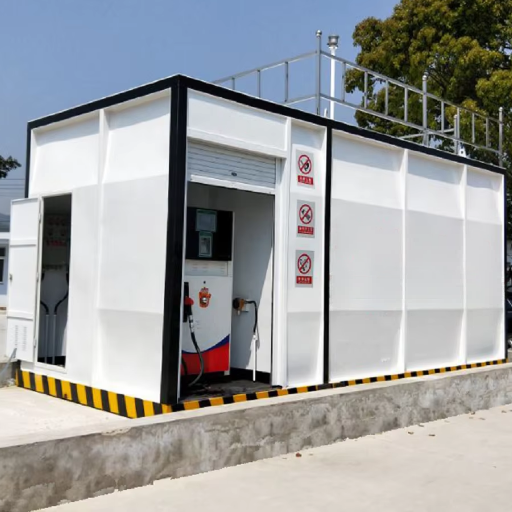
Skid station relocation is a document exercise as much as a lifting one. A carrier, a border post, a crane contractor, or a destination fire officer can stop the job for a missing page.
| Document | Why it travels | Issued by |
|---|---|---|
| Gas-free or cleaning certificate | Changes the transport classification; accepted by carriers and ports | Qualified inspector |
| MSDS or SDS | Carrier, border and emergency response | Fuel supplier or manufacturer |
| CSC plate and ACEP record, if container-framed | Transport credential for the frame | Classification society or surveyor |
| As-built drawing and anchor schedule | Destination pad, lift points, reconnection | Supplier |
| Lift plan and rigging certificates | Crane operator, insurer and site safety | Rigging contractor |
| Pressure and leak test records | Recommissioning baseline | Commissioning engineer |
| Electrical test records | Reconnection and inspection | Electrician |
| Dispenser and ATG calibration certificates | Weights and measures; leak detection | Service provider |
| Origin and destination permits | Authority chain | Operator |
| Maintenance and service history | Insurer, resale and warranty | Operator |
| Shipping papers and placards, only if residue remains | Legal transport | Shipper |
The 20ft skid station specification guide lists the twelve documents a supplier should hand over at purchase. This table is the subset that has to travel on the move, plus the two permits that belong to the operator.
A thirteen-item checklist keeps the sequence honest:
| # | Check |
|---|---|
| 1 | Confirm the destination permit path in writing. |
| 2 | Confirm the destination pad design and bearing capacity. |
| 3 | Book the crane and the transport, and verify the route limits. |
| 4 | Drain the product to a minimal heel and record the volume. |
| 5 | Purge and gas-free the tank, and obtain the certificate. |
| 6 | Lock out and tag out the power, then prove the circuit is dead. |
| 7 | Disconnect and cap the product, vent, and vapor lines. |
| 8 | Remove the anchors and photograph the as-built arrangement. |
| 9 | Verify the lifting points and center of gravity on the unit. |
| 10 | Lift, load, secure, and mark the unit. |
| 11 | Transport with the document pack. |
| 12 | Offload, level, anchor, and reconnect. |
| 13 | Retest, calibrate, fill under supervision, and hand over. |
Step 13 is the one that gets compressed when the schedule slips. Don’t let it.
Frequently Asked Questions
Can you move a skid station with fuel in it?
No. A 20,000 L diesel fill adds about 16.7 t to a unit that weighs 4.2 to 7.0 t dry, which puts it over the practical road cargo limit. Any residue also keeps the tank in dangerous-goods classification until it is cleaned and purged. Drain the product, purge the vapor, and carry the gas-free certificate.
Do I need a gas-free certificate to move a fuel tank?
If the tank has held fuel, yes. In the United States, 49 CFR 173.29 treats an empty packaging with residue as if it were full, which means placards, shipping papers, and a hazmat-endorsed driver. A certificate showing the tank was cleaned and purged is the evidence that the exemption applies. Carriers and ports often ask for it before loading.
Do I need a new permit if I move my skid station?
Assume yes. The destination has its own land-use, fire, environmental, and petroleum-licence approvals, and a temporary approval from the old site does not transfer. A move can also change the unit’s status from temporary to fixed if it is plumbed in at the new location. Start the destination application before the gas-free date, not after.
How much does it cost to relocate a skid station?
Our ten-year model prices a planned year-five move at $8,000. When a permit expiry forces the move, the fallback range is $5,000 to $12,000. Crane and transport are separate cost drivers: a US bulk-tank mover quotes $2,000 to $5,000 for the crane alone on a 30,000-gallon tank, and a 20ft skid is smaller but follows the same logic. A move that fails inspection costs more than either figure.
What has to be retested after a move?
Everything that carried product or current: tank airtightness, pipeline strength, leak verification, overfill alarm and shutoff, earth resistance, dispenser calibration, and interstitial monitoring. Use the same acceptance values as a new installation. The pad, earthing grid, and buried piping are new at the destination and are tested there, not assumed from the old site.
Conclusion
Relocating a fuel skid is a sequence, not a lift. Drain the product, purge and certify the tank gas-free, disconnect and cap the services, lift only at the designated points, move the unit as empty cargo, then re-site it and retest everything that carries fuel or current.
The two decisions that control the schedule are the gas-free date and the destination permit path. Settle both before the crane is booked. The rest is execution.
If you are relocating a fuel skid, talk to our team about lift points, transport configuration, and recommissioning. If you are still choosing the unit, start with the 20ft containerized fuel station and specify the lift points and documents before the steel is cut.