A single fuel dispenser can cost more than a new car. Yet many station owners only budget for the sticker price. That mistake leaves them exposed to installation surprises, compliance upgrades, and maintenance bills that can double the investment within five years.
You already know reliability, safety, and compliance matter. What you need is a clear picture of what a fuel dispenser really costs, from purchase to end of life. In this guide, we break down fuel dispenser cost ranges, the factors that drive price, and how to calculate total cost of ownership (TCO). You’ll learn how to make a confident, profitable decision. For detailed information, please refer to our fuel dispensers complete guide.
Here is what we cover:
- What drives fuel dispenser cost
- Price ranges by dispenser type
- Installation, permits, and supporting equipment
- Long-term costs: maintenance, energy, and downtime
- Hidden costs buyers often miss
- Leasing vs. buying vs. refurbished
- A simple TCO calculation framework
- Practical ways to lower TCO without sacrificing reliability
What Drives Fuel Dispenser Cost?

Fuel dispenser cost isn’t one flat number. A portable diesel transfer unit and a six-nozzle EMV-compliant forecourt dispenser serve very different needs. Their prices reflect that.
When you understand the cost drivers, you can compare quotes fairly and avoid paying for features you don’t need.
Dispenser Type and Configuration
The biggest price driver is configuration.
- Single-product dispensers handle one fuel type, such as gasoline or diesel. They’re the simplest and least expensive option.
- Dual-product dispensers support two fuel grades from one cabinet.
- Multi-product dispensers can deliver three to six fuel types or grades, often with multiple hoses per side.
More nozzles mean more internal meters, valves, hoses, and electronics. High-flow fleet dispensers also carry a premium. They move fuel faster and need heavier-duty components.
For a retail gas station, a basic single-product unit typically starts around 15,000. A multi-product dispenser can exceed 75,000 before installation.
Technology and Features
Modern fuel dispensers are closer to retail computers than simple pumps. Every technology layer adds cost:
- Electronic meters and digital displays replace mechanical counters.
- EMV chip card readers are now expected in many markets. They’re often required to avoid fraud liability.
- Contactless and mobile payment support adds hardware and software.
- Touchscreens and media displays enable advertising and loyalty programs.
- IoT remote monitoring lets teams spot problems before they cause downtime.
- Vapor recovery systems reduce emissions but add 15–20% to base cost.
A basic mechanical dispenser is far cheaper than a connected, payment-ready model. The right choice depends on your volume, market, and compliance needs.
Brand, Build Quality, and Certifications
Premium brands such as Gilbarco, Wayne, Tatsuno, and Bennett cost more. Buyers pay for proven reliability, global parts availability, and service networks. Chinese-compatible or OEM alternatives often cost less upfront. But you should check their certifications and spare-parts access carefully.
Certifications also affect cost. Units built for North America may carry UL listing. European or hazardous-area applications often need ATEX compliance. Metrology standards such as OIML or NTEP matter for legal trade approval. Each certification adds engineering, testing, and paperwork costs.
At Shandong Shengrui, we build fuel dispensers to meet ISO, UL, ATEX, and OIML standards. That means you can deploy them in many different regulatory environments.
Fuel Dispenser Price Ranges by Type
The gap between the cheapest and most expensive fuel dispensers is enormous. Below is a practical guide to current market ranges. Keep in mind these are equipment-only estimates. Installation, permits, and supporting systems add significantly.
| Dispenser Type | Typical Unit Cost (USD) | Best For |
|---|---|---|
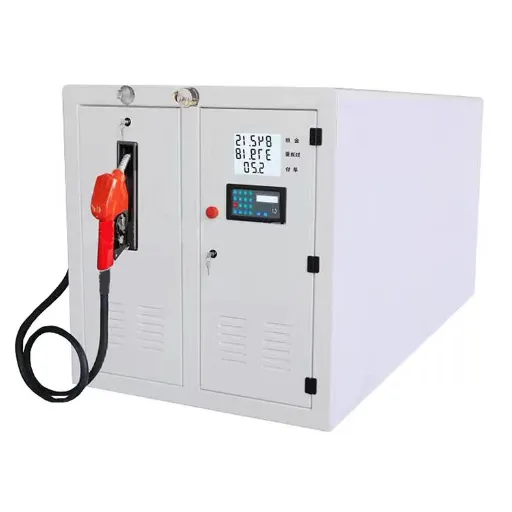
| Portable / mini dispenser | 200–2,000 | Mobile fleets, farms, construction sites |
| Standard 2-nozzle commercial | 1,500–5,000 | Small retail stations, emerging markets |
| 4-nozzle retail dispenser | 3,200–6,000 | Mid-volume retail stations |
| Premium EMV-ready single-product | 15,000–35,000 | High-compliance retail stations |
| Dual-product forecourt dispenser | 25,000–50,000 | Busy stations with multiple grades |
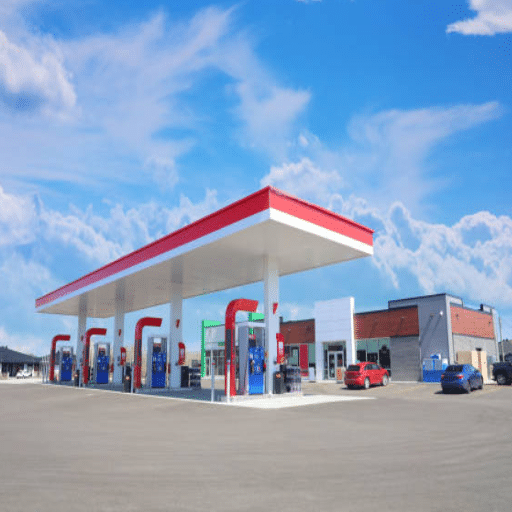
| Multi-product / 6-nozzle dispenser | 40,000–75,000+ | High-throughput travel centers |
Used or refurbished dispensers typically cost 40–60% less than new units. That option can work for budget-conscious buyers. But older electronics may not support EMV or modern payment standards.
Example: Maria runs a small retail station in Southeast Asia. She needs two reliable dispensers for gasoline and diesel. A pair of certified 2-nozzle units costs her roughly 4,000. A comparable pair of premium EMV-ready dispensers would cost close to 40,000 installed. For her market and volume, the simpler units are the smarter TCO choice.
Installation, Permits, and Supporting Equipment
Equipment cost is only the starting point. Getting the dispenser operational requires site work, professional installation, and integration with other station systems.
Installation Cost
Professional installation for a commercial dispenser typically ranges from 2,500 to 15,000 per unit. The wide range reflects:
- Site prep and concrete work
- Electrical and fuel line connections
- Forecourt controller and point-of-sale integration
- Testing and commissioning
For a full retail forecourt upgrade, total project costs can add 10,000 to 30,000 on top of equipment. That includes installation and permits.
Permits and Inspections
Permits usually cost 1,000 to 5,000, depending on local regulations. After installation, weights-and-measures officials test dispenser accuracy and place inspection stickers. Ongoing calibration checks are required to maintain legal-for-trade status.
Supporting Systems
A dispenser can’t work alone. You may also need:
- Fuel management system: 3,000–15,000
- Automatic tank gauge (ATG): for inventory monitoring and leak detection
- Point-of-sale (POS) integration: for payment processing and reporting
- Safety systems: emergency shut-offs, leak detectors, fire suppression
These systems improve accuracy, compliance, and uptime. But they must be included in the total project budget from day one.
Long-Term Costs: Maintenance, Energy, and Downtime

The real cost of a fuel dispenser unfolds over 10 to 15 years. Buyers who plan only for the purchase price often miss these ongoing expenses.
Annual Maintenance and Service Contracts
A preventive maintenance contract typically costs 1,500 to 3,000 per dispenser per year. This usually covers:
- Quarterly inspections
- Filter changes
- Calibration checks
- Priority repair response
Outside the contract, expect additional costs:
- Meter calibration: 250–400 per year
- Weights-and-measures certification: 200–300 per visit
- Hose or nozzle replacement: 300–500
- Pump motor or circuit board replacement: 800–1,500
- Unexpected repairs: 500–5,000 per incident
Proactive maintenance reduces emergency repairs and extends equipment life.
Energy Consumption
The fuel pump itself isn’t a massive power draw. A typical dispenser pump uses roughly 100 to 200 kWh per month. That costs about 10 to 50 per pump, depending on local electricity rates. The larger energy consumers at a station are usually canopy lighting, HVAC, refrigeration, and security systems.
Downtime Cost
A broken dispenser does more than sit idle. It drives customers to competitors and can reduce convenience store traffic.
A single out-of-service pump can cost a station 400 to 600 per day in lost sales. At high-volume locations, the combined loss of fuel margin and in-store sales can exceed $1,000 per day.
Example: James operates a busy highway station in North America. One of his four dispensers fails on a Friday afternoon. Because he has a service contract with a 24-hour response SLA, the unit is repaired by Saturday morning. The 18-hour outage still costs him roughly 500 in fuel margin and another 300 in lost c-store sales. His annual service contract pays for itself after just one or two incidents.
Hidden Costs Buyers Often Miss
Some of the most expensive fuel dispenser costs aren’t on the initial invoice. They appear later, often as compliance requirements or operational surprises.
EMV Compliance and Payment Security
The fuel dispenser EMV liability shift took effect in April 2021 in the United States. Stations without EMV-compliant pay-at-the-pump terminals now bear full liability for counterfeit card fraud at the dispenser.
Upgrade options include:
- Third-party retrofit kits: 3,000–8,000 per pump
- Manufacturer retrofit kits: 9,000–12,000 per pump
- New EMV-ready dispensers: 12,000–20,000+
Older dispensers, especially those over 10 years old, may not support retrofit kits. They require full replacement.
PCI DSS Scope and Network Security
Payment Card Industry Data Security Standard (PCI DSS) compliance applies to any system that stores, processes, or transmits cardholder data. Fuel dispensers with pay-at-the-pump terminals fall under this scope.
Costs may include:
- Network segmentation
- Firewalls and secure VPNs
- Quarterly vulnerability scans
- Annual self-assessments or third-party audits
- Point-to-point encryption (P2PE) hardware
Non-compliance can lead to fines ranging from 5,000 to 100,000 per month, plus liability for fraud and chargebacks.
Credit Card Processing Fees
Every transaction processed at the dispenser carries a processing fee, typically 2% to 4% of the transaction value. Over a high-volume year, this becomes a high operating cost. However, it isn’t unique to any single dispenser choice.
Warranty Gaps and End-of-Life Disposal
Standard warranties typically cover one to two years. Extended coverage, spare parts, and end-of-life disposal should be factored into TCO. A dispenser that’s expensive to repair or obsolete can become a liability long before it physically fails.
Leasing vs. Buying vs. Refurbished: A TCO Comparison

Not every buyer needs to own dispensers outright. Leasing and refurbishment can improve cash flow or reduce upfront risk.
| Factor | Buying New | Buying Refurbished | Leasing |
|---|---|---|---|
| Upfront cost | High (15K–75K+ per unit) | Medium (40–60% less) | Low or none |
| Monthly cost | None, aside from financing | None | 300–800 per dispenser |
| Ownership | Full ownership | Full ownership | Lender owns |
| Maintenance responsibility | Buyer | Buyer | Often included |
| Technology refresh | Buyer-managed | Limited | Easy at lease end |
| Best for | Long-term operations | Tight budgets with acceptable risk | Preserving capital, frequent upgrades |
Leasing works well when payment technology changes quickly or when capital is better deployed elsewhere. Buying new is usually more cost-effective over a 10- to 15-year horizon. This is especially true if the station has stable volume and strong cash flow.
How to Calculate Fuel Dispenser TCO
Total cost of ownership gives you a realistic view of what a dispenser costs over its useful life. The formula is simple:
TCO = Acquisition Cost + Installation + (Annual O&M × Years) + Downtime Cost + Compliance Cost − Residual Value
Worked Example: Mid-Size Retail Station
Suppose you install four dual-product EMV-ready dispensers.
| Cost Item | Amount |
|---|---|
| Equipment (4 dispensers at $30,000 each) | $120,000 |
| Installation and permits | $40,000 |
| Fuel management system and POS integration | $20,000 |
| Annual maintenance (4 dispensers × $2,000 × 10 years) | $80,000 |
| Energy (4 pumps × $25/month × 120 months) | $12,000 |
| EMV/compliance upgrades (mid-life) | $20,000 |
| Estimated downtime incidents over 10 years | $15,000 |
| 10-Year TCO | $307,000 |
This example shows why looking only at the $120,000 equipment price is misleading. Installation, maintenance, energy, compliance, and downtime add more than 150% to the base cost.
For a free starting point, you can adapt a general TCO calculator such as the one published by the New Zealand Government Procurement team.
How to Lower Fuel Dispenser TCO Without Sacrificing Reliability

Reducing lifetime cost doesn’t mean buying the cheapest dispenser. It means making choices that cut waste, downtime, and compliance risk.
Choose Modular, Serviceable Platforms
Dispensers built with standardized components are easier and cheaper to repair. Look for suppliers with strong spare-parts availability and clear technical documentation.
Negotiate Uptime-Focused Service Contracts
A maintenance contract with a response-time SLA reduces downtime cost. Some providers also offer remote diagnostics that resolve payment issues without a site visit.
Standardize Across Sites
If you operate multiple stations, standardizing on one platform reduces training, inventory, and maintenance complexity.
Plan for Compliance Early
Budget for EMV, PCI, and regional certification requirements before installation. Retrofitting after the fact is almost always more expensive.
Buy from a Supplier with Global Export Experience
International projects face additional logistics, documentation, and compliance challenges. A supplier with multi-region experience can help you avoid customs delays, certification mismatches, and installation errors.
At Shandong Shengrui, we provide CAD drawings, 3D assembly videos, remote technical support, and on-site supervision. We help stations deploy efficiently worldwide.
Conclusion
Fuel dispenser cost is only the beginning of the story. The true investment includes installation, maintenance, energy, downtime, compliance, and eventual replacement. Buyers who evaluate total cost of ownership make better decisions, avoid budget shocks, and protect long-term profitability.
Key takeaways:
- Equipment prices range from under 2,000 for portable units to 75,000+ for multi-product retail dispensers.
- Installation, permits, and supporting systems can add 10,000 to 30,000 per project.
- Annual maintenance, energy, and downtime are major long-term cost drivers.
- EMV and PCI compliance aren’t optional; plan for them early.
- Leasing, buying new, and buying refurbished each suit different financial situations.
- A simple TCO model helps you compare options and choose the right investment.
If you’re planning a new fueling project or upgrading an existing station, request a customized quote and TCO assessment from our team. We’ll help you match the right fuel dispenser to your site, volume, and compliance needs.