Search online for a fuel storage tank, and you’ll hit the wall fast. One listing advertises a “double-layer self-sealing” tank. The next calls itself “explosion-proof.” A third does both in the title. And if you’ve spent a day comparing explosion-proof tank vs double-wall tank listings, you’ve probably asked the same thing most buyers do: aren’t these the same thing?
They’re not. They protect against two entirely different failures. Get it wrong, and you’ll buy the wrong tank, with a false sense of safety on top.
Here’s the short version before we go deeper: a double-wall tank contains leaks (it’s built for secondary containment). An explosion-proof tank, what engineers call a barrier-filled tank, suppresses an internal vapor-space explosion before pressure can build. One manages fuel that escapes; the other manages vapor that ignites. In many real-world sites, the right answer is to spec both. This guide explains each, shows you how they compare, and gives you a checklist to pick what your site actually needs.
For comprehensive information, please read our article on explosion-proof tanks.
First, the Terms: What “Explosion-Proof” and “Double-Wall” Actually Mean

Buyers struggle here for a reason: the names collide. “Double-wall” describes construction. “Explosion-proof” describes a safety function. The market keeps mixing them up, so let’s separate them cleanly.
A double-wall (secondary-containment) tank is a tank inside a tank. The inner wall holds the fuel; the outer wall is a containment jacket around it. Between the two sits the interstitial space, a monitored gap that captures any leak from the inner wall and triggers an alarm.
In an SF tank (the global underground benchmark), the inner tank is steel, and the outer jacket is fiberglass-reinforced plastic (FRP), which resists soil corrosion. The whole system’s job is leak control: keep fuel out of the ground and water, and tell you early if a wall fails.
An explosion-proof (barrier) tank addresses a different danger. Inside every tank above the liquid sits the vapor space (ullage). When air and fuel vapor mix there in the right ratio, and a spark or heat source finds them, that confined mixture can ignite and detonate with explosive force. A barrier-filled tank is packed with a metal honeycomb or mesh (HAN Barrier and aluminum-alloy honeycomb are two common forms) that fills the vulnerable space. The material absorbs heat, quenches the flame front, and smothers the pressure wave before it can blow the tank apart. It’s passive protection: no electronics, nothing to switch on, always working.
One overlap trips people up, so it’s worth stating plainly. On aboveground sites, fire-rated tanks (UL 2085) are double-wall by design: the insulated interstitial space is what earns them their two-hour fire rating. So “double wall” and “fire/explosion protection” aren’t opposites. Double-wall construction is a layer that some protection strategies build on.
The real question in this article isn’t whether a wall is double. It’s whether you need containment, suppression, or both.
For a technical perspective on explosion-proof tank design, see our article on explosion-proof tanks’ working principle.
What a Double-Wall (SF) Tank Protects Against: Containment

Think of the double-wall tank as a leak-management system. Its failure mode is slow: corrosion, a weld defect, or a cracked fitting lets product escape. Left alone, that product migrates into the soil and groundwater, a liability that can run into six figures to remediate, before fines and reputational damage.
The double-wall design stops that in two ways:
- Secondary containment. If the inner wall fails, the outer wall or jacket captures the release. The interstitial space is sized to hold the volume required by code and local regulations.
- Continuous leak detection. Because the space between the walls is monitored, a breach of either wall sets off an alarm, usually a sensor probe, a vacuum/pressure gauge, or a brine-filled hydrostatic system that alarms when its level changes. You find out about a leak in days or hours, not years.
That monitoring is why regulators pushed double-wall construction so hard. Under the EPA’s underground storage tank rules (40 CFR Part 280), new and replaced underground tanks and piping need secondary containment. Europe’s EN 12285 series and China’s GB 50156 set similar expectations for buried fuel storage. Our SF double-layer tank — steel core, FRP jacket, UL 1746-listed — is the form most spec’d for this job, because the FRP shell shrugs off the electrochemical corrosion that kills bare steel. You can dig into construction details in our SF double-wall tank guide and the broader underground fuel storage tanks guide.
Now, the part sellers rarely print: a double-wall tank does not stop an internal explosion. If vapor in the ullage ignites, the outer wall is a containment layer, not a suppression device. It may hold the resulting mess (good), but it won’t stop the pressure event that caused it. That’s a separate problem, and it’s the barrier tank’s job.
For systemic considerations, please read our article on explosion-proof tanks for skid and container fuel stations.
What an Explosion-Proof (Barrier) Tank Protects Against: Suppression
Here the failure mode isn’t a slow leak. It’s a fast one: a vapor-space ignition. A reminder that clarifies everything: liquid fuel doesn’t explode; vapor does. That’s why an empty-ish tank can be more dangerous than a full one. The empty volume holds the ignitable mixture.
The clearest real-world proof comes from aviation. TWA Flight 800’s center wing tank failed in 1996 from a vapor-space explosion in the ullage, not from the liquid fuel, and not because the tank leaked. Containment couldn’t help; the tank destroyed itself from the inside out. The same physics applies to a fuel storage tank whose vapor space meets an ignition source: static discharge at a fill opening, hot work nearby, a lightning strike, or a faulty fitting.
A barrier-filled tank stops that chain before pressure can build. Aluminum-alloy honeycomb or HAN Barrier mesh fills the vulnerable volume and acts in three ways at once:
- Heat sink: the metal soaks up heat faster than the flame front can propagate.
- Flame quencher: the honeycomb’s narrow channels interrupt the flame, dropping it below the point where combustion can sustain itself.
- Pressure dampener: the structure splits the volume into thousands of tiny cells, so a deflagration can’t build into a destructive overpressure.
It’s passive and always on, no power, no sensor, no human to arm it. For a deeper look at the mechanism, limits, and the standards that govern it (including NFPA 69), see our HAN Barrier explosion-proof technology guide and the explosion-proof tank product page.
One honest caveat, because you deserve it: suppression works on the filled vulnerable volume. It dramatically reduces internal explosion risk, but it does not replace grounding and bonding, flame arresters, emergency venting, or (for aboveground tanks sitting near exposures) a fire-rated UL 2085 design. Treat the barrier as a powerful layer, not a license to skip the rest of the safety system.
If diesel storage is your main concern, our explosion-proof diesel storage tank guide covers specifications and standards in more detail.
Explosion-Proof Tank vs. Double-Wall Tank: Side-by-Side

Here’s the head-to-head. Note the third column: many high-risk sites genuinely want the combined configuration.
| Double-Wall (SF) Tank | Explosion-Proof (Barrier) Tank | Both (Barrier-Filled SF Double-Wall) | |
|---|---|---|---|
| Primary job | Contain leaks (secondary containment) | Suppress internal vapor-space explosions | Contain leaks and suppress explosions |
| Failure mode it stops | Slow release: corrosion, weld/crack, fitting leak | Fast event: vapor-space ignition / deflagration | Both, in one vessel |
| How it works | Inner tank + monitored interstitial space, outer wall/jacket | Honeycomb/mesh barrier fill that quenches flame & pressure | SF double-wall construction plus barrier fill in the vulnerable volume |
| Monitoring | Continuous: sensors, vacuum/pressure, hydrostatic | Passive, no monitoring needed | Continuous leak monitoring (barrier needs none) |
| Key standards | EPA 40 CFR 280; EN 12285; UL 1746; GB 50156 | NFPA 69 deflagration suppression; China GB/AQ barrier standards | Complies with containment standards and adds suppression |
| Typical fit | Underground tanks; leak-control priority; sensitive groundwater sites | Skid/container stations, urban, enclosed, high-ignition-risk | High-throughput, urban, mining/fleet, or code-driven sites |
| Capacity impact | None (jacket adds footprint, not internal loss) | ~1–3% volume displaced by barrier fill | ~1–3% displaced, same containment footprint |
| Best for | Standard compliant UST replacement | Where the ignition risk, not the leak risk, dominates | The “I want the safest configuration” buyer |
The main difference in one sentence: the double-wall tank protects the environment from the fuel, and the explosion-proof tank protects the tank from its own vapor.
That’s also the fastest way to sanity-check a marketplace listing. If a “double-layer self-sealing explosion-proof” tank turns out to be a plain double-wall vessel with no barrier fill, you know exactly what it does and doesn’t give you, and you can ask the seller to confirm which one you’re actually buying.
For the containment half of that table, our double-wall vs. single-wall fuel tanks guide goes deeper. For the suppression half, start at the explosion-proof tank page.
How to Choose: A 5-Question Checklist
Work these five questions in order, and the right configuration usually answers itself.
1. Where does the tank sit, underground or aboveground?
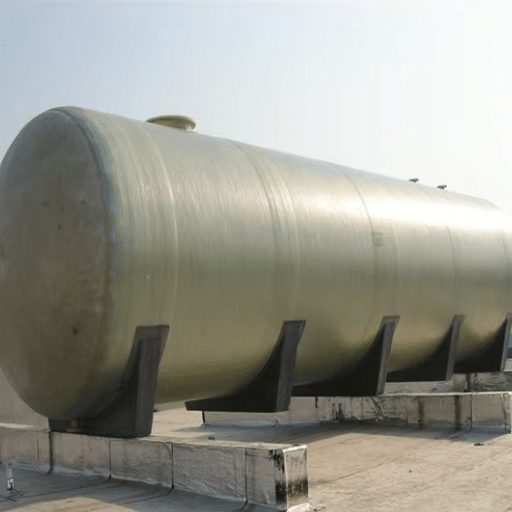
Buried tanks almost always trigger secondary-containment rules (EPA 40 CFR Part 280 in the US; EN 12285 in Europe; GB 50156 in China), which push you to an SF double-wall tank regardless. Aboveground tanks face fire-code rules tied to how close they sit to buildings, property lines, and dispensers, which can push you toward fire-rated (UL 2085) construction.
2. Is secondary containment mandated for this install?
For new or replaced underground tanks and piping: yes, in most regulated markets. That alone answers the double-wall question. If containment isn’t mandated (some aboveground, low-risk sites), you have more latitude, and more need to think about question 4.
3. Is the site near groundwater, wells, or sensitive receptors?
Near a water source, a floodplain, or a residential area? Choose a double-wall for its containment and early detection. This is the environmental-protection decision, and it rarely has a “skip it” option.
4. What’s the ignition and vapor-space risk?
Higher risk profiles, enclosed or skid/container units, urban sites with lots of activity nearby, high-throughput stations, mining or industrial sites where hot work and vehicle movement happen around fuel, argue for barrier suppression. Ask: what’s the chance an ignition source meets a vapor space on this site? If the honest answer is “not zero and consequences are severe,” add the barrier.
5. Does your code or the AHJ require a fire rating?
Aboveground tanks within certain distances of exposures may need a fire-protected (UL 2085) design, which, remember, is a double-wall tank with insulating interstitial fill. If an inspector or fire marshal is in your approval chain, confirm the required rating before you buy. It changes the spec.
When in doubt, ask for both. A barrier-filled SF double-wall tank isn’t exotic; it’s the same SF tank you’d spec for compliance, with honeycomb or HAN Barrier added in the volume that would otherwise hold ignitable vapor. You pay a small capacity cost (~1–3%, the honest figure) and a modest premium, and you cover both failure modes with one vessel. For a skid-mounted or container station in a constrained site, that consolidation is often the cheapest insurance you’ll buy.
Scenario: a fleet depot on the edge of a city wanted underground diesel storage for regulatory reasons but sat near a busy maintenance yard, welding, forklifts, vehicle traffic within meters of the tank fill. Containment alone handled the code. It didn’t handle the vapor risk. The answer was an SF double-wall tank with barrier fill: compliant, monitored, and with an internal suppression layer for a site that would never be spark-free.
FAQ
Is an explosion-proof tank the same as a double-wall tank?
No. A double-wall tank provides secondary containment for leaks; an explosion-proof (barrier) tank suppresses internal vapor-space explosions. They address different failure modes. A tank can be double-wall, barrier-filled, or both.
Does a double-wall tank stop explosions?
No. A double-wall tank contains a release if a wall fails, but its outer wall is not a suppression device. It won’t stop an internal vapor-space ignition. That requires barrier fill (or other explosion-suppression measures).
Does the barrier fill reduce my fuel capacity?
Yes, slightly. The barrier material displaces roughly 1–3% of the tank volume. It’s a small, honest trade-off for passive explosion suppression, and much cheaper than the alternative.
Do I need a fire-rated UL 2085 tank instead?
Only if your site requires fire-rated aboveground construction (based on tank location and exposures). UL 2085 tanks are double-wall by design and fire-rated for pool fires and impacts, but they are not a substitute for barrier suppression of an internal vapor-space explosion; the two serve different hazards.
Can I get a tank that does both?
Yes. A barrier-filled SF double-wall tank combines secondary containment and continuous leak monitoring with internal explosion suppression. It’s the recommended configuration for high-risk, urban, or high-throughput sites.
Conclusion
Here’s what to keep from this: the double-wall tank and the explosion-proof tank aren’t competing products; they’re answers to different questions. Double-wall answers “what happens if this tank leaks?” Explosion-proof answers “what happens if this tank’s vapor ignites?” Pick whichever question your site actually faces. Pick both when you can’t rule either out.
Your next steps:
- This week: confirm the tank’s location (underground vs. aboveground) and pull the code or inspector requirements that apply to it.
- This month: get both configurations priced for the same capacity, containment-only and barrier-filled, so the decision is a number, not a guess.
Then talk to someone who engineers these for a living. Send us your site drawing, your tank requirements, and your local code references, and we’ll recommend the exact configuration, no obligation. It’s the fastest way to make sure “which do you need?” gets a straight answer instead of a marketing one.
Contact our engineers or browse the full fuel storage tank range to get started.