A facility manager in Texas once told us he saved thirty-five percent by choosing carbon steel over stainless steel for his new diesel storage farm. Three years later, he had spent most of that savings on emergency recoating and internal repairs because the lining was wrong for the fuel blend. His story is more common than most buyers expect. A carbon steel tank can deliver decades of reliable service, but only when the material grade, coating system, and design standard match the application.
If you are sourcing storage for fuel, water, or industrial liquids, you have probably faced the same tension. Carbon steel is strong, weldable, and cost-effective, yet it rusts when unprotected.
Standards like API 650, UL 142, AWWA D100, and GB/T 150 each apply in different situations. Coatings range from basic epoxy to high-performance glass-flake linings. Prices vary by capacity, certification, and export documentation. This guide cuts through the confusion so you can specify, compare, and buy a carbon steel tank with confidence.
In this article, you will learn what defines a carbon steel tank, which types suit each application, how carbon steel compares with stainless steel, and how to protect against corrosion. We will also cover coatings and linings, fabrication standards, realistic carbon steel tank cost ranges, inspection schedules, and a step-by-step buyer checklist.
What Is a Carbon Steel Tank?

A carbon steel tank is a storage vessel fabricated primarily from an iron-carbon alloy containing less than two percent carbon. Common material grades include Q235B in Chinese manufacturing, ASTM A36 and A516 in North American fabrication, and equivalent structural steels in European EN standards. The low carbon content gives the steel good weldability and ductility while retaining enough strength for pressure and atmospheric storage duties.
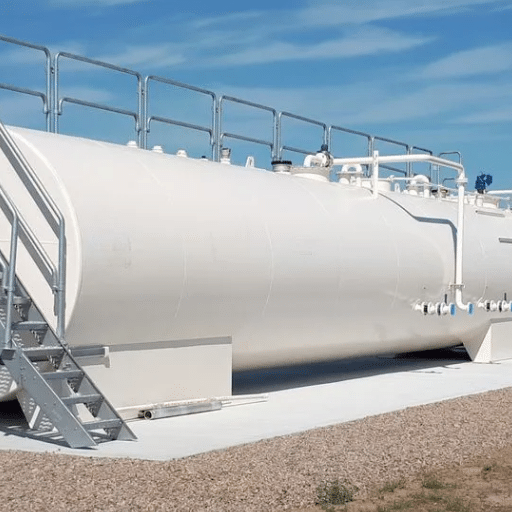
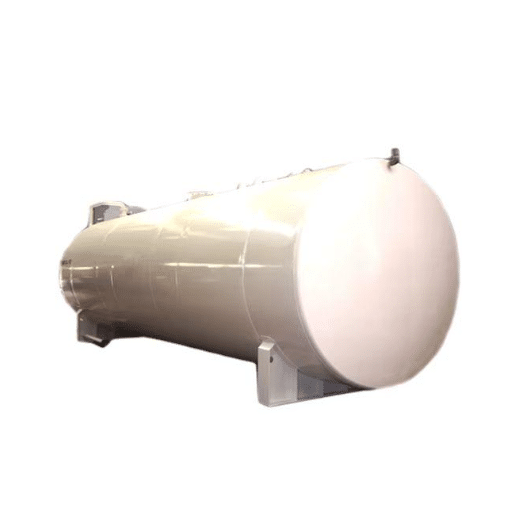
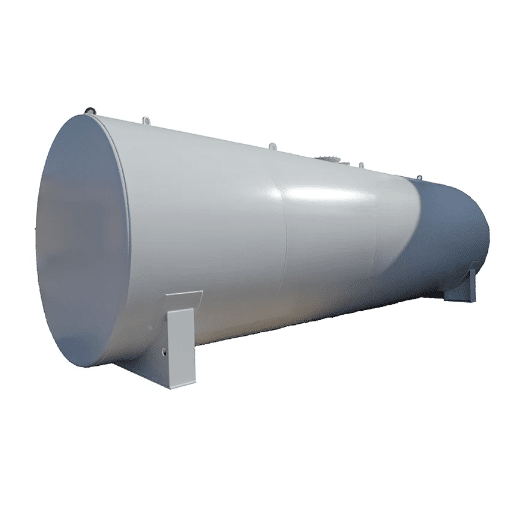
These tanks store liquids and gases across fuel retail, water supply, chemical processing, power generation, and industrial manufacturing. They may be shop-fabricated in standard sizes or field-erected for capacities exceeding shop limits. A carbon steel storage tank can be single-wall or double-wall, aboveground or underground, horizontal or vertical, depending on the liquid, the site, and the regulatory environment.
Carbon steel is used for storage because it balances four priorities: mechanical strength, fabrication flexibility, recyclability, and cost. It accepts welded seams, nozzles, manways, and appurtenances without the specialized tooling some alloys require. It also supports protective coatings and cathodic protection systems that extend service life far beyond unprotected steel. For buyers who need certified, export-ready equipment, carbon steel remains the most widely specified material in the global storage tank market.
Types of Carbon Steel Tanks
Choosing the right type of carbon steel storage tank is the first step in a successful project. The classification depends on location, wall construction, orientation, fabrication method, and pressure rating. Each configuration has its own standards, cost profile, and maintenance needs.
Aboveground vs Underground
Aboveground carbon steel tanks are easier to inspect, maintain, and relocate. They typically comply with UL 142 or API 650 and are common in industrial plants, fleet fueling sites, and backup generator installations. Underground carbon steel tanks save surface space and reduce fire exposure, but they require secondary containment, leak detection, and cathodic protection. In the United States, underground storage tanks fall under EPA regulations, and many jurisdictions now require double-wall construction for new fuel installations. For more information, please read our article on carbon steel underground storage tanks.
Single-Wall vs Double-Wall
A single-wall carbon steel tank is the simplest form. It is economical and widely used for water, chemicals, and some fuel applications where secondary containment is provided externally.
A double-wall tank adds an inner and outer steel shell with an interstitial space for leak monitoring. This design reduces environmental risk and is increasingly required for gasoline, diesel, and ethanol storage. Our related guide on underground fuel storage tanks explains how double-wall construction protects both the tank and the surrounding soil.
Horizontal vs Vertical
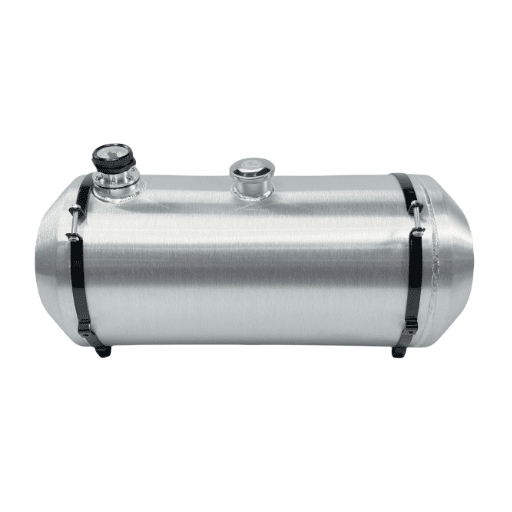
Horizontal carbon steel tanks are common for transportable, skid-mounted, and below-ground installations. Their low profile fits compact sites and simplifies nozzle piping. Vertical tanks maximize capacity per footprint and are typical for large water, chemical, and fuel terminals. The choice affects foundation loading, shell thickness, and access for inspection.
Shop-Fabricated vs Field-Erected
Shop-fabricated tanks are built in a factory, transported whole, and installed on site. They usually range up to several hundred cubic meters and offer tighter quality control and faster delivery. Field-erected tanks are assembled on location from steel plates and are used for very large capacities such as bulk fuel terminals and municipal water reservoirs. Field erection requires certified welders, rigorous non-destructive testing, and close supervision.
Pressure vs Atmospheric
Atmospheric carbon steel tanks store liquids at or near ambient pressure. They dominate fuel, water, and chemical storage. Pressure vessels fabricated from carbon steel must meet ASME VIII or GB/T 150 requirements and are used for compressed gases, process vessels, and high-vapor-pressure liquids. Never confuse the two: a tank designed for atmospheric service cannot safely handle pressure without redesign.
| Type | Typical Capacity | Common Standards | Best For |
|---|---|---|---|
| Aboveground single-wall | 1,000 – 50,000 gal | UL 142, API 650 | Industrial fuel, water, chemicals |
| Aboveground double-wall | 1,000 – 30,000 gal | UL 2085, API 650 | High-risk fuel, environmental protection |
| Underground double-wall | 5,000 – 50,000 gal | UL 58, EPA UST | Retail fuel stations, depots |
| Field-erected welded | 100,000+ gal | API 650, AWWA D100 | Bulk terminals, municipal water |
| Pressure vessel | Varies | ASME VIII, GB/T 150 | Compressed gases, process liquids |
Carbon Steel Tank Applications
A carbon steel tank is not limited to one industry. Its adaptability comes from the combination of material strength, coating technology, and standard compliance. Here are the most common applications and what each one demands from the tank design.
Fuel Storage
Gasoline, diesel, ethanol blends, biodiesel, and aviation fuel are frequently stored in carbon steel fuel tanks. The interior must resist hydrocarbon attack, while the exterior must withstand weather, UV exposure, and spill contact. For retail gas stations and fleet depots, double-wall construction is often mandatory. Vapor recovery, overfill prevention, and leak detection systems integrate with the tank to meet environmental and safety rules.
When fuel storage is part of a new station build, the tank must interface with fuel dispensers, piping, and leak sensors. Choosing a certified tank from the start avoids costly retrofits during commissioning. For a deeper understanding, please read our carbon steel fuel storage tanks guide.
Water Storage
Carbon steel water tanks are used for potable water, fire suppression, process water, and irrigation. Potable applications require NSF-approved or equivalent interior linings that do not leach contaminants. Fire suppression tanks must comply with NFPA 22 and often require large capacities with quick refill capability. AWWA D100 covers welded carbon steel tanks for water storage and is the benchmark for municipal projects in North America.
One advantage of carbon steel for water storage is longevity. With proper linings and periodic recoating, AWWA D100 welded tanks can exceed eighty years of service. The upfront cost is higher than some polymer alternatives, but the lifecycle value is strong for permanent installations.
To learn more information, please click to view our guide about carbon steel water storage tanks.
Chemical and Industrial Storage
Carbon steel chemical storage tanks handle acids, bases, solvents, and process intermediates when the interior lining matches the chemical. A bare carbon steel tank may be acceptable for some oils and hydrocarbons, but aggressive chemicals require phenolic, rubber, glass-flake, or fluoropolymer linings. Always verify material compatibility with the specific concentration and temperature.
Industrial users also value carbon steel for its ability to support agitation, heating coils, insulation, and instrumentation. The material can be engineered for seismic zones, high wind loads, and extreme temperatures when the design standard is selected correctly.
For detailed information, please refer to our carbon steel chemical storage tanks guide.
When Carbon Steel Is the Right Choice
Carbon steel is the right choice when upfront budget matters, the stored liquid is compatible with properly lined steel, and the project can accommodate periodic inspection and recoating. It is less suitable when the liquid is highly corrosive, when zero maintenance is required, or when stainless steel’s hygienic properties are mandatory, such as certain food and pharmaceutical duties.
Ready to match a carbon steel tank to your application? Request a customized specification from our engineering team and receive a quote tailored to your liquid, capacity, and standards.
Carbon Steel vs Stainless Steel Tanks

The carbon steel tank vs stainless steel tank debate usually begins with price. Carbon steel tanks are typically thirty to fifty percent cheaper upfront than comparable stainless steel tanks. But the decision should include corrosion resistance, maintenance, lifespan, and total cost of ownership. For a detailed comparison, please read our article on carbon steel tank vs stainless steel tank.
Upfront Cost and Fabrication
Carbon steel is abundant, easy to weld, and requires less specialized labor. This keeps fabrication costs lower and lead times shorter for most capacities. Stainless steel costs more per ton and demands cleaner welding environments to avoid contamination. For large field-erected tanks, the material price gap can be substantial.
Corrosion Resistance and Lifespan
Stainless steel resists corrosion through its chromium oxide layer. Carbon steel does not. Without coatings or cathodic protection, carbon steel will rust in atmospheric, soil, or immersion conditions.
However, a well-coated carbon steel tank can last twenty to thirty years in fuel service and much longer in water service with periodic maintenance. Stainless steel may last longer in aggressive environments, but the premium is only justified when corrosion rates are high, or product purity is critical.
Maintenance Requirements
Carbon steel tanks need exterior paint systems, interior linings, and periodic inspection. Stainless steel tanks still require inspection and cleaning, but they typically need fewer coating repairs. The maintenance burden for carbon steel is predictable and manageable when built into the project budget from day one.
Decision Framework by Application
Choose carbon steel when the liquid is compatible with a lining, the environment allows protective coatings, and budget efficiency is important. Choose stainless steel when corrosion is severe, cleaning must be frequent and aggressive, or when regulatory codes require it. For many fuel, water, and industrial applications, carbon steel with the right protection system delivers the best value.
| Factor | Carbon Steel Tank | Stainless Steel Tank |
|---|---|---|
| Upfront cost | 30-50% lower | Higher |
| Corrosion resistance | Requires coatings/cathodic protection | Naturally resistant |
| Typical lifespan | 20-30+ years with maintenance | 30-50+ years |
| Maintenance | Periodic recoating and inspection | Lower coating maintenance |
| Best applications | Fuel, water, compatible chemicals | Aggressive chemicals, food, pharma |
| Fabrication | Standard welding, shorter lead time | Specialized welding, longer lead time |
Corrosion Protection for Carbon Steel Tanks
Corrosion is the single biggest risk to carbon steel tank life. It appears as uniform thinning, pitting, galvanic attack, or stress corrosion cracking. The good news is that corrosion can be controlled through a combination of coatings, linings, cathodic protection, and sound design. To achieve the best protection effect, please read our article on carbon steel tank corrosion protection.
Why Carbon Steel Corrodes
Carbon steel corrodes when an electrochemical reaction occurs between the iron, moisture, and oxygen. In fuel tanks, microbial contamination and water bottoms accelerate bottom corrosion.
In buried tanks, soil chemistry, stray currents, and chloride levels drive external pitting. In water tanks, chlorides and oxygen content influence both internal and external corrosion rates. Understanding the environment is the first step in specifying protection.
Protective Coatings and External Paint Systems
External coatings create a barrier between the steel and the atmosphere. Common systems include epoxy primers, polyurethane topcoats, and zinc-rich primers for severe environments.
A typical specification uses a primer, intermediate epoxy coat, and UV-resistant topcoat. The total dry film thickness, surface preparation, and application method determine how long the coating lasts. Exterior paint systems on aboveground tanks typically last fifteen to twenty years before major recoating.
Internal Linings
Internal linings protect the steel from the stored liquid. Epoxy linings are widely used for fuel and water.
Phenolic and polyurethane linings resist solvents and some chemicals. Glass-flake and rubber linings handle aggressive media. Fusion-bonded epoxy provides a hard, abrasion-resistant layer. The wrong lining can fail within months, so compatibility testing is essential.
Want a deeper look at how to choose a lining for your stored liquid? Our carbon steel tank coating and lining guide walks through service-specific selection in more detail.
Cathodic Protection
Cathodic protection controls corrosion by making the steel the cathode of an electrochemical cell. Sacrificial anodes use zinc or magnesium that corrodes instead of the tank.
Impressed current systems use an external power source and inert anodes for larger structures. Buried and submerged carbon steel tanks usually require cathodic protection to meet modern standards. For fuel station projects, cathodic protection works together with double-wall construction and leak detection to keep underground fuel storage compliant.
Design Practices That Extend Tank Life
Design details also affect corrosion. Avoid crevices where water can collect. Provide sloped bottoms to drain water.
Use corrosion allowances in wall thickness calculations. Specify proper surface preparation, such as Sa 2.5 blasting, before coating. And always leave access for internal inspection and recoating.
Maria, a municipal water engineer in a coastal city, learned this lesson during a tank upgrade. Her original specification called for a basic exterior paint system. After five years, salt-laden air had caused blistering and rust streaks.
She switched to a zinc-epoxy-polyurethane system with a higher dry film thickness. The replacement tank reached twelve years without major touch-up, proving that the right carbon steel tank corrosion protection method pays for itself.
Carbon Steel Tank Coatings and Linings Guide
Selecting the right carbon steel tank coating is as important as selecting the steel itself. The coating must resist the stored liquid, tolerate temperature cycles, and bond strongly to the prepared surface.
Epoxy Coatings
Epoxy coatings are the workhorse of tank protection. They adhere well to blast-cleaned steel, resist fuel and water, and provide excellent barrier properties. They are commonly used for both exterior and interior surfaces. The main limitation is UV degradation, which is why epoxies are usually topcoated with polyurethane for aboveground exteriors.
Phenolic and Polyurethane Linings
Phenolic linings resist hydrocarbons, alcohols, and some solvents. They are often used in fuel and chemical service. Polyurethane linings offer flexibility and abrasion resistance, making them suitable for products that move or slosh. Both require careful surface preparation and controlled application conditions.
Glass-Flake and Rubber Linings
Glass-flake coatings incorporate tiny glass flakes that create a tortuous path for moisture and chemicals. They are used in highly corrosive chemical service. Rubber linings, such as natural rubber or chlorobutyl, provide excellent chemical resistance and impact protection. They are common in acid storage and mining applications.
Fusion-Bonded Epoxy
Fusion-bonded epoxy, or FBE, is applied as a powder and cured to form a hard, chemically resistant layer. It is widely used for pipeline coatings and is increasingly applied to tank internals where abrasion resistance is important. FBE requires specialized application equipment but offers long service life.
Selecting the Right Coating by Stored Liquid
Match the lining to the liquid. Gasoline and diesel typically use epoxy or phenolic systems. Potable water requires NSF/ANSI 61 certified epoxy.
Acids may need rubber or glass-flake. High-temperature liquids require coatings rated for the service temperature. Never assume a generic epoxy will handle every product. Always request a coating datasheet and, when possible, compatibility confirmation from the coating manufacturer.
Welding, Fabrication, and Design Standards

A carbon steel tank is only as good as its fabrication. Welds, material traceability, non-destructive testing, and compliance with the correct standard determine safety, durability, and whether the tank will pass inspection at the destination.
API 650 and API 620
API 650 is the leading standard for welded carbon steel tanks for oil storage. It covers design, materials, fabrication, erection, and testing. API 620 applies to large, welded, low-pressure storage tanks. If you are buying tanks for petroleum terminals, refineries, or large fuel farms, API 650 is usually the required standard.
The Steel Tank Institute and the Steel Plate Fabricators Association provide a clear overview of why API 650 tanks remain the industry standard for safe liquid storage.
UL 142, UL 2085, and UL 58
UL 142 covers aboveground steel tanks for flammable and combustible liquids. UL 2085 adds fire-resistant and protected tank requirements. UL 58 applies to underground steel tanks.
These standards are common in North American retail fuel, generator, and fleet applications. A UL-listed tank gives buyers confidence that the design has been independently evaluated.
AWWA D100 and NFPA 22
AWWA D100 governs welded carbon steel tanks for water storage. It addresses design loads, seismic requirements, coatings, and inspection. NFPA 22 covers steel tanks for private fire protection. Municipal and commercial water projects should specify AWWA D100 compliance, while fire suppression tanks should reference NFPA 22.
ASME VIII and GB/T 150
ASME VIII Division 1 is the global standard for pressure vessels. GB/T 150 is the Chinese pressure vessel standard. Carbon steel pressure tanks must be designed, fabricated, and tested under one of these codes. Material certificates, weld procedures, and hydrostatic test records are mandatory.
GB50156 and Chinese Gas Station Standards
For gas station equipment sourced from China, GB50156 is the national standard for design and construction of fuel filling stations. It covers tank burial depth, fire separation distances, leak detection, and explosion-proof requirements. Chinese-made carbon steel fuel tanks built to Q235B with GB/T 150 and GB50156 compliance are widely exported to Asia, Africa, the Middle East, and South America.
What Buyers Should Require in a Fabrication Quote
A complete quote should include material grade and mill certificates, design standard, shell and head thicknesses, nozzle schedule, coating specification, hydrostatic test protocol, non-destructive testing scope, and third-party inspection. Export orders also need packing, freight terms, and destination-market certification support. Requesting these details upfront prevents surprises during installation and commissioning.
For standard information, please read our article on carbon steel tank welding and fabrication.
Carbon Steel Tank Cost and Total Cost of Ownership
Carbon steel tank cost varies widely. A small aboveground UL 142 tank may cost a few thousand dollars, while a large field-erected API 650 tank can cost hundreds of thousands. The purchase price is only part of the picture. Installation, coating, inspection, and maintenance determine the true lifecycle cost.
Equipment-Only Pricing by Capacity and Configuration
Small UL 142 aboveground carbon steel tanks in the 250 to 550 gallon range typically run from roughly $1,700 to $4,700. Mid-size tanks from 1,000 to 3,000 gallons often fall between $5,100 and $10,850. Large skid tanks and customized configurations range higher depending on fittings, coatings, and certification. Double-wall construction adds ten to thirty percent over a comparable single-wall tank.
Installation, Foundation, and Freight
Installation includes site preparation, concrete pads or ring walls, anchoring, piping, electrical, and commissioning. Freight depends on tank dimensions, weight, and distance. For international orders, sea freight, customs clearance, and import duties add cost. Skid-mounted and containerized systems reduce on-site labor by moving assembly to the factory.
Coating and Lining Costs
Coating can represent a significant share of the tank price. A basic exterior paint system costs less than a high-performance epoxy or rubber lining.
However, choosing the cheapest coating often increases maintenance costs. Interior linings for chemicals or potable water require certified products and professional application. Include coating in the initial budget, not as an afterthought.
Inspection and Maintenance Costs
API 653 mandates external inspection at least every five years and initial internal inspection within ten years. Depending on corrosion rates, internal inspection intervals can extend to twenty or thirty years. Budget for inspection access, cleaning, thickness testing, and minor repairs. These costs are predictable and far lower than replacing a tank prematurely.
For full cost breakdown information, read our dedicated guide to carbon steel tank cost.
20-Year TCO Comparison: Carbon Steel vs Stainless Steel
Imagine a procurement director comparing two 10,000-gallon tanks for a chemical blending plant. The carbon steel tank costs $45,000 with a high-quality lining. The stainless steel tank costs $78,000.
Over twenty years, the carbon steel tank needs one major recoat at $12,000 and annual inspections totaling $8,000. The stainless steel tank needs minimal coating work but two specialized cleanings at $6,000 each. The carbon steel option totals $65,000, while the stainless option totals $90,000. Carbon steel wins on TCO in this scenario because the lining matched the chemical.
This example shows why carbon steel tank cost analysis must include service life, not just invoice price. When the environment and coating are matched correctly, carbon steel often delivers better long-term value.
Maintenance, Inspection, and Lifespan
A well-built carbon steel tank can outlast several generations of site equipment. The key is a maintenance program that catches corrosion early and keeps coatings intact.
Expected Service Life by Application
Carbon steel fuel tanks commonly last twenty to thirty years with proper coatings and cathodic protection. Carbon steel water tanks built to AWWA D100 can exceed eighty years with periodic recoating. Chemical tanks vary widely depending on lining compatibility and operating temperature. Aggressive service may require relining every ten to fifteen years.
API 653 Inspection Intervals
API 653 provides the inspection standard for aboveground storage tanks. External visual inspection is required at least every five years. The first internal inspection is due within ten years of commissioning, with subsequent intervals based on corrosion rate calculations. Tanks with effective corrosion protection and low corrosion rates can qualify for extended intervals up to twenty or thirty years.
Common Failure Modes and Warning Signs
Watch for coating blistering, rust streaks, wet spots on the exterior, and unusual settlement. Internal warning signs include pitting, sediment buildup, water bottoms in fuel tanks, and lining degradation. Leak detection alarms, automatic tank gauges, and periodic manual inspection all help identify problems before they become catastrophic.
Recoating and Repair Timing
Exterior paint systems typically need touch-up after ten to fifteen years and major recoating after fifteen to twenty years. Interior linings may need inspection every ten to fifteen years. Schedule recoating before corrosion reaches the base metal. Once pitting becomes widespread, repair costs rise sharply.
Replacement Planning
Start planning replacement when remaining wall thickness approaches the minimum allowed by the design standard, when repair costs exceed fifty percent of replacement cost, or when the tank no longer meets current regulations. Early planning avoids emergency shutdowns and rushed procurement.
For long-term asset planning, our carbon steel tank maintenance and lifespan guide explains how inspection cycles protect your investment.
Selecting the Right Carbon Steel Tank

The right carbon steel tank is the one that matches your liquid, capacity, environment, standards, and budget. Use this checklist to structure your procurement conversation.
Step-by-Step Buyer Checklist
- Define the stored liquid, including temperature, concentration, and contaminants.
- Determine capacity based on usage rate, delivery frequency, and regulatory minimums.
- Choose aboveground or underground based on site constraints and fire safety.
- Select single-wall or double-wall based on environmental regulations and risk tolerance.
- Specify the design standard: API 650, UL 142, AWWA D100, ASME VIII, GB/T 150, or GB50156.
- Select material grade and corrosion allowance.
- Choose interior lining and exterior coating systems.
- Plan for cathodic protection if the tank will be buried or submerged.
- Include leak detection, overfill prevention, and ventilation as required.
- Confirm third-party inspection, mill certificates, and export documentation.
Questions to Ask Your Manufacturer
Ask about recent projects in your application and region. Request material certificates and welding qualifications.
Confirm which standards the tank is designed and tested to. Ask for a coating compatibility statement for your specific liquid. Clarify lead time, freight terms, and after-sales support. A qualified manufacturer will answer these questions clearly and provide documentation.
Export and Documentation Requirements
International buyers should request mill test certificates, material traceability records, hydrostatic test reports, weld inspection reports, and third-party inspection certificates. Destination countries may require additional compliance marks, such as UL, ATEX, CE, or local approvals. Plan documentation early to avoid port delays and customs rejections.
A complete fuel station needs more than a tank. The tank must work with dispensers, piping, leak detection, and canopy structures. Our guide to gas station canopy design shows how structural planning protects equipment and customers above the fueling island.
Frequently Asked Questions
What is a carbon steel tank?
A carbon steel tank is a storage vessel made from an iron-carbon alloy with less than two percent carbon. It is used to store fuel, water, chemicals, and industrial liquids, and it relies on coatings, linings, and cathodic protection to resist corrosion.
How long do carbon steel tanks last?
Carbon steel tanks typically last twenty to thirty years in fuel service and can exceed eighty years in water service with proper coatings and maintenance. Lifespan depends on the liquid, environment, coating system, and inspection program.
Is carbon steel good for fuel storage?
Yes, carbon steel is widely used for fuel storage when the tank has the correct interior lining and meets standards such as UL 142, UL 2085, or API 650. Double-wall construction and leak detection are increasingly required for retail and depot fuel storage.
Carbon steel tank vs stainless steel tank: which is better?
Carbon steel is better when upfront cost, weldability, and standard compliance matter and the liquid is compatible with a lining. Stainless steel is better for highly corrosive liquids, frequent cleaning, or applications requiring high purity. The best choice depends on total cost of ownership.
What coating is best for carbon steel tanks?
The best coating depends on the stored liquid. Epoxy coatings work well for fuel and water. Phenolic and polyurethane linings suit solvents and chemicals.
Glass-flake and rubber linings handle aggressive media. Always verify compatibility before specifying.
How much does a carbon steel tank cost?
Small aboveground carbon steel tanks can start around $1,700, while large custom or field-erected tanks can cost hundreds of thousands of dollars. Total cost includes the tank, coating, foundation, installation, inspection, and maintenance.
What standards should a carbon steel tank meet?
Common standards include API 650 for welded petroleum tanks, UL 142 and UL 2085 for aboveground flammable liquid tanks, AWWA D100 for water tanks, ASME VIII for pressure vessels, and GB/T 150 or GB50156 for Chinese-fabricated tanks.
Can carbon steel tanks be used for drinking water?
Yes, but they must have a certified potable water lining, such as an NSF/ANSI 61 approved epoxy, and comply with AWWA D100 or the applicable local standard. Regular inspection and maintenance are essential to keep the lining intact.
Conclusion
A carbon steel tank remains one of the most practical choices for fuel, water, and industrial storage. Its strength, weldability, and cost advantage make it attractive, but success depends on four decisions: choosing the right material and configuration, matching the coating or lining to the liquid, selecting the correct design standard, and budgeting for inspection and maintenance over the full service life.
Buyers who treat the tank as a system, not a commodity, avoid the surprise costs that turn a low purchase price into an expensive mistake. Match the protection system to the environment. Require certified fabrication and third-party documentation. And plan for recoating before corrosion starts.
If you are specifying storage for a gas station, industrial site, or municipal project, our team can help you select the right carbon steel tank, coating, and certification package. Contact us today for a tailored quote and engineering support.