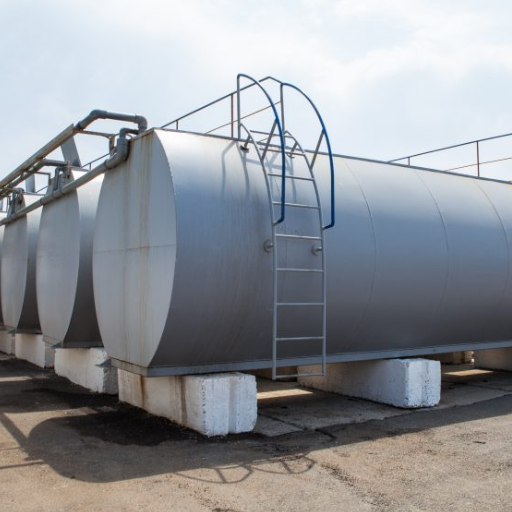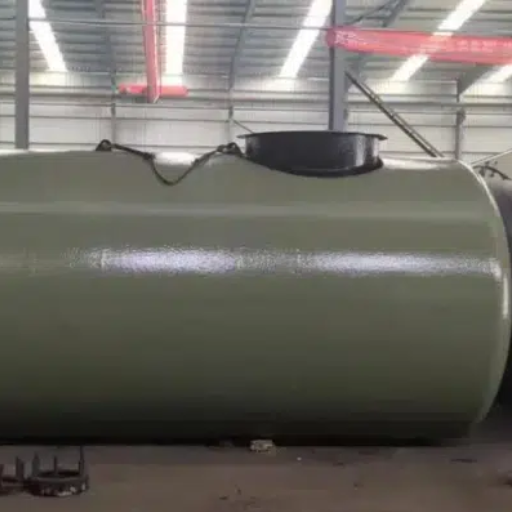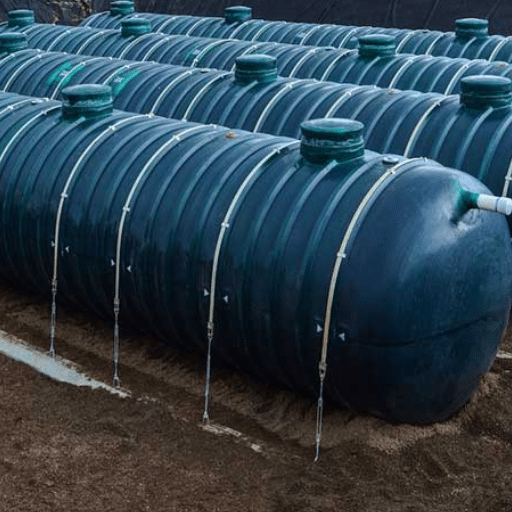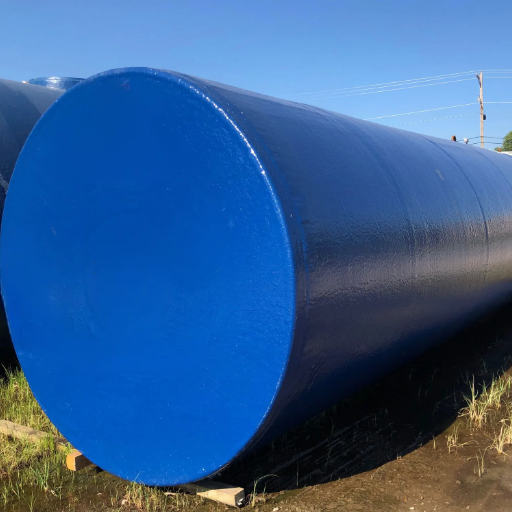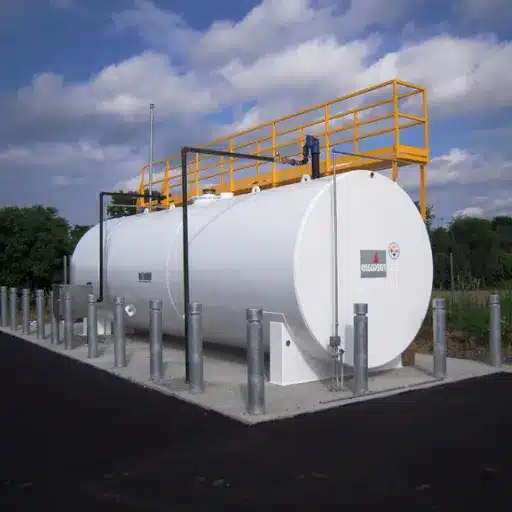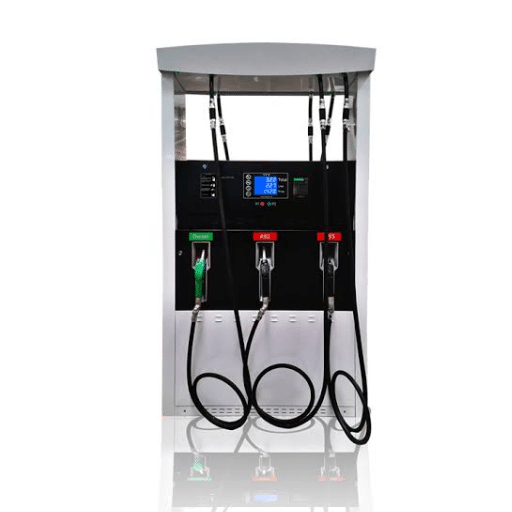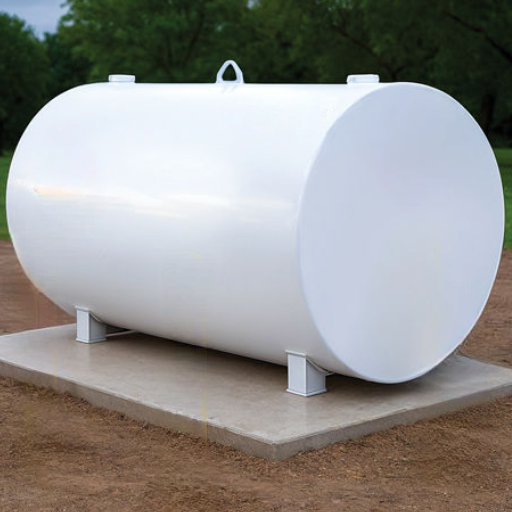
How big are gas station storage tanks? Ask that question, and you’ll get three answers.
The last national survey found a median of about 4,000 gallons per tank. Most new retail tanks are specified at 10,000 to 12,000 gallons. The whole system under a busy station holds 30,000 to 60,000.
None of those numbers is wrong. They answer different questions, and most guides mix them together. That’s why one search can return a government survey, a forum post, and a manufacturer page that appear to disagree.
This article separates the three numbers. You’ll see what the installed base looks like, what a new tank typically measures, how many tanks a station needs, and how much of a tank you can actually use. Every figure is tied to a source, and the dimensions appear in both imperial and metric units.
If you need the full procurement procedure, how to specify an SF double-wall tank covers the submittal package and the rejection process.
How Big Are Gas Station Storage Tanks? The Short Answer
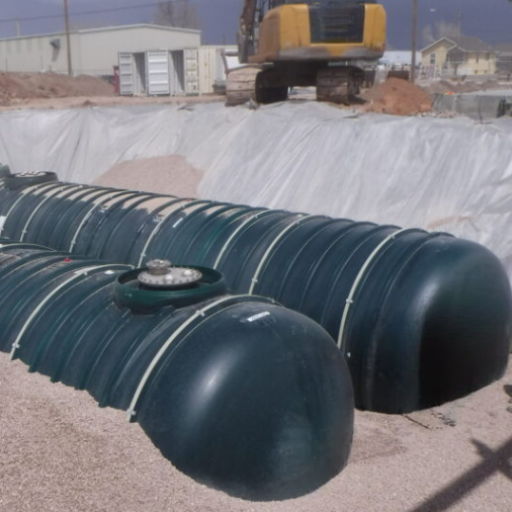
A typical retail gas station stores 30,000 to 60,000 gallons (about 114,000 to 227,000 litres) across two to four underground tanks. Individual tanks commonly hold 10,000 to 12,000 gallons, though the median tank in the existing U.S. fleet is much smaller.
Here is the same picture in one table:
| Measure | Gallons | Litres | What it describes |
|---|---|---|---|
| Median individual tank, U.S. installed base | 4,000 | about 15,100 | The typical tank already in the ground |
| Mean individual tank, U.S. installed base | 5,405 | about 20,500 | Average across all surveyed tanks |
| Typical new retail tank | 10,000 to 12,000 | about 37,900 to 45,400 | What a station installs today |
| Typical station total | 30,000 to 60,000 | about 113,600 to 227,100 | All tanks under one station |
| Large retail or truck-stop tank | 20,000 to 30,000 | about 75,700 to 113,600 | High-volume sites |
The distinction that matters is per tank versus per station. A station with three 12,000-gallon tanks doesn’t have a 12,000-gallon capacity. It has 36,000. When a source says “gas station tank size,” check whether it means one tank or the whole system.
If you’re specifying tanks for a new site, our fuel storage tanks range covers the standard capacities discussed here, in both underground and aboveground configurations.
Why Gas Station Tank Size Numbers Disagree
The three numbers come from three different populations. Once you separate them, the apparent contradiction disappears.
The installed base is older and smaller
The most complete national picture still comes from the U.S. Environmental Protection Agency’s 1985-86 survey of underground motor fuel tanks. Across the eligible tanks it sampled, the median capacity was 4,000 gallons, and the mean was 5,405. Stations owned by major oil companies averaged 6,821 gallons, with a median of 6,000.
That survey describes the fleet as it stood in the mid-1980s, not the tanks installed since. Many of those tanks were small, serving low-volume rural stations that have since closed or been replaced. The EPA reports that more than 1.9 million tanks have been properly closed since 1984, so the median tank in the ground today is likely larger than 4,000 gallons. The survey is still useful because it is the only national dataset of its kind, and because it explains why older sources quote much lower numbers.
New builds cluster at 10,000 to 12,000
A new retail tank is usually specified between 10,000 and 12,000 gallons. That range matches a typical delivery load and gives a station several days of cover between drops. High-volume sites, especially truck stops with diesel, move up to 20,000 or 30,000 gallons per tank.
Manufacturers standardize around these sizes because they balance excavation cost, delivery logistics, and inventory. A 12,000-gallon tank is large enough to avoid daily deliveries at a normal station, but small enough to fit a constrained forecourt.
A station is a system, not a tank
Most stations run two to four tanks, usually one per fuel grade. A station selling regular, midgrade, and premium may have three tanks. Add diesel and the count can reach four. The Water Education Foundation describes the typical arrangement as two or three submarine-shaped tanks holding tens of thousands of gallons in total.
The Pennsylvania Department of Environmental Protection puts a typical underground system at 30,000 to 60,000 gallons. API’s spill-prevention guidance gives a narrower 30,000 to 40,000 gallons. Both describe the whole system, not one tank.
Consider a station owner we’ll call Daniel. He runs a two-island site outside Columbus and gets quotes to replace one aging tank. One supplier offers 4,000 gallons, because that is the size coming out of the ground. Another offers 12,000, because that is the modern standard.
Daniel almost takes the cheaper quote until he checks his sales: about 4,000 gallons a day, with weekly deliveries. A 4,000-gallon tank would need a delivery every day and would still run dry after a busy weekend. He specifies 12,000 and keeps his delivery schedule.
The lesson is not that 12,000 is always right. It is that a national average cannot size a specific station. Throughput and delivery frequency set the floor.
Standard Gas Station Storage Tank Sizes and Dimensions
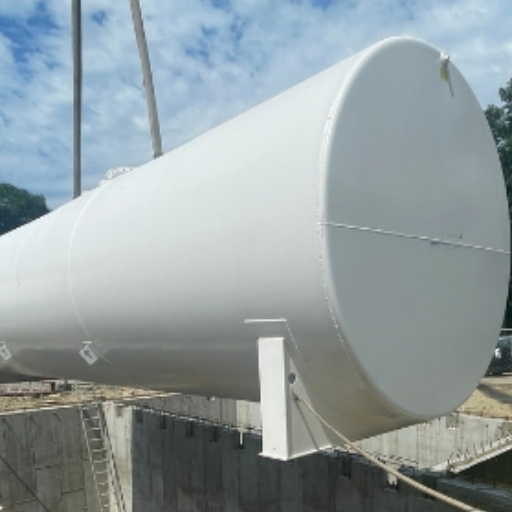
Gallons tell you capacity. Dimensions tell you whether the tank fits the hole. Both matter, and most guides publish only the first.
The table below uses one manufacturer’s UL 58 and UL 1746 double-wall line. It shows the standard underground storage tank sizes, with nominal capacity, diameter, and length:
| Capacity | Litres | Diameter | Length | Length (m) |
|---|---|---|---|---|
| 6,000 gal | about 22,700 | 96 in (2.44 m) | 16 ft 4 in | 4.98 |
| 10,000 gal | about 37,900 | 96 in (2.44 m) | 27 ft 2 in | 8.28 |
| 12,000 gal | about 45,400 | 96 in (2.44 m) | 32 ft 0 in | 9.75 |
| 20,000 gal | about 75,700 | 114 in (2.90 m) | 39 ft 9 in | 12.12 |
Diameter is a design choice
The same capacity can arrive in different shapes. A 12,000-gallon tank can be 96 inches in diameter and 32 feet long, or 108 inches and 25 feet, or 114 inches and 22 feet 8 inches. Wider tanks are shorter. Narrower tanks are longer.
That choice is usually driven by the site, not the tank. A long, narrow lot may suit a longer tank. A site with a tight boundary may need the shorter, wider option even though it costs more to excavate.
Picture a project engineer named Priya. She is laying out a replacement tank on a site with a 30-foot boundary and a utility easement along one side. A 96-inch by 32-foot tank won’t fit with the required clearance.
A 114-inch by 22-foot-8 tank of the same 12,000-gallon capacity will. Same volume, different footprint, different project.
The excavation envelope
Allow roughly 2 to 3 feet of clearance around the tank for bedding and backfill. Cover to the top of the tank is typically 4 to 6 feet, set by local code, traffic loads, and frost depth. For a fuller treatment of cover and anchoring, see our guide to how deep gas station tanks are buried.
The practical result is that a 10,000-gallon tank does not need a 27-foot hole. It needs a hole closer to 32 feet long and 12 to 14 feet wide, plus the depth for bedding and cover. That is the number a contractor prices.
For comprehensive information, please read our double-wall fuel tank specifications explained guide.
How Many Tanks Does a Gas Station Have?
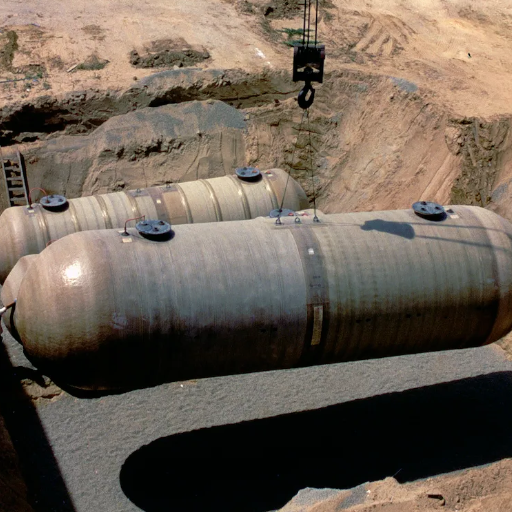
Most stations have two to four underground tanks. The count follows the number of fuel grades, not the size of the station.
A simple two-grade site may run two tanks. A station with regular, midgrade, premium, and diesel may run four.
Some operators use a compartmented tank instead, with one shell divided into two or three sealed sections. That can cut excavation and piping costs, though it reduces flexibility if demand shifts between grades.
The total capacity is the sum of the tanks, minus the unusable volume in each. That is why two stations with the same footprint can hold very different amounts of fuel: one has three 10,000-gallon tanks, the other has two 20,000-gallon tanks.
Tank count also affects operations. More tanks mean more fill points, more gauges, and more monitoring, but also more resilience. If one tank is out of service, the station can keep selling from the others.
Nominal vs Usable Tank Capacity
A 10,000-gallon tank doesn’t hold 10,000 gallons of sellable fuel. The nameplate number is the nominal capacity. The usable volume is lower for two reasons.
The first is the overfill rule. Federal regulations require new and upgraded underground systems to shut off flow automatically when the tank is no more than 95% full, or to alert the operator at no more than 90% by restricting flow or sounding a high-level alarm. The rule is in 40 CFR 280.20(c)(1)(ii). In practice, the last 5% of the tank is emergency space, not inventory.
The second is the heel. Two to five percent of the fuel sits below the suction line and can’t be drawn out. It’s real product, but it’s not usable stock.
Put the two together, and the gap becomes concrete:
| Nominal capacity | Fill ceiling at 95% | Typical heel (2% to 5%) | Usable working volume |
|---|---|---|---|
| 6,000 gal | 5,700 | 120 to 300 | about 5,400 to 5,580 |
| 10,000 gal | 9,500 | 200 to 500 | about 9,000 to 9,300 |
| 12,000 gal | 11,400 | 240 to 600 | about 10,800 to 11,160 |
| 20,000 gal | 19,000 | 400 to 1,000 | about 18,000 to 18,600 |
A 10,000-gallon tank gives you roughly 9,000 to 9,300 gallons of working volume. A 12,000-gallon tank gives you roughly 10,800 to 11,160 gallons of working volume. That gap matters when you’re planning deliveries and calculating days of cover. The full method for sizing around usable volume is in our guide to fuel tank sizing calculations.
Consider a fleet manager we’ll call Maria. She plans monthly demand around a 10,000-gallon tank, assuming 10,000 gallons are available. A heat wave raises consumption, a delivery slips by two days, and the station runs short even though the gauge never showed empty.
The tank was working as designed. Maria was planning against the nameplate instead of the usable volume. She either adds capacity or moves to twice-weekly deliveries.
To learn more information, please click to view our guide to industrial fuel storage tanks.
How Big Are Gas Station Storage Tanks for a New Site?
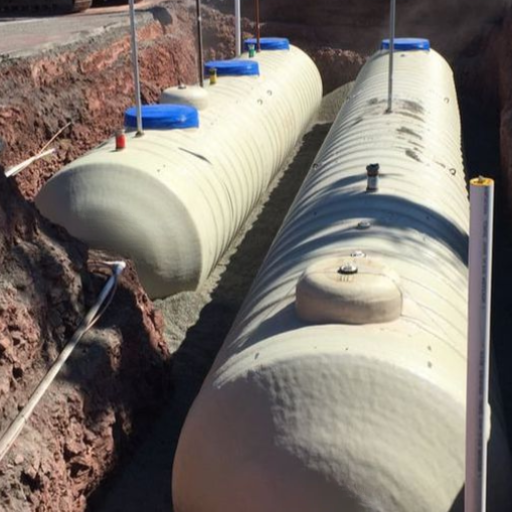
The right size is a function of six things: average daily sales, peak demand, delivery interval, number of grades, available footprint, and local rules. The first three do most of the work.
A tank has to bridge the gap between deliveries and still leave a reserve for a late truck or an unusually busy weekend. A station that receives fuel twice a week needs less storage than one that receives once a week. A station with seasonal peaks needs more than its annual average suggests.
Growth belongs in the calculation too. A tank is a 30-year asset in many projects, and moving it later costs more than sizing it once. A 10% to 20% allowance for growth is common.
For technical information, see our article on tank anti-flotation.
How placement changes the answer
Underground tanks usually range from 6,000 to 20,000 gallons, with larger sites going higher. Aboveground tanks built to UL 142 often range from 1,000 to 30,000 gallons, and they trigger a different set of rules, including SPCC planning once aggregate aboveground capacity passes 1,320 gallons. Skid-mounted and containerized stations typically use 5,000 to 20,000 gallons, sized around fleet demand and delivery access. Our guide to skid-mounted station capacity covers that case separately.
Construction also matters. A double-wall tank gives you secondary containment and interstitial monitoring, but it changes the outer dimensions and the price. Our comparison of double-wall and single-wall tanks explains where each is required.
If you send us your daily sales and delivery schedule, our engineers will check the capacity, dimensions, and configuration against your site before you commit to a tank. Request a capacity review.
Frequently Asked Questions
How big is a gas station storage tank in gallons?
A typical new retail tank holds 10,000 to 12,000 gallons. The median tank in the existing U.S. fleet is about 4,000 gallons, based on the last national survey. A station’s total capacity is usually 30,000 to 60,000 gallons across two to four tanks.
How many gallons does a gas station hold in total?
Most stations hold 30,000 to 60,000 gallons across all tanks. API’s guidance gives a narrower range of 30,000 to 40,000. High-volume truck stops and big-box fuel centers can hold more than 100,000 gallons.
How long is a 10,000-gallon tank?
A common 10,000-gallon underground tank is 96 inches in diameter and about 27 feet 2 inches long. Other diameters change the length: a wider tank is shorter, a narrower tank is longer. Confirm the exact figure on the manufacturer’s submittal.
How many litres is a 10,000-gallon tank?
A 10,000-gallon tank holds about 37,900 litres. A 12,000-gallon tank holds about 45,400 litres, and a 20,000-gallon tank holds about 75,700 litres.
How many tanks does a gas station have?
Most stations have two to four tanks, usually one per fuel grade. A station with regular, midgrade, premium, and diesel may have four. Some sites use a compartmented tank to hold multiple grades in one shell.
How big are the tanks under gas stations?
The tanks under a gas station are usually 10,000 to 12,000 gallons each in a modern build, or about 4,000 gallons in the older installed base. A station with three tanks therefore stores roughly 30,000 to 36,000 gallons. For the depth and installation side of the question, see how deep gas station tanks are buried.
How much of a gas station tank is actually usable?
Roughly 90% to 95% of nominal capacity, depending on the overfill device and the tank’s heel. A 10,000-gallon tank typically gives you 9,000 to 9,300 gallons of working volume.
How big are truck stop fuel tanks?
Truck stops often use 20,000 to 30,000-gallon tanks, with several tanks per site. Total capacity can exceed 100,000 gallons when diesel and multiple grades are stored separately.
Conclusion
So how big are gas station storage tanks? It depends on which tank you mean.
The installed base has a median of about 4,000 gallons. A new retail tank is usually 10,000 to 12,000. A station’s total is typically 30,000 to 60,000 across two to four tanks.
Three practical points follow from that. First, always ask whether a quoted figure is per tank or per station. Second, check the dimensions, not just the gallons, because the same capacity can have a very different footprint. Third, plan around usable volume, not nameplate capacity, since the last 5% to 10% is not sellable stock.
The question “how big are gas station storage tanks?” has a site-specific answer. If you are planning a new station or replacing an existing tank, our engineering team at Shandong Shengrui will review your throughput, delivery schedule, and site plan, then confirm the capacity and dimensions that fit. Talk to our engineers before the excavation is priced.