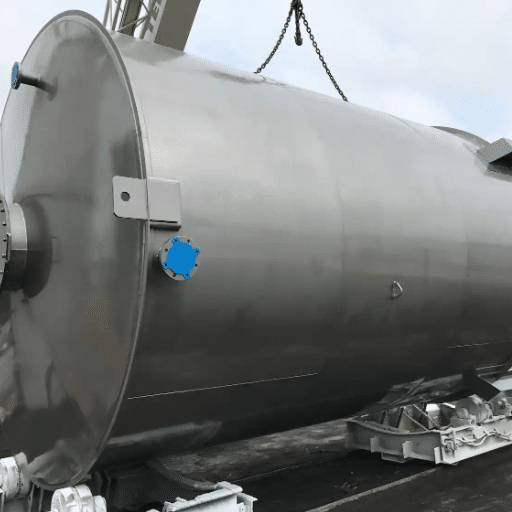
Search for explosion-proof fuel tank cost, and you will find quotes for what sounds like the same product ranging from about $1,000 to $28,500. That spread is not a market. It is a measurement error.
Those listings describe different tanks. Some are single-wall shells with no barrier fill. Some are double-wall tanks sold as “explosion-proof.” Some exclude accessories, certification, and freight. Almost none tell you the capacity basis for the number.
So here’s the uncomfortable truth that saves money: you can’t price an explosion-proof fuel tank until you size it. Cost follows capacity, material, and configuration, in that order. Buyers who shop price first almost always over-specify in one place and under-specify in another.
This guide fixes the order of operations. You’ll learn:
- The four factors that set explosion-proof fuel tank cost, and why online prices mislead
- A step-by-step method to calculate the capacity you actually need
- Capacity bands for the standard 5–50 m³ (5,000–50,000 L) range
- Why factory-direct price, landed cost, and installed cost are three different numbers
- How to request a quote you can compare against another quote
If you are still deciding whether you need this tank at all, start with our complete guide to explosion-proof fuel storage tanks. If you already know your fuel type and site, read on: the math comes first, the money comes second.
How Much Does an Explosion-Proof Fuel Tank Cost? (The Honest Answer)

There is no single price, because an explosion-proof fuel tank is a configured pressure vessel, not a catalog item. The factory-direct price is driven by capacity, shell material, barrier fill, appurtenances, and certification. Installed cost then adds civil work, freight, and commissioning. Expect a wide factory-direct band and a materially higher installed figure.
That answer isn’t evasive. It’s the reason a 10 m³ tank and a 50 m³ tank from the same factory aren’t “the same product at different sizes.”
The prices you see online make this harder. Marketplace listings are single-seller quotes with no defined scope. One might be an Ex Works (EXW) price for the bare vessel. The next might include a pump and a monitoring system. A third is a used unit. Comparing them on the number alone is comparing apples to oranges.
Treat every online price as directional only, then normalize every real quote to the same scope before you decide. The rest of this article walks through explosion-proof fuel tank cost and sizing step by step.
Planning a project budget? Send us your capacity and site details and we will return a scope-explicit quote you can compare line by line. Request a quote.
How to Size an Explosion-Proof Fuel Tank (Step by Step)
Size from demand, not from the largest tank you can afford. An oversized tank ties up capital, leaves fuel sitting long enough to degrade, and buys you nothing but a bigger invoice.
Here is how explosion-proof tank sizing works, using the method our engineers apply with buyers.
- Estimate average daily demand. Use site sales data, fleet draw, or generator consumption (litres per hour multiplied by run hours). For a retail site, diesel and gasoline are sized separately.
- Choose your days of autonomy. This is your storage days, or how long you want to run between refills. It follows your delivery interval and how remote the site is. A city forecourt with daily tanker access needs fewer days than a mine that sees a delivery every two weeks.
- Apply a safety factor. A design factor of about 1.2 covers peak demand, delivery delay, temperature swings, and measurement variance.
- Divide by the utilization coefficient. You can’t use 100% of a tank’s gross volume. Ullage (the vapor space) and dead stock mean gasoline works out at roughly 0.90, and diesel at about 0.85.
- Round to a standard capacity, then check the fit. Confirm the result suits your placement, siting rules, and delivery logistics before you commit.
In formula form, for a given capacity V in cubic metres:
V = (daily demand in L/day × storage days × 1.2) ÷ (1,000 × utilization)
A worked example: a retail gas station
Say a station sells about 11,900 litres of diesel per day and wants three days of autonomy. The math runs: 11,900 × 3 × 1.2, divided by 1,000 × 0.85. That comes to roughly 50 m³, so you select a 50 m³ tank.
That number isn’t a coincidence. Single civil fuel tanks are commonly capped at about 50 m³ in Chinese station codes such as GB 50156, which is exactly why the 5–50 m³ band is the industry standard. Always confirm the current edition of your local code and your authority having jurisdiction (AHJ) before you specify. In the US, NFPA 30 is the flammable and combustible liquids code that governs much of this storage and siting practice.
A worked example: a backup generator
Now scale down. A 20 kW diesel generator burning about 4 litres per hour runs 96 litres a day. Over three days with the same 1.2 factor and the 0.85 diesel utilization coefficient, that is roughly 400 litres net. You need a small component or day tank, not a 50 m³ storage vessel.
This is why explosion-proof diesel storage tanks for generator duty often cost a fraction of a forecourt tank, even though both carry the same safety technology.
Does the barrier fill reduce my usable capacity?
Slightly, and you should plan for it. The internal barrier fill displaces a small amount of volume. Suppliers report figures under 1.1%, and China’s AQ/T 3001-2021 standard caps capacity loss at 6%. Ask your supplier for the gross and net figures and budget for net capacity. It’s a small number, but it belongs in the sizing, not in the surprises.
For a detailed comparison, please read our article on explosion-proof tank vs. double-wall tank.
Explosion-Proof Fuel Tank Capacity & Cost Bands (5–50 m³)

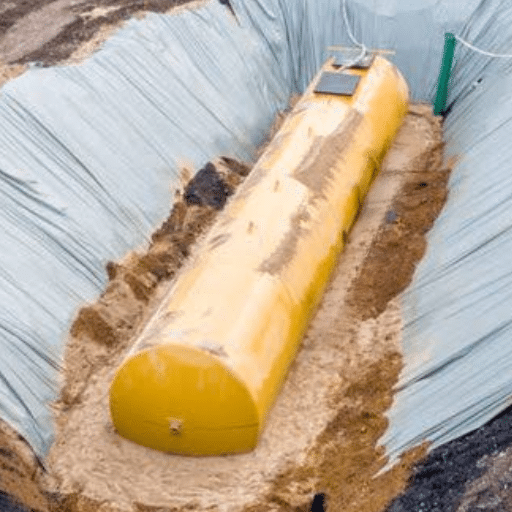
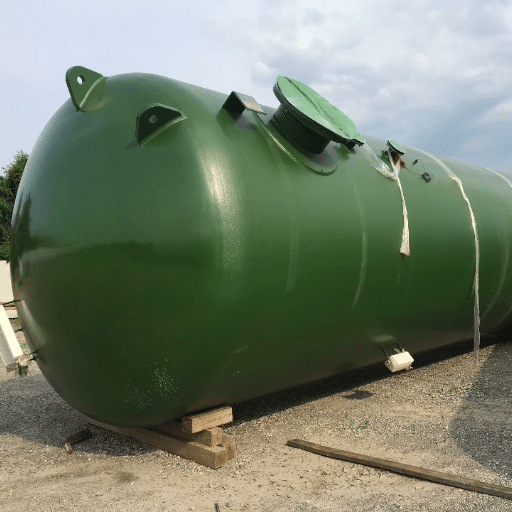
The standard aboveground barrier-tank band runs from 5 m³ to 50 m³, which is 5,000 to 50,000 litres, or roughly 1,320 to 13,200 US gallons. Component and day tanks sit below this band, and elevated tanks for drilling rigs run above it.
Aboveground units are typically built to workshop-fabrication standards such as UNI EN 12285-2, which sets the manufacturing requirements for factory-made steel tanks.
Each band maps to a different job. The table below shows which is which. We list “quote” rather than a figure because the price depends on the shell, fill, and accessories, not capacity alone.
| Capacity | Fuel volume | Typical application | Price basis (factory-direct) |
|---|---|---|---|
| 5 m³ | 5,000 L | Generator day tank, small fleet, retail backup | Lowest band |
| 10 m³ | 10,000 L | Small retail site, mining satellite point | Low–mid band |
| 20 m³ | 20,000 L | Mid-size forecourt, transport depot | Mid band |
| 30 m³ | 30,000 L | High-throughput retail, mine refueling | Mid–high band |
| 50 m³ | 50,000 L | Large station, industrial depot, container station | Highest band |
One pattern matters more than the numbers. Fuel storage tank cost per m³ falls as capacity rises. Certification, transport preparation, and the appurtenance package are partly fixed costs, so they spread across more volume in a bigger tank. A 50 m³ tank can cost less per litre than a 10 m³ tank of the same specification.
That’s a useful budget insight, but don’t let it push you into oversizing. A cheap-per-litre tank you can’t fill is still an expensive tank. If you are searching for a 10 m³ fuel tank price or a 50,000-litre fuel tank price, both sit on the same curve. Only the configuration separates them.
For buyers integrating storage into a containerized or skid-mounted fuel station, the same capacity logic applies, but the tank must also fit the module.
Not sure which capacity fits your site? Compare configurations in our explosion-proof barrier tank range, or send us your daily demand and delivery interval for a sizing review.
What Drives Explosion-Proof Fuel Tank Price?
Barrier fuel tank cost isn’t a mystery once you know the variables. Here are the eight drivers that move the number, in rough order of impact.
- Capacity and gross volume. The baseline. Everything else scales from it.
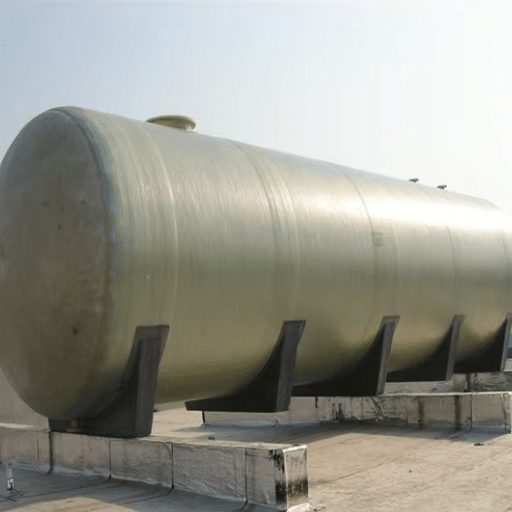
- Shell material. Q235B carbon steel with a protective coating is the economical choice. Stainless steel (SS304 or SS316L) costs more and suits corrosive or coastal sites. S/F (steel-fibreglass) composite builds sit in between.
- Wall thickness and fire rating. A fire-rated build to a standard such as UL 2085 costs more than a standard UL 142 vessel. The fire rating buys you different siting allowances, not a different tank.
- Barrier fill. The mesh type and fill volume drive cost. Our HAN Barrier technology uses a spiral-wound conductive alloy matrix; aluminum-alloy honeycomb is the alternative.
- Double-wall or single-wall, and compartment count. A double-wall tank adds containment. Multiple compartments multiply the fittings and the fabrication.
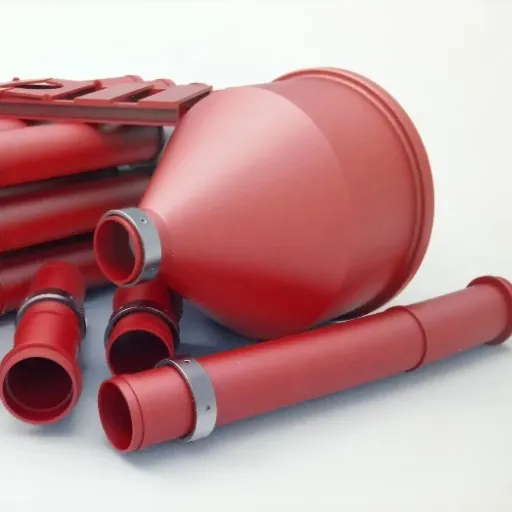
- Appurtenance package. Flame arresters, pressure/vacuum vents, an Ex-rated submersible pump, intrinsically safe tank gauging, overfill prevention, spill containment, and grounding all add cost. They are not optional extras on a compliant site.
- Certification scope. UL, PED, ATEX, IECEx, or Chinese GB and AQ/T documentation each carry a cost. Our certification and standards guide explains what each layer covers.
- Freight and container fit. An ISO 20-foot container station holds roughly 15,000 litres; a 40-foot unit holds around 40,000. Beyond that, you are into break-bulk shipping.
Now the trap. A lower unit price often means a thinner shell, uncertified barrier material, or accessories quoted separately. When those appear on the second invoice, the “cheap” tank is no longer cheap.
Nathan learned this the hard way. The fleet manager at a regional transport depot collected three quotes for a 30 m³ barrier tank. The lowest was an EXW price with no flame arrester, no barrier-material certificate, and freight excluded. The highest included bundled containment, the full accessory package, and delivered-to-site terms. Priced as delivered, compliant scopes, the cheapest quote was the most expensive by a wide margin, and it would have failed the depot’s insurance review.
Unit Price vs. Landed Cost vs. Installed Cost
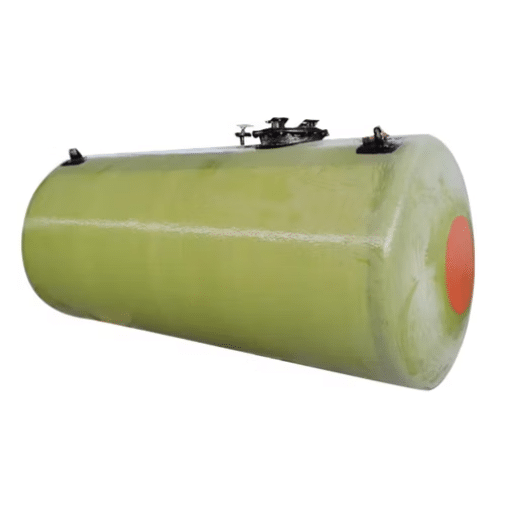
Most guides to explosion-proof fuel tank cost answer one of these three and never say which. You need all three to budget honestly.
Factory-direct unit price (EXW or FOB). The vessel and standard fabrication, priced at the factory or loaded on the vessel.
Landed cost. The unit price plus accessories, certification and documentation, packing, freight, insurance, and import duties. This is what arrives at your port.
Installed cost. The landed cost plus foundations and a pad for aboveground tanks, or excavation, bedding, backfill, and dewatering for underground units. Then piping, spill containment, monitoring, commissioning, and contractor labour.
The explosion-suppression premium sits in the vessel, not in the civil work. Installing a barrier tank costs about the same as installing a conventional tank of the same size and placement. The difference is what the vessel itself does.
For a full installed-cost breakdown on a conventional underground tank, see our underground fuel tank cost guide. For a US reference point, tank contractors commonly quote commercial underground systems in the tens of thousands of dollars per tank installed, depending on size and site.
Total Cost of Ownership: What to Budget Beyond the Price
Sticker price is a small part of the story. Budget these lines too, or they will find you later.
- Inspection and testing. Tightness testing, interstitial monitoring checks, and flame-arrester cleaning and testing on a set schedule.
- Monitoring subscriptions. Automatic tank gauge and leak-detection software often carries an ongoing fee.
- Cathodic protection maintenance. Required for steel underground tanks to control corrosion.
- Spares and consumables. Gaskets and sealants, chosen for biodiesel compatibility if you run B5 or B20.
- End-of-life. An aboveground tank can be lifted and relocated. An underground tank needs excavation, and possibly soil remediation.
That last line is the one buyers underestimate. Leaking-UST cleanups average around $154,000 in US data, with groundwater cases running far higher. An aboveground barrier tank avoids that tail entirely.
The right comparison is not sticker price against sticker price. It is cost per year of service. A well-built, correctly maintained tank is a long-life asset, and the factory-direct premium buys compliance and safety margin, not a shorter service life.
Priya, a depot planner, ran this comparison for a new fleet facility. The 50 m³ tank her team had pencilled in was not the cost problem. What changed the budget was realizing a 20 m³ tank covered five days of peak draw, which freed capital for the accessory package and monitoring that actually protected the site. Sizing correctly paid for the safety equipment.
How to Get an Accurate Explosion-Proof Fuel Tank Quote

A quote is only useful if you can compare it. Use this checklist when you request one.
- Capacity in m³ and the fuel type or types
- Placement: aboveground or underground, since the civil scope differs
- Shell material and wall thickness
- Barrier fill type and the required capacity-loss specification
- Single-wall or double-wall, and the number of compartments
- Appurtenance package, item by item
- Certification and documentation required for your market
- Delivery term (EXW, FOB, or CIF) and destination port
- Who owns foundations and civil work
- Lead time and warranty terms
Then ask four questions of every supplier. What is included and what is not? What are the gross and net capacities? Can you provide the barrier-material certificate? Can you supply CAD drawings and assembly documentation?
Buying factory-direct helps here because it keeps the scope in one place. One supplier, one set of drawings, one point of accountability. Our team supports projects with CAD drawings, 3D assembly videos, and remote or on-site supervision, which is how a storage tank, its accessories, and a skid-mounted station stay coordinated instead of colliding on site.
For placement decisions that change your civil budget, our aboveground vs. underground explosion-proof tank guide walks through the trade-offs.
Frequently Asked Questions
How much does an explosion-proof fuel tank cost?
There is no single figure. Factory-direct price depends on capacity, shell material, barrier fill, appurtenances, and certification scope. Installed cost adds civil work, freight, and commissioning. Expect a wide factory-direct band and a higher installed figure. Request a scope-explicit quote for a real number.
How do I calculate the size of fuel tank I need?
Multiply average daily demand by your days of autonomy and a safety factor of about 1.2, then divide by the utilization coefficient (about 0.90 for gasoline, 0.85 for diesel). Round to a standard capacity and confirm it meets your siting rules.
How much does a 10,000 or 50,000 litre fuel tank cost?
A 10 m³ (10,000 L) tank sits in the lower price band and a 50 m³ (50,000 L) tank in the highest. Per-litre cost generally falls as capacity rises, because fixed costs spread across more volume. Because configuration drives the price, both require a quote.
Why is an explosion-proof tank more expensive than a standard tank?
The premium covers the internal barrier fill, the appurtenance package required for a compliant installation, and the certification and documentation for your market. You are paying for suppression technology and compliance, not decoration.
Does the barrier fill reduce usable capacity?
Slightly. Suppliers report volume displacement under 1.1%, and the AQ/T 3001-2021 standard caps capacity loss at 6%. Ask for gross and net capacity figures and budget on net.
Is the price the same aboveground and underground?
The vessel premium is the same because the barrier fill is the same technology. The civil scope differs. Aboveground installs need a pad and foundations; underground installs add excavation, bedding, and backfill.
Can I order a capacity outside the 5–50 m³ range?
Yes. Component and day tanks cover smaller generator and fleet duty, and elevated tank lines for rigs run larger. Custom capacities are available through our OEM and ODM service.
What is the delivery lead time?
It depends on capacity, configuration, and certification scope, and it is always best confirmed in a quote. Freight and container fit also affect the schedule, so share your destination port up front.
Conclusion
Cost is the last question, not the first. Size the tank from demand, then let capacity, material, and configuration set the price.
- Size from daily demand times days of autonomy, adjusted by a safety factor and a utilization coefficient.
- Factor the small capacity loss from barrier fill into your net usable volume.
- Compare quotes on the same scope: factory-direct unit price, landed cost, and installed cost are three different numbers.
- Per-litre cost falls as tanks get bigger, but the cheapest quote often hides a thinner specification.
- Budget the full ownership picture, including inspection, monitoring, and end-of-life.
Get the order right, and the explosion-proof fuel tank cost becomes a number you can defend to your board, your insurer, and your AHJ. Get it wrong, and you either overpay for capacity you will never use or discover the missing accessory after the tank has landed.
Ready for a real number? Tell us your capacity, fuel type, and placement, and our engineers will return a scope-explicit quote with gross and net capacity, the barrier-material certificate, and delivery terms. Request your quote, and we will size it with you.