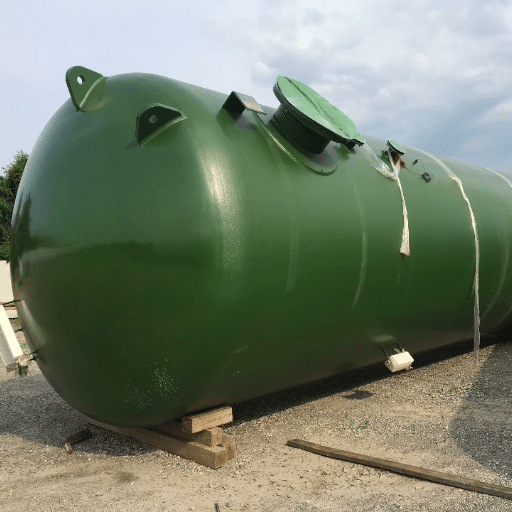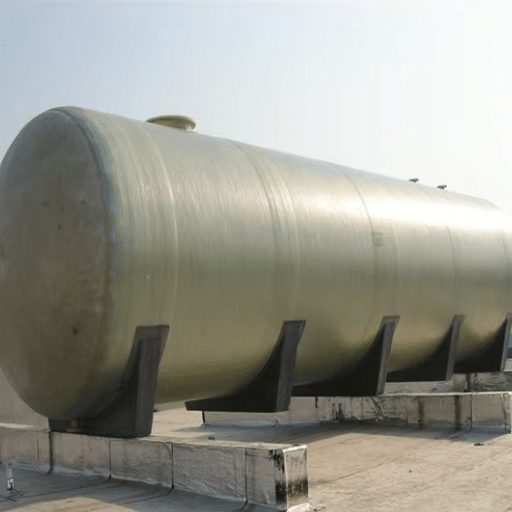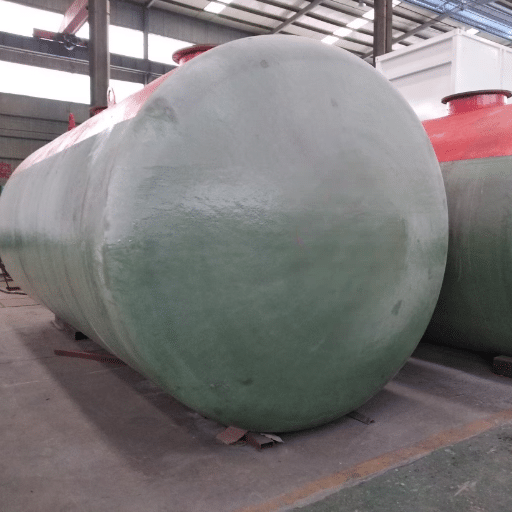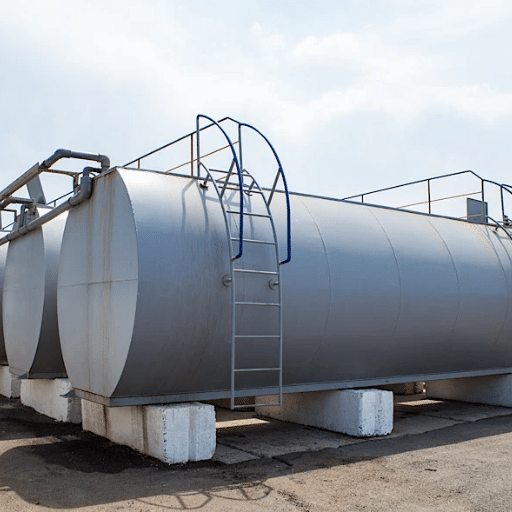
Ask ten suppliers, “Are aboveground or underground explosion-proof fuel tanks safer?” and you’ll get ten confident answers, plus almost no code citations. For an explosion-proof (barrier) storage tank, that’s the wrong opening question. The tank’s internal explosion-suppression fill works the same whether the vessel sits on a concrete pad or is buried below grade. What actually changes is everything surrounding it: fire exposure, emergency venting, the standard that governs the install, corrosion and leak-detection duties, and total cost over the tank’s life.
This guide compares aboveground vs underground explosion-proof fuel tanks so you can choose placement by site, code, and budget, not by a marketing slogan. You’ll see the key differences in one table, learn which standards apply to each placement (UL 142 vs. UL 58, plus the China codes for export projects), get an honest look at what a barrier tank can and cannot do for setback distances, and finish with a decision guide matched to real applications. If you’re new to the product category, our complete guide to explosion-proof fuel storage tanks is the wider starting point.
Explosion-Proof Means the Same Tank, Two Placements

Let’s pin down the term first, because “explosion-proof” gets misused constantly. In this article, it describes a storage vessel with internal barrier fill: typically a HAN-type or aluminum-alloy honeycomb matrix packed into the tank’s vapor space. If an ignition ever happens inside, the metal matrix splits the flame into thousands of cells too small to propagate, absorbs heat faster than the fire generates it, and smothers the pressure rise before it becomes an explosion.
That suppression physics is identical aboveground or buried. The tank is a horizontal cylindrical vessel that a manufacturer like ours can build for either placement. We explain the full mechanism in our guide to how explosion-proof (barrier) fuel tanks work.
Three product categories get blurred together, so keep them straight:
- Barrier (suppression) tank. Internal explosion suppression. Placement-neutral.
- Fire-rated AST. An aboveground tank with insulated construction rated for fire exposure (UL 2085). A separate concept, explained below.
- Double-wall / SF containment tank. Leak containment, not explosion suppression. See our explosion-proof vs. double-wall tank comparison.
Once you know you need suppression, the real decision is placement. That’s what the rest of this guide covers, for an explosion-proof barrier tank in either configuration.
Aboveground vs. Underground Explosion-Proof Tanks: The Key Differences
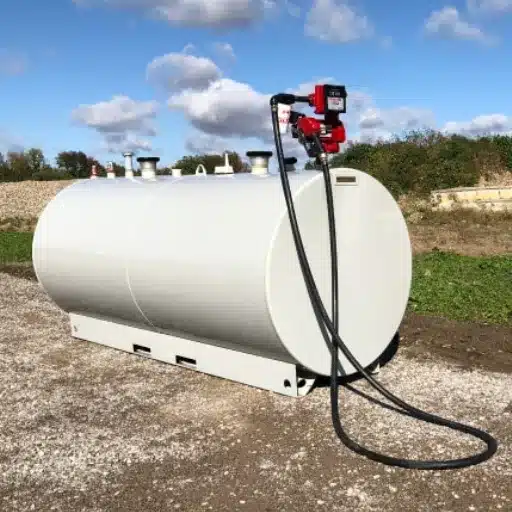
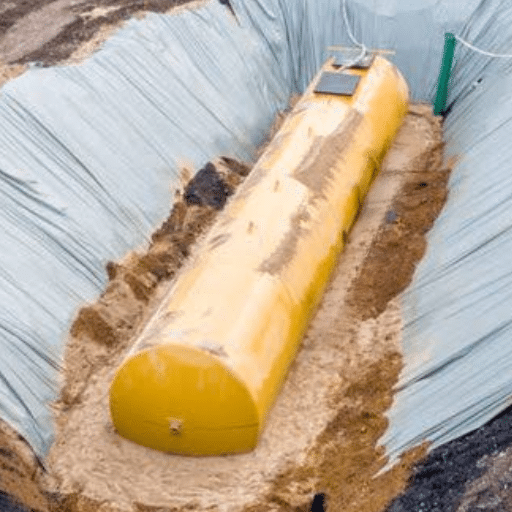
An aboveground storage tank (AST) sits on a pad, cradles, or legs. An underground storage tank (UST) has at least 10% of its volume buried, per the EPA’s definition. Here’s how the two compare once a barrier tank is in the picture.
| Factor | Aboveground (AST) | Underground (UST) |
|---|---|---|
| Fire exposure / BLEVE risk | Exposed; an external fire can heat the vapor space and drive a pressure rise | Earth cover shields the tank; far lower external-fire exposure |
| Emergency venting | Fire-exposure emergency vents required (UL 142 / API 2000 sizing) | Not required for fire exposure; backfill protects the tank |
| Barrier fill benefit | Suppresses an internal vapor-space explosion | Same internal suppression; burial adds external protection |
| Corrosion protection | External coatings; visible and re-coatable | Coatings plus cathodic protection (UL 1746) |
| Leak detection | Visual checks; a leak is found fast | ATG, interstitial monitoring, spill buckets; slow discovery risk |
| Inspection & maintenance | Easy, full access | Difficult; access limited to sumps and manholes |
| Space use | Occupies surface footprint; needs separation distances | Frees the surface for parking, drives, or buildings |
| Relocation | Portable; skid and container options exist | Permanent once buried |
| Installation cost | Lower; concrete pad and piping | Higher; excavation, dewatering, bedding, backfill |
| Regulatory regime (US) | SPCC 40 CFR 112; NFPA 30 | EPA 40 CFR 280; NFPA 30A |
| Removal / end of life | Lift, sell, or relocate | Excavation plus possible soil and water remediation |
Two rows deserve more than a glance, because buyers routinely underweight them.
Fire exposure and emergency venting. An aboveground tank is the one that can actually be heated by an external fire. Heat drives pressure in the vapor space, and if relief is inadequate, the vessel can rupture violently. That’s the scenario behind the term BLEVE (boiling-liquid expanding-vapor explosion), and it’s why aboveground tanks need correctly sized emergency vents for fire exposure. A barrier fill slows a pressure rise from an internal ignition, but it does not replace fire-exposure venting. A buried tank, protected by earth cover, does not carry the same fire-exposure venting duty.
Leak-detection visibility. Aboveground, a leak drips where you can see it. Underground, a leak can migrate into soil and groundwater for years before anyone notices. That difference drives the entire regulatory and monitoring burden described below. Our underground fuel storage tanks guide walks through the full system.
Standards & Fire Ratings by Placement (UL 142 vs. UL 58)
Placement decides which standard governs your tank. The table below maps the North American and China-export pathways.
| Scope | Aboveground (AST) | Underground (UST) |
|---|---|---|
| Steel tank standard | UL 142 | UL 58 |
| Fire-rated / protected tank | UL 2085 (2-hour pool-fire rating) | Not applicable; burial provides protection |
| Corrosion protection | Coatings (visually inspectable) | Cathodic protection per UL 1746 |
| Fiberglass tank | FRP where locally permitted | UL 1316 (common for USTs) |
| US regulatory framework | SPCC 40 CFR 112; NFPA 30 storage & spacing | EPA 40 CFR 280 release detection & containment; NFPA 30A |
| China (export projects) | GB 50156 siting; AQ/T 3002-2021 for aboveground barrier skid units | GB 50156 siting; AQ/T 3001-2021 for barrier tanks |
The rule buyers most often miss: an underground tank is not certified for aboveground use. Per UL’s technical guidance on underground tanks used aboveground, underground tanks are not listed for aboveground service. The reasons matter. A UST needs no fire-exposure emergency vents because backfill protects it; set that same tank on the surface, and a fire can overpressure a vessel with no relief path. A UST is also engineered for the evenly distributed support of bedding and backfill, not for point loading on cradles, and its corrosion package assumes burial. Our underground fuel tank installation guide covers the burial-specific requirements.
A China-export nuance is worth naming because it affects expectations. The barrier-tank standards, AQ/T 3001-2021 for barrier storage tanks and AQ/T 3002-2021 for barrier skid-mounted refueling units, replaced mandatory 2005 versions as recommended standards. They specify barrier-tank performance (capacity-loss limits, material resistivity, burning class) for both aboveground and buried builds under GB 50156 station siting rules. The vessel and its appurtenances are certified separately, which we explain in our ATEX vs. IECEx vs. UL certification guide.
Setback & Separation Logic: What Barrier Tanks Really Do
Here’s the question that separates informed buyers from mis-sold ones: “Does an explosion-proof tank let me install closer to a building or property line?”
The short answer is not automatically, and less than many suppliers imply. Aboveground tanks must sit a minimum separation distance from property lines, buildings, and public ways, per NFPA 30 spacing tables and the fire code adopted by your authority having jurisdiction (AHJ). That distance is what makes an AST harder to site on a tight lot.
Two legitimate mechanisms can change the distance:
- Fire-rated construction, not barrier fill. A UL 2085 “protected” or fire-resistive AST is engineered to survive a 2-hour hydrocarbon pool fire. In some US code paths, an approved fire-rated tank can reduce the required separation, commonly cited by vendors at up to roughly 50% of the NFPA 30 distance. That reduction is tied to the fire rating of the shell, not to internal explosion suppression.
- Burial. Putting the tank underground removes it from the aboveground fire-separation picture entirely, which is why dense or space-constrained sites often bury tanks even at higher install cost.
A barrier fill is a genuine safety layer, but it is not a code-defined setback-reduction class the way a UL 2085 fire rating is. An internal-suppression matrix doesn’t make the tank fire-rated on the outside, and it doesn’t replace emergency venting, flame arresters, or spill containment.
For China-export projects, the point is sharper. The old pathway that let an added explosion-proof retrofit substitute for GB 50156 fire-separation distances was removed when GB 50156 was revised in 2012 (the 2005 reduced-setback policy for retrofitted tanks is repealed for new stations). So for a new station in China, burying the tank, not adding an aboveground “explosion-proof” label, is what satisfies the siting table. Any supplier who promises a barrier tank automatically shrinks your required fire distance is overstating, and we won’t. If you’re weighing an AST, our spill containment systems guide covers the secondary-containment side of the siting approval.
Corrosion, Leak Detection & Lifecycle by Placement

Placement changes how a tank corrodes, how you find a leak, and how hard it is to inspect.
Underground. A buried steel tank fights corrosion from soil moisture and groundwater, which is why a modern UST carries coatings and cathodic protection (UL 1746). Leak detection is code-mandated and layered: automatic tank gauging (ATG), interstitial monitoring between tank walls, and spill buckets at the fill point. Done right, a modern double-wall UST can last decades. The trade-offs are real, though: inspection access is limited to sumps and manholes, monitoring is an ongoing cost, and a leak that develops is slow to detect and expensive to remedy. We cover this in our gas station leak detection systems and cathodic protection for gas stations guides.
Aboveground. The tank’s outer surface is fully visible, so corrosion is caught early and coatings can be refreshed. Leaks are found fast because they’re seen. The trade-offs are weather, ultraviolet exposure, and impact, which is why site bollards and fencing are standard. An aboveground barrier tank should still be built double-walled or self-bunded where leak containment is required, because barrier fill stops explosions, not leaks.
One maintenance point applies to both placements: water. Condensation collects at the tank bottom, and water is what rusts steel from the inside and grows the microbial sludge that clogs filters. In a US EPA survey of diesel underground storage tank systems, internal corrosion was found in the majority of systems sampled. Whichever placement you choose, spec a low-point drain, water detection, and a sampling plan. Our double-wall vs. single-wall fuel tanks guide explains the containment build that makes water manageable.
If diesel storage is your main concern, our explosion-proof diesel storage tank guide covers specifications and standards in more detail.
Aboveground vs Underground Fuel Tank Cost & Ownership
For an aboveground vs underground fuel tank, sticker price and lifetime cost point in opposite directions, and this is where most comparisons stop too early.
Installation. An aboveground tank is typically roughly 40-60% less to install than a comparable buried tank. The difference is excavation, dewatering, bedding, and backfill, which can balloon on rocky or high-water-table sites. For a commercial UST system, installed costs commonly run from about $30,000 to $150,000 or more per tank, depending on size and site conditions. These are directional ranges; your real number depends on site and labor.
The hidden tail: end of life. A buried tank is expensive to leave behind. Removal means excavation, and if a leak is found, contaminated soil and groundwater remediation follows. EPA-linked averages for leaking-UST cleanup sit around $154,000, with groundwater cases running far higher. Aboveground tanks avoid that tail entirely; they can be drained, lifted, and sold or relocated.
The barrier premium is placement-neutral. The fill material, appurtenances, and engineering that make a tank explosion-proof cost about the same whether it goes aboveground or underground. So the barrier premium shouldn’t drive your placement decision; the site, code, and lifecycle numbers should. For a deeper cost breakdown, see our underground fuel tank cost guide.
How to Choose: A Decision Guide by Application

Choose an aboveground explosion-proof tank when…
- You need portability or a temporary site; skid and container builds shine here.
- The budget is tight, and installation must be fast.
- Easy, visible inspection and maintenance are a priority.
- Excavation isn’t feasible (bedrock, high groundwater, or a leased site).
- Your site has room to meet separation distances, or you’re using a fire-rated build.
- You’re running a fleet depot, mining point, or generator compound where fuel must sit near equipment.
Choose an underground explosion-proof tank when…
- You’re building a permanent, high-volume retail station.
- Surface space is limited or premium; buried tanks free the forecourt.
- Local code or zoning effectively requires burial.
- You want the extra external protection that earth cover provides.
- Cold climates matter: a steady ground temperature near 50-55 °F helps keep diesel from gelling and reduces condensation cycling.
- You own the site long-term and can absorb the higher installation and monitoring cost.
Likely placement by application
| Application | Typical placement |
|---|---|
| Retail gas station | Mostly underground (code, space, aesthetics) |
| Fleet / truck depot | Either; often aboveground and self-bunded |
| Mining & tunneling | Aboveground barrier or skid station; buried depot for permanent sites |
| Generator backup power | Aboveground tank plus a day tank near the engine |
| Container / skid remote station | Aboveground barrier station |
| Dense-urban site | Siting-dependent; China strongly favors buried |
The pattern repeats: pick placement by code and site first, then confirm the barrier tank build matches on material, capacity, and accessories. If a skid or container footprint makes sense, our skid-mounted diesel fuel station and container vs. skid-mounted fuel station guides show how barrier tanks are packaged into them.
Frequently Asked Questions
Can an underground fuel tank be used aboveground?
No. UL does not list underground tanks for aboveground service. Underground tanks are not required to have fire-exposure emergency vents because backfill protects them; they are engineered for backfill support rather than aboveground point loading, and their corrosion protection assumes burial. Installing one on the surface creates a fire-exposure and structural risk.
Are aboveground fuel tanks more dangerous than underground?
Not inherently. The risk profile is different, not automatically worse. Aboveground tanks face external fire exposure and need proper emergency venting and separation distances. Underground tanks are shielded by earth cover but carry higher leak-detection and remediation risk because a leak is harder to see. Both are safe when built and sited to their governing standard.
Do explosion-proof tanks have to be buried?
No. Explosion-proof barrier tanks are placement-neutral. The internal suppression fill works identically whether the tank sits aboveground on a pad or is buried. Placement is chosen for site, code, space, and cost reasons, not because the suppression technology requires one placement or the other.
What standards cover aboveground vs. underground explosion-proof tanks?
Aboveground steel tanks follow UL 142, and UL 2085 for fire-rated builds. Underground steel tanks follow UL 58 with UL 1746 corrosion protection. Aboveground storage falls under SPCC 40 CFR 112 and NFPA 30; underground storage falls under EPA 40 CFR 280 and NFPA 30A. For China-export projects, GB 50156 governs siting, with AQ/T 3001-2021 and AQ/T 3002-2021 for barrier tanks.
Does a barrier tank reduce the required fire separation distance?
Not automatically. A UL 2085 fire-rated aboveground tank can reduce separation in some US code paths (commonly cited up to about 50%, vendor-sourced). Internal barrier suppression is not itself a setback-reduction class. And in China, GB 50156-2012 removed the pathway that let an explosion-proof retrofit substitute for required fire-separation distances. Verify your case with your AHJ.
Which is cheaper: aboveground or underground fuel storage?
Aboveground is cheaper to install, typically roughly 40-60% less for equal capacity, since there’s no excavation, dewatering, or backfill. But compare total cost of ownership. Underground brings higher monitoring and corrosion-protection costs plus a potentially expensive end-of-life removal and remediation tail if a leak is found.
Choose the Placement Your Site and Code Dictate
Here’s what to carry forward:
- Suppression is placement-neutral. A barrier tank suppresses internal explosions aboveground or buried. Placement changes everything around the tank, not the tank’s safety function.
- A UST must not go aboveground. UL doesn’t list underground tanks for surface service; emergency venting, support, and corrosion protection all differ.
- Match the standard to the placement. UL 142/UL 2085 and SPCC/NFPA 30 aboveground; UL 58/UL 1746 and EPA 40 CFR 280 underground; GB 50156 with AQ/T 3001-2021/3002-2021 for China-export projects.
- Barrier fill isn’t a setback shortcut. Fire-rated AST construction can reduce separation in some US code paths; barrier suppression does not, and China removed the retrofit pathway in GB 50156-2012. Verify with your AHJ.
- Count the whole lifecycle. Aboveground costs less to install and relocate; underground adds monitoring and a potentially expensive removal-and-remediation tail.
The safest explosion-proof fuel tank isn’t the one with the boldest label. It’s the right tank in the right placement, built and certified to the code that governs your site. If you’re weighing an aboveground vs. underground explosion-proof fuel tank for a gas station, fleet, mine, or container project, our engineers will work through your site, the applicable standards, and the total cost before you order. Request a quote or placement consultation, browse our fuel storage tank range, or start with our complete guide to explosion-proof fuel storage tanks.