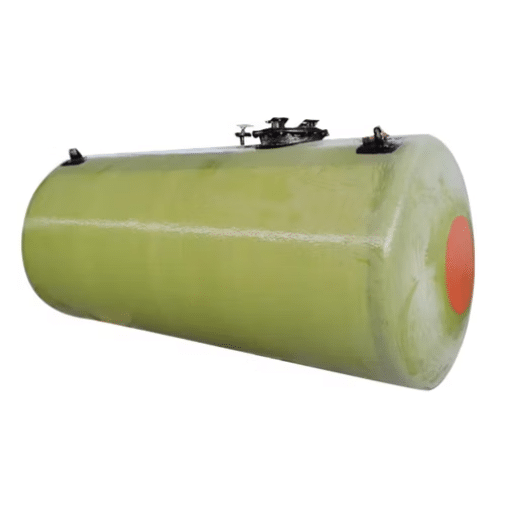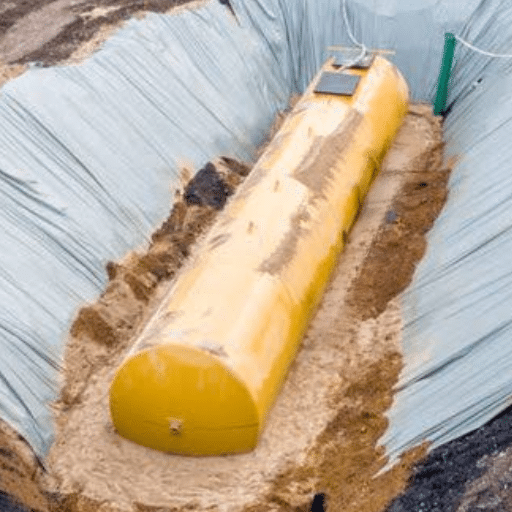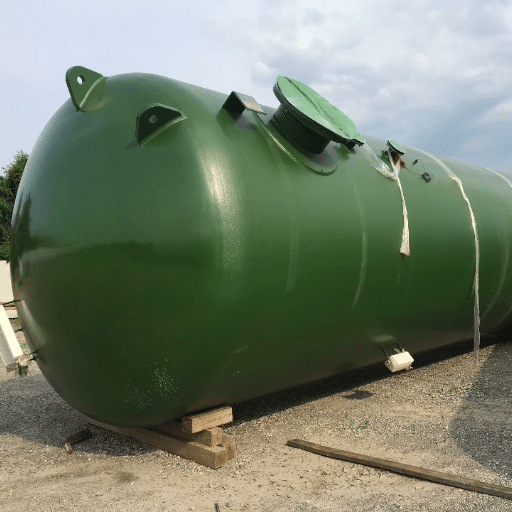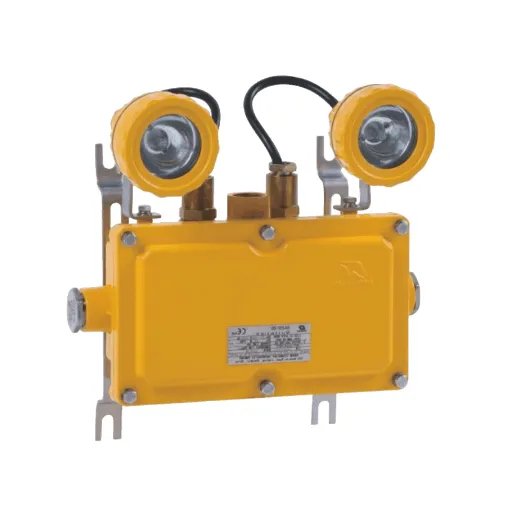
A mine operator orders a “30 m³” explosion-proof container station. The unit arrives, the nameplate reads 30 m³, and the commissioning engineer measures the drawable fuel at closer to 22 m³. Nothing is broken. The barrier fill, the double-wall interstice, and the heel the pump can never reach all took their share before the tank ever left the factory.
If you’re specifying an explosion-proof tank for container skid-mounted fuel station integration, that gap is the whole job. A modular station isn’t a bill of materials (“tank plus dispenser plus pump, ready in 48 hours”). It’s a design problem solved tank-first, because the barrier tank’s geometry and displaced volume decide everything downstream.
By the end of this guide, you’ll know the integration sequence, the real capacity budget inside a 10, 20, or 40 ft envelope, the standards that govern the unit, and the safety loop that turns parts into one station.
For comprehensive information, please read our article on explosion-proof tanks.
How an Explosion-Proof Tank Is Integrated into a Skid or Container Station

Integration runs in one direction, and it starts with the tank. Work through these steps in order, and the rest of the station falls into place.
- Fix net sellable capacity first. Not nameplate volume. Decide how many litres the customer can actually dispense between deliveries.
- Subtract the non-fuel volumes. Barrier fill, the double-wall interstice, and the unusable heel come off the top before you size the shell.
- Size the shell and its appurtenances. Manway, fill point, vent, relief, and the interstitial leak port all need a place on the tank before the enclosure exists.
- Place the dispenser bay, PLC cabinet, and cofferdam. These consume footprint and height, which is often what limits tank size, not the tank itself.
- Choose the envelope. A 10 ft, 20 ft, or 40 ft container (or a custom skid) is selected to fit the assembled system, not the other way round.
- Check weight and centre of gravity. A filled barrier tank and its containment sit low and heavy; lifting points and CSC-rated floor loading follow from that.
Skid and container are two ways to package the same tank-first result. A container fuel station versus a skid-mounted one differs in shipping, not in physics. The tank determines the design either way.
Solving for the tank first is what separates a station that delivers its promised volume from one that quietly underdelivers. It’s also what makes a modular fuel station explosion-proof in practice rather than only on the certificate. The next section shows what that budget looks like inside real ISO envelopes.
The Real Volume Budget: What Fits in a 20 ft or 40 ft Envelope
Return to that 30 m³ unit. The tank was real, but three things shrank the usable figure.
The barrier fill displaced roughly 1.5% of tank volume (vendor-claimed; no independent test standard publishes the figure). The double-wall interstice held no fuel at all. And a bottom heel plus the ullage you never fill to removed another 10–15%.
None of that appears on a spec sheet, yet the container fuel station tank still has to deliver its declared litres. The table below shows the real budget for the standard envelopes.
| Envelope | Typical tank (nominal) | Barrier fill (vendor-claimed) | Double-wall interstice | Heel + ullage | Net sellable capacity | Dispenser bays |
|---|---|---|---|---|---|---|
| 10 ft container | ~5 m³ | 0.06–0.08 m³ | 0.2–0.4 m³ | ~15% | ~3.5–4 m³ | 0–1 |
| 20 ft container | 20–26 m³ | 0.2–0.4 m³ | 0.6–1.2 m³ | ~10–15% | 15–22 m³ | 1–2 |
| 40 ft container | 40–60 m³ | 0.4–0.9 m³ | 1.5–3 m³ | ~10–15% | 32–50 m³ | 2–4 |
| 2×20 ft / custom skid | 40–52 m³ | 0.4–0.8 m³ | 1.2–2.4 m³ | ~10–15% | 32–43 m³ | 2–4 |
One number in that table is a regulatory trap. Under GB 50156-2021 §6.4.10, the cofferdam must hold at least 50% of total tank capacity, and it stores no fuel at all. It’s a spill-containment volume below or around the tank. So the cofferdam and dispenser bay compete for footprint and height, and they, not the tank, usually decide how large a vessel fits.
Two practical rules fall out. First, quote net sellable capacity, never nameplate.
Second, don’t buy the biggest tank that fits the box: a permanently half-full tank oxidizes, collects water, and grows microbial contamination. Size for three to five days of peak demand, then confirm the envelope. Run the demand math properly before you commit to a vessel size. For a detailed cost breakdown, see our explosion-proof fuel tank cost and sizing guide.
If diesel storage is your main concern, our explosion-proof diesel storage tank guide covers specifications and standards in more detail.
Standards That Govern the Integrated Station

An integrated filling station meets several rulebooks at once, and the clause numbers matter more than the framework names.
| Standard | Scope | What it fixes | Key numbers |
|---|---|---|---|
| GB 50156-2021 §6.4 | China, skid-mounted fueling device | Tank, containment, interlocks | Inner tank ≥0.8 MPa; boost ≤0.05 MPa; overfill alarm 90% / valve 95%; vent ≥4 m and ≥1.5 m above tank; relief 20–30 kPa; cofferdam ≥50%; extinguisher rated ≤95 °C; nozzle ≤50 L/min; not indoors |
| GB 50156-2021 §5.0.13 Note 3 / §3.0.3 | China, siting and permitted use | Setbacks and where the unit may sit | Fire separation increased by ≥30%; limited to enterprise self-use, temporary, or specific sites |
| AQ/T 3002-2021 / AQ/T 3001-2021 | China, device vs material | Certifies the device, then the barrier material | 3002 covers the device; 3001 covers the material |
| SH/T 3134 | China, volume caps | Maximum capacity by site type | ≤10 m³ / ≤20 m³ / ≤40 m³ |
| NFPA 30A-2024 Ch.14 / Ch.15 | US | On-demand mobile fueling and marine | 25 ft separation; 1,200 gal chassis cap; 50 ft hose; 10 lb ABC |
| NFPA 30 §22.11 | US | Venting and containment | 100% of the largest releasable volume |
| MSHA 30 CFR 75.1904 / 75.1905 / 75.1906 | US underground coal | Storage, dispensing, transport | 12 in above floor; relief ≤2.5 psi; 100 ft / 50 ft separation; ≤500 gal transport; two ABC |
The containment numbers are the part buyers get wrong, because three different rules sound alike:
- GB 50156-2021 §6.4.10 requires a cofferdam of ≥50% of total tank capacity, a Chinese skid-device rule.
- The self-bunded convention (baked into NFPA 30A listings) sizes bunding at 110% of the largest tank.
- NFPA 30 §22.11 calls for 100% of the largest releasable volume.
Which applies depends on the jurisdiction the unit sits in, not the one it was built in. A tank built to GB 50156 and shipped to a US site still has to satisfy the AHJ’s containment expectation. Get the rulebook right before you get the tank built.
The full clause text of GB 50156-2021 §6.4 is published by China’s construction-standards portals, and the current US mobile-fueling rule lives on the NFPA 30A product page; the underground numbers are readable in full at Cornell LII. For the certification chain that turns these clauses into paperwork, see our guide to explosion-proof tank certifications and standards.
The Safety Systems That Make It an Integrated Station

A modular station fails when it’s treated as assembled parts. It works when the parts share one interlock loop. Three subsystems decide that.
The hazardous-area boundary. The tank interior is the most volatile zone; the dispenser bay, where vapour is released during each fill, is the second; the general station area outside is the third. Draw the boundary first. Equipment inside each zone must match its classification, and the boundary is what tells you which equipment that is.
The interlock loop. Overfill at 90% (alarm) and 95% (valve closure) feeds the same PLC as ground verification, gas detection, and suppression. The chain runs in one direction: ground path verified at ≤4 Ω, or the pump stays inhibited; overfill alarm sounds; gas detected; suppression triggers at ≤95 °C; the PLC drops power and closes the valves. Interstitial leak detection at ≤0.1 L/h sits on the same loop.
Venting. A pressure/vacuum vent alone isn’t flame protection. The vent needs a flame arrester on the tank side, and the breather opens on pressure at 2–3 kPa and vacuum at 1.5–2 kPa. Vent height follows the ≥4 m and ≥1.5 m-above-tank rule from §6.4.
On one mining-camp commissioning job, the static-risk lesson arrived the hard way. A bonding clamp had been left on a painted flange instead of bare metal. The clamp looked attached. It conducted nothing.
That’s why automated ground verification exists: a static charge is invisible, and a lost connection is silent. The equipment-side detail lives in our modular station safety systems breakdown.
Specifying the safety loop? Send us your fuel type, capacity, and site classification and we will map the interlock architecture to your envelope. Request a quote.
Certification Duality: Static Equipment AND Intermodal Cargo
The same unit is two regulated objects at once, and the two regimes don’t recognise each other.
As static fuel equipment, a self-bunded fuel tank container station is listed as a tank and a fuelling system: UL 142 or UL 2085 in the US, NFPA 30A for installation, EN 12285-2 under PED in the EU, and GB 50156-2021 §6.4 plus AQ/T 3002-2021 in China.
As intermodal cargo, it’s a container: ISO 668, ISO 1161, and ISO 1496 for corner fittings and testing, plus a CSC plate and BIC code for ocean transport, with ACEP for the periodic inspection cycle.
Three traps follow from that duality:
- A tank listing doesn’t certify the enclosure.
- A CSC plate doesn’t certify the fuel system.
- A Chinese certificate alone doesn’t clear a foreign port.
Buyers who treat certification as one document discover at the wharf that they need two. Confirm both chains before the unit ships, because neither one clears the other.
Siting and Permitting a Container or Skid-Mounted Station
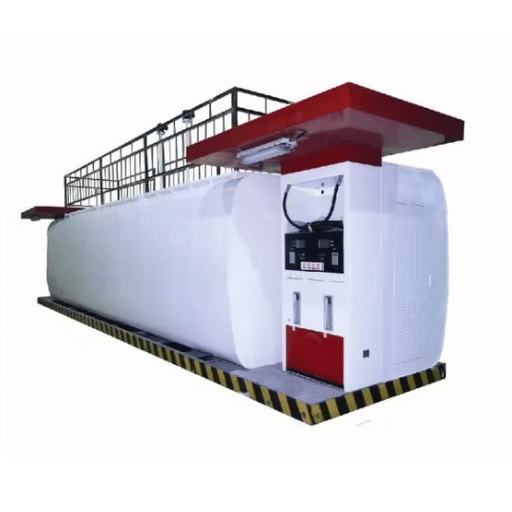
Permitting starts with a site plan, not a purchase order, and “temporary” isn’t “exempt.”
In the US, an EPA SPCC written plan is triggered at more than 1,320 gallons of aggregate aboveground oil storage, and rented or temporary tanks count toward it. Three 500-gallon tanks already cross the line. Double-walled or self-bunded construction reduces the regulatory burden but doesn’t remove it, which is the most common false assumption on a temporary site.
A typical AHJ sequence runs: site plan → spill-control plan with a 24-hour contact → tank listing and capacity specs → pre-delivery inspection by the fire marshal → written approval with a removal deadline. Budget around $100 per site (a commonly cited figure from practitioner guides, not a published tariff) and treat permitting as a scheduling item, not paperwork. Many AHJs also restrict or prohibit gravity discharge, so specify a mechanical pump with a self-closing nozzle. The underlying federal rule for service and refueling areas is OSHA 29 CFR 1926.152(g), which requires automatic-closing nozzles without latch-open devices and a remote emergency shutoff.
A contractor running a temporary fuelling point for a highway job learned the order of operations backwards: the fuel truck was scheduled before the fire marshal’s inspection was booked. The delivery sat for eleven days while the approval cleared.
In China, the siting rule is explicit: GB 50156-2021 §3.0.3 limits skid-mounted devices to enterprise self-use, temporary, or specific sites, and §5.0.13 Note 3 requires fire separation increased by at least 30% rather than reduced. The claim that a barrier tank lets you cut setbacks is wrong for this format.
Deployment itself is a disciplined sequence: pad, containment, unit placement, grounding, commissioning, and handover. Our modular fuel station installation guide covers it step by step.
FAQ
Can you put a fuel tank inside a shipping container?
Yes, and it is a mature product category, not an improvisation. A barrier tank, dispenser bay, PLC, and cofferdam are assembled inside a CSC-certified 10, 20, or 40 ft container. The container then ships as ordinary intermodal cargo. The tank, however, must still be certified separately as fuel equipment.
How much fuel does a barrier tank lose to the explosion-suppression fill?
Vendors commonly cite a displacement of about 1.1–1.5% of tank volume for the barrier fill, though this is vendor-claimed rather than independently standardised. The larger losses are the double-wall interstice, which holds no fuel, and the unusable heel plus ullage, which together remove roughly 10–15% of nominal capacity.
What is the difference between AQ/T 3001-2021 and AQ/T 3002-2021?
They certify different things. AQ/T 3002-2021 covers the skid-mounted device as a whole: tank, dispenser, and controls. AQ/T 3001-2021 covers the barrier material itself, the honeycomb or mesh that fills the tank’s vapour space. A compliant unit needs both: certified material inside a certified device.
Does a double-wall container fuel station still need a permit?
Yes. Double-walled and self-bunded construction reduces the level of containment you must add, but it does not remove the permit requirement. Regulators treat the unit as aboveground oil storage, and temporary or rented tanks still count toward the EPA SPCC threshold of more than 1,320 gallons aggregate.
Is a container fuel station the same as a skid-mounted one?
An explosion-proof tank skid-mounted station and a container unit share the same tank-first design and the same safety loop. They part ways on enclosure and shipping: a container is a CSC-rated intermodal box, while a skid is an open or framed platform. Seven factors decide which one fits your site.
Can a container fuel station ship as standard ISO cargo?
It can, if the enclosure holds a CSC plate, a BIC code, and ISO 668/1161/1496 compliant corner fittings, and it has passed the relevant stacking and racking tests. That certification covers the container as cargo. It does not certify the fuel system inside, which is regulated separately.
What changed in GB 50156-2021 §6.4 for skid-mounted refueling devices?
Section 6.4 collects the device-specific requirements in one place: inner-tank design pressure of at least 0.8 MPa, boost pressure no higher than 0.05 MPa, overfill alarm at 90% and valve closure at 95%, a cofferdam of at least 50% of tank capacity, and a prohibition on indoor installation. Note 3 of §5.0.13 also raises required fire separation by at least 30%.
Does NFPA 30A cover mobile and on-demand fueling?
Yes. NFPA 30A-2024 codifies on-demand mobile fueling in Chapter 14 and marine fueling in Chapter 15. Chapter 14 sets a 25 ft separation, a 1,200-gallon aggregate chassis-tank cap, a maximum 50 ft hose, and a 10 lb ABC extinguisher. It’s the current edition detail most tank literature still omits.
Conclusion
The lesson from that first 30 m³ unit holds for every modular station: net sellable capacity is not nameplate volume. Barrier fill, interstice, heel, and ullage take their share before the customer ever fuels a vehicle.
Five things to carry into your next specification:
- Size the tank first, then the envelope, then the systems, then the certification route.
- Quote net sellable capacity, not the number on the nameplate.
- Match the containment rule to the jurisdiction: 50% under GB 50156, 110% under the self-bunded convention, 100% under NFPA 30.
- Treat the safety loop as one interlocked system, not a parts list.
- Plan for two certifications, static fuel equipment and intermodal cargo, before the unit ships.
Every one of those decisions traces back to the explosion-proof tank at the centre of the container skid-mounted fuel station. Get the tank right, and the station follows; get it wrong and no dispenser, PLC, or certificate can compensate.
Ready to specify one? Explore our explosion-proof barrier fuel tanks for the tank itself, or see the finished format in our explosion-proof mobile fuel stations. Send your capacity, fuel type, and site details through our contact form, and our engineering team will return a scope-explicit integration plan you can compare line by line.