The container arrived in Lagos with a fresh coat of paint, a full set of dispenser manuals, and a note that said “Ready to operate.” But when Adebowale’s site engineer opened the control cabinet, there was no ATEX certificate for the electrical panels. The lightning protection grid had one electrode. The leak detector display showed a factory test code that no one on-site knew how to reset.
Adebowale had bought an explosion proof skid mounted fuel station. He had not bought proof that it was safe.
This scenario repeats more often than it should. Buyers compare tanks, flow rates, and prices, then treat safety systems as background features. In reality, those systems are the difference between a station that passes inspection and one that sits idle while permits are rejected.
This guide explains the skid mounted gas station safety systems that matter most. It covers how each layer works, how they connect, and what to verify before the first truck fuels. Whether you are evaluating a supplier quote or planning commissioning, this article gives you a practical framework.
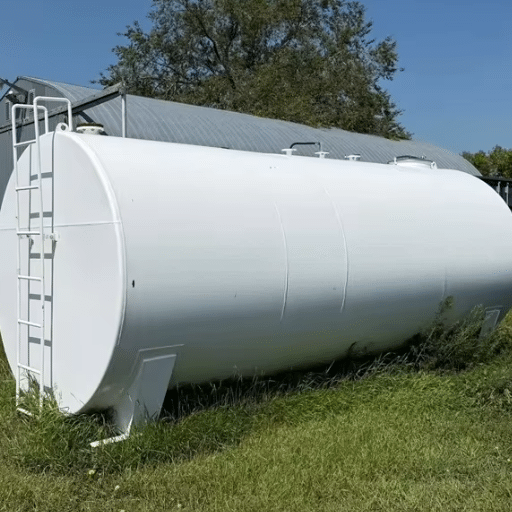
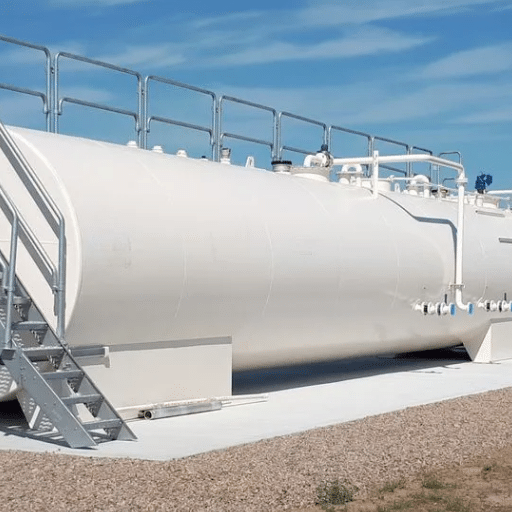
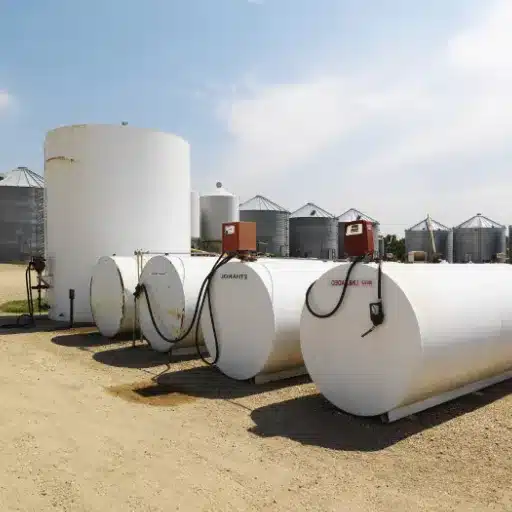
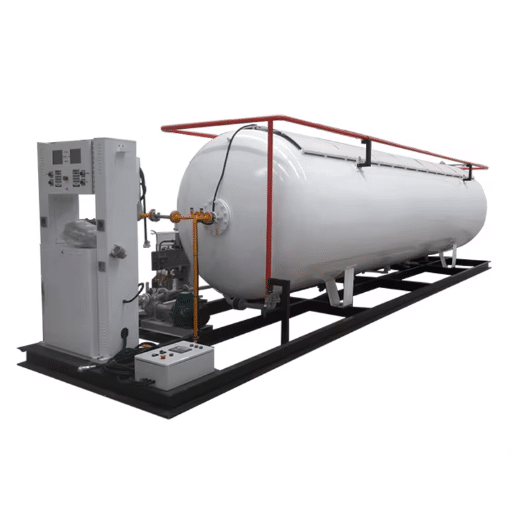
A modern skid-mounted fuel station is a factory-built fueling system mounted on a steel frame. Tanks, pumps, dispensers, piping, and safety equipment are assembled off-site and transported as a single unit.
Because the entire system is above ground and often relocated, its skid mounted gas station safety systems must address fire, explosion, leakage, static electricity, and impact risks. Fixed stations handle many of those risks through burial and permanent structures. Skids must build the protection into the unit itself.
The global gas station equipment market is projected to reach USD 7.47 billion in 2026, growing at a roughly 5.6% CAGR. Safety and environmental monitoring systems now appear in approximately 60% of new installations. That share is rising because regulators and insurers are asking harder questions about fire suppression, leak detection, and hazardous-area compliance.
For detailed information about Skid Mounted Gas Station, please refer to our article about Skid Mounted Gas Station Solution.
What Makes Skid Mounted Gas Station Safety Systems Different

A skid-mounted station is not just a smaller version of a fixed station. Its safety design must account for three unique factors.
First, the tank and equipment are exposed above ground. That means fire resistance, impact protection, and spill containment must be built into the unit itself rather than relying on burial or surrounding structures.
Second, the unit is transported. Vibration, lifting, and sea freight can loosen connections, crack seals, or shift components. Safety systems must survive that journey and still function on arrival.
Third, the station is often redeployed. A unit that moves from a mine in Zambia to a depot in Ghana must keep its grounding, alarms, and shutdown logic intact through multiple installations.
Because of these factors, skid mounted gas station safety systems are best understood as an integrated architecture. Each layer supports the others.
A leak detector without an interlock is only a display. An emergency stop without a common grounding grid can create new hazards. The goal is a single system that prevents ignition, contains fuel, detects failure, and shuts down fast.
1. Barrier Explosion-Proof Tank Construction
The tank is the heart of any skid-mounted station. Modern units use double-wall steel or steel-FRP construction with an interstitial space between the inner and outer walls. That space is monitored continuously for leakage.
Inside the tank, many designs use an explosion-proof material. This is typically a honeycomb aluminum alloy mesh that fills the vapor space.
If a flame or spark enters the tank, the mesh absorbs heat and suppresses flame propagation. The technology is referenced in AQ/T 3002-2021, the Chinese standard for barrier explosion-proof skid-mounted refueling devices.
For liquid-fuel skids, electrical area classification usually rates the tank vapor space as Zone 0 or Zone 1. That means any instrument inside or connected to the tank must carry the appropriate explosion-proof or intrinsically safe certification.
For a deeper look at how these ratings differ from standards like ATEX and IECEx, see our comparison of ATEX vs IECEx vs UL certification paths.
Fire and Impact Resistance
Because the tank sits above ground, it must withstand external threats. Typical design targets include:
- Fire resistance: ability to survive a standardized flammable-liquid fire without leaking
- Impact resistance: outer tank deformation limited under a specified vehicle impact
- Pressure/vacuum relief: breather valves and emergency venting to prevent rupture
These requirements are why skid-mounted tanks are heavier and more engineered than simple above-ground storage tanks. The safety margin is built into the wall thickness, the barrier material, and the venting system.
2. Leak Detection and Spill Containment
Leak detection is not optional for a skid-mounted station. Most designs place sensors at the lowest point of the interstitial space. If fuel enters that space, the sensor triggers an alarm.
Typical targets for skid mounted fuel station leak detection include:
- Sensitivity of ≤0.1 L/h for simulated leaks
- Alarm response within seconds
- Continuous online monitoring
- Separate detection for piping, containment sump, and tank annular space
Adebowale’s team later discovered that their unit only had a tank-level gauge, not a true leak detector. The display showed fuel height, not interstitial pressure or liquid presence.
That distinction matters. A level gauge tells you how much fuel is in the tank. A leak detector tells you whether fuel is leaving the tank.
Secondary Containment
Skid-mounted stations also need secondary containment. NFPA 30A code requirements typically require 110% of the largest tank. GB 50156 and related Chinese standards often specify 10–50% of total tank volume, depending on local interpretation. Some units achieve this with a built-in bund or spill collection tray around the tank base.
During unloading, a spill collection container should catch any drips from hose connections. Top-fill inlet designs reduce splashing and static generation. These details are easy to overlook on a spec sheet but critical on-site.
3. Overfill Protection

Overfill protection prevents the tank from being filled beyond safe capacity. A typical system uses a magnetostrictive level gauge with two alarm points:
- High-level alarm at approximately 90% capacity
- Automatic pump/valve shutoff at approximately 95% capacity
For unloading operations, the skid mounted fuel station overfill protection system should interlock with the tank truck connection. If the high level is reached, the unloading pump stops and the inlet valve closes.
Some systems also include low-level alarms to prevent pump cavitation. While not a safety issue in the same way as overfill, low-level protection extends equipment life and reduces vapor generation.
4. Explosion-Proof Electrical and Control Systems
Every electrical device in or near the hazardous area must be rated for the environment. This includes pumps, motors, dispensers, sensors, lighting, junction boxes, and the control cabinet.
Common ratings for gasoline/diesel skids include:
- Ex d IIB T4 Gb: explosion-proof enclosure, suitable for Zone 1
- Ex ia IIB T4: intrinsically safe circuit, suitable for Zone 0/1
- IP55 or higher: dust and water ingress protection
The difference between Ex d and Ex ia matters. Ex d contains an explosion inside a strong enclosure. Ex ia limits energy in the circuit so it cannot ignite a flammable atmosphere. Both are valid, but they are used for different components.
For hazardous area classification skid mounted station design, the zone around dispensers and vents is usually classified as Zone 1. Areas farther away may be Zone 2 or non-hazardous.
A proper design places non-explosion-proof equipment outside the hazardous zones. It also uses sealed conduit and cable glands for all wiring that crosses zone boundaries.
If you are comparing units, ask for the hazardous area drawing. It should show every device, its rating, and its zone. Without that drawing, you cannot verify that the station meets your local electrical code.
5. Emergency Shutdown and Fire Suppression
An emergency shutdown (ESD) system is the fastest way to stop a dangerous event from escalating. It is the core of every skid mounted fuel station emergency shut off design. In a typical skid-mounted station, pressing any emergency stop button will:
- Stop all fuel dispensers
- Close tank outlet valves
- Cut power to non-essential circuits
- Trigger alarms
Some systems also include fusible link valves. These valves close automatically when exposed to high temperature, typically within 1–3 seconds at around 70°C. They protect the tank even if the electronic controls fail.
For skid mounted gas station fire suppression, automatic dry powder or foam systems are common. The global fire safety equipment market is growing at roughly 6% CAGR, reflecting stronger demand for automated protection at fuel facilities. Heat or flame detectors activate the suppression system, which can respond in 30 seconds or less. The system is usually mounted above the dispenser area and linked to the ESD logic.
Ammar, a project manager in the Middle East, learned this the hard way. His first skid arrived with an ESD button but no fire suppression. The local civil defense rejected the permit.
The supplier added a dry powder system at the factory and re-shipped. The delay cost three weeks and doubled the freight budget.
6. Grounding, Bonding, and Lightning Protection

Static electricity and lightning are two of the most underestimated risks at fuel stations. A single spark in the wrong place can ignite fuel vapor.
A skid-mounted station must have one common grounding grid for:
- Power system faults
- Static electricity from fuel flow and vehicle movement
- Lightning protection
Separate grounding systems are dangerous. During a lightning strike or fault, different systems can reach different voltages. That potential difference can arc across the gap and ignite vapor.
Typical targets for skid mounted gas station grounding and lightning protection include:
- Combined station grounding resistance ≤4 Ω
- At least two separate leads from the grid to the unit’s grounding terminal
- Static grounding clamps at unloading points, interlocked with the pump
- Equipotential bonding of tank, skid frame, dispensers, canopies, and pipework
- Lightning protection masts or rods tied into the same grid
In Indonesia, a construction fleet used a separate lightning rod that was not bonded to the station’s grounding grid. A strike created a potential difference between the rod and the dispenser frame. The surge damaged the dispenser electronics and delayed commissioning until the entire grounding system was rebuilt.
That story illustrates why grounding is an integrated system, not a collection of parts.
7. Vapor Recovery and Gas Detection
For gasoline skids, vapor recovery systems capture fuel vapor during dispensing and unloading. Primary recovery happens at the nozzle. Secondary recovery returns vapor from the tank to the delivery truck.
Some regions require Stage II vapor recovery. Others have moved to onboard refueling vapor recovery on vehicles instead.
Gas detection adds another layer. Flammable gas detectors monitor vapor concentration near dispensers, vents, and low points. Alarms typically trigger at 20–25% of the lower explosive limit. At higher concentrations, the system may interlock with pumps or dispensers.
For explosion-proof skid mounted fuel station designs, gas detectors themselves must be rated for the hazardous area. This is another reason to insist on a complete hazardous area equipment list.
8. Smart Monitoring and Remote Telemetry
Modern skid-mounted stations increasingly include a programmable logic controller (PLC) or dedicated control panel that integrates all safety inputs. The system monitors:
- Tank level and temperature
- Leak detection status
- Grounding resistance
- Vapor concentration
- Pump and dispenser status
- Alarm history
Some systems add IoT telemetry. A project manager in a remote location can receive alerts on a phone or dashboard when a leak, high level, or grounding fault occurs. Remote monitoring is especially valuable for fleet fueling skids, mining stations, and temporary construction depots where on-site staff may be limited.
If your operation spans multiple sites, ask whether the fuel management system can consolidate safety alarms across units. That integration turns individual stations into a monitored network.
9. Global Certification and Code Compliance
Certification is where many buyers get stuck. A station that is legal in one country may not meet the rules in another.
The main standards to understand are listed below.
| Region / Standard | Scope | Typical Relevance |
|---|---|---|
| GB 50156-2022 | Chinese automotive fueling station design | Siting, tank design, electrical zones |
| AQ/T 3002-2021 | Barrier explosion-proof skid-mounted devices | Barrier materials, fire resistance, impact |
| NFPA 30A | North American automotive service stations | Siting, containment, electrical |
| UL 142 / UL 2085 | Aboveground flammable liquid tanks | Tank construction and fire rating |
| ATEX Directive 2014/34/EU | EU equipment for explosive atmospheres | Electrical certification |
| IECEx | International certification scheme | Equivalent to ATEX for global markets |
| OIML R117 | Fuel dispenser metrology | Dispenser accuracy |
When comparing suppliers, ask which certifications apply to the complete station, not just individual components. A dispenser may be OIML certified, but if the control cabinet is not ATEX certified, the station may fail inspection in Europe or parts of Africa.
For ATEX IECEx skid mounted fuel station projects, look for:
- EC-type examination certificates for electrical equipment
- IECEx Certificate of Conformity
- Quality assurance notification for production
- Hazardous area classification drawings signed by a competent body
Your local authority having jurisdiction will decide which certificates are acceptable. Always confirm the list before ordering.
Buyer Verification Checklist
Use this checklist when evaluating a skid-mounted station or preparing for acceptance testing.
Pre-Purchase
- Request hazardous area classification drawings
- Confirm explosion-proof ratings for all electrical devices
- Verify tank leak detection sensitivity and test method
- Confirm overfill alarm and interlock set points
- Ask for fire suppression system specifications and response time
- Review grounding and lightning protection design
- List required certifications for your country
Factory Acceptance
- Witness tank pressure and leak tests
- Test emergency shutdown logic
- Verify calibration certificates for dispensers and sensors
- Inspect electrical seals and conduit entries
- Confirm barrier explosion-proof material certificates
Site Commissioning
- Measure grounding resistance
- Test leak detection with simulated leak
- Test high-level alarm and pump interlock
- Test emergency stop buttons at all locations
- Verify fire suppression activation
- Train operators on alarms and shutdown procedures
Ongoing Inspection
- Daily: visual walk-through, alarm status, grounding clamps
- Weekly: emergency stop function, filter checks
- Monthly: sensor verification, insulation checks
- Annually: lightning protection test, gas detector calibration, electrical parts replacement
For a deeper understanding, please read our Mobile Fuel Station Installation Guide.
Common Safety Mistakes to Avoid
Even experienced buyers make these errors:
- Buying on tank size alone. A cheaper unit may lack certified electrical panels, true leak detection, or integrated fire suppression.
- Accepting separate grounding systems. One common grid is essential.
- Skipping factory acceptance. Transport can damage seals, electrodes, and sensors.
- Ignoring local certification. A Chinese GB certificate does not automatically satisfy ATEX or NFPA requirements.
- Neglecting operator training. The safest system fails if operators silence alarms or bypass interlocks.
Conclusion
Skid mounted gas station safety systems are not a line item. They are an integrated architecture that protects people, property, and permits.
The right design starts with barrier explosion-proof tanks. It adds skid mounted fuel station leak detection and skid mounted fuel station overfill protection. It layers in explosion-proof electrical and skid mounted fuel station emergency shut off capability. It finishes with skid mounted gas station grounding and lightning protection, skid mounted gas station fire suppression, and certified documentation covering ATEX IECEx skid mounted fuel station and hazardous area classification skid mounted station compliance.
If you are evaluating a skid-mounted station, do not stop at the spec sheet. Ask how the systems work together. Request the drawings and certificates. Witness the tests.
Then make sure your local inspector will recognize the standards before the unit ships.
If you need help selecting or verifying skid mounted gas station safety systems for your project, contact Shandong Shengrui Intelligent Equipment Co., Ltd. for a project-specific compliance review. We can review your site conditions, local standards, and supplier documentation so your station arrives ready to pass inspection and operate safely.
Note: This guide provides general safety-system guidance. Always follow local codes, manufacturer instructions, and qualified engineering review for your specific project.