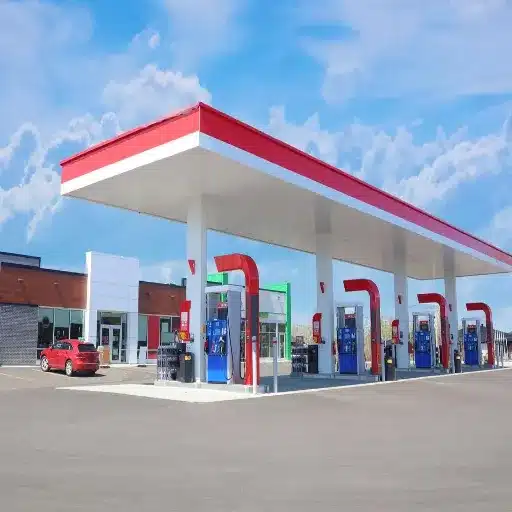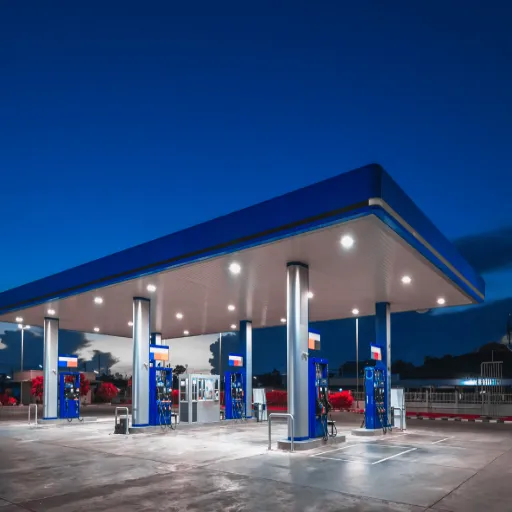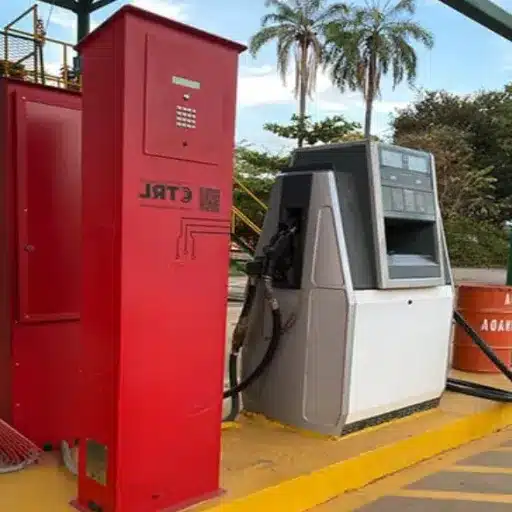
Daniel Mwamba signed a 12-month copper extraction contract in Zambia’s Copperbelt. He had three weeks to set up diesel fueling for a fleet of excavators and haul trucks. Permanent civil construction was impossible.
He sourced a 20,000L skid mounted gas station solution from a Shandong manufacturer. The unit arrived flat-rack, dropped onto a prepared concrete pad, connected to grid power, and began dispensing fuel within 48 hours of arrival. That single decision kept his project on schedule and avoided weeks of costly downtime.
Many buyers face the same challenge Daniel did. They need fueling infrastructure fast, but they are not sure whether a skid mounted gas station solution fits their project, budget, or compliance requirements. This guide answers those questions.
By the end, you will know how a skid mounted gas station solution works, how to size it, how to choose fuel configurations, how to manage shipping and compliance, and how to evaluate suppliers.
What Is a Skid Mounted Gas Station Solution?

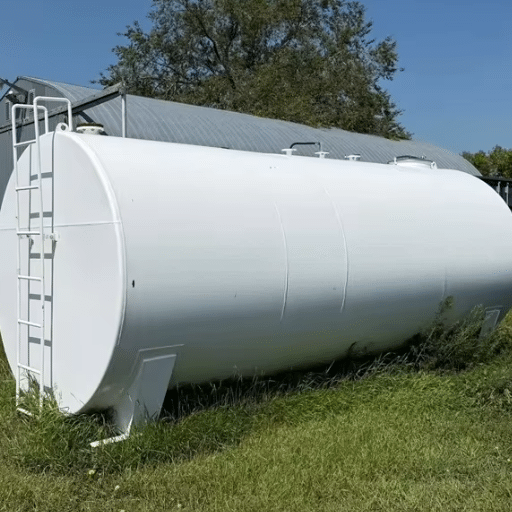
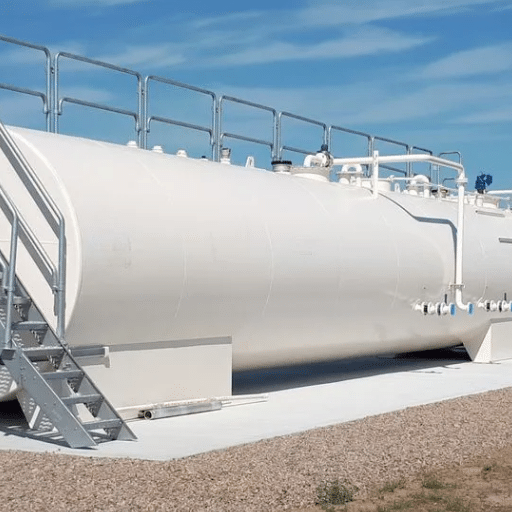
A skid mounted gas station solution is a factory-built, self-contained fueling system assembled on a steel skid. It combines fuel storage, dispensing, pumping, piping, safety systems, and often fuel management into one transportable unit.
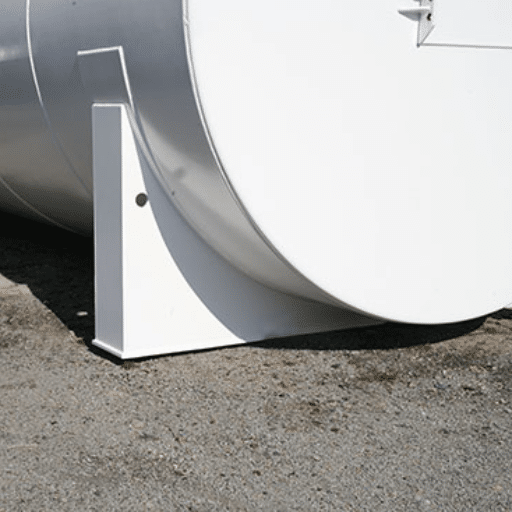
Instead of building a permanent station from scratch, you receive a pre-engineered module that requires only a flat surface and utility connections. Tank walls, frames, and supports are built to handle transport loads and long-term environmental exposure. Most units use Q345R carbon steel frames with tensile strength between 470 and 630 MPa, giving the structure the rigidity needed for repeated lifting and relocation.
How Does a Skid Mounted Gas Station Work?
A skid mounted gas station solution moves fuel through a straightforward loop:
- A tanker delivers fuel to the storage tank through a top or bottom unloading port.
- Fuel rests in a single-wall, double-wall, or self-bunded tank with level monitoring and leak detection.
- A submersible turbine pump or suction pump moves fuel to the dispenser.
- The dispenser meters fuel through a flow meter and delivers it through a hose and nozzle.
- Safety systems monitor vapors, pressure, temperature, and emergency conditions while the fuel management system records every transaction.
This closed-loop design reduces the number of field connections and the risk of installation errors.
Skid Mounted vs. Containerized vs. Traditional Stations
Not every project needs the same format. Here is how the three options compare.
| Feature | Skid Mounted Station | Containerized Station | Traditional Fixed Station |
|---|---|---|---|
| Transport | Flat-rack, break-bulk, RO-RO | Standard shipping container | Built on site |
| Civil work | Minimal concrete pad | Minimal foundation | Extensive excavation, canopy, buildings |
| Deployment time | 2-4 weeks | 3-6 weeks | 3-6 months |
| Mobility | Fully relocatable | Relocatable with crane | Fixed |
| Capacity range | 1,000L – 60,000L+ | 10,000L – 50,000L | Unlimited |
| Best for | Remote, temporary, modular projects | Discrete portable sites | High-volume permanent retail |
Skid-mounted units sit between the two extremes. They offer more capacity flexibility than most containerized options and faster deployment than traditional stations.
Need a detailed comparison between Container Fuel Station and Skid Mounted? Please read our article on Container Fuel Station vs Skid Mounted.
Why Choose a Skid Mounted Gas Station Solution?
The global skid-mounted fuel station market was valued at approximately $800 million in 2024 and is projected to grow at a 6% compound annual growth rate. China manufactures an estimated 60-70% of global capacity, giving buyers a wide supplier base.
Yet the real driver is operational need. Skid stations solve four problems that keep project managers awake at night.
Rapid Deployment
A fixed retail station can take three to six months from civil works to commissioning. A skid mounted fuel station can be ready to dispense in two to four weeks after order confirmation. The factory does the welding, pressure testing, and system integration while your site team prepares a simple pad.
Lower Capital Investment
You avoid permanent buildings, extensive excavation, buried piping runs, and large canopy foundations. Industry estimates suggest skid-mounted stations can reduce capital expenditure by 50-70% compared with permanent stations of similar capacity.
Mobility and Relocation
When the project moves, the station moves. For teams that need a mobile fuel station solution, this flexibility is essential. Construction firms, mining contractors, and emergency response teams value the ability to relocate fueling infrastructure. Relocation typically costs 15-30% of the original equipment value, depending on distance and logistics.
Better Fuel Control
Integrated fuel management systems track every liter or gallon by vehicle, driver, time, and product. That visibility cuts theft, reduces accounting errors, and simplifies audits.
Ayu Pratama runs a construction firm building a toll road in East Java. Her team needed diesel at four separate worksites over two years. Instead of building four fixed stations, she leased a 15,000L portable gas station skid and moved it every six months.
Each relocation took one day. She estimated the approach saved eight weeks of setup time per site and kept fuel within a few hundred meters of the active work area.
For a deeper understanding, please read our Mobile Fuel Station Installation Guide.
Key Components of a Skid Mounted Gas Station Solution
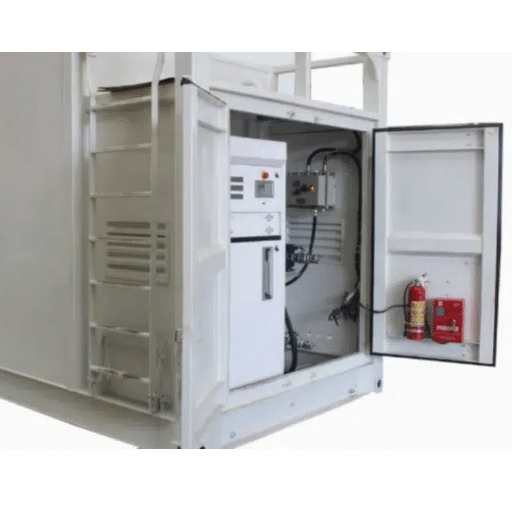
Every skid mounted gas station solution is a modular fueling station, not just a tank on steel. Understanding the components helps you specify the right unit.
Storage Tank Systems
Tanks come as single-wall, double-wall, or self-bunded designs. Self-bunded tanks include a secondary containment wall around the primary tank, capturing leaks before they reach the environment.
Materials include Q235-B and Q345R carbon steel, with stainless steel available for corrosive fuels or extreme climates.
Fuel Dispensing System
Dispensers range from simple single-nozzle units to multi-product, multi-nozzle models. Accuracy matters. OIML R117 recommends fuel dispenser accuracy within ±0.25% for commercial retail meters.
Transfer and Pump Systems
Submersible turbine pumps sit inside the tank and push fuel to the dispenser. Suction pumps pull fuel from the tank. Submersible designs are quieter, support higher throughput, and reduce vapor exposure.
Pump selection depends on dispenser count, peak flow rate, and vertical lift.
Safety and Monitoring Systems
Modern skids include leak detection probes, overfill prevention, emergency shut-off valves, static grounding, vapor recovery, and level gauges. In hazardous zones, electrical enclosures must be rated for explosive atmospheres.
Fuel Management and Control
Options include IC card readers, QR-code authorization, PIN entry, remote telemetry, and cloud-based reporting. These tools turn a basic skid into a controlled commercial fueling point.
For system security information, please read our article on Skid Mounted Gas Station Safety Systems.
Capacity Selection: Sizing Your Skid Mounted Gas Station Solution
Capacity is the first specification buyers must nail. Too small and you strain logistics. Too large and you tie up capital and complicate shipping. To choose the right skid mounted gas station, please read our article on Skid Mounted Gas Station Capacity Selection.
Compact Range (1,000L – 5,000L)
Compact skids suit small fleets, backup generators, remote outposts, and agricultural operations. They often fit inside a standard 20-foot container footprint and can be moved by light crane or forklift.
Mid-Range (10,000L – 20,000L)
This is the sweet spot for construction sites, medium fleets, rural retail stations, and short-term mining camps. A 20,000L unit can typically support two to four dispensers and daily throughputs in the 5,000-10,000L range.
Large Capacity (30,000L – 60,000L)
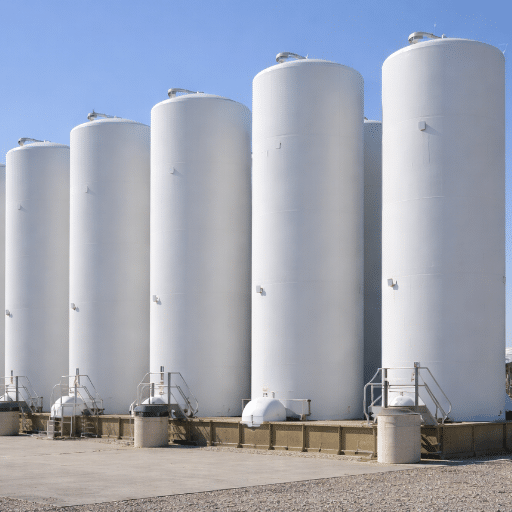
Large skids serve mining operations, industrial depots, logistics hubs, and semi-permanent retail stations. At this size, shipping shifts from standard containers to flat-rack or break-bulk methods.
Capacity Selection Formula
Start with daily fuel demand. Multiply by the number of days you want between deliveries, then add a 20% peak buffer. Finally, confirm the tank turnover target matches your fuel quality and cash-flow goals.
Specification Comparison Table
| Capacity | Typical Dimensions | Approx. Weight | Dispenser Ports | Best For | Price Range (USD) |
|---|---|---|---|---|---|
| 1,000L – 5,000L | 3m x 2.2m x 2.5m | 3-6 tons | 1-2 | Small fleet, generator, remote outpost | 15,000−35,000 |
| 10,000L – 20,000L | 6m x 2.4m x 2.8m | 10-18 tons | 2-4 | Construction, medium fleet, rural retail | 35,000−75,000 |
| 30,000L – 60,000L | 12m x 2.5m x 3m | 25-45 tons | 4-8 | Mining, depot, semi-permanent retail | 75,000−180,000 |
Prices vary by fuel type, safety package, automation level, and regional certification requirements.
Fuel Type Configurations
A turnkey skid mounted gas station solution can be configured for nearly any fuel or energy carrier. The engineering changes with each product.
Diesel and Gasoline Skids
Liquid petroleum skids are the most common configuration. They include atmospheric storage tanks, standard dispensers, and vapor recovery where required. Diesel skids for industrial sites often skip vapor recovery but add water separators and filtration. For a deeper understanding, please read our Skid Mounted Diesel Fuel Station.
LPG Skid Stations
LPG requires pressure vessels, safety relief valves, and vapor recovery systems. Dispensing uses specialized nozzles and scales or flow meters designed for liquefied gas.
LNG/CNG Skid Stations
LNG stations use cryogenic storage, vaporizers, and high-pressure dispensers. CNG stations add compression skids and cascade storage. These configurations demand more insulation, venting, and instrumentation than liquid fuel skids.
Multi-Fuel Configurations
Compartmentalized tanks let one skid dispense diesel, gasoline, and AdBlue from separate chambers. This setup is popular for fleet depots and mining camps where multiple vehicle types refuel in one location.
To understand the differences between different fuels, please read our article on LPG, LNG, and CNG Skid Mounted Station.
Safety Standards and Compliance of Skid Mounted Gas Station

Compliance determines whether your skid mounted gas station solution can clear customs, pass inspection, and operate legally. Requirements vary by region and fuel type.
International Certifications
- ATEX: European directive for equipment used in explosive atmospheres.
- IECEx: Global certification scheme accepted in many Asia-Pacific, Middle East, and African markets.
- OIML R117: Metrological standard for fuel dispenser accuracy.
- ISO 9001: Quality management system certification for the manufacturer.
Chinese Standards
Chinese-built skids often reference GB 50156 for gas station design, GB 3836 for explosion-proof electrical equipment, and NB/T 47003 for welded atmospheric pressure vessels. Buyers importing from China should verify which standards the supplier can document.
North American Standards
In the United States, motor fuel dispensing facilities fall under NFPA 30A. Aboveground flammable liquid tanks may need UL 142 certification. Local authorities having jurisdiction may impose additional requirements.
Regional Import Requirements
Many countries require product registration or conformity certificates before customs release. Examples include SONCAP for Nigeria, SASO for Saudi Arabia, and INMETRO for Brazil. A manufacturer with export experience will know which certifications your target market accepts.
Shipping and Logistics
How your skid mounted gas station solution travels affects cost, lead time, and arrival condition.
Transport Methods by Size
- Standard container: Compact skids up to about 15,000L may fit inside a 40-foot container.
- Flat-rack: Mid-size and large skids ship on flat-rack containers for oversized cargo.
- Break-bulk: Very large or heavy units travel as individual deck cargo.
- RO-RO: Roll-on/roll-off vessels work well for skids mounted on trailers.
Packing and Protection
Manufacturers apply anti-corrosion coatings, brace loose components, seal electrical panels, and include desiccant to control humidity during ocean transit. Protective packing typically adds 2-5% to the landed cost but prevents corrosion and damage.
Customs and Hazardous Cargo
Fuel storage skids are often classified as dangerous goods or pressure equipment. Proper HS codes, material certificates, and pressure-test reports speed customs clearance. Shipping costs typically run 10-20% of equipment value for ocean freight to Africa or the Middle East.
Incoterms and Cost Allocation
- FOB: Buyer pays ocean freight and insurance from the port.
- CIF: Seller includes freight and insurance to the destination port.
- DDP: Seller handles delivery, duties, and taxes to the final site.
Clarify Incoterms before signing a purchase order so you can budget accurately.
If you have shipping needs, please read our article on Skid Mounted Gas Station Shipping Logistics.
Installation and Commissioning
Even a modular skid mounted gas station solution needs proper site preparation and commissioning.
Site Preparation
Install the skid on a level concrete pad with adequate load capacity. Provide drainage so spilled fuel or rainwater does not pool around the unit. Confirm that access roads can handle the delivery truck and crane.
Utility Connections
Most skids need electrical power for dispensers, pumps, lighting, and control systems. Some include onboard generators for remote locations. Fuel supply lines, grounding, and communication cables must be routed according to the manufacturer’s drawings.
Commissioning Checklist
Before first fueling, complete these steps:
- Inspect tanks, piping, and welds for shipping damage.
- Pressure-test the system and verify leak detection.
- Calibrate dispensers and flow meters.
- Test emergency shut-off, overfill prevention, and alarms.
- Train operators on safe fueling and alarm response.
Skid Mounted Gas Station Price and Budget Planning
Understanding the full skid mounted gas station solution cost picture prevents budget surprises. The right price depends on capacity, fuel type, safety package, and certification level.
Equipment Pricing Tiers
Equipment pricing tiers show how skid mounted gas station prices scale with capacity. Compact units start around $15,000. Mid-range kids fall between $35,000 and $75,000. Large−capacity systems can range from $75,000 to $180,000 or more, depending on automation and safety packages.
Hidden Costs
Beyond the equipment price, budget for:
- Ocean freight and inland transport
- Import duties, taxes, and customs clearance
- Foundation and civil preparation
- Electrical connection and grounding
- Local certification or third-party inspection
- Spare parts and commissioning support
Total Cost of Ownership
A turnkey skid mounted gas station package may cost more upfront than a bare tank skid, but it reduces hidden expenses. Over a 10-year life, maintenance, relocation, energy, and labor can exceed the original purchase price. Ask suppliers for expected service intervals and spare parts pricing before you buy.
Chinedu Okafor manages a 40-truck logistics fleet in Lagos. He installed a 30,000L skid with an integrated fuel management system.
Within one quarter, transaction records showed a 12% reduction in unaccounted fuel. The system paid for its automation upgrade in under 18 months through reduced losses and faster reconciliation.
Want an exact skid mounted gas station price for your project? Request a skid-mounted gas station solution specification and we will prepare a budget estimate based on your capacity, fuel type, and destination.
How to Evaluate Skid Mounted Gas Station Solution Manufacturers

Not every supplier can deliver a compliant, reliable skid. Use this checklist before you place an order with skid mounted gas station manufacturers.
Manufacturing Specialization
Look for a manufacturer that builds skids in your target capacity range and fuel type. A supplier focused on 1,000L generator skids may not have the engineering depth for a 60,000L mining station.
Certification and Quality
Ask for ISO 9001, welding certifications, pressure vessel qualifications, and market-specific approvals such as ATEX, IECEx, UL, or SASO. Factory audits and third-party inspections add confidence.
Export Experience
Suppliers with multi-region export history understand packing, documentation, and regional compliance. Request reference projects in markets similar to yours. Shandong Shengrui Intelligent Equipment Co., Ltd. supplies skid-mounted stations across the Middle East, Africa, Southeast Asia, and beyond, with customization support for climate, voltage, and regulatory variations.
Red Flags
Be cautious if a supplier cannot provide clear drawings, test reports, or certification copies. Unclear specifications, missing safety systems, or refusal to allow third-party inspection are warning signs.
To make the most appropriate choice, please read our article on How to Evaluate Skid Mounted Gas Station Manufacturers.
Real-World Application Scenarios
Skid stations fit many industries. Here are the most common use cases.
Mining and Remote Industrial Sites
High-capacity diesel skids keep excavators, haul trucks, and generators running in remote locations. Dust sealing, heavy-duty frames, and minimal civil work make them ideal for harsh environments.
Construction Projects
Contractors move skids as work progresses. Rapid commissioning means crews spend less time waiting for fuel and more time building.
Fleet and Logistics Depots
Fleet operators use mid-size skids with fuel management systems to control costs. Pairing the skid with canopy structures for fueling stations creates a professional, weather-protected refueling point.
Emergency and Humanitarian Deployment
In disaster response, compact skids can be air-shipped or trucked to affected areas. Tool-free connection kits and onboard power let responders start fueling quickly.
For more information, you can read our article about Skid Mounted Hydrogen Refueling Station.
Conclusion
A skid mounted gas station solution is not a temporary shortcut. It is a relocatable, factory-engineered fueling platform that can serve remote mines, construction sites, fleet depots, and semi-permanent retail stations for years.
The right specification comes down to a simple framework. Match capacity to daily demand and delivery frequency. Choose a fuel configuration that fits your vehicles or equipment.
Confirm compliance for your target market. Plan shipping and installation realistically. Select a manufacturer with proven export experience and certification support.
If you are evaluating a project and need a partner who can engineer, certify, and deliver a skid mounted gas station solution tailored to your site, request a skid-mounted gas station solution specification today. Our team will review your fuel volume, site conditions, and compliance needs, then recommend a configuration that keeps your operation moving.