Imagine you build pressure vessels for a living. Your shop holds ASME “U” and “NBIC R” stamps, so you know exactly how certification works — a stamp on the shop, a nameplate on the vessel.
Then a customer asks you to quote a 10,000-gallon UL 142 fuel tank, and you go looking for the explosion-proof tank certification you’ll need to hold. You won’t find one. UL does not certify factories the way ASME stamps a shop; it lists a tank design. A UL representative put it plainly in a public forum: “Companies in this category are not certified by UL. Products are listed.”
That one distinction explains why the phrase confuses so many buyers. They expect a single certificate and instead meet three, issued by different bodies, covering different parts of the same tank.
In this article, we’ll break down:
- What “explosion-proof tank certification” actually covers
- The three certification layers — vessel, appurtenances, and market entry
- Which explosion-proof tank standards apply in the US, the EU, and for China export
- What changed in 2026 that affects your paperwork
- How to verify a tank certificate instead of trusting a logo
For comprehensive information, please read our article on explosion-proof tanks.
The Three Layers of Explosion-Proof Tank Certification

Start with the uncomfortable truth: there is no such thing as a single “explosion-proof tank certificate.” That phrase bundles three separate approvals, issued by different organisations under different rules. Each covers a different part of the same tank.
Here is the correction that separates engineers who understand this from those who don’t. Under the EU framework, the tank vessel is not an ATEX product at all. If its maximum allowable pressure exceeds 0.5 bar, it falls under the Pressure Equipment Directive (PED 2014/68/EU). ATEX 2014/34/EU governs the appurtenances in the hazardous area around it.
The rule practitioners use is short: inside the system is PED, outside the system is ATEX. The dividing line is where the substance can meet air. Keep that in mind, and most of the confusion in this field collapses.
Layer 1 — Vessel Certification: How the Tank Itself Gets Certified
In the United States, fuel storage tank certification runs through a small family of UL standards, and the one you need depends on fire exposure and siting, not on tank size.
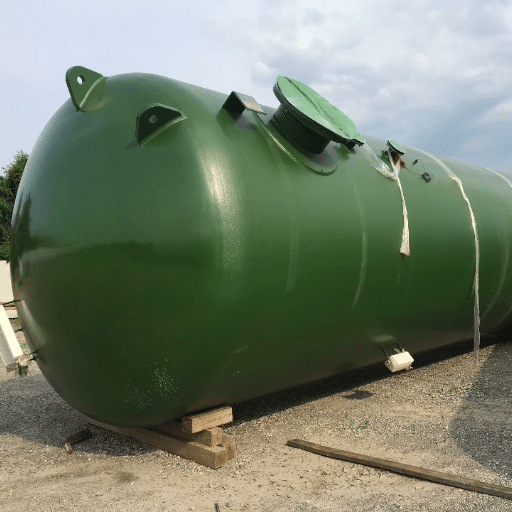
UL 142 is the baseline: shop-fabricated steel aboveground atmospheric tanks for stable, non-corrosive flammable and combustible liquids. It covers materials, welded joints, fittings, coatings, and performance tests including leakage, hydrostatic strength, and load bearing. It carries no fire rating.
UL 2080 adds fire resistance: it limits heat transfer to the primary tank during a two-hour hydrocarbon pool fire and adds impact resistance.
UL 2085 goes further. It is the “protected aboveground tank” standard: stricter heat-transfer limits, built-in secondary containment, and reinforced protection against vehicle impact and projectiles, with optional ballistic testing. Because of that protection, fire codes allow reduced setback distances, which is often the real reason a buyer chooses it.
Underground and field-erected tanks use different standards entirely: UL 58 and UL 1746 for underground steel, ULC 1316 for fibre-reinforced plastic underground tanks in Canada, and API 650 / API 620 / ASME Section VIII for larger field-welded and pressure vessels.
Three practical points buyers consistently miss.
First, a UL listing attaches to a specific design and configuration, not to a brand and not to a factory. The Applicant pays an engineering review fee plus maintenance, and a UL field representative visits the plant four times a year to confirm the design has not changed.
Second, UL 142 certification is deliberately less conservative than API 650/620, and far less conservative than ASME Section VIII. They are not interchangeable safety levels, and treating them as equal is a specification error.
Third, a tank listing covers the tank’s containment spaces, fittings, and integral accessories such as ladders and lifting lugs. It explicitly does not cover accessories shipped with or added to the tank. That gap is the most common surprise at inspection.
For diesel-specific placement decisions and the standards behind them, our guide to explosion-proof diesel storage tanks walks through the regional detail.
Layer 2 — Appurtenance Certification: Pumps, Gauges, and Flame Arresters
Now the layer buyers usually skip, and the one inspectors check with a torch.
Everything electrical or mechanical that touches the vapour space or sits in the classified zone needs explosion-protection certification. On a fuel tank, that typically means the transfer pump, the level gauging, the overfill prevention system, and the flame arrester on the vent.
In Europe, these are ATEX 2014/34/EU products. Internationally, they are certified under IECEx, which is built on the IEC 60079 series. A typical tank pump carries a marking such as II 2 G Ex d IIB T4 Gb. Read it in pieces: Group II (surface industry), Category 2 (Zone 1, safe with one fault), gas atmosphere, flameproof construction (Ex d), gas group IIB, and a T4 temperature class meaning a maximum surface temperature of 135 °C.
Two hardware standards changed recently and matter for new projects. Flame arresters are now specified to ISO/IEC 80079-49:2024, which replaced ISO 16852:2016 and raised the upper design temperature from 150 °C to 200 °C. Overfill prevention equipment used in the EU is now assessed under EN 13616-1:2025.
The design logic is simpler than the paperwork. If the liquid can be at or above its flash point, transfer pumps should be flameproof rated and level gauging should be intrinsically safe. Bonding and grounding are mandatory regardless. Our guides to hazardous area classification for gas stations and to overfill prevention devices cover the zone-by-zone detail.
Get this layer wrong, and you have a well-certified vessel with uncertified hardware on top, a combination no inspector accepts.
Layer 3 — Market-Entry Certification: Clearing the Port and the Inspector

This is the layer that turns a manufactured tank into a deliverable one. It is also the layer where buyers discover, usually late, that the vessel standard they specified is not the document their customs broker or fire marshal wants.
For the European Union, a compliant package includes a CE mark supported by a Declaration of Conformity under PED 2014/68/EU, a vessel certification route that depends on the pressure–volume category (I through IV), and ATEX documentation for the appurtenances. For the United Kingdom, post-Brexit markings are now UKCA and UKEX, a point most supplier blogs still get wrong.
For the United States, the entry document is an NRTL listing from a recognised body such as UL, ETL, or CSA, and the file number must be verifiable, not merely printed.
For China, the domestic framework runs on GB 50156, the code for design and construction of filling stations, together with AQ/T 3001-2021, the technical specification for barrier explosion-proof tanks. AQ/T 3001-2021 took effect on 1 August 2021 and replaced the 2005 edition; for gas-station tanks, it applies to LPG tanks.
Destination markets add their own schemes: SASO/SABER for Saudi Arabia, SONCAP for Nigeria, EAC for the Eurasian customs union. The deliverable is not a logo. It is a Declaration of Conformity that names the directives, the standards, and the Notified Body.
Tank Certification Standards Compared
This is the storage tank standards table the internet keeps leaving out. Use it to check tank certification requirements against your site before you specify.
| Standard | Vessel type | Fire protection | Secondary containment | Typical use |
|---|---|---|---|---|
| UL 142 | Steel aboveground, atmospheric | None | Optional | Rural sites, farms, fleet yards, wide setbacks |
| UL 2080 | Steel aboveground, atmospheric | 2-hour pool fire + impact | Optional | Sites with moderate fire exposure |
| UL 2085 | Steel aboveground, protected | 2-hour pool fire, reduced heat transfer, impact | Built-in, integral | Urban sites, near buildings, dispensers, high-traffic |
| UL 58 / UL 1746 | Underground steel | n/a | Varies | Buried storage |
| API 650 / 620 | Field-erected aboveground | n/a | via design | Large terminals, field-welded tanks |
| EN 13445 / EN 14015 | European vessel | n/a | via design | EU market, with PED CE marking |
Six notes that decide most real projects:
- UL 2085’s reduced setbacks are the practical reason it wins on constrained sites.
- A double-walled UL 142 tank is not a “protected” tank. Double-wall adds containment, not a fire rating.
- “Fire-rated” used loosely by a salesperson is meaningless without the standard number behind it.
- The authority having jurisdiction (AHJ) has the final say on acceptance, not the standard alone.
- Aboveground and underground tanks use different standards and different inspection regimes.
- A heavier tank is harder to relocate, a real cost when you compare UL 142 and UL 2085 for a temporary site.
Explosion-Proof Tank Certification Requirements by Region: US, EU, and China Export
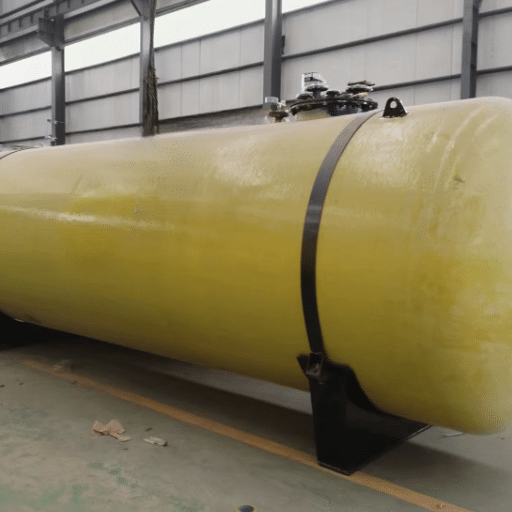
United States. The chain is NFPA 30 / NFPA 30A and the International Fire Code referencing UL 142, UL 2080, and UL 2085; an NRTL listing on the tank; and hazardous-location electrical equipment rated to NFPA 70/NEC Class I Division 1 or the equivalent Zone system. The fire marshal checks the listing mark, the control number, and the permit application together.
European Union. Two directives run in parallel. PED 2014/68/EU certifies the vessel above 0.5 bar; ATEX 2014/34/EU certifies the appurtenances. A single Declaration of Conformity can reference both. There is no central EU database for ATEX certificates, which is precisely why document control matters more here.
China export. Domestically, the tank follows GB 50156 and AQ/T 3001-2021. For export, the same tank must be re-documented to the destination framework: CE/PED for Europe, UKCA/UKEX for the UK, NRTL for the US. A Chinese certificate alone does not clear a foreign port. Ask any supplier to show you the destination-market documentation set before you order, not after.
If you are comparing certification models across component types, our wider breakdown of ATEX vs IECEx vs UL certification fills in the equipment-level detail.
What Changed in 2026: Standards Updates Buyers Must Know
Standards move slowly, then all at once. Four changes affect tank projects specified this year.
- ISO/IEC 80079-49:2024 replaced ISO 16852:2016 for flame arresters, raising the upper design temperature from 150 °C to 200 °C. New specifications should cite the 2024 standard.
- The ATEX Guidelines reached their 6th edition in January 2026, clarifying that digital Declarations of Conformity are acceptable alongside paper.
- PED harmonized standards were revised on 13 January 2026 (published in OJ C/2026/14), which changes which standard versions give a presumption of conformity.
- Commission Decision (EU) 2026/989 added EN 13616-1:2025 for overfill prevention equipment, which applies to any tanker or tank overfill system in the EU.
None of these change the physics. They change the paperwork, and paperwork is what an inspector reads.
If you are mid-project, check that your supplier’s Declaration of Conformity cites current standard versions rather than the ones from five years ago. That review takes an afternoon and prevents a delayed shipment.
How to Verify Explosion-Proof Tank Certification Before You Buy

Counterfeit and misdeclared certificates are not rare. One notified body, ECM, listed 37 fraudulent ATEX certificates; extrapolated across Europe’s roughly 77 notified bodies, that suggests up to 3,000 potentially fraudulent certificates in circulation.
Verification is a six-step habit, not a leap of faith.
- Request the certificate before you order, not after. A supplier who is slow or evasive about providing one has told you something.
- Look up the UL file number on UL Product iQ. Confirm it resolves to the same product, model, and manufacturer named on the document. A mismatch is a stop-and-verify moment.
- Check IECEx certificates on the IECEx database. Confirm the certificate is still “In Force” and that the number matches the label.
- Confirm the Notified Body in the EU’s NANDO database. If the body named on the certificate does not exist for that scope, the certificate is void.
- Know the self-certification loophole. Under ATEX, Zone 2 equipment and many non-electrical products can be self-declared by the manufacturer. Only Category 1 requires third-party verification. IECEx never allows self-declaration and keeps a public database, which is why experienced buyers prefer dual-marked equipment.
- Match the numbers across every document. The certificate number should appear identically on the nameplate, the manual, and the datasheet. Anomalies in marking format are the classic tell.
One inspection team told a story that makes the point better than any rule. On a single vessel, six glass-reinforced plastic junction boxes were all stamped as certified flameproof to gas group IIC, temperature class T6, suitable for hydrogen. They were visibly different from one another in construction. Equipment that is different cannot share one certification, and it didn’t. The marking was simply copied onto hardware that had never been tested.
Certificates are cheap to forge and free to check. The imbalance is the whole argument.
FAQ
Does UL certify a manufacturer or the tank itself?
UL lists products, not companies. A manufacturer’s tank design is certified and inspected through quarterly factory visits, and the listing attaches to a specific configuration. There is no factory-wide “UL certified manufacturer” status equivalent to an ASME shop stamp.
Do I need a UL 142 or a UL 2085 tank?
It depends on fire exposure and setbacks, not tank size. UL 142 suits rural, well-spaced sites. UL 2085 is typically required or preferred where a tank sits near a building, in dense commercial areas, or where local codes demand reduced setbacks. Confirm with your AHJ.
Does ATEX certification cover the tank itself?
No. In the EU, a tank vessel above 0.5 bar is governed by the Pressure Equipment Directive (PED 2014/68/EU). ATEX 2014/34/EU applies to the appurtenances (pumps, gauges, and sensors) in the hazardous area. A correct package carries both.
How do I verify a tank certificate is genuine?
Check the UL file number on UL Product iQ, confirm IECEx certificates on the IECEx database, and verify the Notified Body via NANDO. Match the certificate number across the nameplate, manual, and datasheet. Never rely on the printed logo alone.
What is the difference between UL Listed and UL Recognized?
UL Listed applies to a complete, stand-alone product intended for field installation, the mark an inspector looks for. UL Recognized applies to components and sub-assemblies only. Installing a Recognized component on its own is a frequent cause of inspection failure.
Is a UL-listed tank accepted in the European Union?
Not on its own. A UL listing satisfies the US framework. For the EU, you need PED conformity with CE marking and a Declaration of Conformity, plus ATEX documentation for the appurtenances. Plan for both sets of documents if you sell into both markets.
Getting Explosion-Proof Tank Certification Right the First Time
Certification is not one document. It is a vessel approval, an appurtenance approval, and a market-entry package, and the same tank needs a different combination for every destination.
Three things worth acting on:
- This week: pull every tank certificate you hold and check the standard edition on each. If it cites ISO 16852:2016 or an undated ATEX reference, it needs updating.
- This month: verify one certificate end to end (UL Product iQ file number, IECEx database, or NANDO entry) so you know the process before a deadline depends on it.
- Before your next specification: decide your three layers explicitly. Vessel standard, appurtenance rating, and destination conformity. Putting them in the specification prevents the surprises that surface at inspection.
At Shandong Shengrui Intelligent Equipment, we build gas station and fuel storage equipment for buyers across the Middle East, Europe, Africa, and Southeast Asia, and we prepare the certification package for each destination market rather than handing over a folder and wishing you luck. You can review our fuel storage tank range or talk to our engineering team about the exact certification set your project needs.
Get the three layers right and certification stops being a risk. It becomes the reason your project clears inspection the first time.