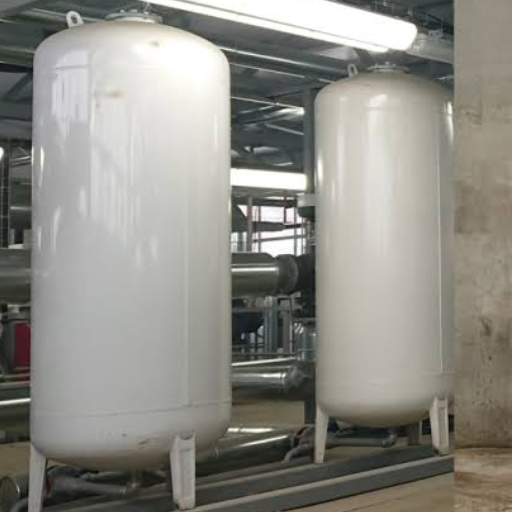
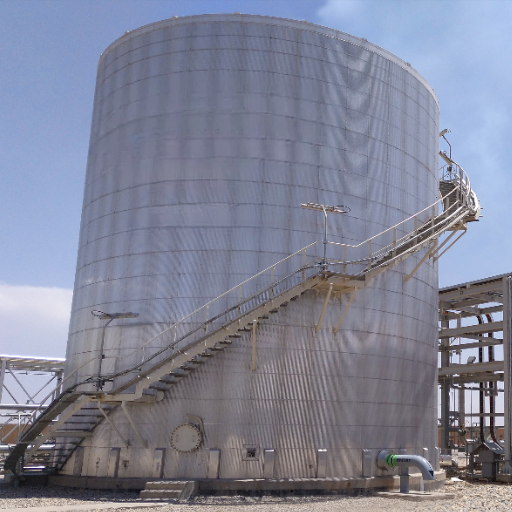
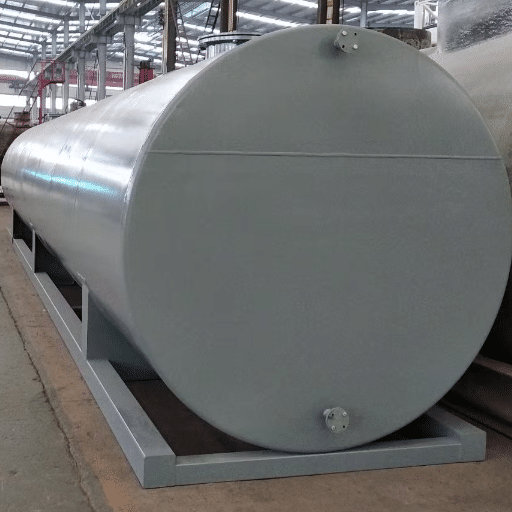
A procurement manager in Nairobi recently received four quotes for the same 1,000-gallon stainless steel fuel tank. The lowest was $2,400. The highest was $8,900. Same capacity, same diesel service, and a gap of more than three times.
The difference wasn’t the stainless steel itself. It was grade, wall thickness, double-wall configuration, certifications, freight, and what each supplier left out of the quote.
That experience is common. Stainless steel fuel tank cost is never a single number. It’s a range shaped by material grade, capacity, design code, fittings, and logistics. If you’re budgeting for a fuel station, generator day tank, or industrial site, understanding those drivers helps you avoid surprises and ask stainless steel fuel tank suppliers the right questions.
In this guide, you’ll learn:
- Real stainless steel fuel tank price ranges by capacity and cost per gallon
- How 304, 316, and 316L grades move the price
- The cost impact of single-wall versus double-wall designs
- How stainless steel tank cost per gallon compares with carbon steel
- Total cost of ownership math that shows when the premium pays off
- A request-for-quote checklist that produces accurate numbers
How Much Does a Stainless Steel Fuel Tank Cost?

Stainless steel fuel tank cost is the total price to fabricate, finish, transport, and install a stainless steel storage tank. For new equipment, typical prices range from about $1,500 for small aboveground units to $75,000 or more for certified double-wall systems, before installation.
The fastest way to estimate a budget is by capacity. Every project is custom-quoted, but the ranges below reflect current market conditions for new, code-compliant stainless steel tanks. Use them as a starting point, then adjust for your specific design.
Typical Price Ranges by Capacity
| Tank Capacity | Typical Price Range (USD) | Common Use Cases |
|---|---|---|
| 100–500 gallons | $1,500–$2,500 | Generator day tanks, small fleet fueling |
| 500–1,500 gallons | $2,500–$6,000 | Retail fuel stations, medium fleet depots |
| 1,500–5,000 gallons | $3,750–$15,000 | Aboveground fuel storage, skid-mounted units |
| 5,000+ gallons (certified) | $10,000–$75,000+ | Fuel farms, aviation, custom industrial systems |
These figures cover the tank shell only. A fully installed system usually adds 30% to 60% for foundations, piping, electrical, and commissioning.
Cost Per Gallon Benchmarks
Engineers often use cost per gallon to compare options quickly. Because smaller tanks need nearly as much fabrication as larger ones, the per-gallon price drops sharply as capacity grows.
- Large fabricated tanks: $0.25–$1.00 per gallon
- Mid-size stainless fuel tanks: $3.00–$5.00 per gallon
- Small or custom tanks: $5.00–$15.00+ per gallon
- Consumer automotive tanks (16–22 gallons): $15.00–$33.00 per gallon
For example, a 40,000-liter stainless tank from a factory-direct supplier can fall near $1.00 per gallon for the shell. A 500-gallon tank with fittings and a polished finish could run $5.00 to $8.00 per gallon. This is why comparing tanks by total price alone can mislead. Cost per gallon gives a clearer view of value across sizes.
Factory-Direct vs. Local or Importer Pricing
Where you buy matters as much as what you buy. Factory-direct purchasing from a manufacturer avoids 15% to 30% of importer and reseller markup layers. The trade-off is longer lead time and the need to verify certifications yourself.
Want to compare more options before you budget? Our stainless steel fuel tanks buyer’s guide walks through grades, applications, and selection criteria in depth.
What Affects Stainless Steel Fuel Tank Cost?

Five factors drive most of the variation in a stainless steel fuel tank price quote. Knowing them helps you compare like for like and spot where a low quote may be cutting corners.
1. Material Grade: 304 vs. 316 vs. 316L
The grade of stainless steel is the single biggest material cost driver. Grade 304 handles clean diesel and gasoline in dry, inland environments. Grades 316 and 316L add molybdenum for superior resistance to chlorides, salt air, and the corrosive effects of biodiesel or ethanol blends. That protection costs money.
- 316 or 316L typically runs 10% to 30% more than 304.
- Raw stainless plate costs roughly $1.00 to $2.50 per pound, against $0.50 to $0.90 for carbon steel.
- The “L” (low-carbon) grades cost slightly more but resist corrosion at weld seams, where fuel tanks fail most often.
For welded fuel tanks, most engineers specify 304L or 316L rather than the non-L grades. Our 304 vs 316 stainless steel fuel tanks guide explains the trade-offs in detail.
For a detailed comparison, please read our article on stainless steel vs aluminum fuel tanks.
2. Wall Thickness and Design Pressure
Thicker shells cost more because they use more material and heavier plate. A tank built for atmospheric storage at 5 mm might be fine for diesel. A pressure-rated vessel at 10 mm with an ASME design adds significantly to the quote. Always confirm the minimum wall thickness with your supplier rather than assuming a standard.
3. Single-Wall vs. Double-Wall Configuration
A double-wall tank wraps a secondary containment layer around the primary shell, with interstitial leak detection between them. This design adds material, welding, and testing, so it costs meaningfully more than a single-wall tank. It also satisfies stricter environmental requirements where a leak cannot be tolerated.
4. Certifications and Compliance Standards
Certified tanks cost more, and for good reason. Compliance standards such as UL 142 for aboveground tanks, API 650 for welded oil storage, and ASME BPVC Section VIII for pressure vessels require engineering review, testing, and third-party inspection. Export buyers may also need ATEX documentation for hazardous areas. Each certification adds to the price but reduces risk.
5. Fittings, Shipping, and Installation
Nozzles, manways, level gauges, ladders, and passivation per ASTM A967 all add cost. Freight for a large tank can be substantial, and the stainless steel fuel tank installation cost typically adds 30% to 60% to the tank-only price. Underground installations run 15% to 25% more than aboveground because of excavation and bedding.
For the fabrication standards behind these checks, see our stainless steel fuel tank fabrication guide.
Stainless Steel Fuel Tank Cost by Application
The right stainless steel fuel tank cost depends on how and where you use it. Different applications carry different certification and design requirements, and each one lands in a different price band.
Gas Stations and Aboveground Storage
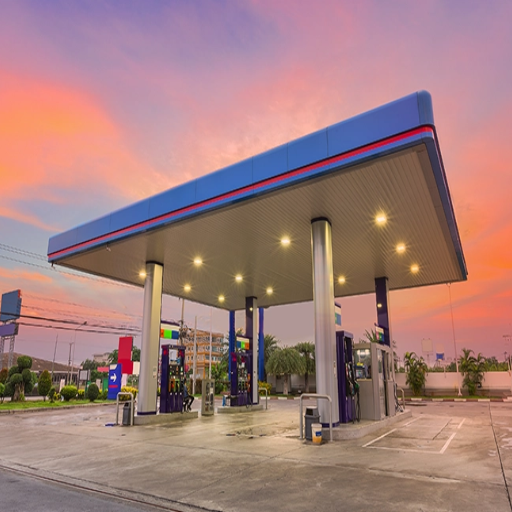
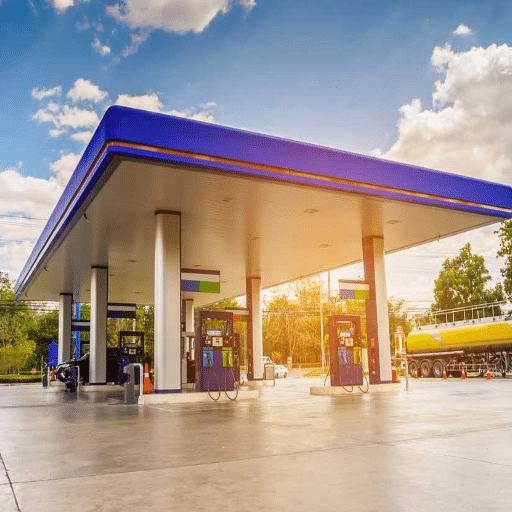
Gas stations most often use stainless for aboveground storage, skid-mounted units, and specialty fuels. A modular skid with a 1,000 to 2,000-liter stainless tank and integrated dispensing equipment is a common configuration. Factory-direct skids start around $3,000 to $6,000 for the tank and structure, before pumps and metering.
Diesel Generator and Fleet Day Tanks
Backup power sites and fleet depots frequently use 316L day tanks because they sit close to expensive generators. A 500-gallon 316L stainless steel diesel tank in day-tank service typically runs $2,000 to $3,500. In coastal or high-humidity locations, the 316L premium is usually worth it to avoid pitting and contamination.
Double-Wall and Bunded Systems
European turnkey double-wall tanks with a stainless inner tank and integrated pump packages range from about $24,000 for a 2,500-liter unit to $36,000 for a 5,500-liter unit. These plug-and-play systems include dispensers, metering, overfill protection, and leak detection.
Aviation and Specialty Fuels
Aviation-grade double-wall stainless systems are the high end of the market. Certified units with FAA or UL 142 compliance and modular container footprints can exceed $73,000. Jet fuel buyers pay for strict surface finish, filtration, and certification requirements. If that is your application, our stainless steel diesel tank guide covers the specs that drive cost. And if you need, please check out our article on stainless steel jet fuel storage tanks.
For detailed information, please refer to our marine stainless steel fuel tanks guide.
Stainless Steel vs. Carbon Steel Fuel Tank Cost

Upfront, the comparison is one-sided. A stainless steel tank typically costs two to three times more than an equivalent carbon steel tank, and up to four times more with 316L or double-wall construction. On a per-gallon basis, carbon steel runs about $1.50 to $2.50, while stainless runs $3.00 to $5.00.
Consider what happened at a mining fleet in West Africa. The operator chose carbon steel tanks and saved roughly $35,000 on day one. Over the next 15 years, recoating, corrosion repairs, inspections, and relining added about $52,000.
By the time the tanks were replaced, the carbon steel “savings” had vanished. A stainless fleet installed at another site required no coatings and no mid-life replacement.
That doesn’t mean stainless is always the right call. For clean, dry diesel in an inland location with a solid maintenance program, carbon steel tank cost may win on total project budget. For coastal sites, biofuels, or long service life, stainless earns its premium. Our carbon steel vs stainless steel tank comparison lays out both sides.
Total Cost of Ownership: Does Stainless Steel Pay for Itself?
The real question for most buyers is not the sticker price. It’s total cost of ownership over the life of the tank. Stainless steel costs more upfront, but it avoids the recurring costs that carbon steel owners carry for decades.
The 25-Year Comparison
A widely used benchmark compares a 20,000-liter tank over 25 years:
| Cost Item | Carbon Steel Route | 316L Stainless Route |
|---|---|---|
| Initial tank | $6,000 | $13,500 |
| Initial coating | $1,500 | — |
| Recoating (5 cycles) | $7,500 | — |
| Cathodic protection | $8,750 | — |
| Replacement at year 15 | $6,000 | — |
| Minimal maintenance | — | $2,500 |
| Total (25 years) | $29,750 | $16,000 |
In this scenario, the 316L stainless tank saves about $13,750 over 25 years while avoiding a mid-life replacement. Buyers typically reach break-even between year 12 and year 20, depending on environment and fuel type.
Lifespan and Maintenance
The math rests on durability. A properly maintained stainless steel tank has a design life of 20 to 30 years, and often longer. Carbon steel typically lasts 10 to 15 years. Annual maintenance for stainless steel runs around 0.8% of initial cost, mostly cleaning and inspection. Carbon steel maintenance can run 2% to 5% of equipment value per year because of coatings and corrosion monitoring.
For biodiesel and ethanol blends, the gap widens. Research on biodiesel-diesel blends shows 316L stainless steel corrodes at roughly 92% lower rates than mild steel, reducing both tank failure risk and fuel contamination. Stainless also keeps diesel usable longer by preventing rust particles from clogging filters and injectors. Steel tank industry guidance confirms stainless steel tanks handle all biofuel blend levels without the compatibility limits of coated carbon steel.
A Real-World Retrofit
A Florida bus fleet operated 304 stainless day tanks on petroleum diesel for eight years without issue. When the fleet switched to B20 biodiesel, pitting appeared near bottom welds within 18 months. The retrofit to 316L cost about 25% more upfront but eliminated the unplanned replacement risk and the downtime that went with it.
For more information, please read our article on stainless steel IBC totes for diesel and fuel storage.
How to Get an Accurate Stainless Steel Tank Quote

Because stainless steel fuel tank cost varies so widely, the quality of your quote depends on the quality of your request. Sending a complete specification produces accurate, comparable numbers. Vague requests produce vague pricing.
RFQ Checklist
- Capacity, dimensions, and orientation (vertical, horizontal, or skid-mounted)
- Material grade (304, 304L, 316, or 316L) and minimum wall thickness
- Stored product and operating temperature
- Single-wall or double-wall, with any secondary containment requirements
- Required compliance standards (UL 142, API 650, ASME, ATEX)
- Fittings and accessories (nozzles, manways, gauges, passivation)
- Site conditions and installation constraints
- Delivery location and Incoterms
Ready to get a factory-direct estimate? Our engineering team builds certified 304 and 316L stainless steel fuel storage tanks for gas station, industrial, and specialty fuel projects worldwide.
FAQ
How much does a stainless steel fuel tank cost?
A stainless steel fuel tank typically costs $1,500 to $75,000 or more, depending on capacity, grade, configuration, and certifications. Small 100 to 500-gallon tanks usually fall between $1,500 and $2,500, while certified double-wall systems can exceed $75,000 before installation.
What is the stainless steel tank cost per gallon?
Cost per gallon drops as capacity grows. Large fabricated tanks run $0.25 to $1.00 per gallon, mid-size fuel tanks run $3.00 to $5.00 per gallon, and small custom tanks run $5.00 to $15.00+ per gallon.
Is stainless steel more expensive than carbon steel for fuel tanks?
Yes, upfront. Stainless steel tanks typically cost two to three times more than equivalent carbon steel tanks. Over a 20 to 25-year service life, however, stainless can be cheaper because it avoids recoating, cathodic protection, and mid-life replacement.
How much more does 316L cost than 304 stainless?
316 or 316L typically costs 10% to 30% more than 304. The premium buys superior resistance to chlorides, salt air, and corrosive biofuel blends, which is why 316L is recommended for coastal sites and long-term fuel storage.
Does a double-wall stainless steel tank cost more?
Yes. A double-wall tank adds a secondary containment layer and interstitial leak detection, so it costs meaningfully more than a single-wall tank. The added cost is justified where environmental regulations demand extra leak protection.
How long does a stainless steel fuel tank last?
A properly maintained stainless steel fuel tank has a design life of 20 to 30 years or more. Carbon steel typically lasts 10 to 15 years. Stainless also needs far less maintenance, around 0.8% of initial cost per year.
Conclusion
Stainless steel fuel tank cost is capacity-driven, but the final quote depends on grade, configuration, certifications, freight, and installation. For buyers who need corrosion resistance, biofuel compatibility, or long service life, stainless steel is often the lower-cost choice over the full life of the tank.
Before you request a quote, model the total project cost, not just the shell price. Include foundation, fittings, freight, and commissioning. Then send suppliers a detailed RFQ so you can compare accurate, like-for-like numbers.
At Shandong Shengrui Intelligent Equipment Co., Ltd., we engineer and export fuel storage tank solutions and complete fuel station infrastructure for projects worldwide. If you need a custom estimate for a stainless steel tank, contact our engineering team with your specifications. We’ll help you size, specify, and budget the right solution.
Key Takeaways
- Small stainless steel tanks (100–500 gal) typically cost $1,500–$2,500; certified double-wall systems can exceed $75,000.
- Cost per gallon drops as capacity grows, from $5–$15/gal for small tanks to $0.25–$1.00/gal for large fabricated tanks.
- 316/316L stainless runs 10–30% more than 304, but resists chlorides and biofuel corrosion.
- Stainless costs 2–3× carbon steel upfront but can save ~$13,750 over 25 years on a 20,000L tank.
- A detailed RFQ with grade, capacity, code, configuration, and delivery terms produces the most accurate quotes.