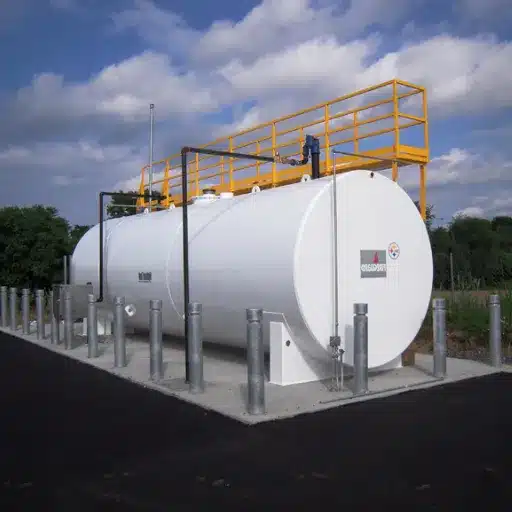
When Priya’s engineering team commissioned a 25,000 ton-hour chilled water tank at a data center campus, the projection promised a third of peak cooling demand. Six months later, the tank was delivering less than half of the expected savings. The problem was not the tank itself. It was a thin temperature differential, an oversized inlet, and insulation that had quietly soaked up moisture.
Thermal energy storage tank design decides whether a facility saves money or wastes it. Get the storage medium, sizing, and stratification right, and you shift load to cheap hours for two decades. Get them wrong, and you buy an expensive tank that never pays back. This guide covers every decision that matters. You will learn the main TES tank types, how to size a tank with a real formula, how stratification and diffusers work, which materials and insulation to specify, the standards that govern them, and what these systems cost. For comprehensive information, please read our article on thermal store tanks.
Explore our engineered storage tank solutions → and see how our engineering team turns these principles into built systems.
What Is a Thermal Energy Storage Tank?
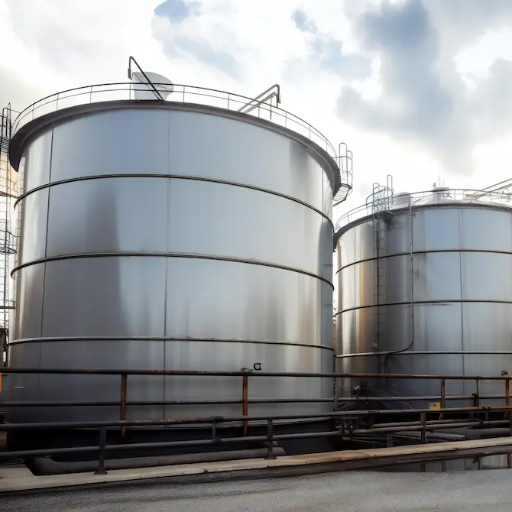
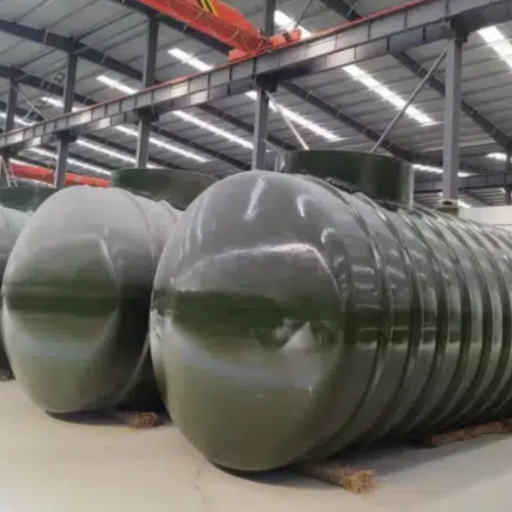
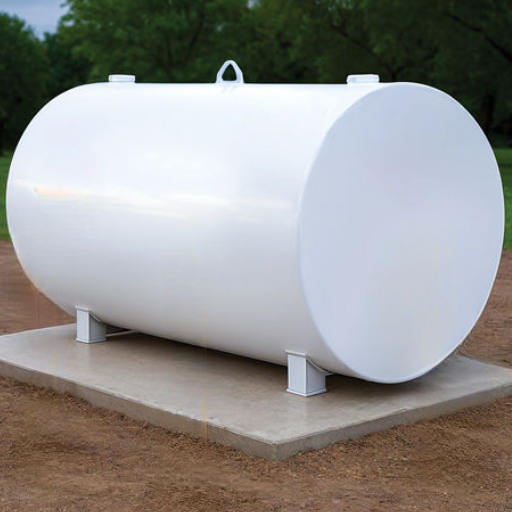
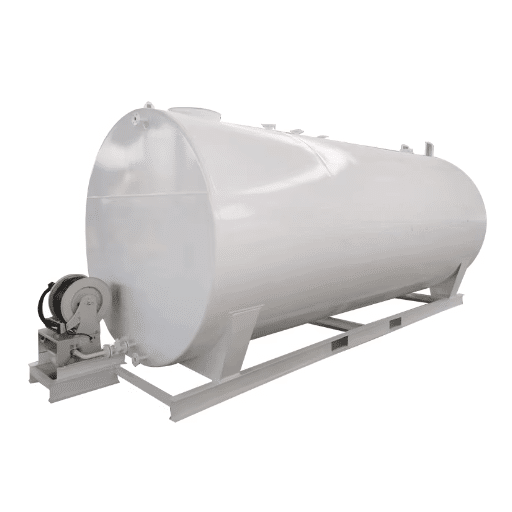
A thermal energy storage tank is an insulated vessel that stores heating or cooling energy in a medium such as water, ice, or molten salt so it can be used later. It charges during low-cost or off-peak hours and discharges during high-demand periods, shifting load without changing how much energy a building or plant consumes.
That definition hides the engineering. A TES tank works because it separates two temperature states, either in two vessels or in one vessel split by a thermal gradient. During charging, a chiller, heat pump, or solar field adds thermal energy to the storage medium. During discharge, the medium releases that energy to serve the building or process.
Storage falls into three families. Sensible storage raises or lowers the temperature of a material, usually water, because water is cheap, safe, and has excellent heat capacity. Latent storage melts or freezes a phase-change material (PCM) such as ice or paraffin, packing more energy into less volume. Thermochemical storage uses reversible chemical reactions for the highest density, but it remains largely pre-commercial.
Types of Thermal Energy Storage Tanks
TES tanks are classified by medium, temperature range, and configuration. Each type fits a different job, and choosing the wrong one is the most common and most expensive design error.
Chilled Water TES Tanks
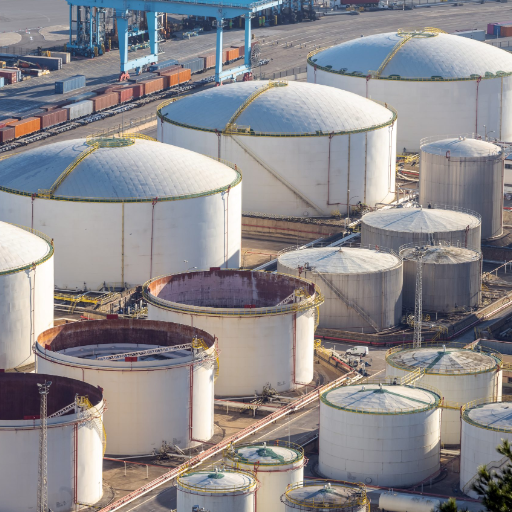
Chilled water tanks store sensible cooling, typically with a 4.5–5.5°C supply and 13.5–15.5°C return. They are atmospheric, stratified vessels used in district cooling, campus cooling, data centers, and turbine inlet air chilling.
Their appeal is simplicity. Water acts as both the storage medium and the heat transfer fluid, so the system needs almost no internal hardware beyond diffusers. The trade-off is size. Chilled water needs roughly six to seven times more installed volume than ice for the same capacity.
Hot Water and Buffer TES Tanks
Hot water storage is the workhorse of heating systems. Unpressurized tanks operate below about 100°C, while pressurized vessels store hotter water and therefore need less volume. Common uses include domestic hot water, space heating, solar thermal, combined heat and power, and district heating.
In its most basic form, a hot water TES tank is simply a buffer tank that decouples boiler or heat pump output from demand. In its advanced form, it is a carefully stratified vessel that keeps hot water at the top and cool water at the bottom to maximize usable capacity.
Ice and Phase-Change Material TES Tanks
Ice storage uses the latent heat of freezing to store far more energy in far less space. Ice needs only about 0.042 m³ per ton-hour, compared with roughly 0.2 m³ for chilled water, which makes it ideal where floor space is tight.
The trade-off is complexity. Salt hydrates can suffer from supercooling, phase separation, and performance loss after repeated cycles. Organic PCMs like paraffin are more stable but conduct heat poorly and change volume by around 10% as they melt.
Molten Salt TES Tanks
Molten salt, usually a nitrate mixture, stores sensible heat at high temperatures and is the commercial standard for concentrated solar power. Two-tank systems hold cold salt near 290–300°C and hot salt near 565°C.
Molten salts freeze at relatively high temperatures, between roughly 120°C and 220°C. That means piping and tanks need heat tracing and careful freeze protection, which raises both capital and operating costs.
Thermocline vs. Two-Tank Design
Here is where the biggest cost decision lives. A two-tank system keeps hot and cold media in separate vessels. Storage efficiency is effectively 100%, but you pay for two tanks.
A thermocline system packs both temperature states into one vessel separated by a vertical gradient, using a low-cost filler such as quartzite to hold most of the thermal mass. This can cut storage capital cost by around 35%. The catch is lower storage efficiency, near 65%, and a taller tank geometry.
| TES type | Typical temperature | Relative footprint | Best for |
|---|---|---|---|
| Chilled water | 4–15°C | Large | District cooling, data centers |
| Hot water | 40–100°C+ | Medium | Heating, DHW, solar, CHP |
| Ice / PCM | −5–8°C (ice) | Small | Space-constrained cooling |
| Molten salt | 290–565°C | Large | Concentrated solar power |
| Thermocline (any medium) | Varies | Medium | Cost-sensitive large storage |
Key Thermal Energy Storage Tank Design Parameters
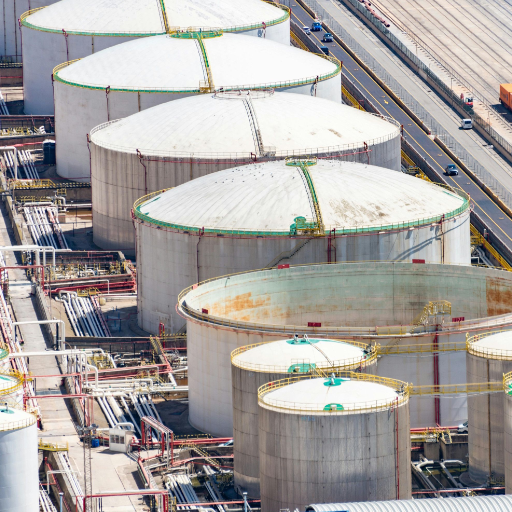
Once you have chosen a type, seven parameters determine whether the tank performs. Treat this list as your design checklist.
- Storage capacity in ton-hours or kWh
- Temperature differential (ΔT) between charge and discharge
- Tank geometry and aspect ratio
- Stratification and thermocline thickness
- Diffuser design
- Operating pressure and code basis
- Nozzle and piping layout
Storage Capacity and Sizing
The core sizing relationship is simple. Stored energy depends on usable volume multiplied by the temperature differential. A practical rule of thumb for chilled water is 144 gallons per ton-hour at a 10°F (about 5.5°C) temperature difference.
A wider ΔT stores more energy in the same tank, which directly shrinks the tank and its cost. This is why engineers push supply and return temperatures apart wherever the load allows. For a fuller treatment of sizing methods and heat-exchanger selection, the US DOE design and installation manual for thermal energy storage remains a useful reference.
Temperature Differential and Geometry
Tank geometry is not cosmetic. Vertical tanks with a diameter-to-height aspect ratio between 1:1 and 2:1 hold the strongest thermocline. Squat tanks let mixing creep in and can reduce usable capacity to 60–70% of nominal.
Stratification and Diffusers
Stratification is the art of keeping hot and cold water layers apart. In chilled water tanks, the thermocline between layers is typically only 0.2–0.4 m thick. In molten salt thermocline tanks, it can span 4–6 m of a 14 m vessel.
Diffusers are what make stratification possible. They slow the incoming fluid to a gentle, laminar flow so it slides into the matching temperature layer instead of stirring the tank. Radial, octagonal, and labyrinth diffusers are common, and their sizing is driven by flow velocity and the Froude number.
Pressure and Nozzles
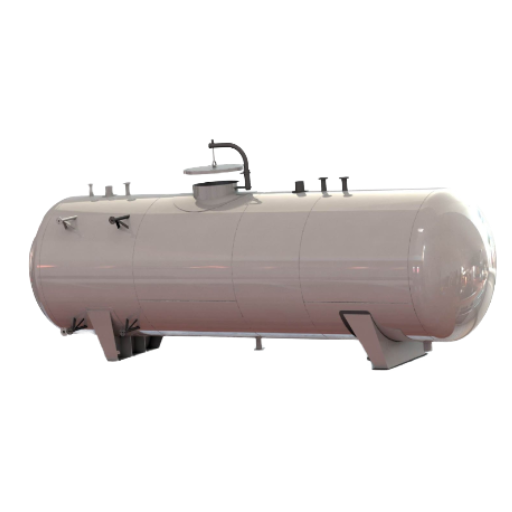
Atmospheric tanks are the default for water storage, but any pressurized design above about 15 PSI becomes a pressure vessel. Nozzle locations, orientations, sizes, and ratings must be coordinated between the vessel and piping designers before fabrication, because thermal cycling concentrates stress at nozzle welds.
Designing a TES tank for your project? Our engineers can review your load profile and turn it into a sizing and specification package. Request a technical review →
Materials and Construction for TES Tanks
Material choice follows temperature, water chemistry, chloride exposure, and target service life.
Carbon Steel
Carbon steel, commonly ASTM A516 Grade 70, covers standard chilled and hot water service. It is strong, weldable, cost-effective, and easy to insulate. With proper coatings and cathodic protection, well-maintained carbon steel tanks reach decades of service. Our carbon steel tank buyer’s guide explains the material trade-offs in depth.
Stainless Steel
Stainless steel types 304 and 316L, plus duplex grades, suit aggressive conditions such as chloride-rich water, brine, and hot-water internals. Grade 316L is usually specified for heat exchanger tubes and tank internals exposed to chilled or brine circuits.
Concrete and Hybrid Steel-Concrete
Large atmospheric water and ice tanks are sometimes built in concrete. Hybrid steel-and-concrete thermocline tanks are especially efficient, using about 70% less steel than an all-steel equivalent while reducing salt inventory by a factor of two to three.
Corrosion Protection
Where fluids are aggressive, or tanks are buried, coatings and linings matter. External systems typically combine a zinc-rich primer with epoxy and polyurethane topcoats. Internal linings range from epoxy for water service to novolac for hot aromatics. For a deeper look, see our tank corrosion protection guide.
Insulation, Vapor Barriers, and Corrosion Under Insulation
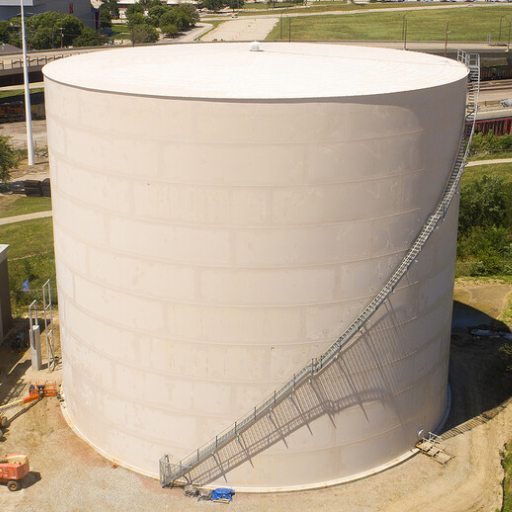
Sub-ambient tanks have an enemy most designers underestimate: moisture. A chilled water tank is colder than the surrounding air, so vapor drives inward toward the cold steel.
Why TES Tanks Are Prone to Corrosion Under Insulation
When that vapor condenses inside permeable insulation, it does three harmful things. It wets the insulation and destroys its R-value, it forces chillers to work harder, and it creates corrosion under insulation (CUI) on the tank wall.
CUI on carbon steel is typically associated with skin temperatures of 25–350°F (−4–175°C). Austenitic and duplex stainless steel are prone to external stress corrosion cracking at 120–350°F (50–175°C). Both ranges overlap with normal TES operation.
Vapor Barrier and Insulation Design
The fix is a continuous, vapor-tight system. Specify a vapor retarder on the warm side of the insulation, seal metal or PVC jacketing at every joint, and apply weatherproof mastic to terminate it correctly.
Closed-cell insulation such as cellular glass can serve as its own vapor barrier and handles awkward geometry, like angle-iron supports, gracefully. Extend insulation over the full tank height and across the top to prevent solar heat gain from destabilizing the gradient.
Moisture control is also a maintenance discipline. A moisture meter reading above 20% means the insulation should be replaced, whether or not the tank looks damaged from outside.
Standards and Codes for TES Tank Design
Standards keep a design reviewable, insurable, and acceptable to local authorities.
System Design
ASHRAE Standard 50 covers thermal storage systems, including ice and chilled water selection and sizing. The ASHRAE Design Guide for Cool Thermal Storage provides a first-level design procedure, and ASHRAE Standard 94 testing rates device thermal performance.
Pressure Vessels and Atmospheric Tanks
Pressurized tanks above roughly 15 PSI fall under ASME Boiler and Pressure Vessel Code Section VIII, Divisions 1 and 2, and typically carry a U-Stamp with National Board registration. Field-erected atmospheric water tanks are commonly built to API 650 or AWWA D100.
International References
European and international projects increasingly reference VDI 4657 Blatt 2, published in December 2025, which covers planning and integration of TES tanks into building energy systems, including sensible and latent storage and hydraulic integration. Material and coating standards such as ASTM A516 and ISO 12944 fill out the specification.
What Thermal Energy Storage Tanks Cost
Cost scales with capacity, and the scale economies are dramatic.
Cost Benchmarks
Installed chilled water TES runs from roughly $200–300 per ton-hour for small systems (1,000–2,000 ton-hours) down to $30–85 per ton-hour above 20,000 ton-hours. Dallas’s 24,500 ton-hour stratified tank came in under $70 per ton-hour. For context, ice TES runs about $100–150 per TR-hour for the tank alone.
Against batteries, TES is sharply cheaper for thermal duty. A full TES system costs roughly $300 per kWh of storage, versus about $700 per kWh for lithium-ion.
What Drives the Cost
Four factors move your number. A wider temperature differential shrinks the tank. Site and soil conditions set foundation cost. Material and insulation choices, especially stainless steel and cellular glass, add premium. And labor rates vary widely by region.
Andres, a plant manager at a food processing facility, faced a choice between a two-tank hot water system and a single thermocline tank. The two-tank design came in at $410,000; the thermocline option landed near $270,000 after accounting for the reduced salt inventory and lower steel weight. He accepted a modest efficiency trade-off and put the savings into better insulation and controls. Two years on, the system still holds a stable thermocline, and the plant has not touched the tank.
Get a customized TES tank quote → with your capacity, temperatures, and site conditions, and our team will return a specification and budget figure.
Design and Installation Best Practices
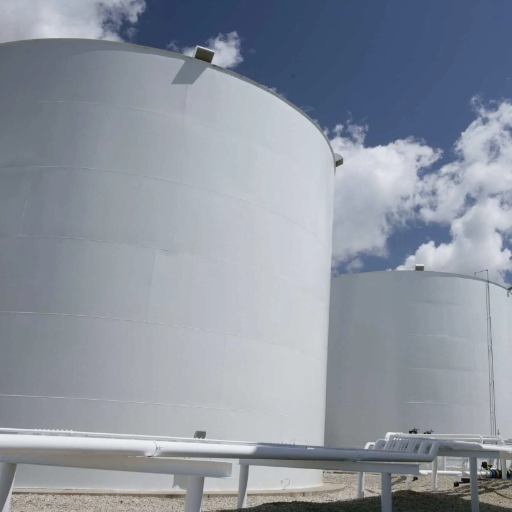
A good design is not enough on its own. Installation and commissioning decide whether the tank performs as modeled.
Design Checklist
Start with the load profile, then set the ΔT, then size the tank. Choose geometry and diffuser type together. Select materials for the water chemistry and temperature. Define the insulation system during fabrication, not after. Finally, plan controls that charge during low-cost hours and protect the thermocline.
Installation and Commissioning
Anchor the tank to a foundation designed for its loads, and coordinate nozzle reinforcement with the piping designer. Then commission deliberately: verify fill-water quality, measure stratification against the design thermocline, and confirm the control system integrates with chillers, boilers, and building automation.
Consider the team at a university campus that commissioned 9,000 ton-hours of chilled water storage. Their first charge cycle showed a thermocline twice as thick as designed because the inlet diffuser velocity was too high. After reworking the diffuser, they recovered full capacity and cut peak electrical demand by more than 2 MW. Small design details produced large consequences.
FAQ
What is a thermal energy storage tank?
A thermal energy storage tank is an insulated vessel that stores heating or cooling energy in water, ice, or molten salt so it can be charged off-peak and discharged when demand peaks. It shifts load without changing total energy consumption.
What is a thermocline in a thermal storage tank?
A thermocline is the transition layer that separates hot water at the top of a tank from cold water at the bottom. A thin, stable thermocline is a sign of good stratification and lets a single tank store both temperature states.
How do you size a thermal energy storage tank?
Multiply usable tank volume by the temperature differential to find stored energy. For chilled water, a common starting point is 144 gallons per ton-hour at a 10°F difference. A wider ΔT lets you store the same energy in a smaller tank.
What is the difference between chilled water and ice thermal energy storage?
Chilled water stores sensible cooling and needs six to seven times more volume than ice for the same capacity, but it is simpler and cheaper at large scale. Ice uses latent heat, packs more energy into less space, and suits space-constrained sites.
Thermocline versus two-tank TES: which is better?
Two-tank systems deliver nearly 100% storage efficiency and better high-temperature performance but cost more. Thermocline systems cut capital cost by roughly 35% with only minor efficiency loss, making them attractive for large, cost-sensitive projects.
What temperature differential should a TES tank use?
As wide a differential as the load allows. A larger ΔT directly reduces required volume and cost. Chilled water systems commonly run a 5–10°F differential, while designers push toward 15–20°F where the load permits.
What materials are used for thermal energy storage tanks?
Carbon steel such as ASTM A516 Grade 70 serves standard chilled and hot water. Stainless steel 304 and 316L and duplex grades handle aggressive or chloride-rich water. Large atmospheric tanks may use concrete or hybrid steel-concrete construction.
How much does a thermal energy storage tank cost?
Cost falls with scale. Small chilled water systems run $200–300 per ton-hour, while systems above 20,000 ton-hours reach $30–85 per ton-hour. A full system runs about $300 per kWh, well below lithium-ion batteries for thermal duty.
Conclusion
Thermal energy storage tank design is a chain of decisions, and the tank is only as strong as its weakest link. Choose the right storage type for the duty. Size with a real temperature differential. Design geometry and diffusers together to protect the thermocline. Specify materials and insulation for the actual water chemistry and temperature. Apply the right standards, and commission carefully.
Do that, and a thermal energy storage tank becomes one of the most reliable load-shifting assets a facility can own, delivering savings for decades with minimal maintenance. Skip it, and you inherit the same problems Priya’s team faced.
Whether you are planning a district cooling plant, a data center campus, or an industrial heating system, the design starts with a conversation about your load profile and site. Talk to our engineering team to turn that profile into a built, compliant thermal energy storage tank.