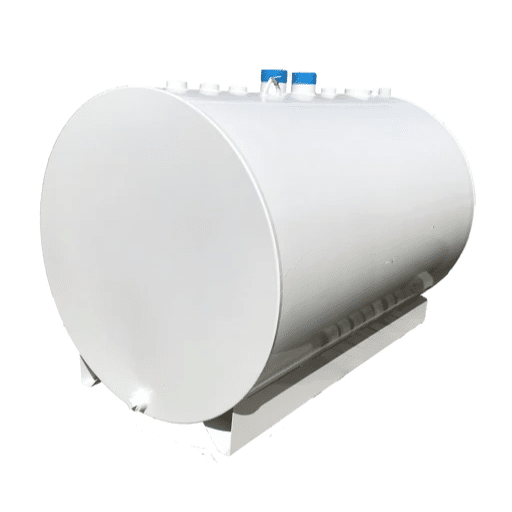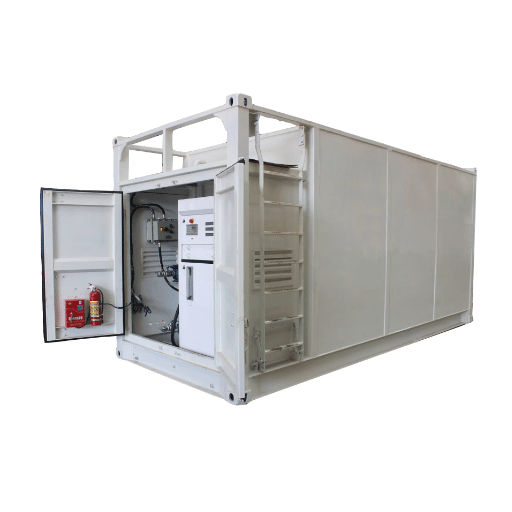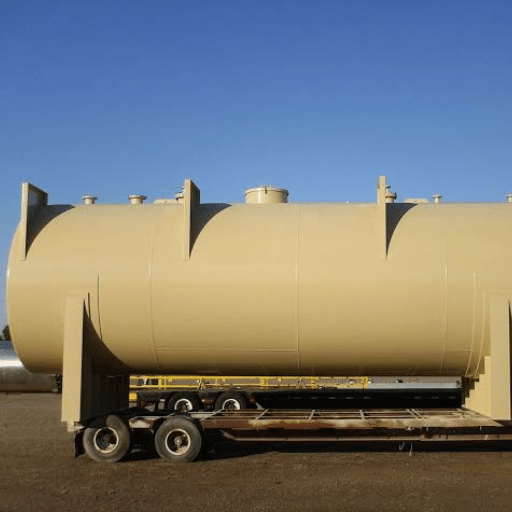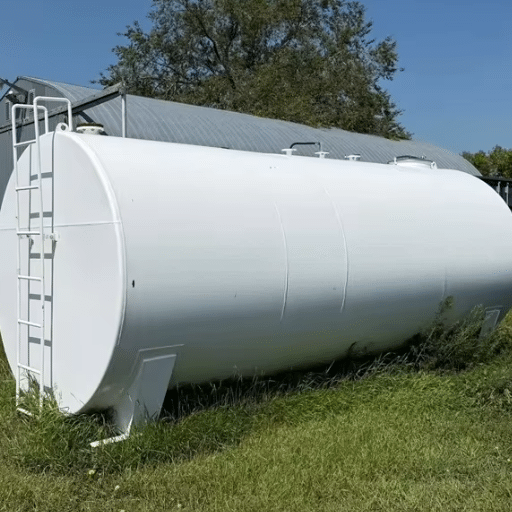
A buyer in Nairobi needed to store LPG for a small autogas island. He had read that vertical tanks hold 80 psi, saw plenty of vertical tank space on site, and nearly sent a purchase order for flat-bottom, atmospheric geometry. The fabricator caught it in time. At ambient temperature, LPG is a liquefied gas, and flat-bottom geometry can’t hold it, not at any diameter, not at any volume.
He had the shape right and the pressure class catastrophically wrong. That’s the trap with atmospheric vs pressure storage tank decisions. Most buyers start with size and geometry, because those are the numbers on the drawing. The one that actually determines the vessel, its wall thickness, its code, its inspection regime, and its price is pressure class.
This guide fixes the order of operations. You’ll get the three pressure classes and the code behind each, the pressures real station fuels demand, and a selection path you can hand to a fabricator. Here’s the map:
- The three pressure classes, and why most guides skip the middle one
- What pressure gas station tanks actually hold (the honest number, not the internet’s)
- Which class each fuel needs: gasoline, diesel, LPG, ammonia, CNG, hydrogen
- How to choose a class in five steps, and where over- and under-specification go wrong
- Cost and lifecycle differences that follow from the class
One scoping note before we start. This article is about pressure class. Two other decisions live elsewhere. Orientation, vertical or horizontal geometry, is covered in our guide to vertical vs. horizontal storage tanks. Containment, single- or double-walled, is covered in our comparison of double vs. single-walled fuel tanks. Pressure class interacts with both, but it doesn’t replace either.
Atmospheric vs. Pressure Storage Tanks: The Short Answer
An atmospheric storage tank holds liquid near ambient pressure, which API 650 covers up to about 2.5 psig, and is vented so pressure can’t build. A pressure vessel holds gas, or a liquefied gas, under real internal pressure, which ASME Section VIII governs above 15 psig, with a thick shell and dished heads. The class is set by the product’s vapor pressure at storage temperature and by design pressure, not by tank size or shape.
There’s a third band most articles skip. The low-pressure storage tank, governed by API 620, sits between 2.5 and 15 psig. If you’re specifying storage, you need all three.
The Three Pressure Classes (and the Code Behind Each)
Pressure class isn’t a preference. In the API 650 vs API 620 vs ASME Section VIII split, it’s the boundary that decides which code governs the vessel, and every code brings its own design rules, testing regime, and paperwork.
| Class | Pressure band | Governing code (US) | China equivalent | Typical products | Station use |
|---|---|---|---|---|---|
| Atmospheric | Up to ~2.5 psig (17.2 kPa) | API 650 | Atmospheric ≈ −0.49 to 6 kPa | Gasoline, diesel, crude, water, chemicals | Retail gasoline and diesel UST and AST |
| Low-pressure | 2.5–15 psig (17–103 kPa) | API 620 | 6 kPa–0.1 MPa | Light oils, refrigerated and cryogenic liquids | Rare in retail; some depot and terminal duty |
| Pressure vessel | Above 15 psig (often 250 psig+) | ASME Section VIII Div. 1; API 2510; NFPA 58 | ≥0.1 MPa; GB/T 150, TSG 21 | LPG, ammonia, CNG, hydrogen | Autogas, LPG and CNG station storage |
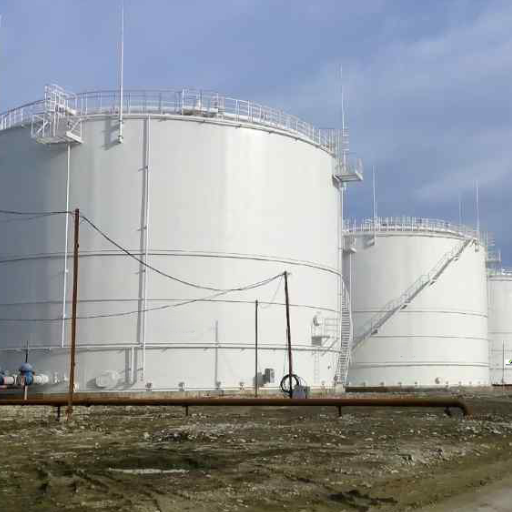
The atmospheric storage tank is the workhorse. It’s a thin-shelled cylinder with a flat, fully supported bottom, and shell thickness is set by liquid head rather than pressure. Plate runs roughly 6 to 25 mm and gets thicker toward the bottom, where the column of liquid weighs most. It’s vented (more on that below), so it never becomes a pressure boundary.
The pressure vessel is a different machine. Above 15 psig, ASME Section VIII governs, and the shell is thick and uniform, sized by hoop stress from internal pressure rather than by how deep the liquid sits. The ends are dished (elliptical, hemispherical, or torispherical), not flat. Welds are full-penetration, radiography and hydrotest are routine, and the finished unit carries a code stamp and registration. In China, the parallel path is GB/T 150 for design and TSG 21 for the regulatory duty, with NB/T 47042 covering horizontal vessels.
The low-pressure band gets overlooked, and that’s a real problem for specifiers. API 620 picks up where API 650 stops, at 2.5 psig, and runs to 15 psig, the range refrigerated LPG and cryogenic liquids live in. Engineers on the eng-tips forums describe a genuine “hole” here. It’s awkward enough that some designers overshoot into ASME territory and pay for steel they don’t need, while others undershoot into API 650 and create a hazard. Our comparison of shop-fabricated and field-erected tanks explains why large field-erected tanks almost always land in the atmospheric and low-pressure bands.
Here’s the rule that matters more than any other in this article: design pressure decides the class, not operating pressure. A vessel rated at 0.2 MPa that normally runs at atmospheric pressure is still a pressure vessel. It gets built, tested, inspected, and certified as one. Get this backwards, and every downstream decision inherits the error.
What Pressure Do Gas Station Tanks Hold?
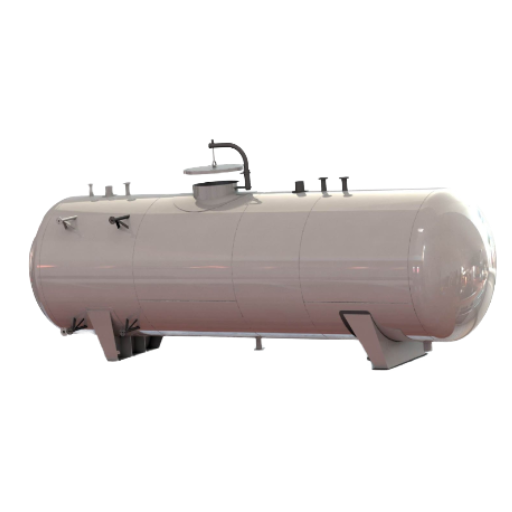
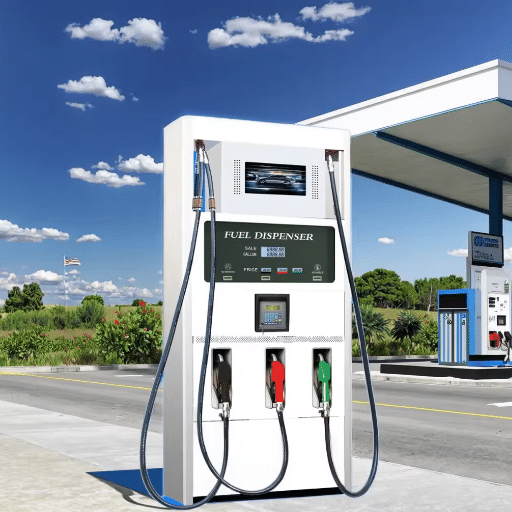
Gasoline and diesel are stored at atmospheric pressure. The Petroleum Equipment Institute states it plainly: all underground storage tanks at gasoline stations are atmospheric tanks, designed for pressures from the atmosphere itself through about 0.5 psig. Lees’ Loss Prevention in the Process Industries puts a flat-bottom, domed-roof tank’s design pressure below 1 psig. These are vented vessels, and they’re meant to be.
So the widespread claim that “vertical tanks hold 80 psi” is simply wrong, and it causes real specification errors. If your product needs meaningful pressure, flat-bottom atmospheric geometry isn’t a candidate no matter how much space it saves.
That raises an obvious question: if station tanks run at roughly 0.5 psig, why do they need vents at all? Because filling, emptying, and daily temperature swings still create positive and negative pressure inside a closed shell. An overfilled tank on a hot afternoon can bulge or buckle a roof that was never built to be a pressure boundary.
That’s why atmospheric tanks carry pressure/vacuum breather valves and emergency vents, often with flame arresters, and why some are fitted with a floating roof to eliminate the vapor space and cut emissions. Venting isn’t a weakness; it’s the design feature that lets an atmospheric tank stay atmospheric.
If your project is diesel-focused, the practical duties are corrosion protection, leak detection, and venting rather than pressure containment. See our guide to explosion-proof diesel storage tanks for that side of the specification.
Pressure Class by Fuel Type
Now the part the generic guides leave out. The pressure class a project needs isn’t abstract; it falls directly out of what you’re storing. This table maps the fuels a fueling site actually handles.
| Fuel | Vapor-pressure reality | Required class | Design pressure |
|---|---|---|---|
| Gasoline / diesel | True vapor pressure well below atmospheric at ambient temperature | Atmospheric | API 650 (≤2.5 psig; PEI cites ~0.5 psig for gasoline USTs) |
| LPG / autogas (propane) | Liquefied gas at ambient temperature; needs pressure to stay liquid | Pressure vessel | US: ASME VIII Div. 1 / NFPA 58, ~250 psig at 125 °F. China: GB 50156-2021 requires ≥1.78 MPa |
| Ammonia | Liquefied gas, or refrigerated | Pressure vessel (or refrigerated atmospheric) | Vapor-pressure based; ASME VIII or GB/T 150 |
| CNG | Compressed gas | High-pressure pressure vessel / cascade | ~250 bar working; ISO 11120 cylinders |
| Hydrogen | Compressed gas | High-pressure cascade | 350 bar dispensing; ~495 bar cascade design; up to 700 bar onboard |
LPG is the pivot case, and it’s worth slowing down on. At ambient temperature, propane and butane are gases that stay liquid only because they’re under pressure. That single fact takes atmospheric storage off the table entirely, unless you refrigerate, which we’ll come to next.
US practice, following NFPA 58 and ASME Section VIII Div. 1, builds bulk LPG tanks to roughly 250 psig design at 125 °F. That number isn’t arbitrary. Canadian regulation frames the logic cleanly: design working pressure must be at least 125% of the LPG vapor pressure at 100 °F, and never below 250 psig for liquefied propane. The driver is always the vapor pressure at a design temperature.
For China-export projects, GB 50156-2021 sets the floor at 1.78 MPa for LPG station tanks, with the pipeline system at 2.5 MPa or higher. That figure is derived, not guessed: propane’s saturated vapor pressure at 50 °C is 1.600 MPa, and the standard adds a 0.18 MPa margin. TSG 21-2016 then caps the filling ratio at 0.95, so the vessel always keeps vapor space for liquid expansion. Confirm these numbers against the current standard edition before you order; this is exactly the kind of detail that separates a compliant filing from a rejected installation.
At the far end of the spectrum, CNG and hydrogen live in high-pressure cascade systems. CNG storage typically works around 250 bar; hydrogen dispensing runs at 350 bar with cascade design pressures approaching 495 bar, and vehicles carry up to 700 bar onboard. These aren’t tanks in the sense we’ve been using; they’re pressure vessels and cylinder banks governed by ISO 11120 and ASME.
The Refrigerated Exception
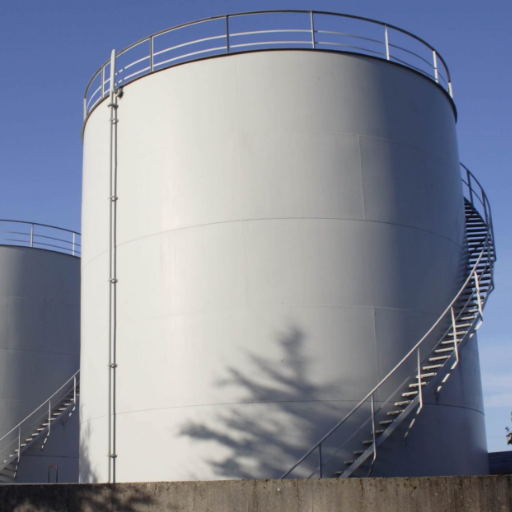
Here’s the honest caveat that most explanations skip. Atmospheric tanks can store LPG and ammonia, but only when the product is refrigerated.
Refrigerated LPG is held near −45 °C, and refrigerated ammonia near −33 °C, in insulated flat-bottom tanks with design pressures around 1.1 to 1.5 bar plus static head. Boil-off gas is recompressed and returned to liquid. A semi-refrigerated arrangement sits around 8 bar at −7 °C and needs a reliquefaction plant to keep the product cold.
This is terminal-scale technology. Fully refrigerated ammonia storage runs to tens of thousands of tonnes per tank, and it’s used at ship and pipeline terminals, not at a retail autogas island. It matters because knowing where the boundary sits prevents mis-specification in both directions. You don’t need a pressure vessel for refrigerated storage, and you can’t use an atmospheric tank for ambient LPG. State the storage temperature and the answer follows.
Selection Logic: How to Choose a Pressure Class
When you’re ready to specify, work in this order.
- Identify the product and its true vapor pressure at the maximum storage temperature. This is the input that decides everything else.
- If vapor pressure stays below atmospheric at that temperature, and the liquid isn’t stored above its boiling point, specify atmospheric (API 650). This covers gasoline, diesel, and most refined products.
- If vapor pressure falls between atmospheric and roughly 15 psig, specify low-pressure (API 620). Refrigerated service and light, volatile liquids live here.
- If vapor pressure exceeds about 15 psig at the design temperature, specify a pressure vessel (ASME Section VIII or GB/T 150), sized to its MAWP with a pressure relief valve. In China, add the TSG 21 filing.
- Confirm the design temperature. China’s LPG rule uses the 50 °C propane vapor-pressure basis; your jurisdiction may use another. The design temperature sets the vapor pressure, and the vapor pressure sets the class.
Two failure modes trip up projects. The first is choosing by volume or shape. The second is confusing operating pressure with design pressure, a mistake that quietly turns an “atmospheric” tank into an unregistered pressure vessel.
There’s a middle zone to watch. If a normally-atmospheric tank can see pressure above roughly 0.034 MPa (about 5 psig), say from a blocked vapor line or a nitrogen blanket at 50 to 100 mbar, relief analysis is required, and the roof must be designed for it. Exceed the roof design, and you no longer have an atmospheric tank. You have a low-pressure vessel, whether the paperwork says so or not.
The foundation follows the class and geometry too, which is why our guide to vertical storage tank foundation design treats ring beam and raft as consequences of the vessel, not independent choices.
Cost and Lifecycle by Pressure Class
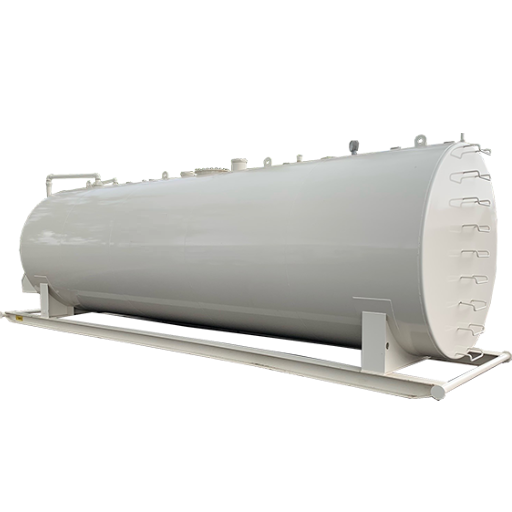
Cost tracks the class almost mechanically, because it tracks steel and testing.
Atmospheric tanks, most often built in carbon steel, are the cheapest per unit stored. Thin plate, a soil-supported flat bottom, and simple welding keep material and labor down. Pressure service is where the money goes: material for API 620 low-pressure tanks runs about 30 to 70% more per tonne than API 650, and ASME vessels push further with uniform thick shells; one documented reclassification case roughly tripled the required shell thickness. Add dished heads, full-penetration welds, radiography, hydrostatic testing, a code stamp, and National Board registration, and the pressure-vessel premium is substantial before a single fitting is installed.
A pressure vessel’s heavier shell adds thermal mass, which offsets part of the cost penalty in some duty cycles. But it doesn’t fully compensate. NASA’s storage-container cost work shows that specific storage cost still rises with design pressure. In plain terms: over-classifying a tank buys you nothing but weight.
Lifecycle cost follows the same logic. Atmospheric tanks need coating, cathodic protection, and periodic internal inspection. Pressure vessels carry statutory inspection on a fixed cycle (API 510 and 570 in the US, TSG 21 in China), plus pressure relief valve recertification. Those are real recurring costs that a first-pass budget often misses. Treat every figure here as directional; pressure-vessel pricing is quotation-driven and swings with material grade and scale. Our fuel storage tank range covers atmospheric, low-pressure, and pressure-vessel builds, so you can compare classes against your actual duty.
Frequently Asked Questions: Atmospheric vs. Pressure Storage Tanks
What is the difference between an atmospheric and a pressure storage tank?
An atmospheric tank holds liquid near ambient pressure (API 650, up to about 2.5 psig) and is vented so pressure can’t build. A pressure vessel holds gas or a liquefied gas under real internal pressure (ASME Section VIII above 15 psig), with a thick, uniform shell and dished heads. The class follows the product’s vapor pressure and the tank’s design pressure, not its size.
What pressure do gas station storage tanks hold?
Gasoline and diesel station tanks are atmospheric. Per the Petroleum Equipment Institute, gasoline-station underground tanks are designed for pressures from atmosphere through about 0.5 psig. They’re vented, not pressurized, and the claim that they hold 80 psi is incorrect.
What pressure can a vertical storage tank hold?
A vertical flat-bottom tank is an atmospheric tank. Under API 650, it’s designed for internal vapor-space pressure of approximately 2.5 psig, roughly what a column of fuel vapor develops. It is not a pressure vessel, and it cannot store a product that produces real vapor pressure at ambient temperature.
How do I know if my tank is a pressure vessel?
Check the design pressure, not the operating pressure. If the design pressure exceeds 15 psig (about 0.1 MPa), it’s a pressure vessel and follows ASME Section VIII, or GB/T 150 and TSG 21 in China. A vessel rated 0.2 MPa that normally runs at atmospheric pressure is still classified and inspected as a pressure vessel.
What is the design pressure of an LPG storage tank?
US practice, following NFPA 58 and ASME Section VIII Div. 1, builds bulk LPG tanks to roughly 250 psig design at 125 °F. China’s GB 50156-2021 requires at least 1.78 MPa for LPG station tanks. Both figures derive from propane’s vapor pressure at a design temperature, not from an arbitrary rule.
What pressure does CNG or hydrogen storage operate at?
CNG storage typically works around 250 bar. Hydrogen dispensing runs at 350 bar, with cascade design pressures approaching 495 bar and onboard vehicle storage up to 700 bar. These are high-pressure pressure vessels and cylinder banks, governed by standards such as ISO 11120 and ASME.
Can an atmospheric tank store LPG?
Only if the LPG is refrigerated. Refrigerated LPG is held near −45 °C in insulated flat-bottom tanks at low design pressure, and refrigerated ammonia near −33 °C. At ambient temperature, LPG is a liquefied gas that requires a pressure vessel; an atmospheric tank is not an option.
Why is “design pressure governs the class” so important?
Because it prevents the most common specification error. Selecting by size, shape, or operating pressure can produce a vessel that’s under-built for its service and unregistered for its code. Design pressure is the single input that determines the governing standard, the wall thickness, the test regime, and the inspection cycle.
Your Next Step
In any atmospheric vs. pressure storage tank decision, pressure class is the choice that sits underneath every other storage choice. Get it right, and the rest of the specification follows.
- Three classes, one rule. Atmospheric (API 650, ≤2.5 psig), low-pressure (API 620, 2.5–15 psig), and pressure vessel (ASME Section VIII, >15 psig), and design pressure governs, not operating pressure.
- Station fuels split cleanly. Gasoline and diesel are atmospheric (~0.5 psig per PEI). LPG and ammonia need pressure vessels (250 psig US / 1.78 MPa China). CNG and hydrogen need high-pressure cascades.
- The middle band is real. Refrigerated LPG and ammonia live in low-pressure and refrigerated atmospheric storage, which is terminal-scale technology, not retail.
- Over-classifying wastes money; under-classifying creates risk. Both are avoidable once you start from vapor pressure at the design temperature.
- Code paths differ by region. US projects follow API and ASME; China-export projects add GB/T 150, TSG 21, and GB 50156-2021.
Before you write a purchase order, confirm the class against the fuel. Our engineering team can review your product, storage temperature, and target market, and tell you which code applies and what it will take to certify it. Request a pressure-class and specification review, or browse the full storage tank range to see atmospheric, low-pressure, and pressure-vessel options side by side.