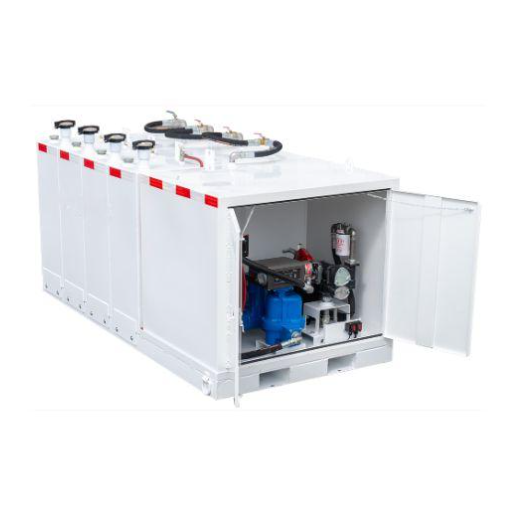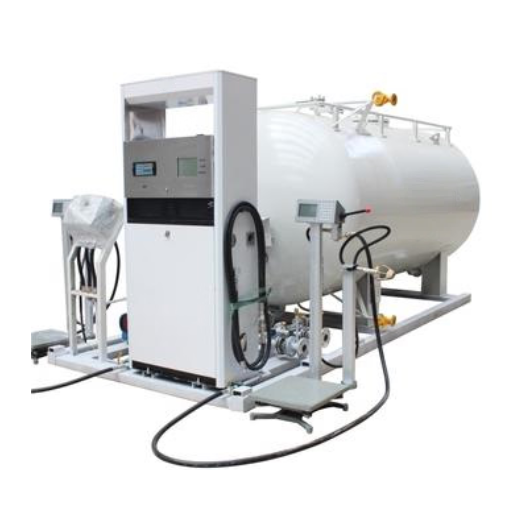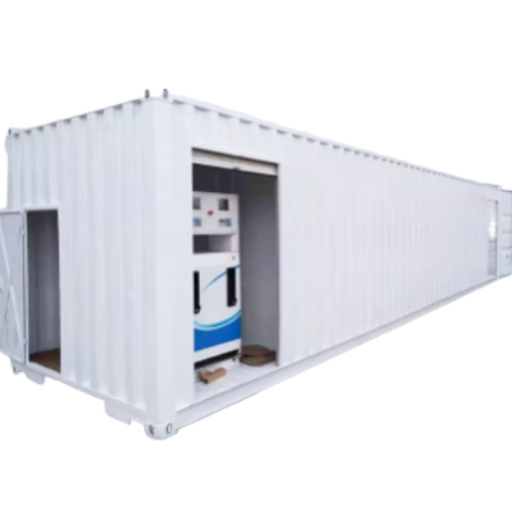
An aviation fuel skid station is a relocatable unit that stores, filters, and dispenses aircraft fuel, with a tank, containment, pump, metering, bonding point, and emergency shutdown on one frame. What makes it an aviation unit isn’t the hardware. It’s that aircraft fuelling is governed by NFPA 407 and, at certificated US airports, by 14 CFR 139.321, not by the motor-fuel codes most buyers already know.
A flying school in the Midwest replaced a drum and hand pump with a containerised unit for a handful of piston aircraft. The purchase went smoothly. The first conversation with the local fire marshal didn’t, because his opening question wasn’t about capacity. It was about who bonds the aircraft, and where the emergency shutoff is placarded.
Published by Shandong Shengrui Intelligent Equipment Co., Ltd. · Last updated 17 November 2026
If you’re weighing a fuel skid against a fuel cabinet, an aviation fuel bowser or an airport fuel farm, this guide covers the four decisions that matter. They are fuel grade, filtration and water, bonding and shutdown, and the standards that decide who signs off. Start with what the 20ft unit actually contains.
Key Takeaways
- Aircraft fuelling falls under NFPA 407, and NFPA 30A doesn’t cover it. At a certificated US airport, 14 CFR 139.321 makes the operator hold written standards for bonding, access control, fire safety in fuel farms and fuelling cabinets, and staff training.
- Jet A-1 is a kerosene, and Avgas 100LL is a leaded gasoline. They need different venting, materials, and segregation, and must never share a line, meter, or hose without a defined cleaning procedure.
- Bonding isn’t grounding. Equipment bonds to the aircraft, the cable is resistance-checked monthly against a 25 ohm limit, and connections come apart in reverse order.
- Filtration does two separate jobs: remove particulate, and separate free water. A coalescer element and a filter/water separator aren’t the same purchase.
- Fuel flow sits under a deadman control, and the emergency shutdown fails closed when power is lost. Neither rule is optional on a fixed unit serving aircraft.
What an Aviation Fuel Skid Station Is and Where It Fits
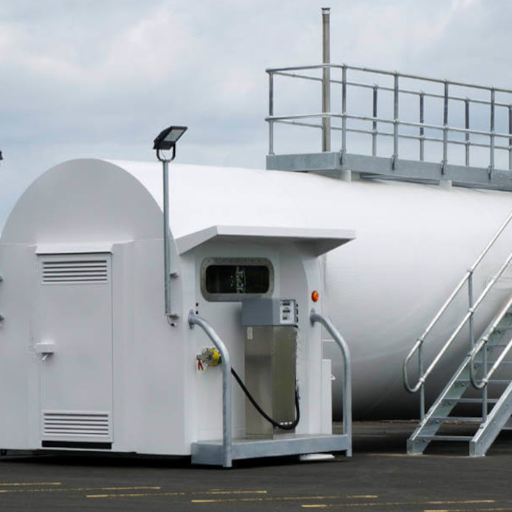
An aviation fuel skid station performs four jobs: store fuel, contain a release, condition the fuel, and dispense it to an aircraft. Each carries an aviation obligation, from the sampling point on the tank to the bonding lug beside the nozzle.
The mechanics overlap with road-fuel equipment. The obligations don’t. A diesel skid must meter accurately and shut down safely. Aircraft refueling equipment must also keep water out of fuel burned at altitude, keep two grades apart, carry a verifiable bonding circuit, and produce records an inspector can check.
| Format | What it is | Main constraint |
|---|---|---|
| Aviation fuel skid station | Tank, containment, pump, filter, meter, and controls on one relocatable frame, serving an FBO, flying school, helipad, or remote strip | Needs a compliant site and an operating procedure, not just a unit |
| Fuel cabinet | Pump and filtration drawing from a remote or underground tank | No tank of its own, so no independent supply |
| Aviation fuel truck or bowser | Mobile tank vehicle that drives to the aircraft | Vehicle and driver regulation, and no substitute for on-site storage |
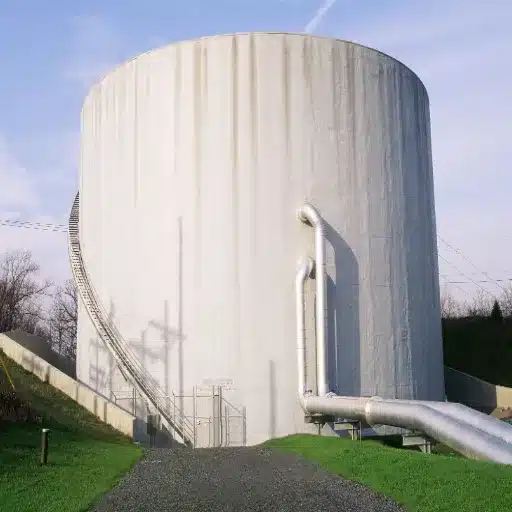
| Fuel farm | Bulk tanks, pumps, filtration and piping | Capital project, fixed, permit-heavy |
A fuel cabinet looks cheaper because it isn’t storing anything. An operator in the Pacific Northwest compared two quotes, chose the cabinet, then found the site had no usable tank to draw from. The cabinet is a pump and filter. The skid is a supply.
Overwing or pressure refuelling decides the rest. Overwing servicing fills through a wing filler cap, which suits light aircraft and low flow rates. Pressure refuelling connects to an underwing coupling and moves fuel far faster, so a pressure system needs a control valve that limits surge and can’t be left open.
The 20ft aviation-ready skid station is the unit this guide is written around. Its product page lists a self-bunded double-wall tank with 110% secondary containment, multi-stage 10-micron particulate and water-absorption filtration, and a positive-displacement meter accurate to ±0.2%.
The same page adds an intrinsically safe electrical box, an overfill prevention valve, interstitial leak sensors, and an emergency shut-off system. It describes the panel as ATEX and IECEx compatible, IP65 rated, with CSC safety approval and ISO 1496-3 compliance. Coalescer filters for aviation fuel appear as an option.
Those are the page’s words, and they matter for what the page doesn’t say. It lists no aviation certification. That absence is normal, and the standards section returns to it.
Aviation Fuel Skid Station Fuels: Jet A-1 vs Avgas 100LL
Jet A-1 is a kerosene-type turbine fuel specified to ASTM D1655, with a minimum flash point of 38 °C, as our published jet fuel tank specification records. Avgas 100LL is a leaded gasoline for spark-ignition piston engines. Gasoline is far more volatile than kerosene, and that one difference drives most of what follows.
| Design point | Jet A-1 (kerosene) | Avgas 100LL (leaded gasoline) |
|---|---|---|
| Volatility and vapour | Low vapour pressure, so free venting is common practice | High vapour pressure, so venting needs more thought |
| Materials in contact | No galvanised steel, copper or cadmium; zinc clogs filters | Same prohibitions, plus lead-compatible seals and no cross-contact with jet systems |
| Storage life | Long, but water and microbial growth are the real risks | Shorter, because oxidation and ageing matter more |
| Segregation | Dedicated line, pump, filter and meter | Same, because a shared line is a contamination route |
The product page lists a multi-fuel compartment option dividing the tank into chambers with independent pumping systems. That buys two grades on one aviation fuel station. It doesn’t automatically buy two filters, two meters, two vents, and two bonding points. A compartmented unit sharing a meter or hose keeps segregation on paper only, so ask for the bill of materials.
Aviation fuel contamination is the failure mode buyers underestimate most. A residue of 100LL in a jet system, or jet fuel in an avgas bowser, is a fuel-quality event that can ground aircraft.
A flying club in Ontario ran 100LL through a unit that had carried Jet A-1 the season before. The line, meter, and hose were flushed. The filter element wasn’t replaced, on the reasoning that it had only seen clean fuel.
The first sample came out hazy, and the club spent a week draining and re-sampling before anyone flew. On a shared frame, segregation is a component list, not a procedure.
Aviation Fuel Filters, Water and Sampling
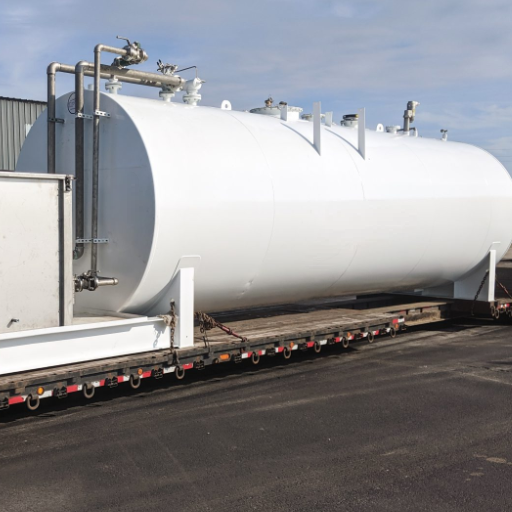
Water arrives quietly through condensation in a partly filled tank. Free water at the tank bottom is where microbial growth takes hold; the jet fuel tank specification covers that corrosion mechanism, so treat it as background here.
Aviation fuel filters do two jobs often described as one. Particulate removal takes out rust, scale, and debris, which is what the product page’s 10-micron multi-stage element is for. Water separation coalesces fine droplets into larger ones that fall out of suspension and collect at a sump.
The page offers specialized coalescer filters for aviation fuel as an option, and that’s as far as the evidence goes. It names no filter standard, no coalescer micron rating, and no flow rating. Specify the element against your fuel-quality programme and ask the supplier for its certificate.
A loaded element loses water-separation performance long before it stops passing fuel, so the differential-pressure gauge is the only warning an operator gets. Read it, log it, replace on pressure rather than on calendar.
Aviation fuel testing starts with the sump. Public airport certification manuals describe drawing roughly five gallons daily from the tank sump and the filter vessel into a clear container, then logging what was found. Fuel Tech, a US aviation fuelling equipment manufacturer, describes the same practice. Treat it as established operating practice rather than a code clause, and note that it only works if the unit has sump points to draw from.
Clear and bright is the field check. ASTM D4176 is the visual inspection method for free water and particulate in distillate fuel, screening for haze, free water, and visible contamination. It isn’t a laboratory result, so it tells you whether fuel still looks like it might meet specification, not whether it does.
| Control | What it prevents | Where it sits |
|---|---|---|
| Coalescer or filter/water separator element | Free water reaching the aircraft | Dispenser inlet |
| 10-micron particulate element | Rust, scale and debris | Upstream of the meter |
| Differential-pressure gauge and log | Silent loss of separation performance | Filter housing |
| Tank and filter sump points | Accumulated water and sediment | Tank low point, filter bowl |
A unit with no sampling points can’t take part in a quality programme at all, which makes them a specification question rather than an accessory.
The Aviation Fuel System: Bonding, Deadman and Shutdown
Bonding isn’t grounding, and that distinction gets lost more than any other. Public airport manuals quoting NFPA 407 set three rules.
Equipment is bonded to the aircraft before connection. Resistance between the bonding clip and the fuelling system framework is checked monthly and must not exceed 25 ohms, with the result recorded. And grounding for the sole purpose of aircraft fuelling isn’t permitted. A conductive hose doesn’t satisfy the requirement either, because it prevents static accumulation without providing an equipotential path.
The sequence is short enough to paint on the equipment bay door:
- Touch the filler cap with the nozzle spout to equalise potential.
- Bond the unit to the aircraft.
- Connect and fuel, with flow under the deadman.
- Disconnect the fuel connection, then the bond, in reverse order.
- Stow the hose and log the check.
Deadman control is the second rule. Fuel flow must sit under a deadman device on the aviation fuel dispenser, and any means of defeating it is prohibited. On pressure systems, the flow-control valve is arranged so it can’t be left open and so a loss of operating energy closes it. Airport manuals also describe an overshoot limit, where flow after the deadman is released must not exceed a small percentage of actual flow rate.
Emergency shutdown is separate from the deadman, not a duplicate of it. Airport manuals describe a fail-safe system with at least one station accessible to each fuelling position. That station sits outside the probable spill area and on the exit route, with placards in letters at least 2 inches high and visible from 25 feet. The arrangement is fail-safe, so a loss of power shuts off flow rather than leaving it open.
Fire extinguisher ratings are where published sources disagree. One Washington state airport manual quotes two listed extinguishers rated at least 40-B: C with 20 lb of dry chemical, one on each side. The Wichita Eisenhower certification manual quotes two rated at least 20-B: C for a tank vehicle.
Both cite NFPA 407, and section numbering shifts between editions, so the edition your authority having jurisdiction adopts governs. Confirm it rather than copying a vendor page.
A fixed container unit isn’t a truck, but it does dispense aviation fuel at a fixed position. Bonding points, a deadman on the dispenser, a placarded shutdown station, and extinguisher provision belong in the scope.
Here’s how a small detail becomes a finding. A maintenance team in Alberta repainted a skid over a winter shutdown and remounted the bonding lug onto the fresh coating. The monthly resistance check read far above 25 ohms.
The cable was fine, the lug was fine, and the paint was the problem, because a coating is an insulator. The fix was a bare-metal landing pad under the lug and a re-test. Bonding is a circuit, and every joint must be metal-to-metal.
Our skid station safety systems article covers explosion protection and hazardous-area classification, and the ATEX, IECEx and UL certification paths guide explains what each mark certifies.
The Standards Map for Aviation Fuel Servicing
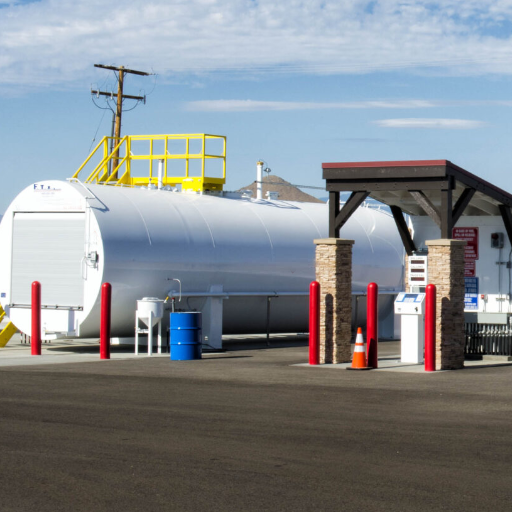
The scope boundary is the most useful line on this page. NFPA 30A covers motor fuel dispensing and doesn’t cover aircraft fuelling, which falls under NFPA 407. Our own NFPA 30A compliance guide says exactly that, and it’s worth internalising before reading a single datasheet, because plenty of skid suppliers quote 30A for a unit that will serve aircraft.
At a certificated US airport, the overlay is statutory. 14 CFR 139.321 requires the certificate holder to hold standards “authorized by the Administrator for protecting against fire and explosions in storing, dispensing, and otherwise handling fuel” on the airport.
Those standards must address at least bonding, public protection, and control of access to storage areas. They also cover fire safety in fuel farms and storage areas, fire safety in mobile fuelers, fueling pits and fueling cabinets, training of fuelling personnel, and the fire code of the public body having jurisdiction. Read that list again: a fuelling cabinet appears in federal regulation by name.
The same section sets the operational rhythm. The certificate holder inspects each tenant fuelling agent’s facilities every three consecutive months and keeps the record for 12 months. At least one supervisor per agent completes an Administrator-authorized fire-safety course, with recurrent instruction every 24 calendar months, and every other fuel handler gets initial on-the-job training on the same cycle.
FAA Advisory Circular 150/5230-4C, Aircraft Fuel Storage, Handling, and Dispensing on Airports, was issued on 23 September 2021 and remains active, cancelling the 4B edition. It sets out the methods the FAA accepts, and 139.321(h) points at it directly.
Below that sit the facility and product standards. EI 1540 and EI 1541 cover facility design and internal coatings. The Joint Inspection Group standards cover quality control across the supply chain. The jet fuel tank article covers all three, so link out rather than repeat them. ASTM D1655 defines Jet A-1 and ASTM D910 defines the avgas grades.
40 CFR Part 112 applies where a site can reasonably discharge to navigable waters and exceeds the aggregate capacity test. A single container sits below that test. A whole airport fuel farm may not.
| Instrument | What it governs | Who applies it |
|---|---|---|
| NFPA 407 | Vehicles, cabinets and hydrants, bonding, deadman, shutdown, separation distances | Fire authority; written into certification manuals |
| NFPA 30 and 30A | Flammable-liquid storage and motor fuel dispensing, excluding aircraft fuelling | Fire authority |
| 14 CFR 139.321 | The certificate holder’s standards and surveillance of tenant agents | FAA and the airport operator |
| FAA AC 150/5230-4C | Accepted methods for storage, handling, dispensing and training | Voluntary, but the reference the FAA accepts |
| ASTM D1655 and D910 | Jet A-1 and avgas product specifications | Buyer, supplier and quality programme |
| ASTM D4176 | Visual clear and bright check | Operator |
| 40 CFR 112 | Spill prevention plan and containment | EPA and state agencies |
Which brings back the approval question. No standard certifies a skid station as aviation-approved, and anyone selling you a sticker is selling you a sticker. What a buyer can obtain is three things: a unit built and documented to a stated code basis, an electrical certification for the assemblies that carry one, and a site approved by the authority having jurisdiction.
At a certificated airport, the operator approves the site too, under its certification manual. Our permit requirements guide walks the general approval tracks.
Siting an Aviation Fuel Skid Station
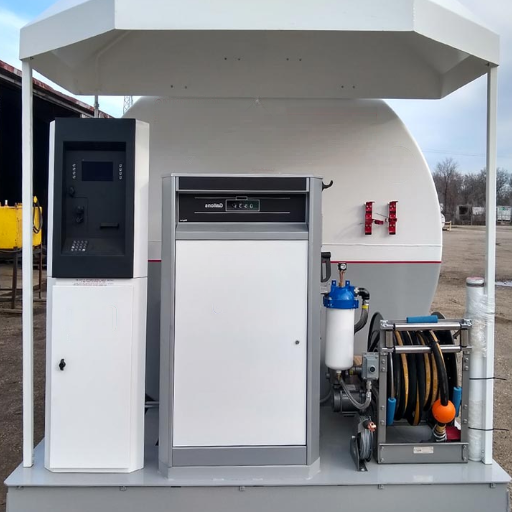
Distance rules decide whether a format is possible on your site, and they’re easier to satisfy before you order than after. Public airport manuals quoting NFPA 407 put aircraft fuel system vents no closer than 25 ft (7.6 m) to any building. They also require 50 ft (15 m) from a combustion or ventilation air intake.
A servicing vehicle stays outside a 10 ft (3 m) radius of those vents. Fuelling hydrants, cabinets and pits sit at least 50 ft from terminals, hangars, service buildings and enclosed concourses.
A fixed container unit is a building-scale object with a tank vent, so the vent distances and ignition-source rules apply to it directly. That’s the practical reason to settle siting before choosing a format. Editions differ, so confirm the numbers with your authority having jurisdiction.
Containment needs the same care. The product page describes 110% secondary containment with self-bunded double-wall construction. Our 20ft skid station specification guide explains the ambiguity.
“110%” can mean an external bund at 110% of tank volume, or an interstitial space of a few percent, and the two aren’t comparable. Ask for the bund volume in cubic meters, and ask which number the figure refers to.
Capacity deserves the same honesty. Nominal capacity, usable capacity at 95% fill, and rated gross mass are three different numbers, and the mass plate can bind before the volume does. Treat a round nominal figure alone as marketing rather than engineering. This article deliberately quotes no capacity.
Handling is where the ISO container format earns its place. The page lists CSC approval and ISO 1496-3 compliance, a standard 20ft footprint that avoids out-of-gauge freight charges, and lifting on ISO corner castings. For an airport that matters twice: the unit arrives without a construction project, and it can be removed or relocated, which is an operational option rather than an approval shortcut. The page also advises draining below 10% before any lift to prevent surge. For a detailed cost breakdown, see our 20ft skid station cost guide.
Power, telemetry, and climate round out the specification. The page offers solar for off-grid sites, cloud tank gauging with leak alerts, and Arctic heating for cold climates. Our remote monitoring guide covers alert routing and commissioning, and the stainless steel tank buyers guide covers material selection for the tank half of the decision. If hydrogen is also in scope, the alternative fuel skid stations article covers that comparison.
Ready to scope a unit? Send your fuel grade, aircraft type, site, and the airport’s certification status, and our team will confirm what the station must carry and what the authority will ask for.
FAQ
Is a fuel skid station allowed at an airport?
It can be, but not because it’s a skid. What decides it is whether the unit and site satisfy the aircraft fuelling rules and the airport’s certification manual, which the authority having jurisdiction and the operator assess.
What’s the difference between a fuel cabinet and a skid station?
A cabinet is a pump and filtration unit drawing from an existing remote or underground tank. A skid station carries its own tank and containment.
Can one unit dispense both Jet A-1 and Avgas?
Yes, with independent compartments, pumps, filters, meters, vents, and bonding points. A divided tank with a shared meter or hose doesn’t give real segregation.
What filtration does an aviation fuel skid station need?
Particulate removal and free-water separation. That normally means a particulate element and a coalescing filter/water separator, plus a differential-pressure gauge and sump points.
Do I need bonding or grounding for aircraft refuelling?
Bonding. Equipment bonds to the aircraft before connection; the cable is resistance-checked monthly, and grounding for the sole purpose of fuelling isn’t permitted.
Which standard applies, NFPA 30A or NFPA 407?
NFPA 407 governs aircraft fuel servicing. NFPA 30A covers motor fuel dispensing and excludes aircraft fuelling, even though skid vendors often quote it.
Can a 20ft skid station be relocated after installation?
Yes. CSC approval and ISO 1496-3 compliance mean it moves as standard freight. Relocating doesn’t reset the approval question at the new site.
The Specification Is the Approval
How should you specify an aviation fuel skid station? Buy it on specifications and approve it on procedures, and the two have to match. The fuel grade decides materials, venting, and segregation. Filtration decides whether water ever reaches an aircraft.
Bonding and deadman control decide whether the unit is acceptable beside an aircraft at all. The standards map decides who signs off.
Get those four right and the container question gets simple. A 20ft unit arrives as standard freight, sits on a level compacted surface, and can be removed when the operation changes. What it can’t do is carry an approval it doesn’t have.
If you’re planning an aviation fuel supply point, the next step is a specification conversation rather than a price request. Bring the fuel grade, the aircraft, the site plan, and the airport’s status. See what the 20ft aviation-ready unit includes, read the specification guide for the capacity method, and take the tank decision to the jet fuel tank specification when you get there.