In 2019, a mid-sized municipal water authority in the Midwest replaced a 500,000-gallon reservoir. They chose a low-cost carbon steel tank with a generic exterior paint system to save 18% on capital spending. Within seven years, interior pitting forced an unplanned outage, a six-figure recoating job, and an emergency water-rationing order. The “savings” cost more than twice the original price difference.
If you are specifying storage for potable water, fire protection, or industrial process water, you already know the stakes. A tank failure disrupts service, triggers regulatory scrutiny, and drains maintenance budgets. The good news is that carbon steel water storage tanks remain one of the most cost-effective and proven choices in the market when the design, coating, and standards match the application.
In this guide, we will explain how carbon steel water storage tanks work, where they fit best, and what to demand from your supplier so your project performs for decades.
Want a deeper look at carbon steel grades and applications? Read our complete carbon steel tank buyer’s guide before making your final decision.
What Are Carbon Steel Water Storage Tanks?

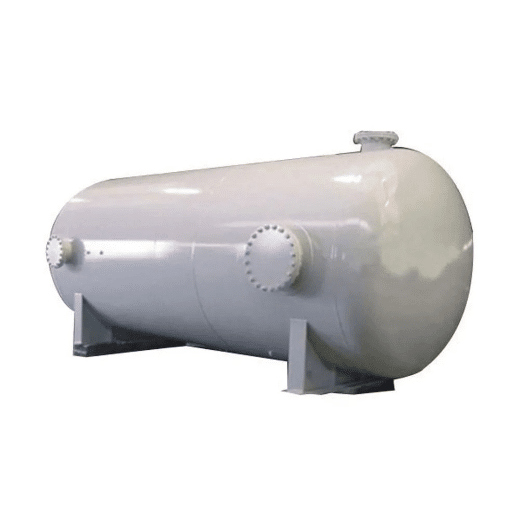
A carbon steel water storage tank is a welded or bolted vessel built from carbon steel plate, typically grades such as Q235B, Q345R, ASTM A36, or A516. These tanks store water aboveground or, less commonly, belowground for municipal, commercial, industrial, and agricultural use. Carbon steel provides high tensile strength, good weldability, and lower material cost than stainless steel or concrete, which is why carbon steel water storage tanks dominate large-capacity water storage worldwide.
Manufacturers produce two main configurations. Welded carbon steel water tanks are fabricated from steel plate, shipped in sections or erected on site, and fully welded to form a monolithic shell. Bolted carbon steel water tanks use factory-coated panels assembled with gaskets and fasteners, offering faster field installation and easier future expansion. Both designs can be engineered for capacities from a few thousand gallons to several million gallons.
Carbon steel water storage tanks perform well because they can be engineered to precise thicknesses, reinforced for wind and seismic loads, and protected with internal and external coatings. The key is matching the steel grade, coating system, and design standard to the water chemistry, climate, and regulatory environment.
For a detailed comparison, please read our article on carbon steel tank vs stainless steel tank.
Key Applications for Carbon Steel Water Storage Tanks
Potable Water and Municipal Storage
Municipalities use carbon steel water storage tanks as distribution reservoirs, elevated tanks, and ground storage. These tanks balance demand fluctuations, maintain system pressure, and provide emergency reserves. For potable use, the interior lining must be certified for drinking-water contact, typically under NSF/ANSI 61, to prevent contamination and taste issues.
When engineer Aisha Patel specified a 1.2-million-gallon welded tank for a county water system, she prioritized a 100% solids epoxy lining with NSF 61 approval. The specification added 8% to the tank price but reduced the expected recoating interval from 10 years to 18 years. Over a 40-year design life, that decision cut maintenance downtime by roughly half.
Fire Protection and NFPA 22 Reservoirs
Fire protection tanks store water for sprinkler systems, fire pumps, and hydrant networks. NFPA 22 sets requirements for materials, capacity, and accessories such as anti-vortex plates, overflow controls, and level indicators. Carbon steel water storage tanks are a common choice for fire protection because they can be built quickly in large volumes and coated for long-term water storage.
Fire protection capacity is not optional; it is dictated by hazard classification and fire-flow calculations. A warehouse district may need 200,000 gallons, while a high-rise district can require more than 1,000,000 gallons. Carbon steel tanks meet these demands without the long cure times of concrete construction.
Industrial Process Water
Manufacturing plants, power stations, and mining operations use carbon steel tanks for cooling water, process makeup, blowdown, and treated wastewater. In these applications, water chemistry varies widely. Cooling towers may produce high-chloride blowdown, while mining sites can face acidic runoff. The right lining, epoxy, rubber, glass-flake, or cement, keeps the tank wall protected.
Irrigation and Agricultural Water
Agricultural operations need reliable storage for irrigation, livestock, and runoff management. Carbon steel water storage tanks offer fast installation and long service life in rural environments. Bolted tanks are especially popular here because they can be expanded as farm operations grow.
Wastewater and Stormwater
Carbon steel tanks also serve as equalization basins, stormwater retention, and treated effluent storage. These applications often require heavier linings and corrosion allowances because the stored liquid can carry solids, chemicals, and variable pH levels.
Want to match the right tank design to your water application? Contact our engineering team for a specification review.
Key Specifications Buyers Should Compare
When buyers evaluate carbon steel water storage tanks, several specifications determine whether the tank will meet the project requirements and design life. Compare capacity, geometry, steel grade, shell thickness, roof design, accessories, and foundation requirements before procurement.
Capacity and Geometry
Tank capacity for carbon steel water storage tanks should account for peak demand, reserve requirements, fire-flow obligations, and future growth. Common configurations include flat-bottom ground storage tanks, elevated tanks on towers, and standpipes. The geometry affects mixing, sediment control, and pressure delivery.
Shell Thickness and Steel Grade
Steel grade selection affects weldability, strength, and cost. Q235B and ASTM A36 are common for atmospheric water tanks. Higher grades such as Q345R or A516 may be used for larger diameters, higher design pressures, or seismic zones. Shell thickness includes a corrosion allowance, typically 1/16 to 1/8 inch, depending on expected service life and coating performance.
Roof and Column Design
Roofs can be self-supporting cone roofs, column-supported roofs, or aluminum geodesic domes. Column design matters for internal access and sediment management. Self-supporting roofs reduce internal obstructions but add cost for larger diameters.
Nozzles, Manways, and Accessories
Specify inlet, outlet, overflow, drain, vent, and manway locations during design. Accessories such as level transmitters, mixer nozzles, and access ladders should be included in the fabrication scope to avoid field modifications later.
Foundation and Anchorage
Carbon steel tanks rest on concrete ring walls, compacted aggregate pads, or engineered slabs. Wind and seismic loads determine anchor bolt size and spacing. A geotechnical report is essential for large tanks to prevent uneven settlement.
Standards and Certifications to Verify

AWWA D100 for Welded Carbon Steel Tanks
AWWA D100 is the leading North American standard for welded carbon steel tanks for water storage. It covers material selection, design, fabrication, erection, inspection, and testing. Buyers of carbon steel water storage tanks should require that each tank be designed, fabricated, and inspected in accordance with AWWA D100 by qualified personnel.
AWWA D103 for Factory-Coated Bolted Tanks
AWWA D103 applies to factory-coated, bolted steel tanks. It specifies coating performance, panel fabrication, gasket materials, and assembly procedures. This standard is especially relevant for bolted water tanks used in municipal and agricultural applications.
NFPA 22 for Fire Protection Water Tanks
NFPA 22 governs tanks used for private fire protection. It addresses tank capacity, materials, coatings, accessories, and maintenance requirements. Compliance with NFPA 22 is often checked by fire marshals and insurance underwriters.
NSF/ANSI 61 for Potable Water Contact
Any tank storing drinking water must use coatings, gaskets, and materials certified to NSF/ANSI 61. This standard limits the leaching of contaminants into potable water. Always request certification documentation for the specific lining system proposed.
API 650 and ASME VIII for Industrial Water
For industrial applications with pressure, temperature, or aggressive chemistry, API 650 or ASME VIII may apply. These standards provide more rigorous design rules than atmospheric water tank standards.
EN and GB/T Standards for International Projects
Outside North America, projects may follow EN 14015, BS 2654, or Chinese standards such as GB/T 150 and GB 50156. International buyers should confirm which standard the destination authority accepts before procurement.
Carbon Steel vs Concrete vs Stainless Steel Water Tanks
| Factor | Carbon Steel | Concrete | Stainless Steel |
|---|---|---|---|
| Upfront cost | Moderate | High | Highest |
| Construction time | Fast | Slow | Fast |
| Design life | 40–100 years with maintenance | 50–100 years | 50–100 years |
| Maintenance | Coating/lining renewal | Crack repair, sealing | Minimal |
| Capacity range | Very flexible | Best for very large reservoirs | Moderate |
| Best fit | Most water storage projects | Massive reservoirs, underground | Aggressive chemistry, food/pharma |
Carbon steel offers the best balance of cost, speed, and capacity flexibility for most water storage projects. This is why carbon steel water storage tanks are specified for municipal, industrial, and agricultural systems across a wide range of climates and capacities. Concrete excels for very large buried reservoirs but requires longer construction schedules and crack management. Stainless steel reduces maintenance but carries a premium that is hard to justify unless water chemistry is unusually aggressive.
A coastal industrial plant in Southeast Asia faced this decision in 2022. The engineering team compared a stainless steel tank against a coated carbon steel tank with a high-build epoxy and cathodic protection. The stainless option cost 65% more upfront. Because the stored water was treated process water with controlled chemistry, the coated carbon steel tank met the 30-year design life at roughly half the lifecycle cost.
Not sure which material fits your water storage project? Our team can compare lifecycle costs and recommend the right specification. Contact us right now!
Coatings and Linings for Carbon Steel Water Tanks

Epoxy Coatings for Potable Water
Epoxy linings are the most common choice for potable water storage. They form a hard, chemically resistant barrier between steel and water in carbon steel water storage tanks. NSF/ANSI 61-approved epoxy systems are mandatory for drinking water. Application quality matters; improper surface preparation or curing can cause pinholes and premature failure.
Glass-Fused-to-Steel Coatings
Glass-fused-to-steel, or porcelain enamel, is baked onto steel panels at high temperature. It offers excellent abrasion resistance and long service life, especially in wastewater and process water. Glass-fused-to-steel tanks are often supplied as bolted panel systems.
Cement and Concrete Linings
Cement mortar linings provide a passive, alkaline barrier that protects steel from corrosion. They are common in older municipal tanks and some industrial applications. Cement linings add weight and require careful curing but can be economical for large reservoirs.
Rubber and Specialty Linings
Rubber linings resist abrasion and chemical attack, making them suitable for mining and process water. Glass-flake and phenolic coatings may be used for aggressive chemicals or high-temperature service.
Selecting the Right Lining by Water Type
The stored liquid drives lining selection for carbon steel water storage tanks. Potable water needs NSF 61 epoxy. Fire protection water can use epoxy or glass-fused-to-steel. Process water with chlorides or low pH may need glass-flake, rubber, or stainless steel. Always share water chemistry data with your tank supplier during specification.
Want a deeper look at how to choose a lining for your stored liquid? Our carbon steel tank coating and lining guide walks through service-specific selection in more detail.
Corrosion Protection and Maintenance
Why Carbon Steel Corrodes in Water Service
Carbon steel corrodes when exposed to oxygen, moisture, and electrolytes. In carbon steel water storage tanks, corrosion can occur on the interior wet surface, the exterior weathering surface, and at crevices or weld heat-affected zones. The rate depends on water chemistry, temperature, oxygen content, and coating integrity. To achieve the best protection effect, please read our article on carbon steel tank corrosion protection.
Cathodic Protection and Anodes
Cathodic protection uses sacrificial anodes or impressed current systems to shift the electrochemical potential of the steel, reducing corrosion. This technique is often combined with coatings for buried portions of tanks, tank bottoms, or structures in aggressive soils.
Exterior Paint and Weatherproofing
Exterior coatings protect against ultraviolet radiation, rain, and atmospheric pollutants. A typical system includes a zinc-rich primer, epoxy intermediate coat, and polyurethane topcoat. Exterior repaint intervals are usually 15–20 years in moderate climates.
Inspection Intervals and Common Failure Modes
Routine inspection catches problems before they become expensive. External inspection should occur annually. Internal inspection depends on lining condition but is typically every 3–5 years for unlined tanks and every 5–10 years for lined tanks. Common failure modes include coating holidays, pitting at welds, sediment accumulation, and seal deterioration in bolted tanks.
For long-term asset planning, our carbon steel tank maintenance and lifespan guide explains how inspection cycles protect your investment.
Sizing and Selecting a Carbon Steel Water Tank
Estimating Demand and Reserve Volume
Start with average daily demand, peak hourly demand, and any reserve or emergency requirements. Municipal systems often store one to three days of average demand. Industrial systems may need buffer capacity based on production cycles and supply reliability.
Peak Flow and Fire-Flow Requirements
Fire protection volume is determined by the required fire flow and duration. A facility needing 1,500 gallons per minute for two hours requires 180,000 gallons of dedicated fire storage. This volume must be available in addition to domestic or process reserves.
Site Constraints and Climate
Site access, foundation conditions, seismic zone, wind exposure, and freezing climate all influence design. Elevated tanks provide pressure but cost more. Ground-level tanks with booster pumps are often more economical for large volumes.
Bolted vs Welded Decision Framework
Choose bolted tanks when speed, future expansion, and lower initial cost are priorities. Choose welded tanks when the project demands a monolithic structure, higher design pressures, or custom geometries. Both configurations of carbon steel water storage tanks can last decades when properly coated and maintained.
For full cost breakdown information, read our dedicated guide to carbon steel tank cost.
Why Source from an Experienced Steel Tank Manufacturer
Carbon steel water storage tanks are long-term assets. The difference between a tank that lasts 25 years and one that lasts 80 years often comes down to fabrication quality, coating application, and design discipline.
At Shandong Shengrui Intelligent Equipment Co., Ltd., we apply the same precision engineering and compliance focus used in gas station fuel storage systems to carbon steel water storage tanks. Our fabrication processes support Q235B, Q345R, and ASTM-grade steels, with coatings and linings selected for the intended water service. We document welds, coatings, and tests to the standards your project requires, whether that is AWWA D100, NFPA 22, GB/T 150, or a project-specific specification.
For international buyers, we provide mill certificates, third-party inspection coordination, and export packaging. Our team works with engineers, EPC contractors, and municipal operators to deliver tanks that match both the drawing and the duty.
Conclusion
Carbon steel water storage tanks deliver proven performance across municipal, fire protection, and industrial applications. Success depends on four decisions: choosing the right tank configuration, specifying the correct lining for the water chemistry, verifying the applicable design standard, and planning for long-term inspection and maintenance.
When these elements align, carbon steel offers a service life measured in decades at a lower total cost than many alternatives. When they are overlooked, even a small specification gap can lead to costly downtime.
If you are planning a water storage project, start with a clear specification. Request a quote from our engineering team, and we will help you select the carbon steel water storage tank design, coating, and certification package that fits your project.