A single weld defect can turn a 30-year carbon steel tank into a five-year liability. In 2023, a fuel depot in East Africa replaced three underground storage tanks after premature leaks traced back to incomplete root penetration and skipped vacuum-box testing. The fabricator had claimed “API-compliant construction,” but the buyer never verified the Welding Procedure Specifications (WPS) or Procedure Qualification Records (PQR). The repair cost more than the original tanks.
This is why carbon steel tank welding standards matter. They are not just technical codes on a shelf. They are the safeguards that determine whether your tank holds fuel, water, or chemicals safely for decades.
In this guide to carbon steel tank welding standards, you will learn:
- Which standards apply to welded carbon steel tanks for fuel, water, and industrial storage
- How welding processes, WPS/PQR, and welder qualifications affect quality
- What non-destructive testing (NDT) methods prove a tank is leak-free
- Common welding defects and how certified fabricators prevent them
- A buyer checklist to evaluate any tank manufacturer before you sign a purchase order
Whether you are sourcing carbon steel fuel storage tanks for a gas station or specifying field-erected storage for an industrial site, this article will help you ask the right questions.
Why Welding and Fabrication Standards Matter for Carbon Steel Tanks

Carbon steel is strong, cost-effective, and widely available, which makes it one of the most common materials for fuel storage tanks, water tanks, and chemical vessels. However, carbon steel is only as reliable as the welds that hold it together.
Carbon steel tank welding and fabrication standards are documented rules that govern material selection, design, welding procedures, inspection, and testing. Following them ensures:
- Structural integrity under internal pressure, hydrostatic loads, and environmental stress
- Leak prevention, which protects soil, groundwater, and nearby infrastructure
- Regulatory acceptance by inspectors, insurers, and environmental authorities
- Predictable carbon steel tank cost over the full lifecycle, because compliant tanks last longer and require fewer emergency repairs
A tank built to API 650, for example, is designed for atmospheric aboveground oil storage. A tank built to UL 58 is designed for buried flammable-liquid service. Each standard reflects a specific risk profile. Choosing the wrong standard, or working with a fabricator that cuts corners, creates compliance and safety exposure that can outlast the equipment itself.
If you want a broader view of how material choice fits into your project, see our complete carbon steel tank buyer’s guide.
Major Carbon Steel Tank Welding and Fabrication Standards Explained
No single standard covers every tank. The right code depends on tank location (aboveground or underground), pressure, temperature, contents, and regional regulations. The table below summarizes the main storage tank welding codes every buyer should recognize.
API 650: Welded Tanks for Oil Storage
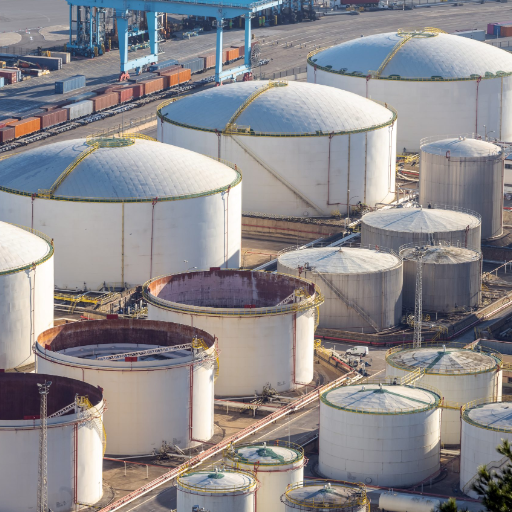
API 650 is the most widely referenced standard for vertical, cylindrical, aboveground welded carbon steel storage tanks. It covers design, fabrication, erection, and inspection for tanks storing oil, gasoline, chemicals, and water at internal pressures up to approximately 2.5 PSI and temperatures up to 93°C (200°F).
Common carbon steel grades under API 650 include ASTM A36, A283, A516 Gr. 60/70, and API 2H. The standard’s API 650 welding requirements include approved WPS/PQR, qualified welders, radiographic or ultrasonic examination of shell butt welds, and hydrostatic testing.
API 620: Large, Welded, Low-Pressure Storage Tanks
API 620 applies to larger welded steel tanks with higher internal pressures and lower temperature service than API 650. It is often used for liquefied natural gas (LNG), cryogenic products, and large-diameter low-pressure vessels.
While API 650 limits internal pressure to roughly 2.5 PSI, API 620 designs can reach approximately 15 PSI. This makes API 620 relevant for projects where operating pressure or low-temperature toughness is a decisive factor.
API 653: Tank Inspection, Repair, Alteration, and Reconstruction
API 653 does not govern new fabrication. It governs what happens after the tank enters service. This standard covers inspection intervals, fitness-for-service assessment, minimum thickness evaluation, repair welding, and reconstruction of existing API 650 or equivalent tanks.
If you are buying a used or relocated tank, API 653 determines whether it is safe to continue operating.
UL 58 and UL 142: Steel Underground and Aboveground Tanks
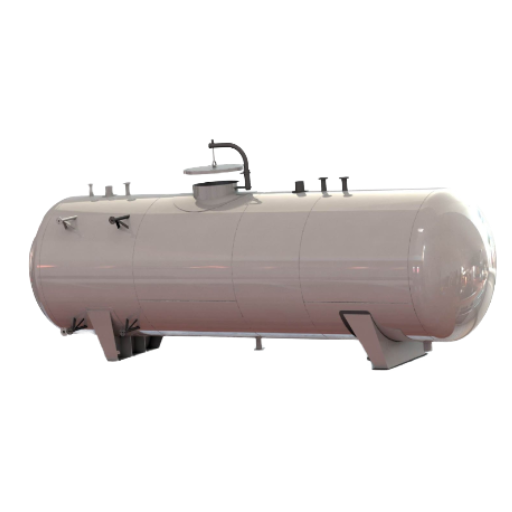
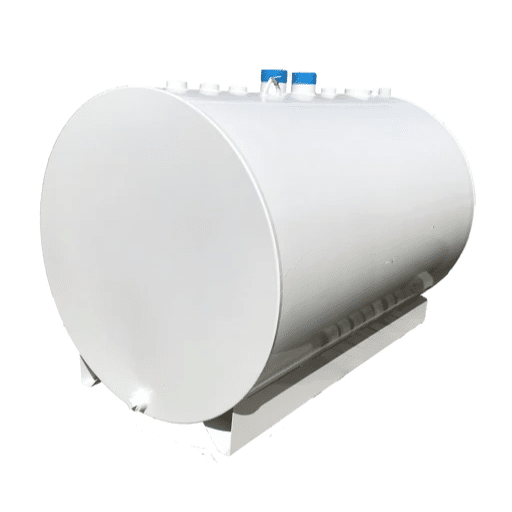
UL 58 governs shop-fabricated steel underground tanks for flammable and combustible liquids such as gasoline and diesel. UL 142 covers aboveground steel tanks for similar service. Both fuel tank fabrication standards require factory testing, including air tests commonly performed at 5 PSI, and specify striker plates, seam inspection, and corrosion protection.
For buried gas station tanks, UL 58 is typically paired with UL 1746, which covers external corrosion protection systems such as coatings, cathodic protection for gas station tanks, and fiberglass-reinforced wraps.
AWWA D100 and NFPA 22: Water and Fire Protection Tanks
AWWA D100 covers welded carbon steel tanks for water storage, including municipal, industrial, and fire-protection applications. NFPA 22 addresses water tanks for private fire protection. These standards emphasize coating systems, seismic design, and water-quality compatibility.
ASME Boiler and Pressure Vessel Code
ASME Section VIII Division 1 applies when a tank is classified as a pressure vessel rather than an atmospheric storage tank. ASME Section IX governs welding qualifications, including WPS, PQR, and welder performance qualifications. Many API 650 fabricators qualify their welding procedures under ASME Section IX because it is broadly accepted across industries.
AWS D1.1: Structural Welding Code – Steel
AWS D1.1 provides acceptance criteria for structural carbon steel welding, including weld profile, undercut limits, porosity, and crack detection. It is often referenced for tank attachments, supports, and ancillary steel structures.
International Standards: EN, ISO, and GB/T
For global projects, additional standards may apply:
- EN 15614-1 and EN ISO 9606-1 for welding procedure and welder qualification in Europe
- ISO 3834 for quality requirements in fusion welding
- GB/T 150 and GB50156 for pressure vessels and gas station design in China
- EN 1090 for structural steel execution classes
At Shandong Shengrui, we routinely work with buyers who need multi-standard compliance. A tank destined for Southeast Asia may reference API 650 and ASME IX, while a project in Europe may require EN 15614-1 and CE marking. Our guide to Chinese gas station equipment certifications explains how GB/T, CNEx, and NEPSI requirements fit into export planning. Clarifying the required standard before fabrication begins prevents costly rework and acceptance delays.
Standards Comparison: Which Code Applies to Your Tank?

| Standard | Primary Application | Pressure Limit | Temperature Range | Common Materials | Key Tests |
|---|---|---|---|---|---|
| API 650 | Aboveground welded oil/water/chemical storage | ~2.5 PSI | Up to 93°C / 200°F | A36, A516, A283, API 2H | RT/UT, vacuum box, hydrostatic test |
| API 620 | Large low-pressure / cryogenic tanks | Up to ~15 PSI | Low-temperature service | A516, A537, nickel alloys | RT/UT, hydrostatic, pneumatic |
| API 653 | In-service inspection, repair, alteration | Per original design | Per original design | Matches original tank | Thickness survey, NDT, pressure test |
| UL 58 | Underground steel tanks for flammable liquids | Factory-rated | Ambient | Carbon steel per UL | Factory air test, leak detection |
| UL 142 | Aboveground steel tanks for flammable liquids | Factory-rated | Ambient | Carbon steel per UL | Factory pressure test |
| AWWA D100 | Welded steel water storage tanks | Atmospheric | Ambient | A36, A572, A516 | Hydrostatic test, coating inspection |
| ASME VIII | Pressure vessels | Design-specific | Design-specific | A516, SA-285, SA-36 | RT/UT, hydrostatic, PMIE |
This table is a starting point, not a substitute for project-specific engineering. Always confirm the governing standard with your engineer and local authority before procurement.
Carbon Steel Tank Welding Processes and Procedures
The welding process affects penetration speed, heat input, defect rates, and cost. Different tank joints call for different processes.
Common Welding Processes
- SMAW (Shielded Metal Arc Welding / stick): Versatile and portable, often used for field erection and repairs. Good for outdoor conditions but slower than mechanized methods.
- GMAW (Gas Metal Arc Welding / MIG): Fast deposition, commonly used in shop fabrication for shell seams and nozzles. ER70S-6 wire with 75% argon / 25% CO₂ is typical for carbon steel.
- FCAW (Flux-Cored Arc Welding): Works well outdoors and on thicker sections. Provides deep penetration and tolerates mill scale better than GMAW.
- SAW (Submerged Arc Welding): High-quality, consistent welds for long shell seams and girth welds. Common in automated tank erection.
- GTAW (Gas Tungsten Arc Welding / TIG): Precise, low-heat input for thin sections, root passes, and nozzle connections.
A large vertical storage tank might use SAW for shell seams, SMAW for fit-up and repairs, and GTAW for precision nozzle welds. A shop-fabricated underground tank might rely more on GMAW and FCAW for speed and repeatability.
Welding Procedure Specifications (WPS) and Procedure Qualification Records (PQR)
A WPS is a written instruction that defines how a specific weld is made. It specifies base metal, filler metal, joint design, preheat, interpass temperature, electrical parameters, and post-weld treatment. A PQR is the documented test record that proves the WPS produces acceptable welds.
For carbon steel tank fabrication, WPS/PQR must be qualified under ASME Section IX or EN 15614-1. These fuel tank fabrication standards require documented proof that each welding procedure produces sound welds on the materials being used. Before you place an order, ask your fabricator for:
- WPS and PQR for each welding process and joint category
- Welder qualification records tied to the applicable WPS
- NDT reports traceable to specific seams and welders
- Material traceability and mill certificates
Without this documentation, “certified welding” is just a claim.
Welder Qualification and Continuity
Welders must be qualified for the processes they use. Under ASME IX, welders typically must use each process within six months or requalify. Continuity records prove that qualifications remain current. When auditing a fabricator, verify that the welders who will work on your tank are qualified for the exact WPS and materials involved.
Joint Preparation and Fit-Up
Quality welding starts before the arc is struck. Edges must be clean of rust, oil, paint, and moisture within the weld zone. Root opening, groove angle, and plate alignment must match the WPS. On curved tank shells, strongbacks or fixtures help maintain alignment and reduce distortion during welding.
Carbon equivalent (CE) also matters. Higher CE steels cool faster and are more prone to hydrogen cracking. When CE is elevated, preheat and interpass temperature control become mandatory.
Quality Control and Non-Destructive Testing (NDT)

Even a visually acceptable weld can hide internal defects. NDT methods detect problems before the tank enters service.
Visual Inspection (VT)
Every weld receives visual inspection. Inspectors check for undercut, porosity, cracks, burn-through, excessive reinforcement, and poor profile. AWS D1.1 typically limits undercut to 1/32 inch on material under one inch thick.
Radiographic Testing (RT) and Ultrasonic Testing (UT)
RT uses X-rays or gamma rays to produce an image of internal weld quality. It is excellent for detecting porosity, slag inclusions, and incomplete fusion. API 650 shell butt welds are often judged against ASME Section VIII Division 1, Appendix 4 acceptance criteria.
UT uses high-frequency sound waves to detect internal flaws and measure wall thickness. It is faster than RT for thick materials and does not produce radiation. Many projects use both methods to balance coverage and detail.
Magnetic Particle (MT) and Liquid Penetrant (PT)
MT detects surface and near-surface cracks in ferromagnetic materials such as carbon steel. PT identifies surface-breaking defects on both magnetic and non-magnetic materials. These methods are commonly used for nozzle welds, attachments, and repair areas.
Leak Testing
- Vacuum box testing checks bottom plate lap joints and other sealed seams by creating negative pressure and applying a leak-detection solution.
- Hydrostatic testing fills the tank with water to verify leak tightness and structural integrity under load.
- Pneumatic testing uses low-pressure air, typically 3-5 PSI, with soapy water or another leak-detection medium. It is common for shop-fabricated fuel tanks under UL 58 and UL 142.
Common Welding Defects and How to Prevent Them
Understanding defects helps you evaluate why one fabricator costs more than another. Proper prevention requires process control, not just good intentions.
| Defect | Cause | Prevention |
|---|---|---|
| Porosity | Moisture, rust, oil, or inadequate shielding gas | Clean joint, dry flux, protect from wind |
| Slag inclusion | Poor cleaning between passes or incorrect angle | Remove slag thoroughly, control electrode position |
| Incomplete fusion / lack of penetration | Low heat input, poor fit-up, wrong angle | Follow WPS amperage/voltage, maintain root opening |
| Cracks | Hydrogen, residual stress, rapid cooling | Preheat, control interpass temperature, use low-hydrogen electrodes |
| Undercut | Excessive current or travel speed | Adjust parameters, maintain consistent travel speed |
| Distortion | Unbalanced heat input, poor sequence | Use skip welding, back-stepping, and fixtures |
When Ahmed, a procurement manager in the Middle East, visited a shortlisted tank supplier, he asked to see the NDT rejection rate for the past six months. One fabricator reported a 4% repair rate with full traceability. Another could not produce records. The difference in documentation cost confidence and the contract.
Safety Essentials for Welding Fuel and Oil Storage Tanks
Welding or repairing tanks that have held flammable liquids is hazardous. Residual vapors can ignite even if the tank appears empty.
Required steps include:
- Drain and clean the tank thoroughly to remove all liquid and sludge
- Degas the interior to eliminate hydrocarbon vapors
- Purge with inert gas such as nitrogen, CO₂, or argon for at least one hour through all openings
- Verify vapor-free conditions with a calibrated LEL meter before and during hot work
- Maintain fire watch and confined-space procedures throughout the repair
Diesel has a lower explosive limit (LEL) of 0.6% and an upper explosive limit (UEL) of 4.7-7.0%. Filling a tank with water is not a substitute for gas testing. For safe fueling infrastructure, these precautions are non-negotiable.
Buyer Checklist: How to Evaluate a Carbon Steel Tank Fabricator

Use this checklist before issuing a purchase order. A qualified fabricator should be able to provide documentation for every item.
- WPS and PQR for each welding process, qualified to ASME IX or EN 15614-1
- Current welder qualification records with continuity evidence
- NDT plan and certified inspector credentials (RT, UT, MT, PT, vacuum box)
- Material traceability and mill certificates, such as EN 10204 3.1
- Quality system certification, such as ISO 9001
- Third-party approvals relevant to your market: UL, ASME, API, CE, or GB/T
- Hydrostatic, pneumatic, or leak-test procedure and acceptance criteria
- Weld map with seam identification, welder ID, and NDT report numbers
- Repair welding procedure and re-inspection protocol
- Delivery documentation, including Manufacturer’s Data Report if required
A low price without these documents is not a bargain. It is a gamble. For full cost breakdown information, read our dedicated guide to carbon steel tank cost.
FAQ
What is the most common standard for welded carbon steel tanks?
API 650 is the most common standard for vertical, cylindrical, aboveground welded carbon steel storage tanks used for oil, chemicals, and water. It is one of the core storage tank welding codes used worldwide.
What is the difference between API 650 and API 620?
API 650 covers atmospheric storage tanks with internal pressures up to about 2.5 PSI. API 620 covers larger, low-pressure tanks with higher pressure ratings and lower temperature service, including cryogenic applications.
Does API 653 apply to new tanks?
No. API 653 applies to tanks already in service. It governs inspection, repair, alteration, and reconstruction of existing tanks built to API 650 or equivalent standards.
What tests should a carbon steel fuel tank pass before delivery?
A carbon steel fuel tank should pass visual inspection, appropriate NDT (RT, UT, MT, or PT depending on the standard), and a leak test such as vacuum box, hydrostatic, or pneumatic testing.
Can carbon steel tanks be welded to stainless steel components?
Yes, but it requires a qualified WPS, a dissimilar-metal filler such as E309, and careful control of galvanic corrosion, contamination, and thermal expansion. API 650 Annex SC addresses mixed carbon and stainless steel construction.
How do I choose between carbon steel and stainless steel tanks?
Carbon steel is cost-effective and strong but requires coatings or cathodic protection for corrosion resistance. Stainless steel resists corrosion better but costs more. Our carbon steel vs stainless steel tank comparison walks through the decision.
Conclusion
Carbon steel tank welding standards exist to protect your project, your people, and your investment. The right standard depends on your tank’s application, location, pressure, temperature, and regional regulations. API 650, API 620, UL 58, UL 142, AWWA D100, ASME IX, and AWS D1.1 each address different risks, but they share one goal: ensuring that every weld performs as intended for the life of the tank.
The best fabricators do not just follow codes. They document every WPS, every welder qualification, every NDT result, and every repair. That documentation is what separates a compliant tank from a costly mistake.
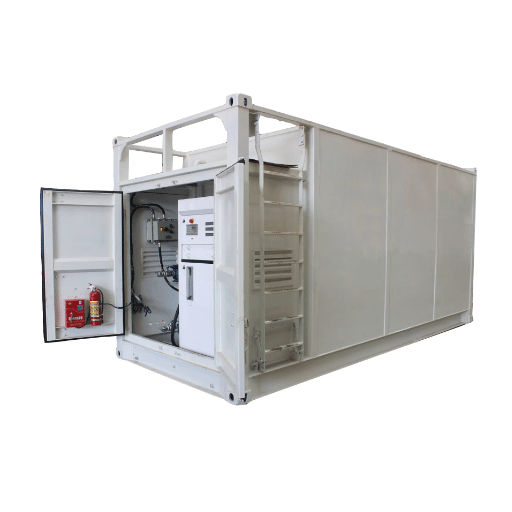
At Shandong Shengrui Intelligent Equipment Co., Ltd., we build welded carbon steel tanks and integrated fueling systems to international carbon steel tank fabrication standards, with full traceability and export documentation for global projects. If you need help selecting the right standard or evaluating a fabricator, contact our engineering team for a consultation or request a customized quote.