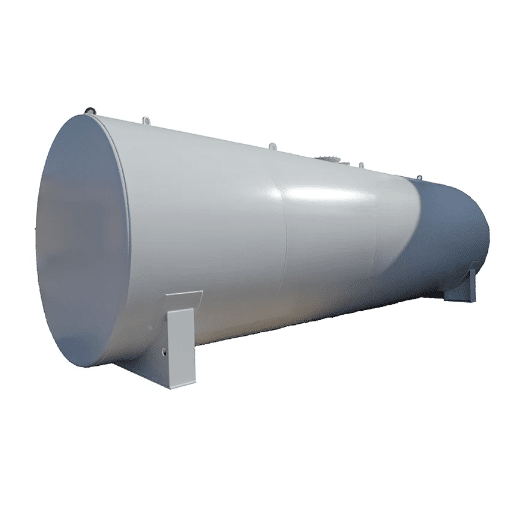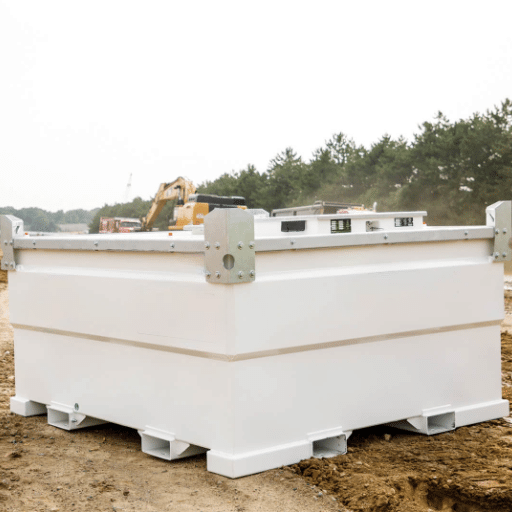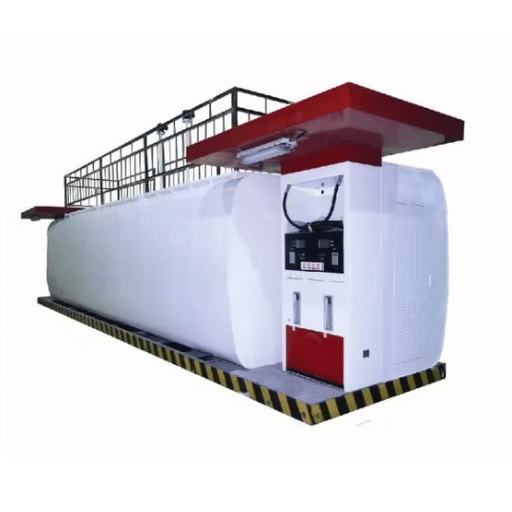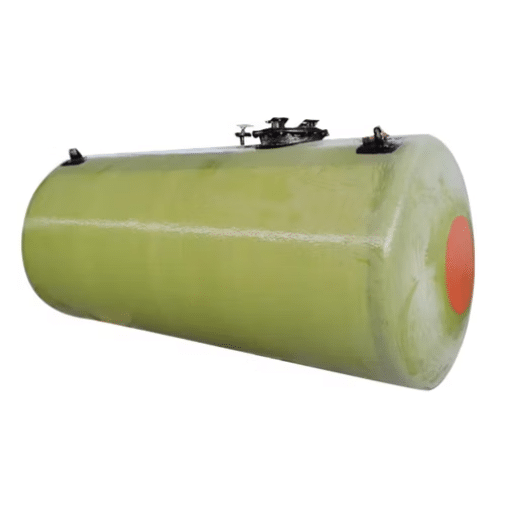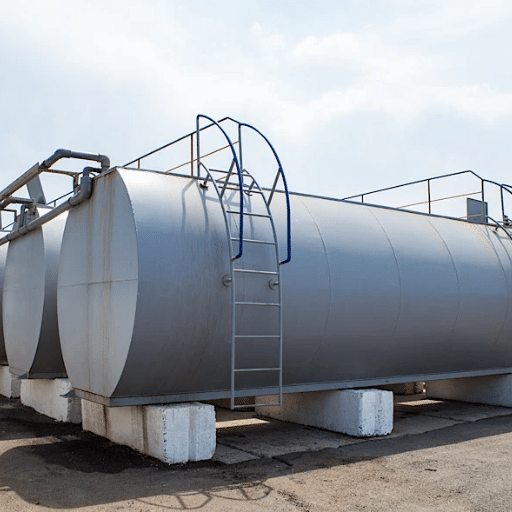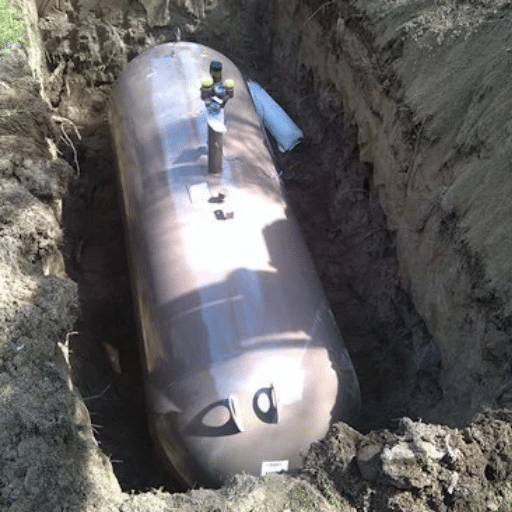
If you searched for “HAN barrier vs. aluminum alloy mesh,” you probably expected a head-to-head. Two products, two spec sheets, one winner.
The first useful thing we can tell you is that there is no head-to-head, because there are not two products. HAN barrier fill and “aluminum-alloy mesh” are the same material family: thin expanded aluminum-alloy foil, slit and stretched into a porous matrix that fills a tank’s vapour space. The “vs.” comes from marketing, not metallurgy.
You’re right to compare before you specify, though. Suppression fill is one of the few tank decisions that is genuinely hard to reverse. Once the matrix is in, changing your mind means draining the tank, opening it, and handling vapour-laden material in a confined space.
So this guide does three things the other pages on this query don’t. It gives you the specification numbers with their sources. It separates what standards require from what vendors claim. And it’s candid about the limit that decides most projects: whether aluminum belongs in your tank at all, given the fuel you store.
Here’s what you’ll learn:
- Why HAN and aluminum-alloy mesh are one material, not two
- Which construction, alloy, and coating choices genuinely differ
- Fill density, void ratio, and pore size, with provenance
- What the standards require, and what the fill is not certified for
- Which fuels rule aluminum fill out entirely
Want the system-level view before the material detail? Start with our guide to explosion-proof barrier fuel tanks, then come back here for the specification.
HAN Barrier and Aluminum-Alloy Mesh: Same Family, Different Specification

Strip away the branding and both names point at the same object: an explosion-proof aluminum alloy mesh made from expanded foil, roughly 0.05 mm thick, slit and stretched into a diamond or honeycomb lattice, then stacked, wound or balled into a matrix that occupies the tank’s vapour space.
What is HAN barrier material? It’s a branded, engineered instance of expanded aluminum mesh: thin aluminum-alloy foil, typically alloy 3003 or 3A21 at around 0.05 mm, slit and stretched into a lattice and packed into a tank’s vapour space as a porous matrix. “Aluminum-alloy mesh,” or expanded aluminum (EA), is the generic name for the same material.
What “HAN” actually is
HAN is a brand and trademark lineage, not an acronym. Contemporary Chinese coverage rendered it as “intrinsically safe, will not explode.” English marketing has since offered inconsistent expansions, including “High-porosity Aluminum Network,” a backronym built after the fact. On the metal itself, the sources support alloy 3003 and its Chinese equivalent 3A21 (LF21) in the H18 temper. If you see a conflicting grade claim, including “aviation-grade 7075,” treat it as unverified until the supplier produces a mill certificate.
Why the “vs.” framing persists
Different vendors use different names for the same product. A specifier searching for a winner finds two brand names, assumes two technologies, and compares the wrong things.
The four variables that actually differ
What differs between any two products on the market is not the concept. It is:
- Construction (block, spiral-wound, spherical or foam)
- Alloy and temper (3003/3A21 most commonly; composite grades emerging)
- Surface treatment (untreated or coated)
- Fill density (the packing figure that governs performance)
Change those four, and you change the product. Change the brand name, and you change nothing.
The 1979 fix that became the standard
Expanded foil had a problem long before anyone marketed it as a safety product. Packed into a tank, the layers kept nesting, sliding into the gaps below, so the matrix compressed and the suppression quietly thinned out.
The 1979 patent US 4,149,649 answered it with a simple fix: reverse every alternate layer in the roll. Two later patents, US 4,673,098 and US 4,925,053, added adhesive restraint and thermally conductive bonding. The failure mode was documented and designed against four decades ago, which is why construction type, not brand, is the first thing a specifier should ask about.
Construction Types: Block, Spiral-Wound, Spherical and Foam
Construction isn’t cosmetic. Whichever explosion suppression material fuel tank specifiers choose, the format decides how the matrix packs, how it behaves under vibration, and whether it survives year five. Four families cover almost everything sold today.
Expanded-mesh block. Stacked layers of expanded foil, the baseline product. Simple, well understood, and the format most of the early patents describe.
Spiral-wound roll. Foil wound into a dense cylinder, often called dense spiral-wound alloy fill. Suited to large or new-build tanks, where the fill can be installed during fabrication rather than squeezed through a manway.
Spherical or cellular fill. Discrete balls or cells that flow into awkward spaces. This is usually the only practical option for retrofitting an existing small tank that cannot be rebuilt around a fixed matrix.
Reticulated polyurethane foam. The non-metallic route, and the one codified for aircraft and military fuel systems under NFPA 69 and SAE AIR4170C. Foam needs a conductive grade to dissipate static. Stainless-steel foil matrices, at roughly 25 µm and around 100 kg/m³, are the corrosion-resistant alternative where aluminum is disqualified.
| Construction | Typical use | Static dissipation | Relative cost |
|---|---|---|---|
| Expanded-mesh block | Baseline; small to mid tanks | Conductive (metal) | Low |
| Spiral-wound roll | Large / new-build tanks | Conductive (metal) | Medium |
| Spherical / cellular | Retrofit of existing tanks | Conductive (metal) | Medium |
| Reticulated foam | Aircraft, military, specialised | Requires conductive grade | High |
The Specification Numbers That Decide Performance

A specifier’s real problem isn’t a shortage of claims. It’s that no two sources agree, and nobody says which basis is defensible. For an aluminum alloy mesh explosion-proof system, four numbers decide performance. Here they are, with their provenance.
Fill density. Peer-reviewed work puts the optimum in the range of 28–32 kg/m³, with a wider test range of 25–35 kg/m³; one methane-air study found an optimum near 27.39 kg/m³. Against that, vendor figures of 25–35 kg/m³ and 35–45 kg/m³ both circulate. If a supplier quotes a higher density, ask what it buys and what it costs, because two numbers cannot both be right.
Volume occupancy. The most-cited review, Birk (2008), records expanded aluminum occupying 1–3% of tank volume. The familiar “<1%” claim is a vendor figure; a third-party UK manufacturer corroborates a minimum liquid displacement near 0.95%. The tighter ≤0.8% cylindrical and ≤1.0% spherical rule belonged to the 2005-era standard and was deleted in 2021. Plan on roughly 0.7% net fuel displacement.
Pore size and surface area. Where NFPA 69 applies, pore size must be ≤2 mm and surface-area-to-volume ratio ≥0.25 mm⁻¹ for propane-like vapours. Real products sit near 400–1,000 m⁻¹. Notably, most vendors do not publish mesh pore dimensions at all, which is itself a finding: it is the number that most directly predicts suppression performance.
Performance. Peer-reviewed testing reduced an explosion pressure of 1.40 MPa to 0.14 MPa, best at 28–32 kg/m³ packing density. Zalosh (2007) reports a stoichiometric propane-air deflagration reaching roughly 8.5 bar without mesh, producing only about ⅓ bar with it. Every multiplication figure you see, for instance “30×”, “40×” or “43%”, should be treated as an unattributed vendor claim until a test report is produced.
| Parameter | Defensible figure | What the market claims |
|---|---|---|
| Fill (packing) density | 28–32 kg/m³ (peer-reviewed optimum) | 25–35 kg/m³; 35–45 kg/m³ |
| Volume occupancy | 1–3% of tank volume (Birk, 2008) | “<1%” |
| Pore size | ≤2 mm where NFPA 69 applies | Rarely published |
| Surface-area-to-volume | ≥0.25 mm⁻¹ (NFPA 69); products 400–1,000 m⁻¹ | Not published |
| Pressure ceiling | 1.40 MPa → 0.14 MPa (peer-reviewed) | “30×”, “99.9%” unattributed |
What the Standards Require, and What They Do Not Certify
Three things get blended together whenever this topic comes up: what a standard requires, what a vendor claims, and what the fill is actually certified for. In any HAN barrier vs aluminum alloy mesh comparison, that confusion is where most bad specifications start, so keep them apart, and the barrier material fuel tank specifications get much clearer.
If you’re writing a tender for an explosion-proof tank filler material, this is the section to copy into the technical annex. The standard numbers below are the only ones a supplier must meet, whatever the brand name on the datasheet.
China: grade and type
GB/T 35684-2017 defines the material by grade and by type. Grade 1 is untreated foil. Grade 2 carries a chromate conversion coating. Types are set by mesh aperture: Type I at 4 mm and ≥0.04 mm foil, Type II at 5 mm and ≥0.05 mm, Type III at 5.5 mm and ≥0.08 mm, all with a ±0.5 mm tolerance. The scope is Group IIA, T3 fuels and vapours. Its performance limits are explicit: combustion pressure rise ≤0.14 MPa, no secondary explosion in the static-explosion test, no explosion in the cook-off test, and at least an 80% cut in hot-zone duration under shaped-charge penetration.
| Grade / type | Mesh aperture | Foil thickness (min) | Note |
|---|---|---|---|
| Grade 1 | Not specified | Not specified | Untreated foil |
| Grade 2 | Not specified | Not specified | Chromate conversion coated |
| Type I | 4 mm | ≥0.04 mm | ±0.5 mm tolerance |
| Type II | 5 mm | ≥0.05 mm | ±0.5 mm tolerance |
| Type III | 5.5 mm | ≥0.08 mm | ±0.5 mm tolerance |
What AQ/T 3001-2021 changed
AQ/T 3001-2021 superseded AQ 3001-2005, effective 1 August 2021. Two changes matter. It is now a recommended (AQ/T) standard rather than a mandatory (AQ) one, so its regulatory standing is arguably weaker than in 2005. And it deleted filling density, void ratio, displacement ratio, material appearance, structural dimensions, and the old explosion-performance test clause.
What it added is the substance: volume resistivity ≤1.0×10⁸ Ω·m, a GB 8624 B₂ fire classification, a normative compatibility test (Appendix A), vibration durability, and three destructive tests (static explosion, cook-off, shaped-charge penetration). For gas-station service, it covers LPG only, not CNG, LNG, or L-CNG. Separately, GB 50156-2021 clause 6.4.2 requires skid-mounted gasoline tanks to use material with a combustion pressure-rise value ≤0.05 MPa, a different standard with a different scope from the 0.14 MPa figure above.
International: NFPA 69, and what is not certified
NFPA 69 Chapter 14 is the only major non-Chinese code that codifies passive suppression by expanded metal mesh or polymer foam. It sets near-100% fill, pore ≤2 mm, SA/V ≥0.25 mm⁻¹, and a ≥10 J minimum ignition energy test. The technique’s lineage is aircraft fuel tanks, not road vehicles.
Then the part that gets blurred. UL 2085 covers protected aboveground tanks. UL 2245 covers below-grade vaults. EN 12285 covers tank fabrication. ISO 28300 covers venting. EN 14373 covers active suppression. As a result, none of these evaluate the internal mesh fill. No UL, ATEX, or IECEx product certification of the fill itself was found.
One more piece of history: GB 50156-2012 deleted the clause that let barrier fill substitute for safety setbacks, and 应急〔2018〕32号 invalidated the 2013 reply on distance adjustment. Barrier fill is endorsed in China, but it is no longer a distance waiver. For the certifications that do apply, see our certification and standards guide.
Fuel Compatibility and Corrosion: The Criterion That Actually Decides
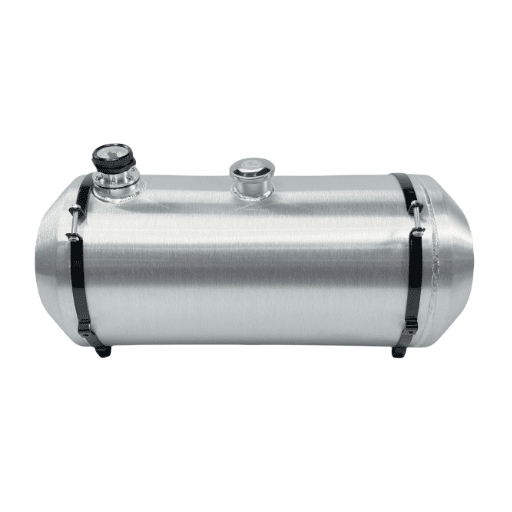
This is the section virtually no English-language page covers, and it is the one that decides whether your fill is still doing its job in year eight.
Aluminum is the anode
Aluminum’s standard electrode potential sits below iron’s. Put water in the tank, and the aluminum becomes the anode, dissolving galvanically while the steel tank stays protected. Patent application CN104249876A diagnoses exactly this, describing “corrosion and continuous dissolution of the aluminum alloy,” and claims a remedy of an oxide film 2–20 µm thick under an insulating coating of 0.5–5 µm. Water doesn’t need to be liquid to cause trouble. Vapour condensing at the tank top and bottom is enough to close the galvanic couple.
Ethanol and methanol are a hard stop
The US Department of Energy lists aluminum as not compatible with E85. PHMSA records aluminum pitting and stress-corrosion cracking in ethanol service. The Florida Department of Environmental Protection advises against bare aluminum wetted parts for E85. The mechanism is straightforward: ethanol is hygroscopic, so it absorbs water, and that water can phase-separate into a conductive, water-rich layer that drives galvanic and pitting corrosion. Methanol is worse.
This matters for your specification. Aluminum fill and ethanol-blended fuel don’t belong together, and coated grades don’t change that. Coating buys time against trace water. It doesn’t make aluminum ethanol-compatible.
The hidden top void
Here’s a failure that leaves no outward sign. Over years of vibration and thermal cycling, the foil matrix compacts. The lower region cakes into a dense mass, while the upper vapour space, the only place suppression is actually needed, is left progressively void. Level gauges read normally. The tank looks fine. The suppression is simply no longer where a deflagration would begin. Chinese field literature describes pitting the same way, highly concealed, because no external inspection reveals it.
Powdering, compaction and blocked fuel circuits
Long-term corrosion thins the foil until it perforates and powders. Poor-quality material makes this worse: some products measure yield strength below 120 MPa, tensile strength below 140 MPa, and elongation below 2%, so they fragment in service. Vibration causes compaction, and when the matrix settles enough, void ratio exceeds its limit and suppression is lost.
The shed fragments and powder travel downstream, contaminating fuel and blocking lines, filters, and dispenser components. Birk (2008) lists fuel-delivery restriction or blockage as a known installation penalty, and the problem appears in the patent chain going back to 1979.
When aluminum fill is unsuitable
- Ethanol, E85, or methanol service: aluminum is not compatible
- Any tank with chronic water ingress: galvanic dissolution is inevitable
- Hydrogen or acetylene duty: mesh suppresses methane-air deflagration but can promote hydrogen-air and acetylene-air events, with suppression reportedly collapsing above roughly 69% of stoichiometric hydrogen
- Buried, low-risk tanks with no mandated code: where the case for fill is most contested (see below)
What coating and alloy change
Grade 2 chromate conversion coating, anodising, micro-arc and electrophoretic coatings all attack the corrosion problem directly. Composite alloys improve the mechanical numbers too: patent CN107326222B claims a nano-composite aluminum (SiC 0.8–2%) at 280–350 MPa tensile and above 5% elongation, against prior-art figures of roughly 180–200 MPa and 1%. These are real gains, but they don’t change the compatibility calculus for ethanol and methanol.
Service Life, Cleaning and the Maintenance Penalty
Two numbers decide the total cost of ownership of suppression fill, and neither appears on a product page.
How long it lasts. Standards-adjacent and industry references expect at least 10 years in normal service, and 15 or more in high-risk duty, with periodic inspection typically no less than every 5 years. Against that, the common vendor claim of “over 30 years, zero maintenance” is unsupported. It’s also contradicted by the existence of the coated grade, the normative compatibility test, and the inspection interval itself. A product that never degrades doesn’t need a corrosion-resistant variant.
What cleaning costs. To clean the tank, the fill must be removed. Workers then enter a confined space, and the removed material carries fuel vapour. Specialised cleaning and regeneration procedures exist precisely because the fill cannot be cleaned in place, and post-cleaning performance re-testing is needed before the material is returned. Standing test-lab services for media compatibility and long-term service-life testing exist for the same reason.
For a step-by-step maintenance procedure, please read our explosion-proof tank maintenance and inspection checklist.
Choosing Between HAN Barrier and Aluminum-Alloy Mesh

Start from the fuel and the site, not the catalogue. Five questions settle most tank explosion suppression fill specifications:
- Which fuel will the tank hold, now and in the next decade?
- Is this a new build or a retrofit?
- Is the tank aboveground, buried, or containerised?
- Which jurisdiction and which standard governs the project?
- What is the clean-and-inspect access plan?
| Fuel | Tank type | Fill approach | Governing standard | The caveat that matters |
|---|---|---|---|---|
| Gasoline / diesel | Buried retail UST | Spiral-wound or spherical, coated grade | GB/T 35684-2017 | Buried low-risk duty is where the need is most contested |
| Diesel | Aboveground mine / fleet | Block or spiral-wound, coated grade | NFPA 69 where applicable | Aboveground, densely sited duty is the strongest case |
| Gasoline | Skid / container station | Fill meeting ≤0.05 MPa | GB 50156-2021 cl. 6.4.2 | Different standard from the 0.14 MPa figure |
| LPG | Station storage | Fill to AQ/T 3001-2021 | AQ/T 3001-2021 | Written for LPG only, not CNG/LNG |
| E85 / ethanol / methanol | Any | Not suitable | DOE / PHMSA guidance | Aluminum is not compatible |
One honest note on jurisdiction. Barrier fill is an established, standards-governed practice in China. Internationally, its codified home is NFPA 69 for aircraft and military-type vessels. There is no European equivalent of AQ/T 3001, and no European standard harmonises filling retail tanks with mesh. If your project is in Europe, you are designing outside a code.
Not sure which fill your fuel and site allow? Send us the fuel, tank type, and jurisdiction, and we will return a fuel-compatibility and material-specification review for your project.
Frequently Asked Questions
Is HAN barrier the same as aluminum-alloy mesh?
Materially, yes. Both are thin expanded aluminum-alloy foil formed into a suppression matrix. HAN is a branded, engineered instance; “aluminum-alloy mesh” is the generic description of the same product family.
What is HAN barrier material made of?
Expanded aluminum-alloy foil, typically alloy 3003 or 3A21 in the H18 temper, around 0.05 mm thick, slit and stretched into a lattice and formed into a matrix.
How much fuel capacity does barrier fill consume?
Plan on 1–3% of tank volume, per Birk (2008), with roughly 0.7% net fuel displacement. Vendor claims of “<1%” reflect a deleted 2005-era rule.
Can aluminum-alloy mesh be used with ethanol or methanol fuel?
No. The US DOE lists aluminum as not compatible with E85, and PHMSA records aluminum pitting and stress-corrosion cracking in ethanol.
How long does barrier fill last, and how often is it inspected?
Expect at least 10 years, with inspection no less than every 5 years. “Over 30 years, zero maintenance” is a vendor claim with no supporting test.
Is barrier fill UL or ATEX certified?
No UL, ATEX, or IECEx product certification of the fill was found. UL 2085, UL 2245, EN 12285, and ISO 28300 all address other components.
What is the difference between barrier fill and a flame arrester?
They do different jobs. Fill suppresses a deflagration inside the vapour space; a flame arrester stops a flame front travelling through a pipe or vent. Fill does not remove the need for arresters. See our guide to tank safety accessories and flame arresters.
Which is better, aluminum-alloy mesh or polyurethane foam?
Open question. Peer-reviewed comparisons report foam outperforming mesh on peak overpressure, while mesh is conductive by nature and self-supporting. The honest answer is that it depends on the fuel and the code you’re designing to.
Can existing tanks be retrofitted?
Often yes, using spherical or cellular fill that can be installed through an existing opening. A tank that cannot be rebuilt around a fixed matrix can still usually take cellular fill.
The Bottom Line on HAN Barrier vs. Aluminum-Alloy Mesh
Five things are worth carrying into your specification:
- HAN barrier and aluminum-alloy mesh are the same material family, not competing technologies.
- The variables that actually differ are construction, alloy and temper, surface treatment, and fill density.
- Standards define grades and types, not brands. GB/T 35684-2017 sets them; AQ/T 3001-2021 governs LPG service only.
- Corrosion and fuel compatibility decide suitability. Ethanol and methanol are a hard stop for aluminum.
- Cleaning and inspection belong in the business case from day one, not after the first tank entry.
If you take one thing from this comparison, take the last one. The question worth answering is not “HAN barrier vs aluminum alloy mesh,” because they are one material. It is which construction, which alloy and coating, and whether aluminum is the right metal for the fuel you store.
Ready to specify? Send our engineering team your fuel, tank type, jurisdiction, and cleaning access plan, and we will return a fuel-compatibility and material-specification review for your project.