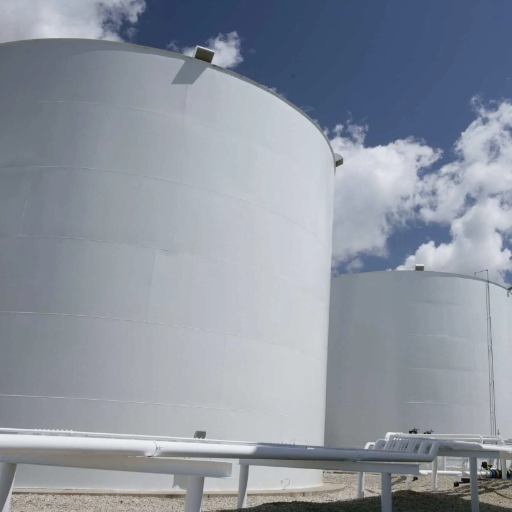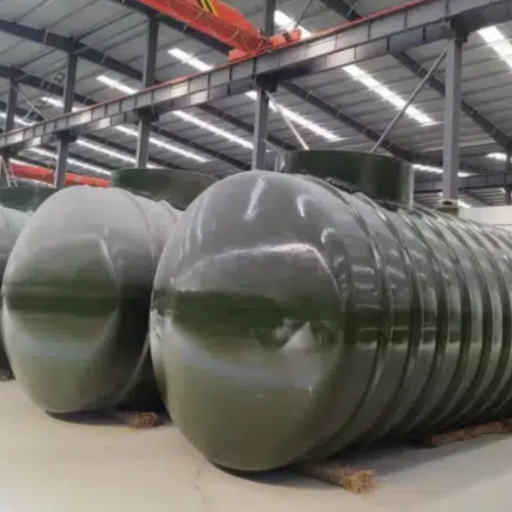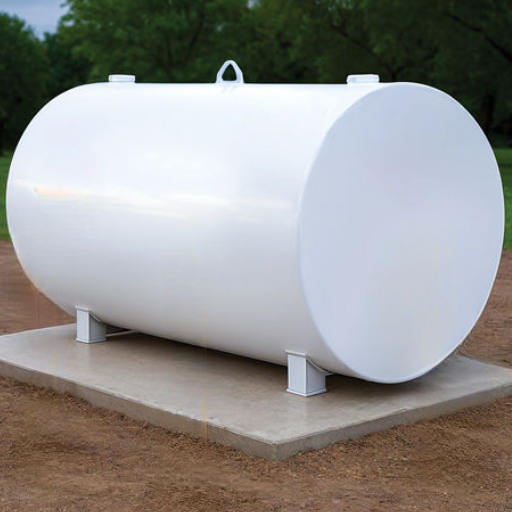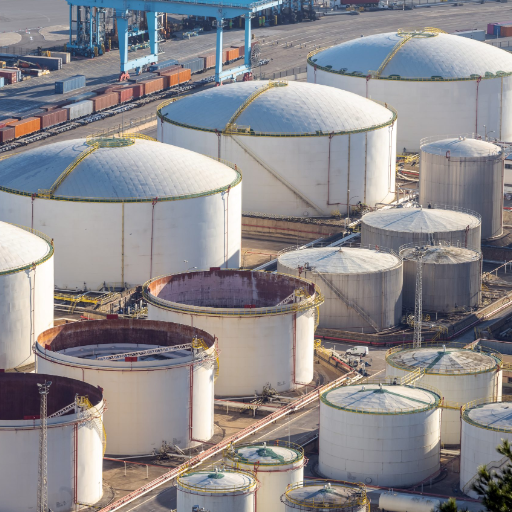
Two insulated steel cylinders stand side by side in a plant room. Outwardly, they look identical. One is a thermal store; the other is a buffer tank. Order the wrong one, or size it on the wrong basis, and you either shorten the life of the heat pump it’s supposed to protect or pay for energy you thought you had banked.
The confusion over thermal store vs buffer tank is everywhere. Installers, specifiers, and even some manufacturers use the two names almost interchangeably, alongside accumulator and hot water cylinder. They aren’t the same vessel, and they don’t do the same job.
This guide ends the confusion. You’ll learn:
- The one-line difference between a thermal store and a buffer tank
- How each compares with an accumulator and a hot water cylinder
- Why a thermal store can hold more usable energy than a buffer of the same size
- The two different sizing bases, and how to choose the right one
- A simple decision sequence you can apply to your own project
By the end, you’ll know which vessel your system actually needs. For the full picture, start with our complete guide to thermal store tanks.
Thermal Store vs Buffer Tank: The Short Answer
Here’s the cleanest way to separate them. A buffer tank adds water volume to a heating or cooling loop to stop the heat source from short-cycling, and it separates circuits hydraulically. A thermal store holds energy for hours, usually to shift load to off-peak or renewable hours, and it’s built to stratify so that stored heat stays usable.
That two-sentence distinction is the whole difference in plain language. But it hides an important truth: the terms genuinely overlap. A buffer’s side benefits include some storage.
A thermal store normally performs the buffer’s anti-cycling job as well. That overlap is exactly why buyers get it wrong.
So the goal isn’t to memorize definitions. It’s to understand what each vessel is optimized for:
- A buffer is optimized to protect the heat source.
- A thermal store is optimized to hold energy over time.
Everything else- the sizing, the internals, the insulation- follows from those two jobs. For the deeper physics of how a store keeps heat usable, see our guide to how thermal stratification works.
The real-world cost of mixing them up can be steep. Daniel, the facilities manager at a Midlands leisure centre, replaced an ageing gas boiler with a heat pump and, on his installer’s advice, fitted a 200-litre buffer tank. The compressor stopped short-cycling, so the installer’s job was done. But Daniel had also expected the tank to let him run the pool hall on cheap overnight electricity.
It couldn’t do that. A buffer sized for cycle protection holds minutes of run time, not the kilowatt-hours of stored heat that load shifting demands. Six months later, he added a properly stratified thermal store alongside the buffer. The buffer now does its narrow job; the store does the energy work.
Not sure which job your system needs? Talk to our engineering team, and we’ll help you specify the right vessel.
Thermal Store vs Buffer Tank vs Hot Water Cylinder
Most comparisons stop at two vessels. In practice, buyers meet four, and they look alike enough to be genuinely confusing. Two of the most-searched pairings, thermal store vs hot water cylinder and buffer tank vs storage tank, are also the two most often muddled, so both appear in the table below.
| Vessel | What it stores | Main job | Provides DHW? | Sizing basis | Stratified? |
|---|---|---|---|---|---|
| Thermal store (TES tank) | Primary (non-potable) system water | Store heat for later; manage multiple heat sources | Yes, indirectly via coil or plate heat exchanger | Energy: kWh or ton-hours of demand to shift | Yes, designed to stratify |
| Buffer tank (buffer vessel) | Primary heating-circuit water | Add volume and hydraulic separation; prevent short cycling | No | Time/volume: about 10 to 25 L per kW | Typically mixed (lower average temperature) |
| Accumulator tank | Primary system water (bulk) | Absorb a full batch burn; release over hours or days | Usually no, or indirectly | Biomass: at least 25 L per kW, often 50 | Yes (a large stratified store) |
| Hot water cylinder (vented or unvented) | Potable water | Store and supply DHW directly; unvented runs at mains pressure | Yes, directly | DHW demand and recovery volume | Not usually (some stratification) |
The fastest way to read the table is to start with the fourth column. If the water comes out of a tap, you’re looking at a cylinder or a thermal store with a domestic-hot-water exchanger. If the water stays inside the heating loop, you’re looking at a buffer, a store, or an accumulator.
The names blur because the same steel shell can be built into any of them. A tank fabricator changes the nozzles, the internal baffles or diffusers, the lining, and the insulation to make one vessel into a buffer, a store, or an accumulator. The steel doesn’t decide the job. The specification does.
Buffer Tank vs Thermal Store: The Stratification Difference
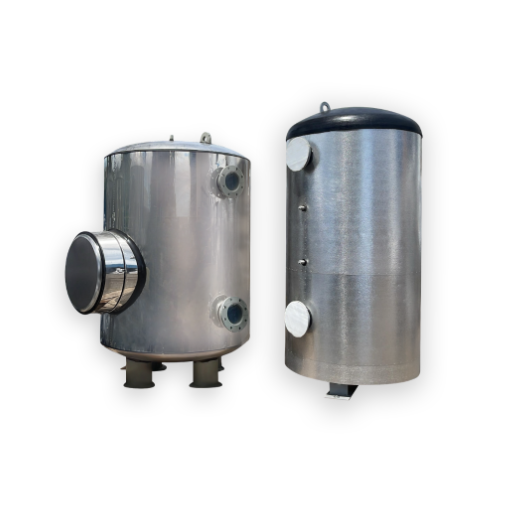
There’s one physical difference that decides whether a store outperforms a buffer of the same size: stratification.
A thermal store is designed to hold hot water on top, and cold water at the bottom, separated by a narrow transition zone called a thermocline. Because the hot layer stays at the top at full system flow temperature, the store can deliver usable heat at the temperature your emitters need. A buffer, by contrast, generally mixes. Its average temperature sits a few degrees below the flow temperature, and that lower temperature means lower energy quality, or exergy, for the same charge.
In practice, that gap matters. At equal volume, a well-stratified store can supply more usable energy than a mixed buffer. Well-designed stores recover roughly 85 to 95 percent of their stored capacity; poorly mixed tanks may recover only 60 to 70 percent.
Keep this in mind when a supplier quotes capacity by volume alone. Two 2,000-litre tanks can hold very different amounts of usable heat depending on how well they stratify. We cover the internals, thermoclines, and diffusers in depth in our article on thermal energy storage tank design, so this guide stays focused on the decision.
Thermal Store vs Buffer Tank Sizing
The two vessels are sized on completely different bases, and this is where most costly mistakes happen. A buffer is sized by time. A store is sized by energy.
Buffer tank: sized by run time, not energy. A buffer exists to give the heat source a minimum run time even when only the smallest zone calls for heat, and to keep the loop above its minimum volume. For residential air-to-water heat pumps, published practice clusters around 10 to 20 litres per kW of output, widening to roughly 10 to 25 L per kW when solar diversion or DHW pre-heating is included. A 12 kW unit therefore needs roughly 120 to 300 litres, depending on the design.
Thermal store: sized by kilowatt-hours. A store exists to move energy in time, so you size it against the demand you want to shift. An 80-gallon tank holds about 668 pounds of water and stores roughly 12 kWh of usable heat at a 35 °C temperature difference. A 700-gallon module stores about 108 kWh: energy at battery scale, for the cost of a tank.
Put the two side by side, and the difference is stark. A 12 kW heat pump may need only a 120 to 240 litre buffer to stop short cycling. Shifting that same plant’s load overnight needs a store of many hundreds to thousands of litres.
That leads to the warning worth taping to the plant-room wall: a tank sized only for cycle protection isn’t a storage strategy. If your goal is off-peak or solar shifting, the sizing basis switches from minutes to kilowatt-hours, and the vessel gets far larger.
Even the buffer rule has a caveat. Modulating, inverter-driven heat pumps cycle less, so fixed-speed units benefit most from a buffer.
Which One Do You Need? A Decision Guide
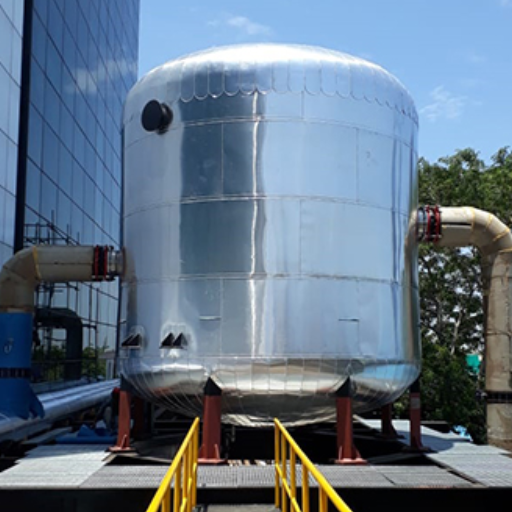
Work through these questions in order. They resolve almost every case.
- Does the vessel need to make hot water at the tap? If yes, choose a hot water cylinder, or a thermal store with a domestic-hot-water exchanger.
- Is the goal to protect the heat source from short cycling and separate circuits? If yes, choose a buffer tank.
- Is the goal to move energy in time: off-peak tariffs, solar, CHP, or a biomass batch burn, or peak shaving? If yes, choose a thermal store, or an accumulator for batch-fed biomass.
- Do you need both? Many designs use a small buffer for hydraulic separation plus a store for load shifting, and a good thermal store often covers the buffer’s role too.
- Confirm the details: potable versus primary-water separation, the heat sources involved, and the sizing basis from step 2 or step 3.
That logic scales across very different projects. Priya runs a smallholding in Devon with a log boiler, and her first attempt at storage was a 500-litre buffer that filled up with tepid water and never heated the house evenly. When she replaced it with a 2,000-litre accumulator store, the boiler could burn each batch at full output into the store, then release usable heat over the following day. The lesson is the same whether the tank sits on a farm or in a district heating plant: match the vessel to the job, then size on the correct basis.
For a quick reference by application:
| Your situation | Choose | Why |
|---|---|---|
| Hot water at the tap, mains pressure | Unvented cylinder, or store with DHW exchanger | Stores potable water directly |
| Stop a heat pump or boiler short-cycling | Buffer tank | Adds loop volume and hydraulic separation |
| Shift load to off-peak or solar hours | Thermal store | Stores kWh for later |
| Batch-fed log or pellet boiler | Accumulator store | Absorbs a full burn, releases later |
| Multiple heat sources (boiler, solar, stove) | Thermal store | Acts as the system “heart,” selecting the cheapest source |
| Space heating and DHW with load shifting | Thermal store with DHW exchanger | Covers both jobs in one vessel |
Need a vessel specified for your exact setup? Request a custom quote, and we’ll match the tank to your heat sources and load profile.
Materials, Codes, and What to Specify
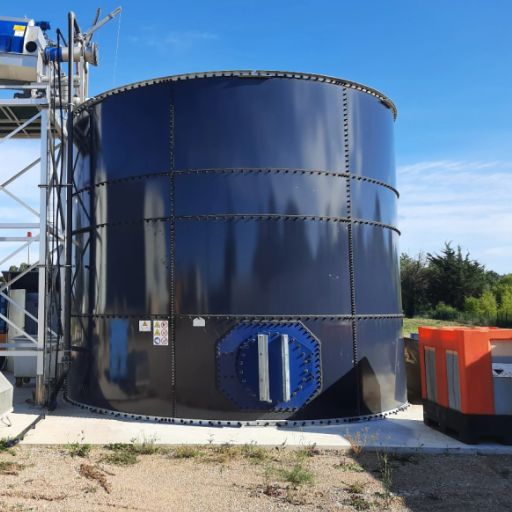
Because the same steel shell becomes a buffer, a store, or an accumulator depending on its specification, the details are where quality lives.
For primary-water service, carbon steel to ASTM A516 Grade 70 with an epoxy lining is the standard choice. Where water chemistry is aggressive, or the water is potable, 304 or 316L stainless is preferred, with stainless or copper internals for domestic-hot-water coils. You can read more about the material options in our guide to carbon steel fuel storage tanks.
Several codes guide the specification. ASME BPVC Section VIII with a U-stamp applies to pressurised vessels and is independently verified through the National Board. BS EN 303-5 sets a minimum accumulator volume for manually stoked boilers, and Approved Document G3 governs unvented cylinders. For heat pumps, MCS MIS 3005-D sets how much coil surface a domestic-hot-water store needs, because boiler-era cylinders often have coils too small for low-temperature heat pumps.
Get the specification right, and the vessel will do its job for decades. Get it wrong, and no amount of tank volume will compensate.
Frequently Asked Questions
What is the difference between a thermal store and a buffer tank?
A buffer tank adds water volume to protect the heat source from short cycling and separates circuits hydraulically. A thermal store holds energy for later use, typically to shift load to off-peak or renewable hours, and is designed to stratify.
Is a buffer tank the same as a thermal store?
No. The terms are often used interchangeably, but a buffer is sized by run time and normally doesn’t provide hot water, while a thermal store is sized by energy and can provide hot water indirectly through a coil or heat exchanger.
Does a buffer tank provide hot water?
No. A buffer tank stores primary heating-circuit water, which stays inside the heating system. It doesn’t supply water to taps.
Does a thermal store provide hot water?
Yes, indirectly. Mains water passes through a high-surface-area coil or plate heat exchanger inside the store and is heated by the surrounding store water, usually delivered through a thermostatic mixing valve.
Is an accumulator tank the same as a thermal store?
An accumulator is a thermal store used for a specific purpose: absorbing a full batch burn from a log or pellet boiler and releasing it over hours or days. It’s usually larger than a domestic thermal store.
What’s the difference between a thermal store and a hot water cylinder?
A hot water cylinder stores potable water and supplies it directly to taps. A thermal store holds primary system water and heats potable water indirectly through a heat exchanger.
Do I need a buffer tank with a heat pump?
Not always. Modulating heat pumps cycle less and may not need one, while fixed-speed units and heavily zoned systems usually benefit. If the goal is load shifting rather than cycle protection, you need a thermal store instead.
The Bottom Line
The thermal store vs buffer tank question comes down to two different jobs. A buffer tank protects the heat source by adding volume. A thermal store holds energy for later. Telling them apart, along with the accumulator and the hot water cylinder, lets you buy the right vessel the first time.
Three points are worth remembering. First, the same steel shell can be any of these vessels; the specification decides which. Second, buffer sizing is driven by run time and litres per kW, while store sizing is driven by kilowatt-hours of demand. Third, a well-stratified store delivers more usable energy than a mixed buffer of the same size, so don’t compare tanks by volume alone.
At Shandong Shengrui Intelligent Equipment Co., Ltd., we build carbon steel and stainless steel vessels for thermal, buffer, and accumulator duty, engineered to ASME, UL, and ISO 9001 standards and supported with full documentation from selection to installation. Whether you need a compact buffer, a stratified thermal store, or a large accumulator, our team can specify it to your heat sources and load profile.
Ready to specify the right vessel? Request a custom buffer, thermal store, or accumulator tank quote, and our engineers will help you make the thermal store vs. buffer tank call correctly the first time.