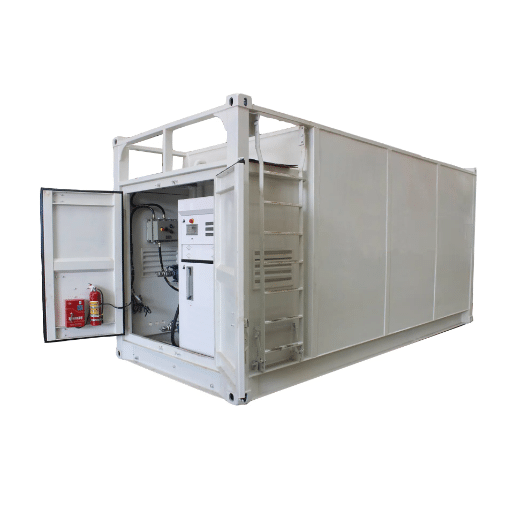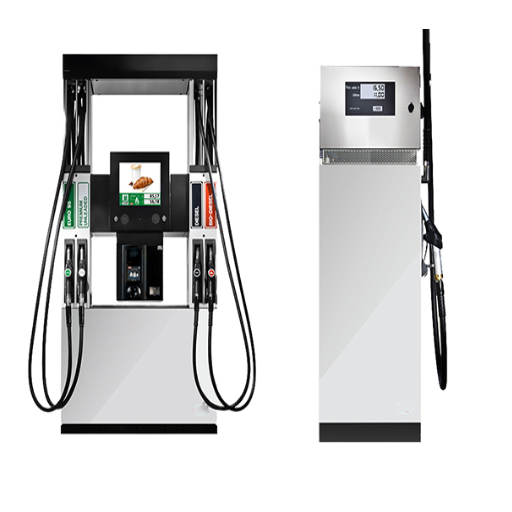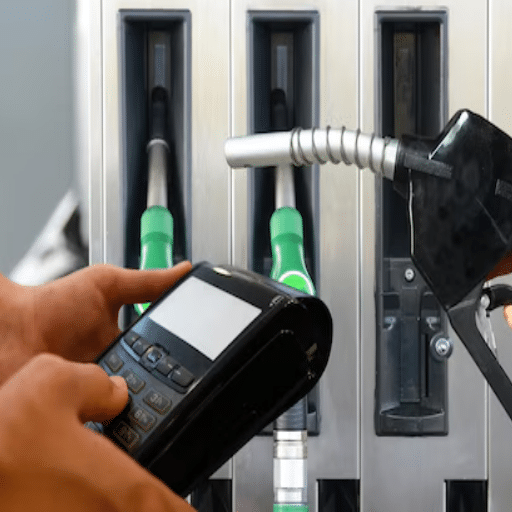
A 20ft skid station costs $25,000 to $70,000 ex-works and roughly $140,000 to $210,000 to own for ten years, before a single liter of fuel. The number that decides whether that is cheap is cost per liter: about 6 cents at 20,000 liters a month, falling to roughly 1 cent above 80,000 liters a month. Your skid station total cost of ownership depends far more on throughput than on the price you negotiate.
Here is the uncomfortable part. The cheapest quote you receive won’t usually be the cheapest station. The gap between two quotes rarely comes from the tank. It comes from freight, duty, the pad under the unit, and what happens in year six.
You probably already suspect the sticker price is not the whole story. This guide builds the whole story: a line-item model you can copy into a spreadsheet, three worked sites, and the one metric that makes two projects comparable.
If you haven’t settled the equipment itself yet, start with our 20ft skid station specification guide. This article assumes the format is chosen and the budget is the open question.
Key Takeaways
- Delivered cost runs about twice the ex-works price once packing, freight, duty, pad, power and commissioning are counted.
- Ten-year ownership for a 15,000 to 20,000 liter unit lands at $140,000 to $210,000, excluding fuel.
- Cost per liter, not capex, is the comparison that survives: the same unit costs 12 cents a liter at 10,000 liters a month and under a cent at 150,000.
- Residual value is 3 to 8 percent at auction, not the “high resale value” brochures imply.
- Amortize over the permit life, not the equipment life. A 12-month permit makes a $72,000 unit cost $72,000 a year.
What a 20ft Skid Station Costs Before the Fuel
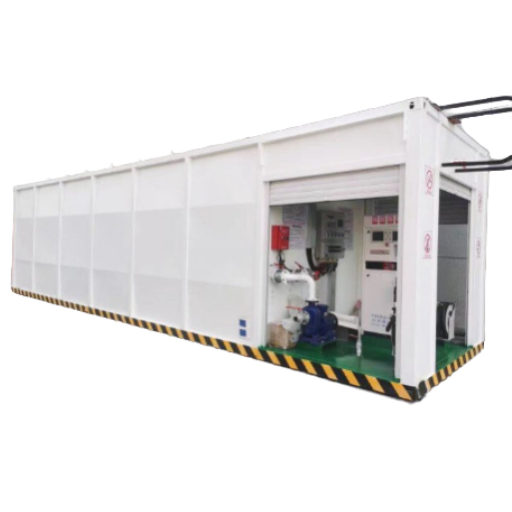
Published equipment bands for a 20ft footprint sit between $25,000 and $60,000 for an open-frame skid and $30,000 to $70,000 for a container-framed unit of the same capacity, according to our container versus skid price comparison. The enclosure adds 10 to 30 percent for the same tank and dispenser.
Those are ex-works numbers, and most skid-mounted gas station cost comparisons stop there. The unit still has to reach your site, sit on something designed for it, and pass an inspection.
| Cost line | Typical range | Basis |
|---|---|---|
| Equipment, ex-works | $25,000–70,000 | 10,000–22,000 liter unit |
| Export packing and inland transport | 2–4% of equipment | Factory to port |
| Ocean freight, one 20ft slot | $1,500–6,800 | Lane and season dependent |
| Destination port, haulage, crane | $2,000–10,000 | A 20ft unit may need a 25 t crane |
| Duty and clearance | 0–25% of CIF | HS code and country |
| Site works | $12,000–50,000 | 60–100 m² pad, power, earthing, bollards |
| Commissioning and approvals | $2,000–8,000 | Metrology, electrical, fire, training |
| Delivered and commissioned | $45,000–180,000 | Before site-specific extras |
Freight is the line that moves most. The Freightos Baltic Index is quoted per 40ft container, not per 20ft, and 2026 forwarder quotes for a 20ft slot range from about $1,500 to $6,800 depending on lane and month. Treat any single freight number as a snapshot.
Take a composite example. A procurement team compared two 20ft units quoted $9,000 apart. The cheaper unit arrived on a frame that needed a larger crane and a thicker reinforced pad. The crane surcharge and the extra concrete consumed the savings before commissioning, and the schedule slipped three weeks waiting for both.
The delivered price was the only number that mattered, and neither quote showed it.
Want that arithmetic run on your own site instead of a range? Send us the layout and throughput, and we’ll price the delivered scope, not just the unit.
What Skid Station Total Cost of Ownership Quotes Leave Out
Freight and duty. Ex-works and FOB quotes stop at the port. Everything after it, including the crane that lifts a 4.2 to 7.0 tonne unit off a flat rack, is yours. Our shipping weights and road limits guide covers the transport envelope.
Site works. The pad is not optional. Industrial hardstanding runs roughly $140 to $340 per square meter depending on thickness and reinforcement, and a 20ft unit needs 60 to 100 square meters once turning space and bunding are counted. The US slab benchmarks put heavy-load concrete at $13 to $22 per square foot. Power connection, earthing, and bollards sit on top.
Commissioning and metrology. A dispenser is a measuring instrument. Calibration, electrical inspection, fire authority sign-off, and operator training are separate line items, and the fire review is where schedules usually break.
Working capital in fuel. A 15,000-liter unit holds about $15,000 of fuel at $1.00 per liter. Average inventory sits near half a tank, so $7,500 to $10,000 is tied up permanently, and carrying it at 8 percent costs $600 to $800 a year. Over ten years, that is $6,000 to $8,000, roughly the size of the entire maintenance budget.
The permit clock. More on this below, because it changes what “per year” means.
The Skid Station Total Cost of Ownership Model, Line by Line
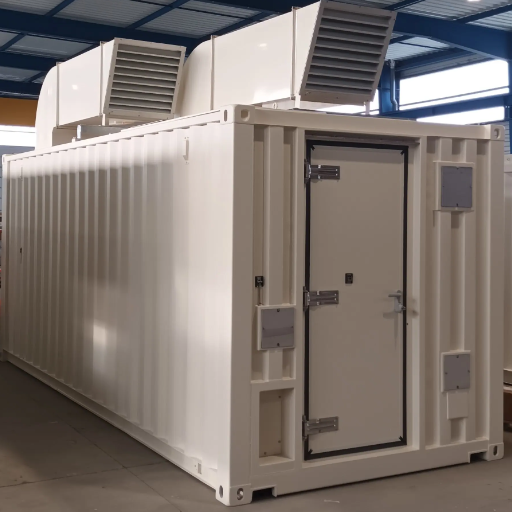
Three configurations, modeled line by line. Every figure is a planning estimate, not a quotation. If you have seen a mobile fuel station cost sheet before, this is the same arithmetic with the lines most of them leave out.
| Line item | Mining / remote camp | Fleet depot | Retail / cardlock |
|---|---|---|---|
| Configuration | 15,000 L, 1 dispenser, off-grid | 20,000 L, 2 dispensers, grid | 20,000 L, 2 dispensers, POS |
| Equipment ex-works | 35,000 | 55,000 | 60,000 |
| Packing and inland transport | 1,200 | 1,650 | 1,800 |
| Ocean freight | 4,000 | 4,000 | 4,500 |
| Port, haulage, crane | 5,000 | 5,000 | 6,000 |
| Duty and clearance | 3,900 | 5,900 | 6,500 |
| Site works | 20,000 | 28,000 | 35,000 |
| Commissioning and approvals | 3,500 | 5,000 | 8,000 |
| Delivered subtotal | 72,600 | 104,550 | 121,800 |
| O&M, per year | 2,500 | 3,500 | 4,000 |
| Consumables, per year | 600 | 800 | 900 |
| Energy, per year | 1,200 | 400 | 500 |
| Insurance, per year | 500 | 700 | 900 |
| Permits and compliance, per year | 1,000 | 1,500 | 2,000 |
| Annual subtotal | 5,800 | 6,900 | 8,300 |
| Recurring over ten years | 58,000 | 69,000 | 83,000 |
| Refurbishment, years 5 to 7 | 6,000 | 9,000 | 10,000 |
| Relocation, year 5 | 8,000 | 0 | 0 |
| Residual value, year 10 | (4,000) | (8,000) | (9,000) |
| Ten-year skid station total cost of ownership | 140,600 | 174,550 | 205,800 |
| Liters per month | 80,000 | 120,000 | 150,000 |
| Cost per liter | $0.0146 | $0.0121 | $0.0114 |
Read the delivered rows against the equipment row. In all three cases, the station costs about twice its ex-works price before it dispenses anything, and recurring costs add another 125 to 165 percent of the equipment price over ten years.
That’s the mid-case. Our own container versus skid comparison puts full turnkey at two to four times ex-factory, and the upper half of that band is real in high-duty markets, remote sites and jurisdictions that demand local certification.
The model excludes the fuel itself, financing, land and local property taxes. State those exclusions when you present a number internally, or the first finance reviewer will find them for you.
Three Worked Scenarios: Mining, Fleet Depot, Retail
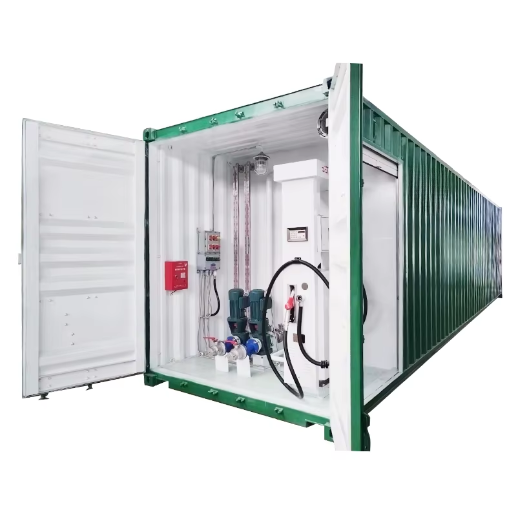
The remote mining camp. A 15,000-liter unit, one high-flow dispenser, no grid power, and a five-year contract. Delivered cost lands near $72,600, and the generator adds $1,200 a year in energy. The decision this scenario forces is relocation: the contract ends, and the unit either moves at $8,000 or is sold at auction for a fraction of its book value.
The fleet depot. A 20,000-liter unit with two dispensers, grid power, and 120,000 liters a month. Delivered cost is about $104,550 and recurring cost is about $6,900 a year. The decision here is scaling: when volume outgrows the unit, a second dispenser costs far less than a second station.
The retail or cardlock site. A 20,000-liter unit with point-of-sale integration at 150,000 liters a month. Delivered cost nears $121,800 because payments, metrology, and fire review are heavier. The decision is format: above roughly 200,000 liters a month, refill frequency becomes the constraint. A 20ft unit is then the wrong size, not the wrong price.
Cost Per Liter: The Only Number That Survives
Hold the mining scenario’s $140,600 constant and change only throughput.
| Throughput | Lifetime liters | Cost per liter |
|---|---|---|
| 10,000 L/month | 1.2 million | $0.117 |
| 20,000 L/month | 2.4 million | $0.059 |
| 40,000 L/month | 4.8 million | $0.029 |
| 80,000 L/month | 9.6 million | $0.015 |
| 150,000 L/month | 18.0 million | $0.008 |
Two readings matter.
At 20,000 liters a month, the infrastructure alone costs about 6 cents a liter. In many markets, that is comparable to the entire retail margin on a liter of diesel. For a private site at that volume, the honest question is not whether the skid is cheap. It’s whether on-site fuel is worth 6 cents a liter compared with buying retail and paying for delivery.
Above about 80,000 liters a month, the curve flattens. More volume does not make the asset cheaper per liter in any dramatic way; it simply spreads a fixed cost. That’s the point at which a second dispenser, not a larger tank, is usually the better spend.
Where the Money Leaks After Year One
Skid station operating cost is where buyers underestimate most, and the industry quotes maintenance two ways.
Owner-managed service, where your team handles checks and calls a technician for faults, runs about $1,500 to $3,500 a year for a small or mid-size mobile station, and $3,500 to $7,000 for a larger or high-volume unit. That range covers inspections, pressure testing, filters, hoses, nozzles, interior cleaning, and permits.
A full-service contract is priced per dispenser instead. Our dispenser operating cost guide puts preventive maintenance contracts at $1,500 to $3,000 per dispenser per year, plus $250 to $400 for annual calibration. For a two-dispenser unit, that can double the maintenance line. Calibration is annual for most sites and six-monthly above roughly 500,000 liters a year.
Energy is small but not zero: 100 to 200 kWh a month per pump on grid power, and considerably more off-grid where the generator burns fuel to run the pump.
Downtime is the skid station’s total cost of ownership line nobody budgets. A failed pump costs roughly $400 to $600 a day in lost margin at a retail site, more at high volume. Treat that as a reason to hold spares, not as a forecast.
Residual Value, Relocation and the Permit Clock
Vendor pages describe skid station resale value as high. The auction record is more modest.
Small and mid-size units commonly clear a few thousand dollars. A 15,000-liter diesel station with a double-wall tank and dispenser was listed in Europe at €6,000. A 10,000-gallon diesel station ex-transit fleet opened at $1,000 at a US government auction, and a 77,000-gallon station with two pumps sold for $5,625. Larger, compliant, dispenser-equipped units do better, in the €6,000 to $27,000 band.
Model 3 to 8 percent of capex at auction and 10 to 20 percent on a private sale to an operator who knows the unit. The strategic point is that a skid’s exit advantage over a buried tank is option value, not salvage value. You keep it because you can use it somewhere else, not because it’s worth much. Our skid station versus underground tank comparison covers the exit paths in full.
Then there’s the clock. Our skid station permit requirements article found that “temporary” is a permit category with a life attached: 90 days, 180 days, one year, or 24 months, depending on jurisdiction.
A $72,600 unit on a 12-month permit that is not renewed costs $72,600 per year of use, not $7,260. A 24-month permit renewed four times to reach ten years costs the same as the model above, plus four renewal fees and the staff time to file them. The fallback is relocation at $5,000 to $12,000.
Amortize over the shorter of the equipment life and the permit life. That single rule changes the ranking of quotes more often than any equipment specification.
For context, the most rigorous public comparison still runs against aboveground equipment. A 2018 US Army life-cycle study of retail fueling found underground systems cost $74,887 a year annualized against $90,570 for aboveground systems following recommended practices, a $474,789 difference over 30 years. Its scope is federal retail sites, not private skids, and its maintenance assumptions are far heavier than yours. The direction is still worth knowing.
How to Cut Skid Station Total Cost of Ownership
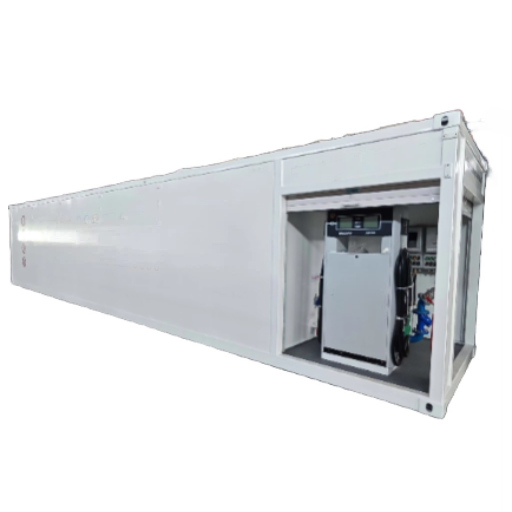
Six levers, in the order they usually pay:
- Size to throughput, not to refill convenience. Cost per liter is a throughput metric; a bigger tank does not improve it.
- Fix the pad and power before you request quotes. Suppliers can’t quote site work they haven’t seen, which is why quotes understate it.
- Specify calibration access and a spare-parts kit in the purchase order. Both are cheap at build and expensive later.
- Buy the first fill’s worth of spares with the unit. Filters, a hose set, and a nozzle cost little at the factory.
- Contract only the work your team cannot do. Full-service contracts are convenient and priced accordingly.
- Plan the relocation before you need it. Lifting points, transport configuration, and gas-freeing cost less when designed in.
Our manufacturer evaluation criteria cover how to test whether a supplier will support those six items after delivery.
Frequently Asked Questions
How much does a 20ft skid station cost to buy and run?
A 20ft unit costs $25,000 to $70,000 ex-works and $45,000 to $180,000 delivered and commissioned. Running costs are typically $1,500 to $7,000 a year depending on configuration and whether you buy a service contract.
What is the total cost of ownership of a skid station over ten years?
For a 15,000 to 20,000 liter unit, the skid station total cost of ownership lands at $140,000 to $210,000 excluding fuel, financing, and land. The spread comes mainly from site works, freight, and the maintenance model rather than from the tank.
How much does skid station maintenance cost per year?
Owner-managed maintenance runs about $1,500 to $3,500 a year for a small or mid-size station and $3,500 to $7,000 for a larger one. A full-service contract priced per dispenser can double that.
Is a skid station cheaper than building a gas station?
Usually, for a private or temporary site. A conventional retail station carries land, canopy, civil works, and retail systems that a skid does not. The comparison only holds at similar throughput, which is why cost per liter matters more than capex.
Does a skid station hold its value?
Modestly. Auction results for small and mid-size units commonly land at a few thousand dollars, and better-equipped units reach the low tens of thousands. Model 3 to 8 percent of capex at auction and 10 to 20 percent on a private sale.
Conclusion
A 20ft skid station is not expensive or cheap in the abstract. It’s expensive per liter at low throughput and cheap per liter at high throughput, and the quote you sign is the smallest number in the model.
Three rules carry most of the decision in any skid station total cost of ownership study. Count delivered cost, not ex-works. Model ten years, not year one. Divide by liters, not by sites.
Run those three, and the choice between two quotes usually makes itself. If you want the model built on your own throughput, freight lane, and permit term, talk to our team about your site or review the 20ft configurations before you commit.